Beardless barb
Cyclocheilichthys apogon
Also known as Skin-head barb, Gentle pearlscale barb
FreshwaterFish
Care at a glance
- Temperature
- 72–82°F
- 22–28°C
- pH
- 6.0–7.5
- Adult size
- 7.9 in
- 20 cm
- Minimum tank
- 66 gal
- 250 L
- Temperament
- Peaceful
- Social behavior
- Schooling
- Swim level
- Middle
- Difficulty
- Easy
- Breeding
- No record
- Rarity
- Rare
- Family
- Cyprinidae
- Origin
- Mekong to Sundaland
Overview
The beardless barb is a large, hardy, active river schooler for a spacious community tank. It is easy to keep if you have the room.
Caring for the beardless barb
Give beardless barbs a spacious tank of at least 66 gal (250 L), with a long footprint and room to cruise. Add a bed of sand or fine gravel, some wood or rock, and some current from the filter.
Beardless barbs are undemanding on water chemistry, doing well at 72 to 82°F (22 to 28°C) and a pH of 6.0 to 7.5. Keep the water clean and well filtered. They are easy to feed and readily take sinking pellets, flake and frozen or live foods.
Keep several together, since a group looks best and keeps them settled. They are peaceful toward tank mates too big to be eaten, so they make good company for other large, calm community fish. There are no aquarium spawning records for the beardless barb.
Good to know
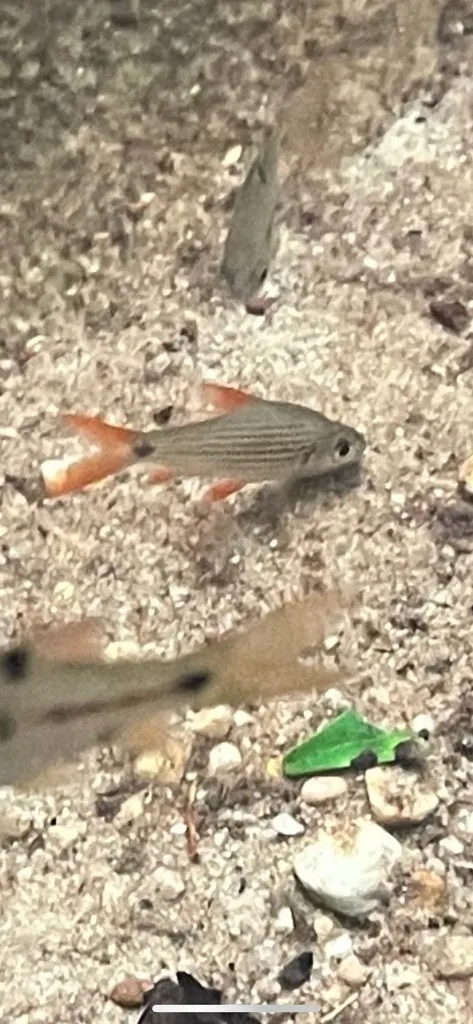
Cyclocheilichthys apogon is a silvery cyprinid, and it can grow a little larger than its common adult size. It is easily recognized by neat rows of dark dots running along the scale rows and a dark blotch at the tail base.
In the wild
The beardless barb ranges widely across Southeast Asia, from Myanmar through the Mekong to Sundaland. It lives in streams, canals, reservoirs and other slow or still waters.
Weekly picks
Tank mates
The beardless barb is a peaceful, schooling species that keeps to the middle. These picks share a community profile with it, are safe together in both directions, and overlap on water type, temperature and pH.
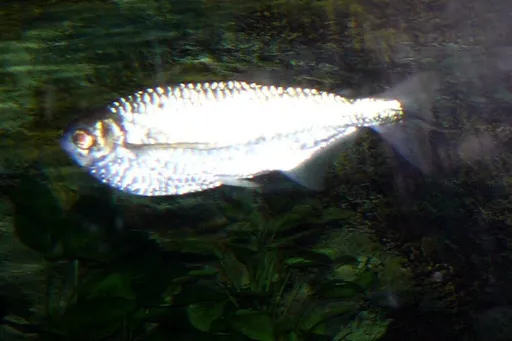
Narrow hatchetfish
Triportheus angulatus
Freshwater9.8 in (25 cm) · 79 gal (300 L)73–82°F (23–28°C)Uruguayan eartheater
Gymnogeophagus australis
Freshwater6.1 in (15.5 cm) · 66 gal (250 L)61–79°F (16–26°C)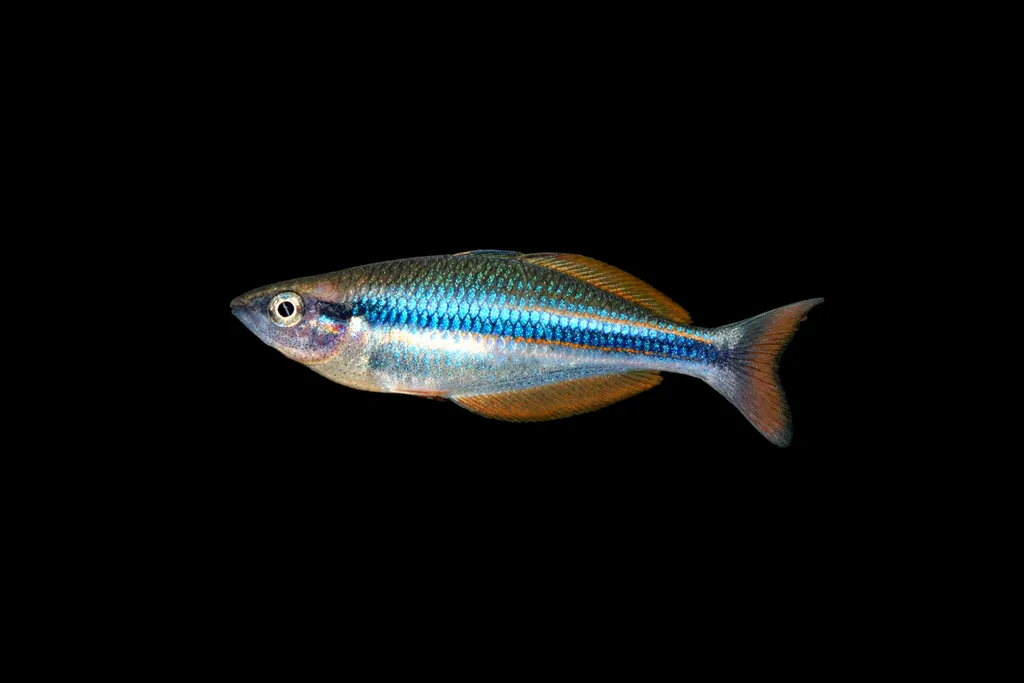
Van Heurn's rainbowfish
Melanotaenia vanheurni
Freshwater7.3 in (18.5 cm) · 66 gal (250 L)73–82°F (23–28°C)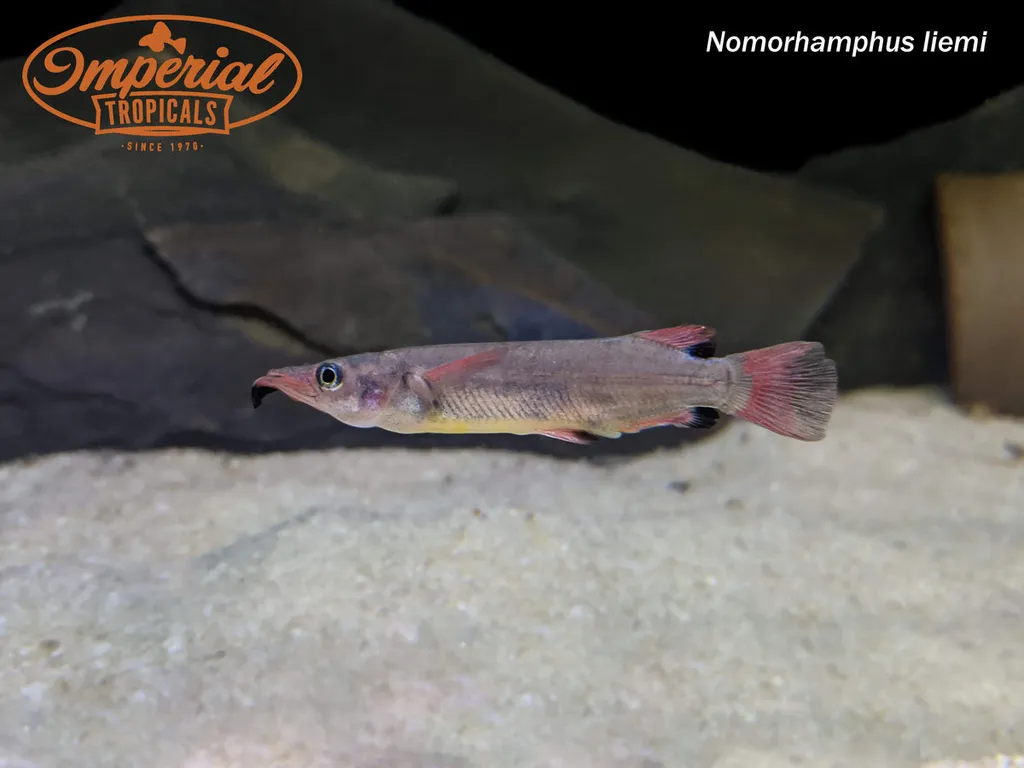
Celebes halfbeak
Nomorhamphus liemi
Freshwater3.5 in (9 cm) · 40 gal (150 L)68–77°F (20–25°C)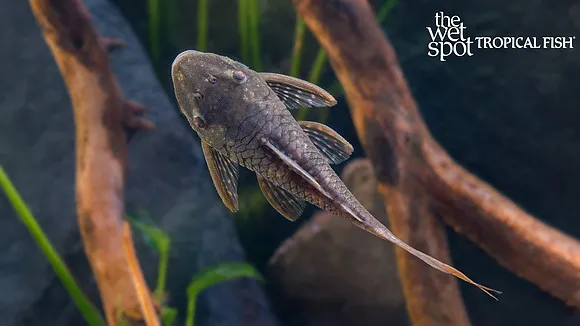
Red tail lasiancistrus
Lasiancistrus heteracanthus
Freshwater7.1 in (18 cm) · 66 gal (250 L)73–81°F (23–27°C)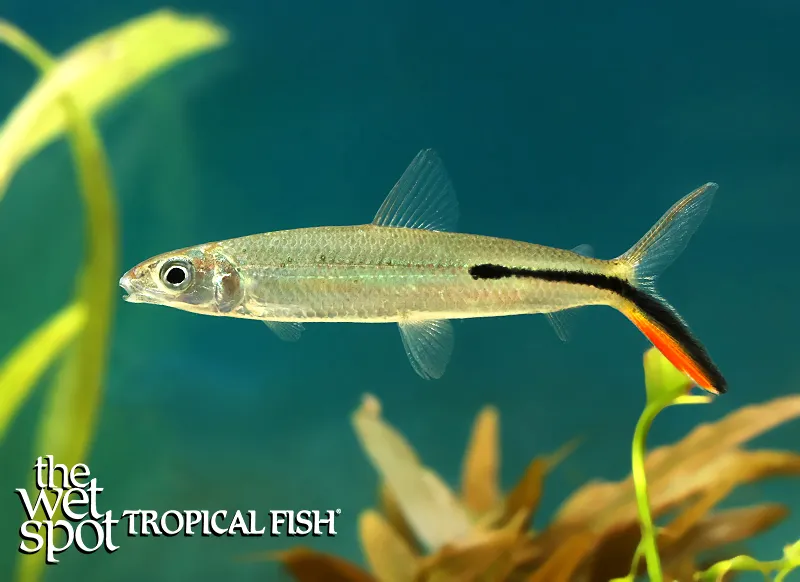
Slender hemiodus
Hemiodus gracilis
Freshwater7.1 in (18 cm) · 66 gal (250 L)73–82°F (23–28°C)
Common questions
What size tank does a beardless barb need?
A beardless barb needs at least 66 gal (250 L). It spends most of its time in the middle.
What temperature and pH does a beardless barb need?
A beardless barb is comfortable at 72–82°F (22–28°C) with a pH of 6.0–7.5.
What does a beardless barb eat?
A beardless barb is easy to feed. It readily takes sinking pellets, flake and frozen or live foods.
How big does a beardless barb get?
An adult beardless barb reaches about 7.9 in (20 cm).
Does a beardless barb need a group?
Yes. A beardless barb is a schooling species and should be kept in a group, not singly.
Related species
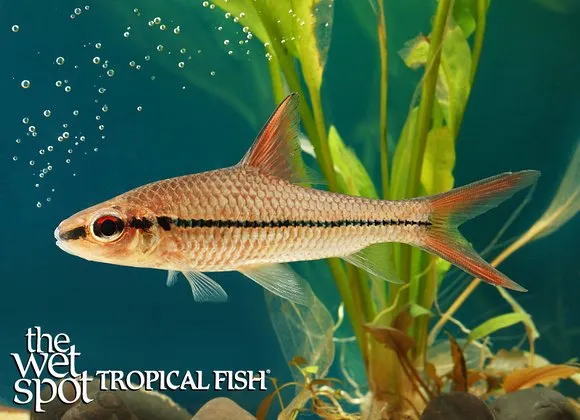 7.1 in (18 cm)53 gal (200 L)73–82°F (23–28°C)
Purple-fin barb
Cyclocheilichthys janthochir
7.1 in (18 cm) · 53 gal (200 L)
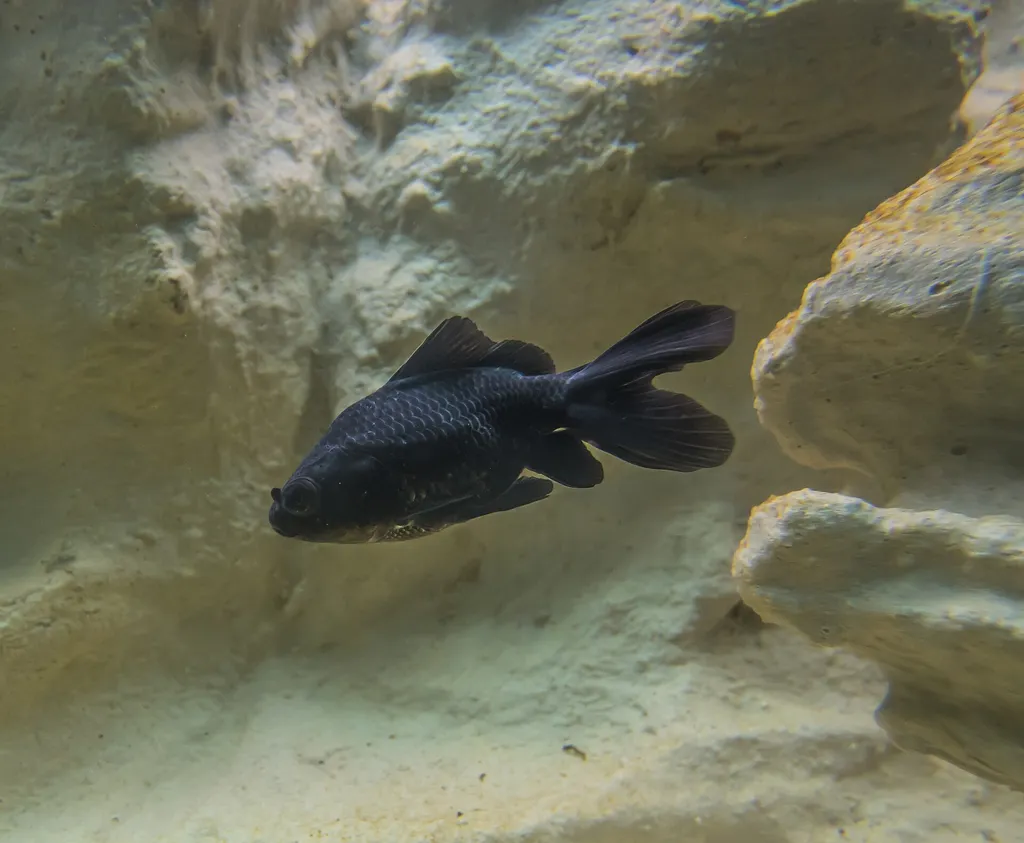 7.9 in (20 cm)25 gal (95 L)61–75°F (16–24°C)
Black moor
Carassius auratus
7.9 in (20 cm) · 25 gal (95 L)
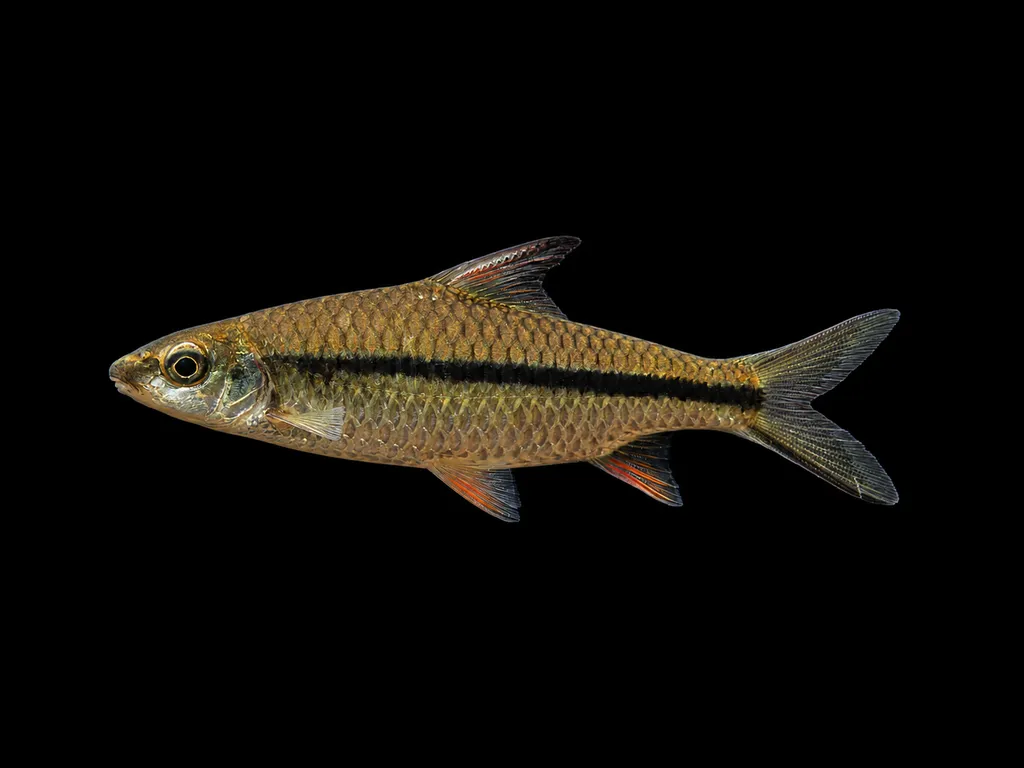 7.9 in (20 cm)66 gal (250 L)64–77°F (18–25°C)
Blackline poropuntius barb
Poropuntius melanogrammus
7.9 in (20 cm) · 66 gal (250 L)
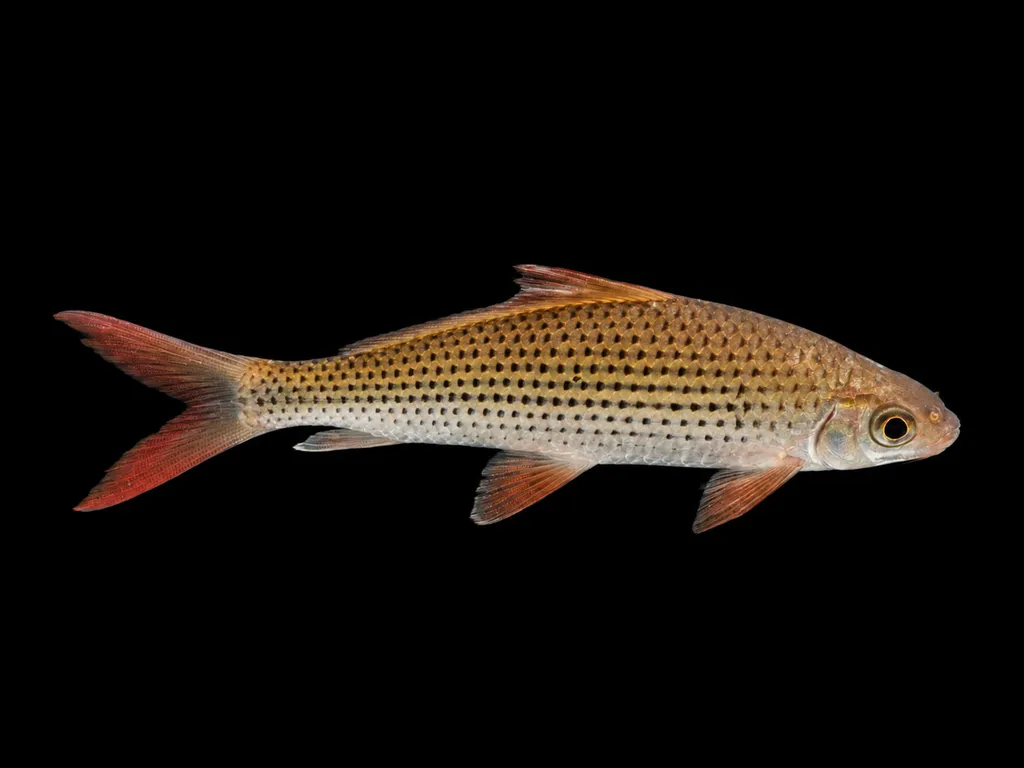 7.9 in (20 cm)66 gal (250 L)73–82°F (23–28°C)
Festive sharkminnow barb
Labiobarbus festivus
7.9 in (20 cm) · 66 gal (250 L)
 7.9 in (20 cm)66 gal (250 L)68–81°F (20–27°C)
Ogilbie's osteobrama
Rohtee ogilbii
7.9 in (20 cm) · 66 gal (250 L)
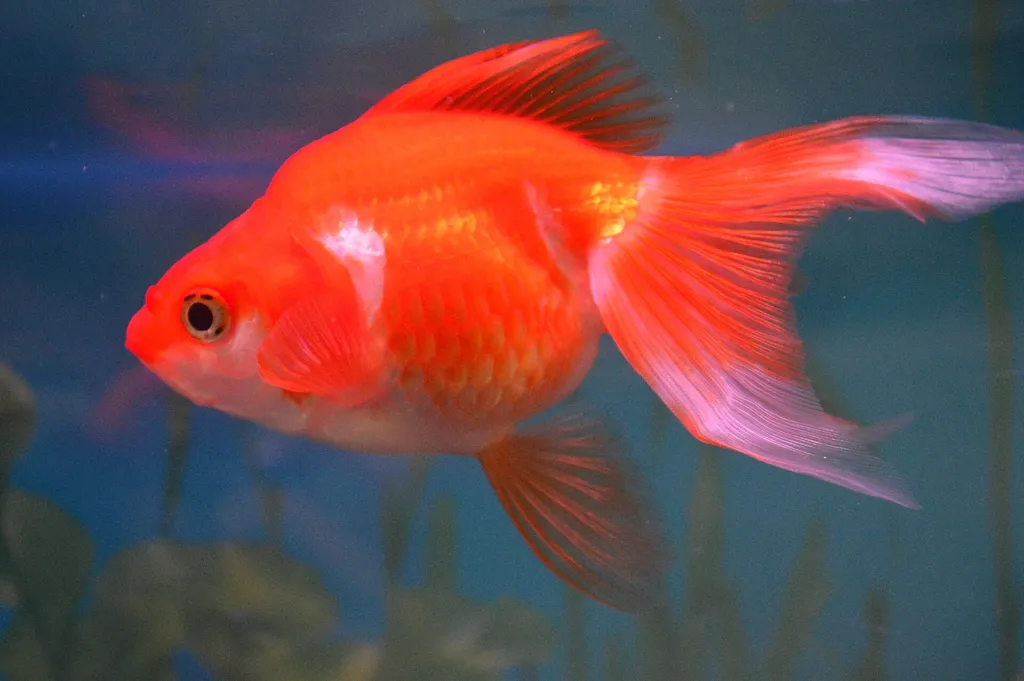 7.9 in (20 cm)25 gal (95 L)61–73°F (16–23°C)
Ryukin
Carassius auratus
7.9 in (20 cm) · 25 gal (95 L)