Purple-fin barb
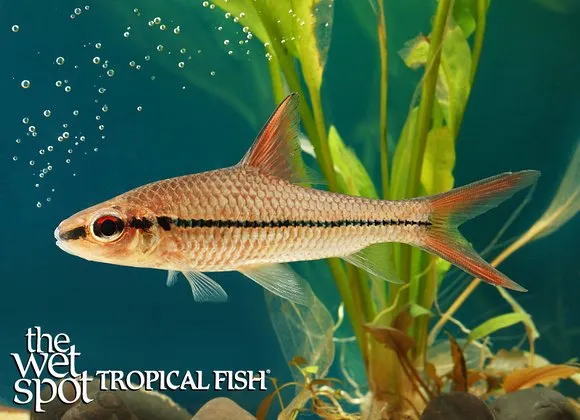
Cyclocheilichthys janthochir
Also known as Janthochir barb, Red fin bala shark
FreshwaterFish
Care at a glance
- Temperature
- 73–82°F
- 23–28°C
- pH
- 4.5–6.5
- Adult size
- 7.1 in
- 18 cm
- Minimum tank
- 53 gal
- 200 L
- Temperament
- Peaceful
- Social behavior
- Schooling
- Swim level
- Middle
- Diet
- Omnivore
- Difficulty
- Medium
- Breeding
- No record
- Rarity
- Rare
- Family
- Cyprinidae
- Origin
- Blackwater rivers of western Borneo
Overview
The purple-fin barb is a medium-sized, peaceful schooling barb for a large, soft-water community tank. It needs a keeper with some experience.
Did you know
The purple-fin barb carries violet as standard, a rare color on a freshwater fish. Its species name, janthochir, means violet hand, after the orchid tint on its pectoral fins.
Caring for the purple-fin barb
Give a group of purple-fin barbs a long tank of at least 53 gal (200 L), with room to cruise. They grow too large and active for a small tank. Add a dark substrate, driftwood, heavy leaf litter and dim lighting.
Keep the water warm, soft and distinctly acidic, at 73 to 82°F (23 to 28°C) and a pH of 4.5 to 6.5. Soft, mineral-poor water matters for their health and keeps the violet in their fins strong. They are omnivores that lean toward small live and frozen foods, insects and sinking pellets.
Keep a group of at least six. They are peaceful and swim in the middle water. They are safe with other sizeable soft-water fish such as chocolate gouramis and larger rasboras, but they will overwhelm tiny tank mates. Their aquarium breeding is not documented.
Good to know
Cyclocheilichthys janthochir is a member of the carp family, Cyprinidae. It grows substantially larger than most aquarium barbs.
In the wild
The purple-fin barb lives in the blackwater streams and peat-swamp rivers of western Borneo. The water there is very soft, strongly acidic and stained with tannins, and it runs dark under the forest canopy. It feeds on aquatic insects there.
Weekly picks
Tank mates
The purple-fin barb is a peaceful, schooling species that keeps to the middle. These picks share a community profile with it, are safe together in both directions, and overlap on water type, temperature and pH.
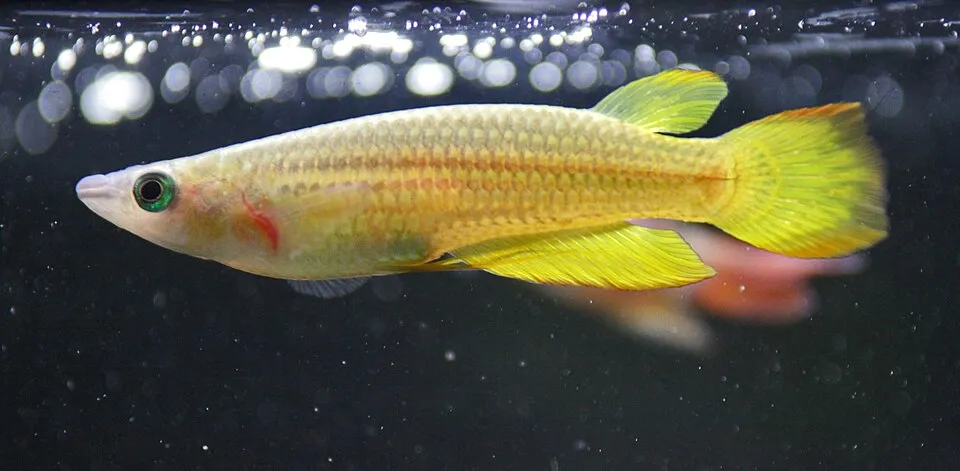
Striped panchax
Aplocheilus lineatus
Freshwater4.3 in (11 cm) · 30 gal (115 L)72–77°F (22–25°C)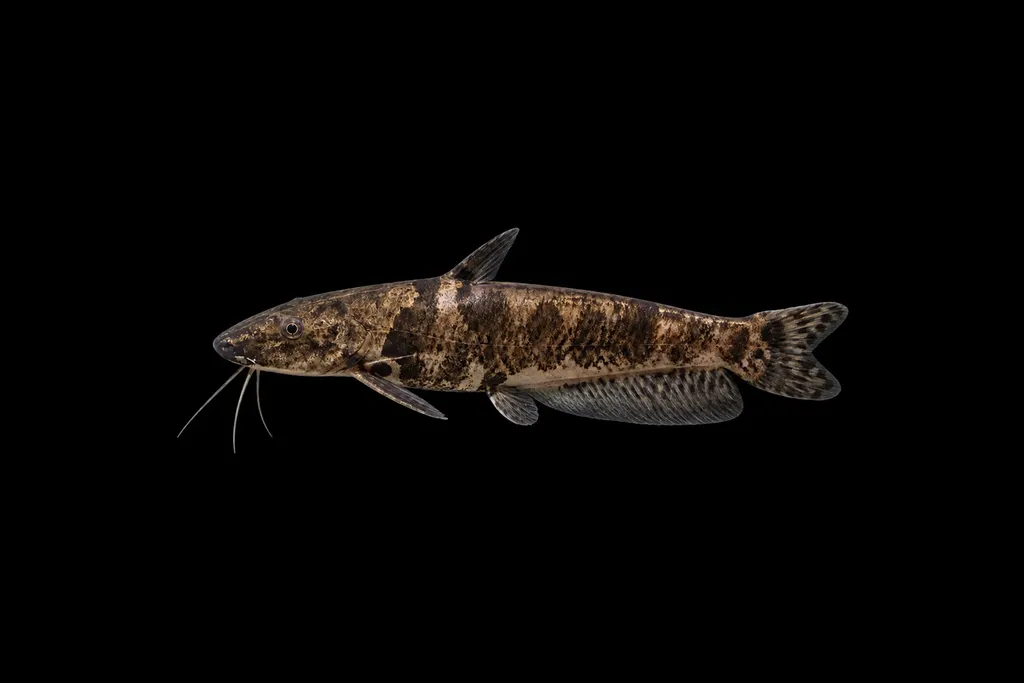
Zamora catfish
Auchenipterichthys thoracatus
Freshwater5.5 in (14 cm) · 53 gal (200 L)73–82°F (23–28°C)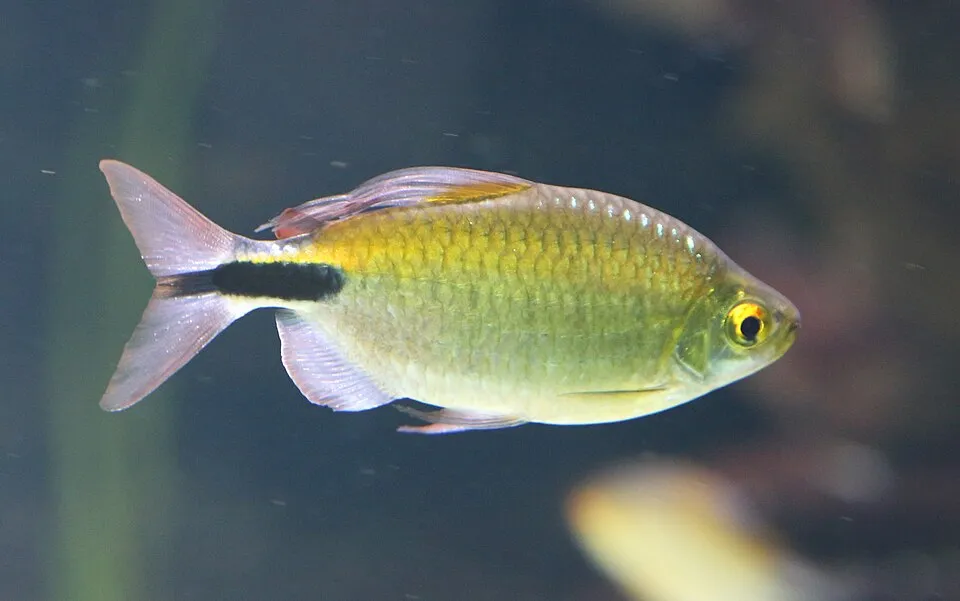
Long-fin tetra
Brycinus longipinnis
Freshwater4.9 in (12.5 cm) · 50 gal (190 L)72–79°F (22–26°C)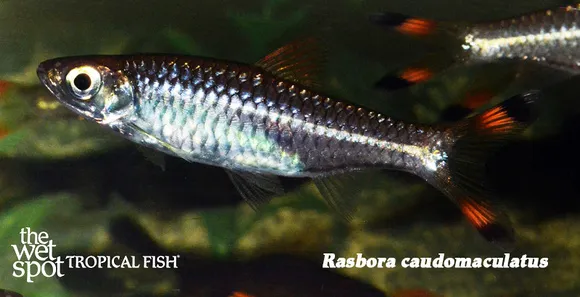
Greater scissortail
Rasbora caudimaculata
Freshwater5.1 in (13 cm) · 53 gal (200 L)68–79°F (20–26°C)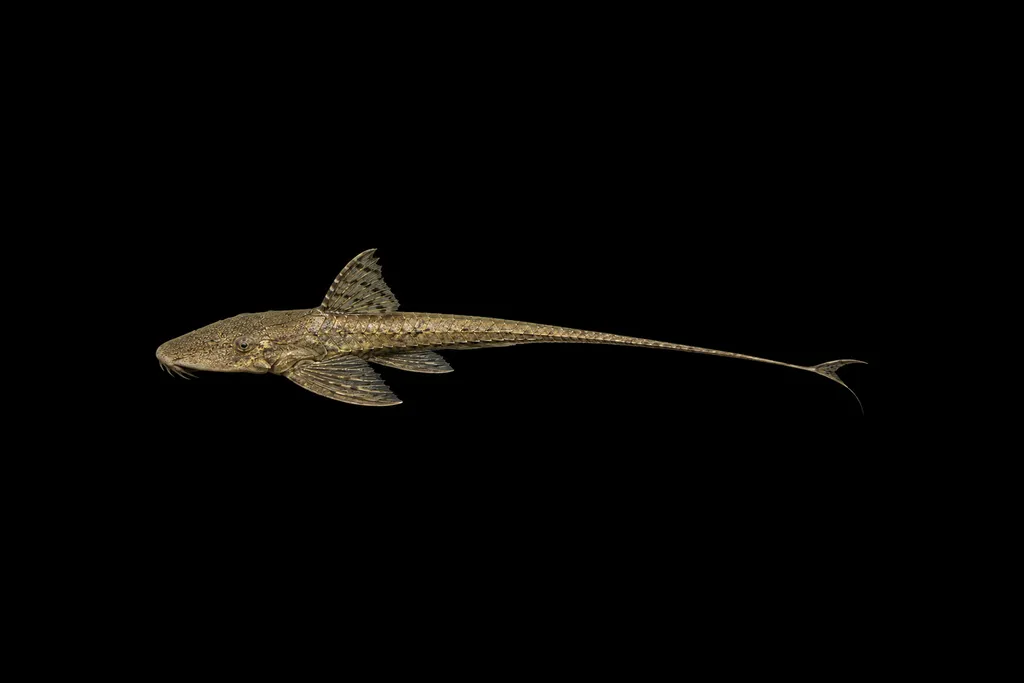
Parnahyba whiptail
Loricaria parnahybae
Freshwater9.8 in (25 cm) · 53 gal (200 L)73–82°F (23–28°C)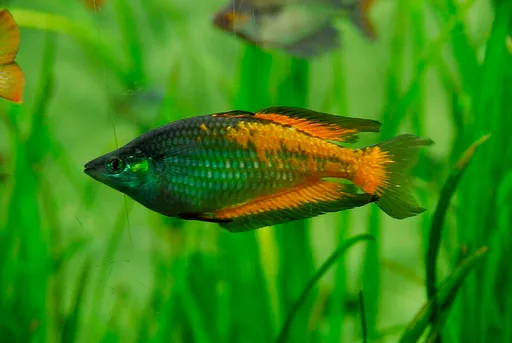
Sepik rainbowfish
Glossolepis multisquamata
Freshwater5.5 in (14 cm) · 55 gal (208 L)79–86°F (26–30°C)
Common questions
What size tank does a purple-fin barb need?
A purple-fin barb needs at least 53 gal (200 L). It spends most of its time in the middle.
What temperature and pH does a purple-fin barb need?
A purple-fin barb is comfortable at 73–82°F (23–28°C) with a pH of 4.5–6.5.
What does a purple-fin barb eat?
A purple-fin barb is an omnivore. It leans toward small live and frozen foods and insects, and it also takes sinking pellets.
How big does a purple-fin barb get?
An adult purple-fin barb reaches about 7.1 in (18 cm).
Does a purple-fin barb need a group?
Yes. A purple-fin barb is a schooling species and should be kept in a group, not singly.
Related species
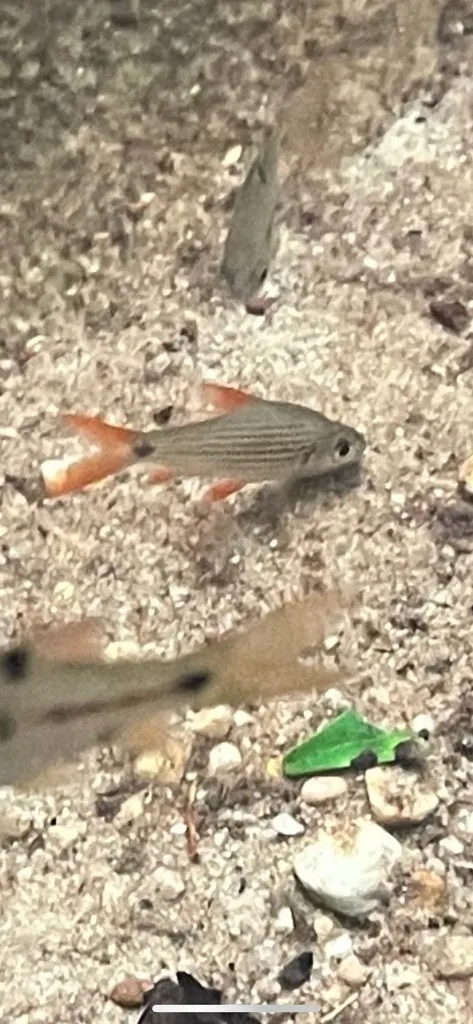 7.9 in (20 cm)66 gal (250 L)72–82°F (22–28°C)
Beardless barb
Cyclocheilichthys apogon
7.9 in (20 cm) · 66 gal (250 L)
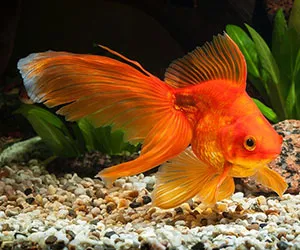 7.1 in (18 cm)20 gal (75 L)59–73°F (15–23°C)
Fantail
Carassius auratus
7.1 in (18 cm) · 20 gal (75 L)
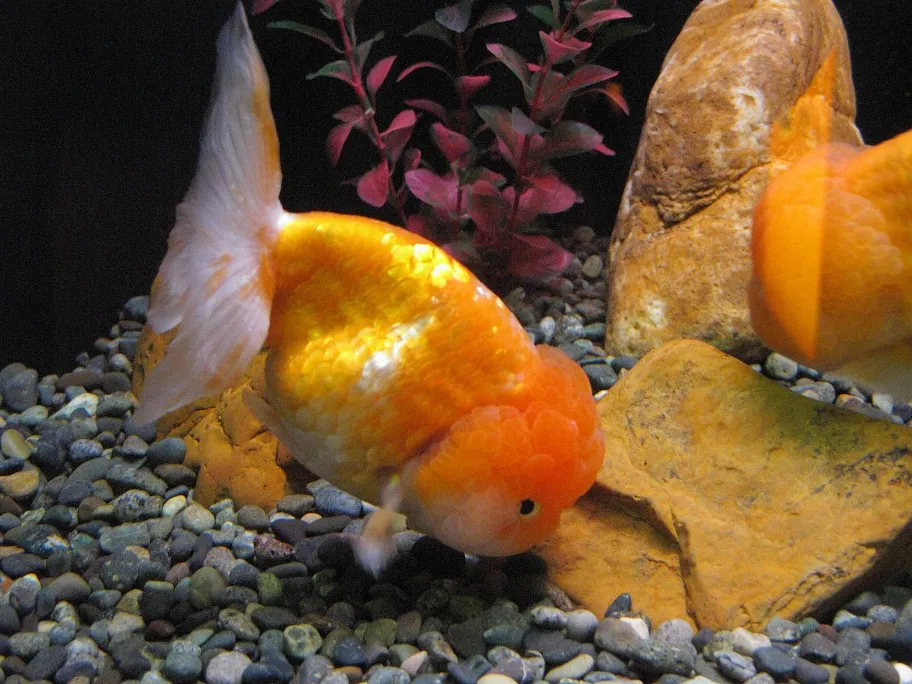 7.1 in (18 cm)25 gal (95 L)61–75°F (16–24°C)
Lionhead
Carassius auratus
7.1 in (18 cm) · 25 gal (95 L)
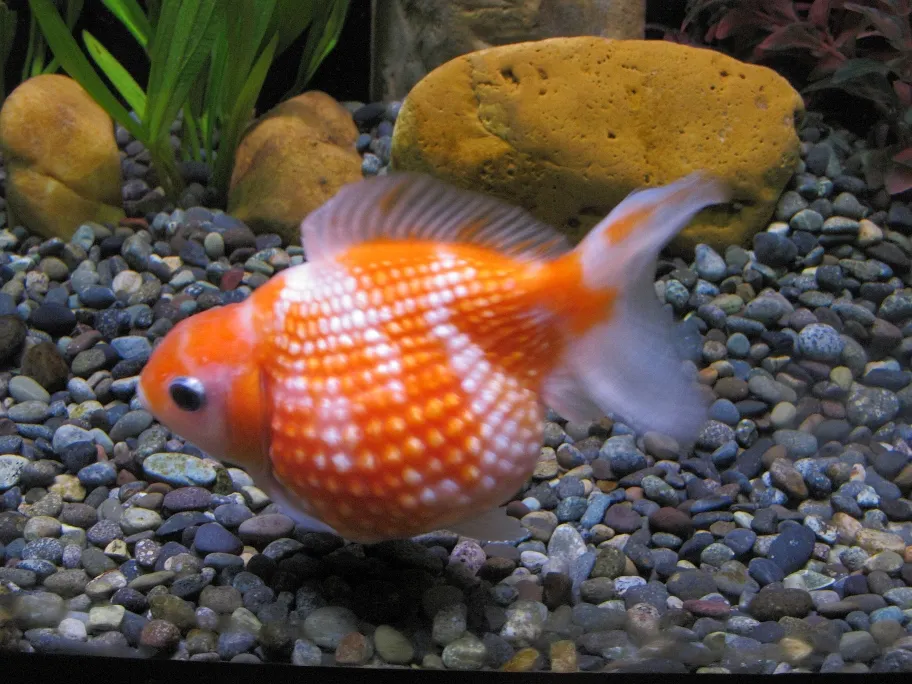 7.1 in (18 cm)25 gal (95 L)64–75°F (18–24°C)
Pearlscale
Carassius auratus
7.1 in (18 cm) · 25 gal (95 L)
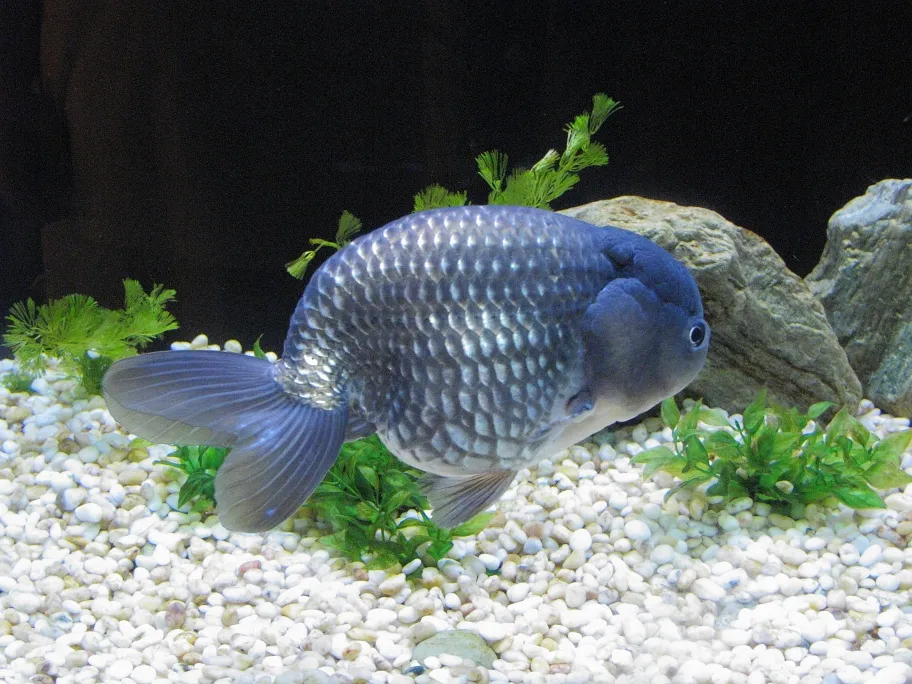 7.1 in (18 cm)25 gal (95 L)61–75°F (16–24°C)
Ranchu
Carassius auratus
7.1 in (18 cm) · 25 gal (95 L)
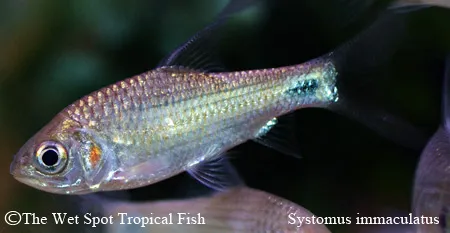 7.5 in (19 cm)66 gal (250 L)72–81°F (22–27°C)
Immaculate barb
Systomus immaculatus
7.5 in (19 cm) · 66 gal (250 L)