Variety of Goldfish
Fantail
Carassius auratus
One of 12 varieties of Carassius auratus · See all varieties →
Also known as Fantail goldfish, Western fantail, Ryukin fantail
FreshwaterFish
Varieties · Carassius auratus
See all 12 →
Care at a glance
- Temperature
- 59–73°F
- 15–23°C
- pH
- 6.5–8.0
- Adult size
- 7.1 in
- 18 cm
- Minimum tank
- 20 gal
- 75 L
- Temperament
- Peaceful
- Social behavior
- Social
- Tankmates
- With caution
- Swim level
- Middle
- Difficulty
- Easy
- Breeding
- Medium
- Rarity
- Very common
- Family
- Cyprinidae
- Origin
- The base fancy goldfish body type, a selectively bred form of domesticated Carassius auratus whose wild ancestor lives in slow freshwater across East Asia.
Overview
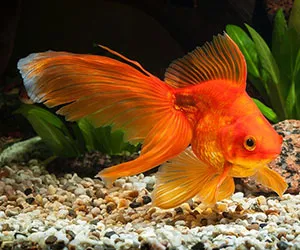
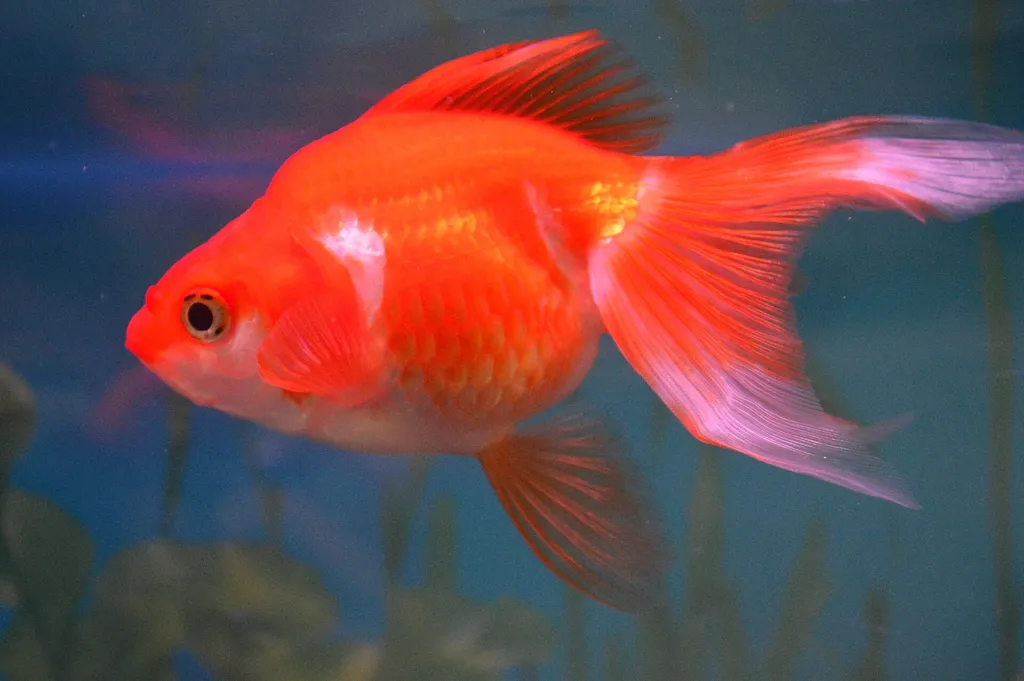
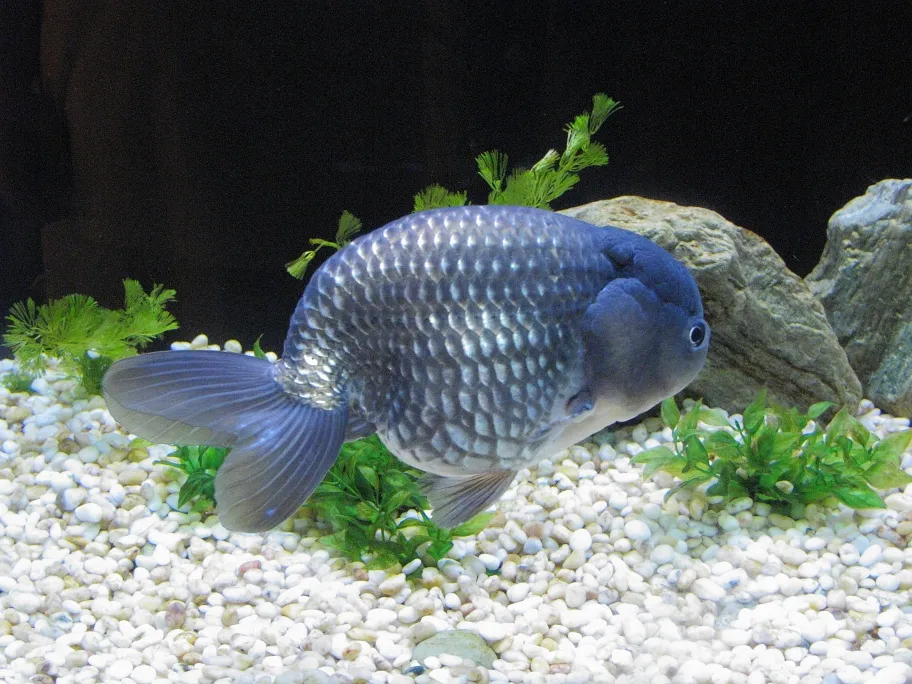
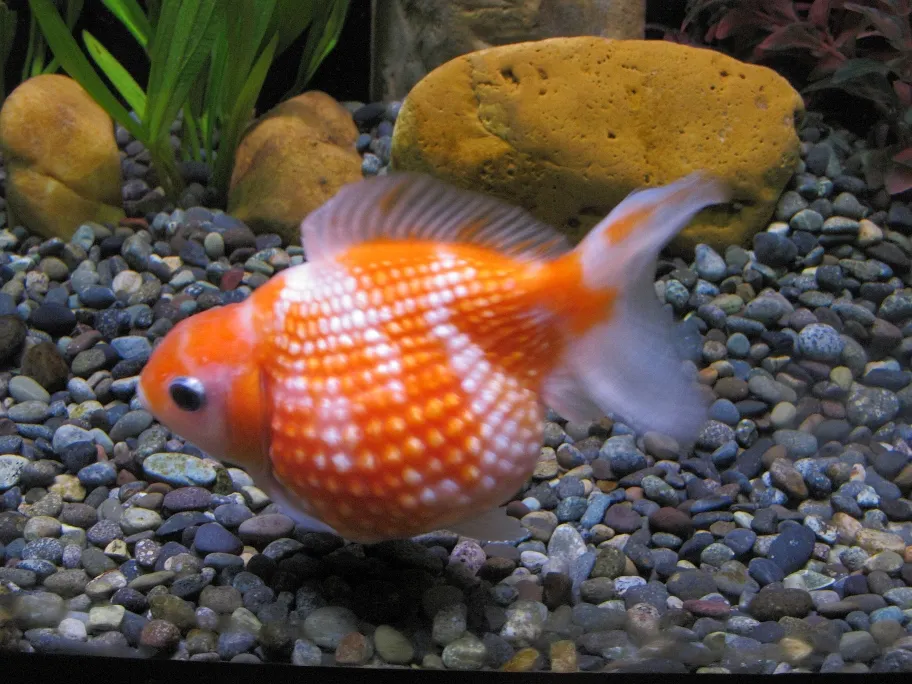
The fantail is the hardiest and most widely sold fancy goldfish, with an egg-shaped body and a split, fan-like double tail. It makes a good first fancy for beginners.
Did you know
The fantail has none of the sight or breathing handicaps of fancier strains. That makes it the fancy goldfish most likely to do well outdoors in a sheltered pond over a mild winter.
Caring for the fantail
Start with 20 gal (75 L) for one fantail, and add roughly 40 L for each extra fish. It lacks the extreme features of other fancies, so it swims better and copes with a wider range of conditions. Its rounded body still favors smooth decor and sinking food.
Like any goldfish, it makes a lot of waste and needs strong filtration. Keep the water at 59 to 73°F (15 to 23°C) and a pH of 6.5 to 8.0. A fantail handles cooler water than the delicate fancies do.
Feed a varied diet of sinking pellets, vegetables and frozen foods in small daily amounts. A goldfish has no stomach, so food passes through it quickly.
Fantails are peaceful and social, and each one wants the company of its own kind. They mix well with other fancy goldfish. Breeding them is of medium difficulty.
Good to know
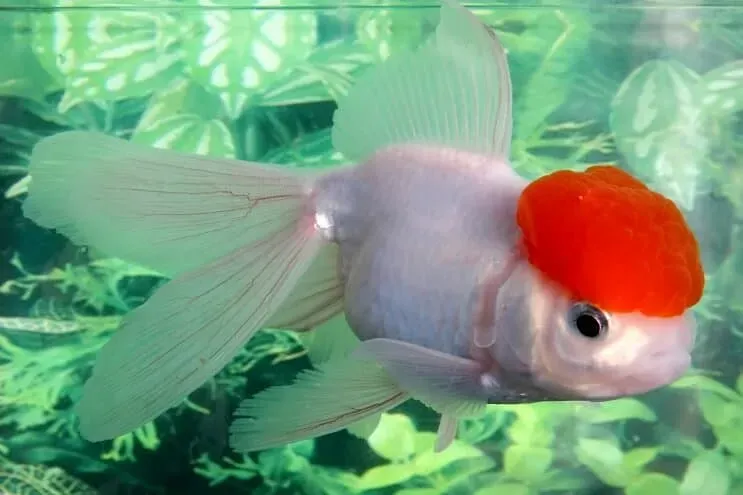
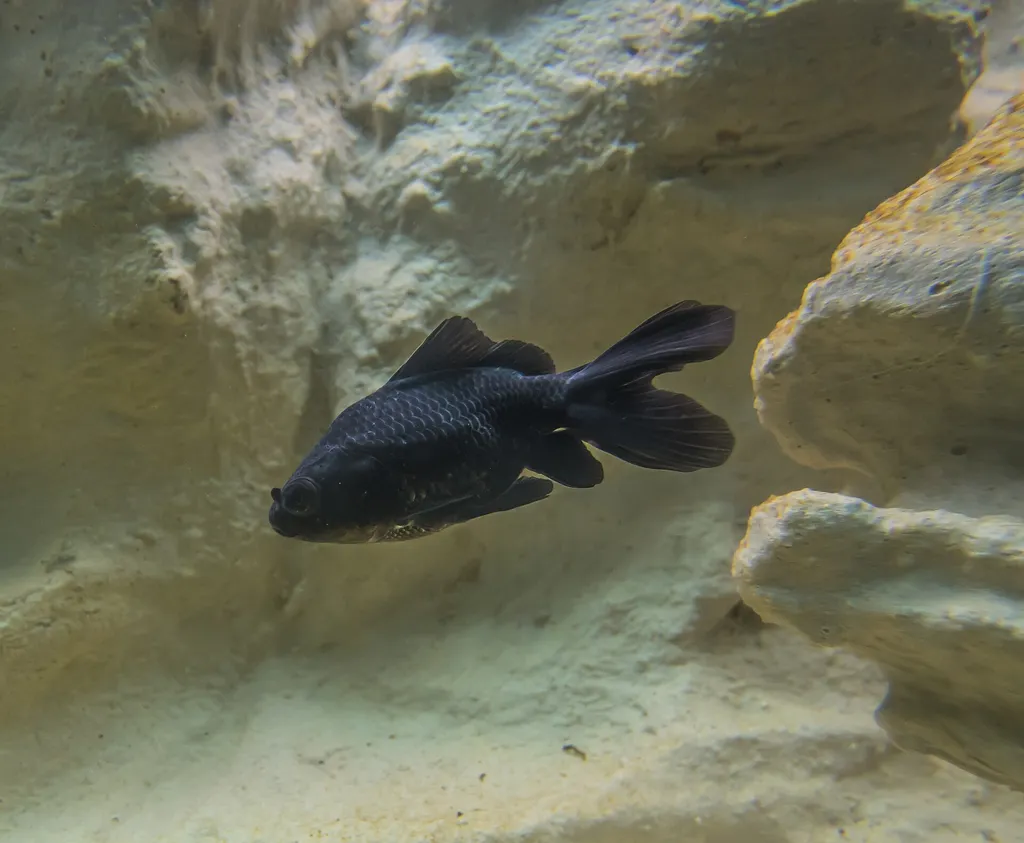
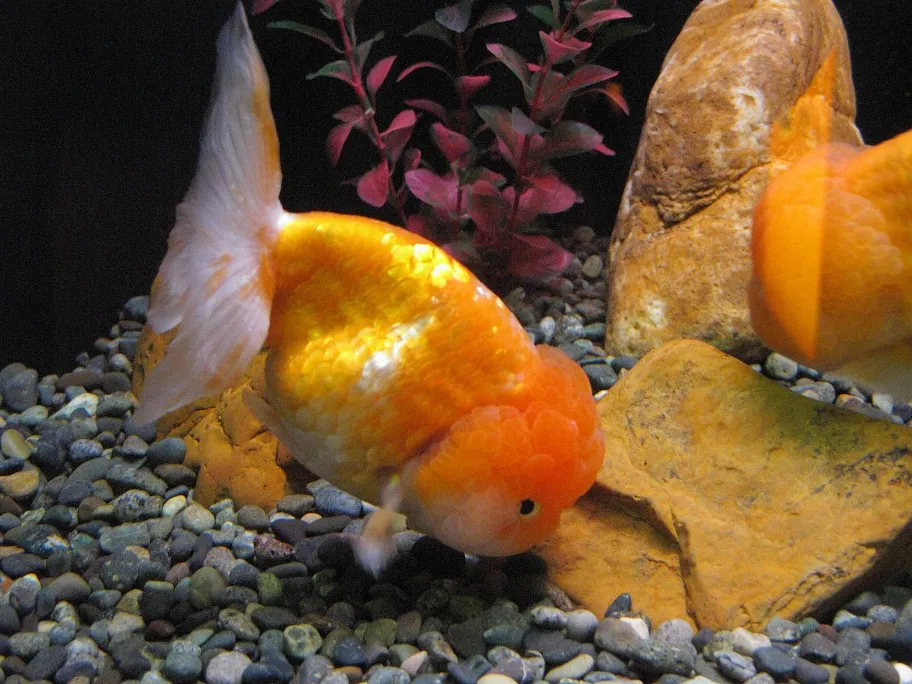
The fantail is the base fancy goldfish body type, from which strains like the ryukin, oranda and moor were developed. Its paired caudal and anal fins are a fixed trait, unlike the single tail of common and comet goldfish. All of them are one species, Carassius auratus, in the family Cyprinidae.
In the wild
The fantail is a selectively bred form of the domesticated goldfish. Its wild ancestor lives in slow freshwater across East Asia.
From published sources
Tank mates
Each fish here is named as a tank mate for the fantail by at least two published care guides. Every partner here handles cool water. The tank needs about 20 gallons (75 liters) for the first fancy goldfish and 10 gallons (38 liters) for each extra one.
Sources: Practical Fishkeeping, Aquarium Co-Op, Fishkeeping World, Aquarium Source, Tropical Fish Hobbyist.
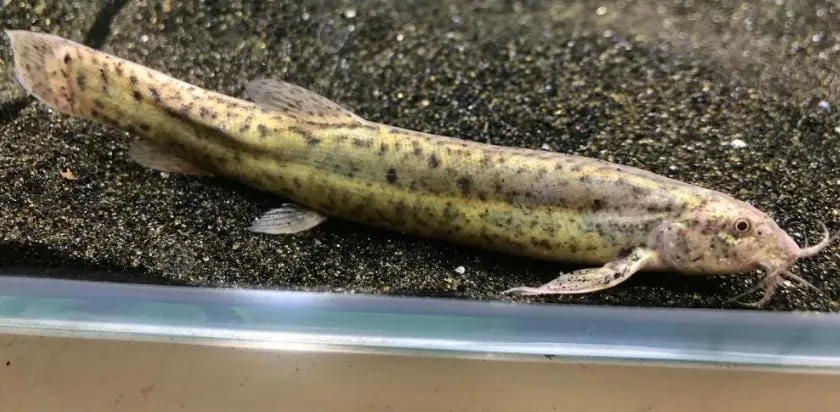
Weather loach
Misgurnus anguillicaudatus
Freshwater11 in (28 cm) · 55 gal (210 L)50–73°F (10–23°C)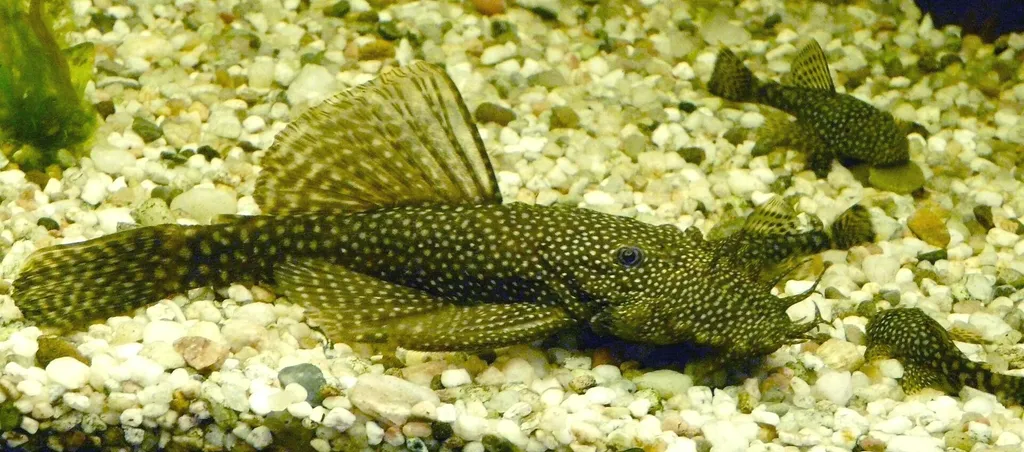
Bristlenose pleco
Ancistrus sp.
Freshwater4.9 in (12.5 cm) · 20 gal (75 L)70–79°F (21–26°C)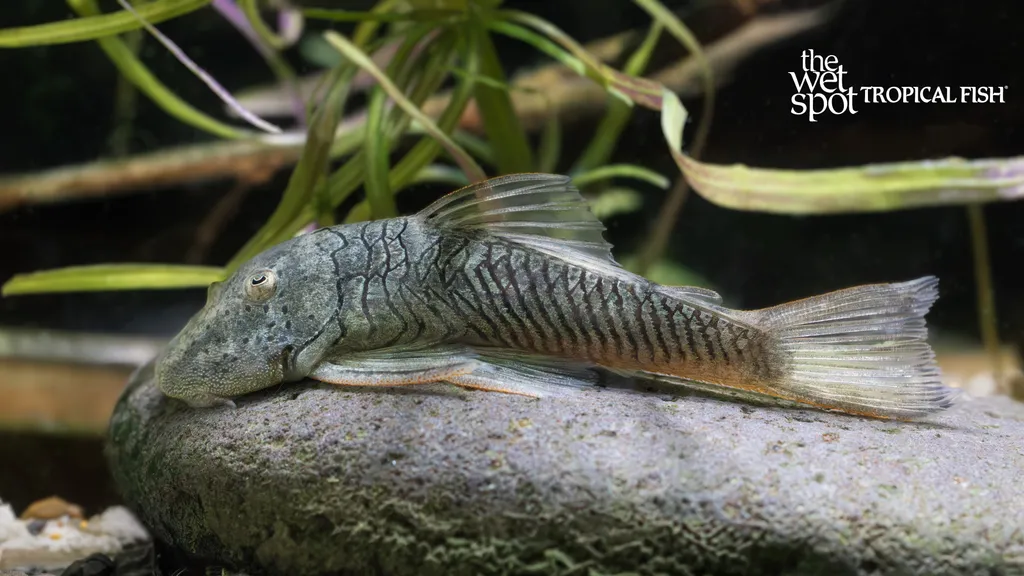
Bulldog pleco
Chaetostoma formosae
Freshwater4.3 in (11 cm) · 40 gal (150 L)68–77°F (20–25°C)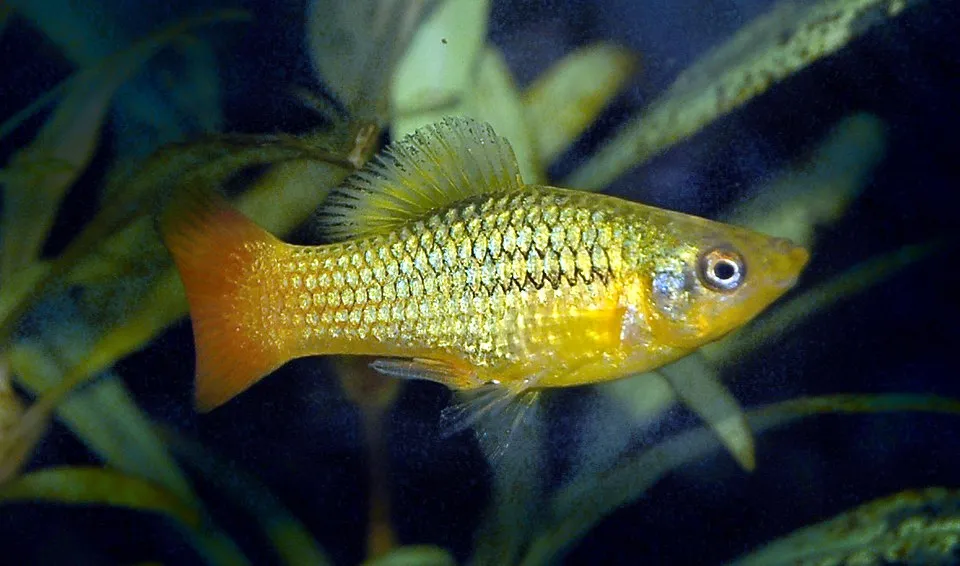
Variable platy
Xiphophorus variatus
Freshwater2.8 in (7 cm) · 15 gal (55 L)68–79°F (20–26°C)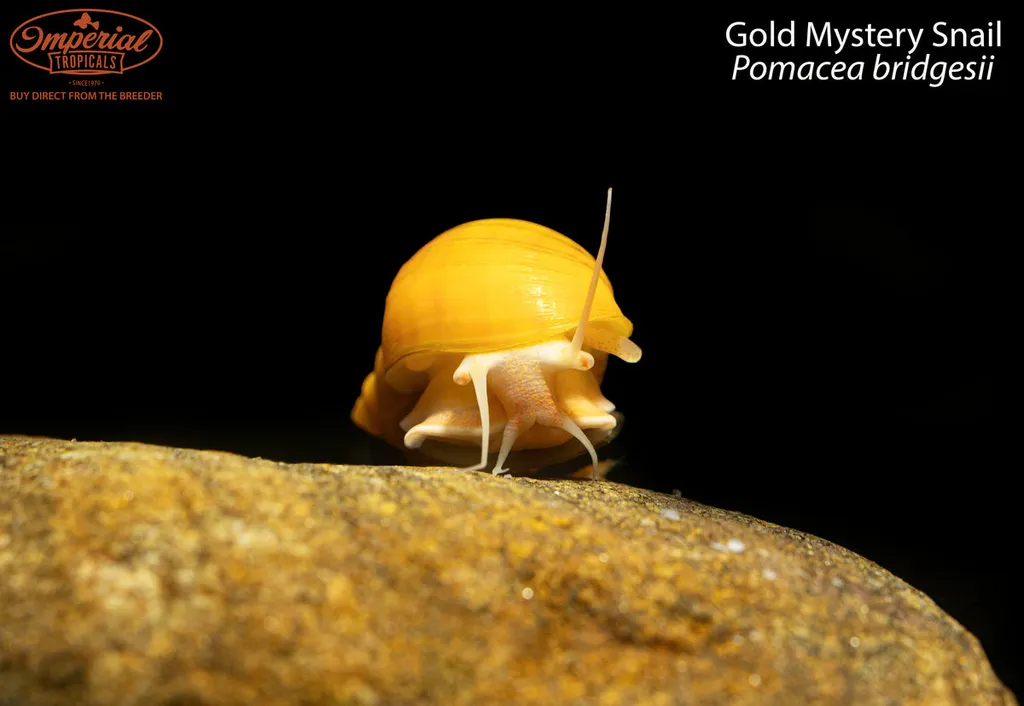
Mystery snail
Pomacea diffusa
Freshwater2 in (5 cm) · 5 gal (19 L)70–79°F (21–26°C)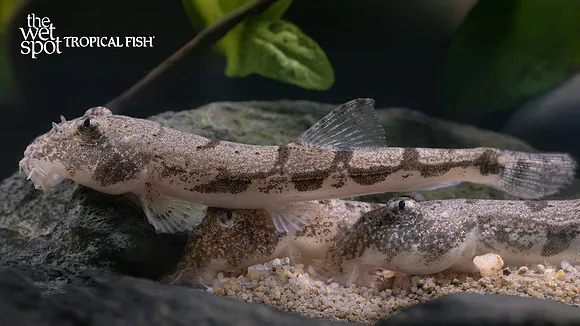
Chinese butterfly loach
Pseudogastromyzon cheni
Freshwater2.4 in (6 cm) · 20 gal (75 L)64–75°F (18–24°C)
Common questions
Is a fantail a different species from the goldfish?
No. A fantail is a variety of the goldfish, Carassius auratus. It is kept the same way apart from difficulty, adult size, tank size and temperature.
What size tank does a fantail need?
A fantail needs at least 20 gal (75 L). It spends most of its time in the middle.
What does a fantail eat?
A fantail eats a varied diet of sinking pellets, vegetables and frozen foods. Feed it in small daily amounts.
How big does a fantail get?
An adult fantail reaches about 7.1 in (18 cm).
What fish can live with the fantail?
Published care guides name weather loach, bristlenose pleco, bulldog pleco and variable platy, among others. Every partner here handles cool water. The tank needs about 20 gallons (75 liters) for the first fancy goldfish and 10 gallons (38 liters) for each extra one.
Related species
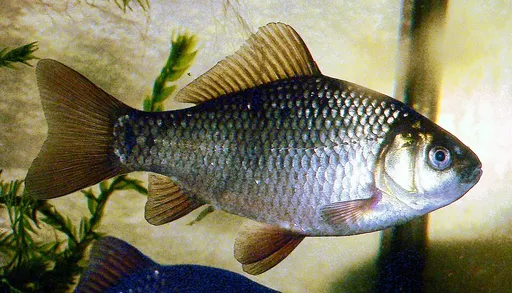 11.8 in (30 cm)119 gal (450 L)39–75°F (4–24°C)
Crucian carp
Carassius carassius
11.8 in (30 cm) · 119 gal (450 L)
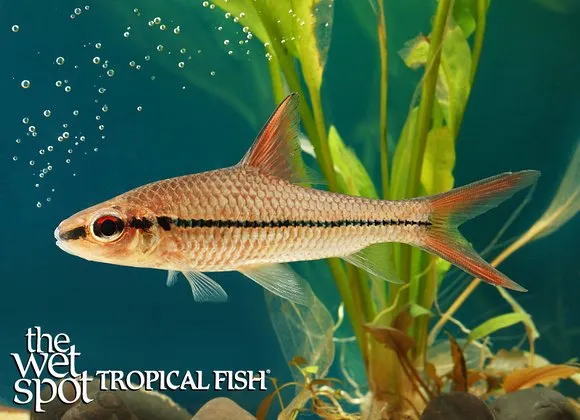 7.1 in (18 cm)53 gal (200 L)73–82°F (23–28°C)
Purple-fin barb
Cyclocheilichthys janthochir
7.1 in (18 cm) · 53 gal (200 L)
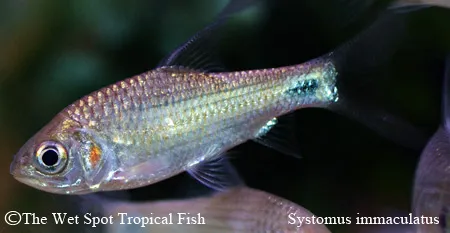 7.5 in (19 cm)66 gal (250 L)72–81°F (22–27°C)
Immaculate barb
Systomus immaculatus
7.5 in (19 cm) · 66 gal (250 L)
 7.9 in (20 cm)66 gal (250 L)72–82°F (22–28°C)
Beardless barb
Cyclocheilichthys apogon
7.9 in (20 cm) · 66 gal (250 L)
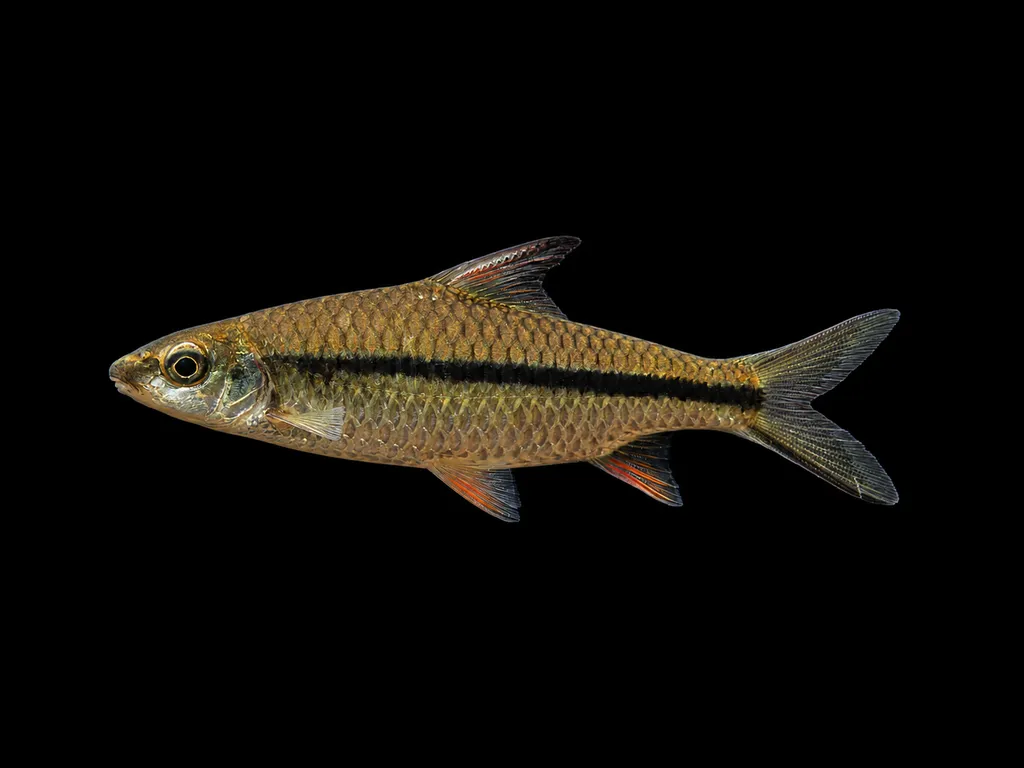 7.9 in (20 cm)66 gal (250 L)64–77°F (18–25°C)
Blackline poropuntius barb
Poropuntius melanogrammus
7.9 in (20 cm) · 66 gal (250 L)
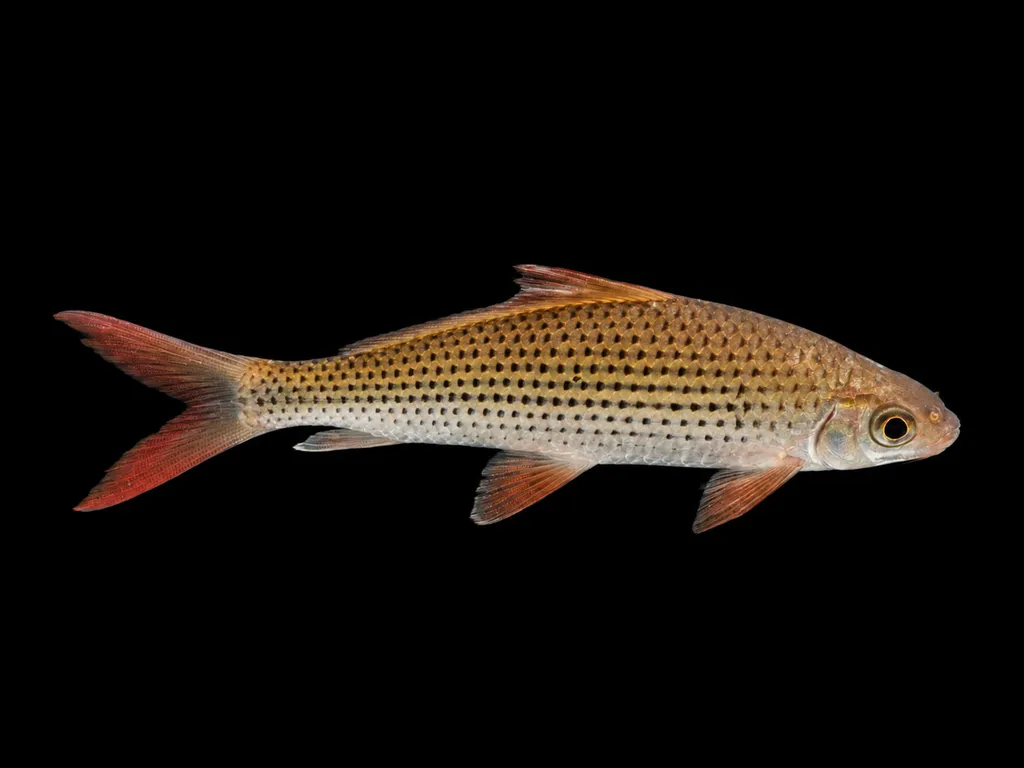 7.9 in (20 cm)66 gal (250 L)73–82°F (23–28°C)
Festive sharkminnow barb
Labiobarbus festivus
7.9 in (20 cm) · 66 gal (250 L)