One species · 12 varieties
Goldfish
Carassius auratus
Also known as Carassius auratus auratus
FreshwaterFish
Care at a glance
- Temperature
- 39–75°F
- 4–24°C
- Varies by variety
- pH
- 6.5–8.0
- Adult size
- 5.9–11.8 in
- 15–30 cm
- Varies by variety
- Minimum tank
- 20–50 gal
- 75–190 L
- Varies by variety
- Temperament
- Peaceful
- Social behavior
- Social
- Tankmates
- With caution
- Swim level
- Middle
- Breeding
- Medium
- Rarity
- Very common
- Family
- Cyprinidae
- Origin
- East Asia, domesticated in China
Pick a variety
2 bands · care differsSingle-tail · pond or very large tank
50 gal (190 L) minimum · grows to 9.8–11.8 in (25–30 cm) · 39–75°F (4–24°C) · pH 6.5–8.0
Fancy · tank
20–30 gal (75–114 L) minimum · grows to 5.9–9.8 in (15–25 cm) · 59–75°F (15–24°C) · pH 6.5–8.0
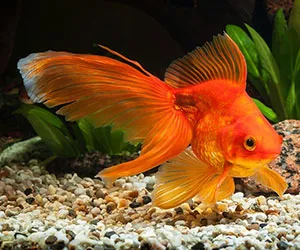
Fantail
double tail, egg-shaped body20 gal (75 L)7.1 in (18 cm)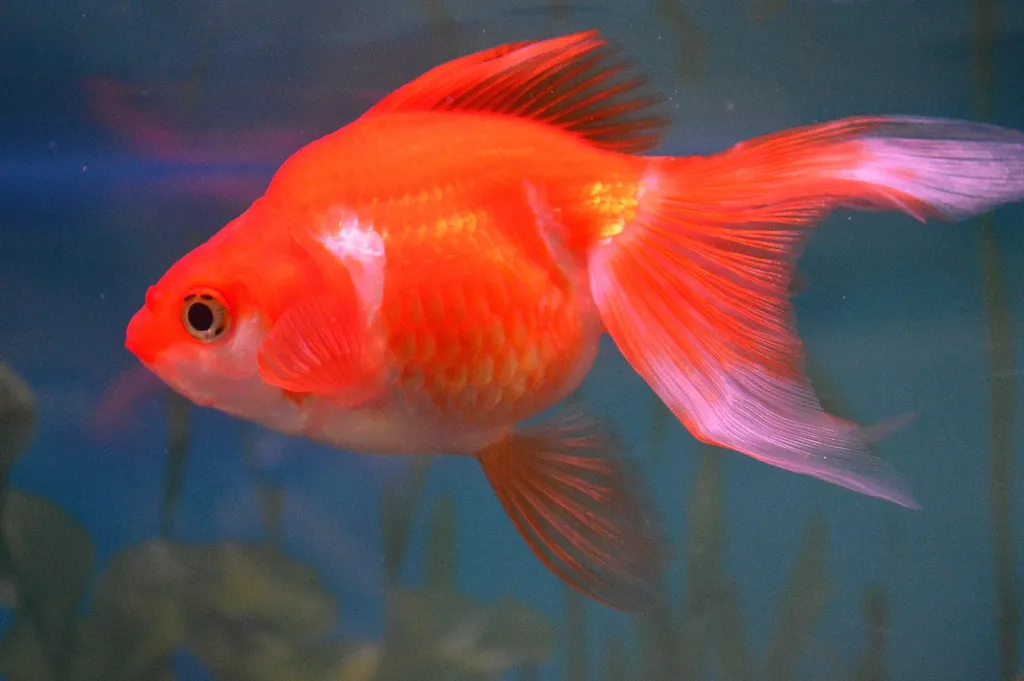
Ryukin
deep body, high shoulder hump25 gal (95 L)7.9 in (20 cm)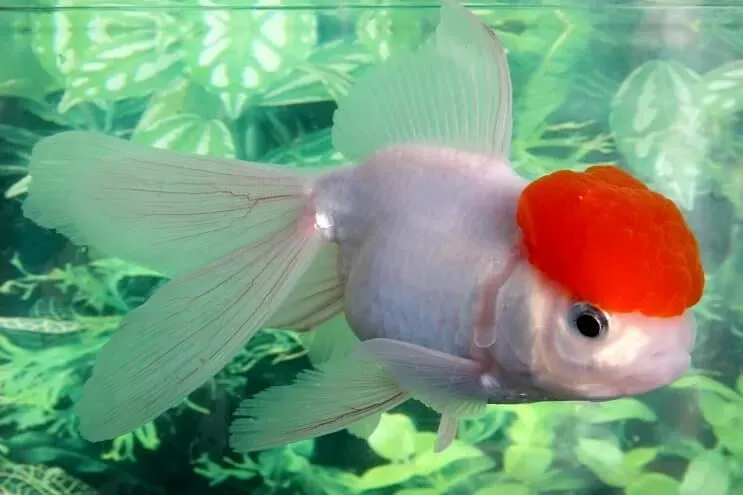
Oranda
raspberry head growth30 gal (114 L)9.8 in (25 cm)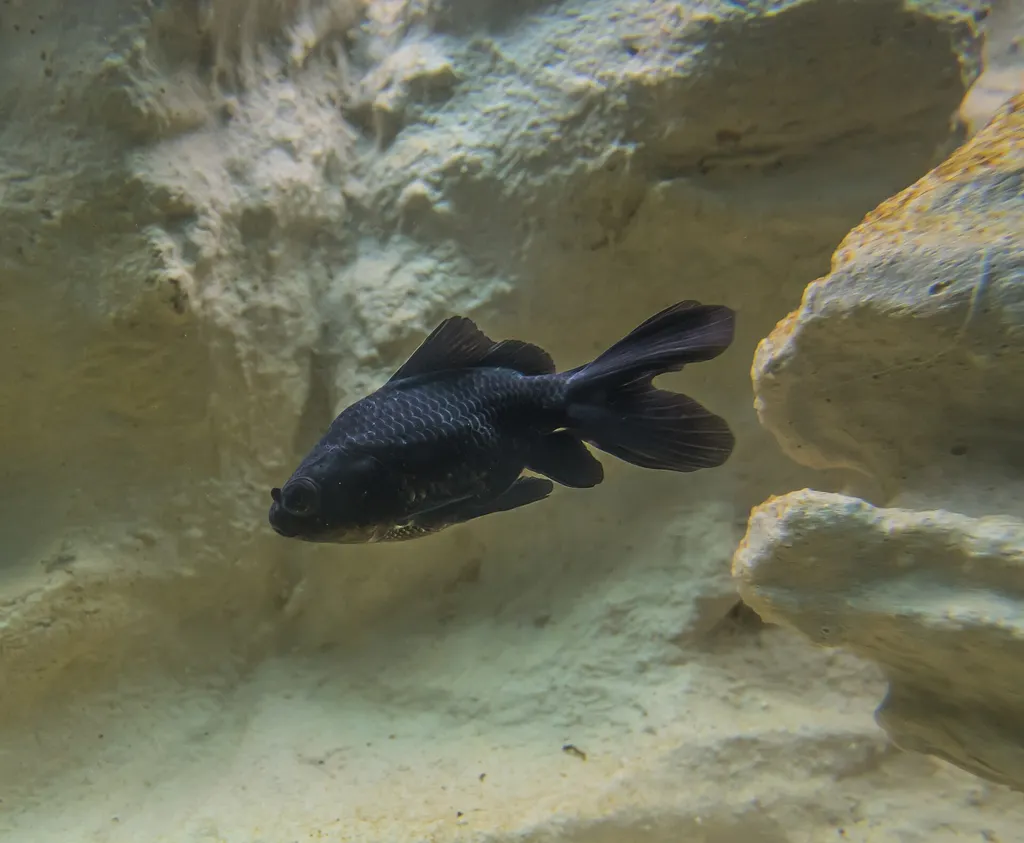
Black moor
all black, telescope eyes25 gal (95 L)7.9 in (20 cm)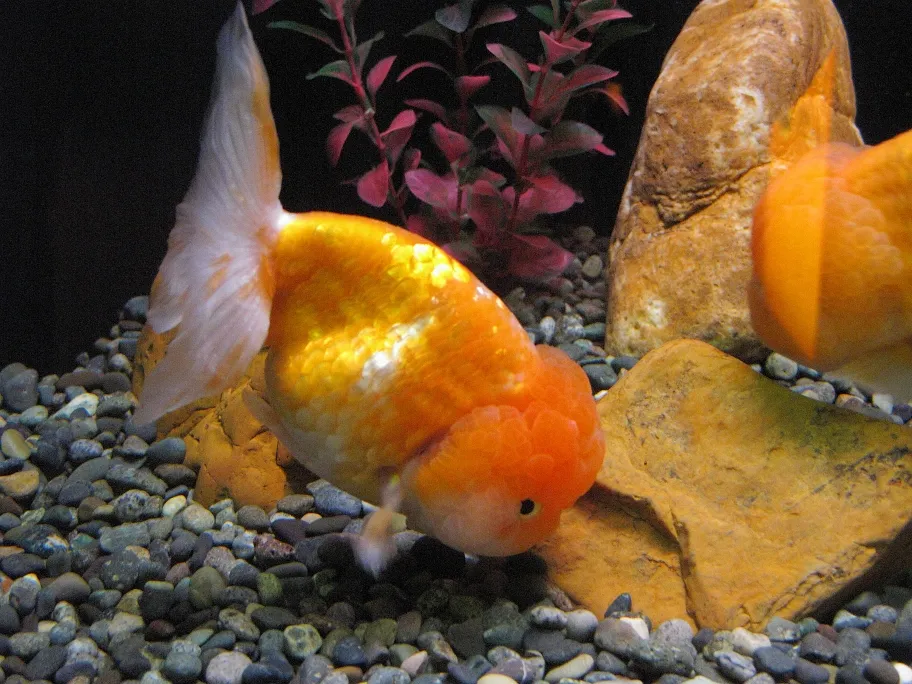
Lionhead
hooded head, no dorsal fin25 gal (95 L)7.1 in (18 cm)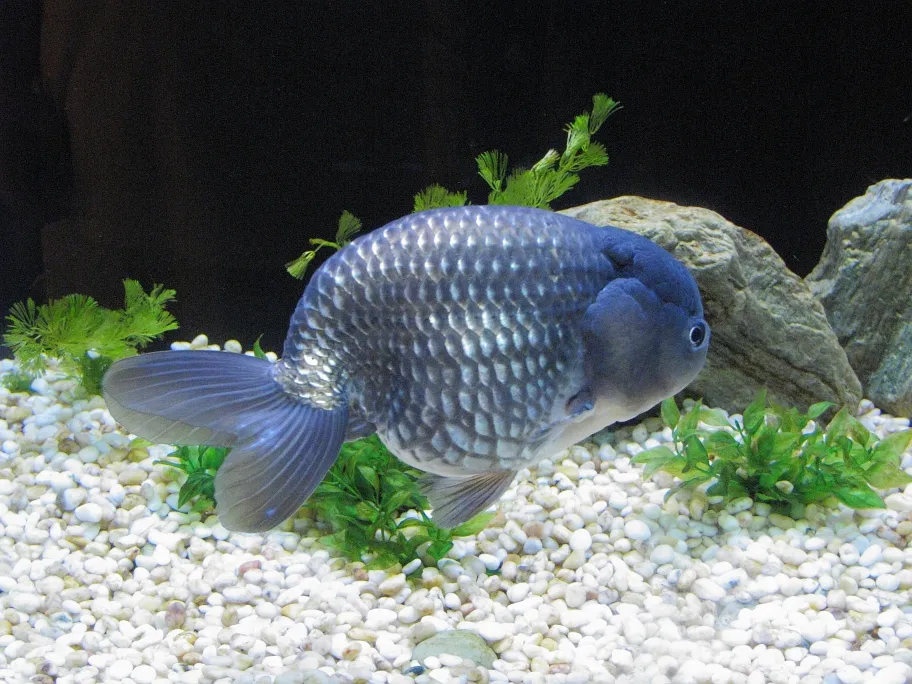
Ranchu
arched back, no dorsal fin25 gal (95 L)7.1 in (18 cm)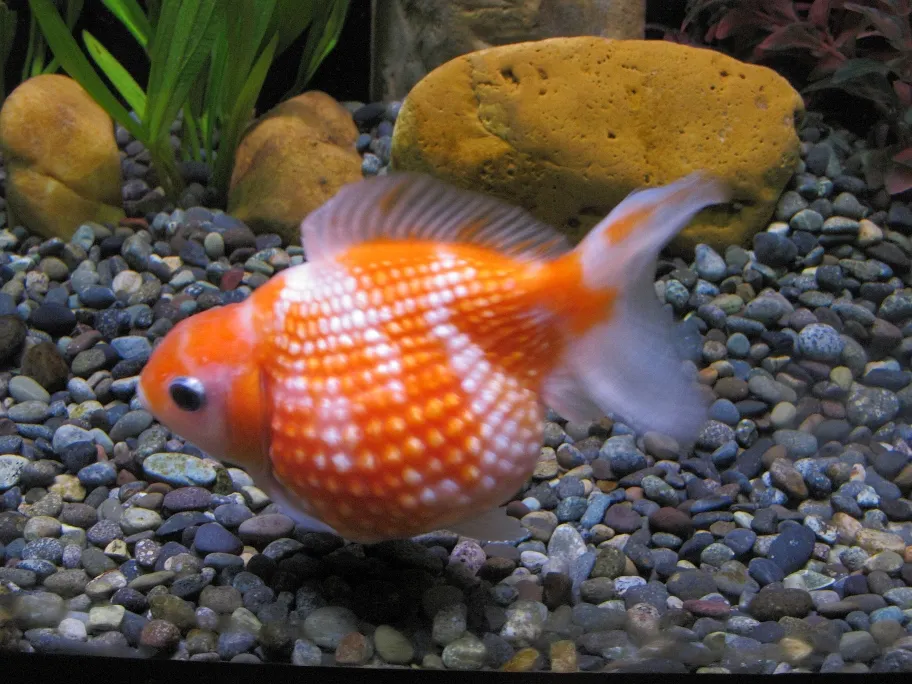
Pearlscale
round body, domed scales25 gal (95 L)7.1 in (18 cm)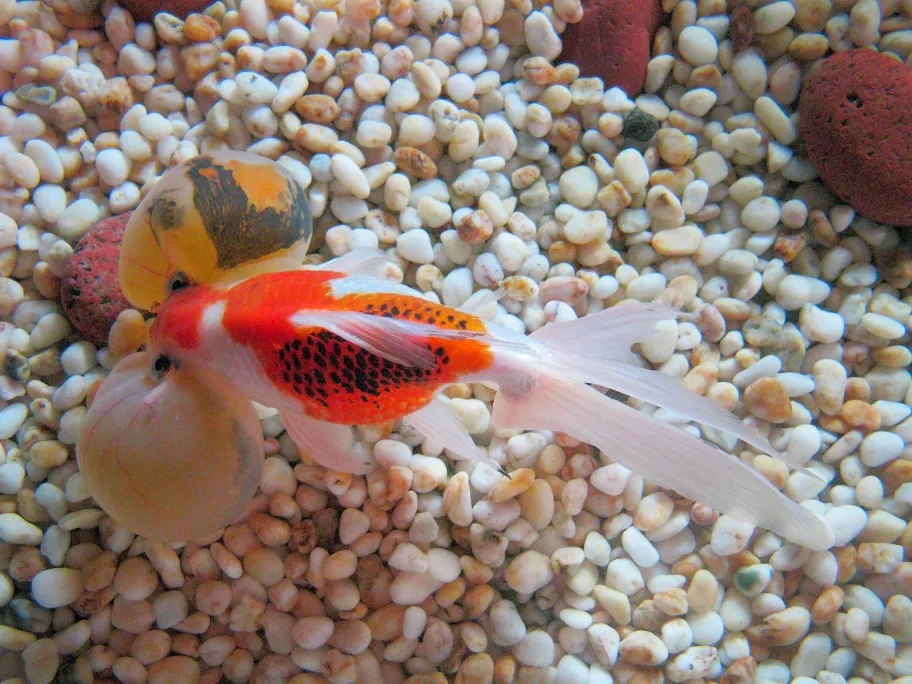
Bubble eye
fluid sacs under the eyes20 gal (75 L)5.9 in (15 cm)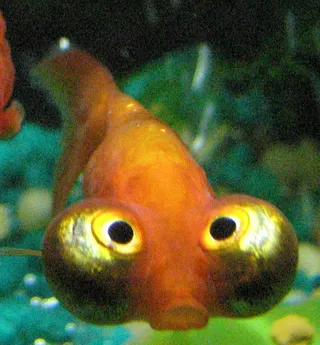
Celestial eye
eyes fixed upward20 gal (75 L)5.9 in (15 cm)
What differs between the bands
The same for every variety: cold water, no heater, a big appetite and a heavy waste load. Plan on strong filtration whichever band you pick.
Overview
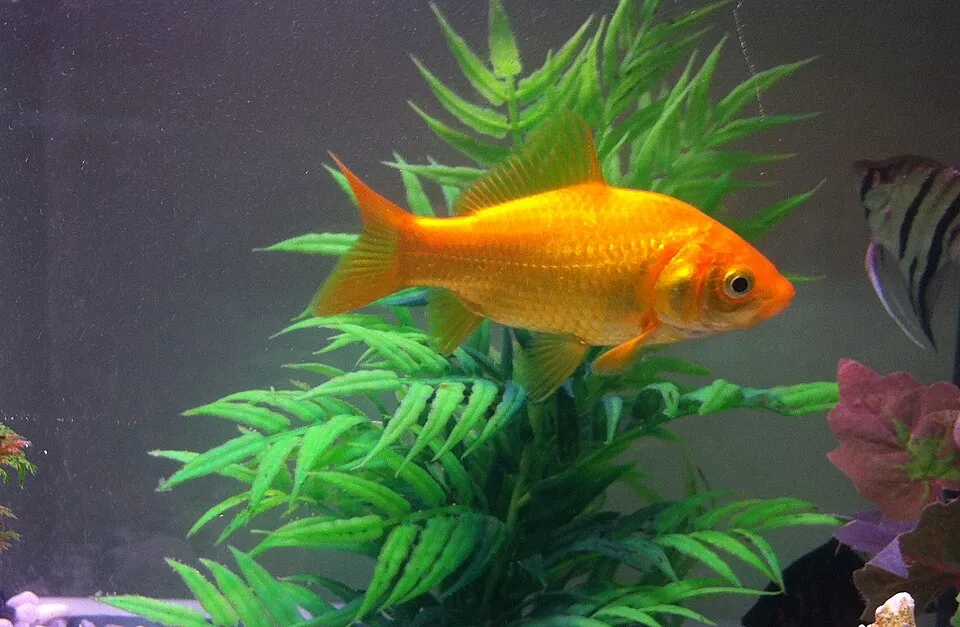
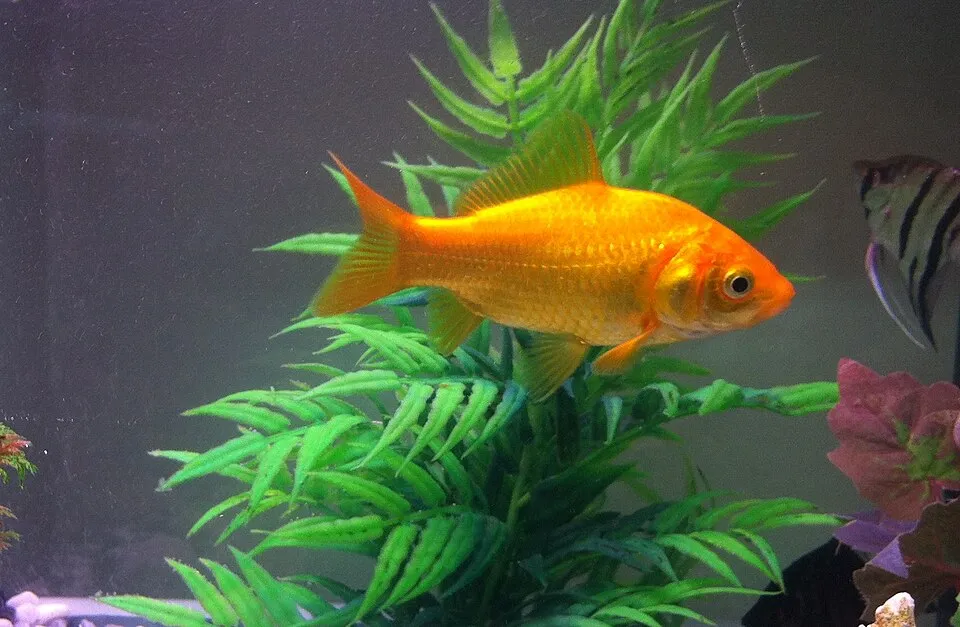
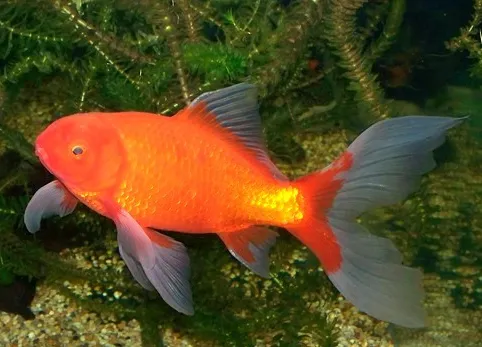
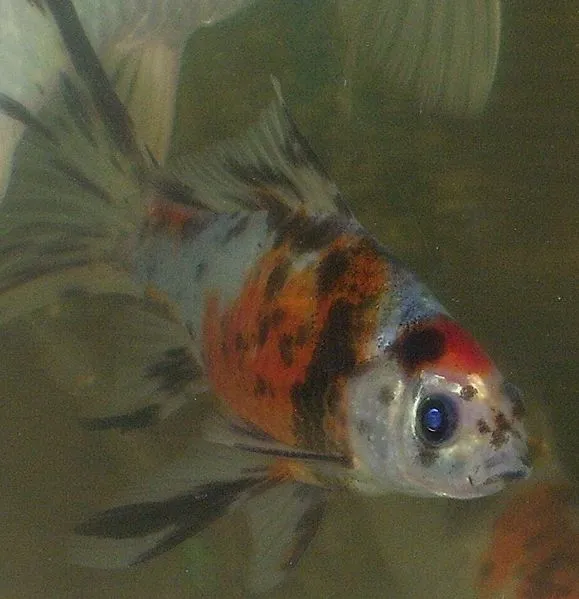
Goldfish are hardy, peaceful coldwater fish that come in two bands, the fast single-tails and the round-bodied fancies. The common, comet and shubunkin are single-tails, while the oranda, ryukin and ranchu are fancies that stay smaller. Pick a variety below for its own numbers.
Did you know
The oldest recorded goldfish, Tish, reached the age of 43 in Yorkshire. That fish was an exception, but pond goldfish of 20 and 30 are not unusual.
Caring for the goldfish
No goldfish belongs in a bowl. Goldfish grow bigger, live longer and make more waste than most people expect. Single-tails are fast and belong in a pond or a very large tank. Fancies need 75 to 114 L per fish with strong filtration.
A goldfish has no stomach, so food passes through quickly. A well fed goldfish produces a lot of ammonia, which is the reason behind the big-tank, big-filter advice.
Every variety is a coldwater fish that wants a pH of 6.5 to 8.0 and room to swim. Fancies want warmer, calmer water and are most comfortable at 59 to 75°F (15 to 24°C). Single-tails handle 39 to 75°F (4 to 24°C).
Feed a varied diet of pellets, vegetables and the odd frozen food. Goldfish are peaceful and social, and every variety wants the company of its own kind.
Goldfish were domesticated from a wild, silver-brown carp in China roughly a thousand years ago, and every variety since has come from selecting body, tail, eye and head mutations within the same species. A comet and a bubble eye are as closely related as two littermates; the differences are entirely bred, which is why the bands differ in what they can live in but not in what they are.
Fancy varieties mix well with each other: they swim at the same slow pace and compete evenly for food. Keep single-tails with single-tails. They are faster, take the food first, and need colder water and far more space than a fancy setup provides. The delicate-eyed forms, bubble eye, celestial eye and black moor, do best with equally slow tank mates and nothing sharp in the tank.
Good to know
Carassius auratus is a cyprinid, a member of the carp family. Its wild ancestor is still argued over. One leading candidate is the Prussian carp, Carassius gibelio, and another is a wild form of Carassius auratus itself. Goldfish live 10 to 15 years with good care and far longer in ponds. They can see into the ultraviolet, and their color comes from pigment in the scales and skin. That color can shift with light, diet and age.
In the wild
The goldfish's wild carp ancestor comes from eastern Asia, where it lives in slow rivers, lakes and ponds in China. Early keepers held yellow and orange mutants of the wild fish in ponds and later in bowls. The goldfish reached Japan in the 1500s and Europe in the 1600s. Released goldfish revert to the wild color within a few generations. They now live feral on every continent except Antarctica, growing large and muddying the water, so never let one go.
Common questions
Can fancy and single-tail goldfish share a tank?
No. Single-tails are faster and take the food first, and the two bands want different space and temperatures. Varieties within a band mix well.
Do goldfish need a heater?
No. Every variety is a coldwater fish. Fancies are most comfortable at 59–75°F (15–24°C); single-tails handle 39–75°F (4–24°C) and can overwinter in a deep enough pond.
How big do goldfish really get?
Far bigger than the bowl myth. Single-tails reach 10–12 in (25–30 cm) and belong in ponds or very large tanks; fancies stay 6–10 in (15–25 cm) and want 20 gal (75 L) or more each.
What does a goldfish eat?
A goldfish eats a varied diet of pellets, vegetables and the odd frozen food. It has no stomach, so food passes through it quickly.
Related species
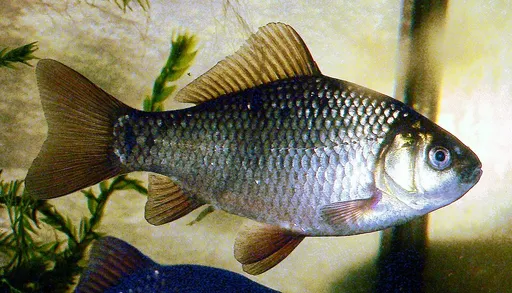 11.8 in (30 cm)119 gal (450 L)39–75°F (4–24°C)
Crucian carp
Carassius carassius
11.8 in (30 cm) · 119 gal (450 L)
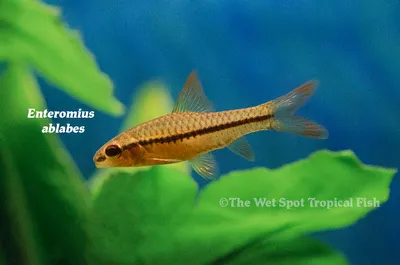 3.1 in (8 cm)24 gal (90 L)72–81°F (22–27°C)
Ablabes barb
Enteromius ablabes
3.1 in (8 cm) · 24 gal (90 L)
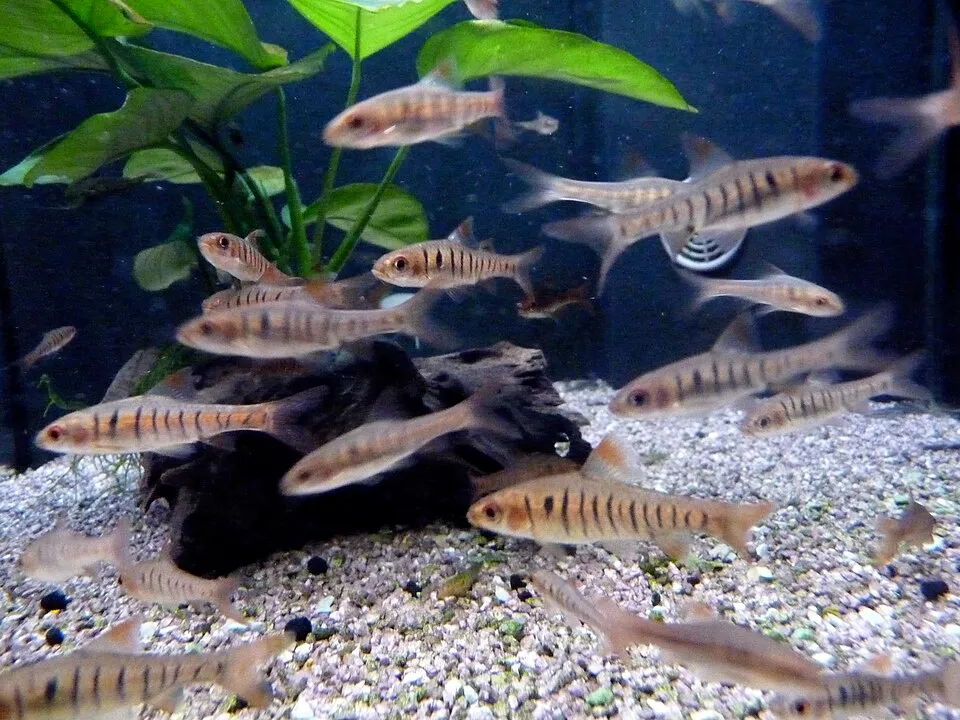 2.4 in (6 cm)20 gal (75 L)68–79°F (20–26°C)
African banded barb
Barbus fasciolatus
2.4 in (6 cm) · 20 gal (75 L)
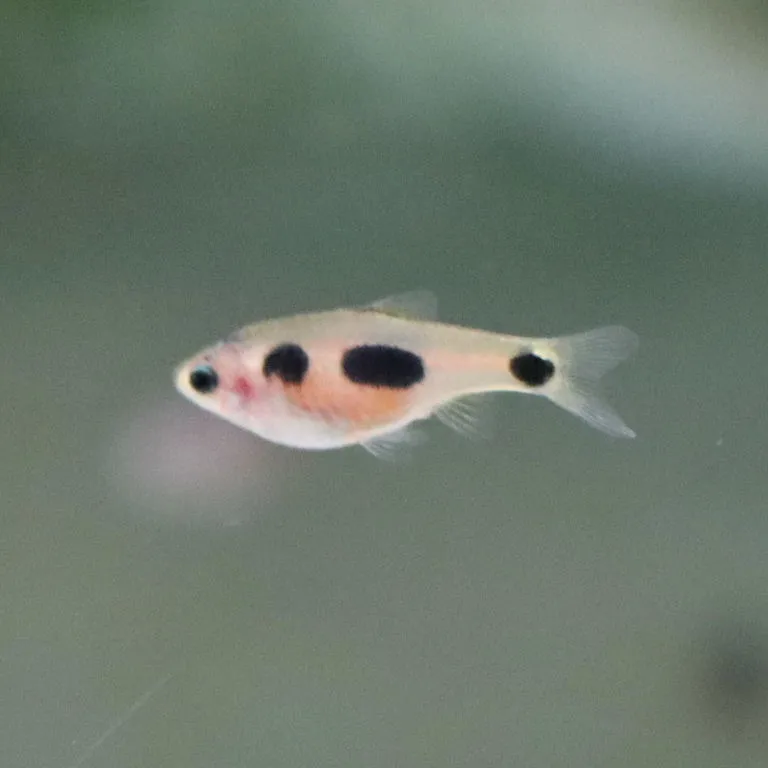 1.4 in (3.5 cm)11 gal (40 L)63–75°F (17–24°C)
African butterfly barb
Barbus hulstaerti
1.4 in (3.5 cm) · 11 gal (40 L)
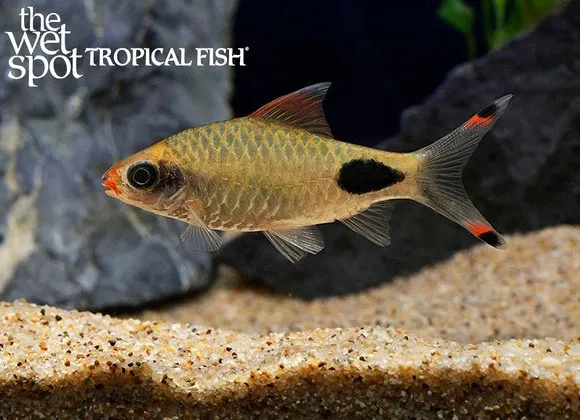 3.5 in (9 cm)42 gal (160 L)70–79°F (21–26°C)
Apsara barb
Dawkinsia apsara
3.5 in (9 cm) · 42 gal (160 L)
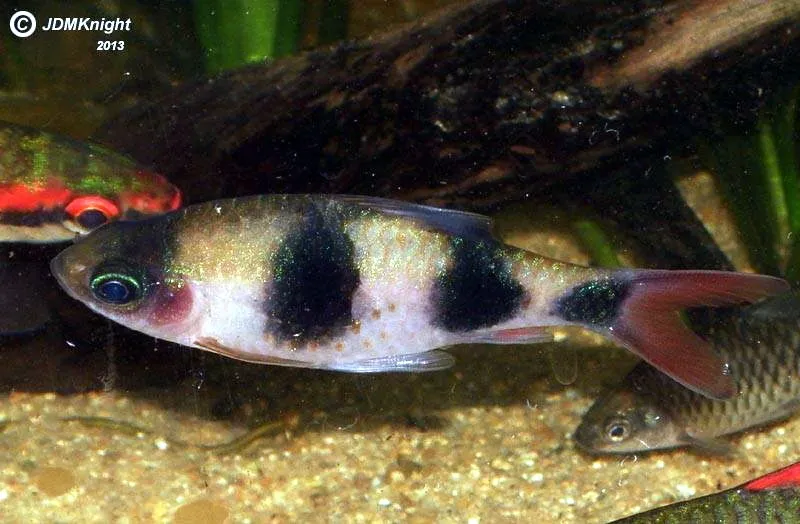 4.7 in (12 cm)37 gal (140 L)66–77°F (19–25°C)
Arulius barb
Dawkinsia arulius
4.7 in (12 cm) · 37 gal (140 L)