Striped woodcat
Trachelyopterichthys taeniatus
Also known as Striped driftwood catfish
FreshwaterFish
Care at a glance
- Temperature
- 73–82°F
- 23–28°C
- pH
- 6.0–7.5
- Adult size
- 5.9 in
- 15 cm
- Minimum tank
- 53 gal
- 200 L
- Temperament
- Peaceful
- Social behavior
- Social
- Swim level
- Bottom
- Difficulty
- Medium
- Breeding
- No record
- Rarity
- Rare
- Family
- Auchenipteridae
- Origin
- Amazon and upper Orinoco basins
Overview
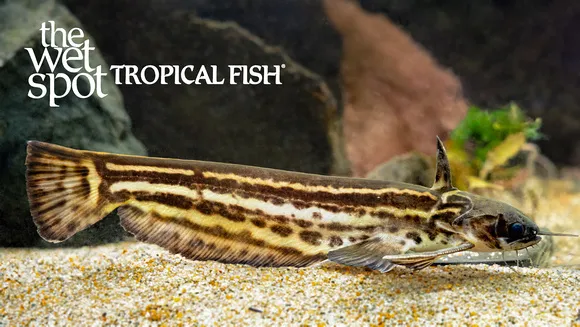
The striped woodcat is a slim, eel-shaped nocturnal catfish for a calm community of fish its own size. It is best with a little experience.
Did you know
The striped woodcat's narrow, drawn-out body moves through the water in long side-to-side waves. It swims more like an eel or a ribbon than a typical catfish, with pale stripes streaming along its flanks.
Caring for the striped woodcat
Give striped woodcats a tank of at least 53 gal (200 L) with plenty of driftwood, shade and cover. Add a long resting spot such as a hollow branch or tube where each one can lie hidden. The flow should be moderate and well oxygenated.
Keep the water clean, soft and warm, at 73 to 82°F (23 to 28°C) and a pH of 6.0 to 7.5. They shelter in wood by day and patrol the tank confidently once the lights are off. Feed in the evening with sinking and frozen foods, worms and prepared catfish feeds.
Keep a group of four to six, which settles them and encourages them into the open at night. Striped woodcats are peaceful with fish too large to eat, but they will take small fish, fry and shrimp. Match them with calm tank mates of a similar size. Like the rest of their family, they fertilize internally through a modified anal fin, and aquarium spawning is not on record.
Good to know
The striped woodcat is a driftwood catfish in the family Auchenipteridae, also sold as the striped driftwood catfish. Its long, eel-slim body is ruled by cream lengthwise stripes.
In the wild
The striped woodcat comes from slow tributaries and flooded forest in the upper Amazon and upper Orinoco. It tucks into driftwood and shaded cover by day.
Weekly picks
Tank mates
The striped woodcat is a peaceful, social species that keeps to the bottom. These picks share a community profile with it, are safe together in both directions, and overlap on water type, temperature and pH.
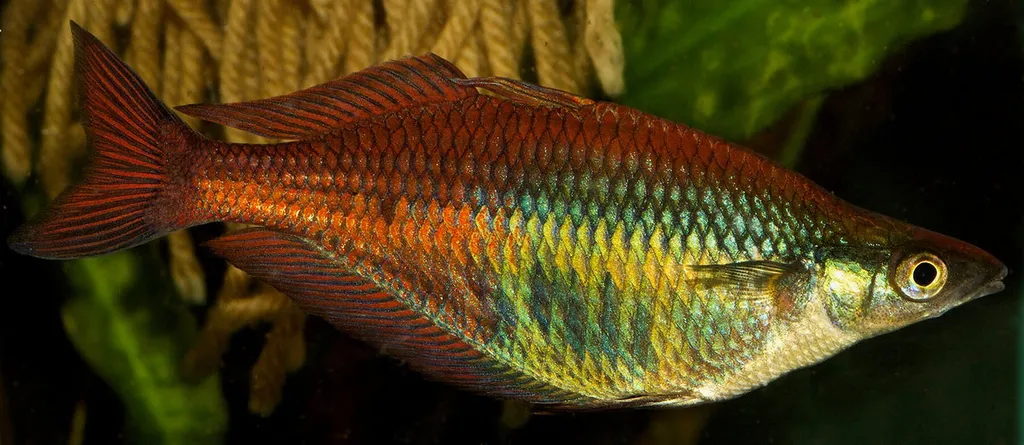
Barred rainbowfish
Chilatherina fasciata
Freshwater4.7 in (12 cm) · 53 gal (200 L)75–86°F (24–30°C)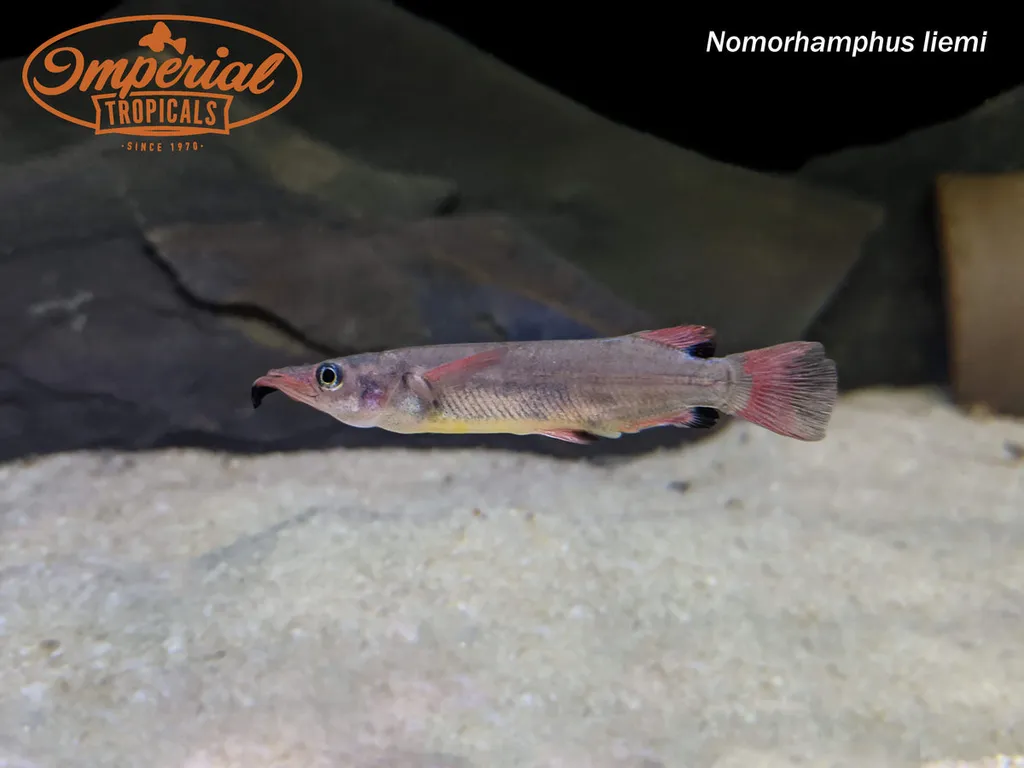
Celebes halfbeak
Nomorhamphus liemi
Freshwater3.5 in (9 cm) · 40 gal (150 L)68–77°F (20–25°C)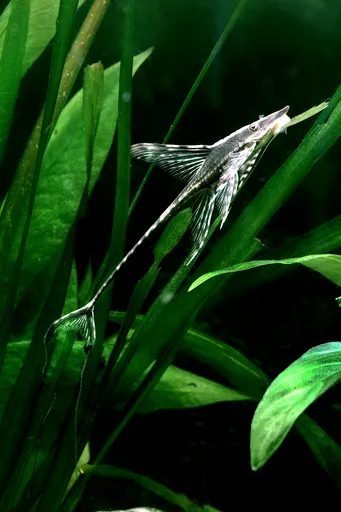
Giant whiptail catfish
Sturisomatichthys aureus
Freshwater7.9 in (20 cm) · 53 gal (200 L)73–81°F (23–27°C)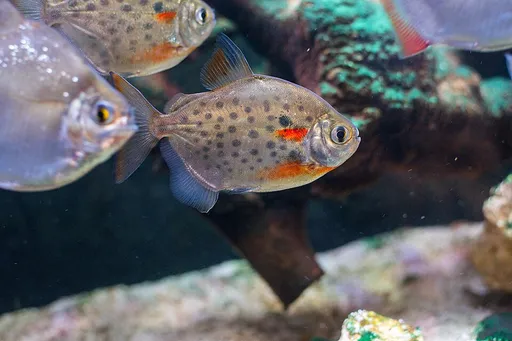
Spotted silver dollar
Metynnis lippincottianus
Freshwater5.5 in (14 cm) · 53 gal (200 L)73–81°F (23–27°C)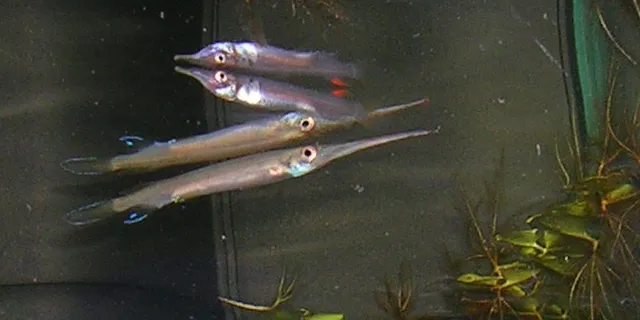
Forest halfbeak
Hemirhamphodon pogonognathus
Freshwater3.5 in (9 cm) · 34 gal (130 L)75–82°F (24–28°C)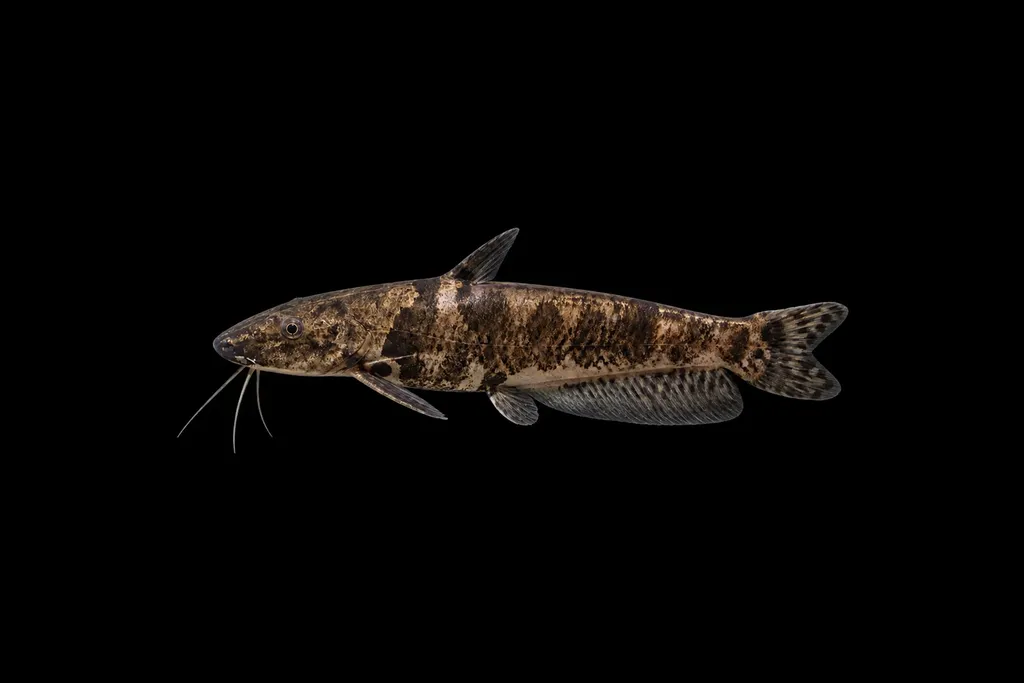
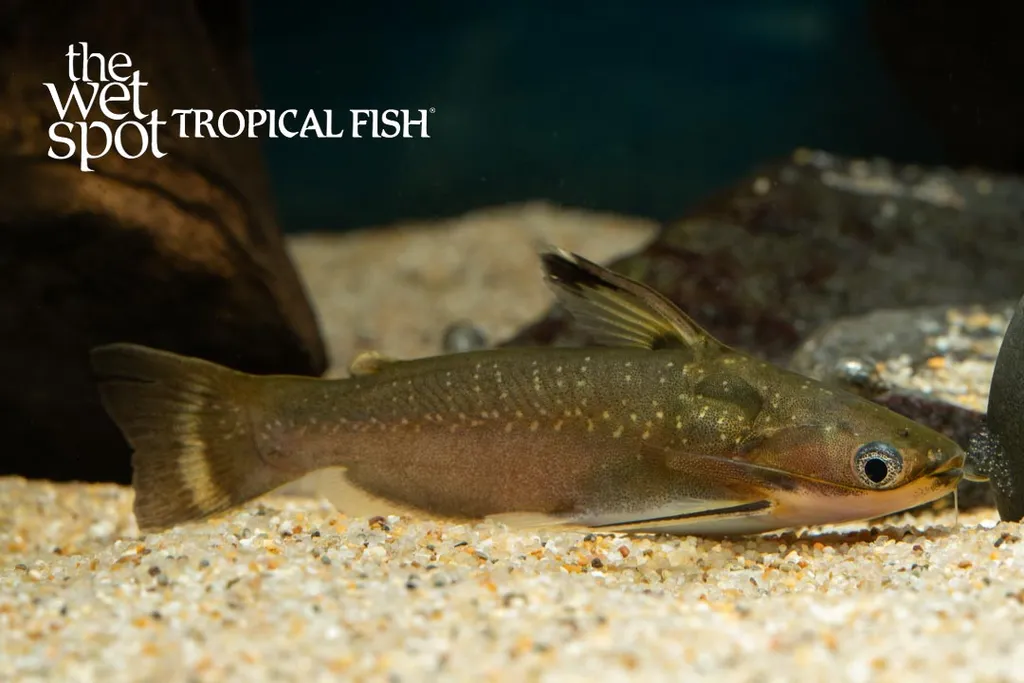
Zamora catfish
Auchenipterichthys thoracatus
Freshwater5.5 in (14 cm) · 53 gal (200 L)73–82°F (23–28°C)
Common questions
What size tank does a striped woodcat need?
A striped woodcat needs at least 53 gal (200 L). It spends most of its time in the bottom.
What temperature and pH does a striped woodcat need?
A striped woodcat is comfortable at 73–82°F (23–28°C) with a pH of 6.0–7.5.
What does a striped woodcat eat?
A striped woodcat eats sinking and frozen foods, worms and prepared catfish feeds. Feed it in the evening.
How big does a striped woodcat get?
An adult striped woodcat reaches about 5.9 in (15 cm).
Related species
- 5.5 in (14 cm)53 gal (200 L)73–82°F (23–28°C)
Zamora catfish
Auchenipterichthys thoracatus
5.5 in (14 cm) · 53 gal (200 L)
 4.3 in (11 cm)20 gal (75 L)72–77°F (22–25°C)
Midnight catfish
Auchenipterichthys coracoideus
4.3 in (11 cm) · 20 gal (75 L)
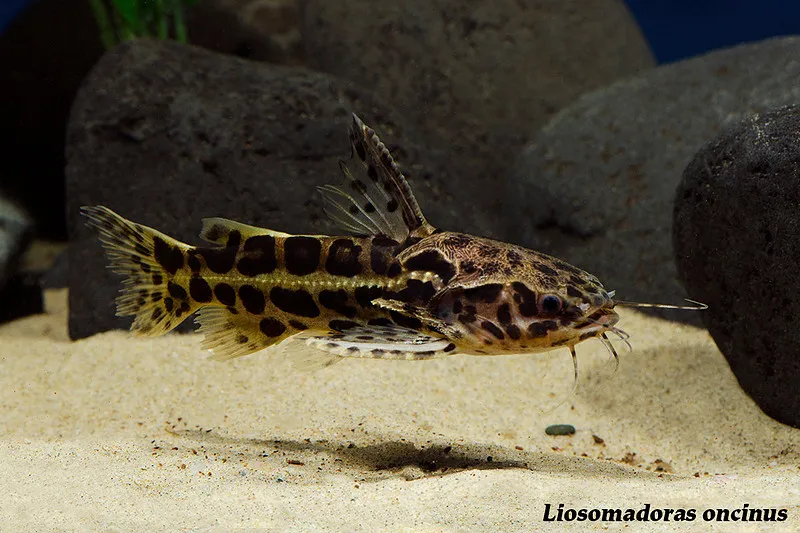 9.1 in (23 cm)65 gal (245 L)72–82°F (22–28°C)
Jaguar catfish
Liosomadoras oncinus
9.1 in (23 cm) · 65 gal (245 L)
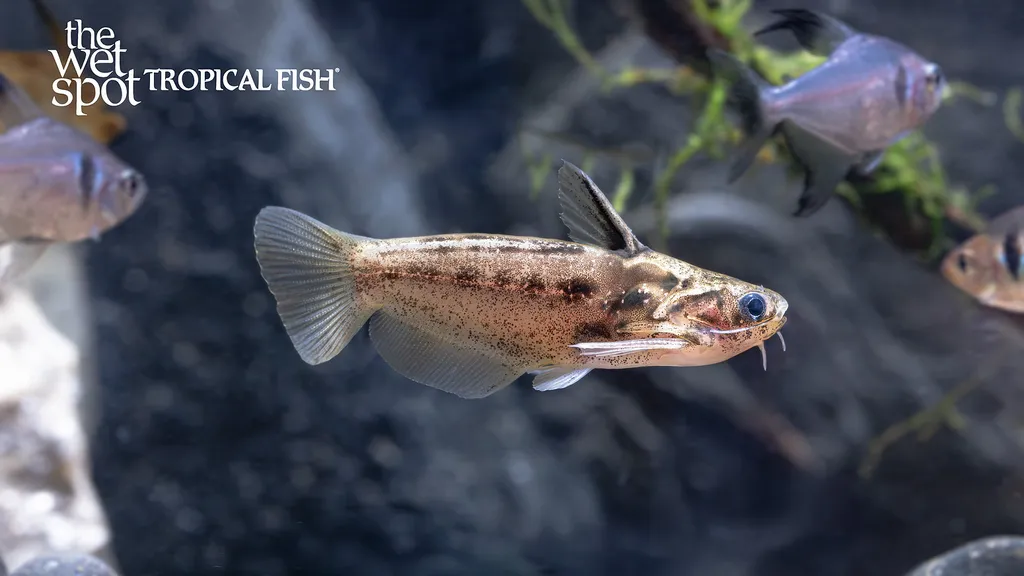 3.1 in (8 cm)21 gal (80 L)72–77°F (22–25°C)
Pygmy driftwood catfish
Trachelyichthys exilis
3.1 in (8 cm) · 21 gal (80 L)
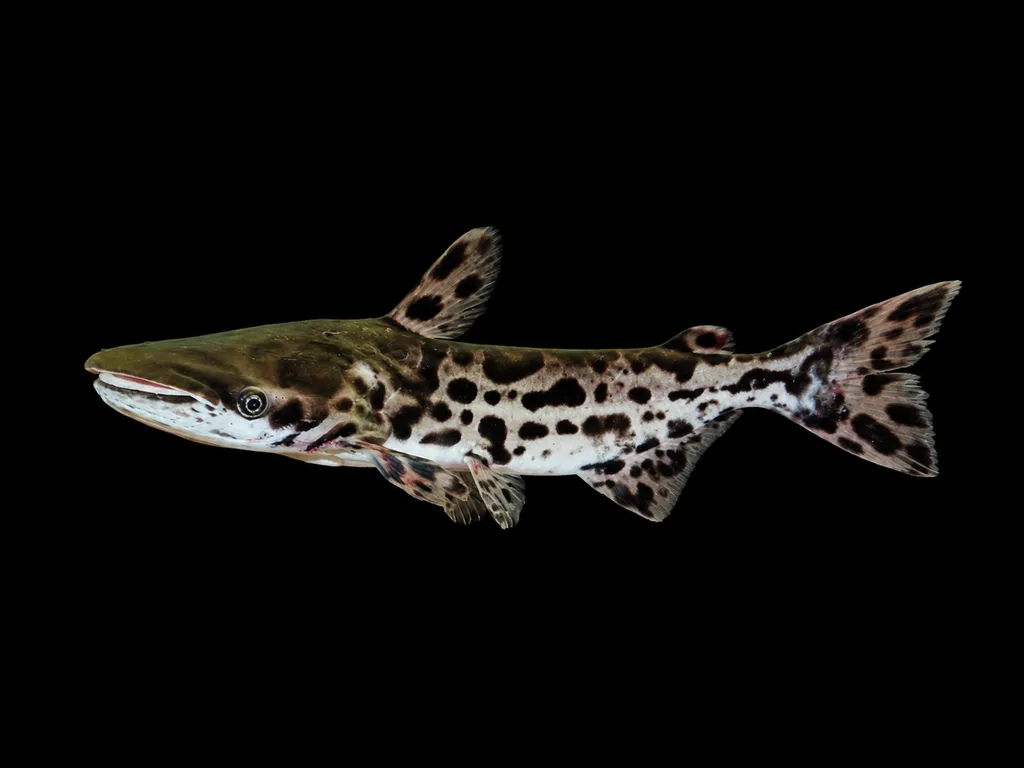 7.9 in (20 cm)95 gal (360 L)72–79°F (22–26°C)
Bottlenose catfish
Ageneiosus marmoratus
7.9 in (20 cm) · 95 gal (360 L)
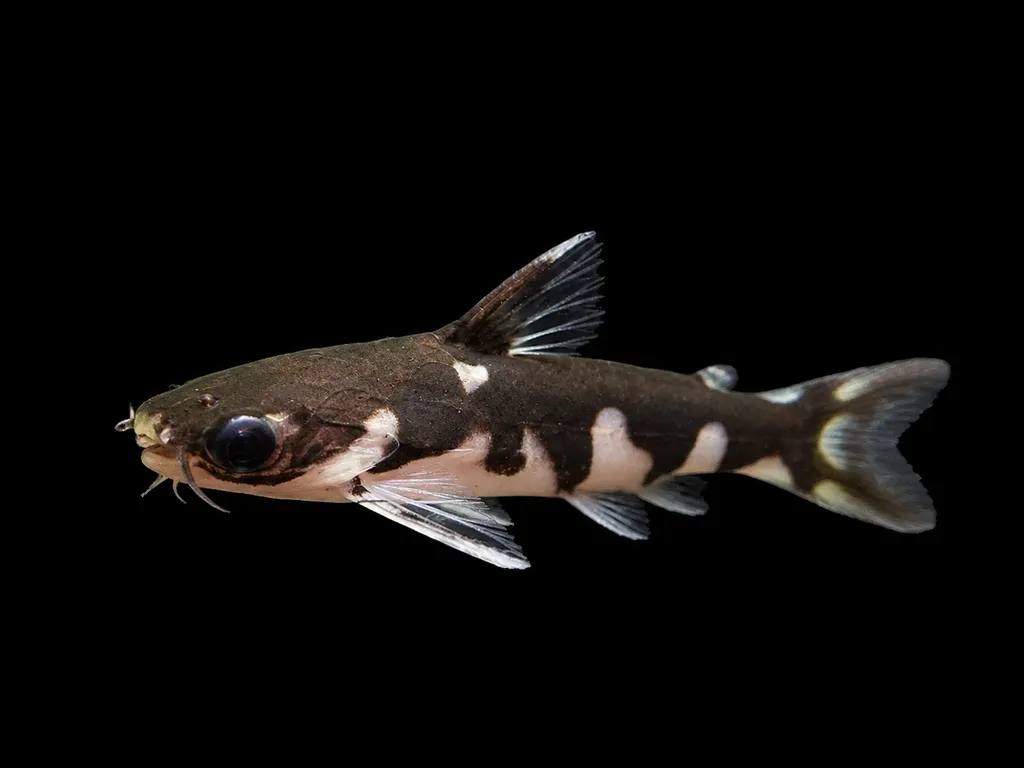 2.4 in (6 cm)21 gal (80 L)73–82°F (23–28°C)
Ninja tatia
Centromochlus musaicus
2.4 in (6 cm) · 21 gal (80 L)