Chameleon whiptail
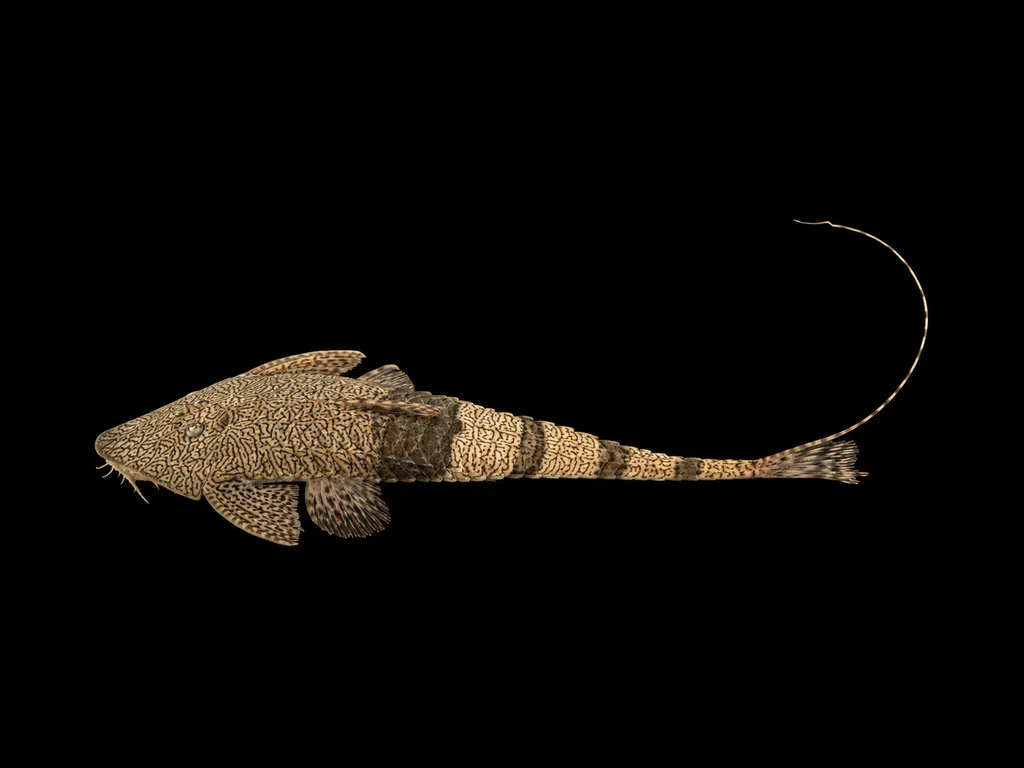
Pseudohemiodon apithanos
Also known as Apithanos whiptail
FreshwaterFish
Care at a glance
- Temperature
- 75–82°F
- 24–28°C
- pH
- 5.8–7.0
- Adult size
- 6.7 in
- 17 cm
- Minimum tank
- 79 gal
- 300 L
- Temperament
- Peaceful
- Social behavior
- Social
- Swim level
- Bottom
- Difficulty
- Medium
- Breeding
- Egg carrier · Medium
- Rarity
- Rare
- Family
- Loricariidae
- Origin
- Upper Amazon, Ecuador and Colombia
Overview
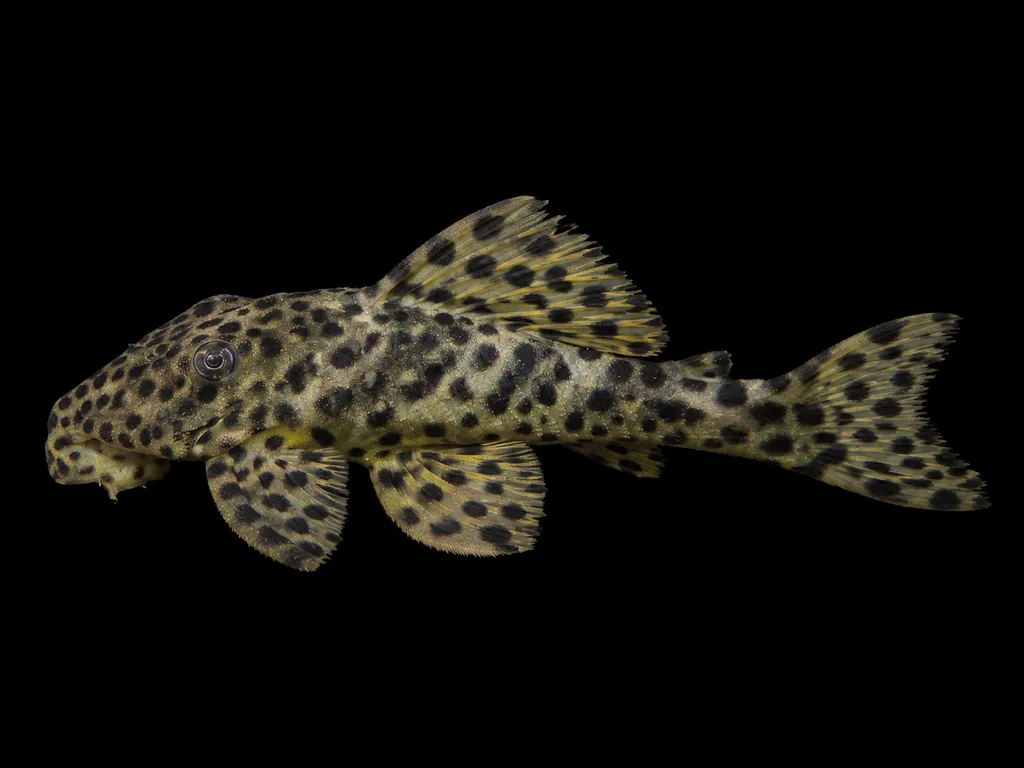
The chameleon whiptail is a flat, peaceful catfish that spends its life on the bottom, often half-buried in sand. It suits a wide, calm tank and a keeper with some experience.
Did you know
The chameleon whiptail can shift its color and pattern within moments, trading bold dark saddles for plain sandy tones. That quick change is where the chameleon name comes from.
Caring for the chameleon whiptail
Give chameleon whiptails a wide, open-floored tank of at least 79 gal (300 L). A deep bed of soft, fine sand matters more than anything else, since they bury themselves in it to feel safe. Sharp gravel or a bare floor will not do.
Keep the water clean and well oxygenated, with gentle flow and some shade. It should be soft and acidic to neutral, at 75 to 82°F (24 to 28°C) with a pH of 5.8 to 7.0.
Chameleon whiptails are peaceful and do fine alone or in a group, and a few can share a tank when the floor space allows. They are shy and slow to feed, and they will not fight for a meal. Keep them only with calm, non-aggressive fish. Drop sinking pellets, frozen bloodworm and other soft foods onto the sand.
The chameleon whiptail is a lip brooder. After spawning, the male scoops up the large eggs. He carries them stuck to the underside of his head and body for around two weeks. Experienced keepers have bred it in aquariums with moderate difficulty.
Good to know
Pseudohemiodon apithanos is a member of the family Loricariidae. Its species name, apithanos, means unbelievable. Only a handful of catfishes share its lip-brooding habit.
In the wild
The chameleon whiptail comes from soft, slow tributaries of the upper Amazon in Ecuador and Colombia. It lies buried in the fine sand of these rivers.
Weekly picks
Tank mates
The chameleon whiptail is a peaceful, social species that keeps to the bottom. These picks share a community profile with it, are safe together in both directions, and overlap on water type, temperature and pH.
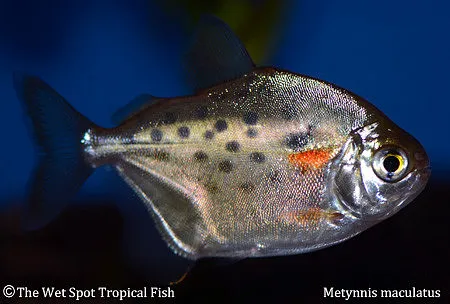
Spotted metynnis
Metynnis maculatus
Freshwater7.1 in (18 cm) · 92 gal (350 L)73–82°F (23–28°C)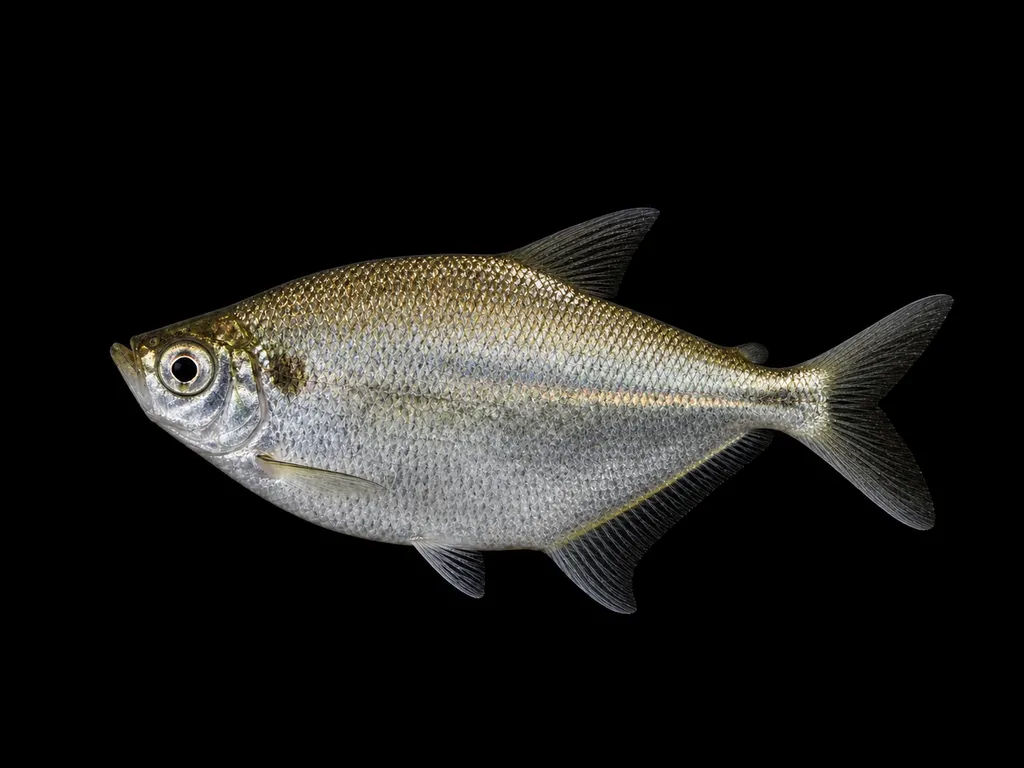
Giant river hatchetfish
Triportheus rotundatus
Freshwater9.8 in (25 cm) · 79 gal (300 L)73–82°F (23–28°C)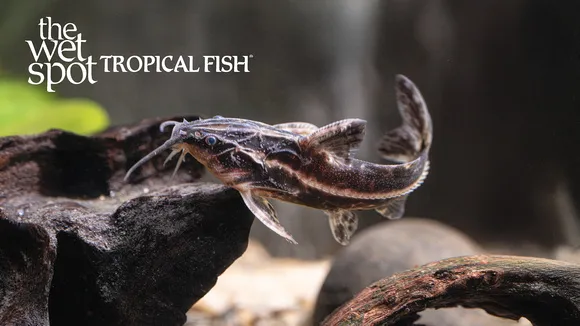
Orinoco talking catfish
Orinocodoras eigenmanni
Freshwater7.9 in (20 cm) · 70 gal (265 L)73–82°F (23–28°C)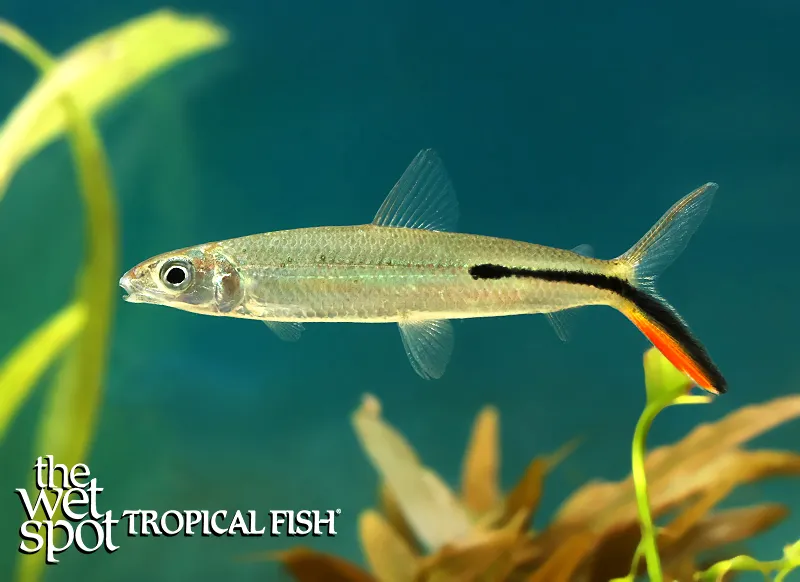
Slender hemiodus
Hemiodus gracilis
Freshwater7.1 in (18 cm) · 66 gal (250 L)73–82°F (23–28°C)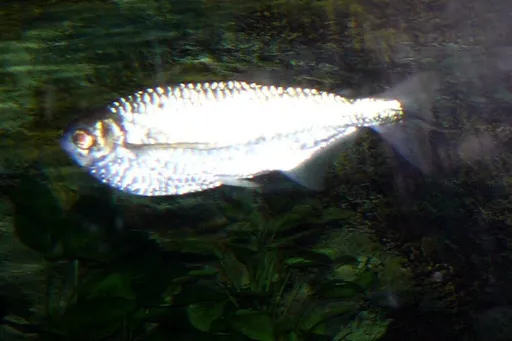
Narrow hatchetfish
Triportheus angulatus
Freshwater9.8 in (25 cm) · 79 gal (300 L)73–82°F (23–28°C)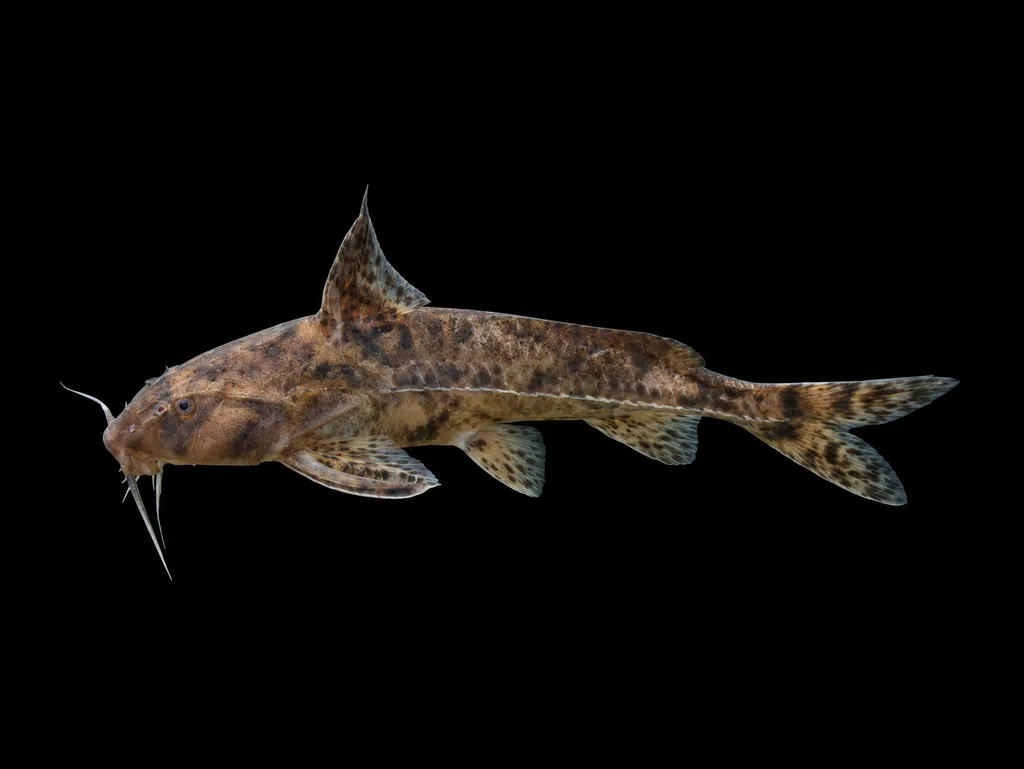
Fog talking catfish
Rhinodoras boehlkei
Freshwater6.7 in (17 cm) · 79 gal (300 L)73–82°F (23–28°C)
Common questions
What size tank does a chameleon whiptail need?
A chameleon whiptail needs at least 79 gal (300 L). It spends most of its time in the bottom.
What temperature and pH does a chameleon whiptail need?
A chameleon whiptail is comfortable at 75–82°F (24–28°C) with a pH of 5.8–7.0.
What does a chameleon whiptail eat?
A chameleon whiptail eats sinking pellets, frozen bloodworm and other soft foods dropped onto the sand. It is shy and slow to feed, and it will not fight for a meal.
How big does a chameleon whiptail get?
An adult chameleon whiptail reaches about 6.7 in (17 cm).
How does a chameleon whiptail breed?
The chameleon whiptail is a lip brooder. After spawning, the male carries the large eggs stuck to the underside of his head and body for around two weeks. Experienced keepers have bred it with moderate difficulty.
Related species
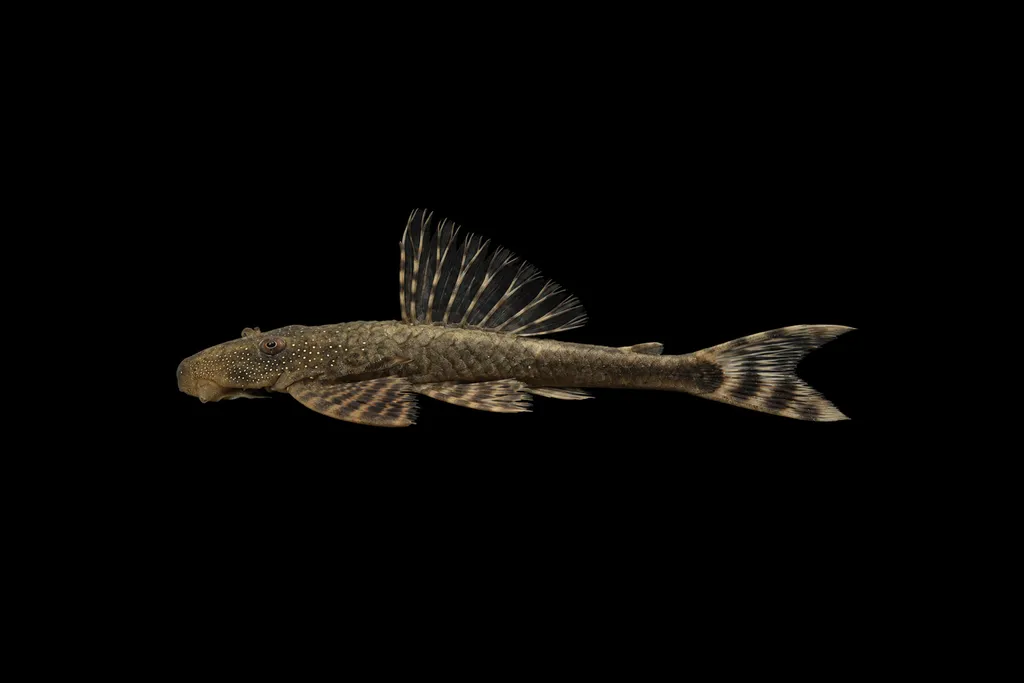 6.7 in (17 cm)66 gal (250 L)77–84°F (25–29°C)
Head-spot delta pleco
Lasiancistrus tentaculatus
6.7 in (17 cm) · 66 gal (250 L)
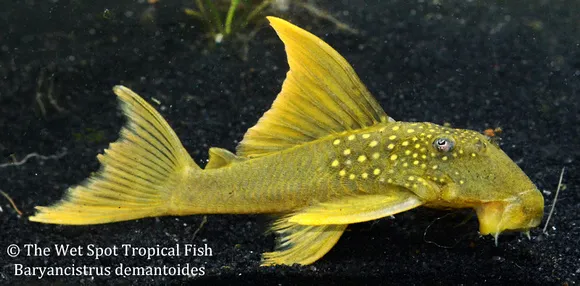 7.1 in (18 cm)79 gal (300 L)77–84°F (25–29°C)
Hi-fin green phantom pleco
Baryancistrus demantoides
7.1 in (18 cm) · 79 gal (300 L)
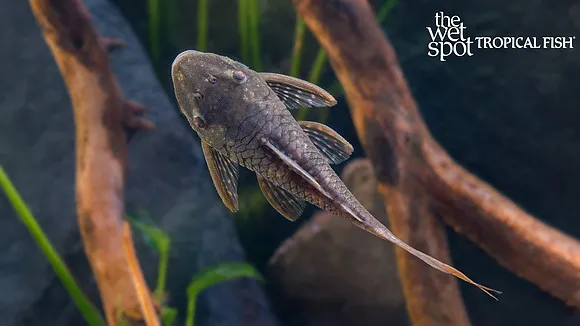 7.1 in (18 cm)66 gal (250 L)73–81°F (23–27°C)
Red tail lasiancistrus
Lasiancistrus heteracanthus
7.1 in (18 cm) · 66 gal (250 L)
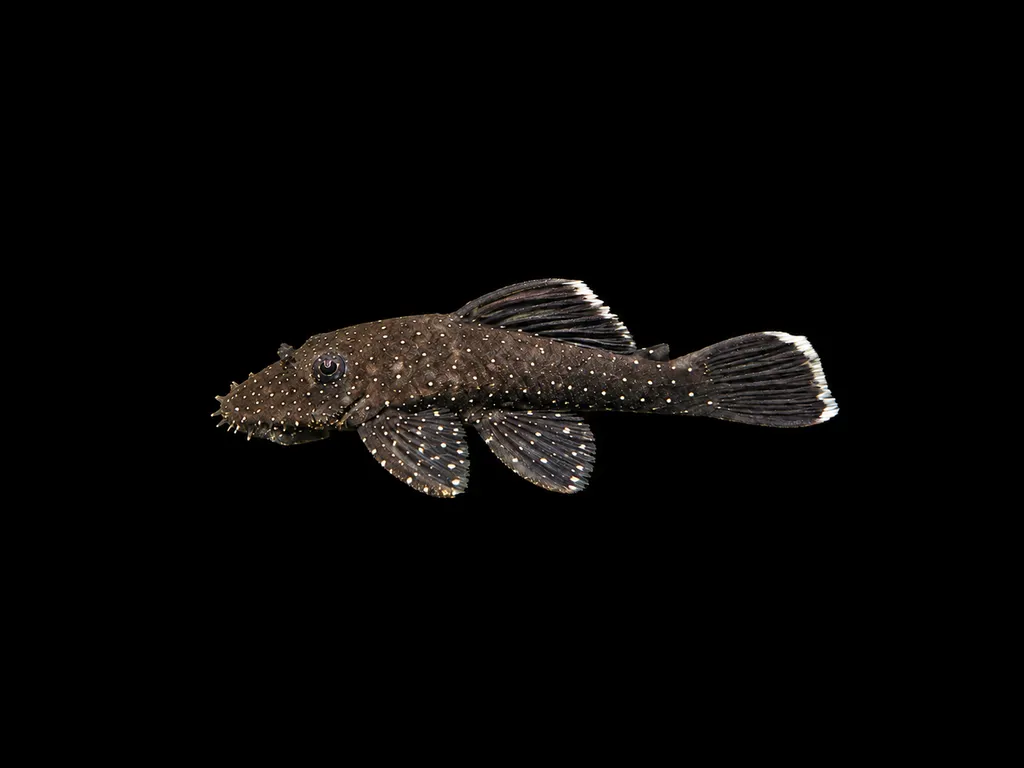 7.1 in (18 cm)42 gal (160 L)77–84°F (25–29°C)
Starry night bristlenose pleco
Ancistrus hoplogenys
7.1 in (18 cm) · 42 gal (160 L)
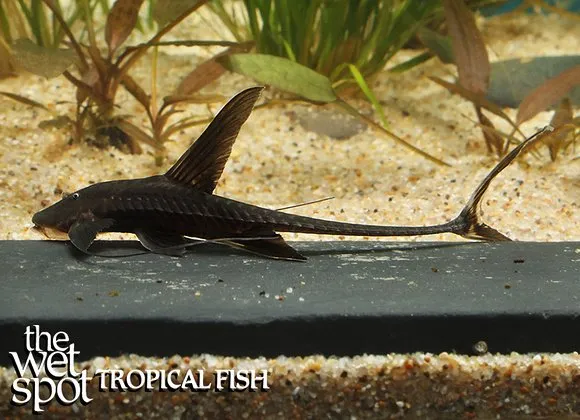 6.3 in (16 cm)40 gal (150 L)73–82°F (23–28°C)
Antenna whiptail
Pterosturisoma microps
6.3 in (16 cm) · 40 gal (150 L)
 6.3 in (16 cm)79 gal (300 L)79–86°F (26–30°C)
Golden vampire pleco
Leporacanthicus heterodon
6.3 in (16 cm) · 79 gal (300 L)