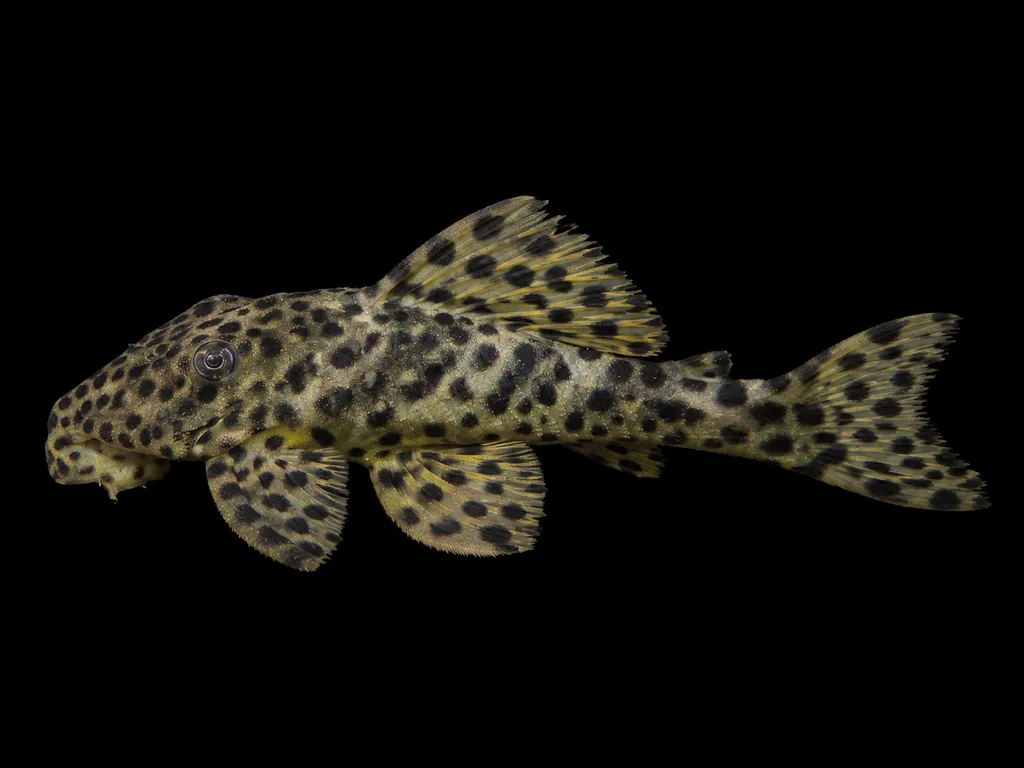
Golden vampire pleco
Leporacanthicus heterodon
Also known as L172a, Heterodon vampire pleco
FreshwaterFish
Care at a glance
- Temperature
- 79–86°F
- 26–30°C
- pH
- 6.0–7.2
- Adult size
- 6.3 in
- 16 cm
- Minimum tank
- 79 gal
- 300 L
- Temperament
- Peaceful
- Social behavior
- Solitary
- Swim level
- Bottom
- Diet
- Carnivore
- Difficulty
- Medium
- Breeding
- Cave spawner · Medium
- Rarity
- Rare
- Family
- Loricariidae
- Origin
- Rio Xingu basin, Brazil
Overview
The golden vampire pleco is a hunting pleco rather than an algae grazer, suited to a warm tank with rocky caves. It is a step up from the easiest fish.
Did you know
The golden vampire pleco has a pair of enlarged, fang-like teeth in its upper jaw, which set its genus apart among suckermouth catfish. They are thought to help it grip snails and other shelled prey, though their exact use is not certain.
Caring for the golden vampire pleco
Give the golden vampire pleco a warm tank of at least 79 gal (300 L). Stack smooth rock into caves, add some driftwood, and give it dim cover to rest in through the day.
Keep the water hot and soft, at 79 to 86°F (26 to 30°C) with a pH of 6.0 to 7.2. Run brisk, oxygenated flow.
It patrols the floor and hardscape after dark, coming out from a daytime cave. Build the diet around meaty foods such as sinking carnivore pellets, frozen bloodworm, mysis, and prawn or mussel. It is one of the few plecos that actively eats snails, and it happily takes pond snails. Skip a plain algae-wafer diet.
Keep it on its own. It is peaceful toward mid-water fish but territorial with other bottom-dwellers and rival males. It is a cave-spawning egg layer, and breeding it is of moderate difficulty.
Good to know
Leporacanthicus heterodon is a loricariid sold as L172 and also known as the heterodon vampire pleco.
In the wild
The golden vampire pleco comes from the Rio Xingu in Brazil. It hunts invertebrates among rocks and crevices in warm, fast, clear water.
Weekly picks
Tank mates
The golden vampire pleco is a peaceful, solitary species that keeps to the bottom. These picks share a community profile with it, are safe together in both directions, and overlap on water type, temperature and pH.
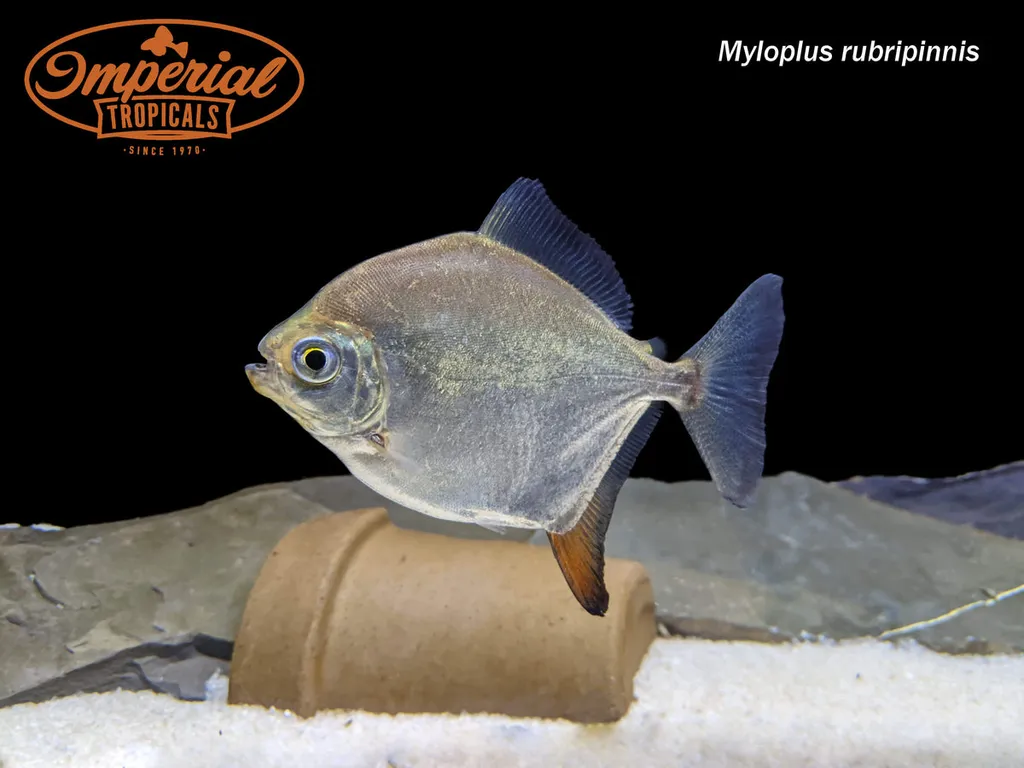
Redhook
Myloplus rubripinnis
Freshwater9.8 in (25 cm) · 70 gal (265 L)73–81°F (23–27°C)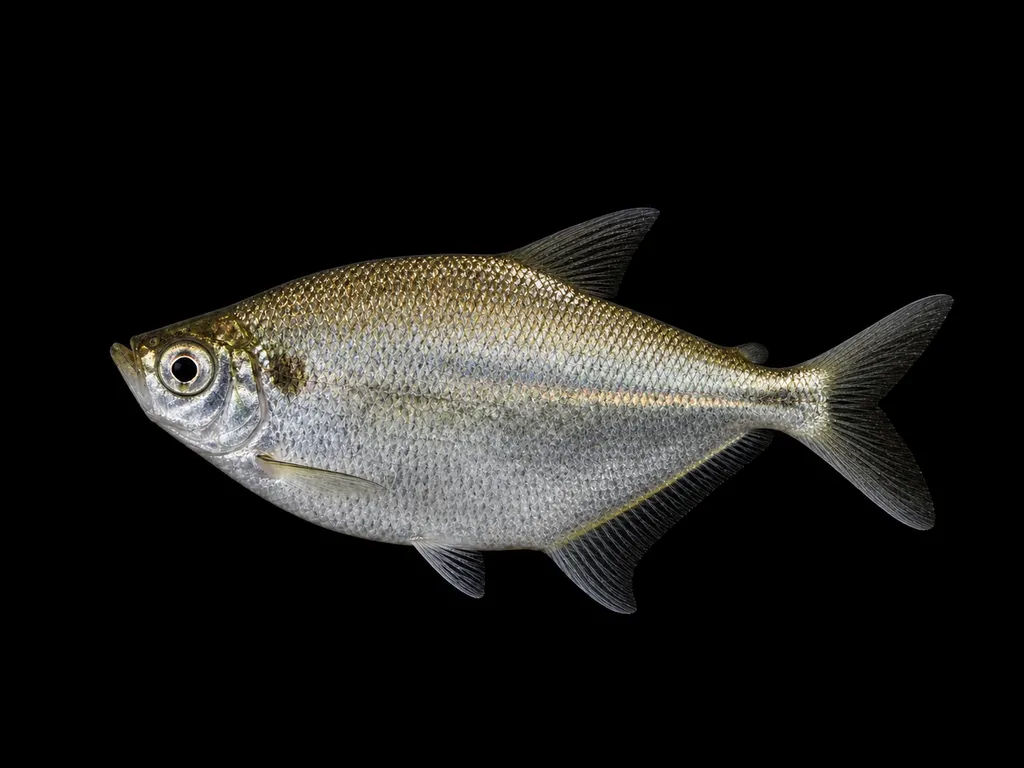
Giant river hatchetfish
Triportheus rotundatus
Freshwater9.8 in (25 cm) · 79 gal (300 L)73–82°F (23–28°C)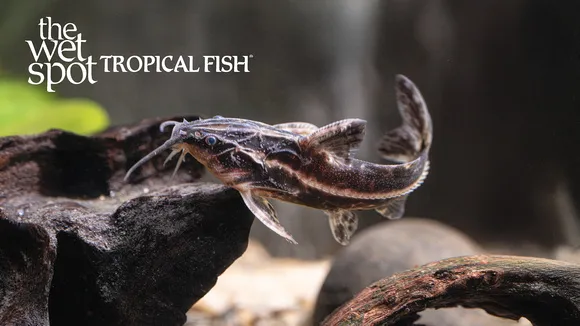
Orinoco talking catfish
Orinocodoras eigenmanni
Freshwater7.9 in (20 cm) · 70 gal (265 L)73–82°F (23–28°C)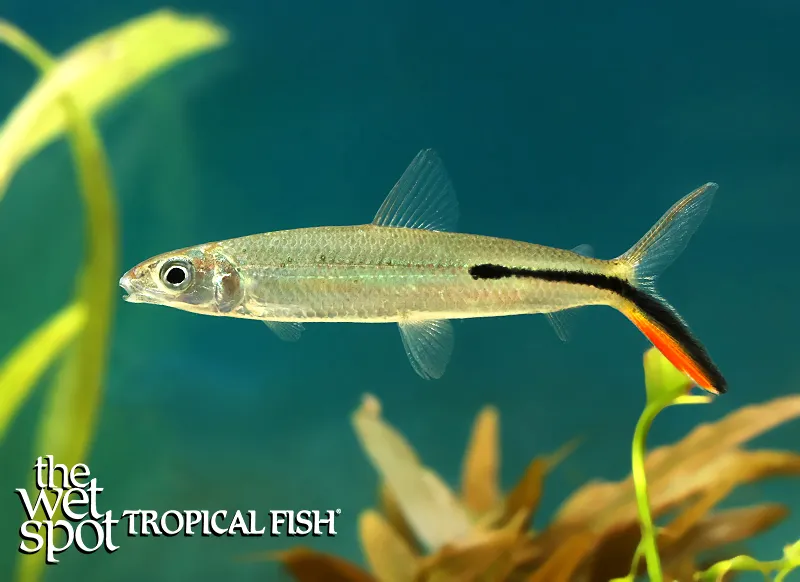
Slender hemiodus
Hemiodus gracilis
Freshwater7.1 in (18 cm) · 66 gal (250 L)73–82°F (23–28°C)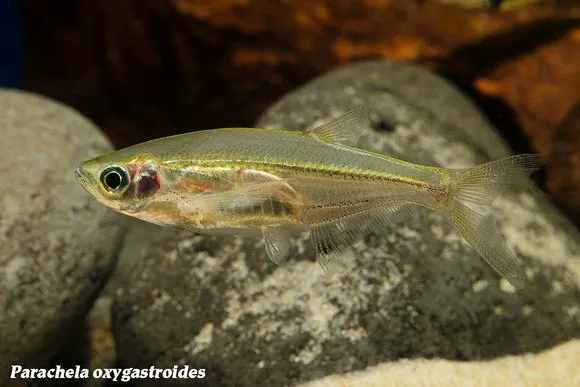
Asian glass hatchetfish
Parachela oxygastroides
Freshwater7.9 in (20 cm) · 79 gal (300 L)73–82°F (23–28°C)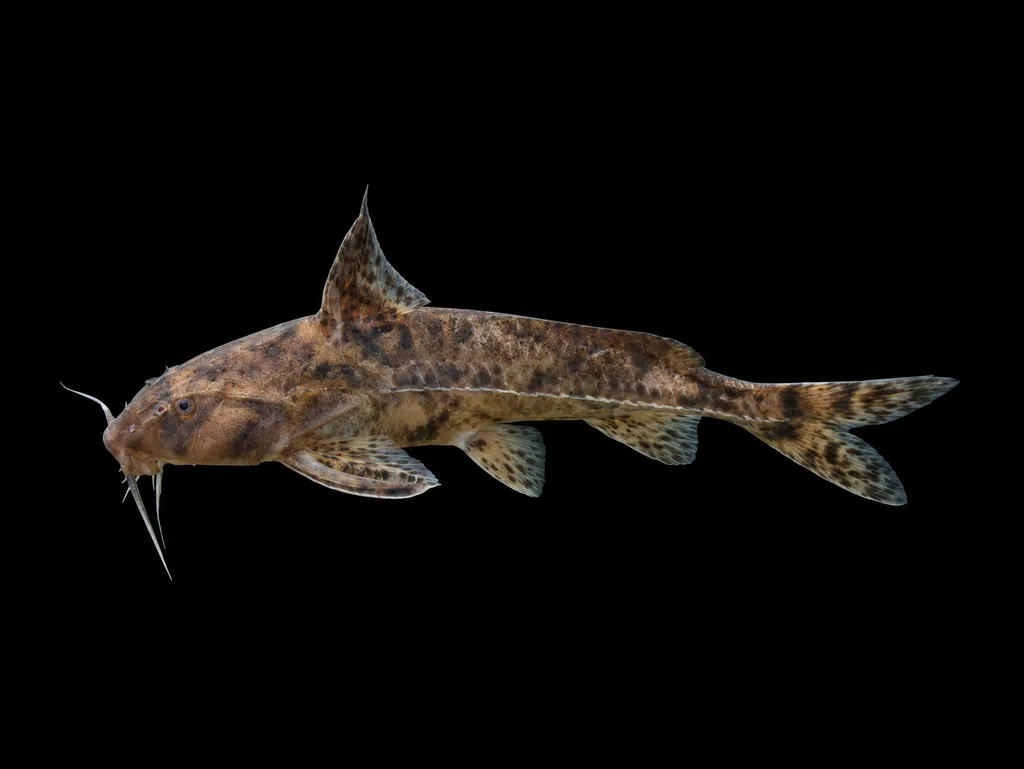
Fog talking catfish
Rhinodoras boehlkei
Freshwater6.7 in (17 cm) · 79 gal (300 L)73–82°F (23–28°C)
Common questions
What size tank does a golden vampire pleco need?
A golden vampire pleco needs at least 79 gal (300 L). It spends most of its time in the bottom.
What temperature and pH does a golden vampire pleco need?
A golden vampire pleco is comfortable at 79–86°F (26–30°C) with a pH of 6.0–7.2.
What does a golden vampire pleco eat?
A golden vampire pleco eats meaty foods, such as sinking carnivore pellets, frozen bloodworm, mysis, and prawn or mussel. It also eats pond snails, which few plecos actively do.
How big does a golden vampire pleco get?
An adult golden vampire pleco reaches about 6.3 in (16 cm).
How does a golden vampire pleco breed?
A golden vampire pleco spawns in caves and lays its eggs there. Breeding it is of moderate difficulty.
Related species
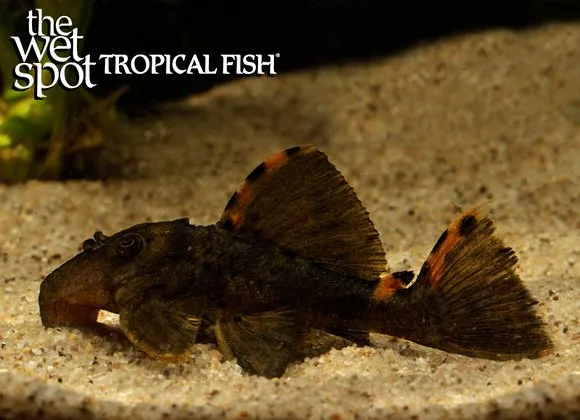 11 in (28 cm)106 gal (400 L)79–86°F (26–30°C)
Three beacon pleco
Leporacanthicus triactis
11 in (28 cm) · 106 gal (400 L)
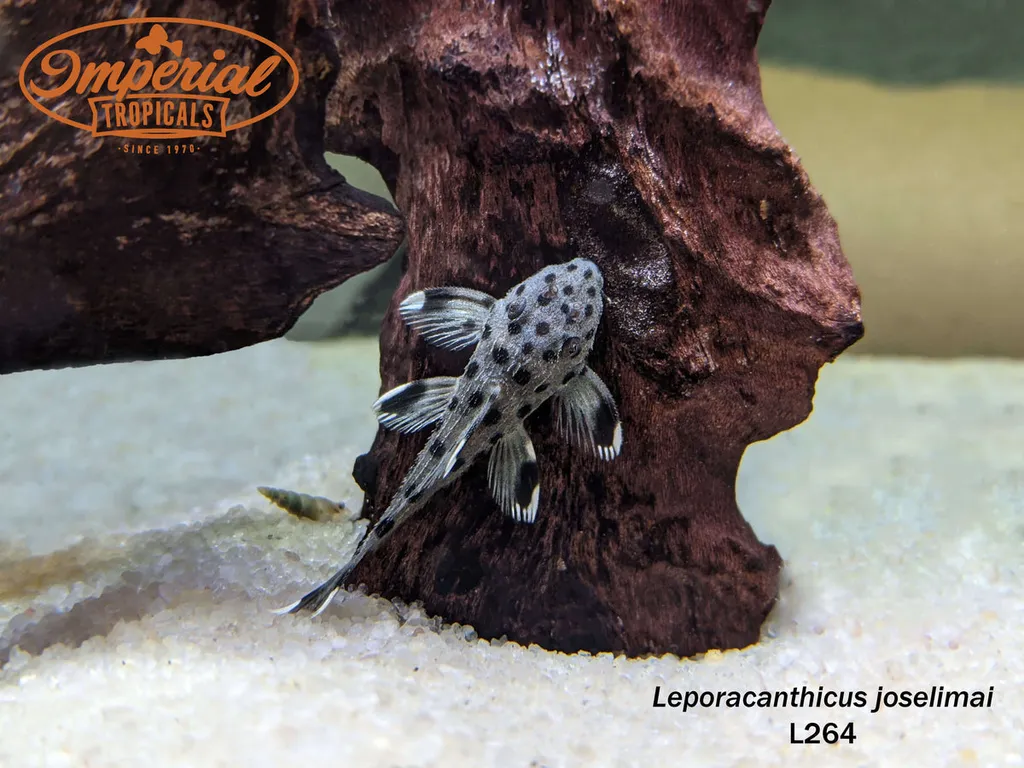 8.7 in (22 cm)66 gal (250 L)79–86°F (26–30°C)
Sultan pleco (L264)
Leporacanthicus joselimai
8.7 in (22 cm) · 66 gal (250 L)
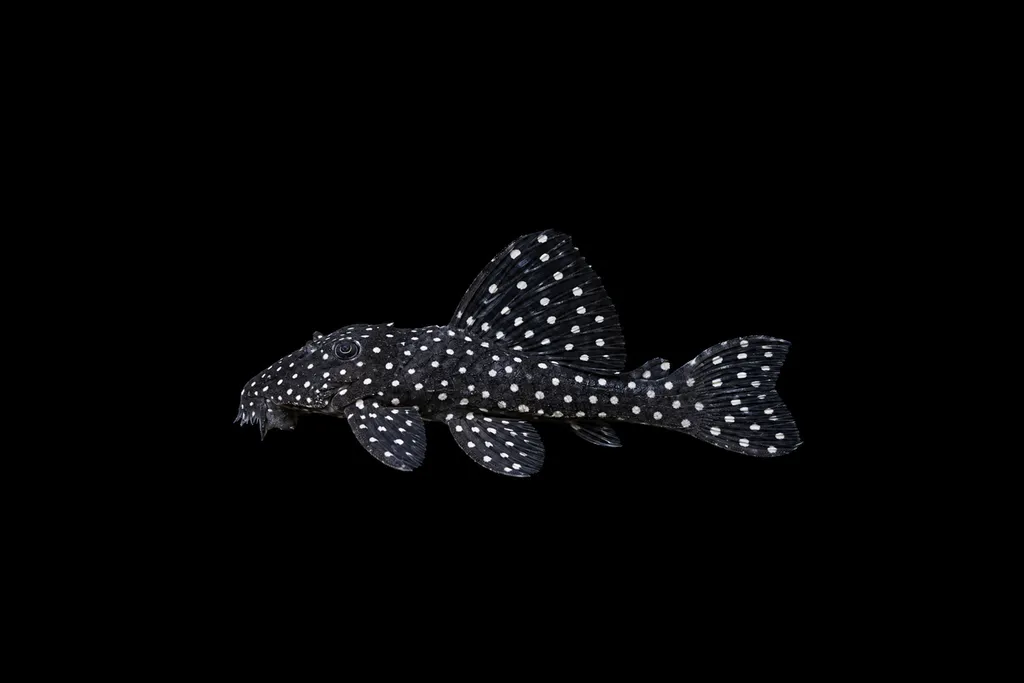 9.8 in (25 cm)66 gal (250 L)79–86°F (26–30°C)
Vampire pleco (L029)
Leporacanthicus galaxias
9.8 in (25 cm) · 66 gal (250 L)
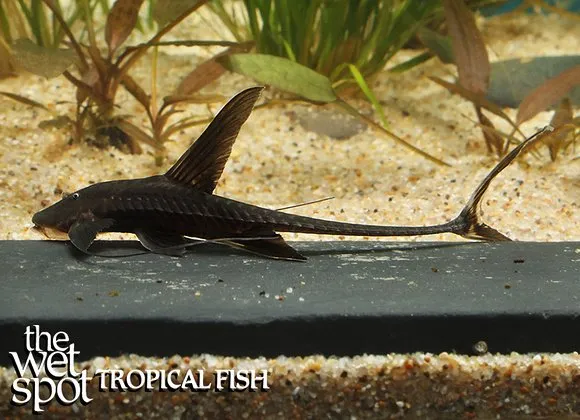 6.3 in (16 cm)40 gal (150 L)73–82°F (23–28°C)
Antenna whiptail
Pterosturisoma microps
6.3 in (16 cm) · 40 gal (150 L)
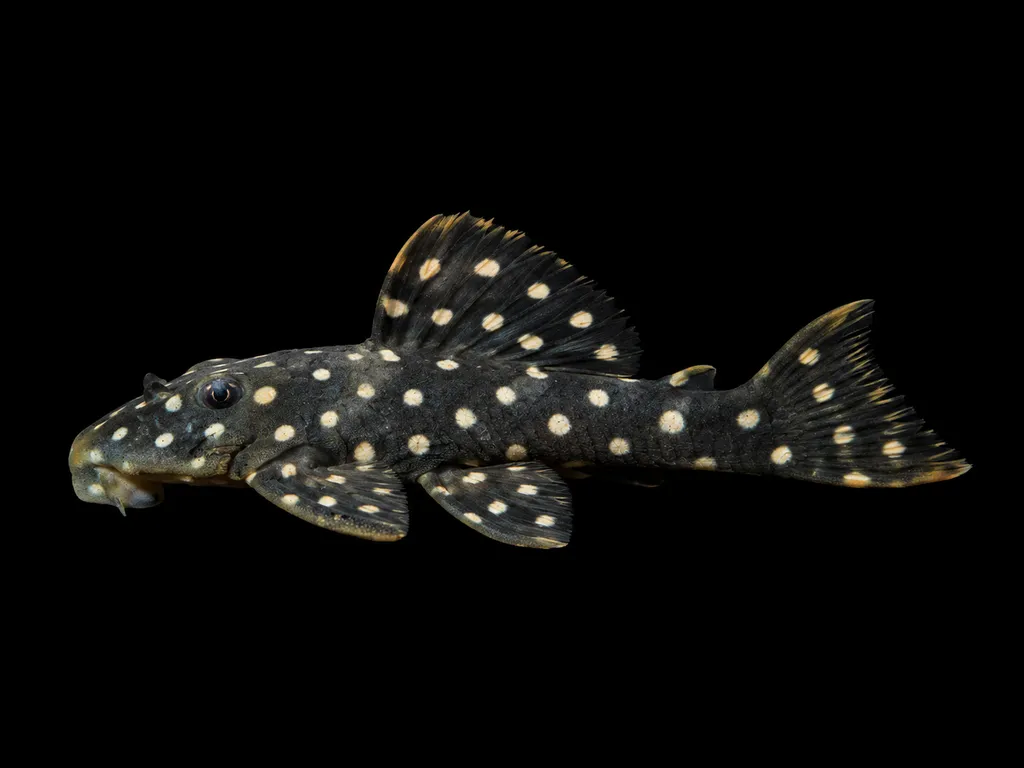 6.3 in (16 cm)79 gal (300 L)81–88°F (27–31°C)
Opal spot pleco
Scobinancistrus raonii
6.3 in (16 cm) · 79 gal (300 L)
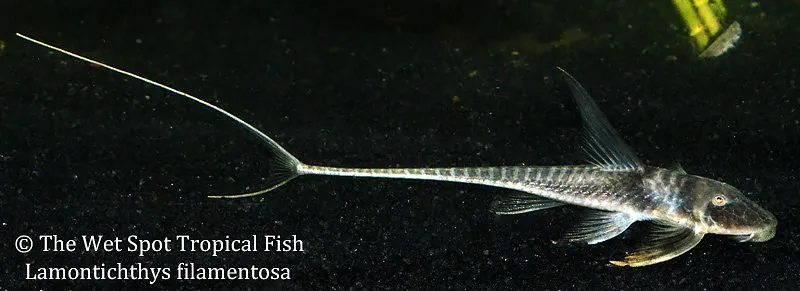 6.3 in (16 cm)63 gal (240 L)72–86°F (22–30°C)
Sturgeon catfish
Lamontichthys filamentosus
6.3 in (16 cm) · 63 gal (240 L)