Antenna whiptail
Pterosturisoma microps
Also known as Longfin whiptail catfish, Antenna catfish
FreshwaterFish
Care at a glance
- Temperature
- 73–82°F
- 23–28°C
- pH
- 5.5–7.2
- Adult size
- 6.3 in
- 16 cm
- Minimum tank
- 40 gal
- 150 L
- Temperament
- Peaceful
- Social behavior
- Schooling
- Swim level
- Bottom
- Difficulty
- Medium
- Breeding
- No record
- Rarity
- Rare
- Family
- Loricariidae
- Origin
- Upper Amazon, Peru
Overview
The antenna whiptail is a slender, fine-finned catfish for the bottom of a flowing, river-style tank. It suits a keeper with a little experience.
Did you know
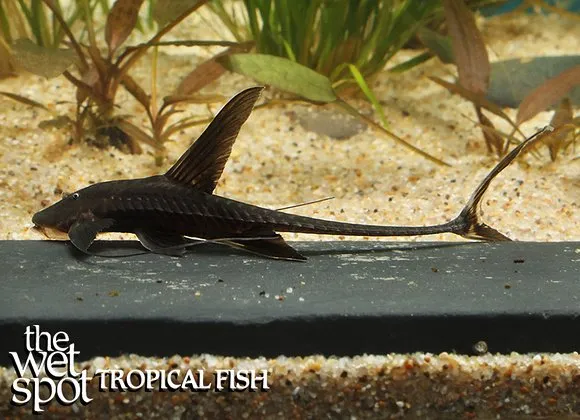
The fin streamers of an antenna whiptail can be almost as long as its body. A settled adult looks nearly twice its real length as it drifts over the rocks and holds against the current.
Caring for the antenna whiptail
Give antenna whiptails a river tank of at least 40 gal (150 L). Furnish it with smooth stones, driftwood and a sand or fine-gravel floor. Run a brisk flow from powerheads or a strong filter return, and keep the water well oxygenated. They can be slow to settle, so do not add them to a brand new tank.
Keep the water soft and slightly acidic to neutral, at 73 to 82°F (23 to 28°C) and a pH of 5.5 to 7.2. Stable parameters matter, since they react badly to sudden swings.
They graze biofilm from wood and rock. Tempt them with vegetable foods such as nori and blanched zucchini, plus soft sinking pellets, until they feed confidently.
Keep them in a small group, in a tank with the space and hiding places to go around. Several can share one setup without trouble. They are peaceful and easily out-competed, so pick calm, gentle tank mates. Breeding in aquariums is essentially undocumented.
Good to know
Pterosturisoma microps is a member of Loricariidae. Long filament extensions stream from its dorsal, pectoral and tail fins, and much of its length is trailing fin. That gives it a dramatic outline for a bottom fish. The species name microps means small eye.
In the wild
The antenna whiptail lives in the fast, clear upper Amazon of Peru. It holds station on wood and rock faces, in current that keeps the water rich in oxygen.
Weekly picks
Tank mates
The antenna whiptail is a peaceful, schooling species that keeps to the bottom. These picks share a community profile with it, are safe together in both directions, and overlap on water type, temperature and pH.
Red-tail bitterling
Acheilognathus tonkinensis
Freshwater4.7 in (12 cm) · 40 gal (150 L)61–79°F (16–26°C)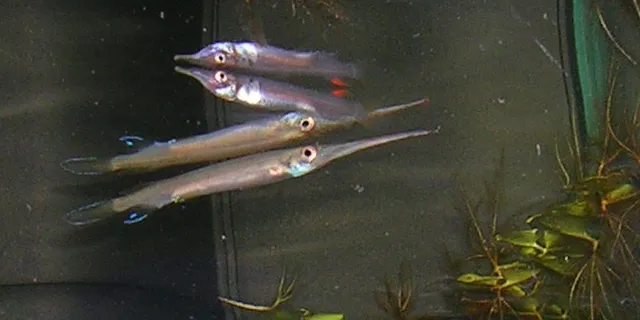
Forest halfbeak
Hemirhamphodon pogonognathus
Freshwater3.5 in (9 cm) · 34 gal (130 L)75–82°F (24–28°C)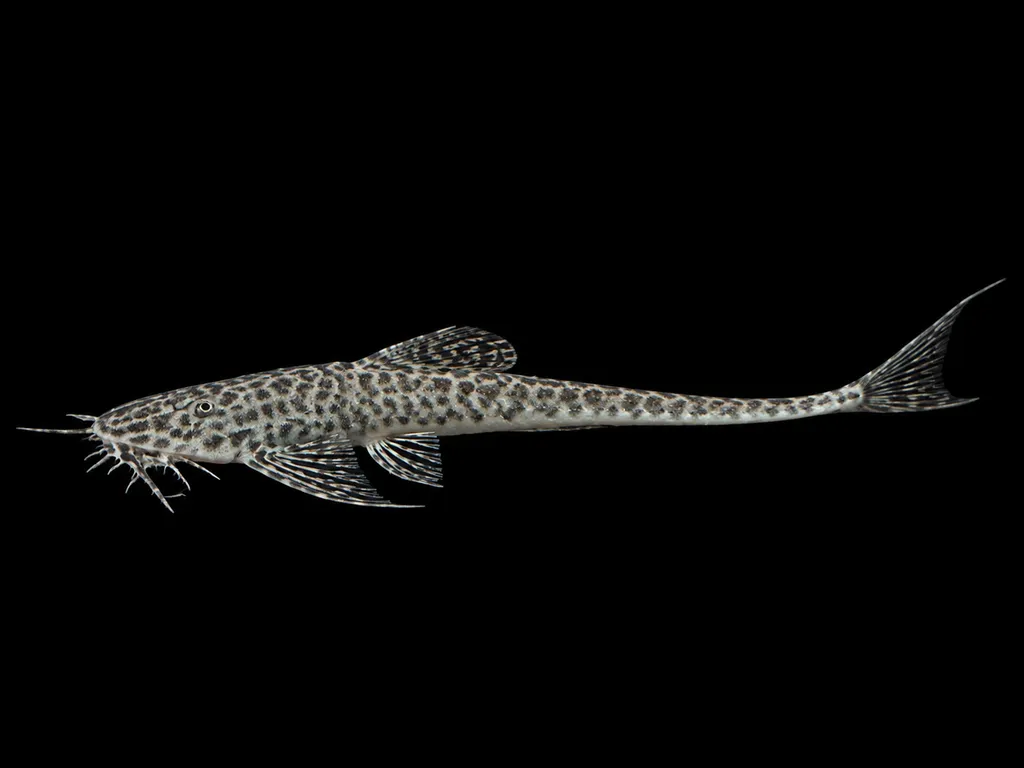
Ommation whiptail
Rhadinoloricaria ommation
Freshwater5.7 in (14.5 cm) · 40 gal (150 L)73–82°F (23–28°C)
Striped barb
Desmopuntius johorensis
Freshwater4.7 in (12 cm) · 40 gal (150 L)73–79°F (23–26°C)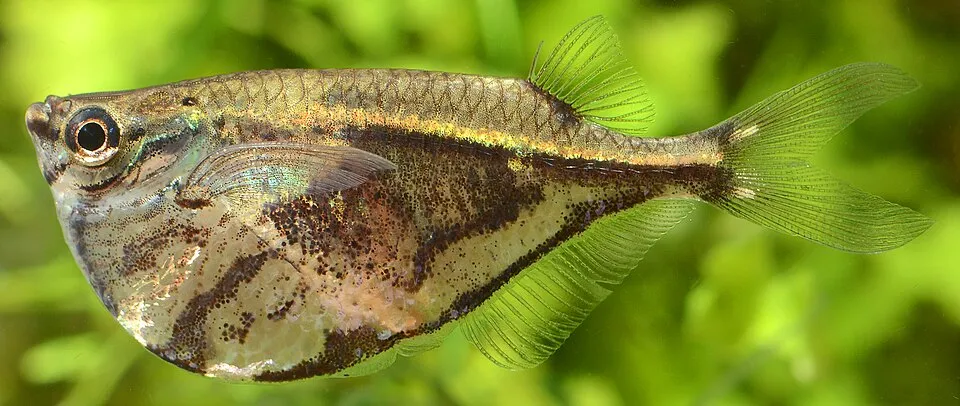
Marbled hatchetfish
Carnegiella strigata
Freshwater1.6 in (4 cm) · 32 gal (120 L)68–82°F (20–28°C)
Orinoco spotted raphael
Agamyxis albomaculatus
Freshwater5.9 in (15 cm) · 40 gal (150 L)73–82°F (23–28°C)
Common questions
What size tank does an antenna whiptail need?
An antenna whiptail needs at least 40 gal (150 L). It spends most of its time in the bottom.
What temperature and pH does an antenna whiptail need?
An antenna whiptail is comfortable at 73–82°F (23–28°C) with a pH of 5.5–7.2.
What does an antenna whiptail eat?
An antenna whiptail grazes biofilm from wood and rock. Tempt it with nori, blanched zucchini and soft sinking pellets until it feeds confidently.
How big does an antenna whiptail get?
An adult antenna whiptail reaches about 6.3 in (16 cm).
Does an antenna whiptail need a group?
Yes. An antenna whiptail is a schooling species and should be kept in a group, not singly.
Related species
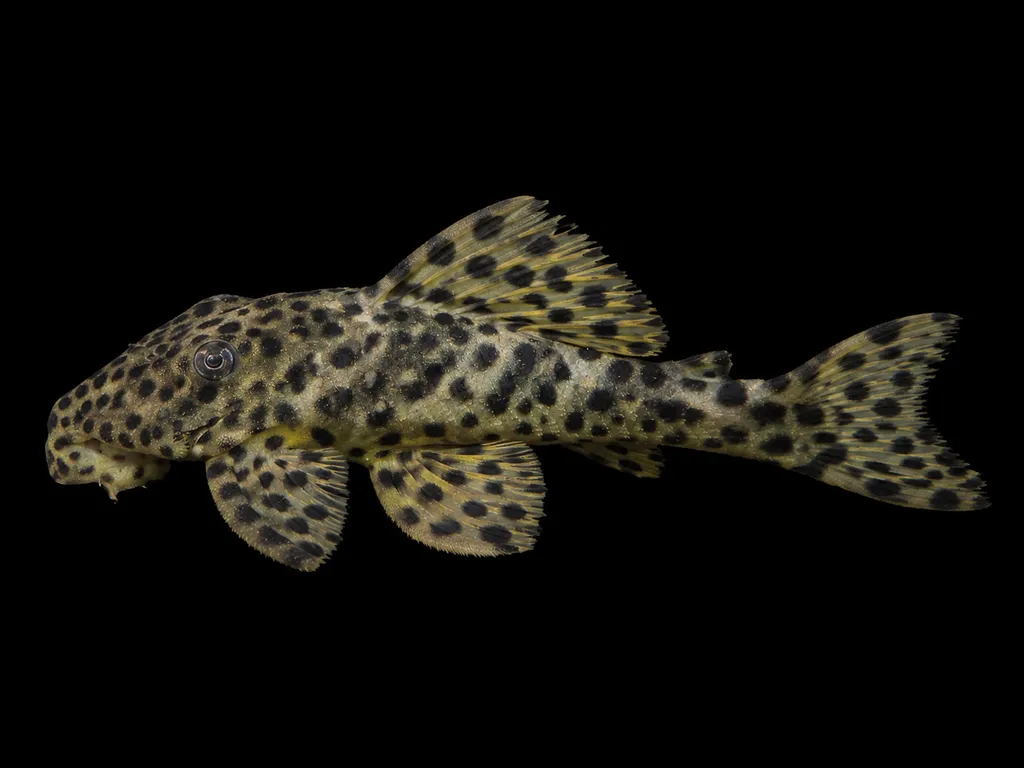 6.3 in (16 cm)79 gal (300 L)79–86°F (26–30°C)
Golden vampire pleco
Leporacanthicus heterodon
6.3 in (16 cm) · 79 gal (300 L)
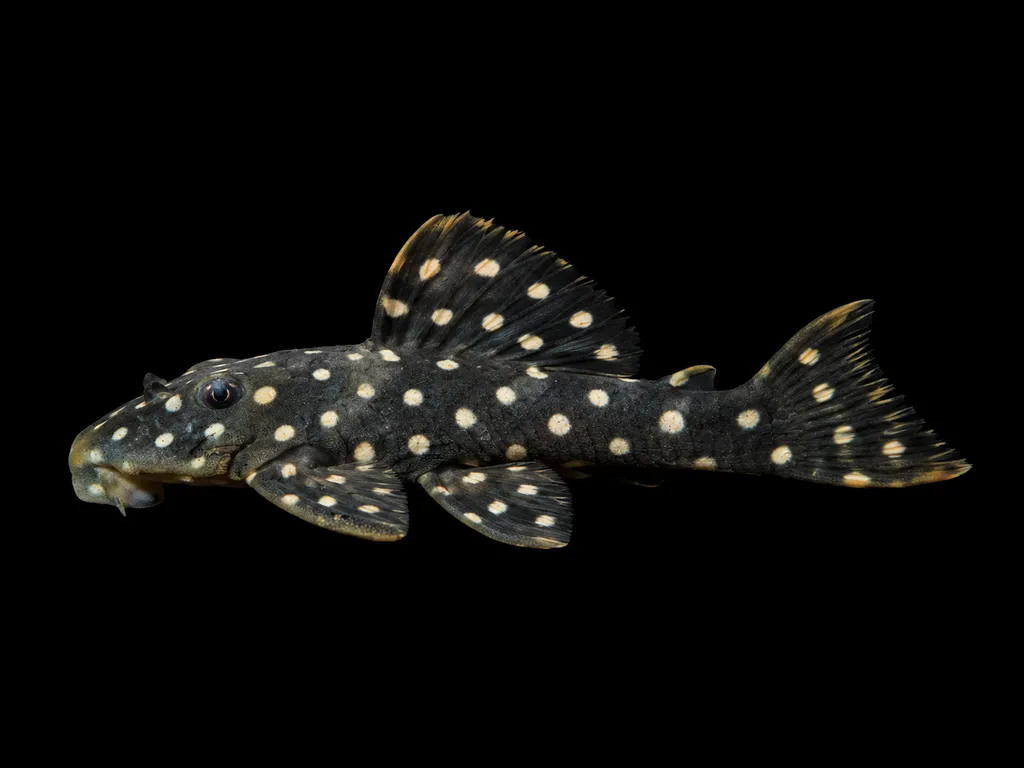 6.3 in (16 cm)79 gal (300 L)81–88°F (27–31°C)
Opal spot pleco
Scobinancistrus raonii
6.3 in (16 cm) · 79 gal (300 L)
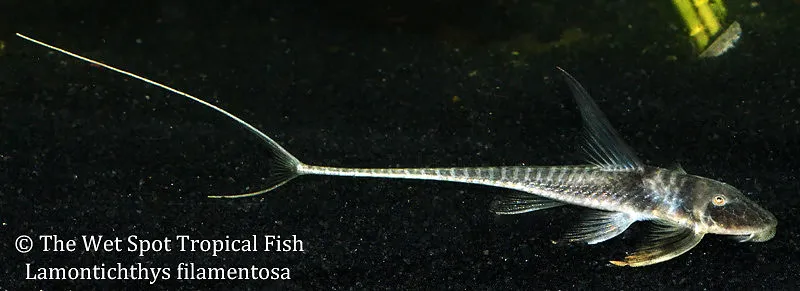 6.3 in (16 cm)63 gal (240 L)72–86°F (22–30°C)
Sturgeon catfish
Lamontichthys filamentosus
6.3 in (16 cm) · 63 gal (240 L)
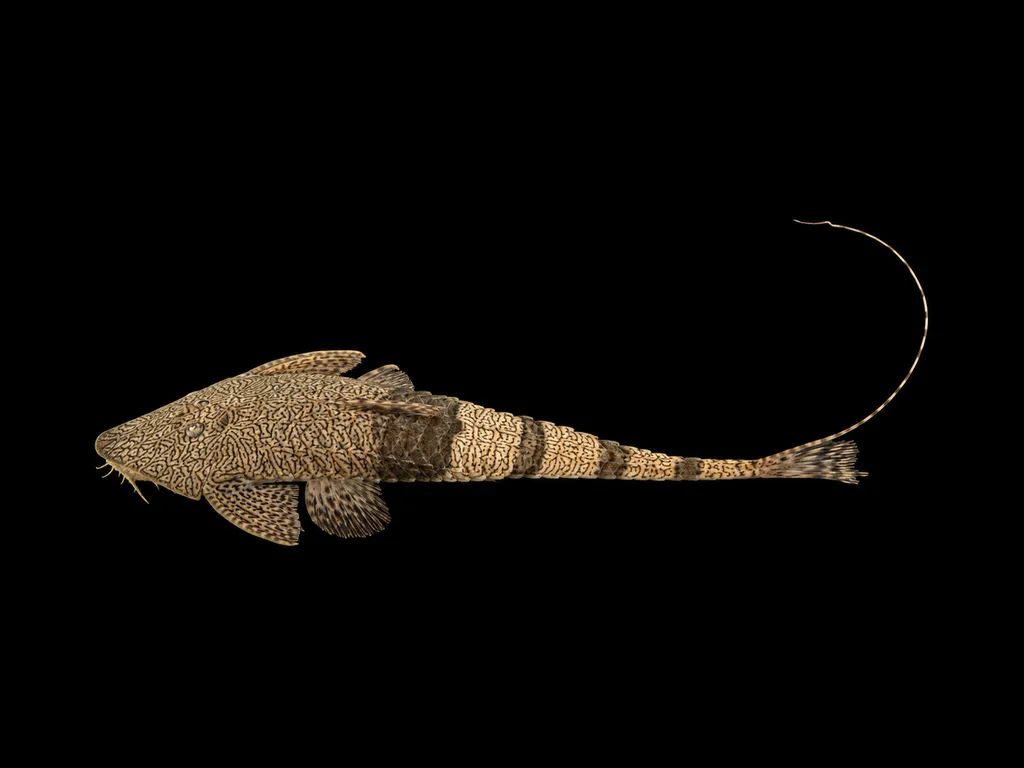 6.7 in (17 cm)79 gal (300 L)75–82°F (24–28°C)
Chameleon whiptail
Pseudohemiodon apithanos
6.7 in (17 cm) · 79 gal (300 L)
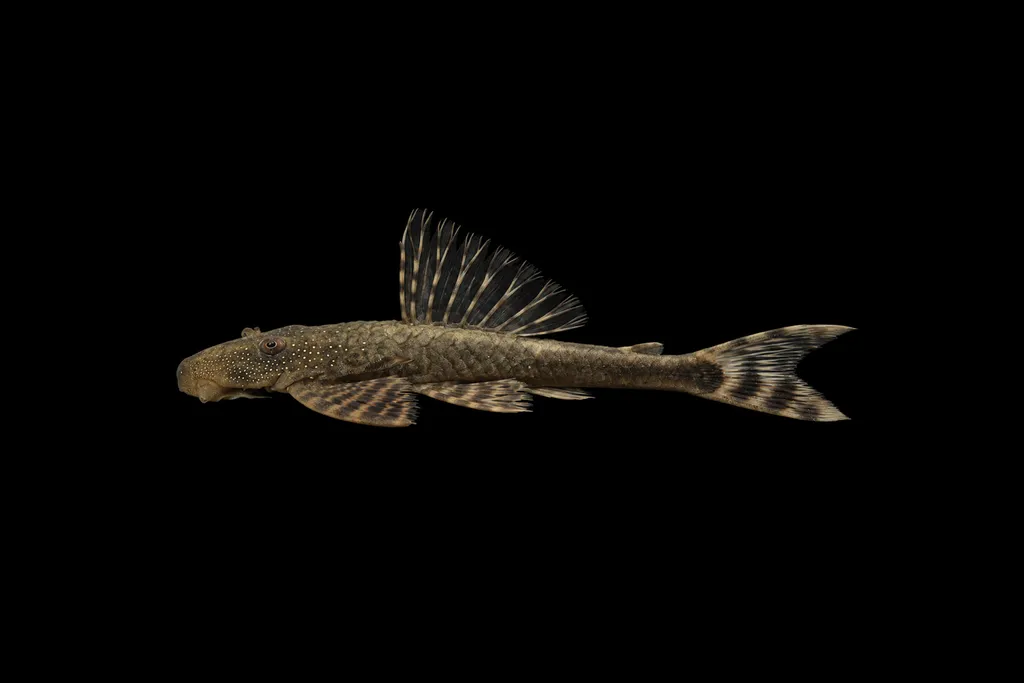 6.7 in (17 cm)66 gal (250 L)77–84°F (25–29°C)
Head-spot delta pleco
Lasiancistrus tentaculatus
6.7 in (17 cm) · 66 gal (250 L)
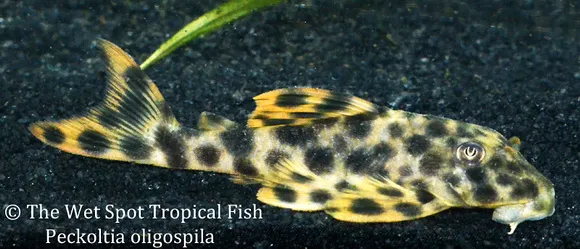 5.9 in (15 cm)42 gal (160 L)77–84°F (25–29°C)
Brown dot peckoltia
Peckoltia oligospila
5.9 in (15 cm) · 42 gal (160 L)