Sturgeon catfish
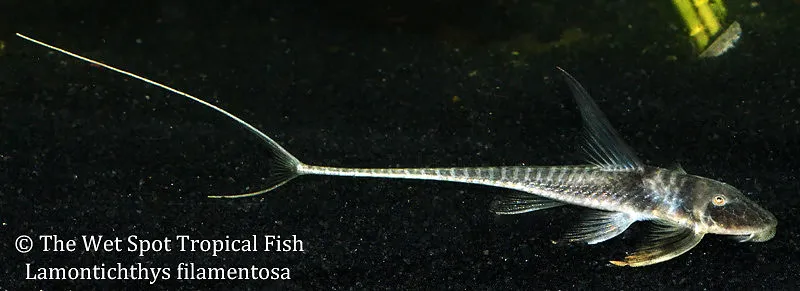
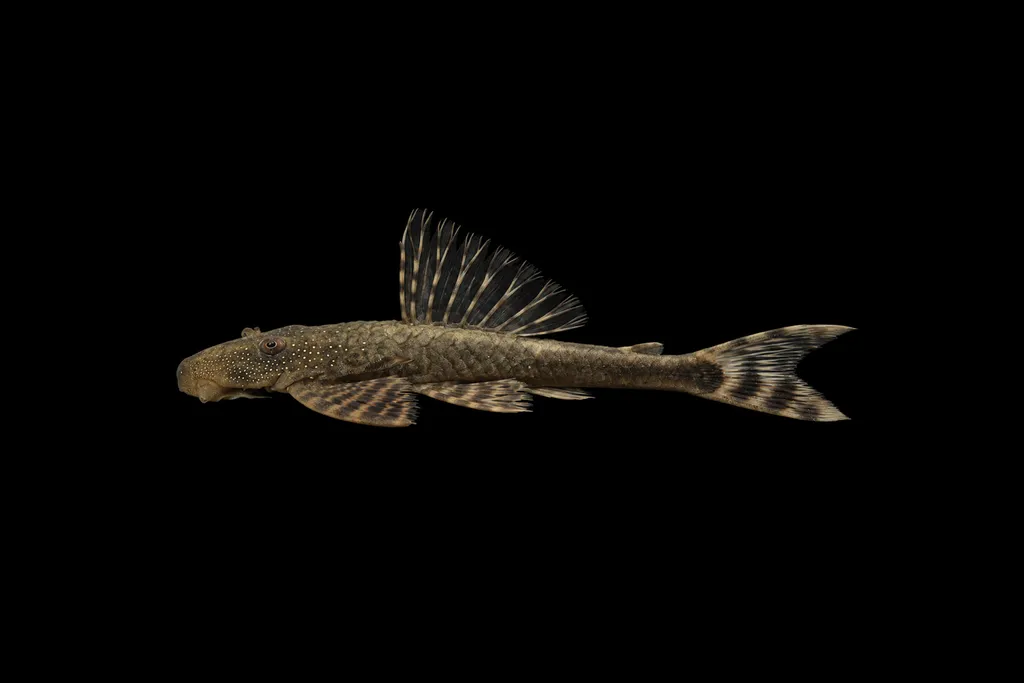
Lamontichthys filamentosus
Also known as Kite Pleco, Filament Whiptail Cat
FreshwaterFish
Care at a glance
- Temperature
- 72–86°F
- 22–30°C
- pH
- 6.0–7.5
- Adult size
- 6.3 in
- 16 cm
- Minimum tank
- 36 gal
- 135 L
- Temperament
- Peaceful
- Social behavior
- Social
- Swim level
- Bottom
- Difficulty
- Difficult
- Breeding
- No record
- Rarity
- Rare
- Family
- Loricariidae
- Origin
- Brazil, Bolivia, Peru, Ecuador
Overview
The sturgeon catfish, also called the kite pleco, is a peaceful, delicate loricariid that is reasonably sociable and can be kept in a small group of its own kind. It clings to wood and rock in the current, rasping algae and tiny organisms from the surface, and it needs only calm, similarly gentle tankmates. This is a demanding fish that lives or dies by water quality and oxygen, so it is best for experienced keepers. Feed algae wafers, vegetables, and sinking foods. Provide strong flow and driftwood, and aim for a tank around 135 liters or larger.
In the wild
Lamontichthys filamentosus comes from fast, oxygen-rich reaches of the western Amazon in Brazil, Bolivia, Peru, and Ecuador, where it clings to solid surfaces in strong current. Despite its fragile look it must have brisk flow and high oxygen, so provide powerful filtration and moving surface water. Hold the temperature between 22 and 30 degrees C at a pH of 6.0 to 7.5, and remember that warmer water carries less oxygen, so keep it well aerated. Use driftwood and smooth rock as grazing surfaces.
Good to know
This member of Loricariidae, the suckermouth armored catfishes, reaches about 16 centimeters and has a flattened, kite-shaped body with long trailing filaments on the fins. Its underside bears an armor of bony plates and a sucker mouth that both grips surfaces in current and rasps benthic algae and micro-organisms. It is delicate and needs pristine, oxygen-rich water. Breeding is not recorded in home aquariums.
Did you know
The sturgeon catfish trails long, whip-like filaments from its fins and tail, and its slender, flattened shape and rows of body plates give it the look of a miniature sturgeon, though the two fish are not related.
Weekly picks
Tank mates
Sturgeon catfish is a peaceful, social species that keeps to the bottom. These picks share a community profile with it, are safe together in both directions, and overlap on water type, temperature and pH.
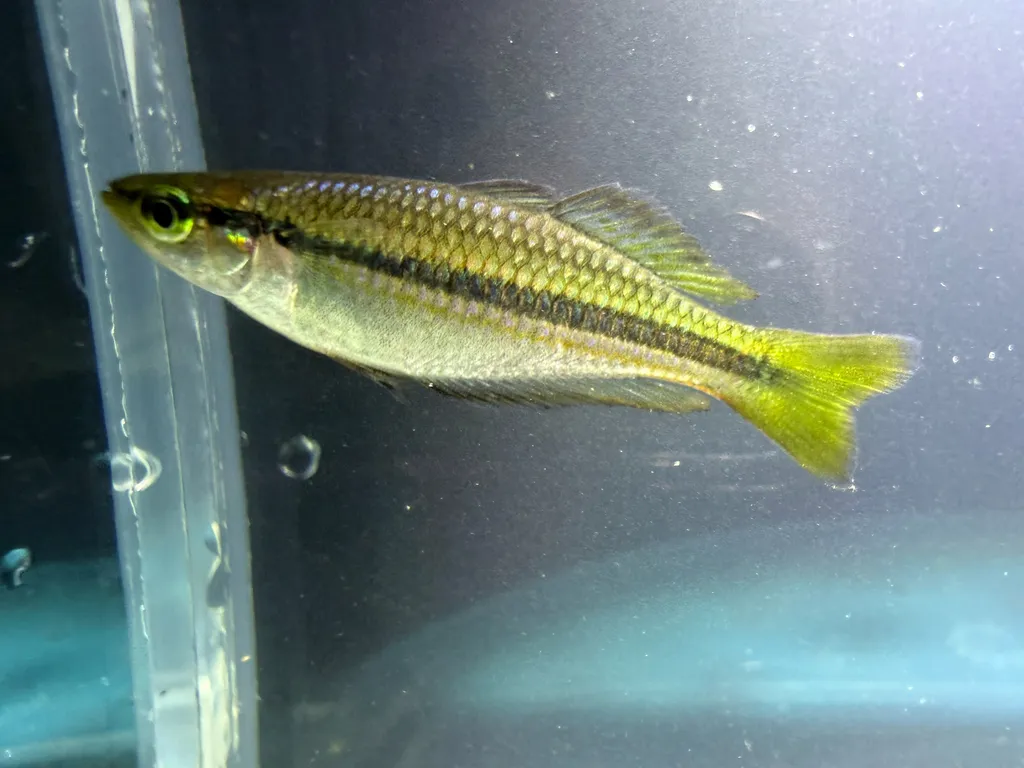
Black-banded rainbowfish
Melanotaenia nigrans
Freshwater3.9 in (10 cm) · 32 gal (120 L)72–82°F (22–28°C)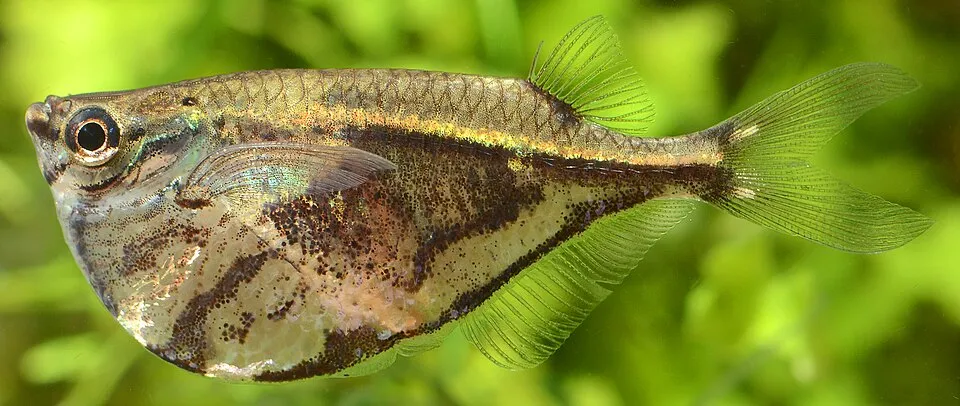
Marbled hatchetfish
Carnegiella strigata
Freshwater1.6 in (4 cm) · 32 gal (120 L)68–82°F (20–28°C)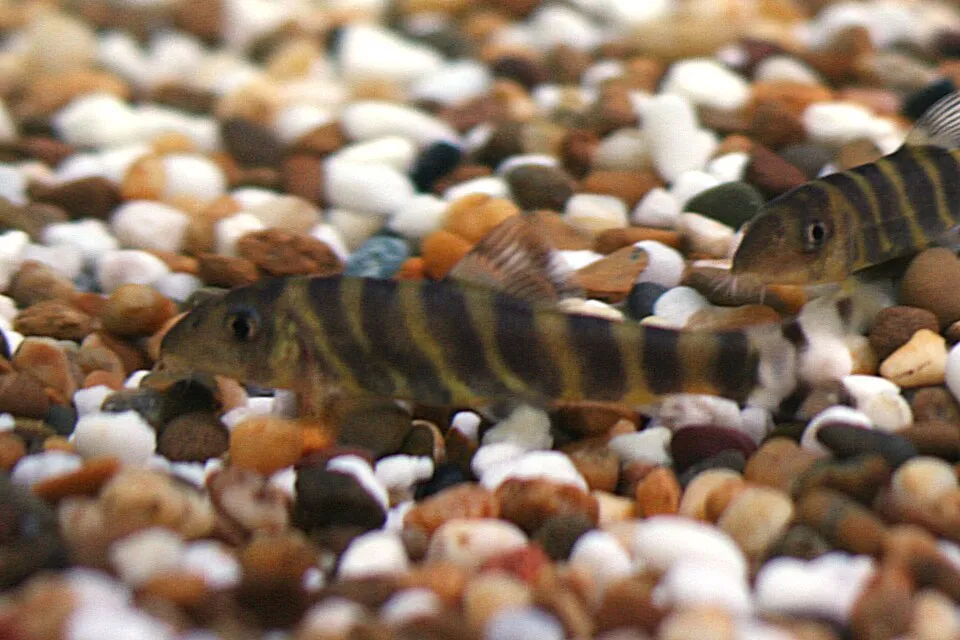
Bengal loach
Botia dario
Freshwater5.1 in (13 cm) · 37 gal (140 L)73–79°F (23–26°C)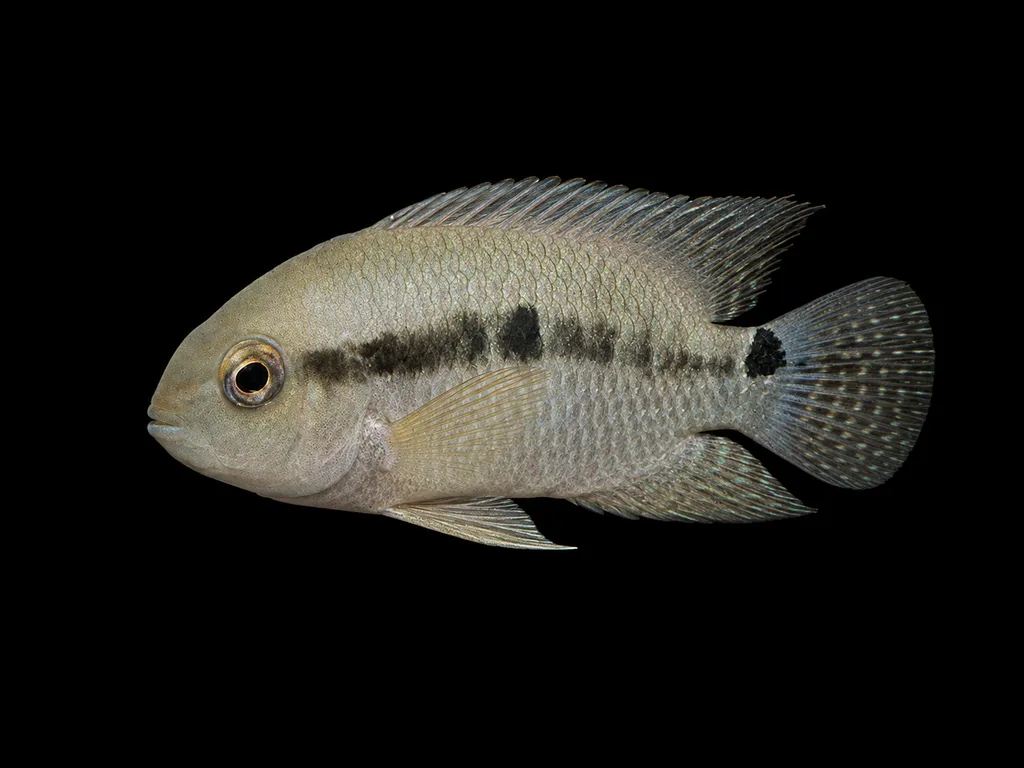
Black acara
Cichlasoma bimaculatum
Freshwater7.1 in (18 cm) · 40 gal (150 L)68–82°F (20–28°C)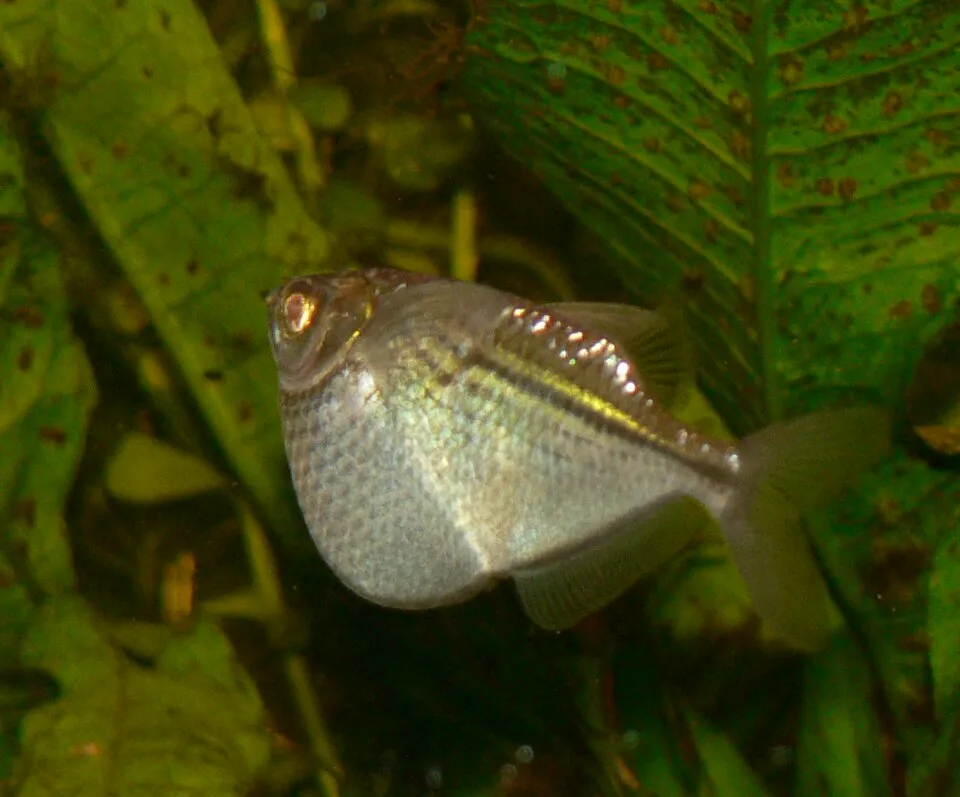
Common hatchetfish
Gasteropelecus sternicla
Freshwater1.6 in (4 cm) · 33 gal (125 L)68–82°F (20–28°C)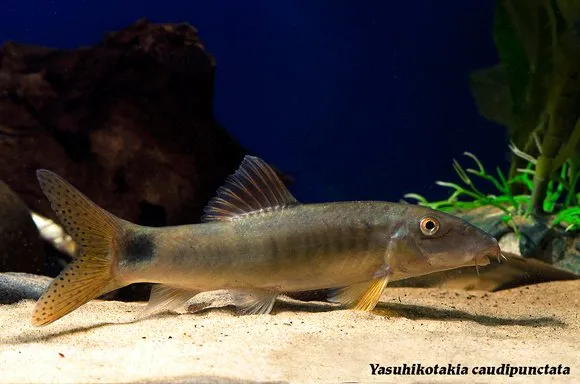
Spottail loach
Yasuhikotakia caudipunctata
Freshwater4.3 in (11 cm) · 37 gal (140 L)73–82°F (23–28°C)
Common questions
What size tank does a Sturgeon catfish need?
A Sturgeon catfish needs at least 36 gal (135 L). It spends most of its time in the bottom.
What temperature and pH does a Sturgeon catfish need?
A Sturgeon catfish is comfortable at 72–86°F (22–30°C) with a pH of 6.0–7.5.
How big does a Sturgeon catfish get?
An adult Sturgeon catfish reaches about 6.3 in (16 cm).
Related species
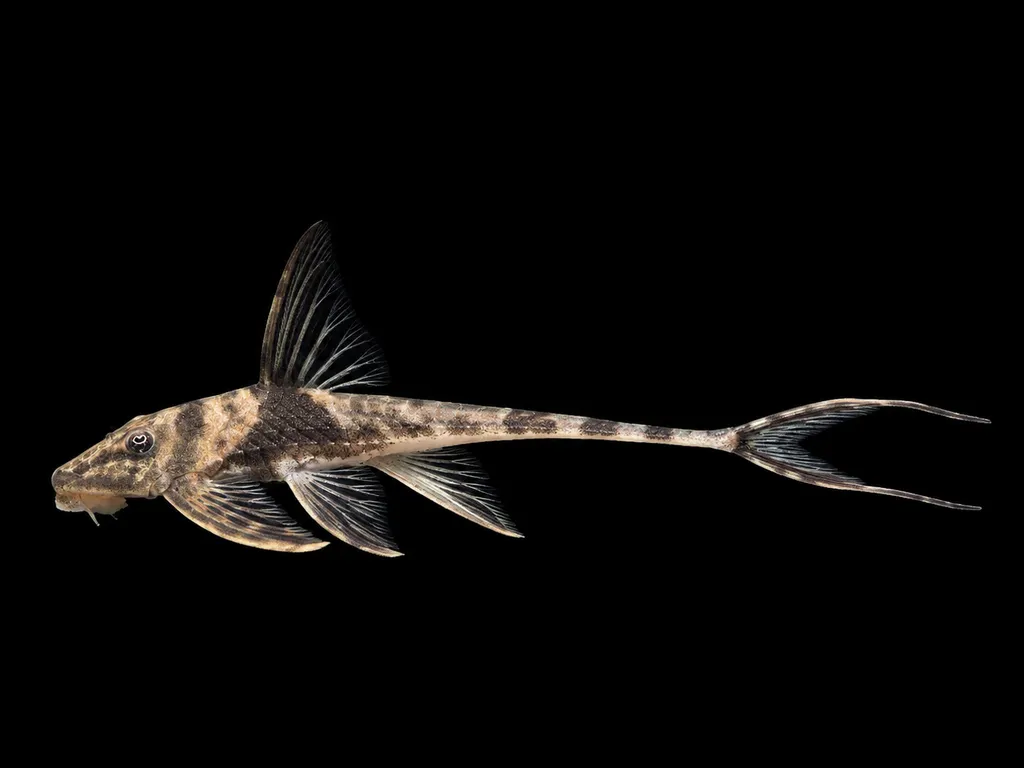 9.1 in (23 cm)79 gal (300 L)75–82°F (24–28°C)
Llanero whiptail
Lamontichthys llanero
9.1 in (23 cm) · 79 gal (300 L)
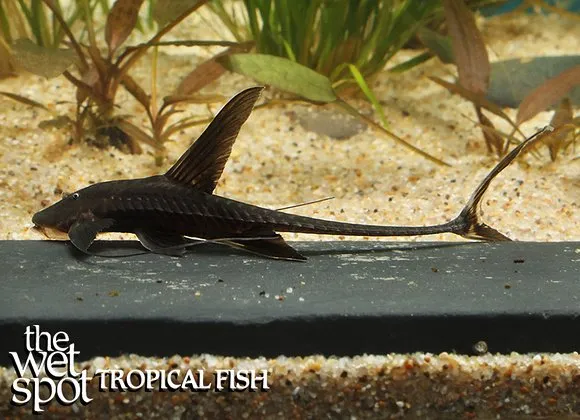 6.3 in (16 cm)40 gal (150 L)73–82°F (23–28°C)
Antenna whiptail
Pterosturisoma microps
6.3 in (16 cm) · 40 gal (150 L)
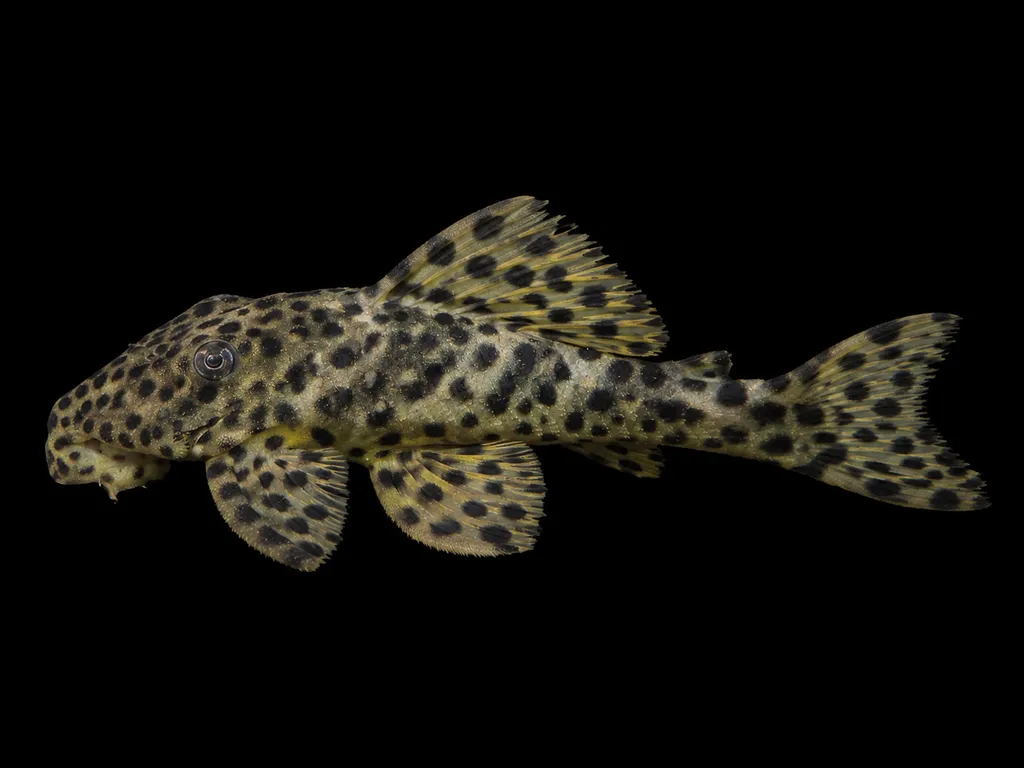 6.3 in (16 cm)79 gal (300 L)79–86°F (26–30°C)
Golden vampire pleco
Leporacanthicus heterodon
6.3 in (16 cm) · 79 gal (300 L)
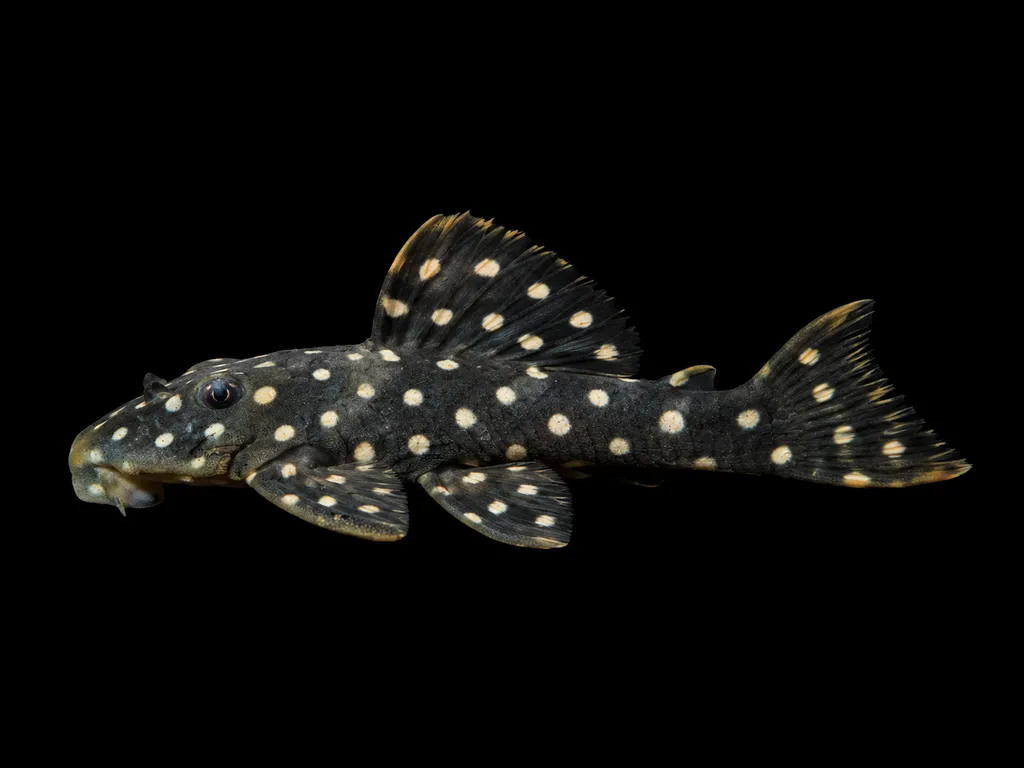 6.3 in (16 cm)79 gal (300 L)81–88°F (27–31°C)
Opal spot pleco
Scobinancistrus raonii
6.3 in (16 cm) · 79 gal (300 L)
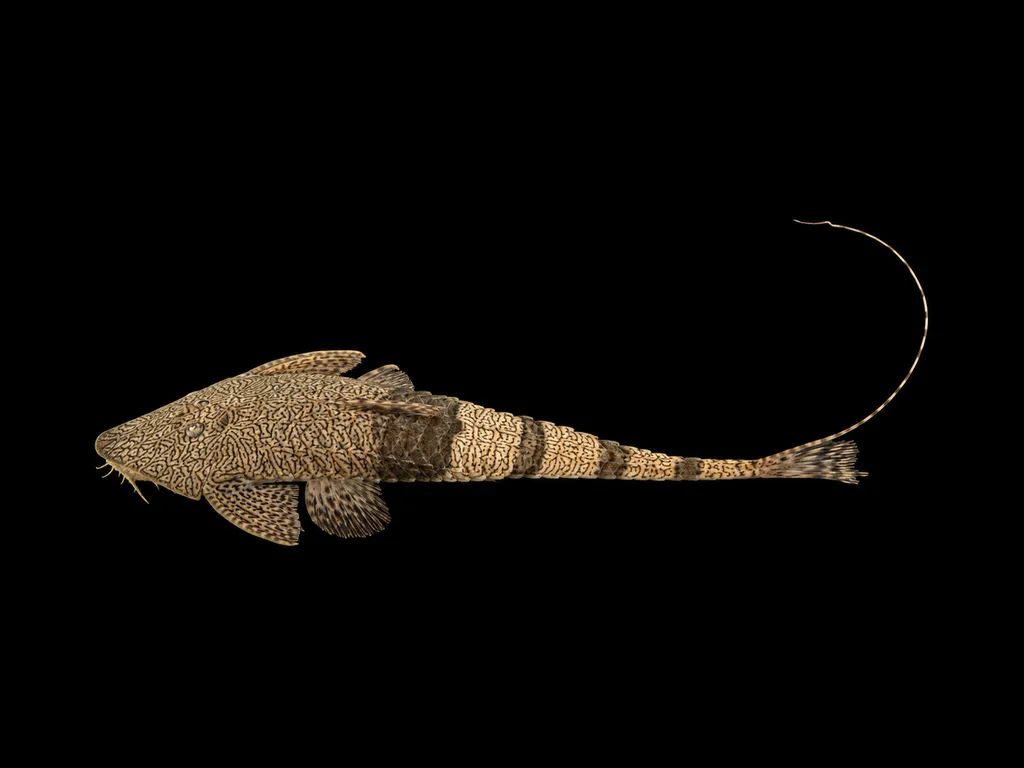 6.7 in (17 cm)79 gal (300 L)75–82°F (24–28°C)
Chameleon whiptail
Pseudohemiodon apithanos
6.7 in (17 cm) · 79 gal (300 L)
 6.7 in (17 cm)66 gal (250 L)77–84°F (25–29°C)
Head-spot delta pleco
Lasiancistrus tentaculatus
6.7 in (17 cm) · 66 gal (250 L)