Starry night bristlenose pleco
Ancistrus hoplogenys
Also known as Ancistrus punctatus, L059, L182, Starlight bristlenose
FreshwaterFish
Care at a glance
- Temperature
- 77–84°F
- 25–29°C
- pH
- 5.5–7.0
- Adult size
- 7.1 in
- 18 cm
- Minimum tank
- 42 gal
- 160 L
- Temperament
- Peaceful
- Social behavior
- Solitary
- Swim level
- Bottom
- Diet
- Omnivore
- Difficulty
- Medium
- Breeding
- Cave spawner · Medium
- Rarity
- Rare
- Family
- Loricariidae
- Origin
- Amazon basin blackwaters
Overview
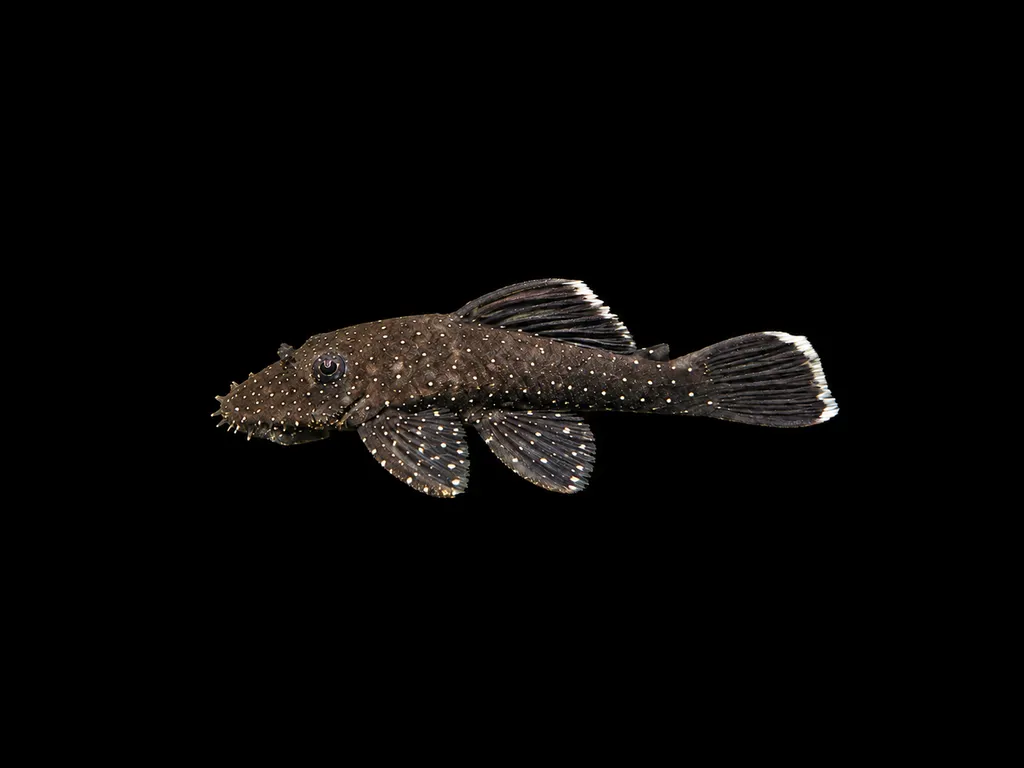
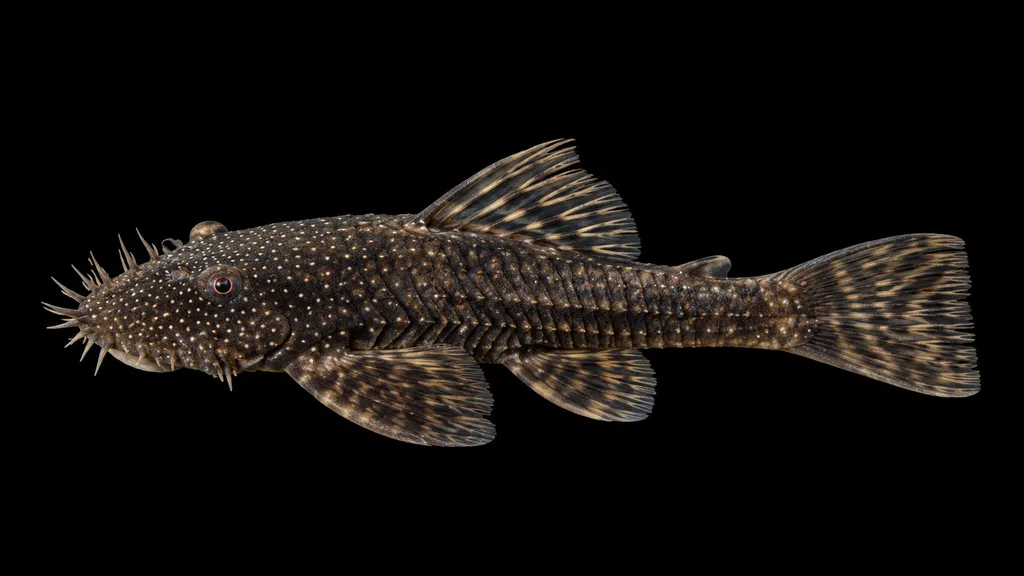
The starry night bristlenose pleco is a black bristlenose speckled with white, with the gentle habits of the common bristlenose. It is a grazer for a calm community tank and needs a little more care than a beginner fish.
Did you know
Young starry night bristlenose plecos wear bright white edges on their fins. The edges stand out against the black body like fresh trim on a night sky. They slowly fade with age, leaving older adults plainer than the juveniles that first catch a buyer's eye.
Caring for the starry night bristlenose pleco
Give a starry night bristlenose pleco a tank of at least 42 gal (160 L), over sand. Add plenty of driftwood to rasp, some dried leaves and stone caves, so it has a cave to hold.
It has a taste for softer water than the common bristlenose. Keep the water clean, soft and acidic, at 77 to 84°F (25 to 29°C) and a pH of 5.5 to 7.0. A gentle flow suits it. A little tannin from leaves or wood matches its blackwater home and shows off the pale spotting against the dark body.
Feed it as an omnivore that leans vegetable. Offer algae wafers, blanched zucchini and other vegetables, with some sinking pellets and light protein.
The starry night bristlenose is solitary and best kept one to a tank, or as a pair. It works the bottom and is peaceful and community safe, suiting calm midwater tank mates.
Mature males grow the bushy snout tentacles typical of the genus. Breeding it is of moderate difficulty, and the male guards the eggs in a cave.
Good to know
Ancistrus hoplogenys is a bristlenose catfish of Loricariidae, jet black and scattered with white pinpoint spots. Its name means armed cheek, after the stiff spines on the gill covers. Several similar black-and-white forms in the trade go under this name, including L059 and the fish sold as Ancistrus punctatus.
In the wild
The starry night bristlenose pleco grazes over submerged wood in the soft, tannin-stained blackwaters of the Amazon basin.
Weekly picks
Tank mates
The starry night bristlenose pleco is a peaceful, solitary species that keeps to the bottom. These picks share a community profile with it, are safe together in both directions, and overlap on water type, temperature and pH.
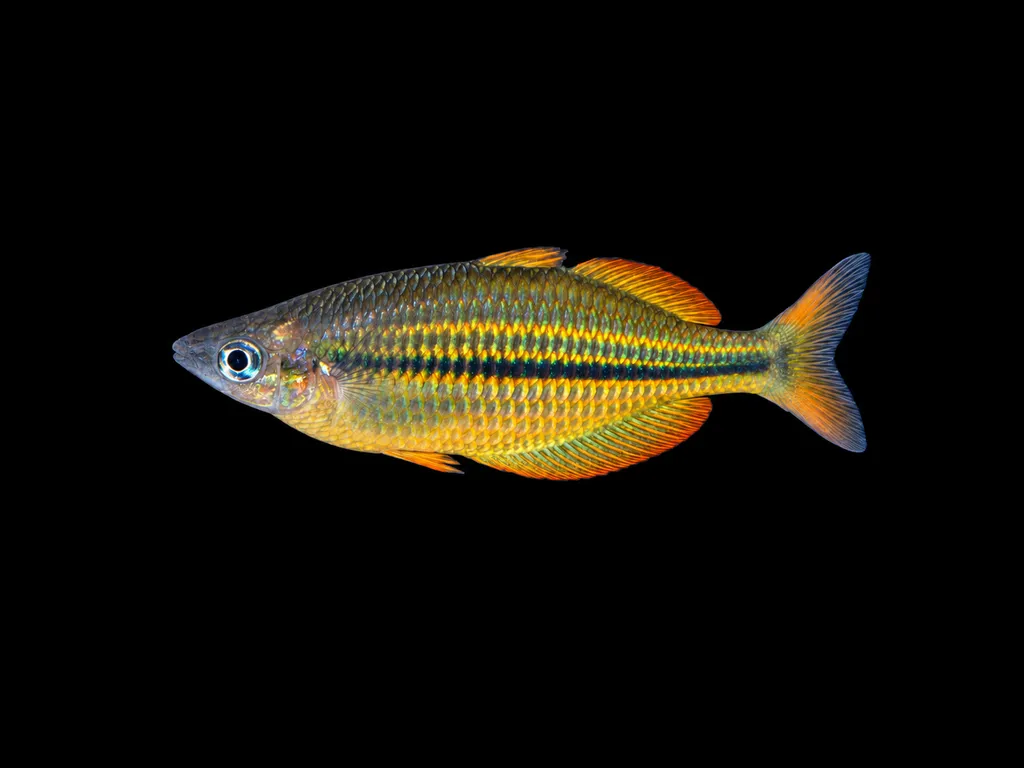
Ammer rainbowfish
Melanotaenia ammeri
Freshwater4.6 in (11.7 cm) · 42 gal (160 L)77–86°F (25–30°C)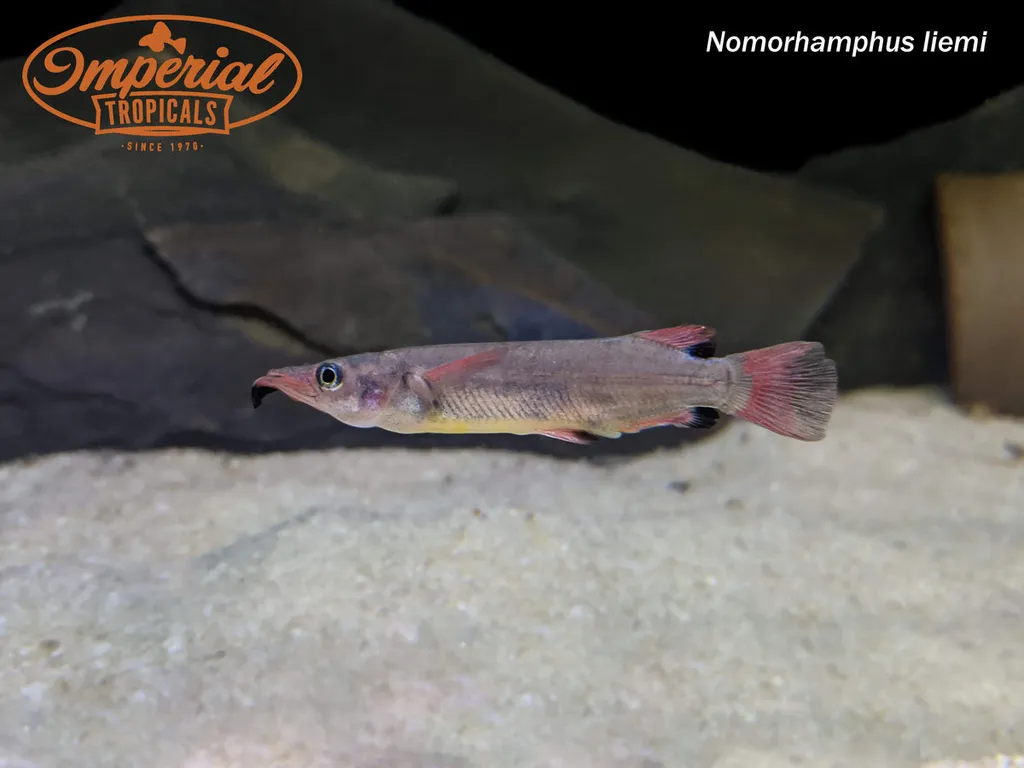
Celebes halfbeak
Nomorhamphus liemi
Freshwater3.5 in (9 cm) · 40 gal (150 L)68–77°F (20–25°C)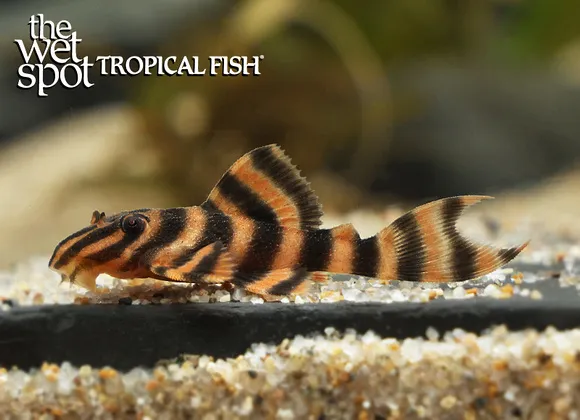
Bloodred tiger pleco
Panaqolus claustellifer
Freshwater3.1 in (8 cm) · 42 gal (160 L)77–84°F (25–29°C)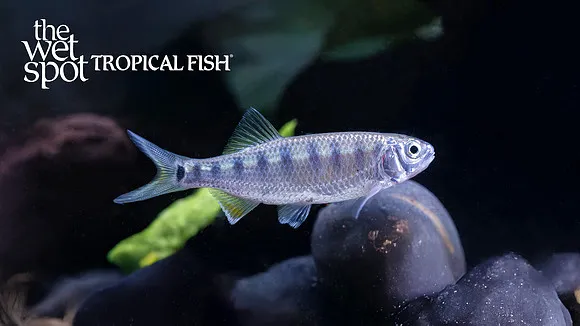
Bernatzik's baril
Opsarius bernatziki
Freshwater4.3 in (11 cm) · 42 gal (160 L)72–81°F (22–27°C)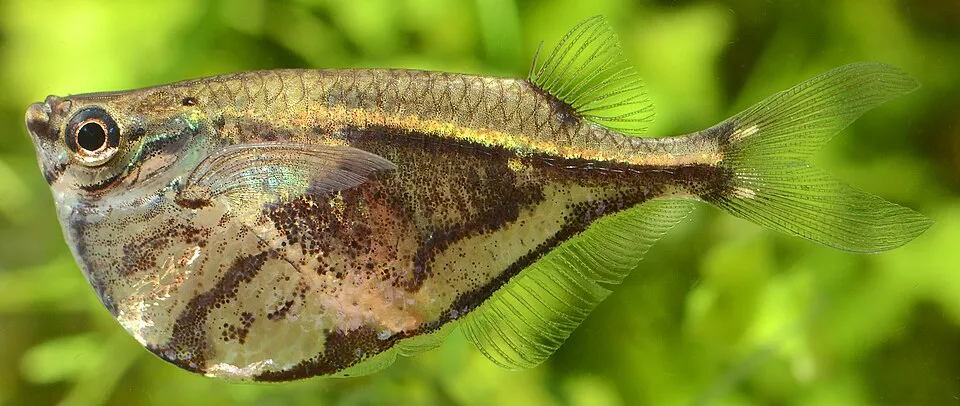
Marbled hatchetfish
Carnegiella strigata
Freshwater1.6 in (4 cm) · 32 gal (120 L)68–82°F (20–28°C)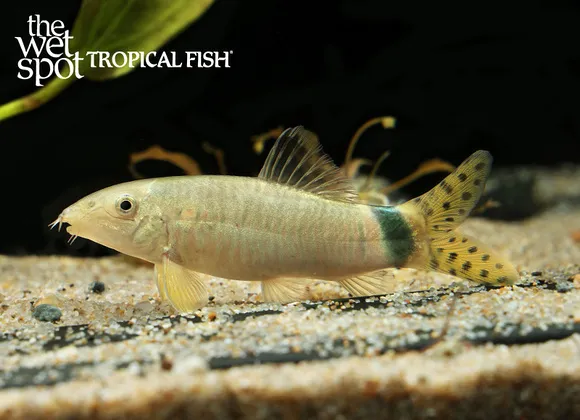
Splendid loach
Yasuhikotakia splendida
Freshwater4.7 in (12 cm) · 42 gal (160 L)73–82°F (23–28°C)
Common questions
What size tank does a starry night bristlenose pleco need?
A starry night bristlenose pleco needs at least 42 gal (160 L). It spends most of its time in the bottom.
What temperature and pH does a starry night bristlenose pleco need?
A starry night bristlenose pleco is comfortable at 77–84°F (25–29°C) with a pH of 5.5–7.0.
What does a starry night bristlenose pleco eat?
A starry night bristlenose pleco is an omnivore that leans vegetable. It eats algae wafers, blanched zucchini and other vegetables, with some sinking pellets and light protein.
How big does a starry night bristlenose pleco get?
An adult starry night bristlenose pleco reaches about 7.1 in (18 cm).
How can you tell a male starry night bristlenose pleco from a female?
Males grow bushy snout tentacles as they mature, as is typical of the genus.
How does a starry night bristlenose pleco breed?
A starry night bristlenose pleco breeds in a cave, where the male guards the eggs. Breeding it is of moderate difficulty.
Related species
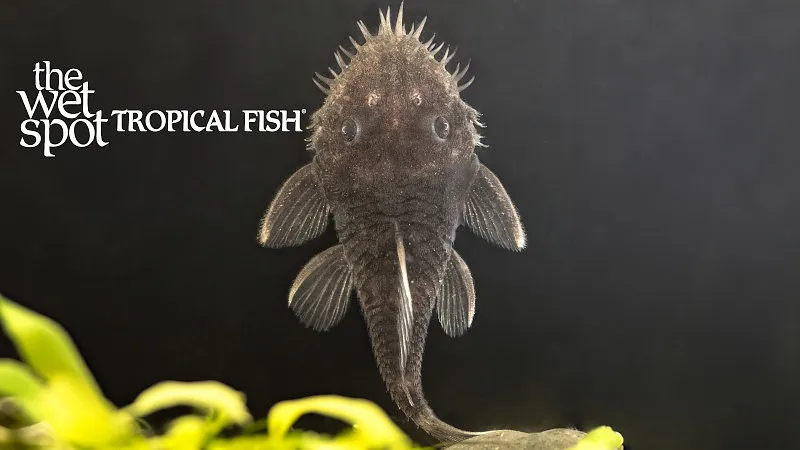 5.9 in (15 cm)18 gal (70 L)79–86°F (26–30°C)
Medusa pleco (L034)
Ancistrus ranunculus
5.9 in (15 cm) · 18 gal (70 L)
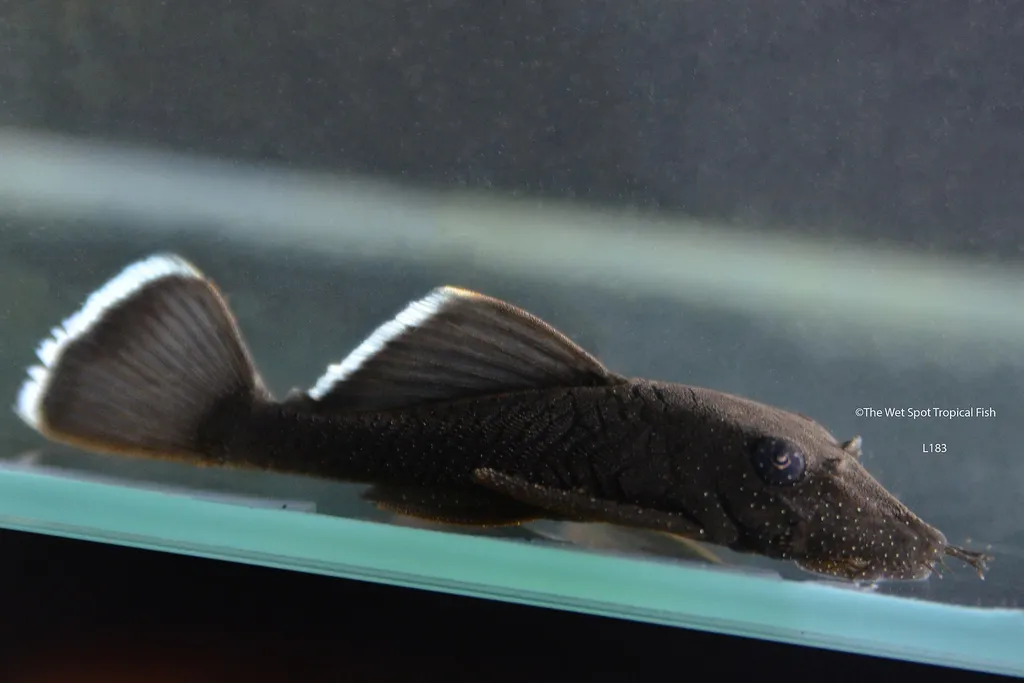 5.5 in (14 cm)63 gal (240 L)79–84°F (26–29°C)
Starlight bristlenose pleco (L183)
Ancistrus dolichopterus
5.5 in (14 cm) · 63 gal (240 L)
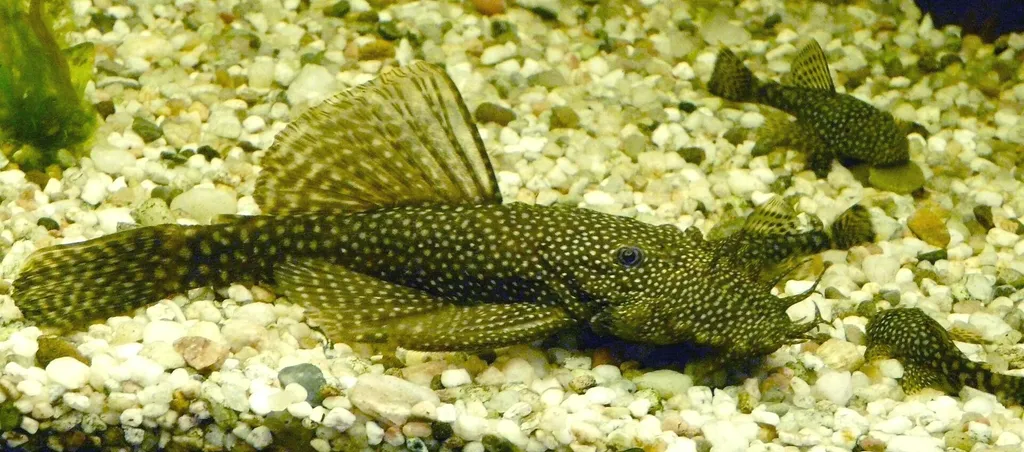 4.9 in (12.5 cm)20 gal (75 L)70–79°F (21–26°C)
Bristlenose pleco
Ancistrus sp.
4.9 in (12.5 cm) · 20 gal (75 L)
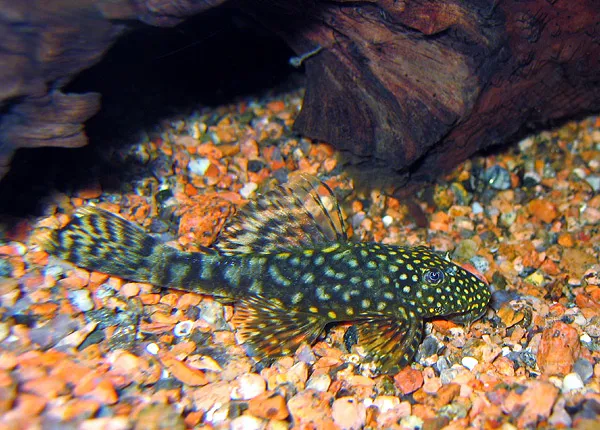 4.3 in (11 cm)18 gal (70 L)77–84°F (25–29°C)
Colombian bristlenose pleco
Ancistrus triradiatus
4.3 in (11 cm) · 18 gal (70 L)
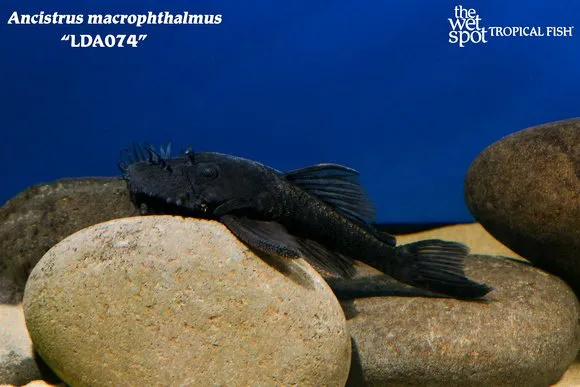 3.5 in (9 cm)29 gal (110 L)77–84°F (25–29°C)
Blue medusa pleco
Ancistrus macrophthalmus
3.5 in (9 cm) · 29 gal (110 L)
 3.1 in (8 cm)29 gal (110 L)77–84°F (25–29°C)
Aguaboa bristlenose pleco
Ancistrus aguaboensis
3.1 in (8 cm) · 29 gal (110 L)