Aguaboa bristlenose pleco
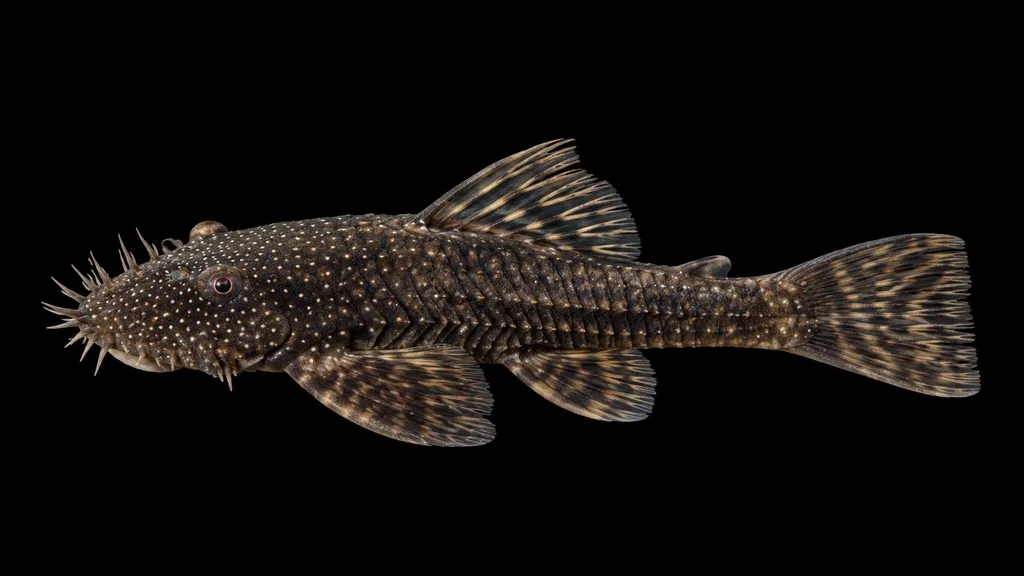
Ancistrus aguaboensis
Also known as L032
FreshwaterFish
Care at a glance
- Temperature
- 77–84°F
- 25–29°C
- pH
- 6.0–7.5
- Adult size
- 3.1 in
- 8 cm
- Minimum tank
- 29 gal
- 110 L
- Temperament
- Peaceful
- Social behavior
- Solitary
- Swim level
- Bottom
- Diet
- Omnivore
- Difficulty
- Medium
- Breeding
- Cave spawner · Medium
- Rarity
- Rare
- Family
- Loricariidae
- Origin
- Rio Água Boa, Tocantins basin, Brazil
Overview
The Aguaboa bristlenose pleco is a small bristlenose catfish for a calm, mature community tank. It is a step up from the easiest fish.
Did you know
One well-known idea is that the snout tentacles of males mimic a clutch of wriggling larvae. A female may read them as a sign that the male is already a proven father.
Caring for the Aguaboa bristlenose pleco
Give the Aguaboa bristlenose pleco a mature tank of at least 29 gal (110 L). That gives it room and a territory of its own. Add plenty of driftwood and rocky caves, with a moderate current. Good filtration and steady oxygen matter more to it than any decoration.
Keep the water soft to neutral, at 77 to 84°F (25 to 29°C) and a pH of 6.0 to 7.5. It spends the day clamped to wood or tucked in a cave. At night it comes out to rasp algae and biofilm from surfaces.
Offer algae wafers and vegetables such as zucchini or cucumber, along with the odd sinking meaty item. Keep a piece of driftwood in the tank for it to graze and gnaw.
This small bristlenose keeps to itself, so a single fish or a male and female pair suits a tank better than a crowd. Two males will squabble over caves. It is peaceful and mixes well with calm community fish that will not bully it off its food.
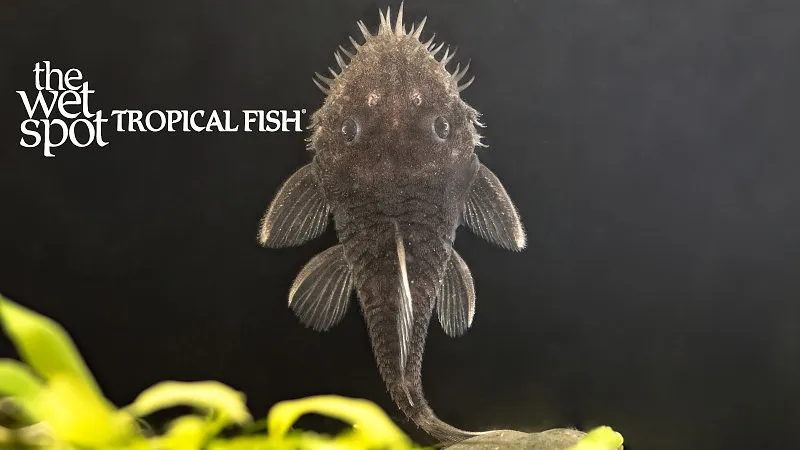
Only males grow the branching, fleshy tentacles across the snout that give bristlenoses their name. It is a cave spawner, and breeding it is moderately difficult. The male takes a narrow cave and the female lays a clutch inside. He guards and fans the eggs until they hatch.
Good to know
Ancistrus aguaboensis belongs to Loricariidae, the suckermouth armored catfishes. It is a dwarf member of the bristlenose group, and its dark body is dusted with small pale spots. It is also sold under the code L032.
In the wild
The Aguaboa bristlenose pleco comes from the Rio Agua Boa, a clear tributary in the Tocantins basin of Brazil. It lives among rock and sunken wood in relatively fast, well-oxygenated water.
Weekly picks
Tank mates
The Aguaboa bristlenose pleco is a peaceful, solitary species that keeps to the bottom. These picks share a community profile with it, are safe together in both directions, and overlap on water type, temperature and pH.
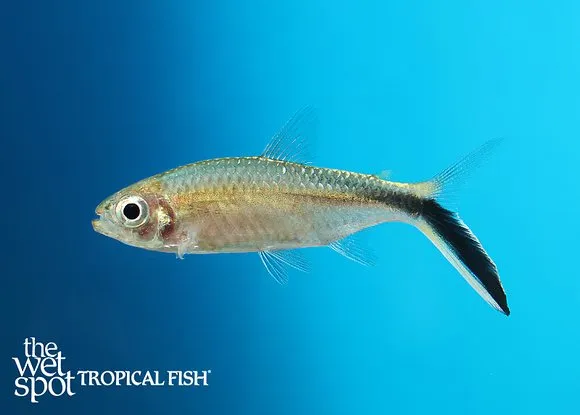
True penguin tetra
Thayeria obliqua
Freshwater3 in (7.6 cm) · 29 gal (110 L)73–82°F (23–28°C)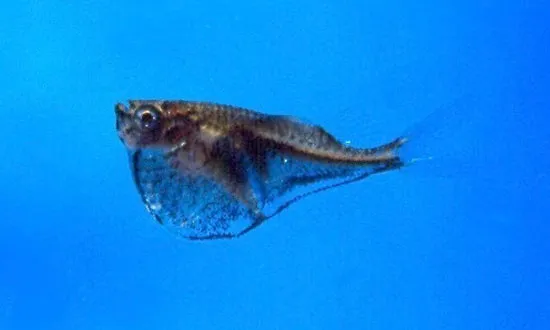
Blackwing hatchetfish
Carnegiella marthae
Freshwater1.4 in (3.5 cm) · 30 gal (115 L)68–82°F (20–28°C)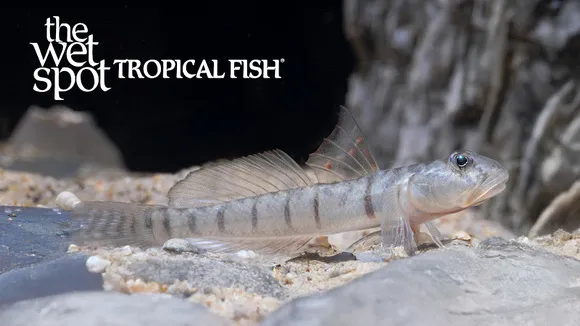
Candy stripe goby
Awaous flavus
Freshwater3.9 in (10 cm) · 29 gal (110 L)75–82°F (24–28°C)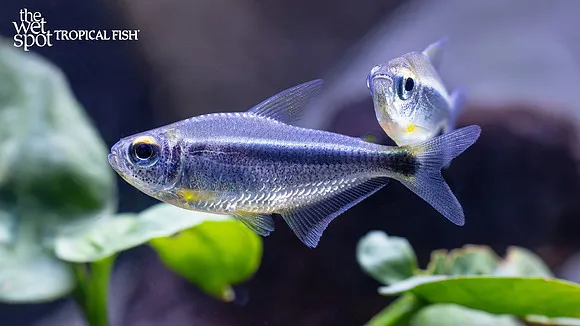
Heiko's tetra
Moenkhausia heikoi
Freshwater3.4 in (8.7 cm) · 29 gal (110 L)75–84°F (24–29°C)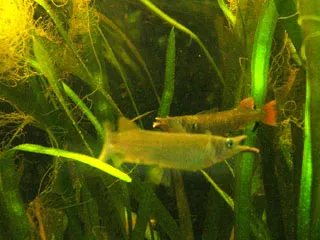
Redfin halfbeak
Nomorhamphus ebrardtii
Freshwater3.5 in (9 cm) · 29 gal (110 L)75–81°F (24–27°C)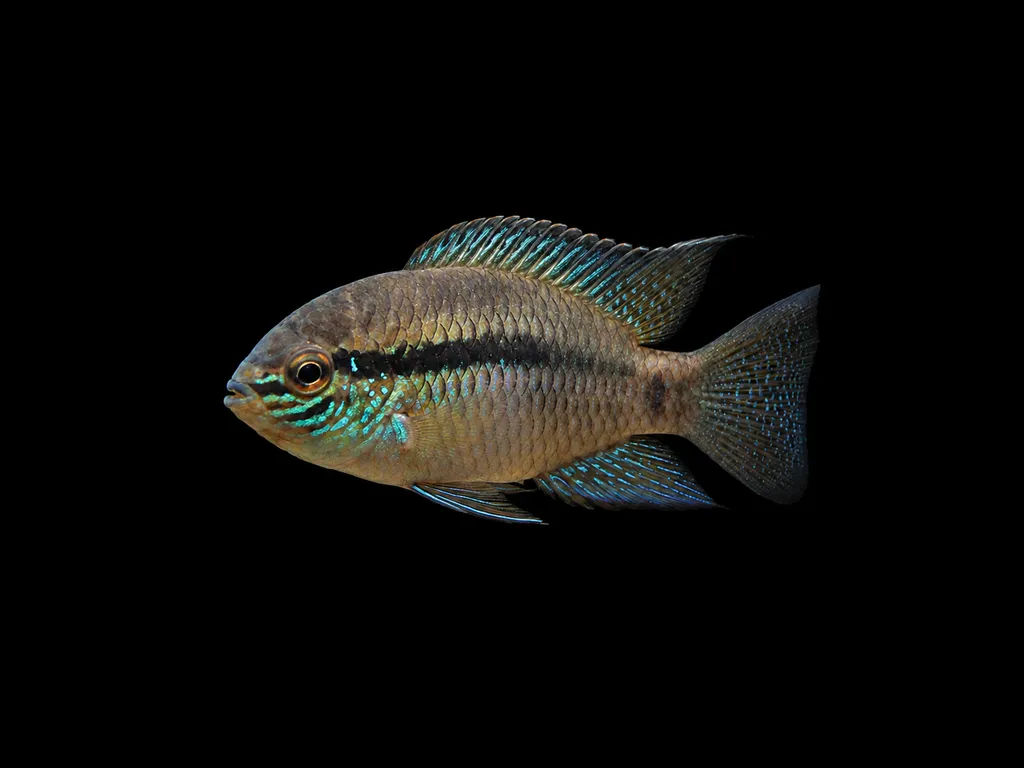
Thayer's dwarf acara
Laetacara thayeri
Freshwater4.7 in (12 cm) · 29 gal (110 L)75–82°F (24–28°C)
Common questions
What size tank does an Aguaboa bristlenose pleco need?
An Aguaboa bristlenose pleco needs at least 29 gal (110 L). It spends most of its time in the bottom.
What temperature and pH does an Aguaboa bristlenose pleco need?
An Aguaboa bristlenose pleco is comfortable at 77–84°F (25–29°C) with a pH of 6.0–7.5.
What does an Aguaboa bristlenose pleco eat?
An Aguaboa bristlenose pleco rasps algae and biofilm from surfaces at night. Feed it algae wafers and vegetables such as zucchini or cucumber, with the odd sinking meaty item.
How big does an Aguaboa bristlenose pleco get?
An adult Aguaboa bristlenose pleco reaches about 3.1 in (8 cm).
How can you tell a male Aguaboa bristlenose pleco from a female?
Males grow branching, fleshy tentacles on the snout, and females lack them.
How does an Aguaboa bristlenose pleco breed?
The Aguaboa bristlenose pleco is a cave spawner. The male takes a narrow cave, the female lays a clutch inside, and he guards and fans the eggs until they hatch. Breeding it is moderately difficult.
Related species
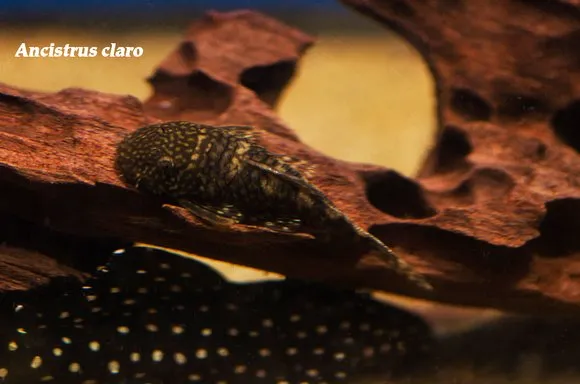 3.1 in (8 cm)20 gal (75 L)77–84°F (25–29°C)
Gold marble bristlenose pleco
Ancistrus claro
3.1 in (8 cm) · 20 gal (75 L)
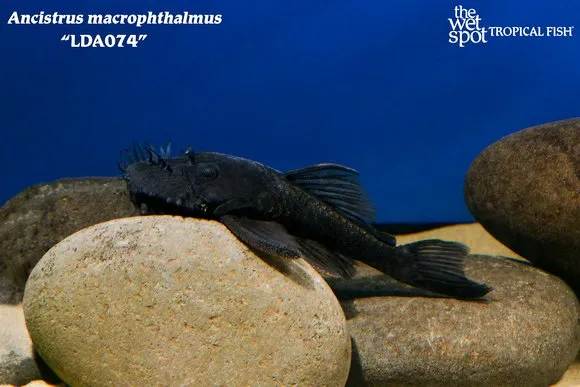 3.5 in (9 cm)29 gal (110 L)77–84°F (25–29°C)
Blue medusa pleco
Ancistrus macrophthalmus
3.5 in (9 cm) · 29 gal (110 L)
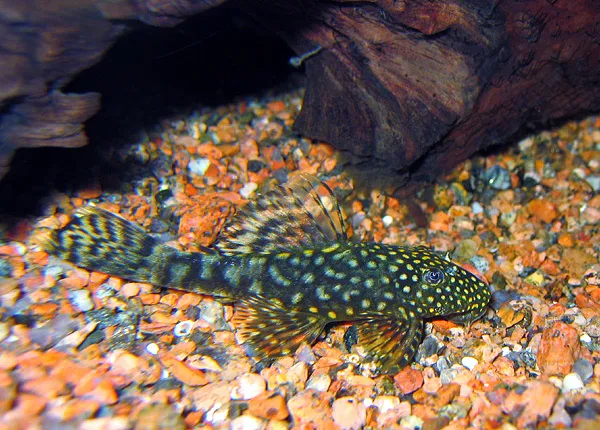 4.3 in (11 cm)18 gal (70 L)77–84°F (25–29°C)
Colombian bristlenose pleco
Ancistrus triradiatus
4.3 in (11 cm) · 18 gal (70 L)
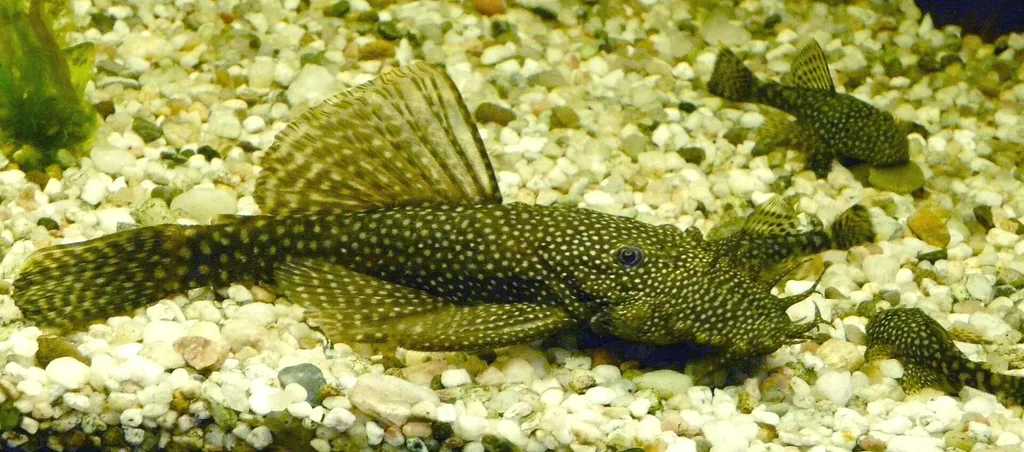 4.9 in (12.5 cm)20 gal (75 L)70–79°F (21–26°C)
Bristlenose pleco
Ancistrus sp.
4.9 in (12.5 cm) · 20 gal (75 L)
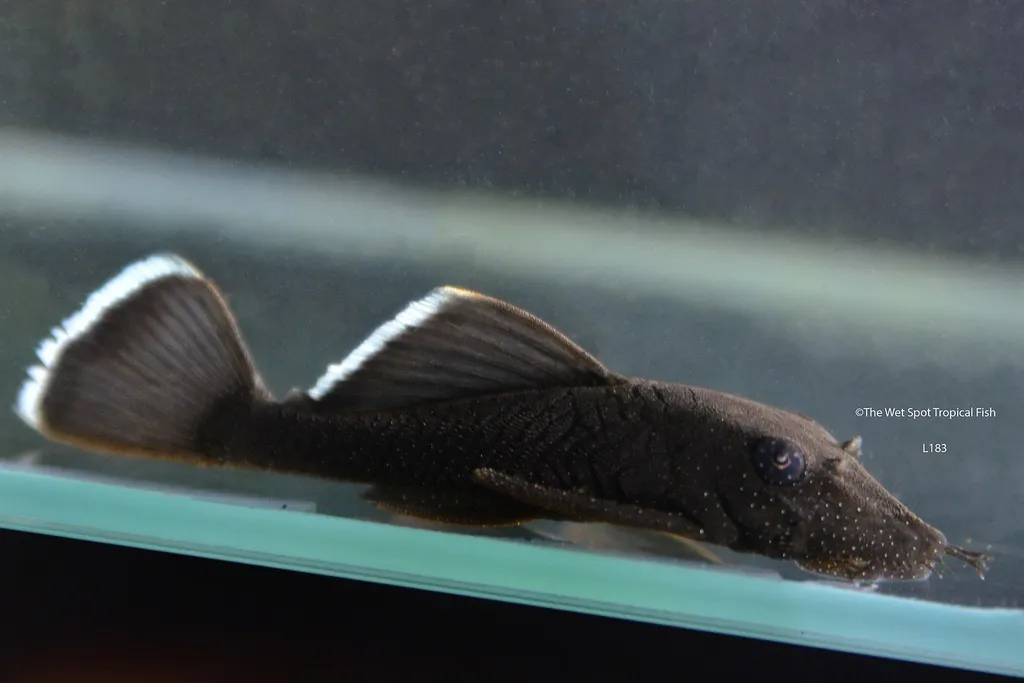 5.5 in (14 cm)63 gal (240 L)79–84°F (26–29°C)
Starlight bristlenose pleco (L183)
Ancistrus dolichopterus
5.5 in (14 cm) · 63 gal (240 L)
 5.9 in (15 cm)18 gal (70 L)79–86°F (26–30°C)
Medusa pleco (L034)
Ancistrus ranunculus
5.9 in (15 cm) · 18 gal (70 L)