Dicrozoster eartheater
Geophagus dicrozoster
Also known as Forked-band eartheater
FreshwaterFish
Care at a glance
- Temperature
- 77–84°F
- 25–29°C
- pH
- 5.5–7.2
- Adult size
- 9.8 in
- 25 cm
- Minimum tank
- 172 gal
- 650 L
- Temperament
- Mostly peaceful
- Social behavior
- Social
- Swim level
- Bottom
- Diet
- Omnivore
- Difficulty
- Medium
- Breeding
- Mouthbrooder · Medium
- Rarity
- Rare
- Family
- Cichlidae
- Origin
- Orinoco basin
Overview
The Dicrozoster eartheater is a big, peaceful sand-sifter for the bottom of a large South American community tank. It is a fish for a keeper past the beginner stage.
Did you know
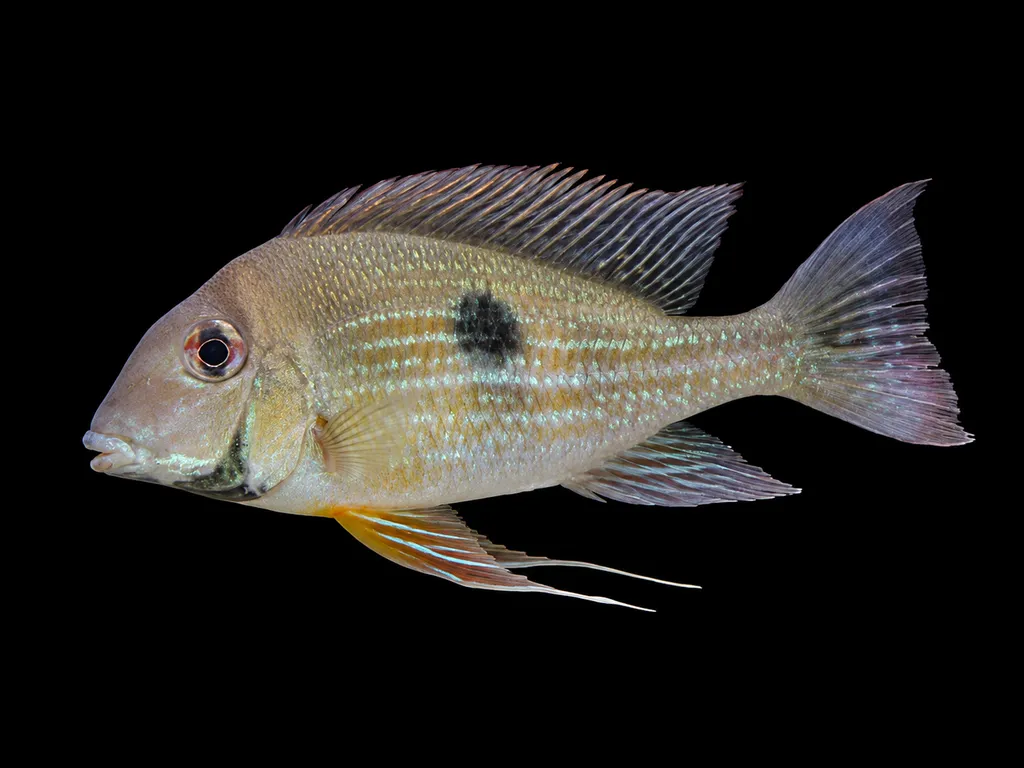
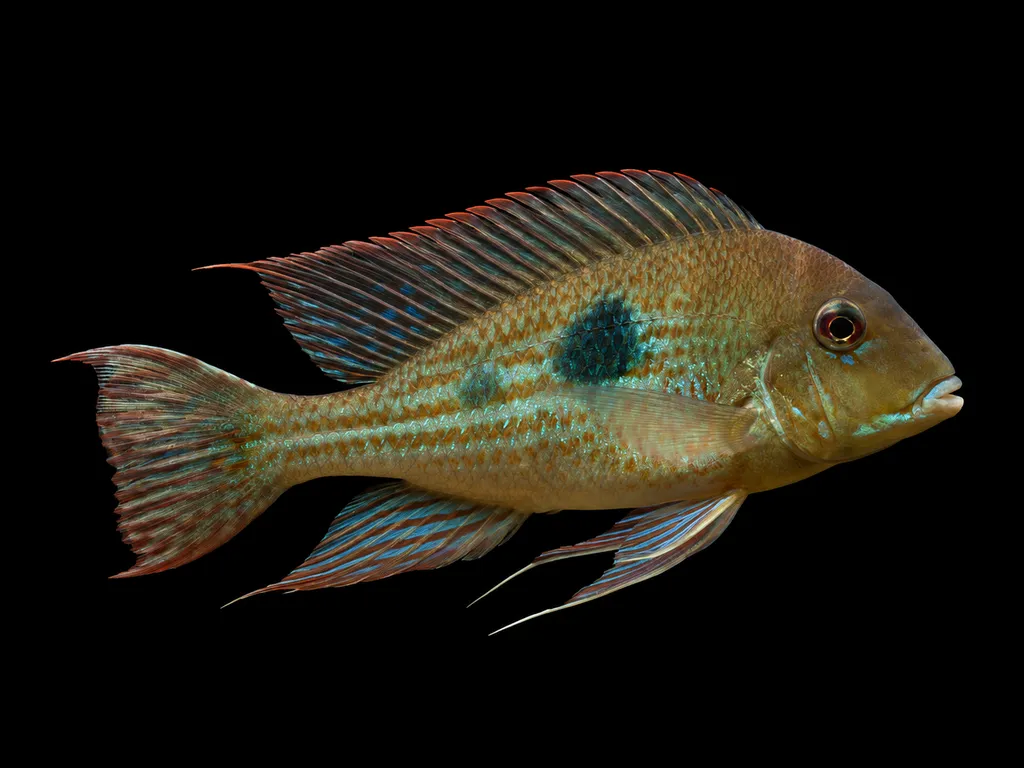
The sand-sifting eartheaters are fiddly to tell apart, but the Dicrozoster eartheater is pinned down by a single field mark. A dark bar on its flank splits in two like the tines of a fork.
Caring for the Dicrozoster eartheater
Give a group of Dicrozoster eartheaters at least 172 gal (650 L), with a deep bed of soft, fine sand. Leave a wide stretch of open sand, and add some smooth wood and rounded stone with swimming space above. Use strong filtration to handle the constant sifting.
Keep the water warm and soft, at 77 to 84°F (25 to 29°C) and a pH of 5.5 to 7.2. It takes in mouthfuls of sand and sifts them through its gills for small food. Feed sinking granules and pellets, frozen bloodworm and mysis, and the occasional plant-based food. Make sure the food reaches the floor.
It is peaceful and gregarious and does best in a group, so keep five or more. The group settles a loose pecking order without real trouble. It is harmless to other fish and mixes well in a calm community of medium-sized South Americans.
It is a substrate-spawning, biparental larvophile mouthbrooder. The pair spawns on the bottom, then takes the larvae into their mouths. Breeding is a moderate challenge in soft water.
Good to know
The Dicrozoster eartheater belongs to the family Cichlidae and to the sand-sifting surinamensis group. Its species name, dicrozoster, means forked girdle.
In the wild
The Dicrozoster eartheater comes from the Orinoco basin. It sifts white-sand shallows and lagoons in warm, soft, slightly acidic water.
Weekly picks
Tank mates
The Dicrozoster eartheater is a mostly peaceful, social species that keeps to the bottom. These picks share a community profile with it, are safe together in both directions, and overlap on water type, temperature and pH.
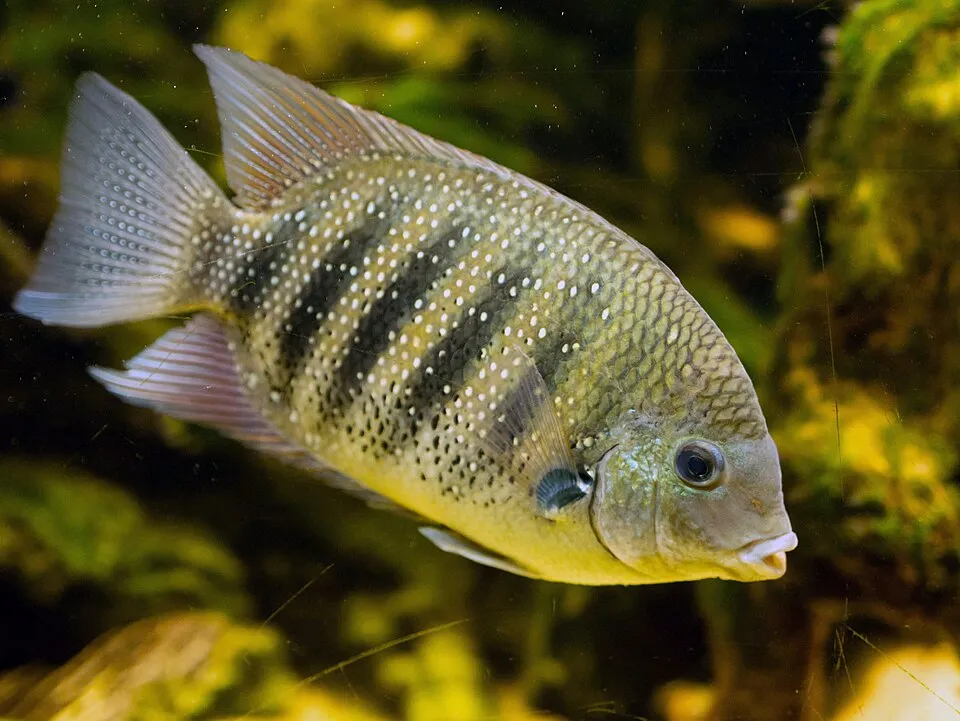
Green chromide
Etroplus suratensis
FreshwaterBrackish11.8 in (30 cm) · 145 gal (550 L)68–86°F (20–30°C)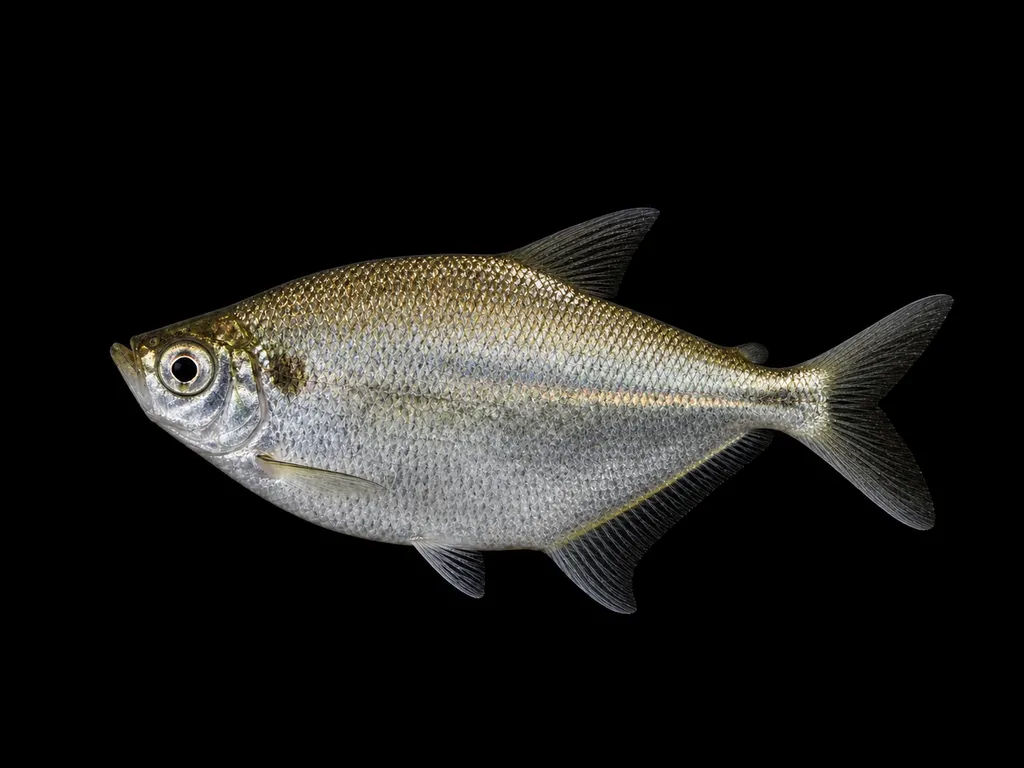
Giant river hatchetfish
Triportheus rotundatus
Freshwater9.8 in (25 cm) · 79 gal (300 L)73–82°F (23–28°C)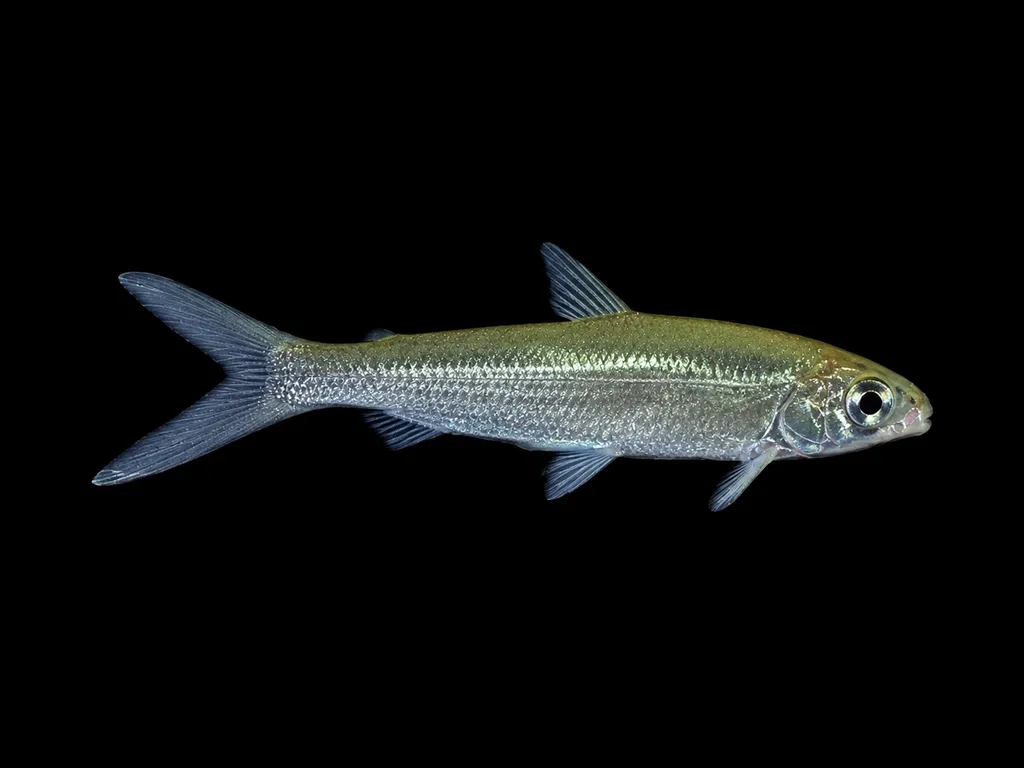
Fowler's hemiodus
Bivibranchia fowleri
Freshwater7.5 in (19 cm) · 106 gal (400 L)75–84°F (24–29°C)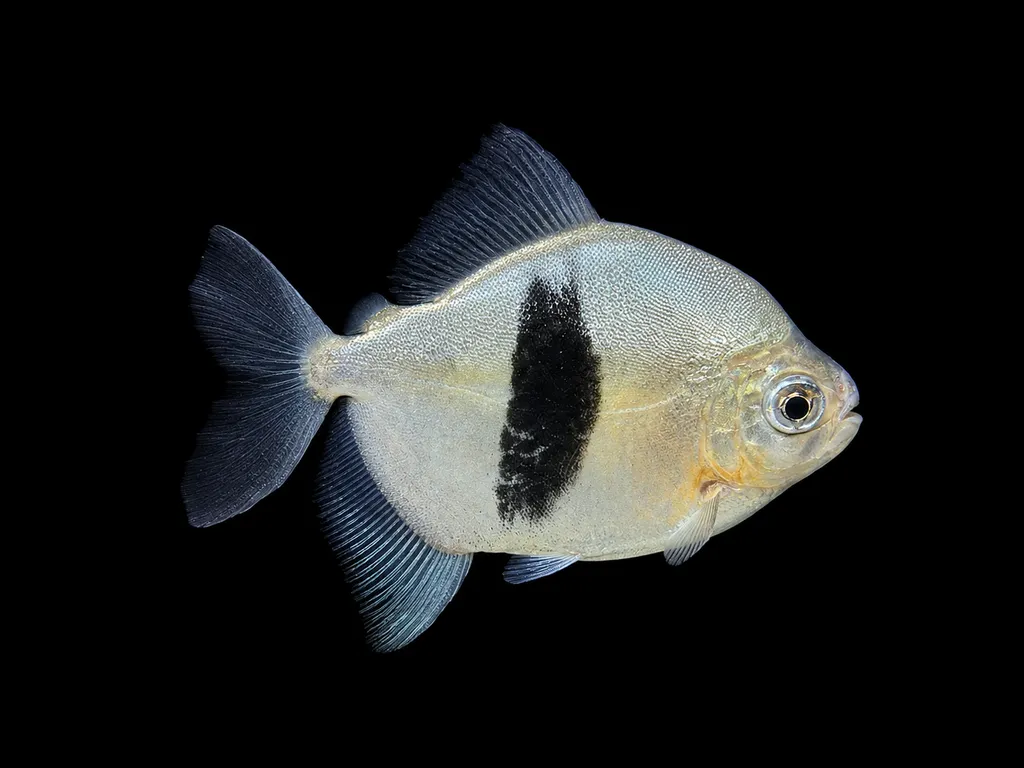
Blue hook silver dollar
Myloplus aylan
Freshwater13.8 in (35 cm) · 170 gal (645 L)75–82°F (24–28°C)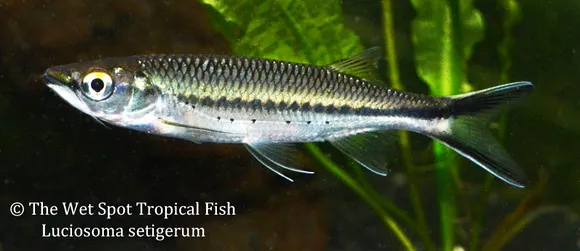
Apollo shark minnow
Luciosoma setigerum
Freshwater11.8 in (30 cm) · 106 gal (400 L)72–81°F (22–27°C)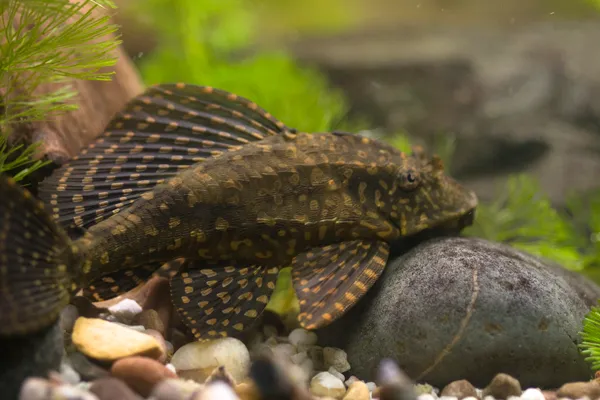
Gold spot sailfin pleco
Pterygoplichthys joselimaianus
Freshwater15.7 in (40 cm) · 119 gal (450 L)77–84°F (25–29°C)
Common questions
What size tank does a Dicrozoster eartheater need?
A Dicrozoster eartheater needs at least 172 gal (650 L). It spends most of its time in the bottom.
What temperature and pH does a Dicrozoster eartheater need?
A Dicrozoster eartheater is comfortable at 77–84°F (25–29°C) with a pH of 5.5–7.2.
What does a Dicrozoster eartheater eat?
A Dicrozoster eartheater eats sinking granules and pellets, frozen bloodworm and mysis, and the occasional plant-based food. It also sifts mouthfuls of sand for small food.
How big does a Dicrozoster eartheater get?
An adult Dicrozoster eartheater reaches about 9.8 in (25 cm).
How does a Dicrozoster eartheater breed?
Dicrozoster eartheaters spawn on the bottom as a pair. Both parents then take the larvae into their mouths, and breeding is a moderate challenge in soft water.
Related species
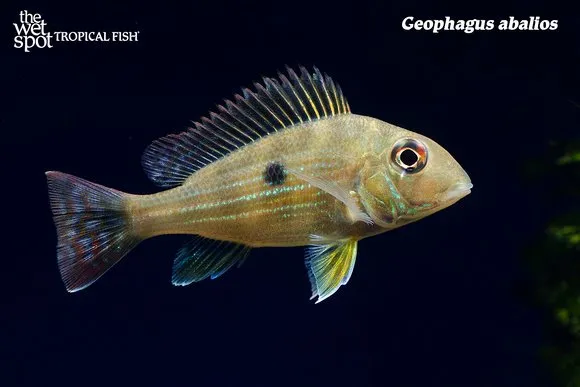 9.8 in (25 cm)172 gal (650 L)77–84°F (25–29°C)
Abalios eartheater
Geophagus abalios
9.8 in (25 cm) · 172 gal (650 L)
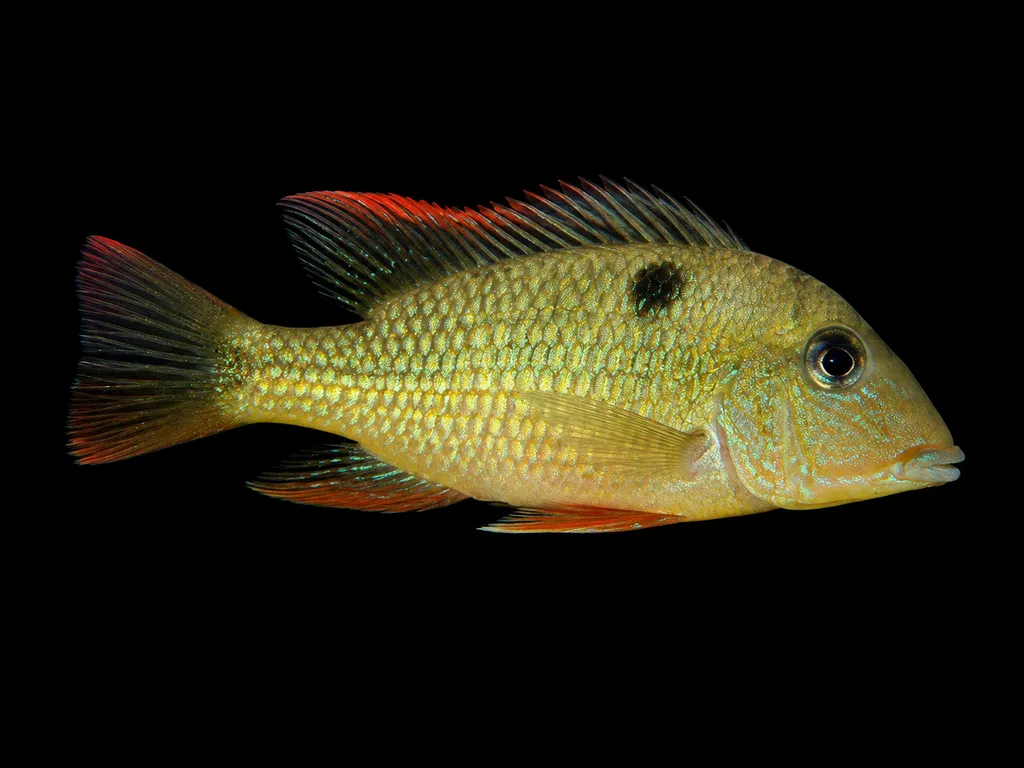 10.2 in (26 cm)172 gal (650 L)77–84°F (25–29°C)
Panama eartheater
Geophagus crassilabris
10.2 in (26 cm) · 172 gal (650 L)
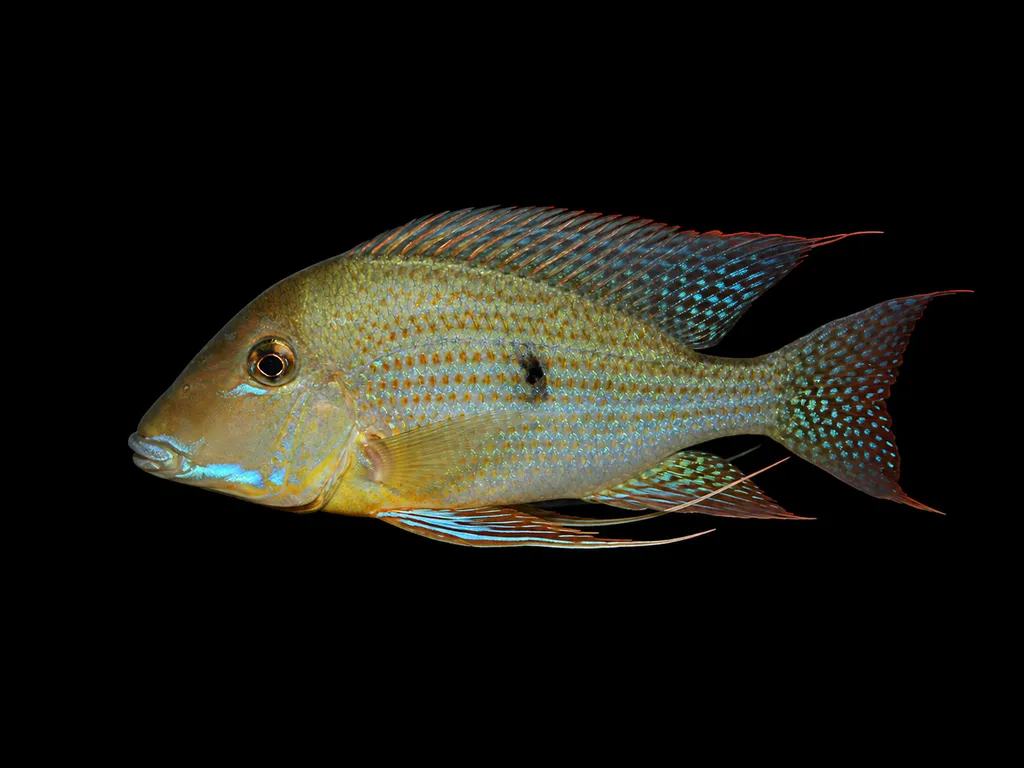 9.4 in (24 cm)172 gal (650 L)77–84°F (25–29°C)
Neambi eartheater
Geophagus neambi
9.4 in (24 cm) · 172 gal (650 L)
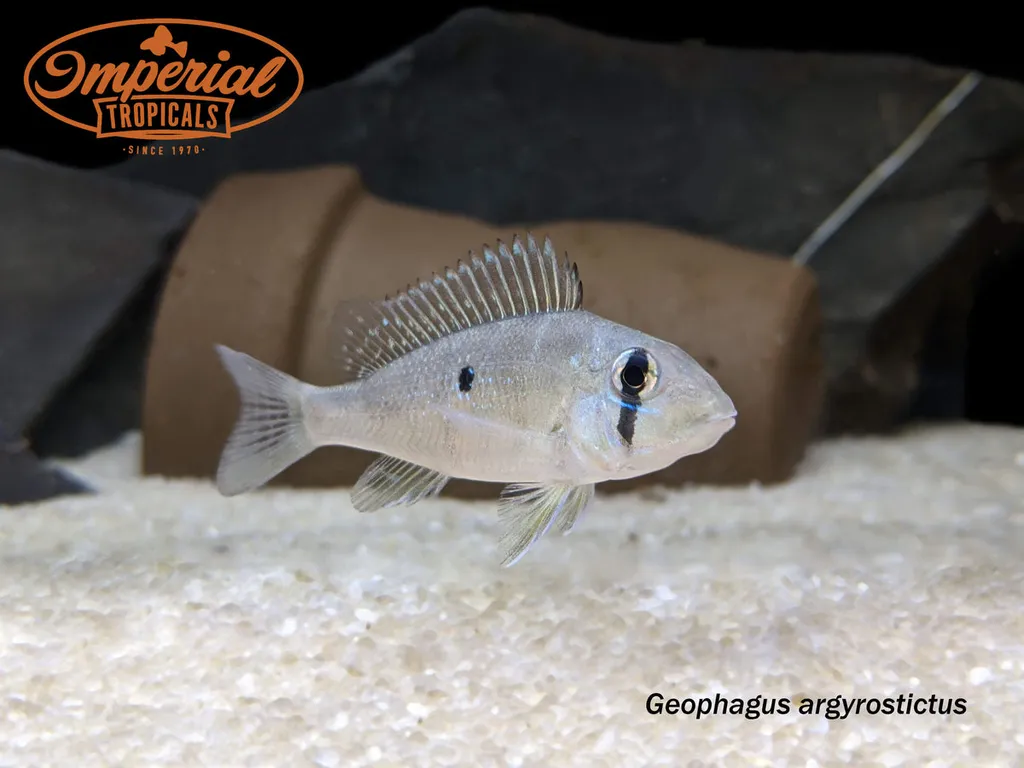 9.4 in (24 cm)119 gal (450 L)77–84°F (25–29°C)
Silverspot eartheater
Geophagus argyrostictus
9.4 in (24 cm) · 119 gal (450 L)
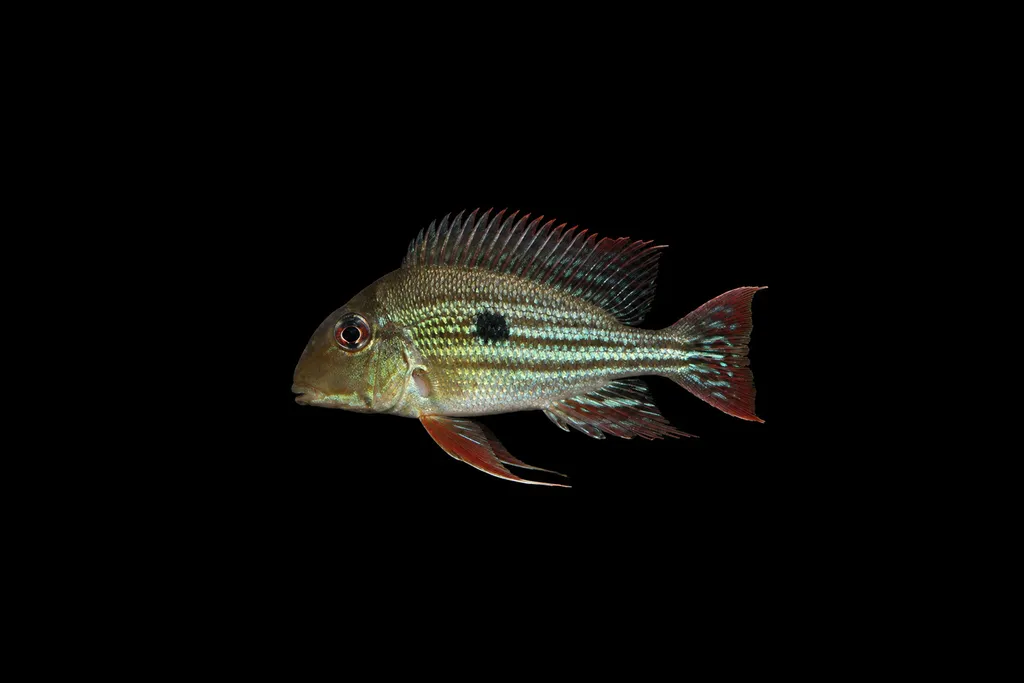 9.4 in (24 cm)172 gal (650 L)77–84°F (25–29°C)
Winemiller's eartheater
Geophagus winemilleri
9.4 in (24 cm) · 172 gal (650 L)
 9.1 in (23 cm)172 gal (650 L)77–84°F (25–29°C)
Bigspot eartheater
Geophagus megasema
9.1 in (23 cm) · 172 gal (650 L)