Winemiller's eartheater
Geophagus winemilleri
Also known as Casiquiare eartheater
FreshwaterFish
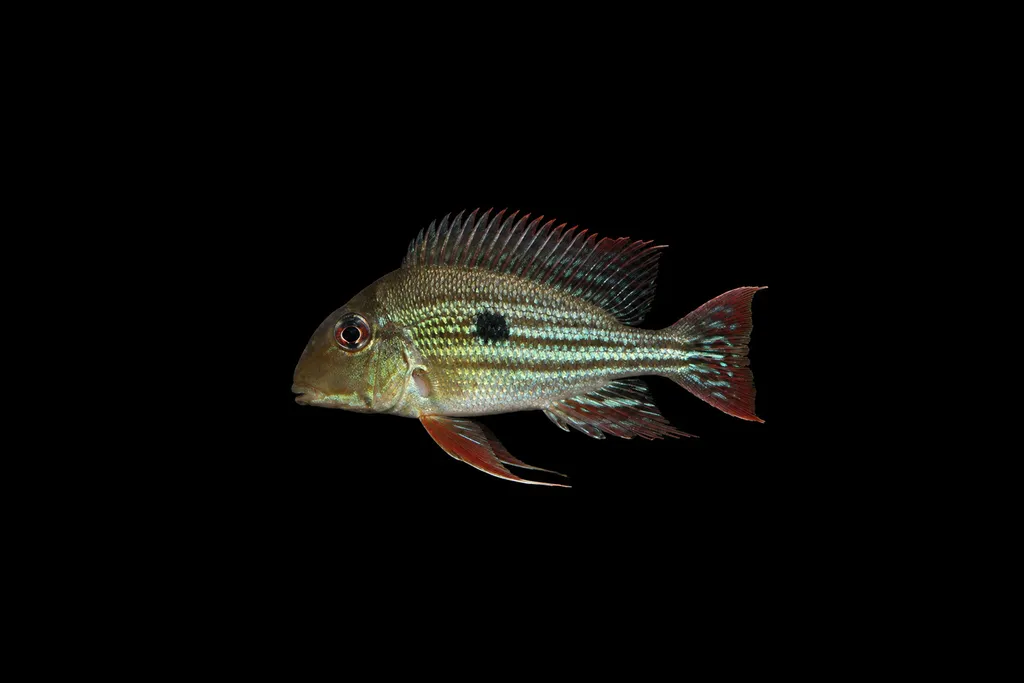
Care at a glance
- Temperature
- 77–84°F
- 25–29°C
- pH
- 4.8–6.5
- Adult size
- 9.4 in
- 24 cm
- Minimum tank
- 172 gal
- 650 L
- Temperament
- Mostly peaceful
- Social behavior
- Social
- Swim level
- Bottom
- Difficulty
- Medium
- Breeding
- Mouthbrooder · Medium
- Rarity
- Common
- Family
- Cichlidae
- Origin
- Casiquiare and upper Negro drainages
Overview
The Winemiller's eartheater is a sand-sifting cichlid for the bottom of a dark, soft-water tank. It is best with a little experience.
Did you know
The Winemiller's eartheater lives in a hydrological oddity. Its home canal, the Casiquiare, is a natural channel that connects the Orinoco to the Amazon. The fish can pass between the two river systems.
Caring for the Winemiller's eartheater
Keep a group of five or six Winemiller's eartheaters in at least 172 gal (650 L). Give them deep, pale sand with leaf litter, tannin-stained water and subdued light, which is what brings up their color.
Run its tank darker and softer than the average eartheater's. Keep the water at 77 to 84°F (25 to 29°C) and a pH of 4.8 to 6.5. Stable, very soft water matters more for this fish than for the rest of the genus.
Feed fine sinking foods and frozen brine shrimp or cyclops in small, frequent amounts. Winemiller's eartheaters are mostly peaceful and suit calm blackwater company.
It is a delayed mouthbrooder. Breeding it is of moderate difficulty.
Good to know
Geophagus winemilleri, a member of the family Cichlidae, is named for the ecologist Kirk Winemiller. It is a blackwater specialist within a genus that mostly lives in clearer water.
In the wild
Geophagus winemilleri sifts blackwater sand along the Casiquiare and in the upper Negro.
Weekly picks
Tank mates
The Winemiller's eartheater is a mostly peaceful, social species that keeps to the bottom. These picks share a community profile with it, are safe together in both directions, and overlap on water type, temperature and pH.
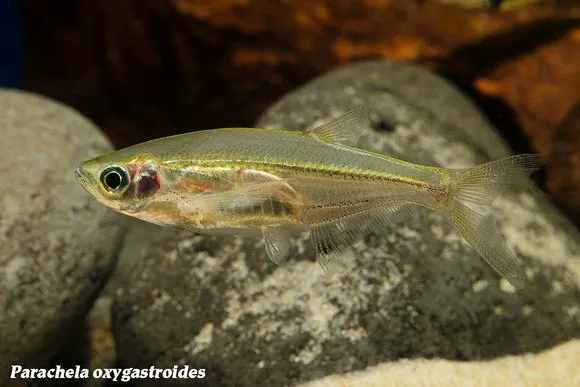
Asian glass hatchetfish
Parachela oxygastroides
Freshwater7.9 in (20 cm) · 79 gal (300 L)73–82°F (23–28°C)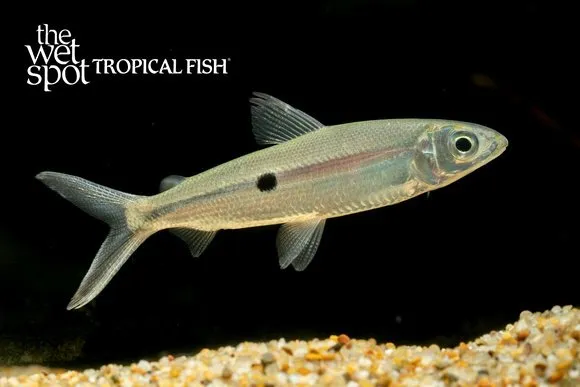
Smallscale hemiodus
Hemiodus microlepis
Freshwater11 in (28 cm) · 159 gal (600 L)75–84°F (24–29°C)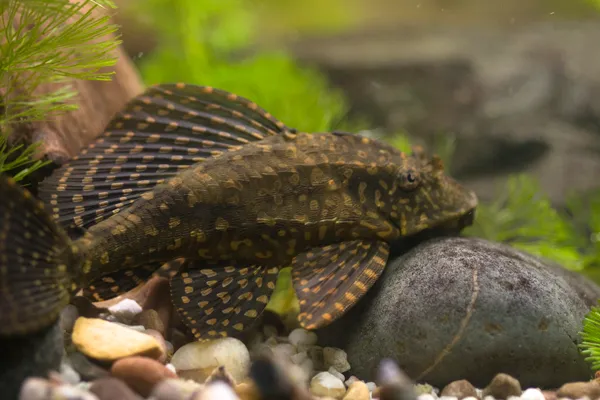
Gold spot sailfin pleco
Pterygoplichthys joselimaianus
Freshwater15.7 in (40 cm) · 119 gal (450 L)77–84°F (25–29°C)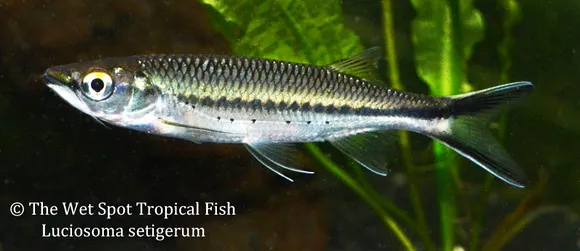
Apollo shark minnow
Luciosoma setigerum
Freshwater11.8 in (30 cm) · 106 gal (400 L)72–81°F (22–27°C)False hemiodus
Argonectes longiceps
Freshwater11.8 in (30 cm) · 159 gal (600 L)75–84°F (24–29°C)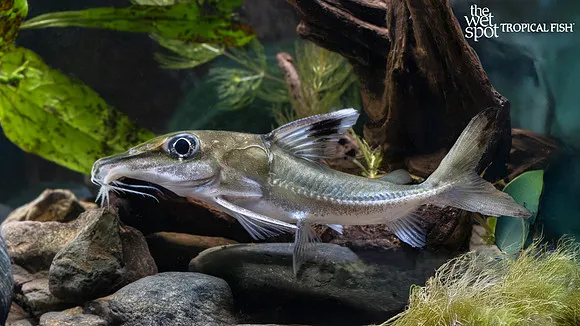
Black-top mouse catfish
Hassar orestis
Freshwater11.8 in (30 cm) · 106 gal (400 L)73–82°F (23–28°C)
Common questions
What size tank does a Winemiller's eartheater need?
A Winemiller's eartheater needs at least 172 gal (650 L). It spends most of its time in the bottom.
What temperature and pH does a Winemiller's eartheater need?
A Winemiller's eartheater is comfortable at 77–84°F (25–29°C) with a pH of 4.8–6.5.
What does a Winemiller's eartheater eat?
A Winemiller's eartheater eats fine sinking foods and frozen brine shrimp or cyclops. Offer them in small, frequent amounts.
How big does a Winemiller's eartheater get?
An adult Winemiller's eartheater reaches about 9.4 in (24 cm).
How does a Winemiller's eartheater breed?
A Winemiller's eartheater is a delayed mouthbrooder. Breeding it is of moderate difficulty.
Related species
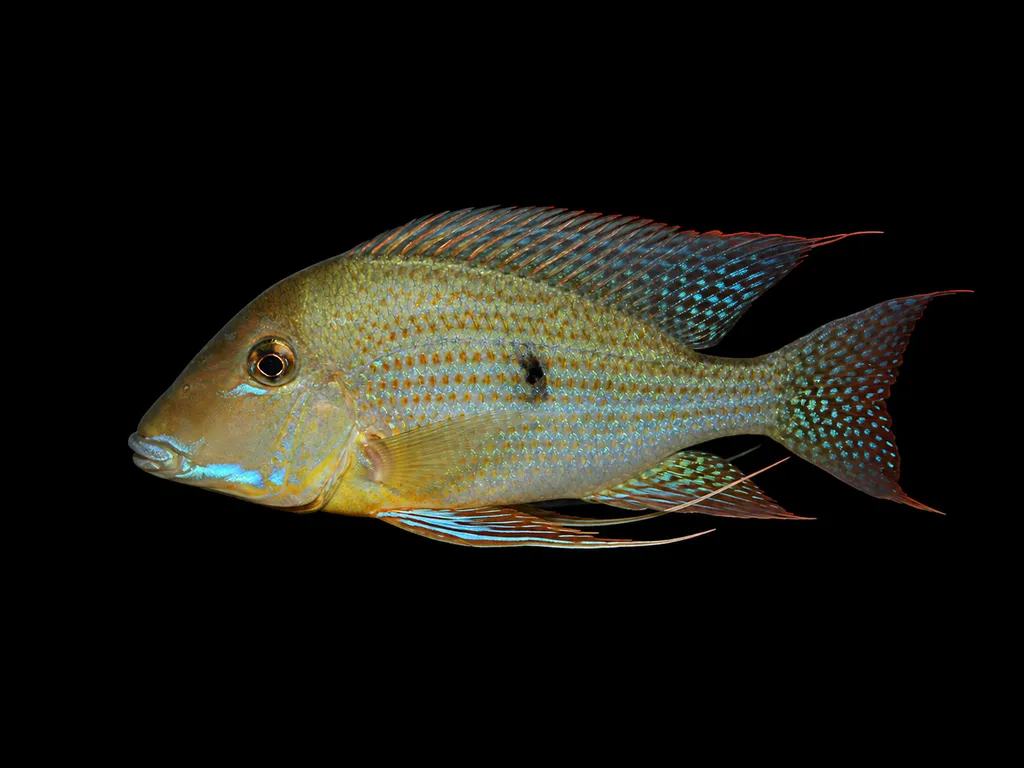 9.4 in (24 cm)172 gal (650 L)77–84°F (25–29°C)
Neambi eartheater
Geophagus neambi
9.4 in (24 cm) · 172 gal (650 L)
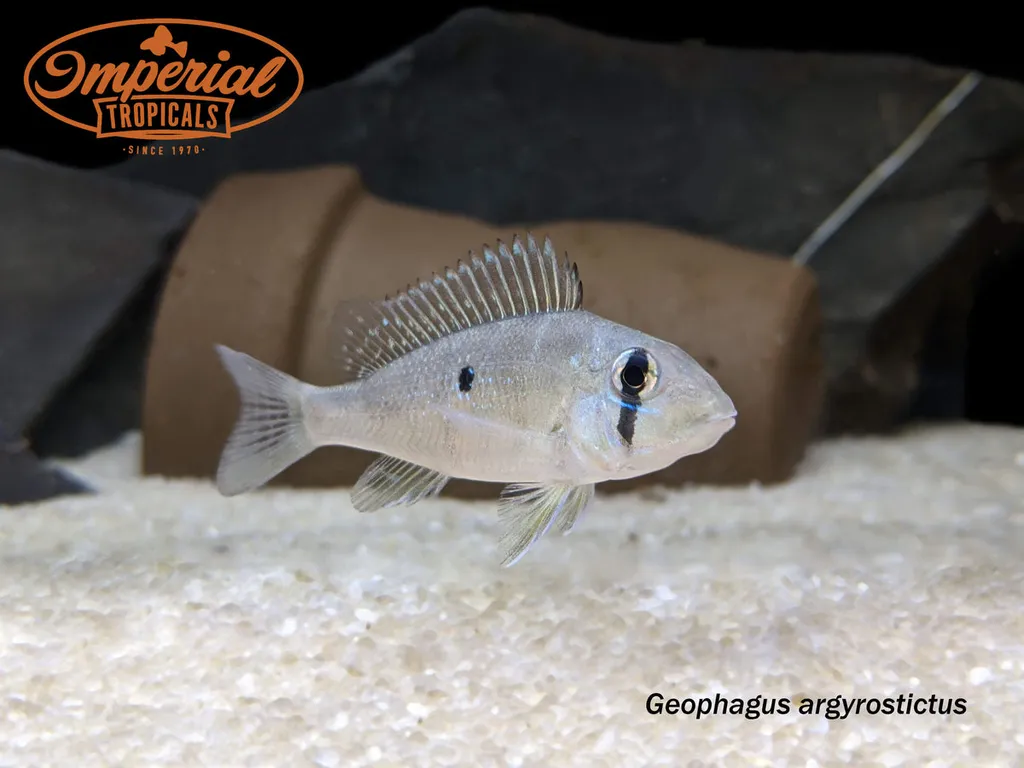 9.4 in (24 cm)119 gal (450 L)77–84°F (25–29°C)
Silverspot eartheater
Geophagus argyrostictus
9.4 in (24 cm) · 119 gal (450 L)
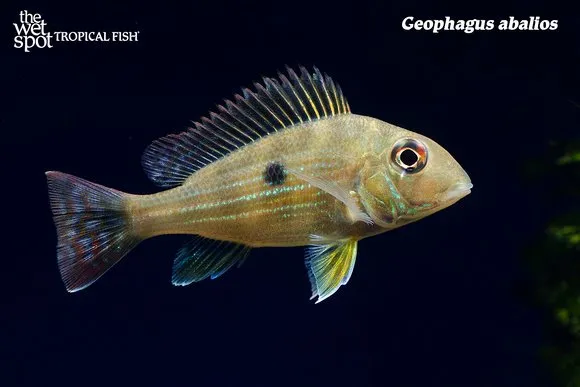 9.8 in (25 cm)172 gal (650 L)77–84°F (25–29°C)
Abalios eartheater
Geophagus abalios
9.8 in (25 cm) · 172 gal (650 L)
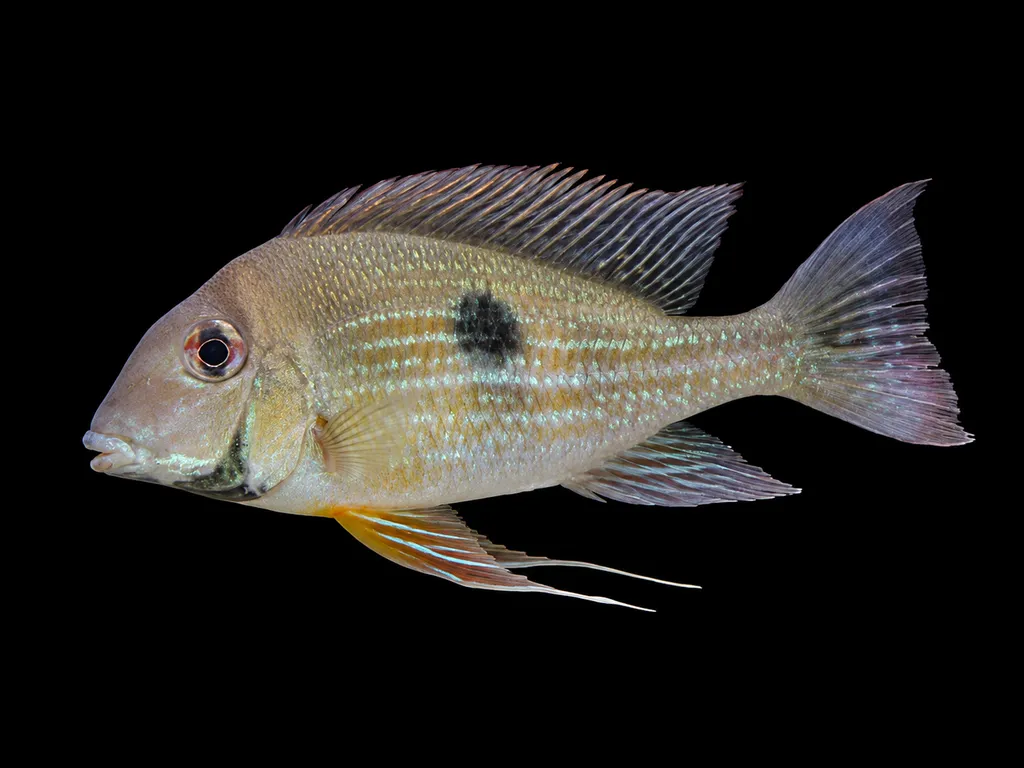 9.8 in (25 cm)172 gal (650 L)77–84°F (25–29°C)
Dicrozoster eartheater
Geophagus dicrozoster
9.8 in (25 cm) · 172 gal (650 L)
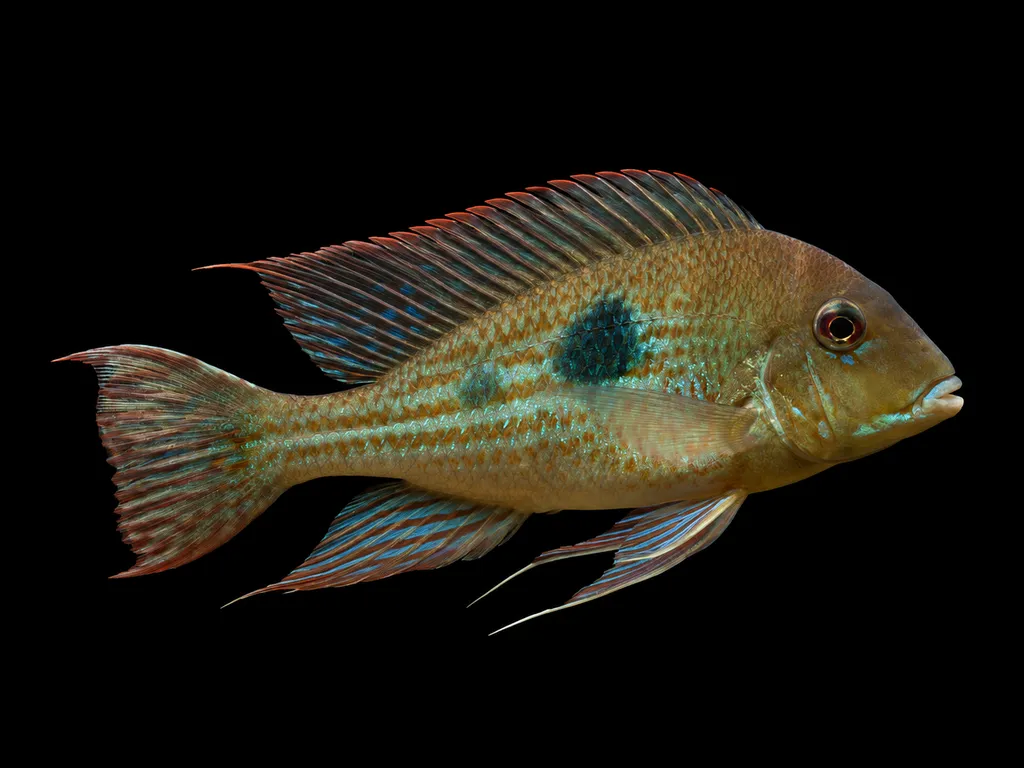 9.1 in (23 cm)172 gal (650 L)77–84°F (25–29°C)
Bigspot eartheater
Geophagus megasema
9.1 in (23 cm) · 172 gal (650 L)
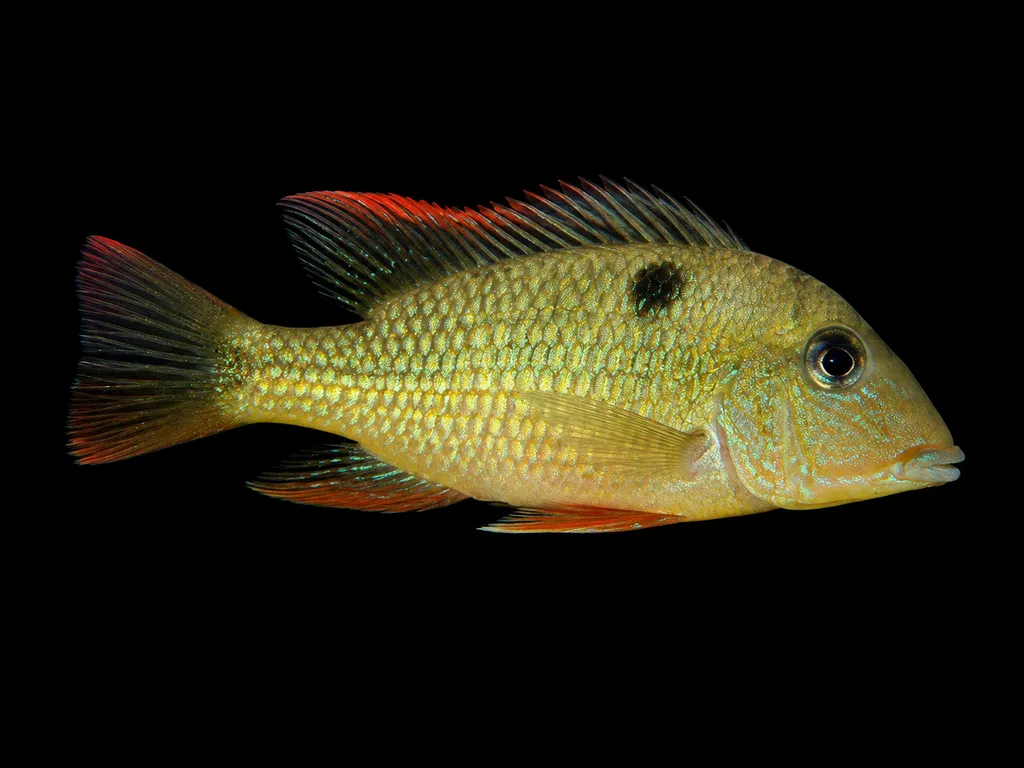 10.2 in (26 cm)172 gal (650 L)77–84°F (25–29°C)
Panama eartheater
Geophagus crassilabris
10.2 in (26 cm) · 172 gal (650 L)