Sucker barb
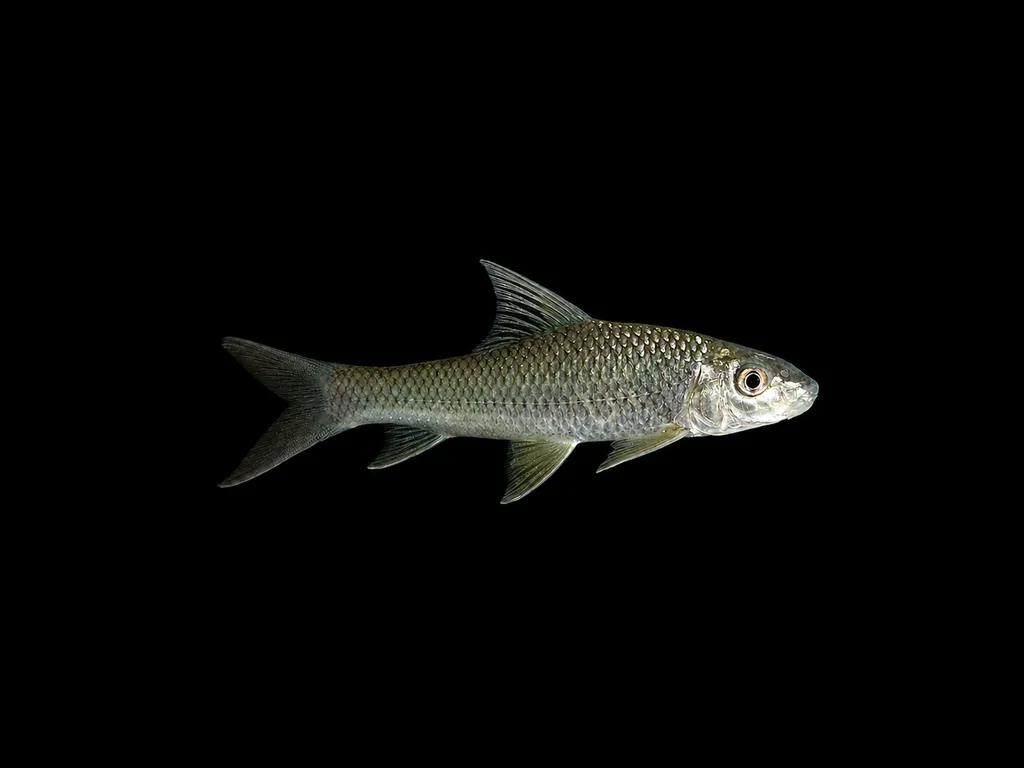
Barbichthys laevis
Also known as Sucker barbel
FreshwaterFish
Care at a glance
- Temperature
- 72–82°F
- 22–28°C
- pH
- 6.0–7.5
- Adult size
- 12.2 in
- 31 cm
- Minimum tank
- 159 gal
- 600 L
- Temperament
- Mostly peaceful
- Social behavior
- Schooling
- Swim level
- Middle
- Difficulty
- Medium
- Breeding
- No record
- Rarity
- Rare
- Family
- Cyprinidae
- Origin
- Rivers of the Malay Peninsula, Sumatra, and Borneo
Overview
The sucker barb is a large, silvery river fish that grazes surfaces. It suits a keeper with a little experience and a very big tank.
Did you know
The sucker barb makes its living much like the little flying fox and Siamese algae eater, grazing biofilm from river stone. It does the same job at more than twice their length, a scaled-up version of the familiar aquarium algae grazers.
Caring for the sucker barb
Give sucker barbs a big river tank with long swimming lanes and strong current, and treat 159 gal (600 L) as a realistic minimum. Add plenty of grazable rock and wood, such as water-worn boulders and driftwood, over a sand bed. That setup lets them feed and behave naturally.
Keep the water warm, at 72 to 82°F (22 to 28°C) with a pH of 6.0 to 7.5. Give them high oxygen and heavy filtration.
The sucker barb works the middle and lower water, rasping biofilm and algae. Feed a green-leaning diet of algae wafers, vegetables and sinking pellets, with some frozen foods.
Sucker barbs are a shoaling species, happiest in a group. They are mostly peaceful, though large adults can be pushy, so give them room. Match them with other sizeable, robust tank mates rather than small fish. They are not bred in home aquariums.
Good to know
The sucker barb, Barbichthys laevis, is a member of the carp family, Cyprinidae, described by Valenciennes in 1842. It has a down-turned, grazing mouth. Unusually, greatly enlarged suborbital bones cover much of its cheek, and a dark stripe runs along each lobe of the tail.
In the wild
The sucker barb lives in medium and large rivers across the Malay Peninsula, Sumatra, Borneo and neighboring parts of Southeast Asia. It grazes stone and submerged wood in flowing water.
Weekly picks
Tank mates
The sucker barb is a mostly peaceful, schooling species that keeps to the middle. These picks share a community profile with it, are safe together in both directions, and overlap on water type, temperature and pH.
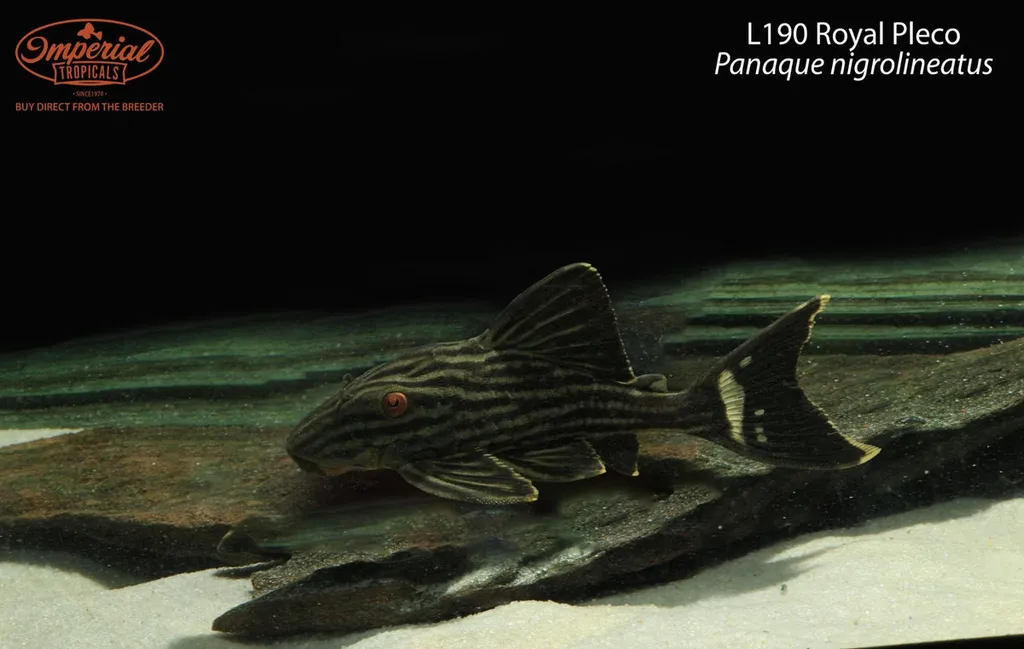
Royal pleco
Panaque nigrolineatus
Freshwater16.9 in (43 cm) · 125 gal (473 L)72–82°F (22–28°C)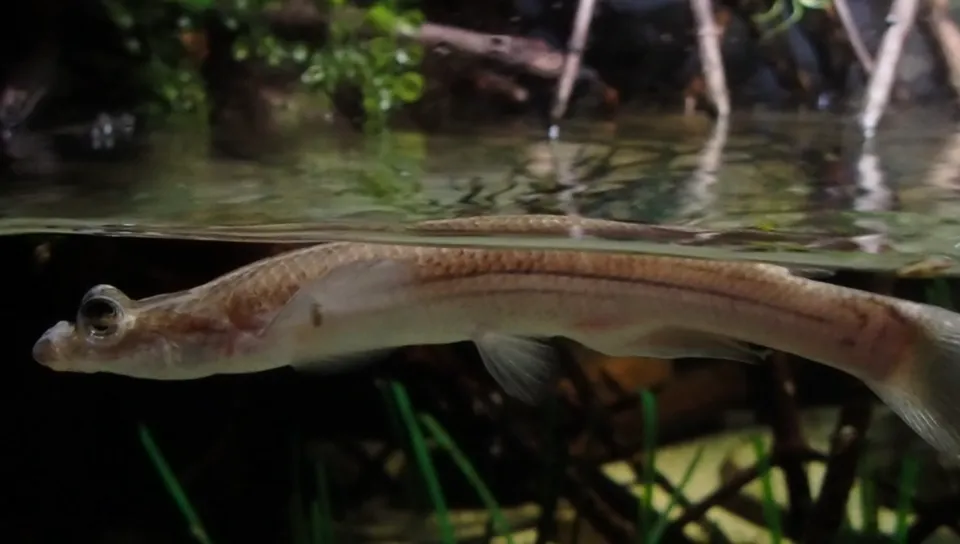
Largescale four-eyed fish
Anableps anableps
FreshwaterBrackish11.8 in (30 cm) · 70 gal (265 L)77–88°F (25–31°C)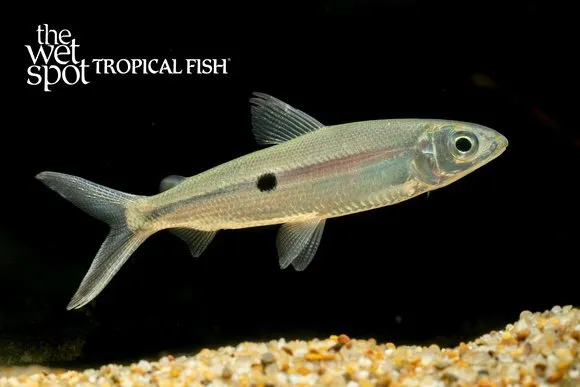
Smallscale hemiodus
Hemiodus microlepis
Freshwater11 in (28 cm) · 159 gal (600 L)75–84°F (24–29°C)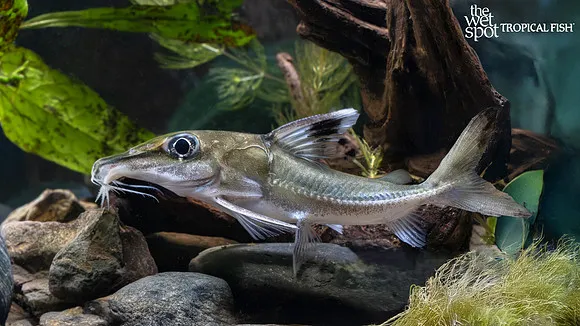
Black-top mouse catfish
Hassar orestis
Freshwater11.8 in (30 cm) · 106 gal (400 L)73–82°F (23–28°C)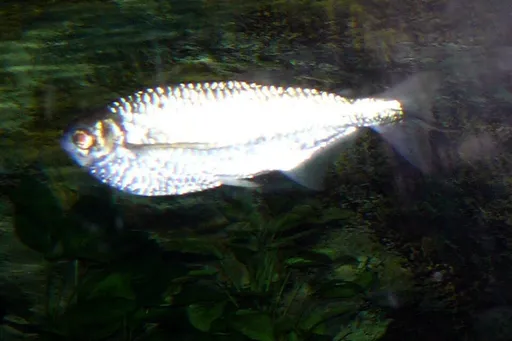
Narrow hatchetfish
Triportheus angulatus
Freshwater9.8 in (25 cm) · 79 gal (300 L)73–82°F (23–28°C)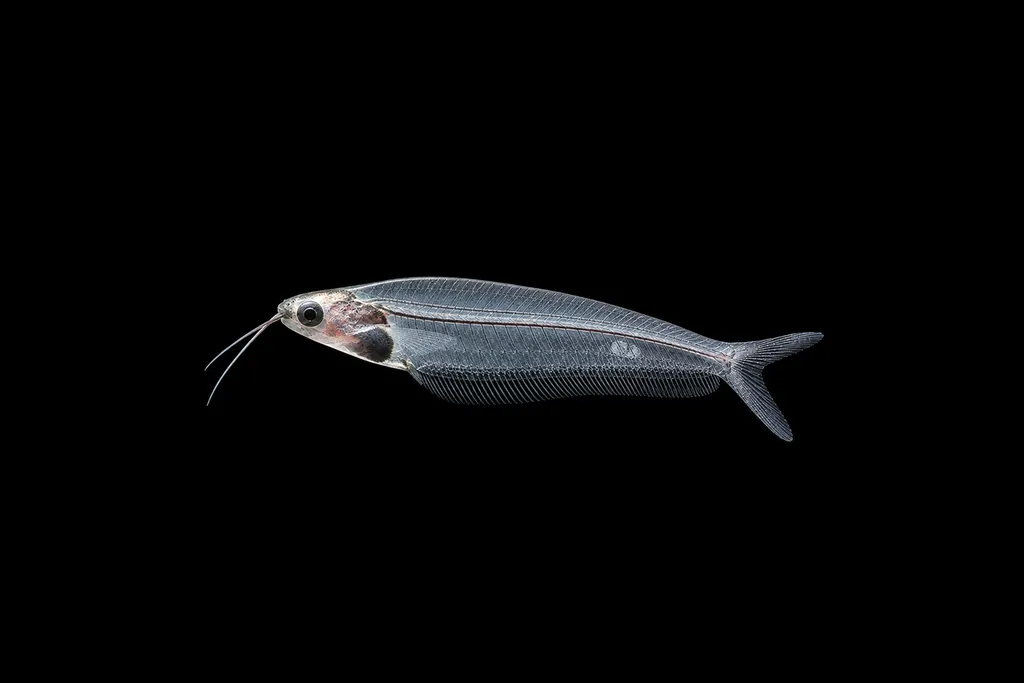
Mekong glass sheatfish
Kryptopterus limpok
Freshwater11.8 in (30 cm) · 119 gal (450 L)73–81°F (23–27°C)
Common questions
What size tank does a sucker barb need?
A sucker barb needs at least 159 gal (600 L). It spends most of its time in the middle.
What temperature and pH does a sucker barb need?
A sucker barb is comfortable at 72–82°F (22–28°C) with a pH of 6.0–7.5.
What does a sucker barb eat?
A sucker barb rasps biofilm and algae from surfaces. Feed it a green-leaning diet of algae wafers, vegetables and sinking pellets, with some frozen foods.
How big does a sucker barb get?
An adult sucker barb reaches about 12.2 in (31 cm).
Does a sucker barb need a group?
Yes. A sucker barb is a schooling species and should be kept in a group, not singly.
Related species
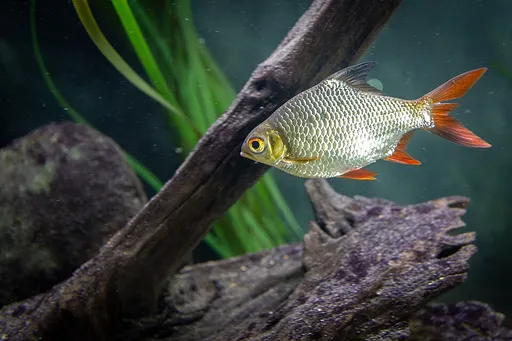 13.8 in (35 cm)180 gal (680 L)72–82°F (22–28°C)
Tinfoil barb
Barbonymus schwanenfeldii
13.8 in (35 cm) · 180 gal (680 L)
- 13.8 in (35 cm)211 gal (800 L)72–82°F (22–28°C)
Red-tail silver shark
Hypselobarbus kurali
13.8 in (35 cm) · 211 gal (800 L)
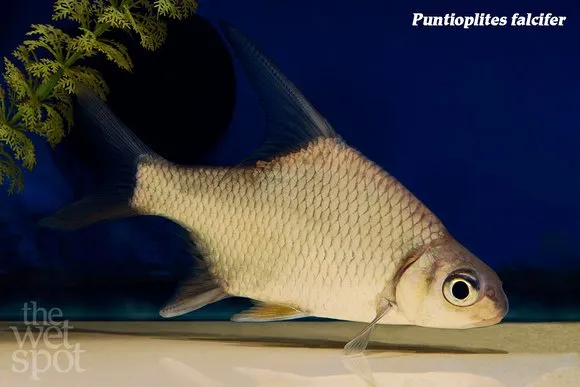 15.7 in (40 cm)264 gal (1,000 L)73–82°F (23–28°C)
Sickle-fin barb
Puntioplites falcifer
15.7 in (40 cm) · 264 gal (1,000 L)
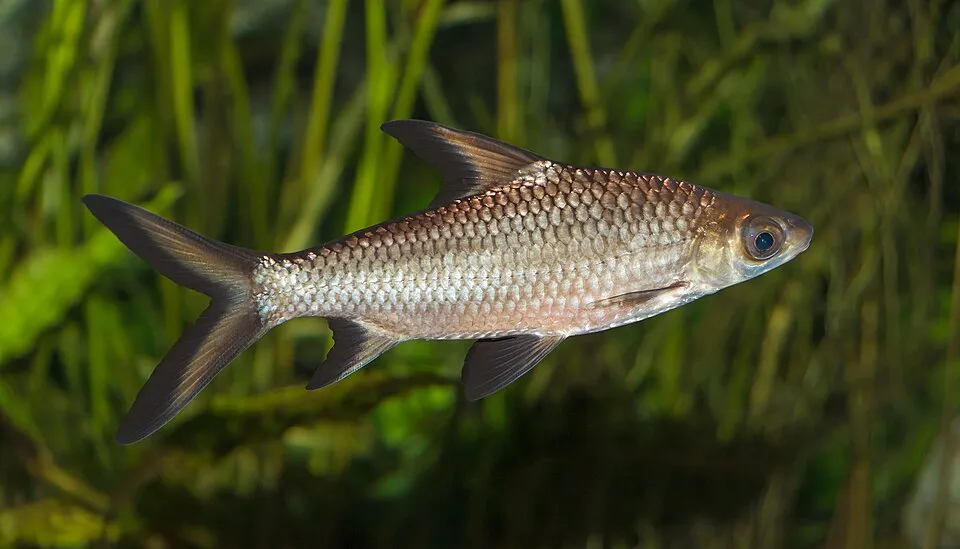 15.7 in (40 cm)227 gal (860 L)72–82°F (22–28°C)
Silver shark
Balantiocheilos melanopterus
15.7 in (40 cm) · 227 gal (860 L)
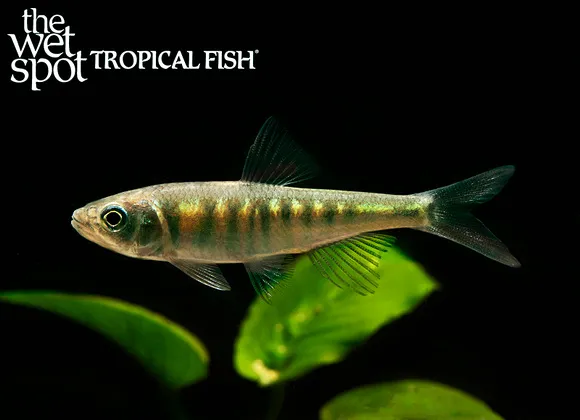 7.9 in (20 cm)79 gal (300 L)54–75°F (12–24°C)
Pale chub
Zacco platypus
7.9 in (20 cm) · 79 gal (300 L)
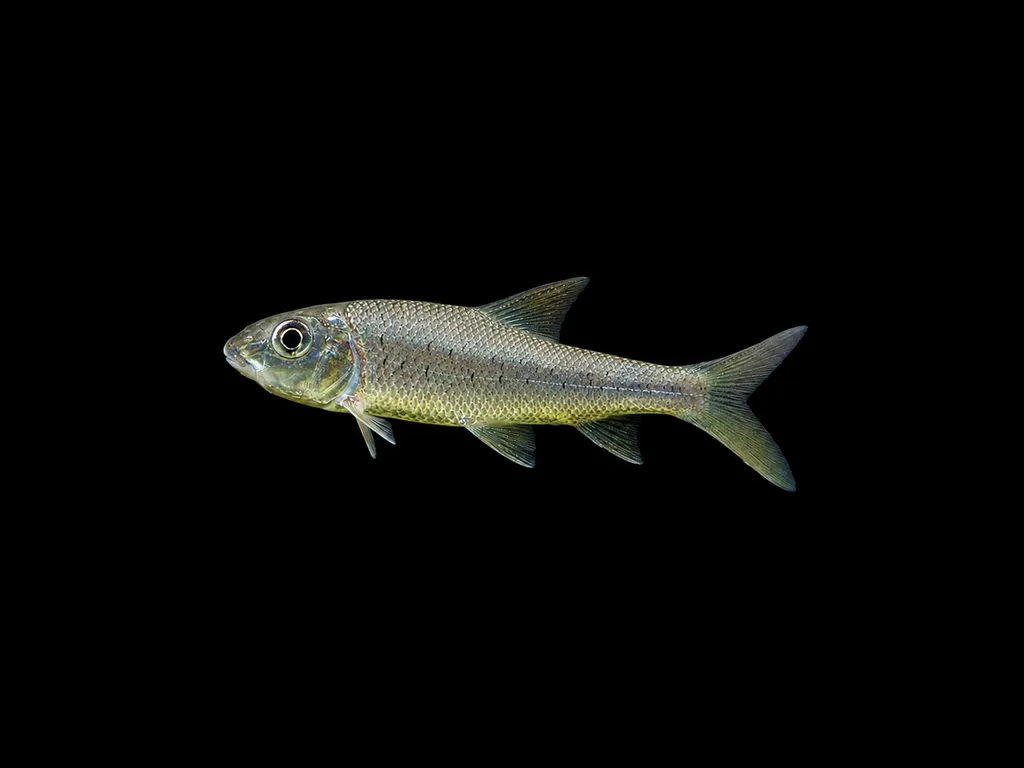 19.7 in (50 cm)317 gal (1,200 L)61–79°F (16–26°C)
Shovelmouth barb
Chagunius chagunio
19.7 in (50 cm) · 317 gal (1,200 L)