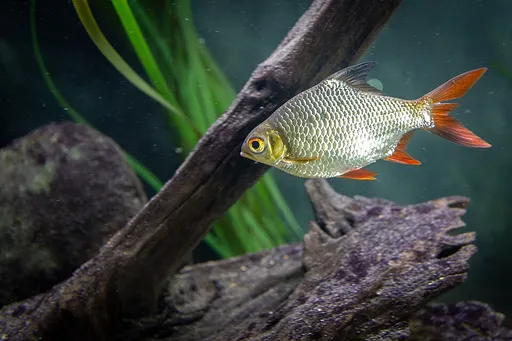
Tinfoil barb
Barbonymus schwanenfeldii
FreshwaterFish
Care at a glance
- Temperature
- 72–82°F
- 22–28°C
- pH
- 6.5–7.5
- Adult size
- 13.8 in
- 35 cm
- Minimum tank
- 180 gal
- 680 L
- Temperament
- Mostly peaceful
- Social behavior
- Schooling
- Swim level
- Middle
- Difficulty
- Medium
- Breeding
- No record
- Rarity
- Very common
- Family
- Cyprinidae
- Origin
- Southeast Asia (Mekong and Chao Phraya basins, Malay Peninsula, Sumatra, Borneo)
Overview
Keep them in a group of at least six, since they are a schooling fish that gets nervous and jumpy on its own. They are mostly peaceful and cruise the middle of the water column, but they are powerful, fast swimmers that need room to move in water from 22 to 28 C at a pH of 6.5 to 7.5. Feed them an omnivore diet with regular vegetable matter like blanched greens or spirulina alongside pellets and frozen foods. They will eat any fish small enough to swallow, so pick tankmates of similar size. Fit a heavy, tight lid, because these are strong jumpers that will launch themselves out of an open tank.
In the wild
Tinfoil barbs come from the larger rivers and flooded forests of Southeast Asia, including the Mekong and Chao Phraya basins, the Malay Peninsula, Sumatra, and Borneo. These are big, open waterways with steady current where the fish move in fast shoals. To match that, give them a long tank of at least 680 liters with plenty of open swimming length, strong filtration, and good flow. Keep the water between 22 and 28 C with a pH from 6.5 to 7.5.
Good to know
This is a large cyprinid in the family Cyprinidae, reaching about 35 cm as an adult. It is an egg scatterer, but commercial stock is raised in ponds or hormone-spawned, so breeding in a home tank is unrecorded. With good care a healthy fish can live for many years, so it is a long-term commitment.
Did you know
For a fish often sold as a small juvenile, the tinfoil barb grows into a serious tank buster, putting on size fast and topping out around 35 cm. Many get bought on impulse and outgrow their tank within a year or two, which is why they end up needing a setup measured in hundreds of liters rather than tens.
Weekly picks
Tank mates
Tinfoil barb is a mostly peaceful, schooling species that keeps to the middle. These picks share a community profile with it, are safe together in both directions, and overlap on water type, temperature and pH.
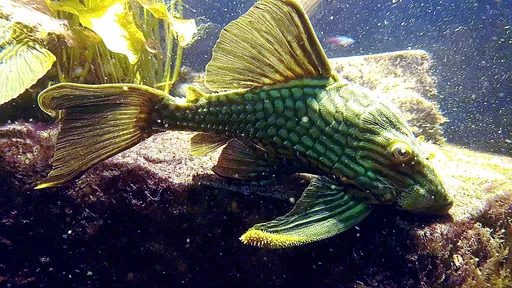
Thunder royal pleco (L027)
Panaque armbrusteri
Freshwater17.7 in (45 cm) · 151 gal (570 L)77–84°F (25–29°C)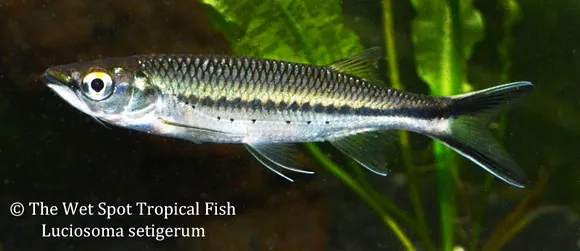
Apollo shark minnow
Luciosoma setigerum
Freshwater11.8 in (30 cm) · 106 gal (400 L)72–81°F (22–27°C)False hemiodus
Argonectes longiceps
Freshwater11.8 in (30 cm) · 159 gal (600 L)75–84°F (24–29°C)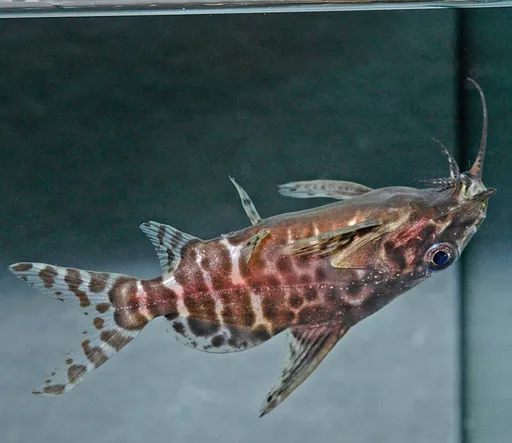
Giant upside-down catfish
Synodontis batensoda
Freshwater11.8 in (30 cm) · 79 gal (300 L)72–81°F (22–27°C)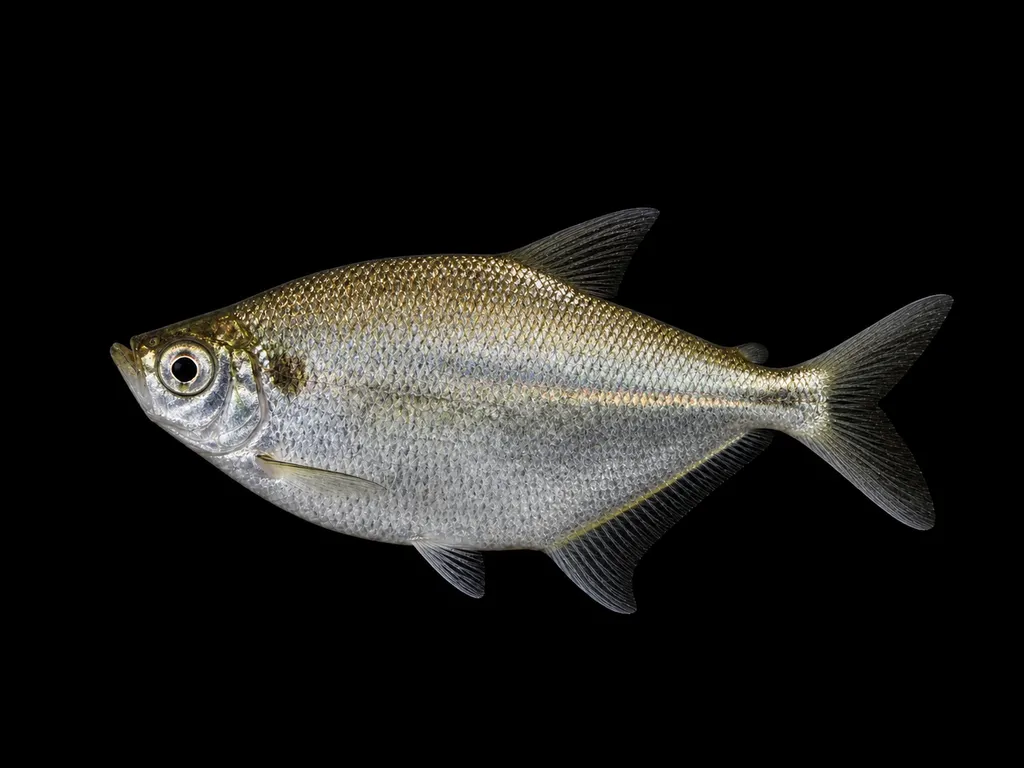
Giant river hatchetfish
Triportheus rotundatus
Freshwater9.8 in (25 cm) · 79 gal (300 L)73–82°F (23–28°C)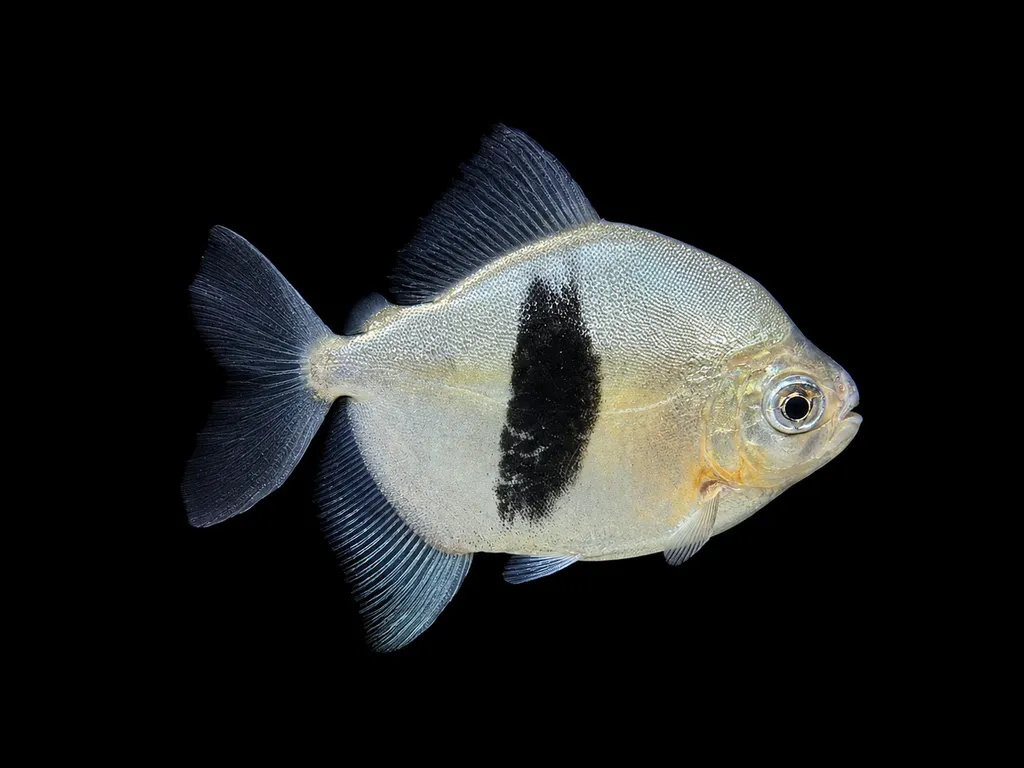
Blue hook silver dollar
Myloplus aylan
Freshwater13.8 in (35 cm) · 170 gal (645 L)75–82°F (24–28°C)
Common questions
What size tank does a Tinfoil barb need?
A Tinfoil barb needs at least 180 gal (680 L). It spends most of its time in the middle.
What temperature and pH does a Tinfoil barb need?
A Tinfoil barb is comfortable at 72–82°F (22–28°C) with a pH of 6.5–7.5.
How big does a Tinfoil barb get?
An adult Tinfoil barb reaches about 13.8 in (35 cm).
Does a Tinfoil barb need a group?
Yes. A Tinfoil barb is a schooling species and should be kept in a group, not singly.
Related species
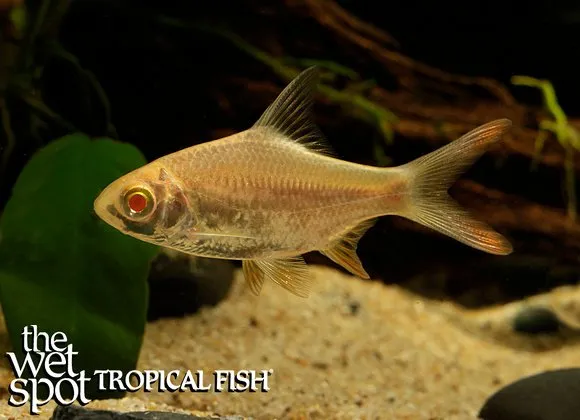 9.8 in (25 cm)106 gal (400 L)72–82°F (22–28°C)
Red-tailed tinfoil barb
Barbonymus altus
9.8 in (25 cm) · 106 gal (400 L)
- 13.8 in (35 cm)211 gal (800 L)72–82°F (22–28°C)
Red-tail silver shark
Hypselobarbus kurali
13.8 in (35 cm) · 211 gal (800 L)
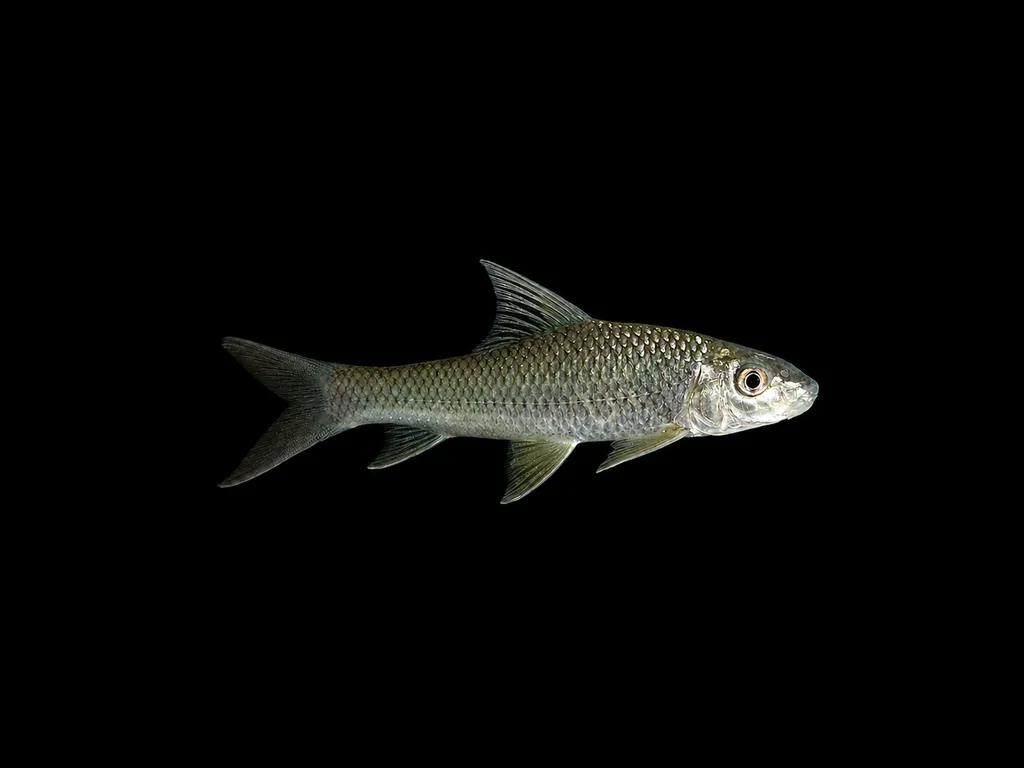 12.2 in (31 cm)159 gal (600 L)72–82°F (22–28°C)
Sucker barb
Barbichthys laevis
12.2 in (31 cm) · 159 gal (600 L)
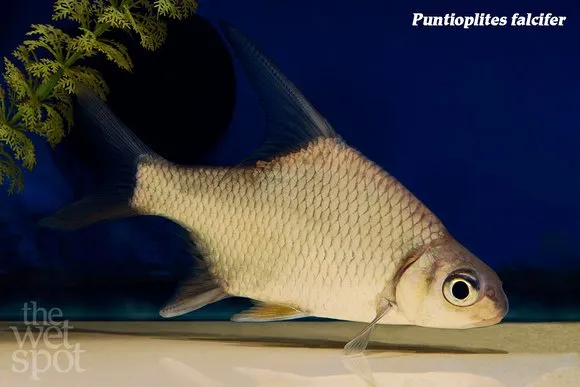 15.7 in (40 cm)264 gal (1,000 L)73–82°F (23–28°C)
Sickle-fin barb
Puntioplites falcifer
15.7 in (40 cm) · 264 gal (1,000 L)
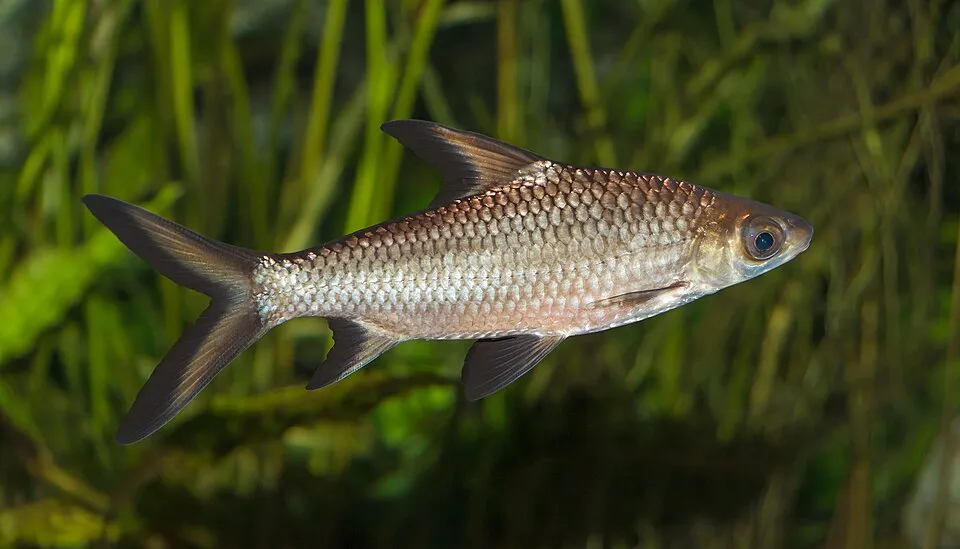 15.7 in (40 cm)95 gal (360 L)72–82°F (22–28°C)
Silver shark
Balantiocheilos melanopterus
15.7 in (40 cm) · 95 gal (360 L)
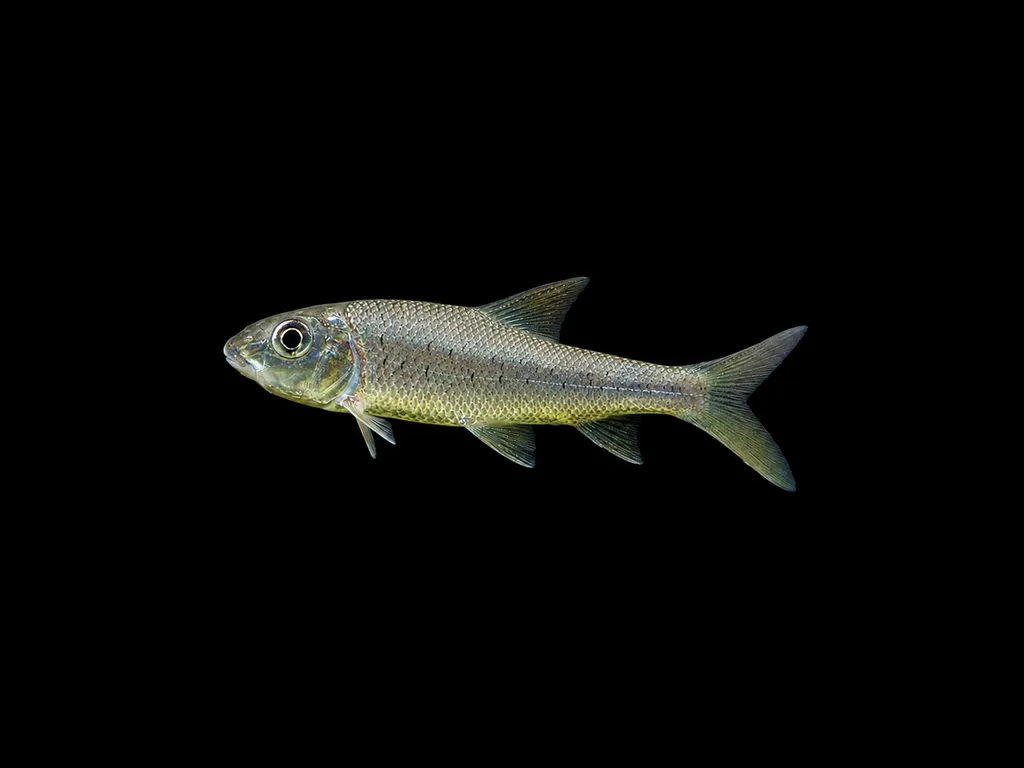 19.7 in (50 cm)317 gal (1,200 L)61–79°F (16–26°C)
Shovelmouth barb
Chagunius chagunio
19.7 in (50 cm) · 317 gal (1,200 L)