Sickle-fin barb
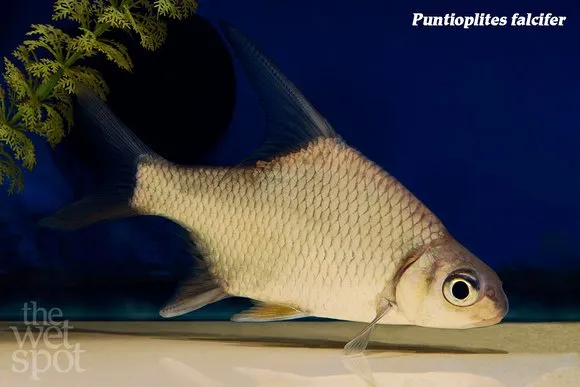
Puntioplites falcifer
Also known as Sicklefin barb
FreshwaterFish
Care at a glance
- Temperature
- 73–82°F
- 23–28°C
- pH
- 6.5–7.5
- Adult size
- 15.7 in
- 40 cm
- Minimum tank
- 264 gal
- 1,000 L
- Temperament
- Mostly peaceful
- Social behavior
- Schooling
- Swim level
- Middle
- Diet
- Omnivore
- Difficulty
- Difficult
- Breeding
- No record
- Rarity
- Rare
- Family
- Cyprinidae
- Origin
- Mekong basin, Laos, Thailand, and Cambodia
Overview
The sickle-fin barb is a mostly peaceful Mekong barb that suits only very large aquariums or indoor ponds. It is a fish for experienced keepers.
Did you know
The sickle-fin barb's long front dorsal spine carries roughly thirty tiny serrations down its back edge. So the fin that gives the fish its name is also a saw.
Caring for the sickle-fin barb
Keep sickle-fin barbs in a group, since they shoal as they travel. A tank of at least 264 gal (1,000 L) is a realistic minimum for even a small group, and more length is always better. Give them long, uninterrupted swimming lanes and a substrate of sand and rounded stone.
Keep the water warm, at 73 to 82°F (23 to 28°C), with a pH of 6.5 to 7.5. Strong, well-oxygenated flow and open water suit them. Provide heavy filtration to match the waste of a large, active shoaling fish.
Feed a broad diet of large sinking pellets, wafers, vegetables and meaty frozen foods. The sickle-fin barb cruises the open middle water and is mostly peaceful. Keep it with other big, calm species rather than small fish that could pass for food. It is a river spawner and is not bred in aquariums.
Good to know
Puntioplites falcifer is a high-backed, silver carp-family fish in the Cyprinidae, described by Smith in 1929. Its name means sickle-bearing, for the long, curved dorsal fin. The fin's leading spine can be so extended that it nearly reaches the tail.
In the wild
The sickle-fin barb is a migratory fish of the Mekong basin, across Laos, Thailand and Cambodia. It is common in the main river and its floodplain, moving with the seasonal flood.
Weekly picks
Tank mates
The sickle-fin barb is a mostly peaceful, schooling species that keeps to the middle. These picks share a community profile with it, are safe together in both directions, and overlap on water type, temperature and pH.
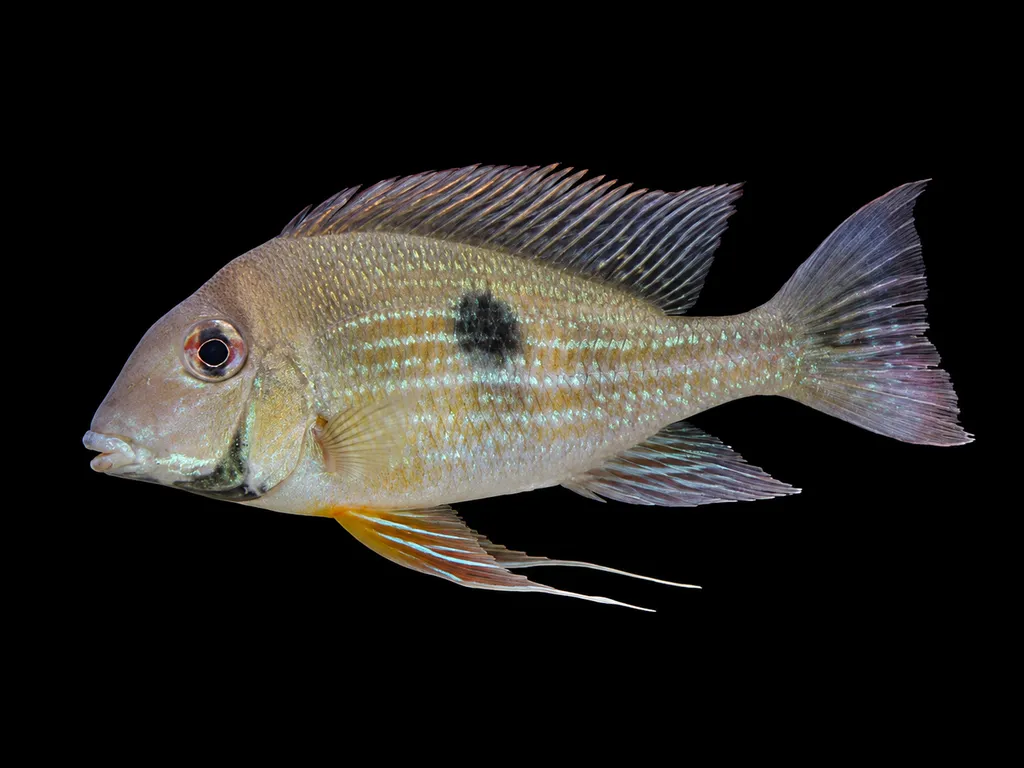
Dicrozoster eartheater
Geophagus dicrozoster
Freshwater9.8 in (25 cm) · 172 gal (650 L)77–84°F (25–29°C)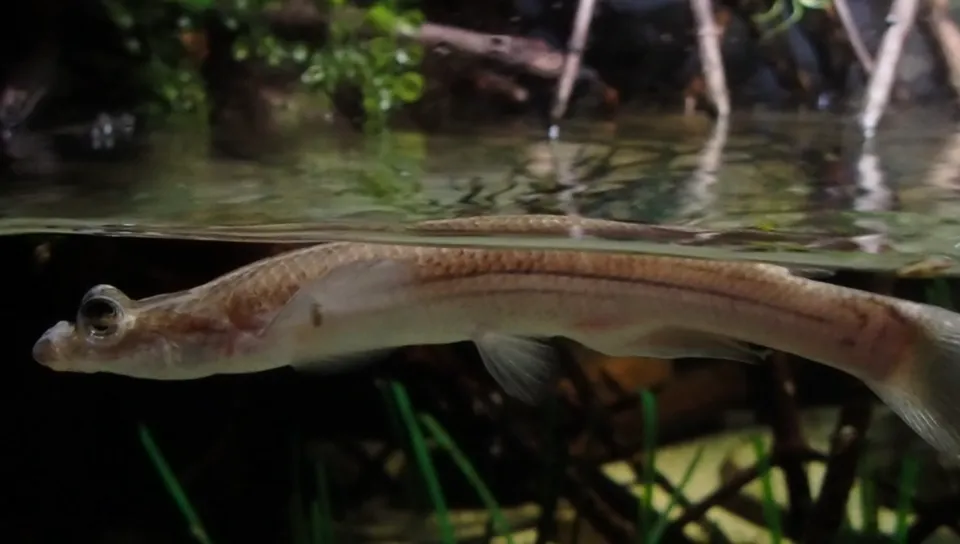
Largescale four-eyed fish
Anableps anableps
FreshwaterBrackish11.8 in (30 cm) · 70 gal (265 L)77–88°F (25–31°C)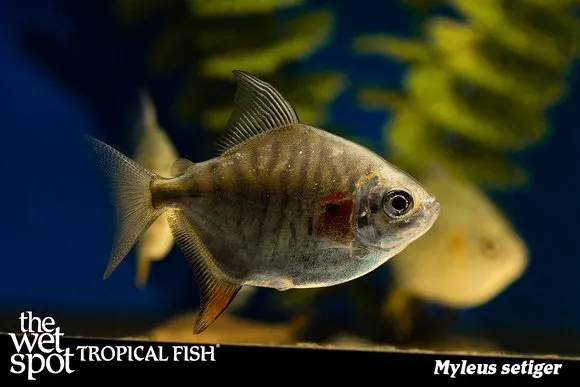
Sailfin red hook
Myleus setiger
Freshwater11 in (28 cm) · 159 gal (600 L)73–82°F (23–28°C)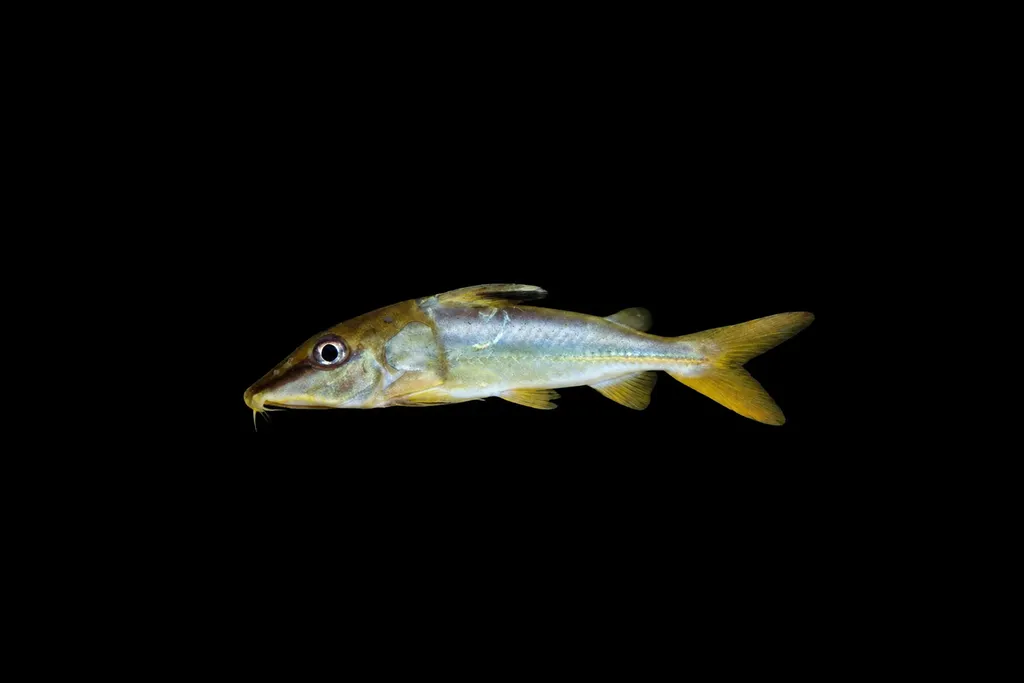
Wilder's mouse catfish
Hassar wilderi
Freshwater9.8 in (25 cm) · 106 gal (400 L)73–82°F (23–28°C)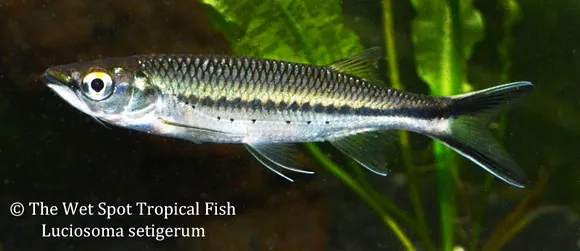
Apollo shark minnow
Luciosoma setigerum
Freshwater11.8 in (30 cm) · 106 gal (400 L)72–81°F (22–27°C)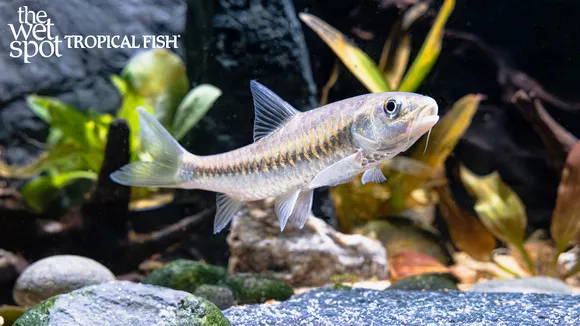
Stracheyi mahseer
Neolissochilus stracheyi
Freshwater23.6 in (60 cm) · 238 gal (900 L)64–79°F (18–26°C)
Common questions
What size tank does a sickle-fin barb need?
A sickle-fin barb needs at least 264 gal (1,000 L). It spends most of its time in the middle.
What temperature and pH does a sickle-fin barb need?
A sickle-fin barb is comfortable at 73–82°F (23–28°C) with a pH of 6.5–7.5.
What does a sickle-fin barb eat?
A sickle-fin barb eats a broad diet of large sinking pellets, wafers, vegetables and meaty frozen foods.
How big does a sickle-fin barb get?
An adult sickle-fin barb reaches about 15.7 in (40 cm).
Does a sickle-fin barb need a group?
Yes. A sickle-fin barb is a schooling species and should be kept in a group, not singly.
How does a sickle-fin barb breed?
The sickle-fin barb is a river spawner and is not bred in aquariums.
Related species
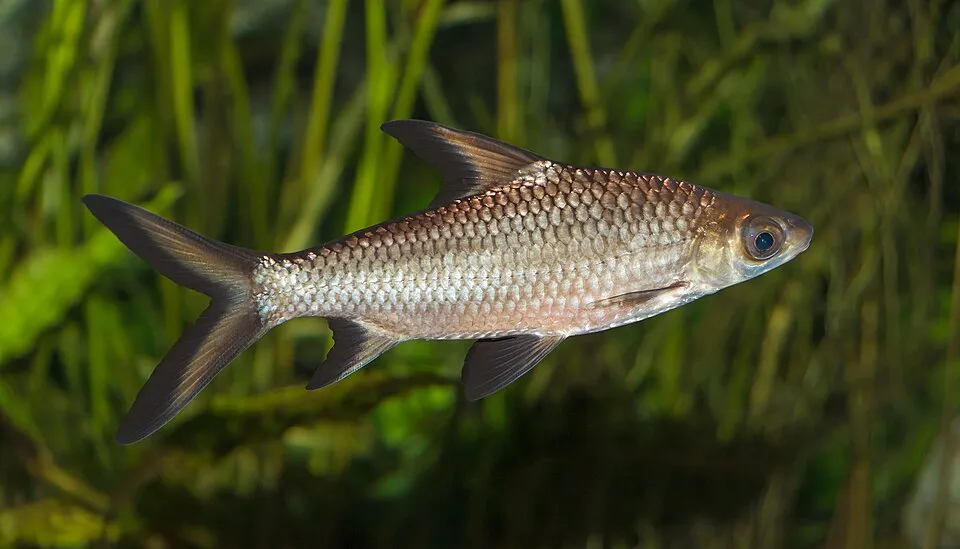 15.7 in (40 cm)227 gal (860 L)72–82°F (22–28°C)
Silver shark
Balantiocheilos melanopterus
15.7 in (40 cm) · 227 gal (860 L)
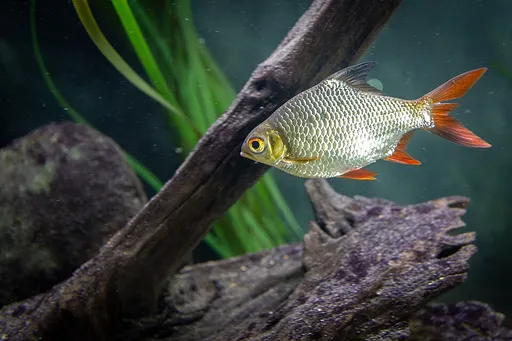 13.8 in (35 cm)180 gal (680 L)72–82°F (22–28°C)
Tinfoil barb
Barbonymus schwanenfeldii
13.8 in (35 cm) · 180 gal (680 L)
- 13.8 in (35 cm)211 gal (800 L)72–82°F (22–28°C)
Red-tail silver shark
Hypselobarbus kurali
13.8 in (35 cm) · 211 gal (800 L)
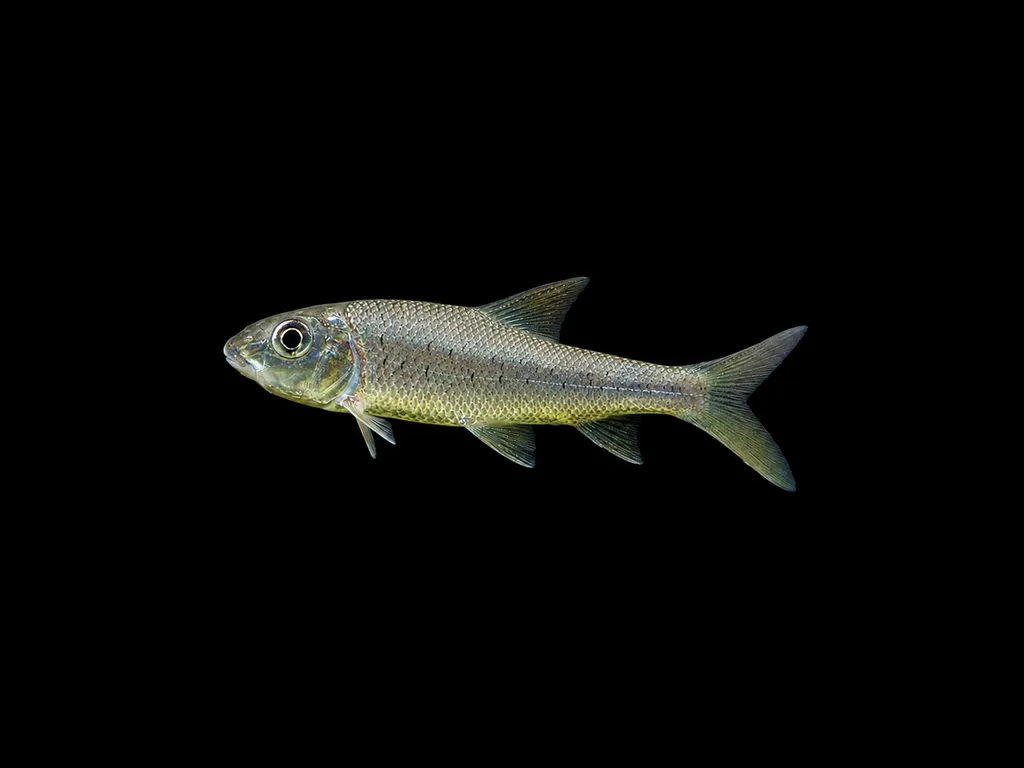 19.7 in (50 cm)317 gal (1,200 L)61–79°F (16–26°C)
Shovelmouth barb
Chagunius chagunio
19.7 in (50 cm) · 317 gal (1,200 L)
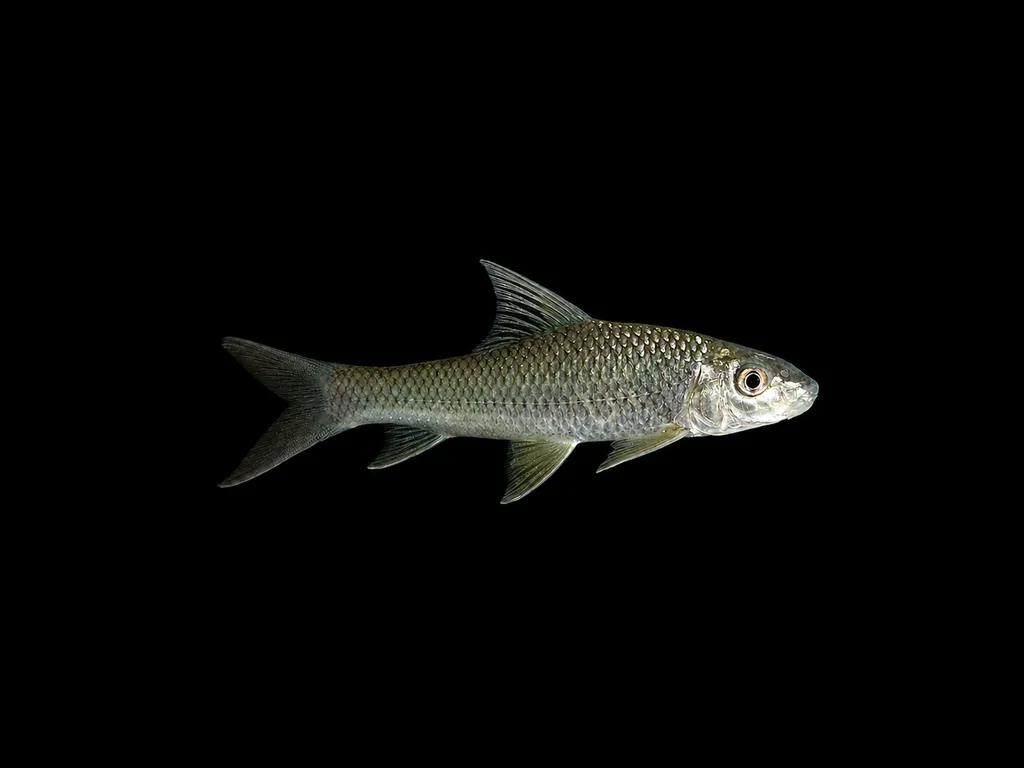 12.2 in (31 cm)159 gal (600 L)72–82°F (22–28°C)
Sucker barb
Barbichthys laevis
12.2 in (31 cm) · 159 gal (600 L)
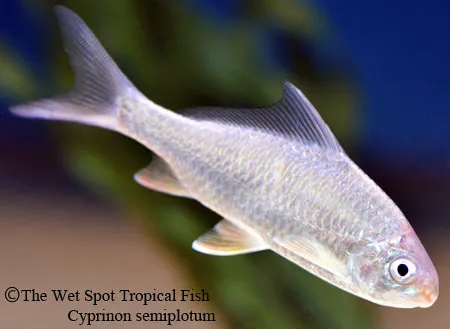 23.6 in (60 cm)396 gal (1,500 L)61–77°F (16–25°C)
Emperor round-face barb
Cyprinion semiplotum
23.6 in (60 cm) · 396 gal (1,500 L)