Emperor round-face barb
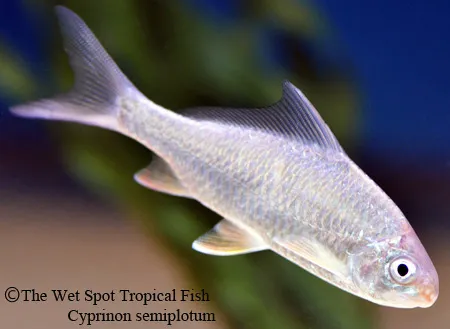
Cyprinion semiplotum
Also known as Assamese kingfish
FreshwaterFish
Care at a glance
- Temperature
- 61–77°F
- 16–25°C
- pH
- 6.5–7.8
- Adult size
- 23.6 in
- 60 cm
- Minimum tank
- 396 gal
- 1,500 L
- Temperament
- Mostly peaceful
- Social behavior
- Schooling
- Swim level
- Middle
- Difficulty
- Difficult
- Breeding
- No record
- Rarity
- Rare
- Family
- Cyprinidae
- Origin
- Himalayan foothill rivers from India to Myanmar
Overview
The emperor round-face barb is a large, cool-water grazing barb for public aquariums and the biggest systems. It is for experienced keepers.
Did you know
The emperor round-face barb, a big river grazer, is prized enough in Assam to be called the kingfish. It is valued there as food.
Caring for the emperor round-face barb
Give the emperor round-face barb at least 396 gal (1,500 L), with a great deal of swimming room. Run a strong, brisk current over a bed of rock and gravel.
Keep the water cool and well oxygenated, at 61 to 77°F (16 to 25°C) and a pH of 6.5 to 7.8. Feed a mixed diet weighted toward vegetable matter, such as algae wafers and spirulina. Add pellets and some frozen foods.
The emperor round-face barb works the middle and lower water, grazing algal film from stone. Keep it in a group where volume allows. It is mostly peaceful for its size but needs large, sturdy tank mates. It is seldom kept outside public collections and is not bred in home tanks.
Good to know
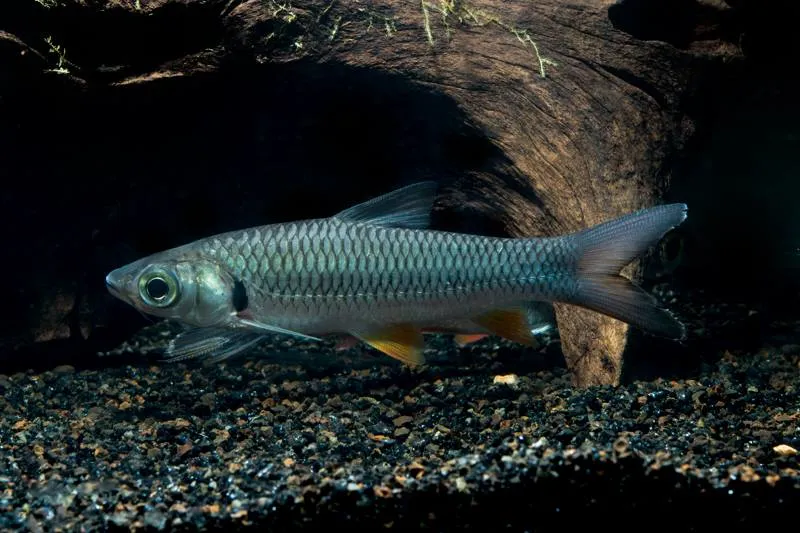
The emperor round-face barb, Cyprinion semiplotum, is a large cyprinid also known as the Assamese kingfish. It has a rounded snout and a mouth built for scraping algae from rocks. The IUCN assesses it as vulnerable, with its numbers reduced across its Himalayan range.
In the wild
The emperor round-face barb grazes algae-covered stone in cool, clear, fast foothill rivers of the eastern Himalaya. Its range runs across northern India, Nepal, Bhutan and Myanmar.
Weekly picks
Tank mates
The emperor round-face barb is a mostly peaceful, schooling species that keeps to the middle. These picks share a community profile with it, are safe together in both directions, and overlap on water type, temperature and pH.
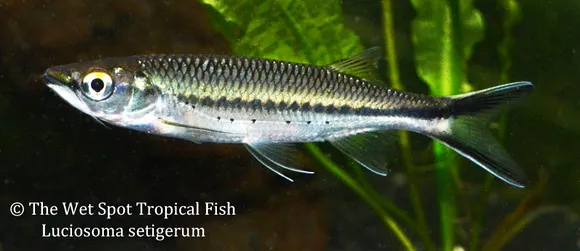
Apollo shark minnow
Luciosoma setigerum
Freshwater11.8 in (30 cm) · 106 gal (400 L)72–81°F (22–27°C)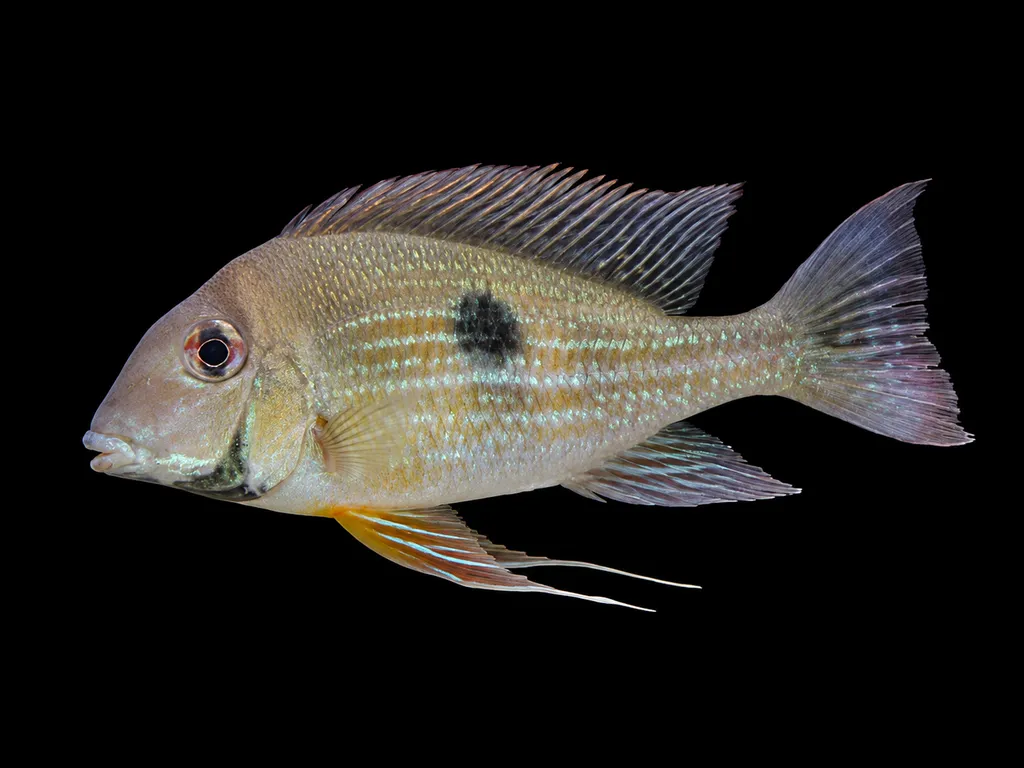
Dicrozoster eartheater
Geophagus dicrozoster
Freshwater9.8 in (25 cm) · 172 gal (650 L)77–84°F (25–29°C)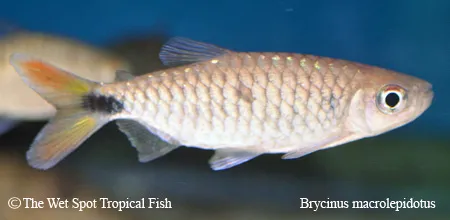
Red-tail brycinus
Brycinus macrolepidotus
Freshwater20.9 in (53 cm) · 264 gal (1,000 L)73–82°F (23–28°C)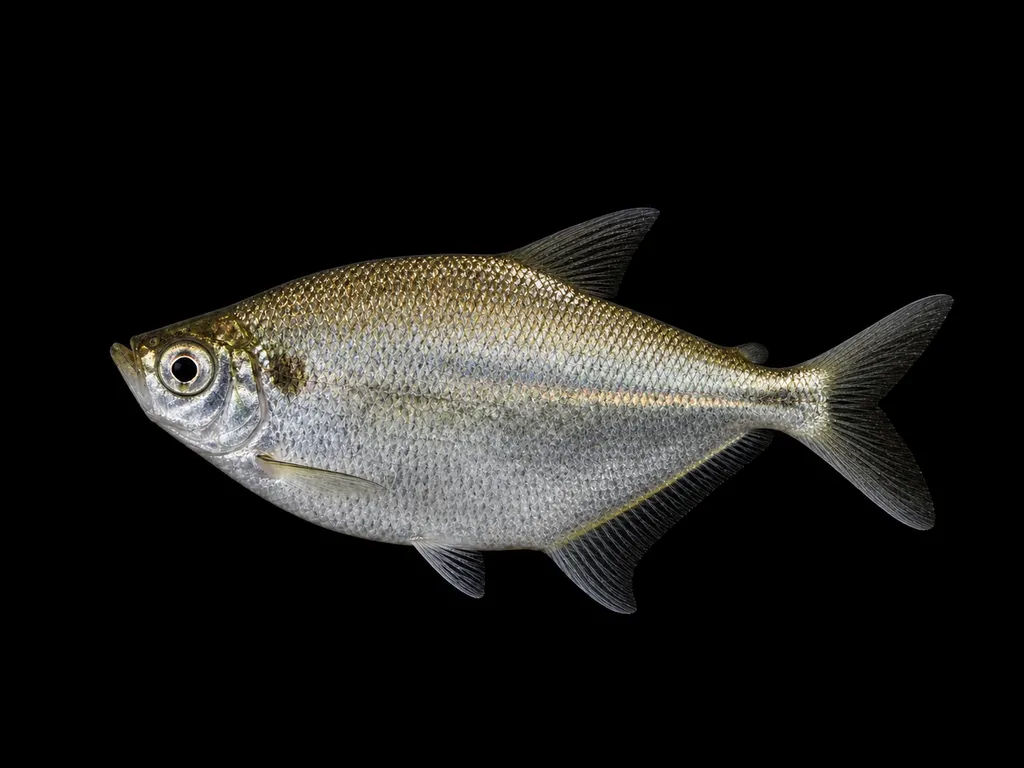
Giant river hatchetfish
Triportheus rotundatus
Freshwater9.8 in (25 cm) · 79 gal (300 L)73–82°F (23–28°C)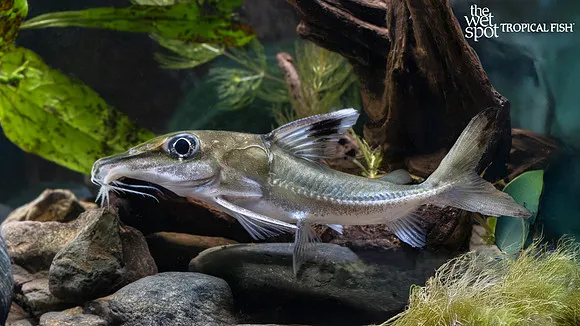
Black-top mouse catfish
Hassar orestis
Freshwater11.8 in (30 cm) · 106 gal (400 L)73–82°F (23–28°C)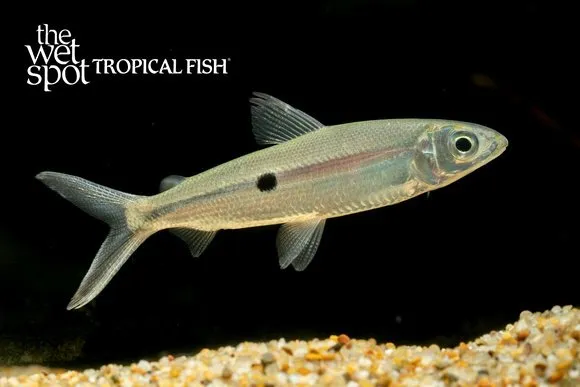
Smallscale hemiodus
Hemiodus microlepis
Freshwater11 in (28 cm) · 159 gal (600 L)75–84°F (24–29°C)
Common questions
What size tank does an emperor round-face barb need?
An emperor round-face barb needs at least 396 gal (1,500 L). It spends most of its time in the middle.
What temperature and pH does an emperor round-face barb need?
An emperor round-face barb is comfortable at 61–77°F (16–25°C) with a pH of 6.5–7.8.
What does an emperor round-face barb eat?
An emperor round-face barb eats a mixed diet weighted toward vegetable matter, such as algae wafers and spirulina. Add pellets and some frozen foods.
How big does an emperor round-face barb get?
An adult emperor round-face barb reaches about 23.6 in (60 cm).
Does an emperor round-face barb need a group?
Yes. An emperor round-face barb is a schooling species and should be kept in a group, not singly.
Related species
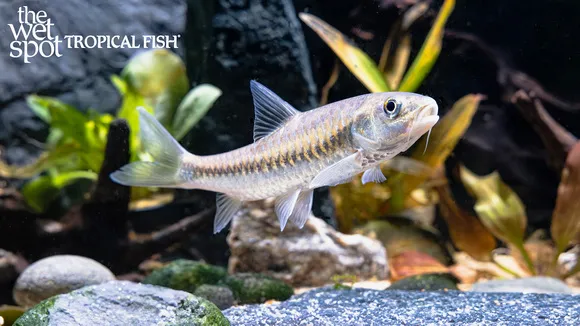 23.6 in (60 cm)238 gal (900 L)64–79°F (18–26°C)
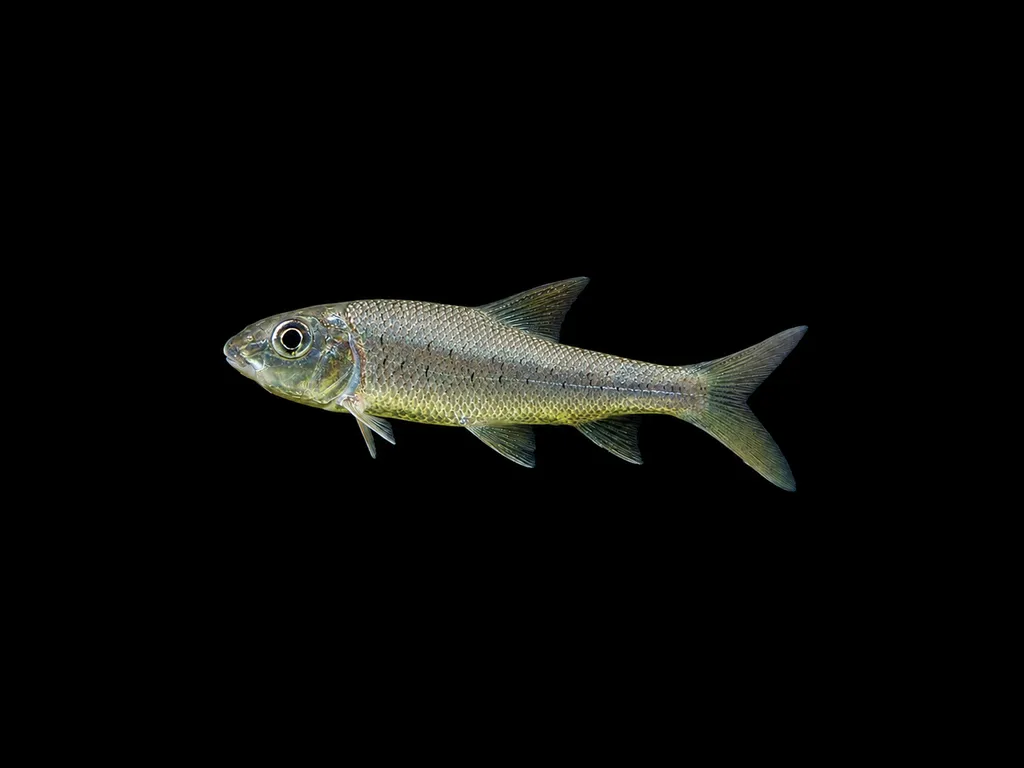
Stracheyi mahseer
Neolissochilus stracheyi
23.6 in (60 cm) · 238 gal (900 L)
 19.7 in (50 cm)317 gal (1,200 L)61–79°F (16–26°C)
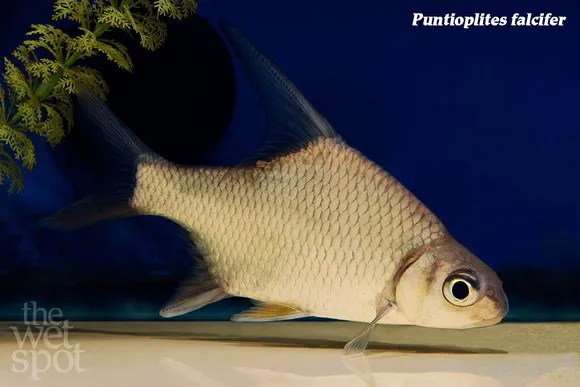
Shovelmouth barb
Chagunius chagunio
19.7 in (50 cm) · 317 gal (1,200 L)
 15.7 in (40 cm)264 gal (1,000 L)73–82°F (23–28°C)
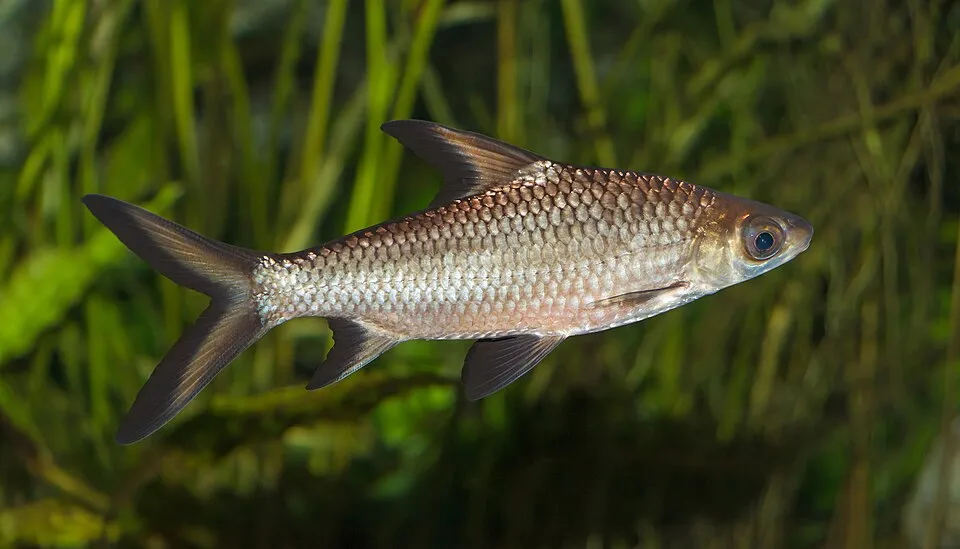
Sickle-fin barb
Puntioplites falcifer
15.7 in (40 cm) · 264 gal (1,000 L)
 15.7 in (40 cm)227 gal (860 L)72–82°F (22–28°C)
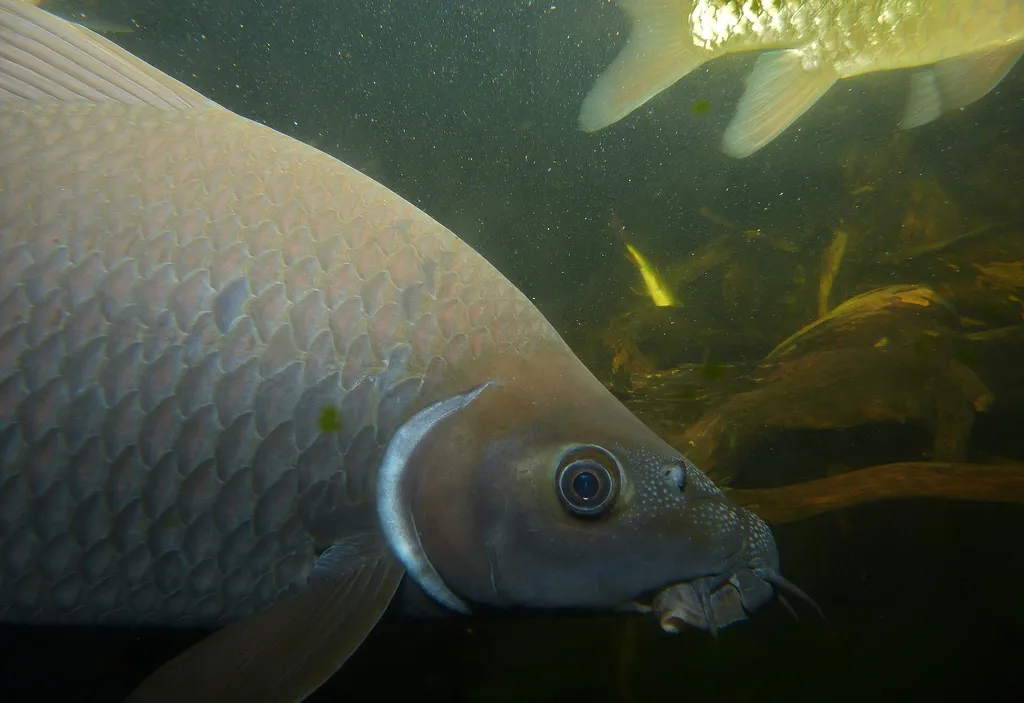
Silver shark
Balantiocheilos melanopterus
15.7 in (40 cm) · 227 gal (860 L)
 23.6 in (60 cm)660 gal (2,500 L)68–79°F (20–26°C)
Black shark
Labeo chrysophekadion
23.6 in (60 cm) · 660 gal (2,500 L)
 23.6 in (60 cm)317 gal (1,200 L)72–82°F (22–28°C)
Mad barb
Leptobarbus hoevenii
23.6 in (60 cm) · 317 gal (1,200 L)