Black shark
Labeo chrysophekadion
FreshwaterFish
Care at a glance
- Temperature
- 68–79°F
- 20–26°C
- pH
- 6.0–8.0
- Adult size
- 23.6 in
- 60 cm
- Minimum tank
- 660 gal
- 2,500 L
- Temperament
- Aggressive
- Social behavior
- Solitary
- Own kind
- One per tank
- Tankmates
- With caution
- Swim level
- Middle
- Difficulty
- Difficult
- Breeding
- No record
- Rarity
- Very rare
- Family
- Cyprinidae
- Origin
- Southeast Asia
Overview
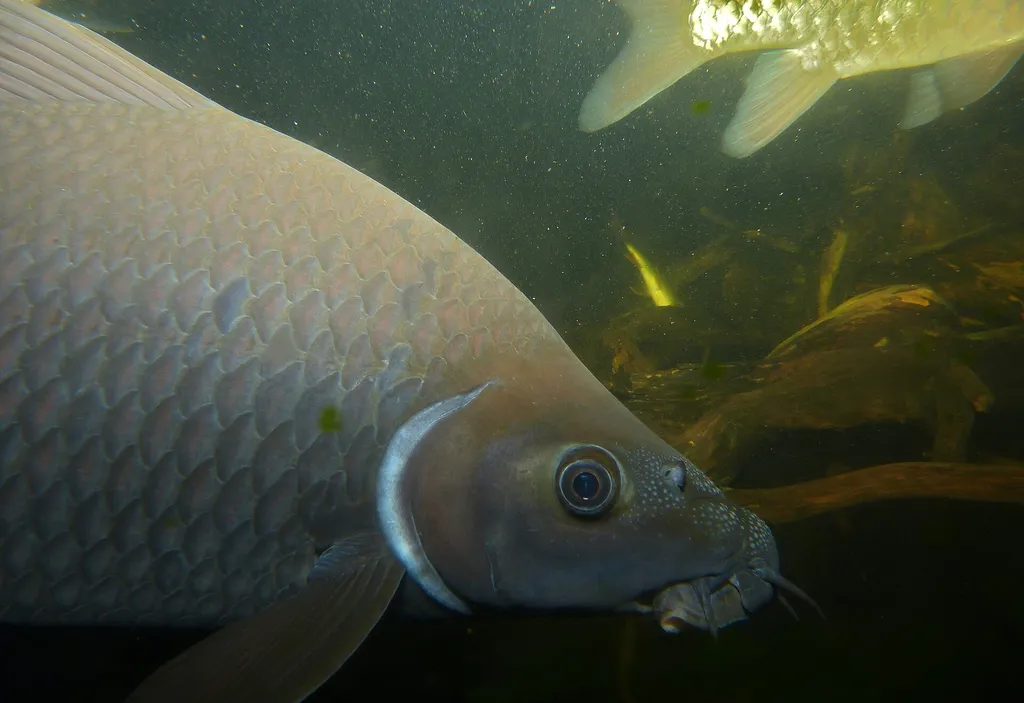
The black shark is a large, territorial cyprinid best kept as a single specimen, as it does not tolerate its own kind and grows increasingly aggressive with age. It is not a true community fish. In a big enough system it can share space with fast, sizable tankmates that occupy other levels, but it will chase and bully anything it sees as a rival grazer. It patrols the middle and lower water, rasping algae and biofilm from surfaces, and should be fed a mostly vegetable diet of algae wafers, blanched greens, and spirulina, rounded out with sinking pellets and the occasional frozen food. This fish needs a very large aquarium on the order of 2500 liters, or a heated pond, to house it long term.
In the wild
This species ranges widely through the fresh waters of Southeast Asia, from the Mekong and Chao Phraya basins into Indonesia, living in large rivers, flooded forests, and canals that shift with the seasons. It is adaptable across a broad chemistry, doing well from about 20–26 C and a pH of roughly 6.0–8.0. A mature setup should be built around open swimming space with a sand or smooth gravel bed, large water worn boulders and driftwood to define territory, and strong, well oxygenated flow. Sturdy plants can be used, but expect this fish to graze and uproot softer species.
Good to know
Labeo chrysophekadion is a member of the family Cyprinidae and one of the giants of the group kept by aquarists, reaching around 60 cm in length. Despite the common name it is not a shark at all but a heavy bodied, velvety black carp relative with a downturned, rasping mouth suited to scraping algae from hard surfaces. Juveniles often show fine golden speckling that fades with age. There is no established record of it being bred in home aquaria, and commercial stock is produced on farms, often with the aid of hormone induction.
Did you know
Black sharks are sold as small, glossy juveniles only a few centimeters long, which hides the fact that they can grow to the length of a house cat and live for many years. That mismatch between shop size and adult size makes them one of the more commonly rehomed fish in the hobby.
Common questions
What size tank does a Black shark need?
A Black shark needs at least 660 gal (2,500 L). It spends most of its time in the middle.
What temperature and pH does a Black shark need?
A Black shark is comfortable at 68–79°F (20–26°C) with a pH of 6.0–8.0.
How big does a Black shark get?
An adult Black shark reaches about 23.6 in (60 cm).
Related species
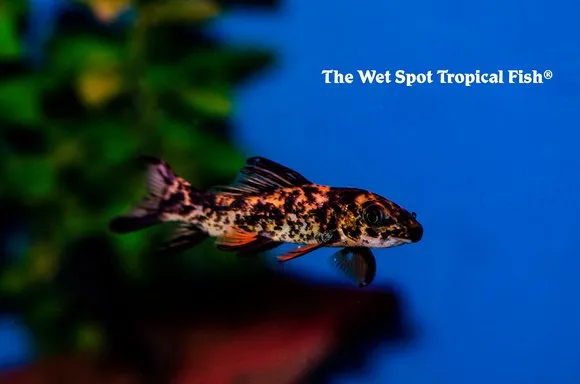 6.3 in (16 cm)66 gal (250 L)73–81°F (23–27°C)
Harlequin sharkminnow
Labeo cyclorhynchus
6.3 in (16 cm) · 66 gal (250 L)
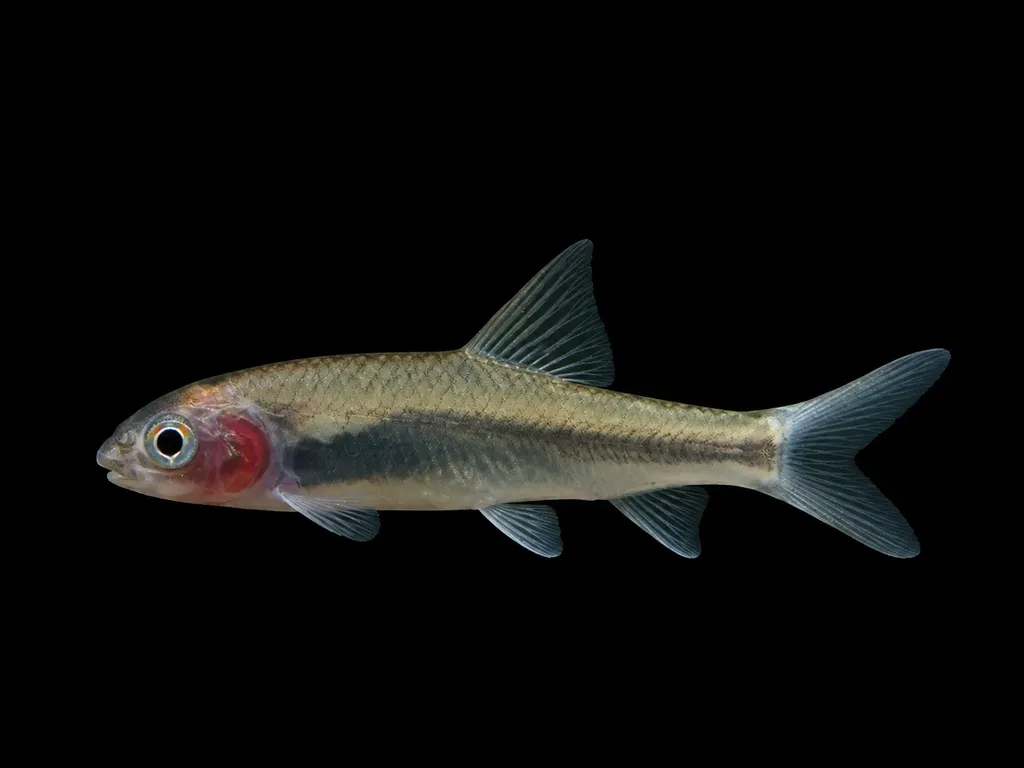 11.8 in (30 cm)106 gal (400 L)68–81°F (20–27°C)
Boga labeo
Labeo boga
11.8 in (30 cm) · 106 gal (400 L)
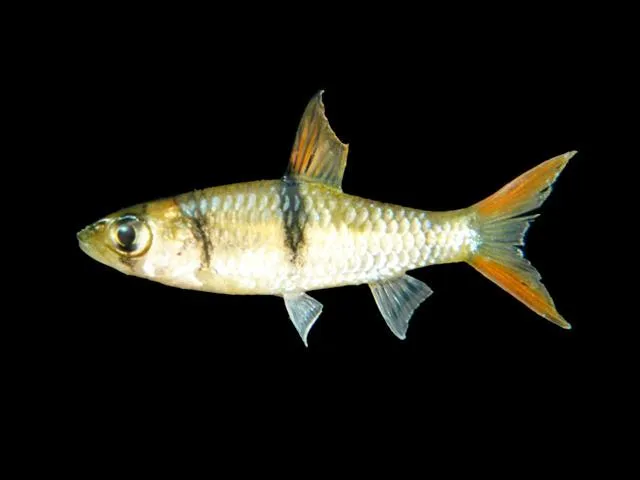 19.7 in (50 cm)238 gal (900 L)72–82°F (22–28°C)
Hampala barb
Hampala macrolepidota
19.7 in (50 cm) · 238 gal (900 L)
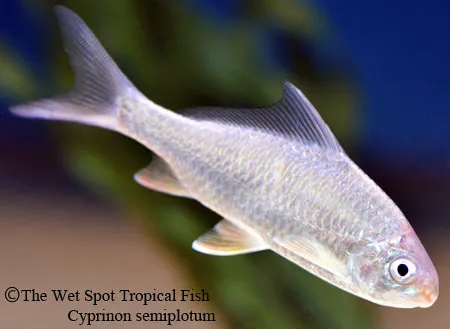 23.6 in (60 cm)396 gal (1,500 L)61–77°F (16–25°C)
Emperor round-face barb
Cyprinion semiplotum
23.6 in (60 cm) · 396 gal (1,500 L)
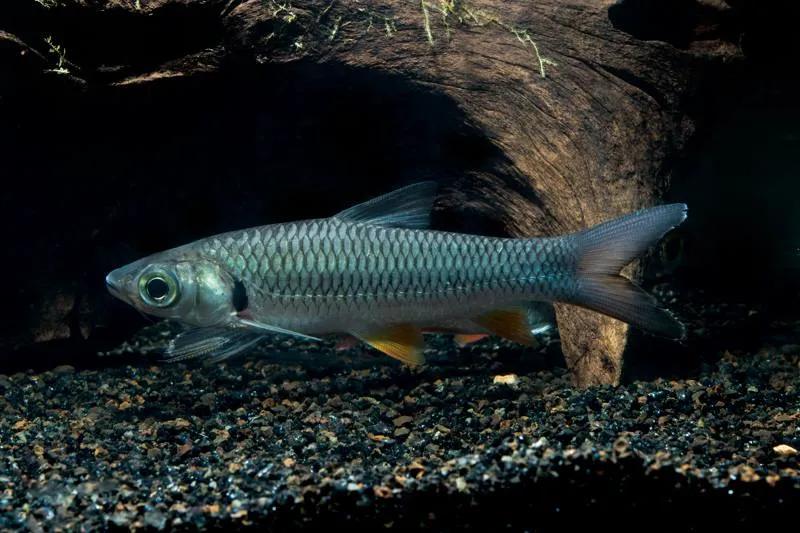 23.6 in (60 cm)317 gal (1,200 L)72–82°F (22–28°C)
Mad barb
Leptobarbus hoevenii
23.6 in (60 cm) · 317 gal (1,200 L)
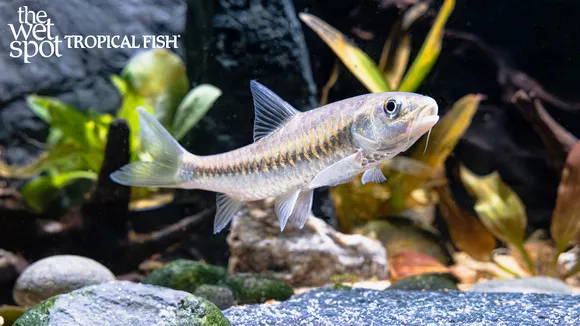 23.6 in (60 cm)238 gal (900 L)64–79°F (18–26°C)
Stracheyi mahseer
Neolissochilus stracheyi
23.6 in (60 cm) · 238 gal (900 L)