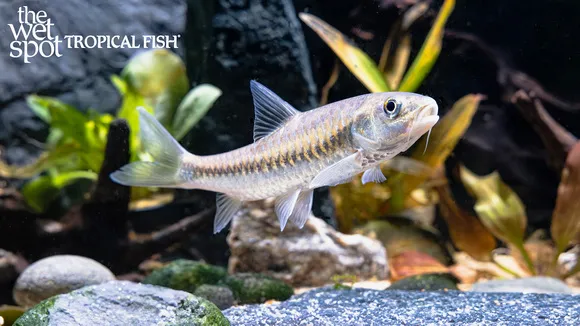
Stracheyi mahseer
Neolissochilus stracheyi
Also known as Blue mahseer, Burmese mahseer, Blue tor
FreshwaterFish
Care at a glance
- Temperature
- 64–79°F
- 18–26°C
- pH
- 6.5–7.8
- Adult size
- 23.6 in
- 60 cm
- Minimum tank
- 238 gal
- 900 L
- Temperament
- Mostly peaceful
- Social behavior
- Schooling
- Swim level
- Middle
- Diet
- Omnivore
- Difficulty
- Difficult
- Breeding
- No record
- Rarity
- Rare
- Family
- Cyprinidae
- Origin
- Upland rivers from Myanmar to the Malay Peninsula
Overview
The Stracheyi mahseer is a strong, fast cool-water giant for huge show tanks and ponds. It is a fish for experienced keepers.
Did you know
The Stracheyi mahseer's lineage includes protected temple fish kept in Thai monastery pools. In those sanctuaries, whole shoals of related mahseer grow tame enough to be hand-fed by visitors.
Caring for the Stracheyi mahseer
The Stracheyi mahseer belongs only in very large systems, such as big show tanks or ponds. Plan on 238 gal (900 L) as a bare minimum, with heavy filtration and strong current.
Keep the water cool and pristine, with high oxygen, at 64 to 79°F (18 to 26°C) and a pH of 6.5 to 7.8. That is cooler than most tropical fish want. Feed a varied omnivore diet of sinking pellets, prawn and mussel, plus vegetables and fruit, which it takes readily.
Keep it in a small group. It swims actively in open midwater and is mostly peaceful for its size, but it will eat much smaller fish. House it only with large, sturdy tank mates. It is a river spawner and is not bred in ordinary home aquariums.
Good to know
Neolissochilus stracheyi, also called the blue or Burmese mahseer, is a large cyprinid that can weigh several kilograms. It is a long-lived member of the copper-mahseer group.
In the wild
The Stracheyi mahseer holds clear, fast, well-oxygenated upland rivers and waterfall pools, over beds of rock and gravel. It is found from Myanmar through Thailand, Laos and Vietnam, and on the Malay Peninsula. In the wild it feeds partly on fruit and berries that drop from streamside trees.
Weekly picks
Tank mates
The Stracheyi mahseer is a mostly peaceful, schooling species that keeps to the middle. These picks share a community profile with it, are safe together in both directions, and overlap on water type, temperature and pH.
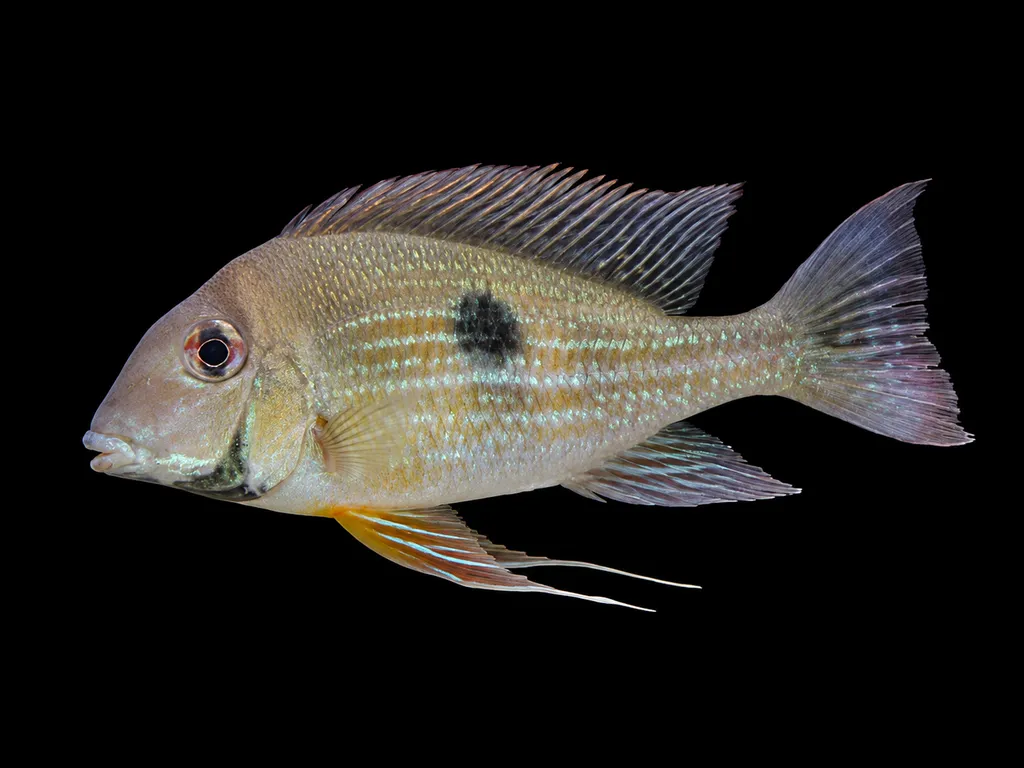
Dicrozoster eartheater
Geophagus dicrozoster
Freshwater9.8 in (25 cm) · 172 gal (650 L)77–84°F (25–29°C)
Narrow hatchetfish
Triportheus angulatus
Freshwater9.8 in (25 cm) · 79 gal (300 L)73–82°F (23–28°C)False hemiodus
Argonectes longiceps
Freshwater11.8 in (30 cm) · 159 gal (600 L)75–84°F (24–29°C)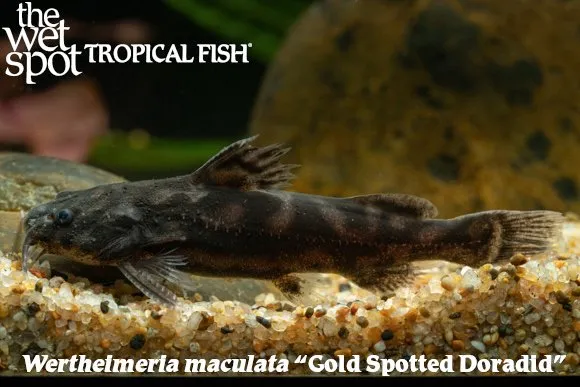
Gold-spotted doradid
Wertheimeria maculata
Freshwater11.8 in (30 cm) · 106 gal (400 L)68–79°F (20–26°C)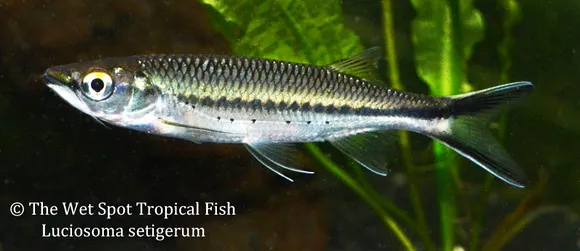
Apollo shark minnow
Luciosoma setigerum
Freshwater11.8 in (30 cm) · 106 gal (400 L)72–81°F (22–27°C)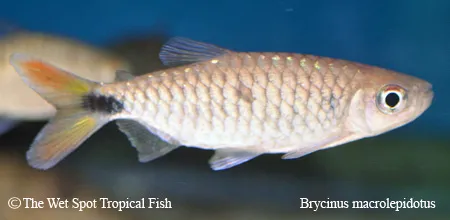
Red-tail brycinus
Brycinus macrolepidotus
Freshwater20.9 in (53 cm) · 264 gal (1,000 L)73–82°F (23–28°C)
Common questions
What size tank does a Stracheyi mahseer need?
A Stracheyi mahseer needs at least 238 gal (900 L). It spends most of its time in the middle.
What temperature and pH does a Stracheyi mahseer need?
A Stracheyi mahseer is comfortable at 64–79°F (18–26°C) with a pH of 6.5–7.8.
What does a Stracheyi mahseer eat?
A Stracheyi mahseer eats a varied omnivore diet of sinking pellets, prawn and mussel. It also takes vegetables and fruit readily.
How big does a Stracheyi mahseer get?
An adult Stracheyi mahseer reaches about 23.6 in (60 cm).
Does a Stracheyi mahseer need a group?
Yes. A Stracheyi mahseer is a schooling species and should be kept in a group, not singly.
How does a Stracheyi mahseer breed?
The Stracheyi mahseer is a river spawner, and it is not bred in ordinary home aquariums.
Related species
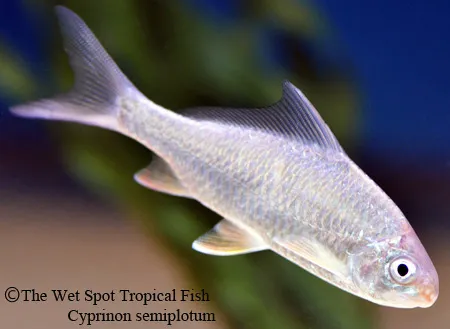 23.6 in (60 cm)396 gal (1,500 L)61–77°F (16–25°C)
Emperor round-face barb
Cyprinion semiplotum
23.6 in (60 cm) · 396 gal (1,500 L)
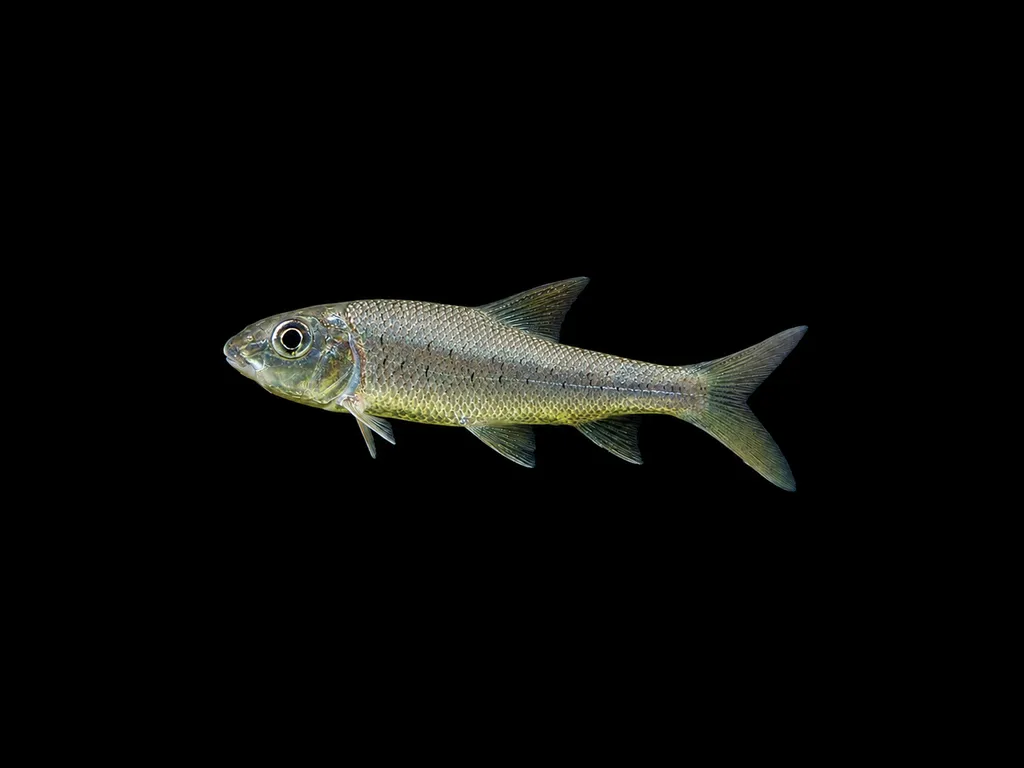 19.7 in (50 cm)317 gal (1,200 L)61–79°F (16–26°C)
Shovelmouth barb
Chagunius chagunio
19.7 in (50 cm) · 317 gal (1,200 L)
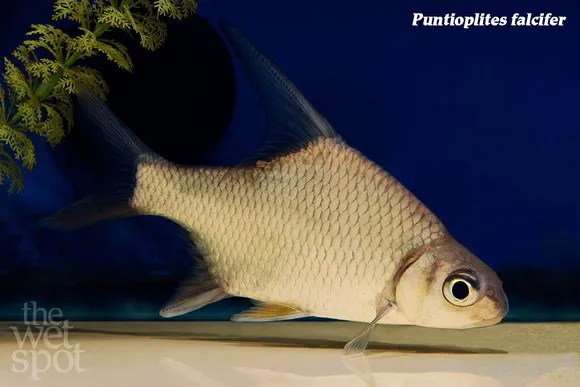 15.7 in (40 cm)264 gal (1,000 L)73–82°F (23–28°C)
Sickle-fin barb
Puntioplites falcifer
15.7 in (40 cm) · 264 gal (1,000 L)
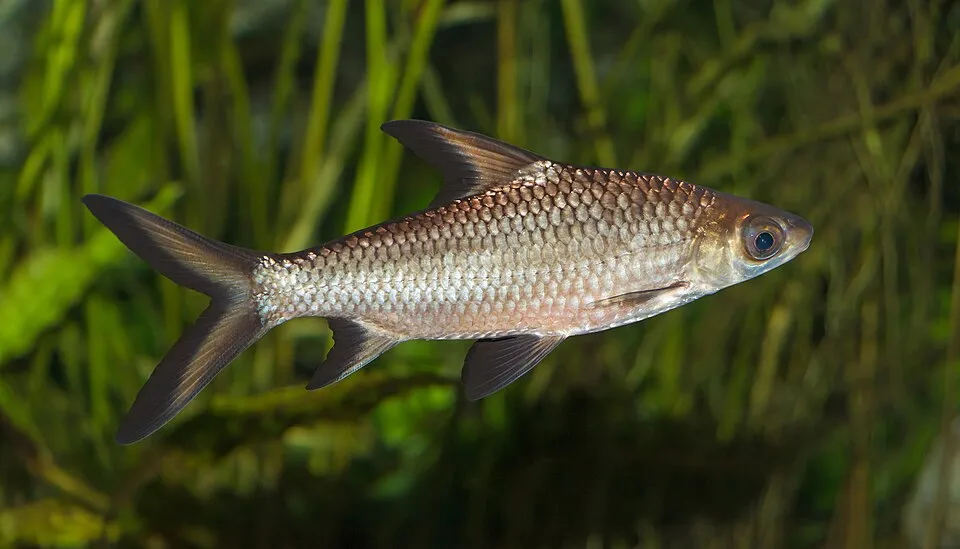 15.7 in (40 cm)227 gal (860 L)72–82°F (22–28°C)
Silver shark
Balantiocheilos melanopterus
15.7 in (40 cm) · 227 gal (860 L)
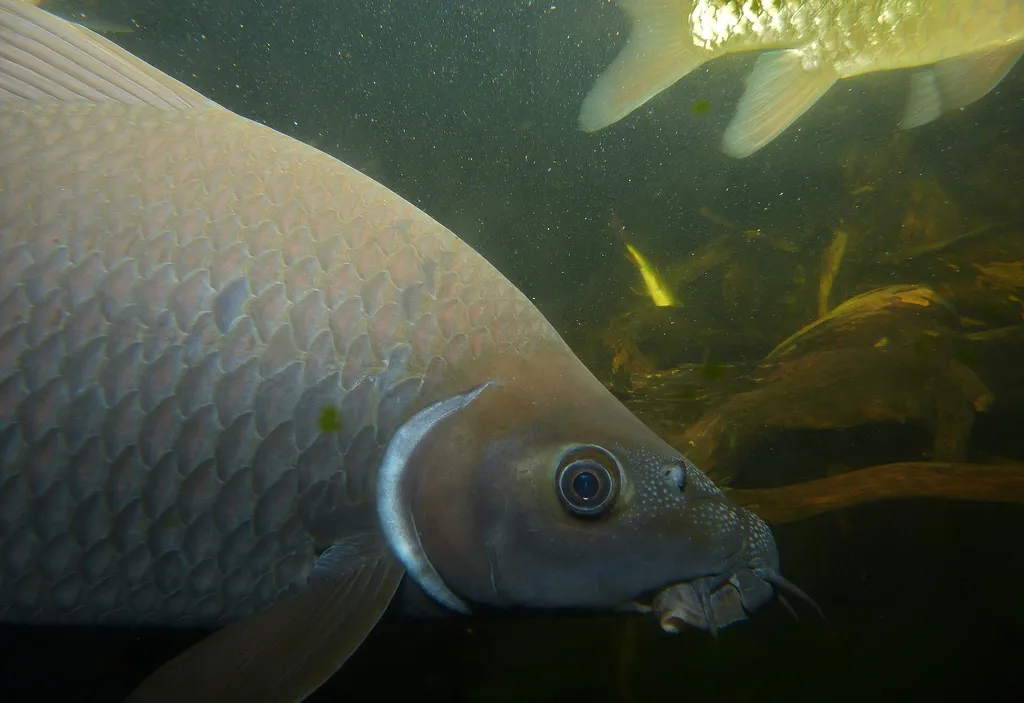 23.6 in (60 cm)660 gal (2,500 L)68–79°F (20–26°C)
Black shark
Labeo chrysophekadion
23.6 in (60 cm) · 660 gal (2,500 L)
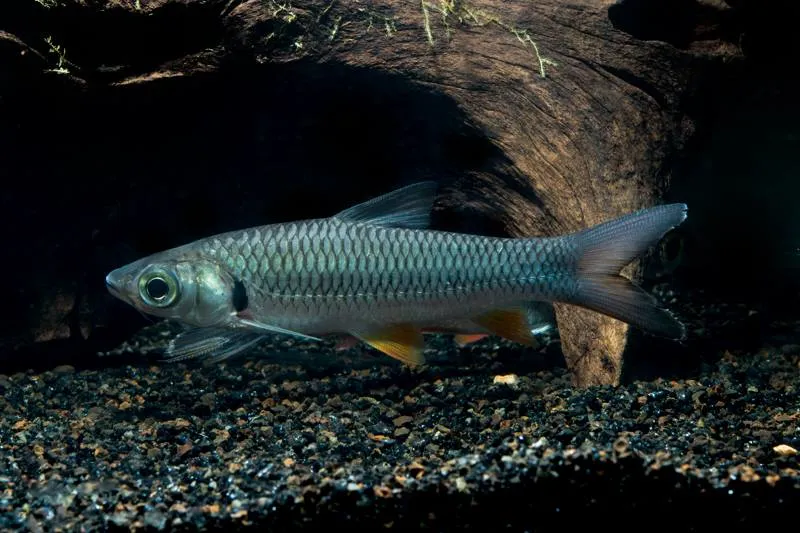 23.6 in (60 cm)317 gal (1,200 L)72–82°F (22–28°C)
Mad barb
Leptobarbus hoevenii
23.6 in (60 cm) · 317 gal (1,200 L)