Red-tail silver shark
Hypselobarbus kurali
Also known as Kurali barb
FreshwaterFish
Care at a glance
- Temperature
- 72–82°F
- 22–28°C
- pH
- 6.5–7.8
- Adult size
- 13.8 in
- 35 cm
- Minimum tank
- 211 gal
- 800 L
- Temperament
- Mostly peaceful
- Social behavior
- Schooling
- Swim level
- Middle
- Diet
- Omnivore
- Difficulty
- Difficult
- Breeding
- No record
- Rarity
- Rare
- Family
- Cyprinidae
- Origin
- Western Ghats rivers, Kerala, India
Overview
The red-tail silver shark is a big, fast river barb for a very large aquarium or an indoor pond rather than a standard tank. Its size and space needs make it a specialist fish for experienced keepers.
Did you know
The red-tail silver shark is the Western Ghats' own answer to the Southeast Asian bala shark. It is a large, silver, red-tailed river barb that fills the same fast-water niche. The two fish are unrelated and live on opposite sides of the Bay of Bengal.
Caring for the red-tail silver shark
Keep red-tail silver sharks in a group of five or six or more, never as a lone fish. They power up and down the middle of the tank all day and need real length to turn. Plan on at least 211 gal (800 L) as a starting point, and more for a full group.
Give them strong current, high oxygen, open swimming space, and a substrate of sand and water-worn rock. Keep the water warm, at 72 to 82°F (22 to 28°C), with a pH of 6.5 to 7.8. Keep it very clean too, since this fish suffers in stale or crowded conditions.
Feed a varied diet of sinking pellets, wafers, vegetables and meaty frozen foods. The red-tail silver shark is mostly peaceful with fish too large to be seen as food. It will bully or swallow small tank mates, so match it with other large, calm species. Captive breeding is not recorded in the hobby.
Good to know
Hypselobarbus kurali belongs to the carp family, Cyprinidae, and was described by Menon and Rema Devi in 1995. It has a silver body under a red-flushed tail, and it is one of the larger barbs of India's Western Ghats. It is a food and game fish in its range, and it is also known as the Kurali barb.
In the wild
The red-tail silver shark is endemic to the southern Western Ghats of Kerala, India. It lives in large, clear, fast-flowing streams and rivers below the hills.
Weekly picks
Tank mates
The red-tail silver shark is a mostly peaceful, schooling species that keeps to the middle. These picks share a community profile with it, are safe together in both directions, and overlap on water type, temperature and pH.
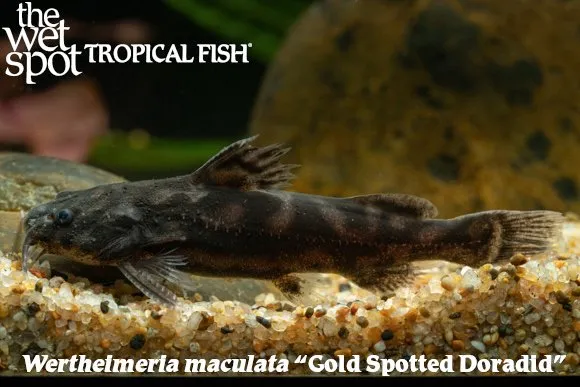
Gold-spotted doradid
Wertheimeria maculata
Freshwater11.8 in (30 cm) · 106 gal (400 L)68–79°F (20–26°C)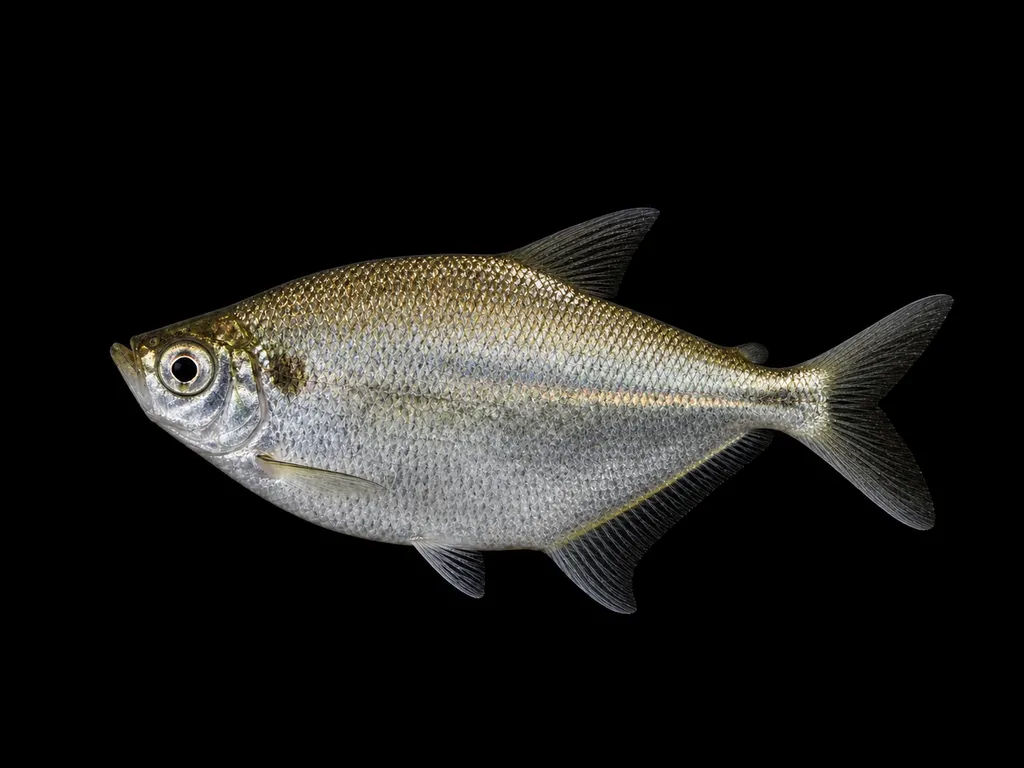
Giant river hatchetfish
Triportheus rotundatus
Freshwater9.8 in (25 cm) · 79 gal (300 L)73–82°F (23–28°C)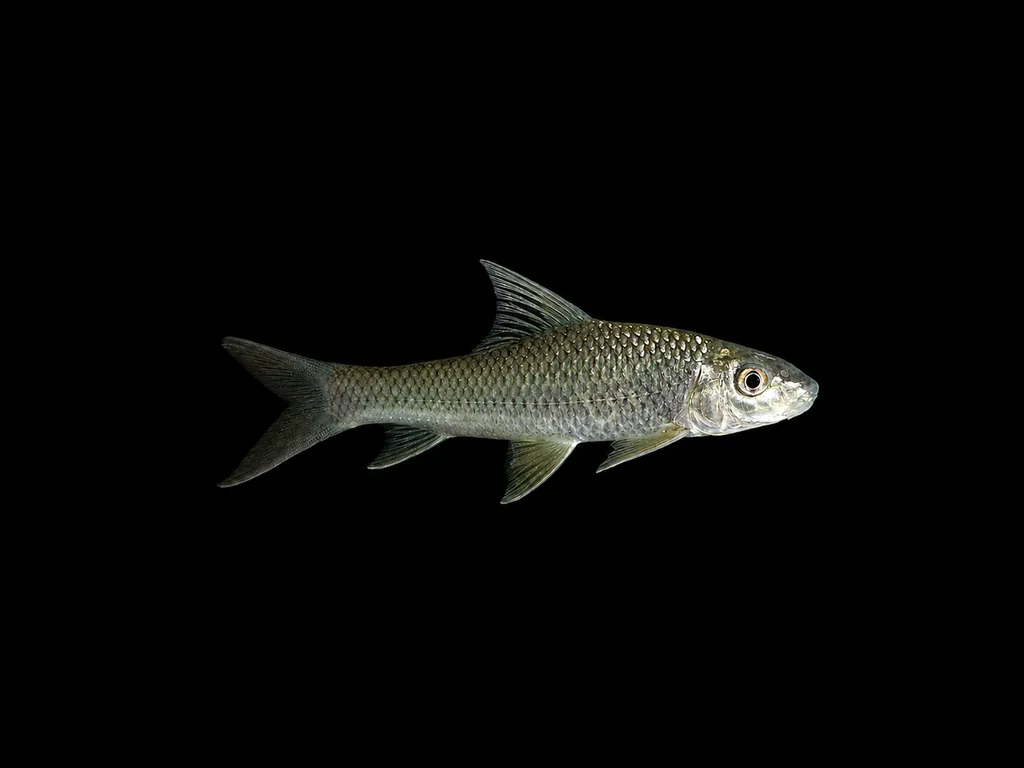
Sucker barb
Barbichthys laevis
Freshwater12.2 in (31 cm) · 159 gal (600 L)72–82°F (22–28°C)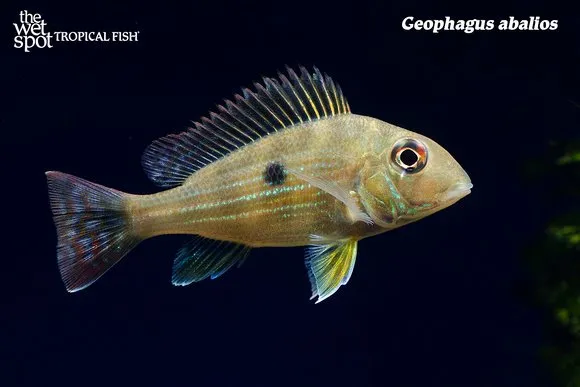
Abalios eartheater
Geophagus abalios
Freshwater9.8 in (25 cm) · 172 gal (650 L)77–84°F (25–29°C)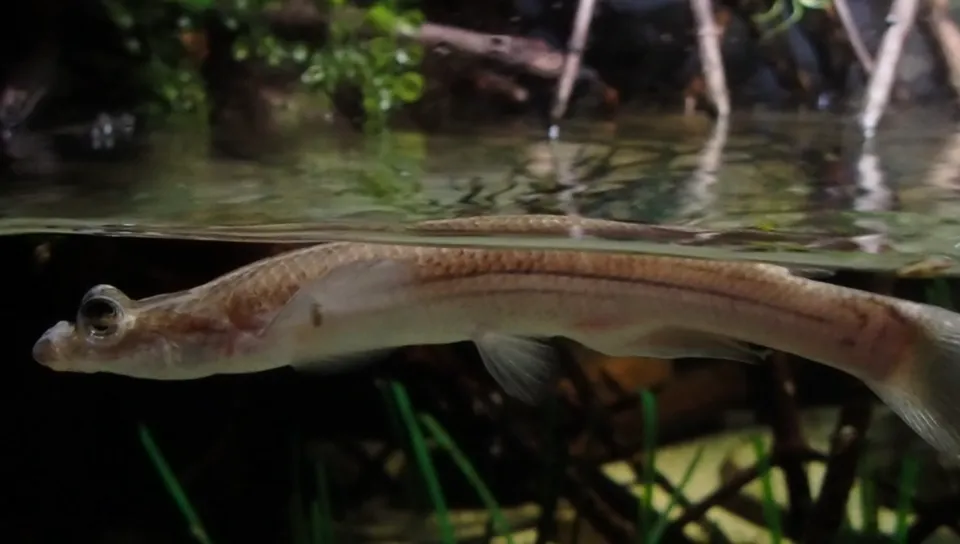
Largescale four-eyed fish
Anableps anableps
FreshwaterBrackish11.8 in (30 cm) · 70 gal (265 L)77–88°F (25–31°C)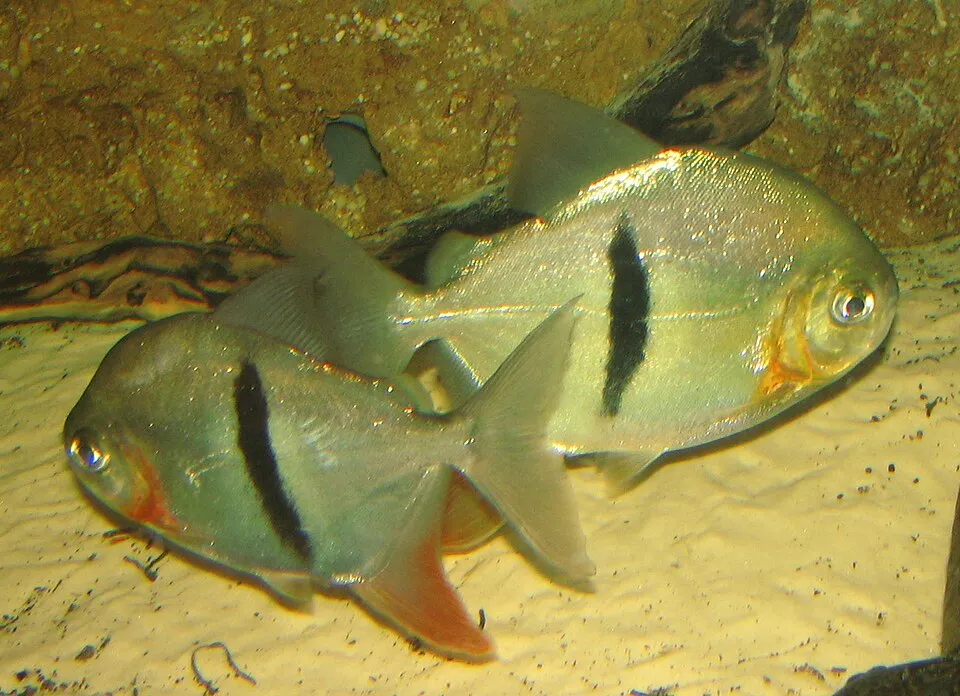
Disk tetra
Myloplus schomburgkii
Freshwater15.7 in (40 cm) · 170 gal (645 L)73–81°F (23–27°C)
Common questions
What size tank does a red-tail silver shark need?
A red-tail silver shark needs at least 211 gal (800 L). It spends most of its time in the middle.
What temperature and pH does a red-tail silver shark need?
A red-tail silver shark is comfortable at 72–82°F (22–28°C) with a pH of 6.5–7.8.
What does a red-tail silver shark eat?
A red-tail silver shark eats a varied diet of sinking pellets, wafers and vegetables, along with meaty frozen foods.
How big does a red-tail silver shark get?
An adult red-tail silver shark reaches about 13.8 in (35 cm).
Does a red-tail silver shark need a group?
Yes. A red-tail silver shark is a schooling species and should be kept in a group, not singly.
Related species
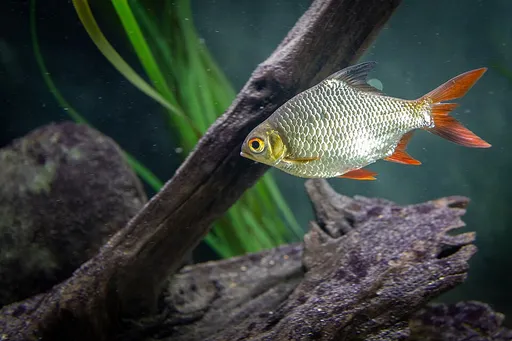 13.8 in (35 cm)180 gal (680 L)72–82°F (22–28°C)
Tinfoil barb
Barbonymus schwanenfeldii
13.8 in (35 cm) · 180 gal (680 L)
- 12.2 in (31 cm)159 gal (600 L)72–82°F (22–28°C)
Sucker barb
Barbichthys laevis
12.2 in (31 cm) · 159 gal (600 L)
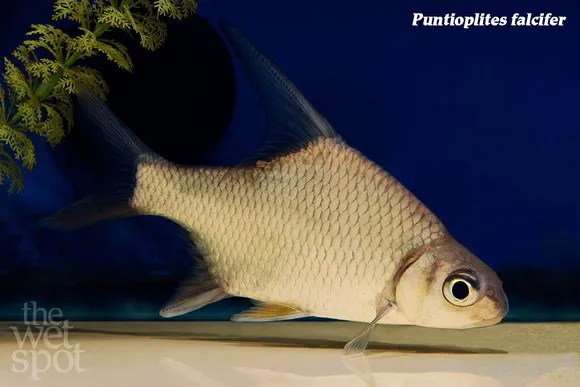 15.7 in (40 cm)264 gal (1,000 L)73–82°F (23–28°C)
Sickle-fin barb
Puntioplites falcifer
15.7 in (40 cm) · 264 gal (1,000 L)
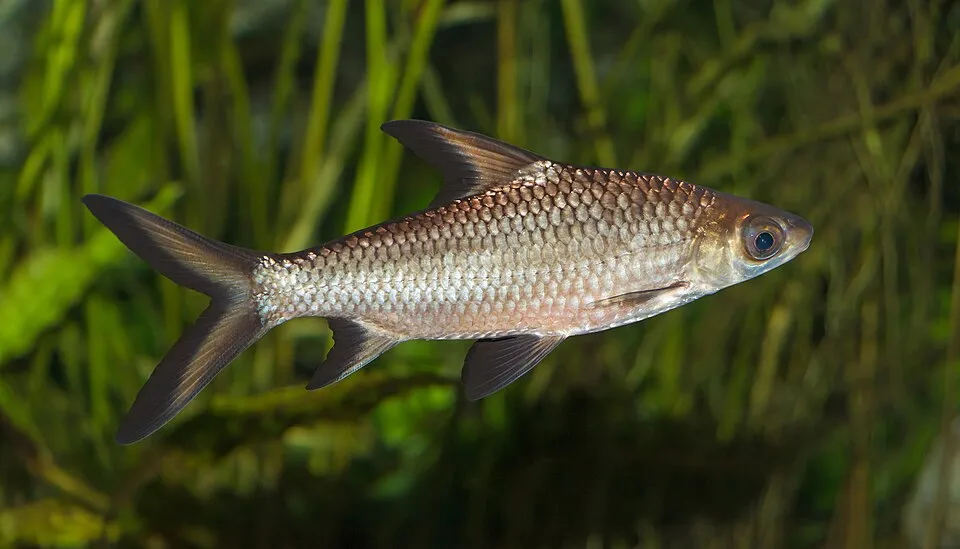 15.7 in (40 cm)227 gal (860 L)72–82°F (22–28°C)
Silver shark
Balantiocheilos melanopterus
15.7 in (40 cm) · 227 gal (860 L)
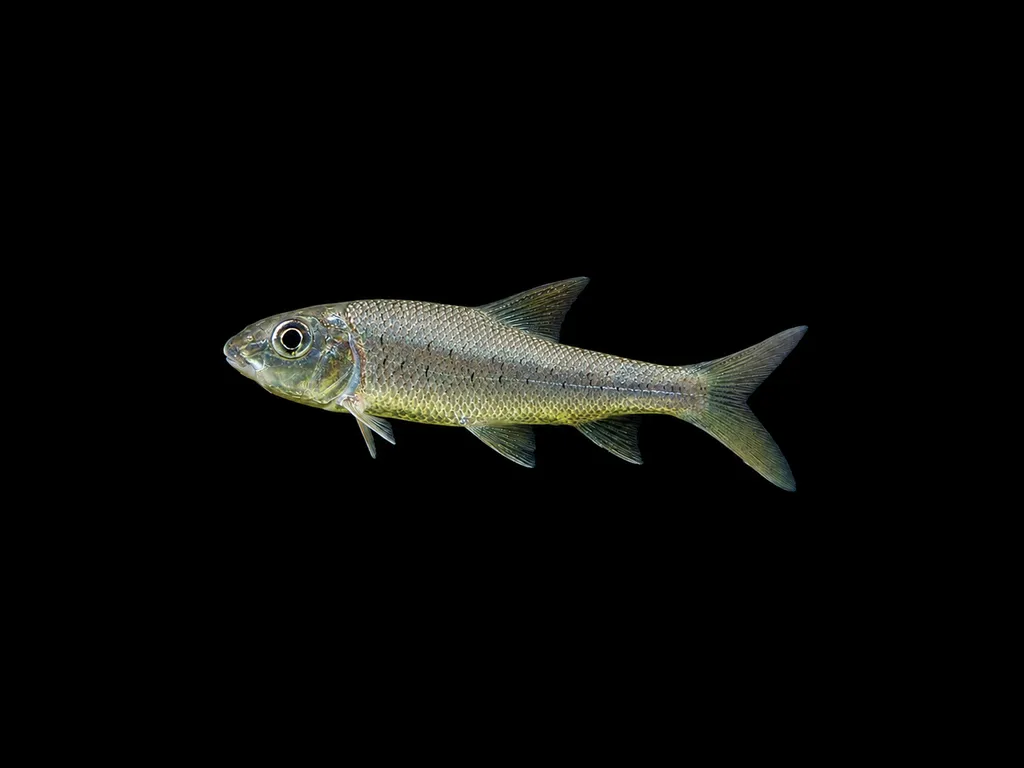 19.7 in (50 cm)317 gal (1,200 L)61–79°F (16–26°C)
Shovelmouth barb
Chagunius chagunio
19.7 in (50 cm) · 317 gal (1,200 L)
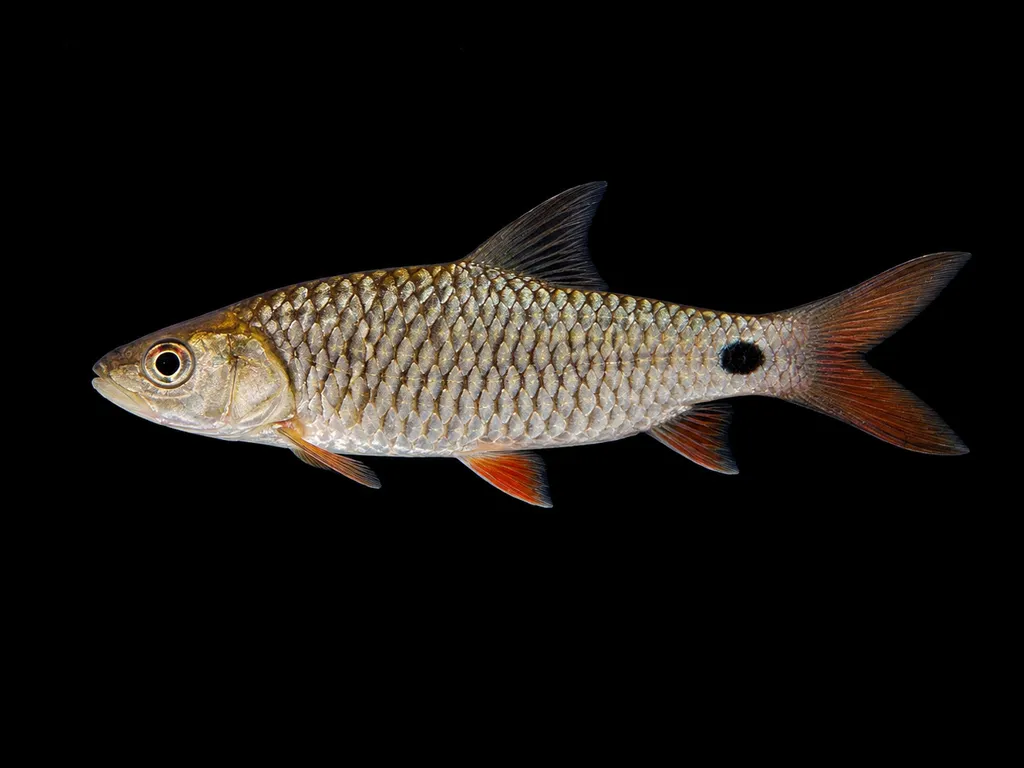 13.8 in (35 cm)159 gal (600 L)72–82°F (22–28°C)
Eyespot hampala barb
Hampala dispar
13.8 in (35 cm) · 159 gal (600 L)