One species · 5 varieties
Severum
Heros efasciatus
Also known as Heros appendiculatus, Peru severum, Peruvian severum
FreshwaterFish
Care at a glance
- Temperature
- 72–84°F
- 22–29°C
- pH
- 6.0–7.5
- Adult size
- 11.8 in
- 30 cm
- Minimum tank
- 65 gal
- 245 L
- Temperament
- Mostly peaceful
- Social behavior
- Social
- Swim level
- Middle
- Diet
- Omnivore
- Difficulty
- Medium
- Breeding
- Substrate spawner · Hard
- Rarity
- Rare
- Family
- Cichlidae
- Origin
- Brazil
Pick a variety
One setup covers every line on this page: care is the species' care.
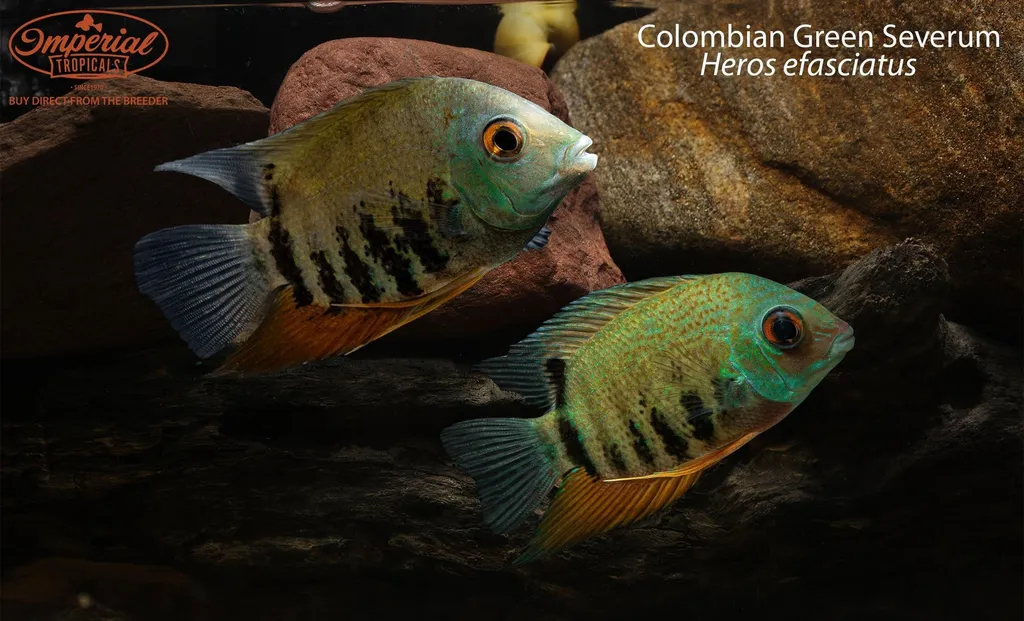
Green severum
the wild pattern; the fish every other line was bred from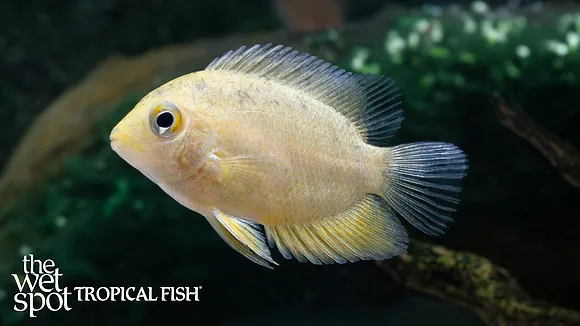
Gold severum
yellow-gold leucistic form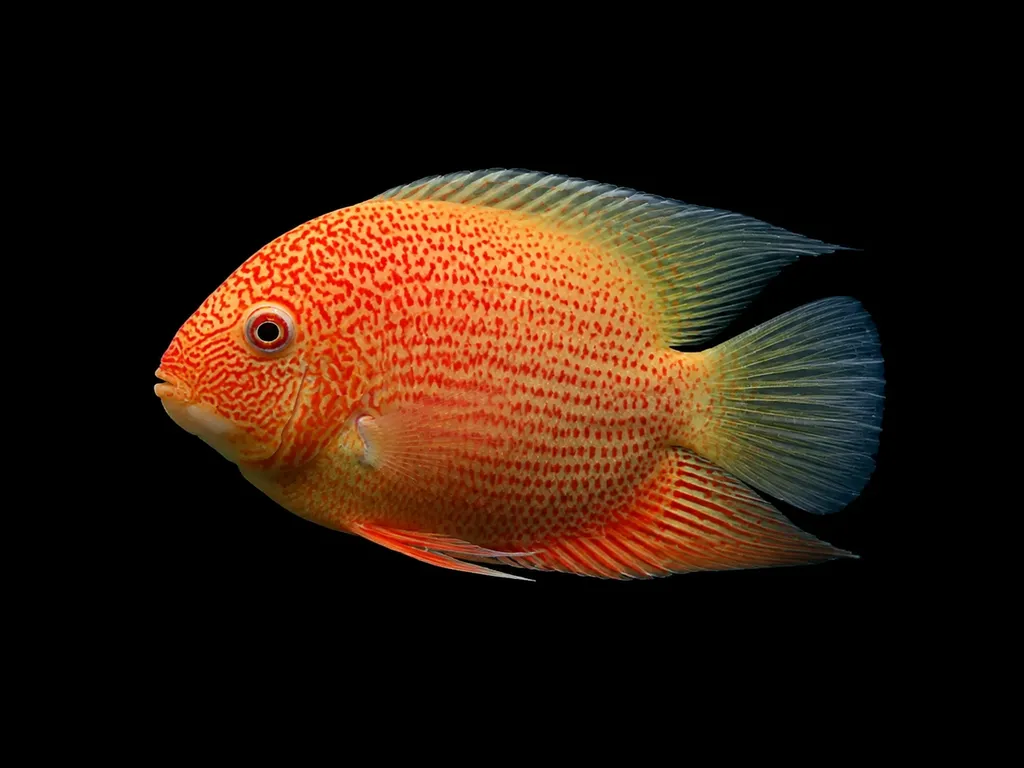
Red spotted severum
gold densely spotted with red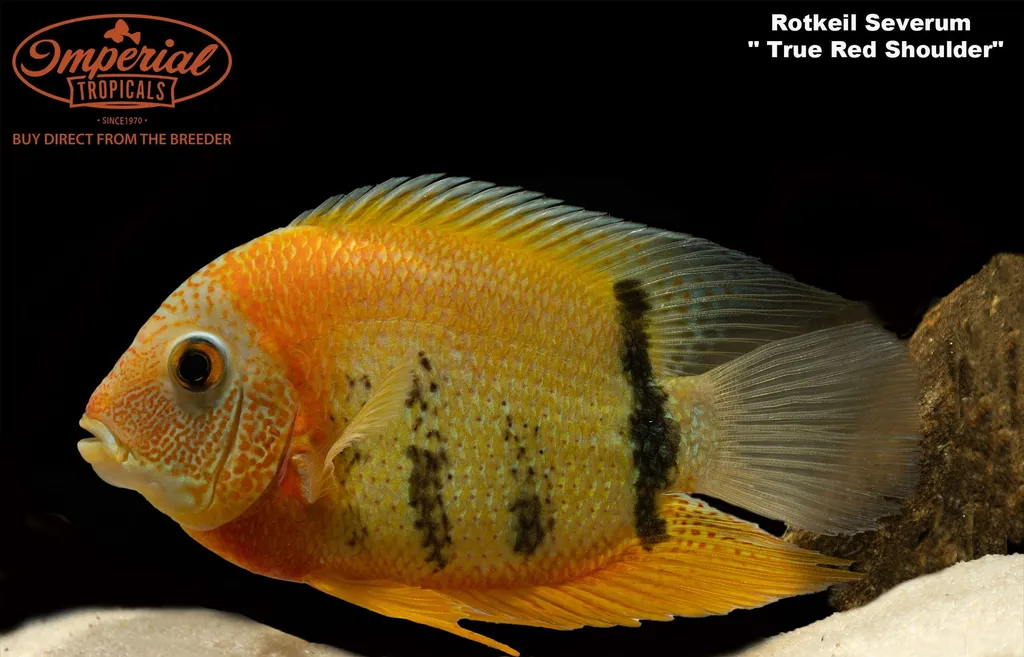
Rotkeil severum
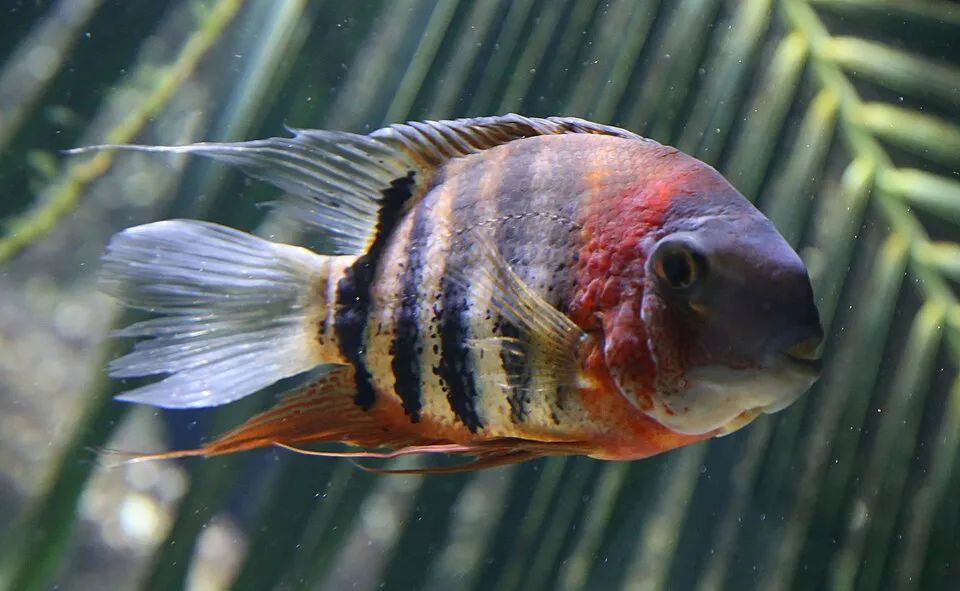
red to orange wedge over the head and shoulders; a Peruvian form with eight bars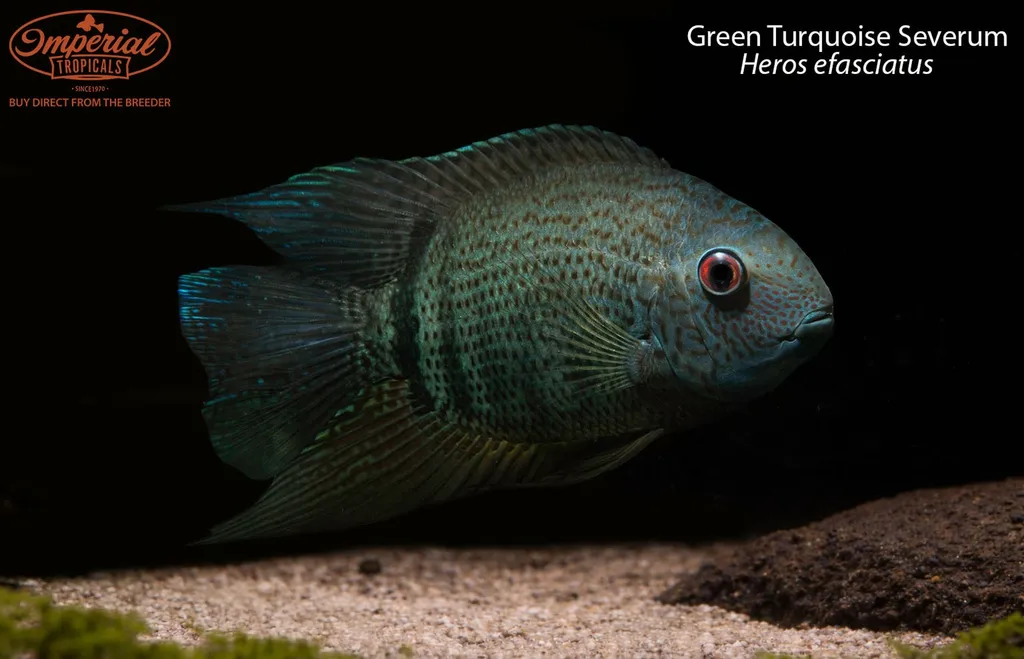
Turquoise severum
the green with more blue; the name covers a farm line and the Peruvian wild fish
Overview
The severum is a tall, deep-bodied cichlid for a large community tank, best kept by someone with a little experience.
Did you know
Severums learn who feeds them. Many swim to the front glass when that person walks in, and they take food from the hand once settled.
Caring for the severum
Give a pair of severums at least 65 gal (245 L), with open water in the middle and sturdy cover along the sides. Use sand or fine gravel, driftwood and a few rocks, and leave room to swim. A severum digs and grazes soft plants, so plant anubias and Java fern or leave the tank bare. Potted or anchored plants last longer.
Run the water soft to neutral, at 72 to 84°F (22 to 29°C) with a pH of 6.0 to 7.5. Feed quality pellets with blanched vegetables, peas and spirulina, plus frozen bloodworms and brine shrimp.
Severums stay mostly peaceful for their size and are fine alone or in a group. Keep them with calm fish too large to swallow, such as larger tetras, Geophagus and plecos. A bonded pair can hold a tank on its own.
A severum turns territorial around a spawn. Pairs spawn on a cleaned flat surface, and both parents fan the eggs and herd the fry. Breeding them is hard.
Every fish on this page is sold as Heros efasciatus. Green is the wild pattern, sold plain or by locality. Gold is a xanthic line, and red spotted is a gold bred for red. Turquoise is the green with more blue, by farm selection or by Peruvian origin. The rotkeil is the odd one, a red-shouldered fish from Peru with eight bars instead of nine. Hobby specialists treat it as an undescribed species. The true severum, Heros severus, and the Rio Negro spotted severum, Heros notatus, have pages of their own.
All of these lines interbreed, and a rotkeil crossed to a green gives nine-barred red-headed fry that get sold on as rotkeils. Keep one line to a tank if you mean to breed. In a display they mix without trouble, since temper is the species' temper across the board and the rotkeil is the calmest of them.
Good to know
The severum, Heros efasciatus, was described by Heckel in 1840. The wild fish is green to olive with nine dark bars, and the bars fade as it matures. Nearly every severum in the trade is this species, whatever name the price list prints. Shops sell wild and F1 fish under place names such as Colombian green, Rio Tocantins and Peru turquoise. Heros severus, the true severum, is a rarer blackwater fish. The IUCN lists the species as Least Concern.
In the wild
Severums come from the Amazon basin, from Peru and Colombia across Brazil to the lower river. They live in slow, warm water under flooded forest, among roots, fallen branches and leaf litter. The water there is soft and slightly acidic.
Weekly picks
Tank mates
Every variety on this page wants the same water, so one set of picks fits them all. These picks match on water type, temperature, pH, size and temperament.
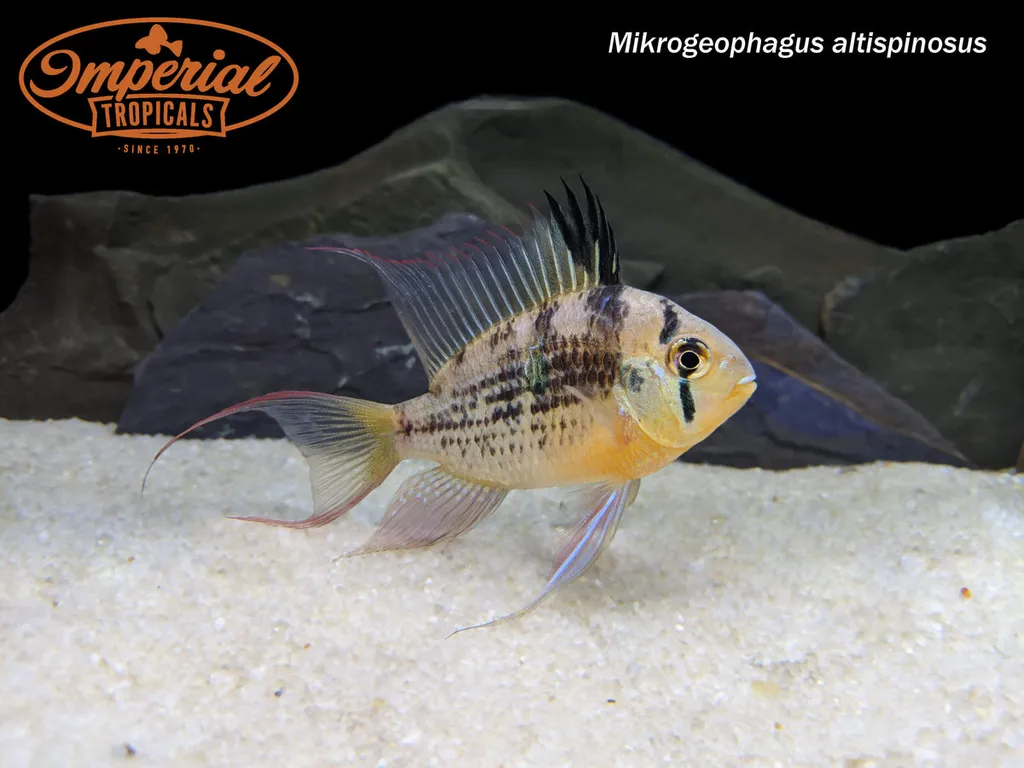
Bolivian ram
Mikrogeophagus altispinosus
Freshwater3.1 in (8 cm) · 45 gal (170 L)75–82°F (24–28°C)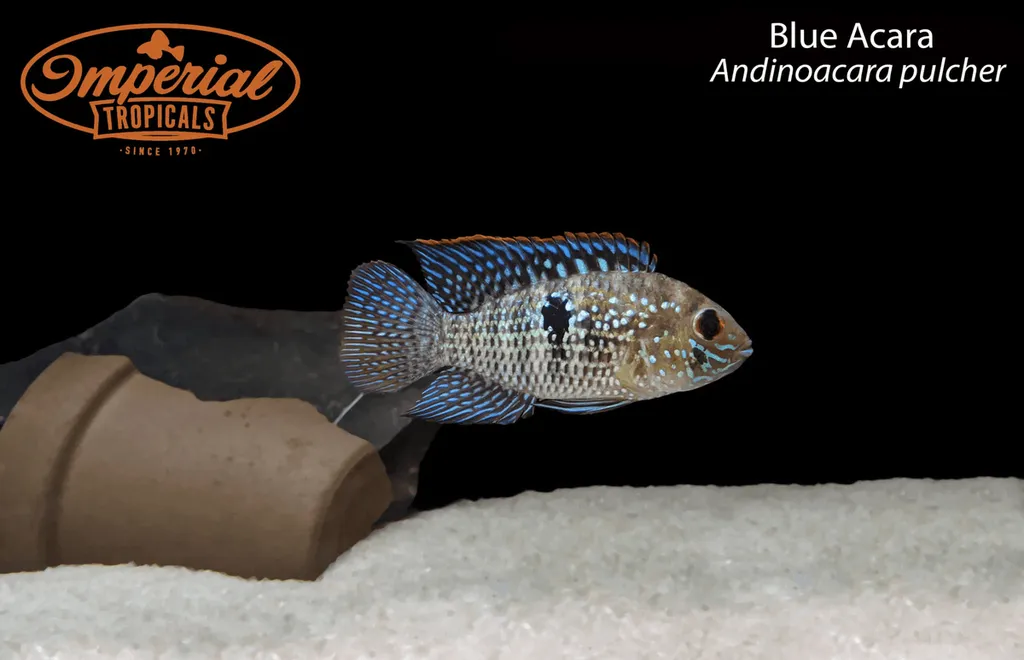
Blue acara
Andinoacara pulcher
Freshwater5.9 in (15 cm) · 42 gal (160 L)72–82°F (22–28°C)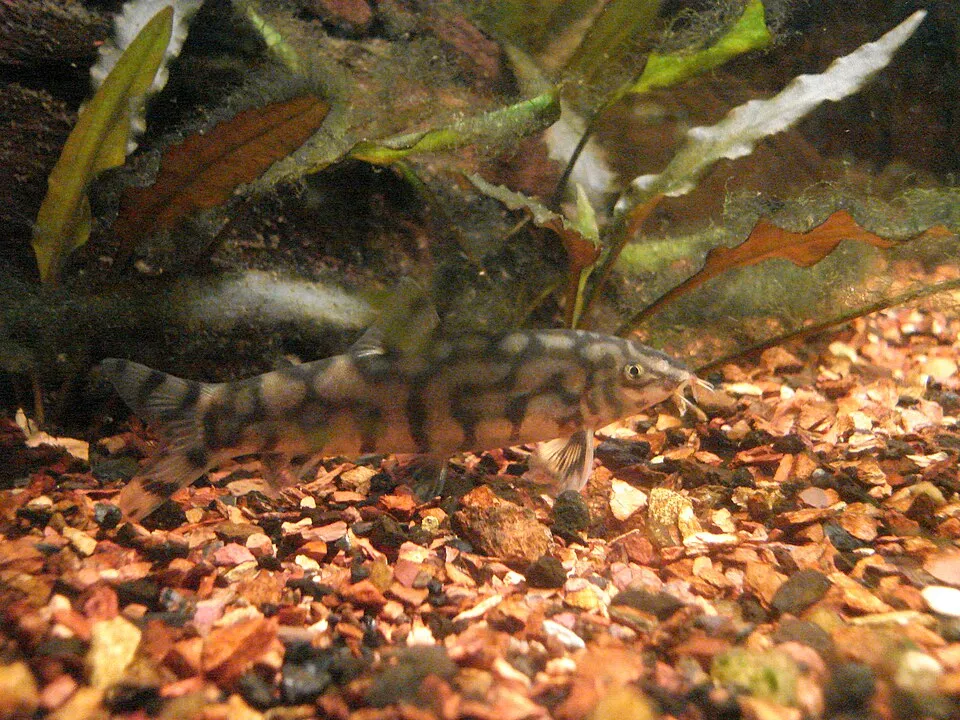
Yoyo loach
Botia almorhae
Freshwater6.3 in (16 cm) · 42 gal (160 L)66–81°F (19–27°C)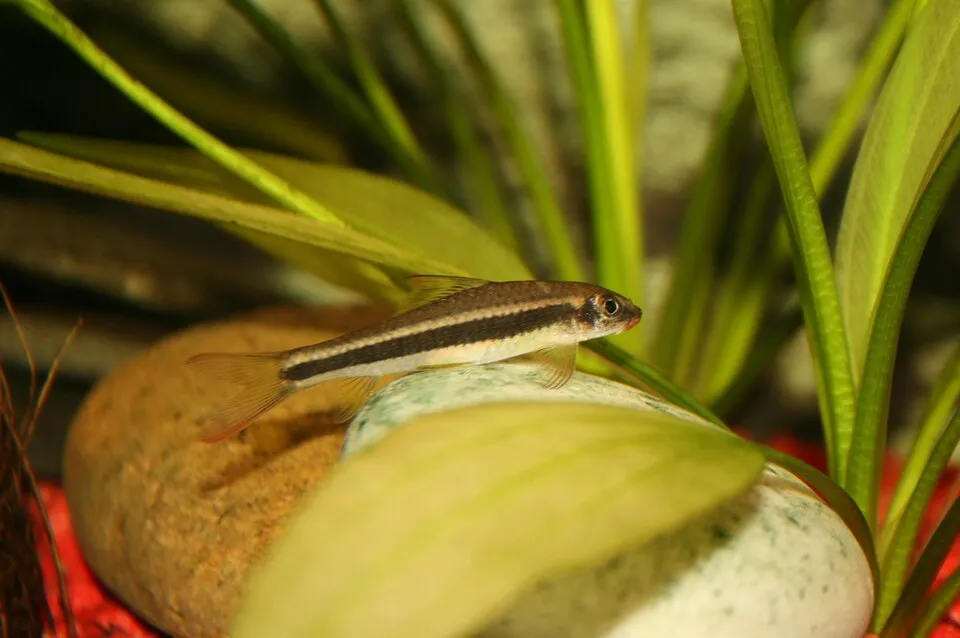
Cambodian log sucker
Garra cambodgiensis
Freshwater5.9 in (15 cm) · 63 gal (240 L)68–81°F (20–27°C)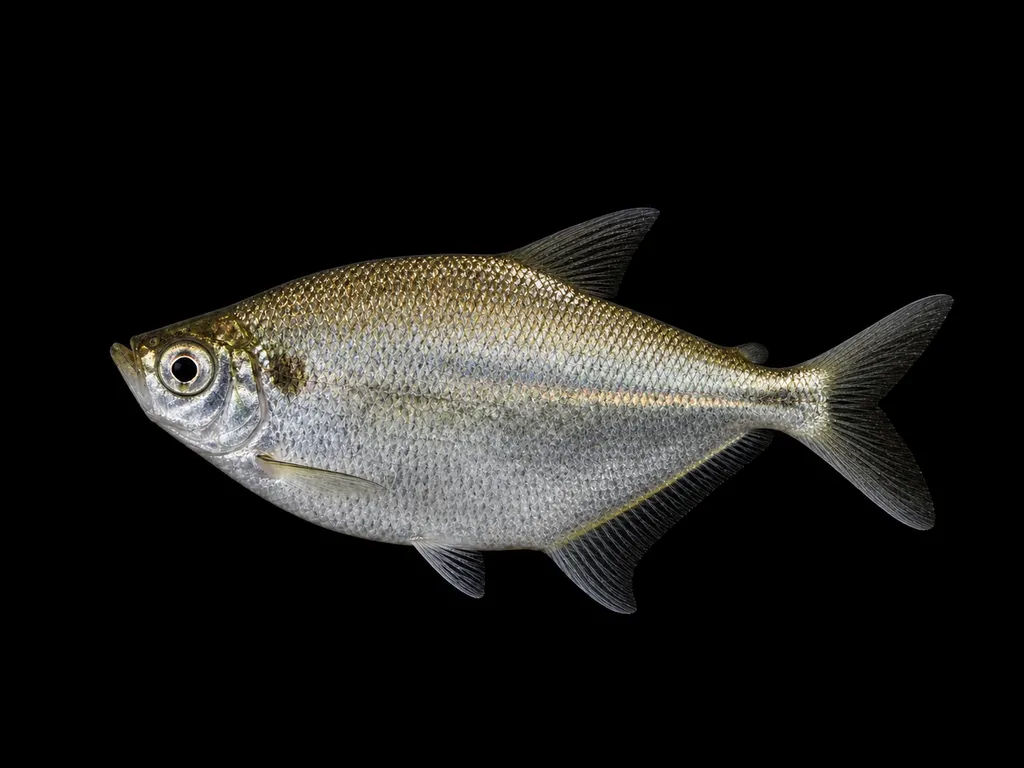
Giant river hatchetfish
Triportheus rotundatus
Freshwater9.8 in (25 cm) · 79 gal (300 L)73–82°F (23–28°C)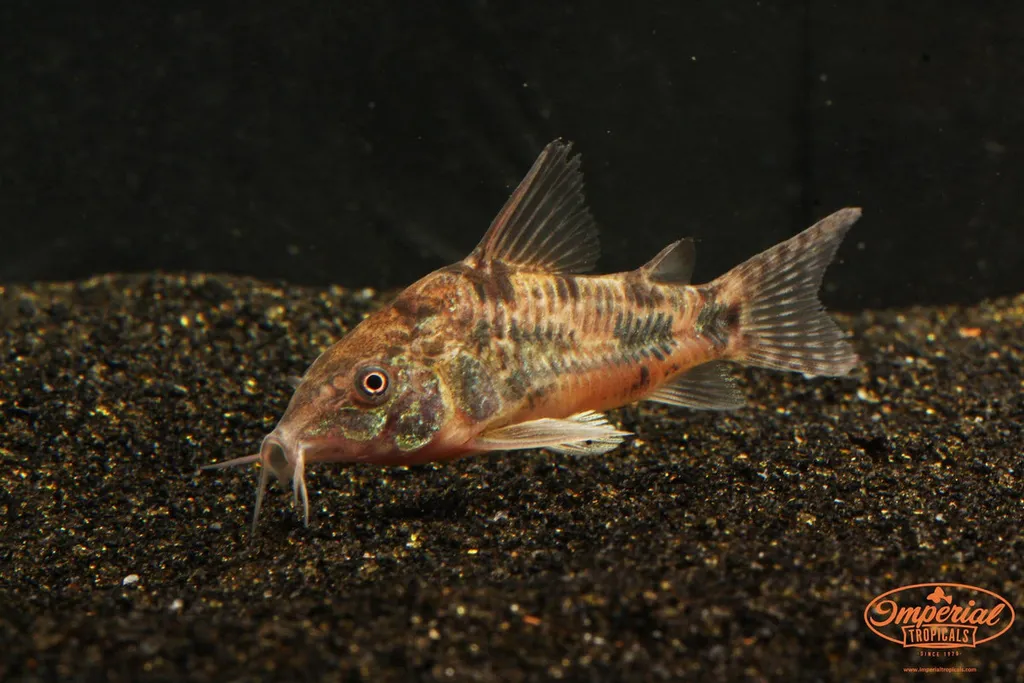
Peppered cory
Hoplisoma paleatum
Freshwater2.8 in (7 cm) · 21 gal (80 L)72–79°F (22–26°C)
Common questions
Can gold, turquoise and rotkeil severums live together?
Yes. They are one species in different colors and share the same temper. A mixed group works in the 120 gallons (450 liters) the shops ask for a group. They also pair across lines, and the fry muddy the next generation, so keep lines apart if you plan to breed.
What size tank does a severum need?
A severum needs at least 65 gal (245 L). It spends most of its time in the middle.
What temperature and pH does a severum need?
A severum is comfortable at 72–84°F (22–29°C) with a pH of 6.0–7.5.
What does a severum eat?
A severum eats quality pellets with blanched vegetables, peas and spirulina. Add frozen bloodworms and brine shrimp as well. It also grazes soft plants in the tank.
How big does a severum get?
An adult severum reaches about 11.8 in (30 cm).
How does a severum breed?
Severum pairs spawn on a cleaned flat surface and turn territorial while they do. Both parents fan the eggs and herd the fry. Breeding them is hard.
Related species
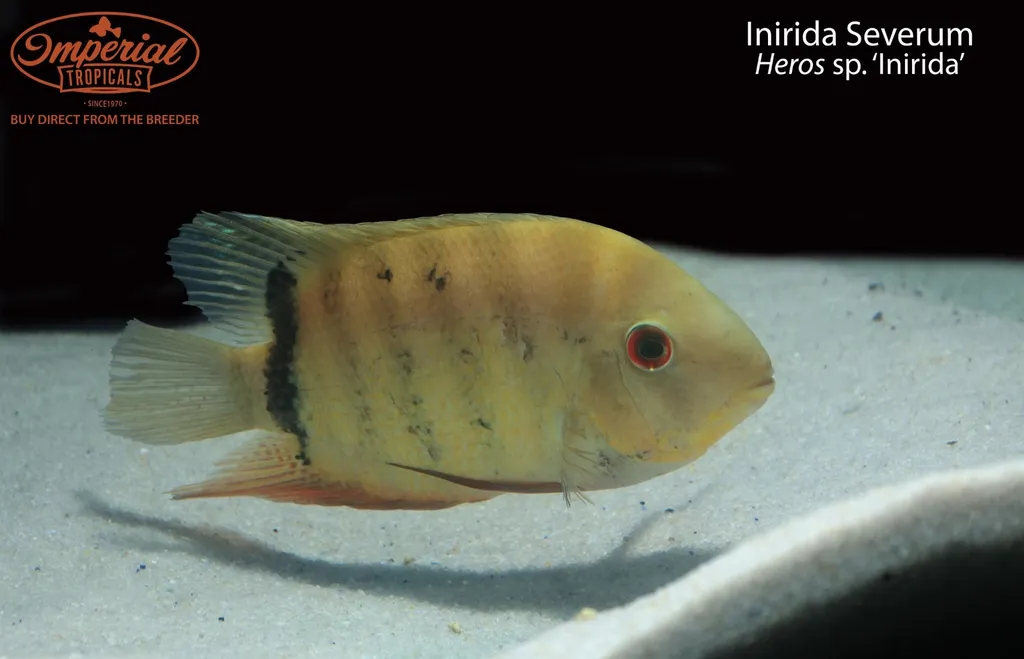 11.8 in (30 cm)119 gal (450 L)75–82°F (24–28°C)
Inirida severum
Heros sp. 'Inirida'
11.8 in (30 cm) · 119 gal (450 L)
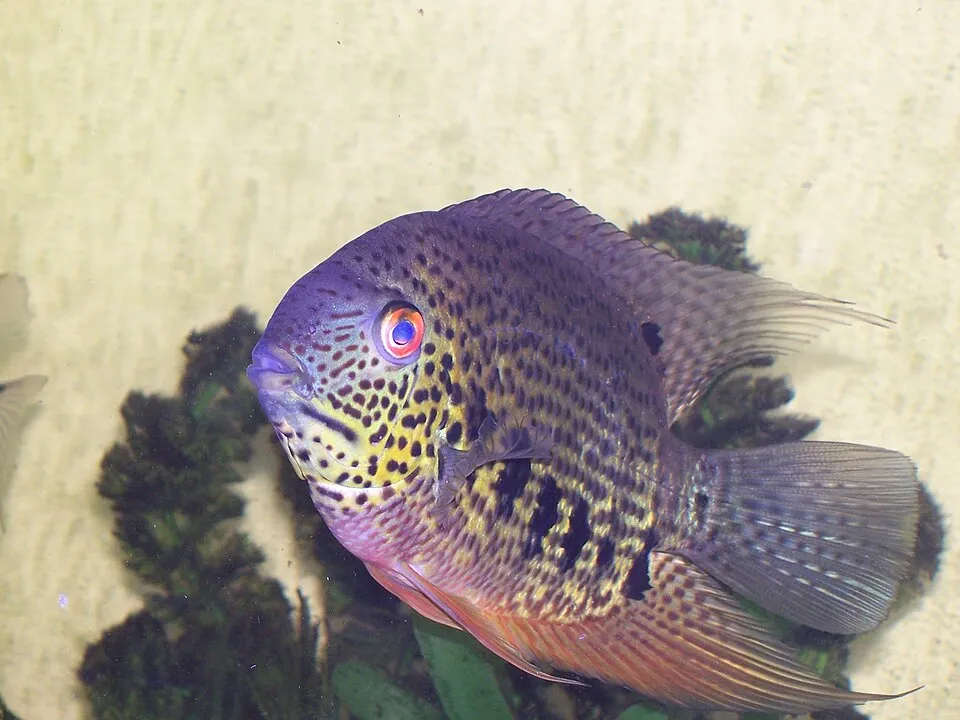 11.8 in (30 cm)58 gal (220 L)72–84°F (22–29°C)
Spotted severum
Heros notatus
11.8 in (30 cm) · 58 gal (220 L)
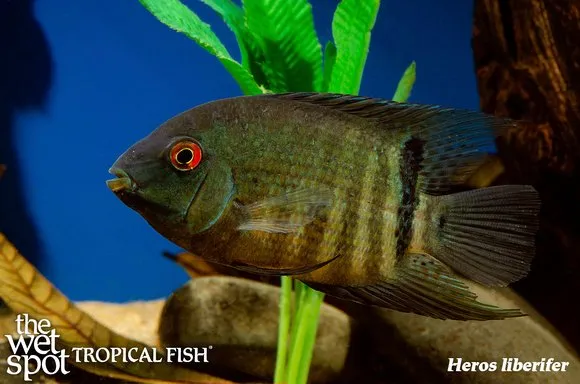 7.9 in (20 cm)106 gal (400 L)75–82°F (24–28°C)
Eyespot severum
Heros liberifer
7.9 in (20 cm) · 106 gal (400 L)
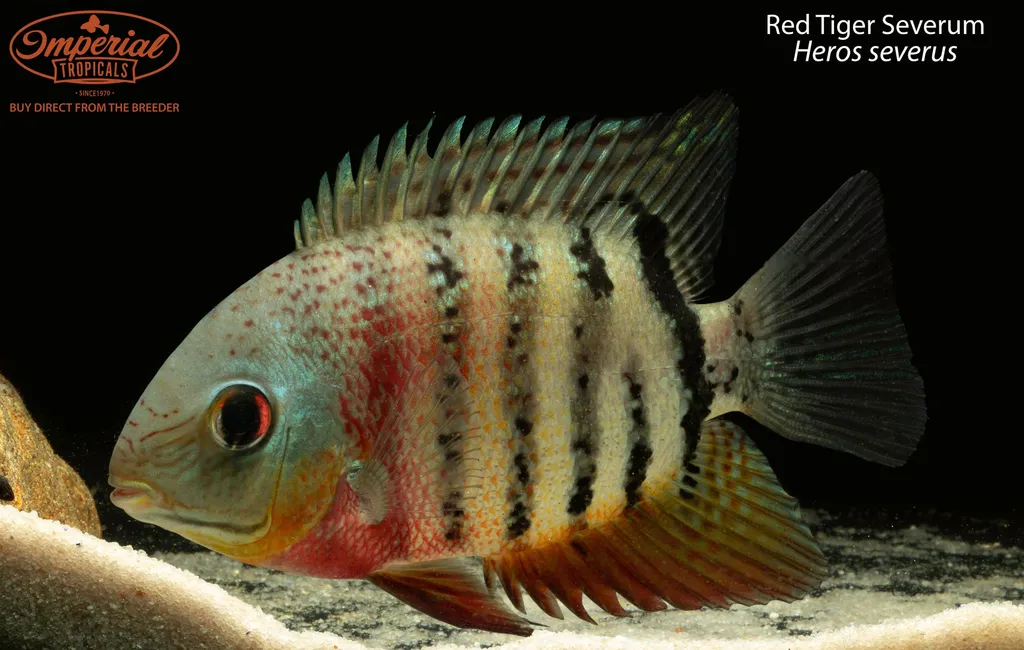 7.9 in (20 cm)75 gal (285 L)79–86°F (26–30°C)
True severum
Heros severus
7.9 in (20 cm) · 75 gal (285 L)
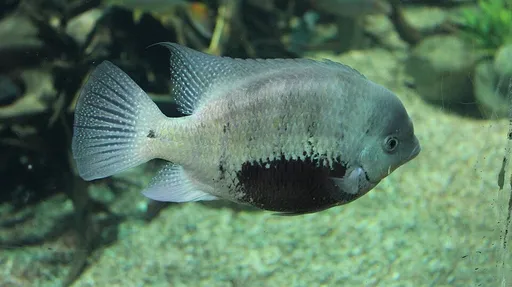 11.8 in (30 cm)119 gal (450 L)77–86°F (25–30°C)
Pantano cichlid
Cincelichthys pearsei
11.8 in (30 cm) · 119 gal (450 L)
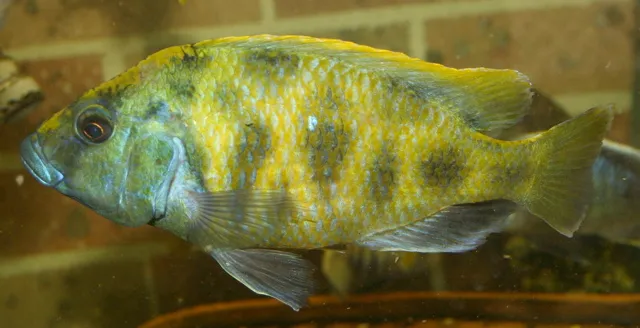 11.8 in (30 cm)74 gal (280 L)75–82°F (24–28°C)
Venustus cichlid
Nimbochromis venustus
11.8 in (30 cm) · 74 gal (280 L)