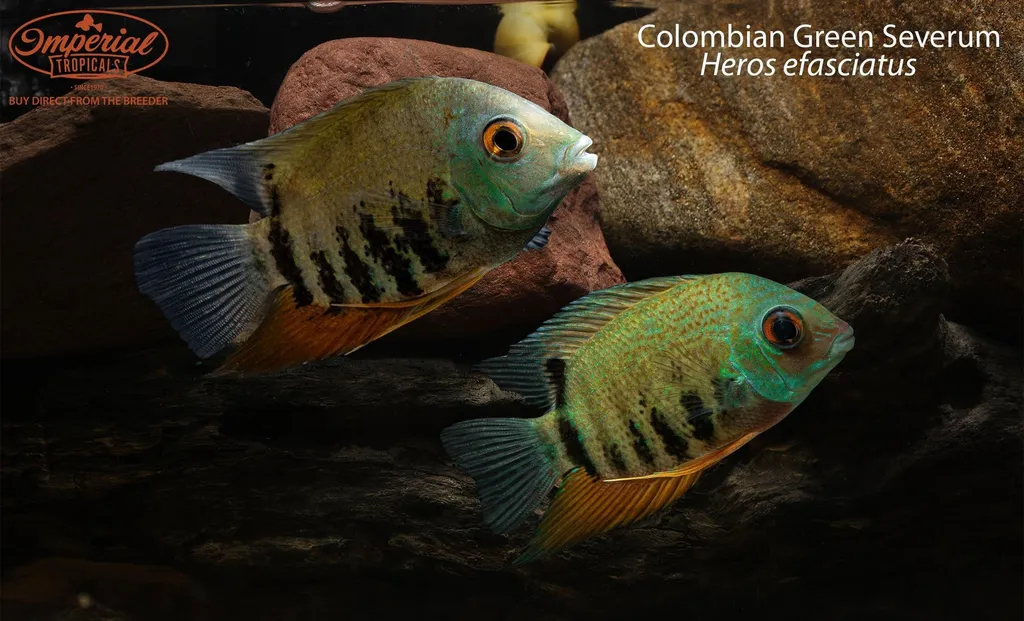
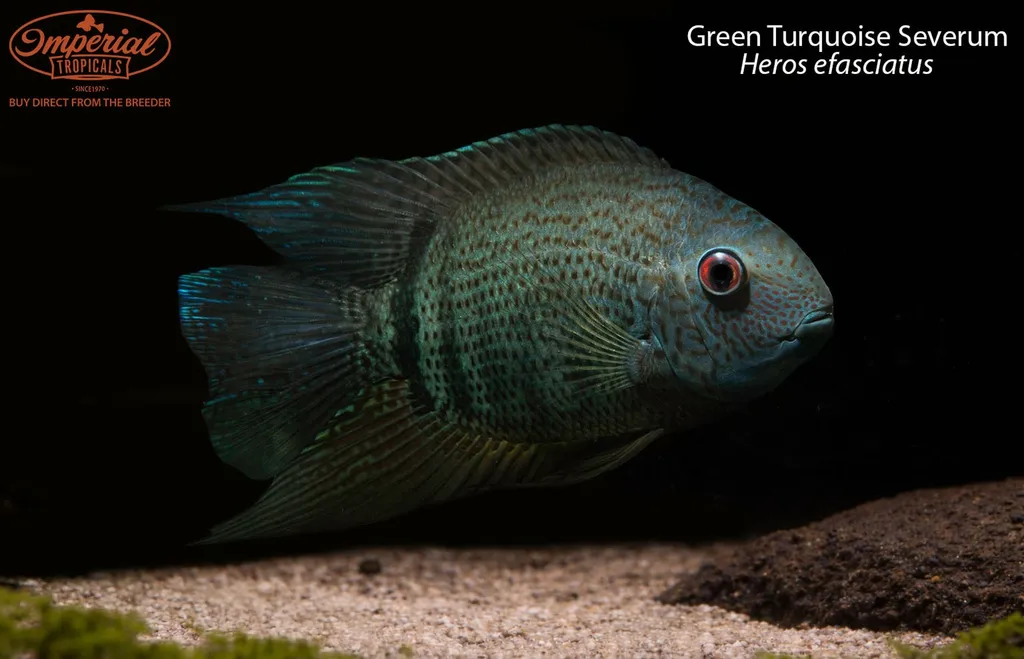
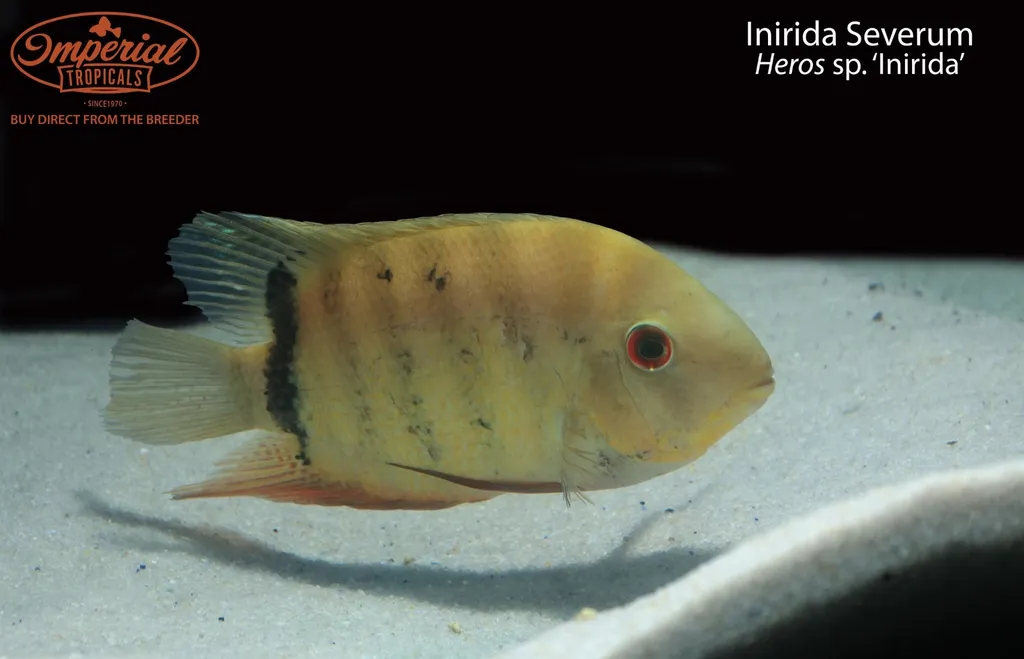
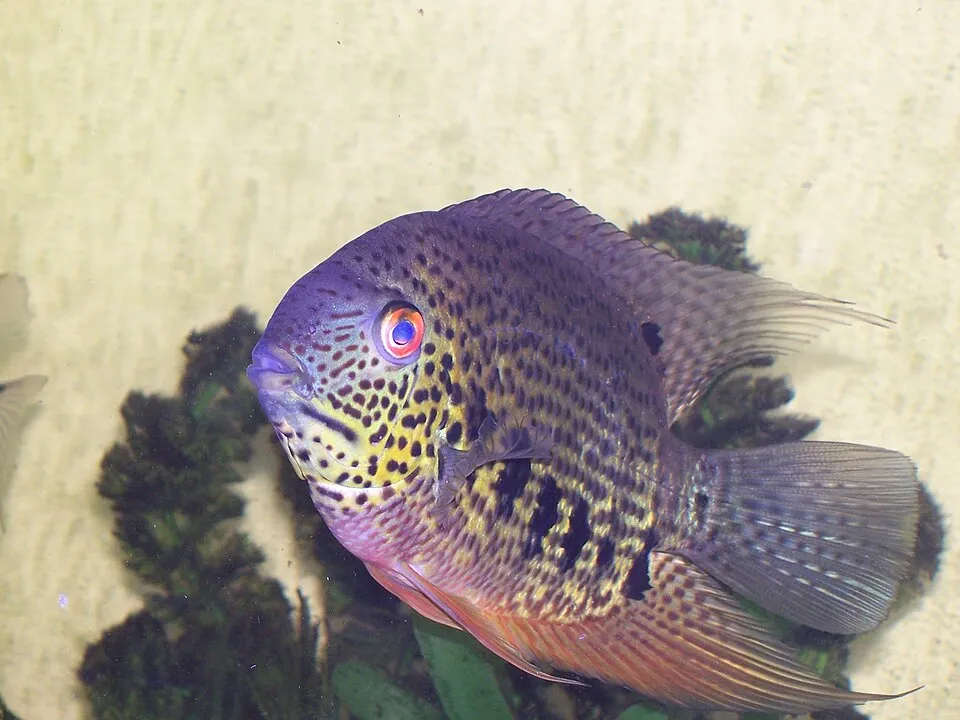
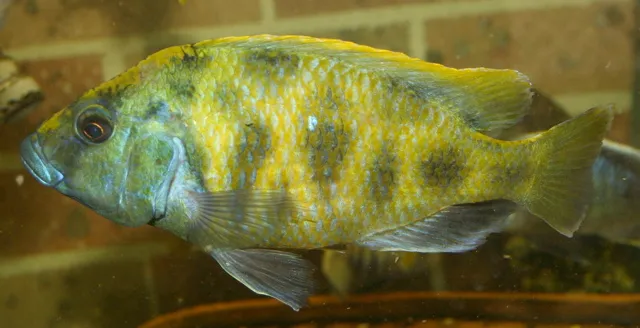
The turquoise severum is a green severum with more blue in it. The blue shows as a wash on the face and flanks and as an edge on the fins. It is a mostly peaceful cichlid for a large community tank, and a step up from the easiest fish.
Did you know
For years, green severum meant the farm-bred fish, and turquoise was kept for the wild Peruvian one. Today the two names describe shades of one species. A wild Peru fish can even arrive plainer than a farm turquoise.
Caring for the turquoise severum
Keep a pair of turquoise severums in at least 65 gal (245 L). Leave open water through the middle and sturdy cover along the sides, over sand or fine gravel with driftwood and a few rocks. They dig and graze soft plants, so plant only anubias and Java fern, potted or anchored, or keep the tank bare.
Run the water soft to neutral, at 72 to 84°F (22 to 29°C) with a pH of 6.0 to 7.5. Feed quality pellets with blanched vegetables, peas and spirulina, plus frozen bloodworms and brine shrimp.
Turquoise severums are mostly peaceful for their size and fine alone or in a group. Pick calm tank mates too large to swallow, such as larger tetras, Geophagus and plecos. A bonded pair can hold a tank by itself.
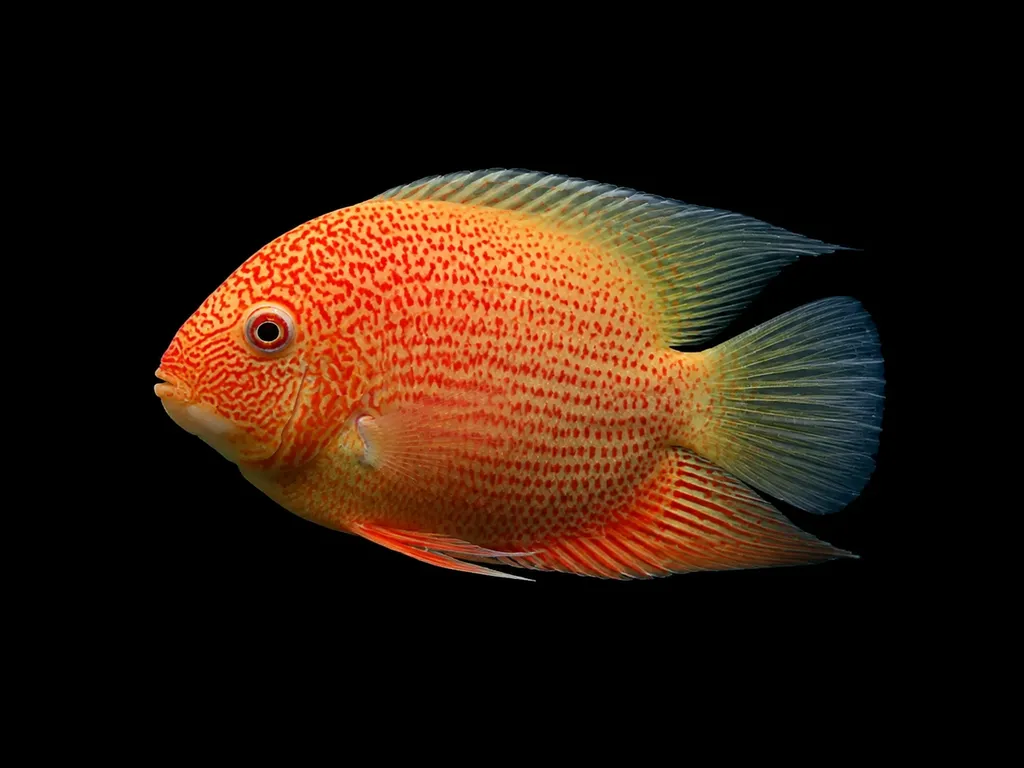
In wild Peruvian fish, males show small red spots across the body. Pairs turn territorial around a spawn and lay on a cleaned flat surface. Both parents fan the eggs and herd the fry, and breeding them is hard.
Good to know
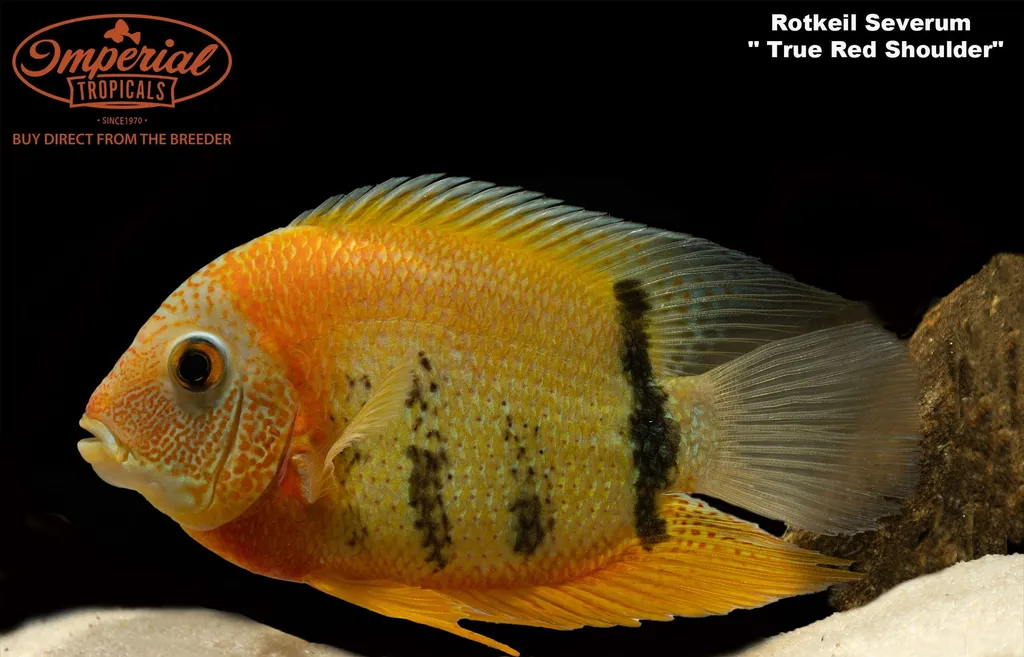
Turquoise is not a separate trait like gold. The blue is the sheen on a green fish, and farm lines carry more or less of it after decades of mixed breeding. Juveniles show little blue, and it builds as the fish matures. Imperial Tropicals breeds a line selected for the blue. Wild Peruvian fish and farm fish both carry nine bars, which separates them from the eight-barred Rotkeil. Keepers on the cichlid forums describe farm greens and turquoises as one mixed stock, so the name describes the fish in front of you.
In the wild
Wild turquoise severums come from the Ucayali and the upper Amazon in Peru. The wild form was first described in 1855, as Heros appendiculatus. Kullander redescribed it in 1986 from Peruvian material. Imperial Tropicals labels its wild fish Turquoise Severum Peru.
Weekly picks
Tank mates
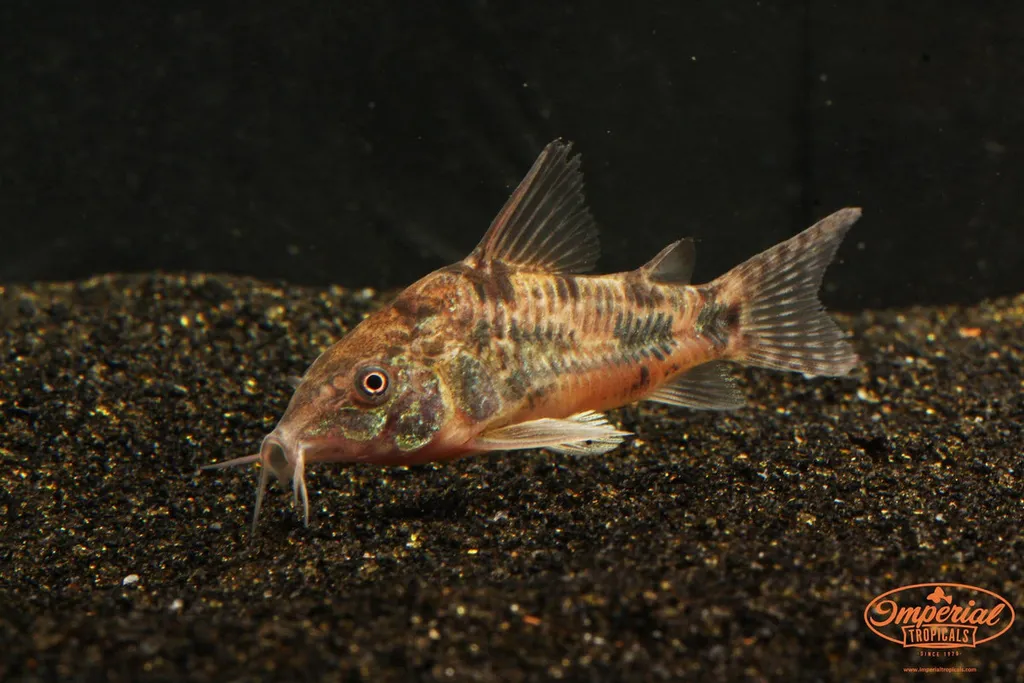
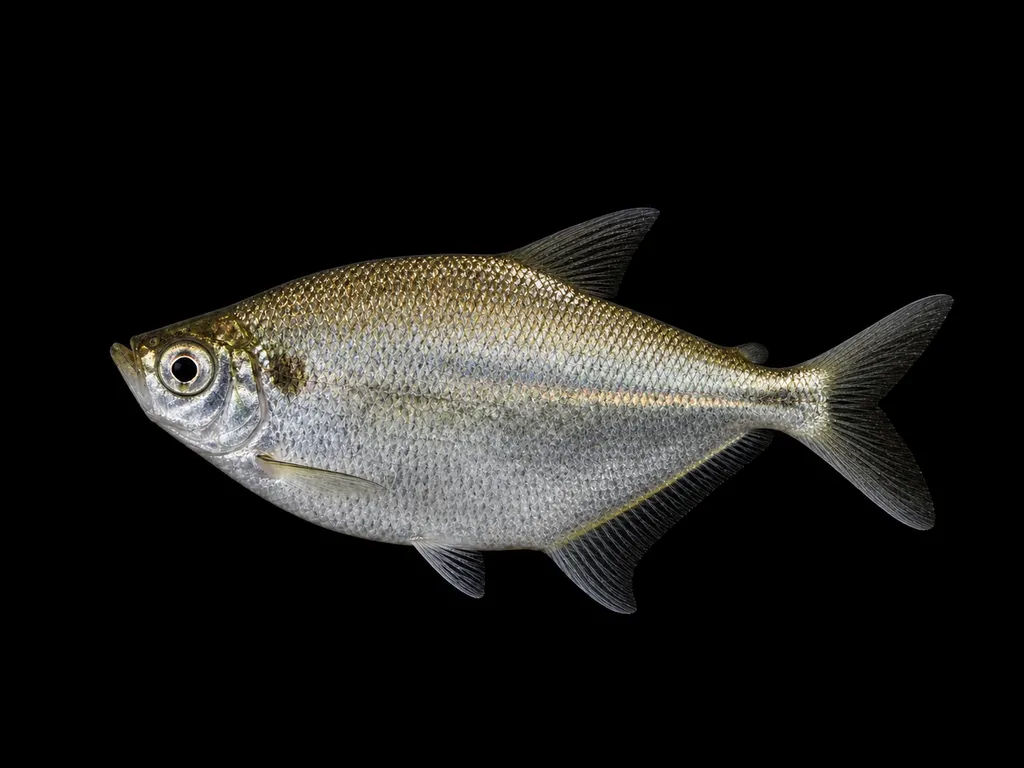
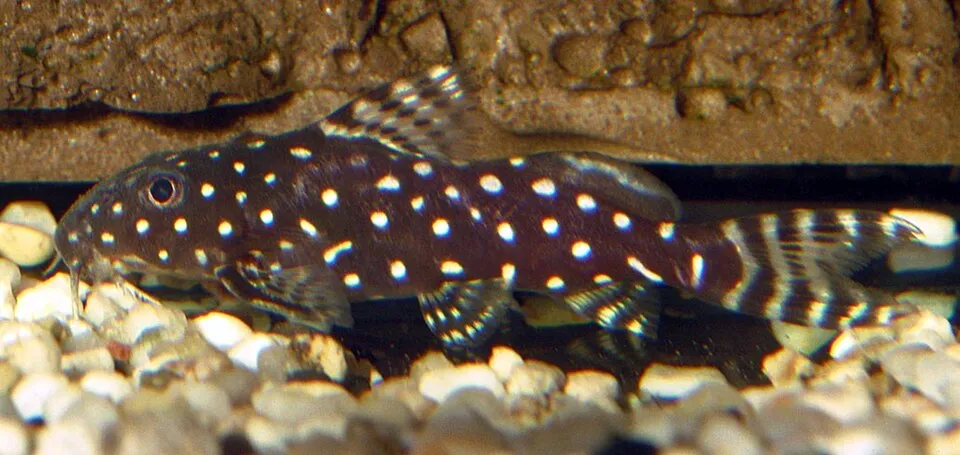
The turquoise severum is a mostly peaceful, social species that keeps to the middle. These picks share a community profile with it, are safe together in both directions, and overlap on water type, temperature and pH.
Is a turquoise severum a different species from the severum?
No. A turquoise severum is a variety of the severum, Heros efasciatus, and it wants the same tank, water and food as the species.
Is a turquoise severum the same fish as a green severum?
Yes, by today's naming. Turquoise once meant the Peruvian wild fish described as Heros appendiculatus, now a synonym of Heros efasciatus. Most shops use the word for a bluer farm-bred green, and Imperial Tropicals sells both kinds under the name.
Does a turquoise severum need different care from a green?
No. It wants the same 65 gallon (245 liter) tank, 72 to 84°F (22 to 29°C) water and pellet-and-vegetable diet. It digs and guards a spawn the same way. The blue swings with light and mood, so judge the fish over a few days rather than at the shop.
What size tank does a turquoise severum need?
A turquoise severum needs at least 65 gal (245 L). It spends most of its time in the middle.
What does a turquoise severum eat?
A turquoise severum eats quality pellets with blanched vegetables, peas and spirulina. Add frozen bloodworms and brine shrimp, and expect it to graze soft plants.
How big does a turquoise severum get?
An adult turquoise severum reaches about 11.8 in (30 cm).
How can you tell a male turquoise severum from a female?
Males of the wild Peruvian form show small red spots across the body.
How does a turquoise severum breed?
Turquoise severum pairs lay on a cleaned flat surface and turn territorial around the spawn. Both parents fan the eggs and herd the fry, and breeding them is hard.
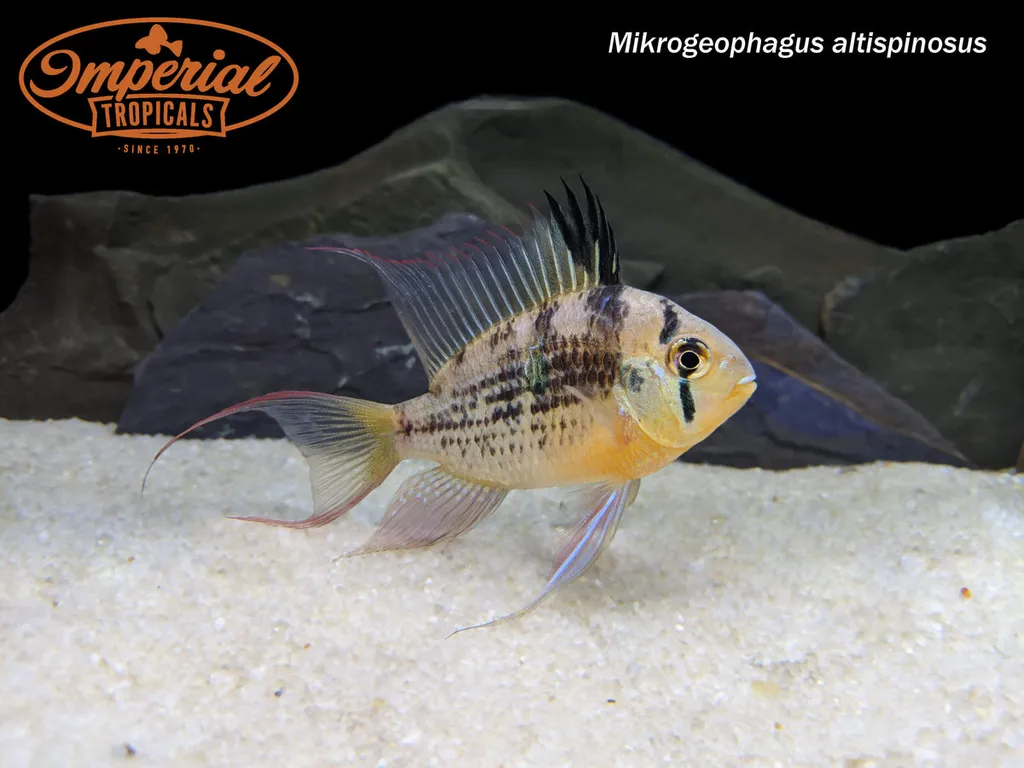
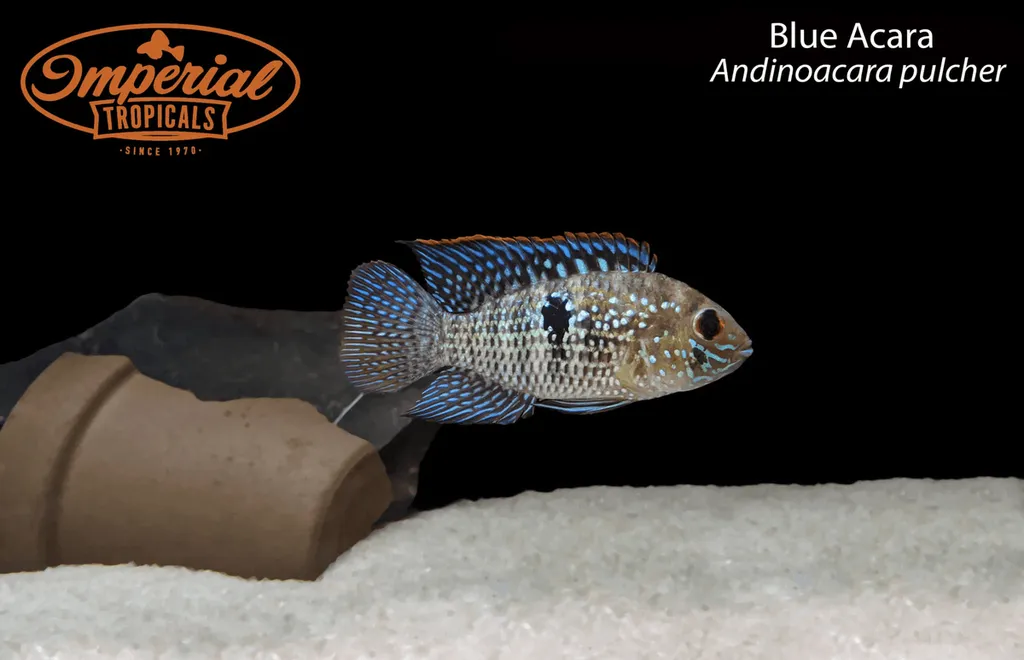
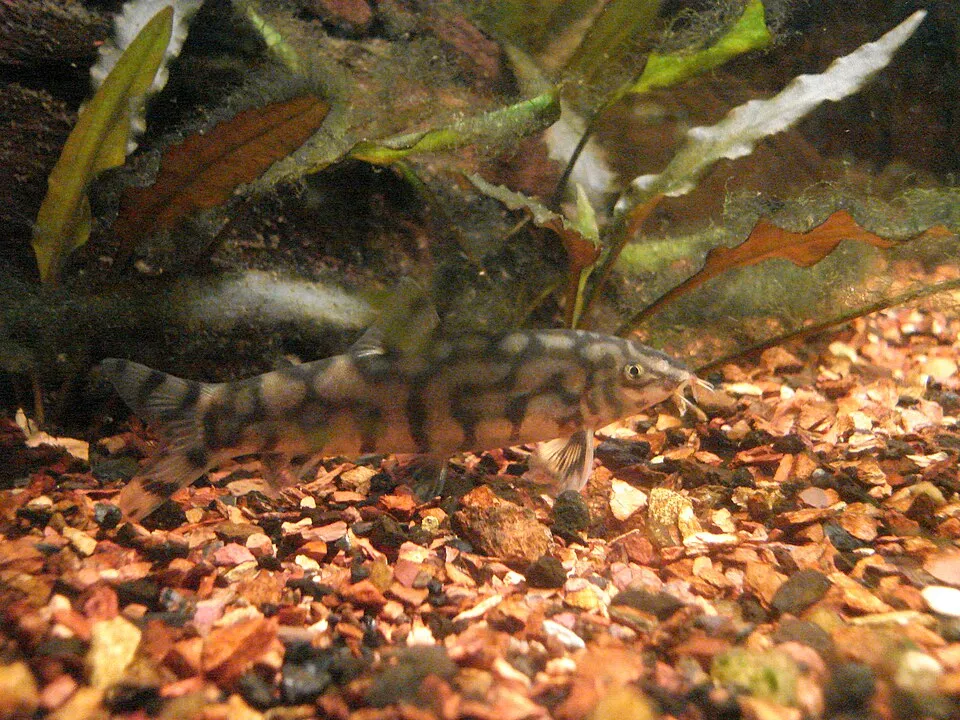
 11.8 in (30 cm)119 gal (450 L)75–82°F (24–28°C)
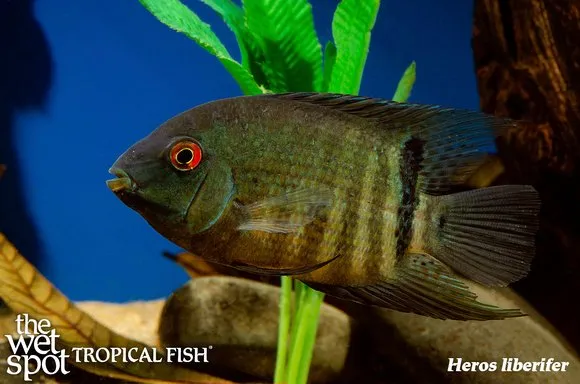
 11.8 in (30 cm)58 gal (220 L)72–84°F (22–29°C)
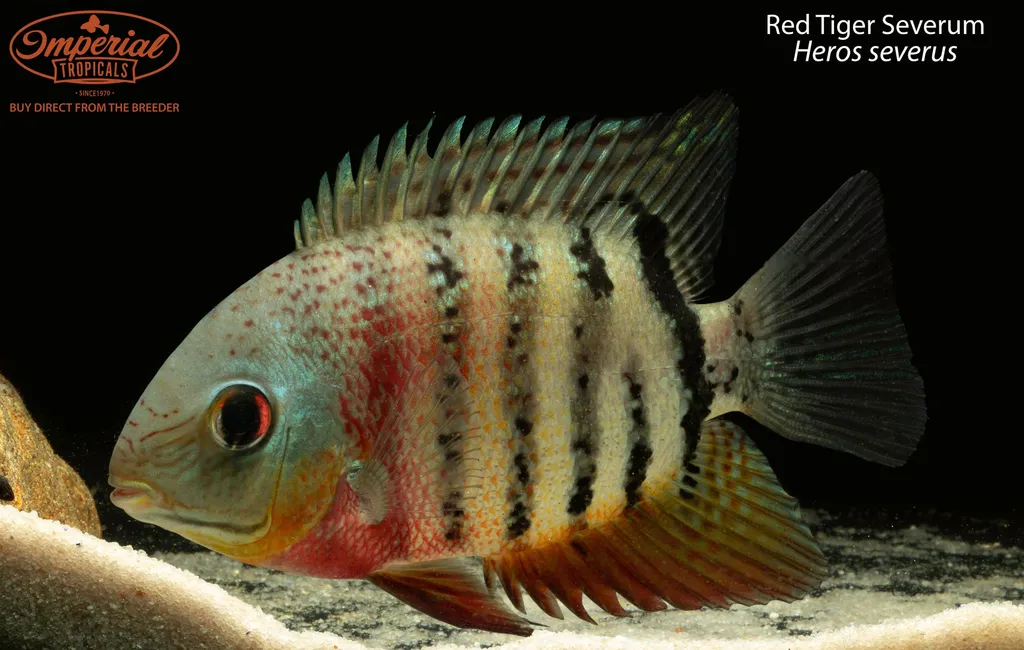
 7.9 in (20 cm)106 gal (400 L)75–82°F (24–28°C)
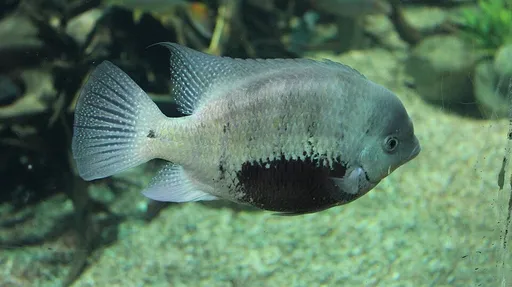
 7.9 in (20 cm)75 gal (285 L)79–86°F (26–30°C)
 11.8 in (30 cm)119 gal (450 L)77–86°F (25–30°C)
 11.8 in (30 cm)74 gal (280 L)75–82°F (24–28°C)