Three-striped African catfish
Pareutropius buffei
Also known as Three Striped African Glass Catfish, Swallowtail Glass Cat
FreshwaterFish
Care at a glance
- Temperature
- 75–82°F
- 24–28°C
- pH
- 6.0–7.5
- Adult size
- 3.1 in
- 8 cm
- Minimum tank
- 20 gal
- 75 L
- Temperament
- Peaceful
- Social behavior
- Schooling
- Swim level
- Middle
- Difficulty
- Medium
- Breeding
- Hard
- Rarity
- Rare
- Family
- Schilbeidae
- Origin
- Nigeria, Niger, Benin, Mali
Overview
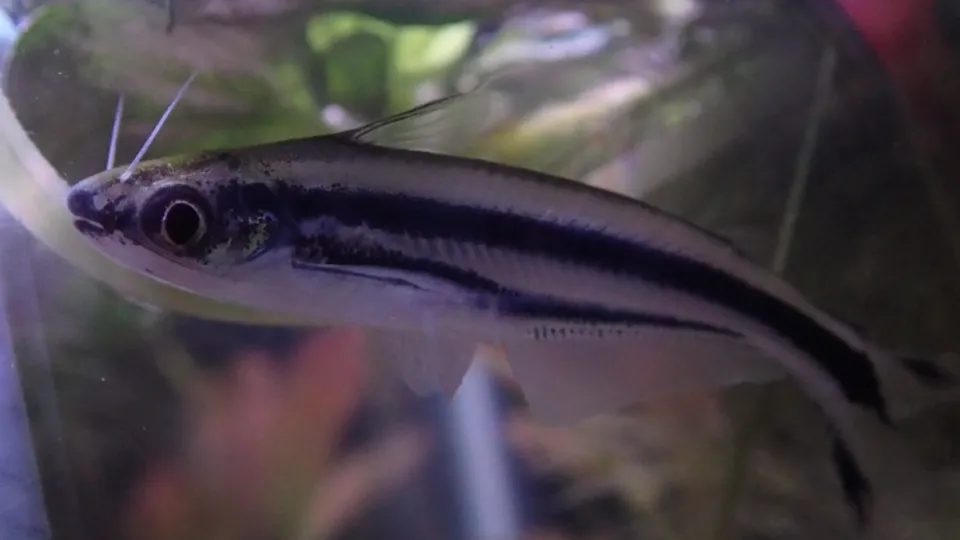
The three-striped African catfish is a small, peaceful, constantly moving shoaler that lives in open water, not on the bottom, so it must be kept in a group of at least six. Kept alone or in twos it hides and refuses food, but in a proper shoal it darts about actively by day with its forked tail flicking. It is completely peaceful and suits a lively community of small, calm fish. Offer small foods that spread through the water, such as frozen bloodworms, daphnia, brine shrimp, and fine flakes or micro pellets. Give it open swimming space with some planting and gentle to moderate flow, around 75 liters or larger for a shoal.
In the wild
The three-striped African catfish comes from the rivers of West Africa, across the Niger basin through Nigeria, Niger, Benin, and Mali, where it shoals in warm, flowing, open water. Keep it from around 24 to 28 C with a pH between 6 and 7.5 and a gentle to moderate current, which suits its active swimming. A tank with open midwater space, some planting or driftwood around the sides, and clean, well-oxygenated water lets the shoal move naturally. A secure lid helps, as this lively fish can jump when startled.
Good to know
The three-striped African catfish is a member of Schilbeidae, the African glass or butter catfishes, and grows to around 8 cm. It has a slim, silvery, semi-transparent body marked with three dark horizontal stripes and a deeply forked tail that suits its restless swimming. Unlike most catfish here it has been bred in aquariums, though it is difficult, with a pair scattering up to about 100 eggs among plants in the early morning that hatch in roughly three days.
Did you know
The three-striped African catfish almost never stops swimming, flicking its deeply forked tail as it patrols open water in a tight group. Kept singly it turns shy and off its food, so a shoal is not optional but essential to its wellbeing.
Weekly picks
Tank mates
Three-striped African catfish is a peaceful, schooling species that keeps to the middle. These picks share a community profile with it, are safe together in both directions, and overlap on water type, temperature and pH.
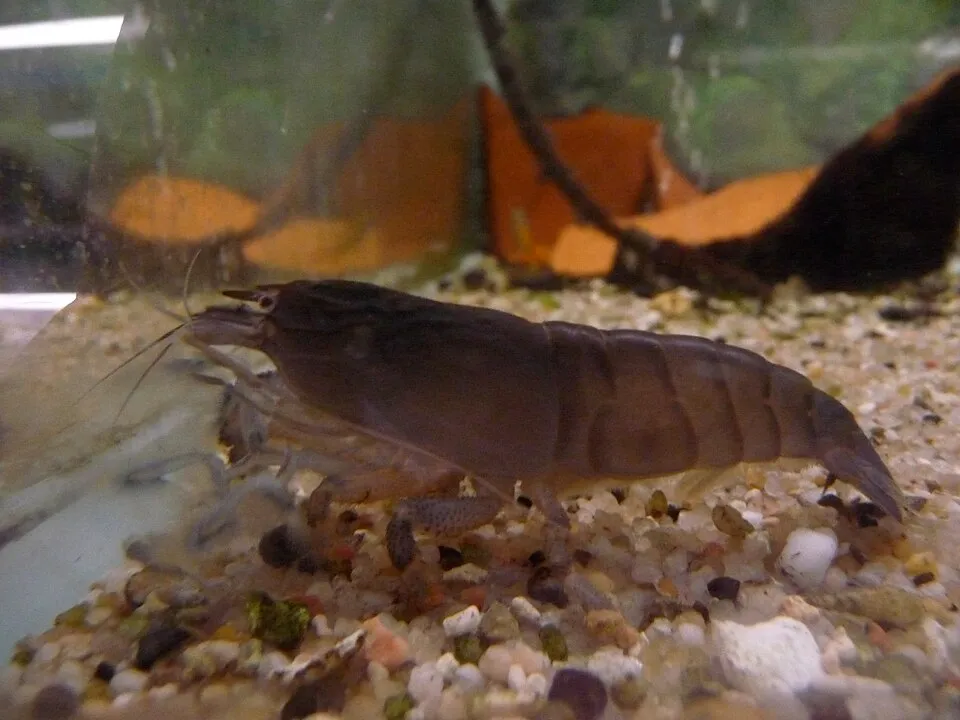
Vampire shrimp
Atya gabonensis
Freshwater5.1 in (13 cm) · 20 gal (75 L)75–82°F (24–28°C)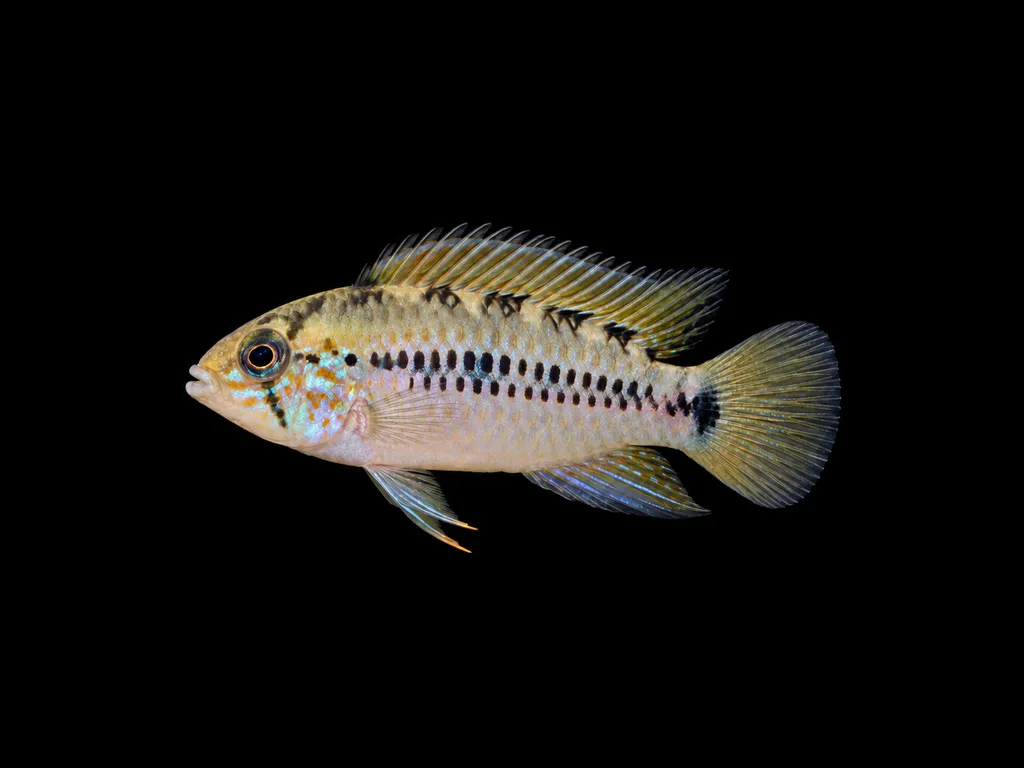
Alacrina dwarf cichlid
Apistogramma alacrina
Freshwater2.8 in (7 cm) · 20 gal (75 L)73–82°F (23–28°C)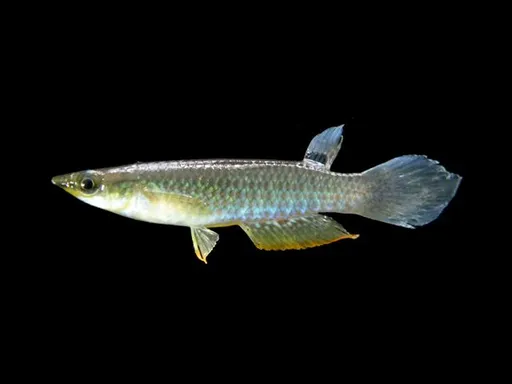
Blue panchax
Aplocheilus panchax
Freshwater3.5 in (9 cm) · 20 gal (75 L)72–82°F (22–28°C)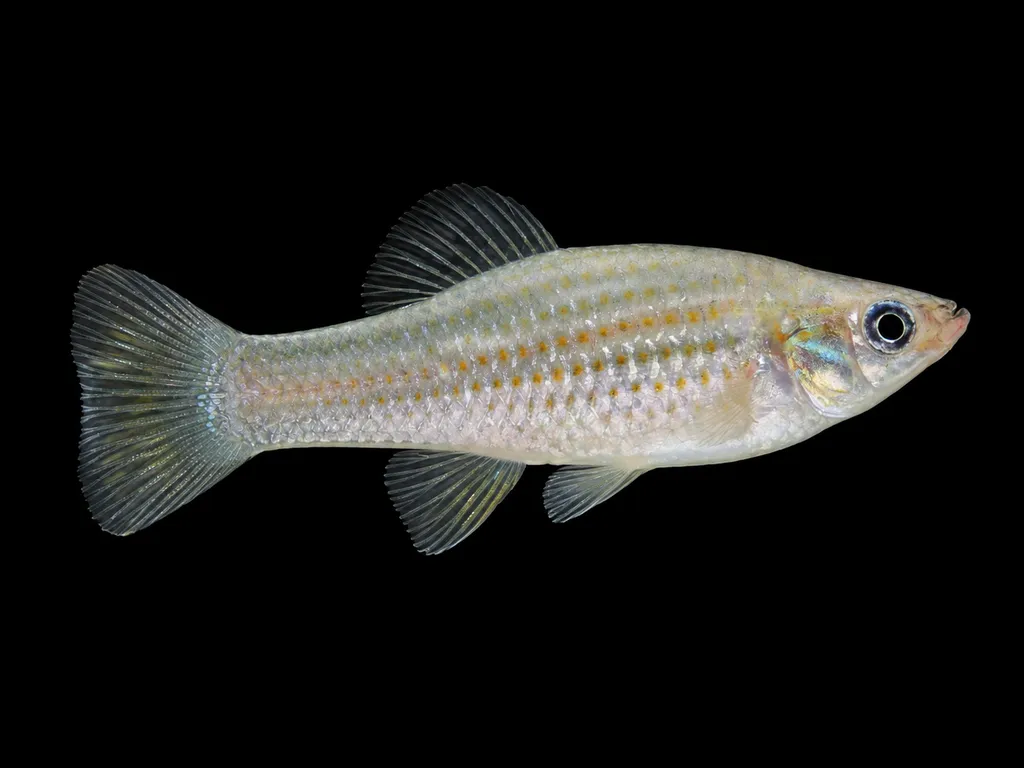
Amazon molly
Poecilia formosa
Freshwater3.5 in (9 cm) · 20 gal (75 L)68–82°F (20–28°C)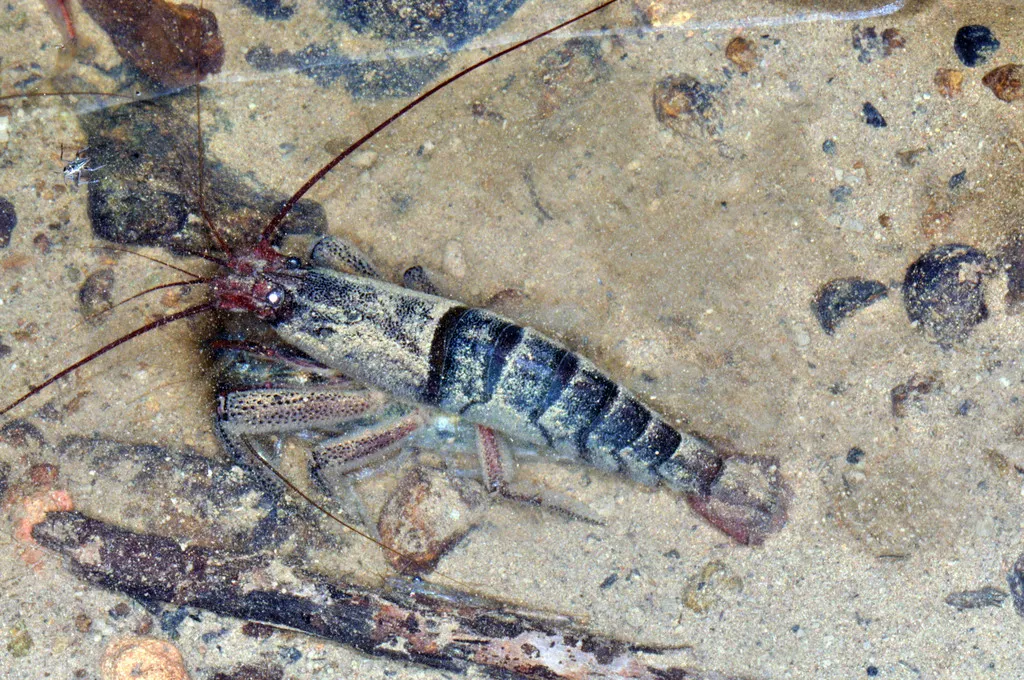
Marble wood shrimp
Atya scabra
Freshwater3.9 in (10 cm) · 20 gal (75 L)73–82°F (23–28°C)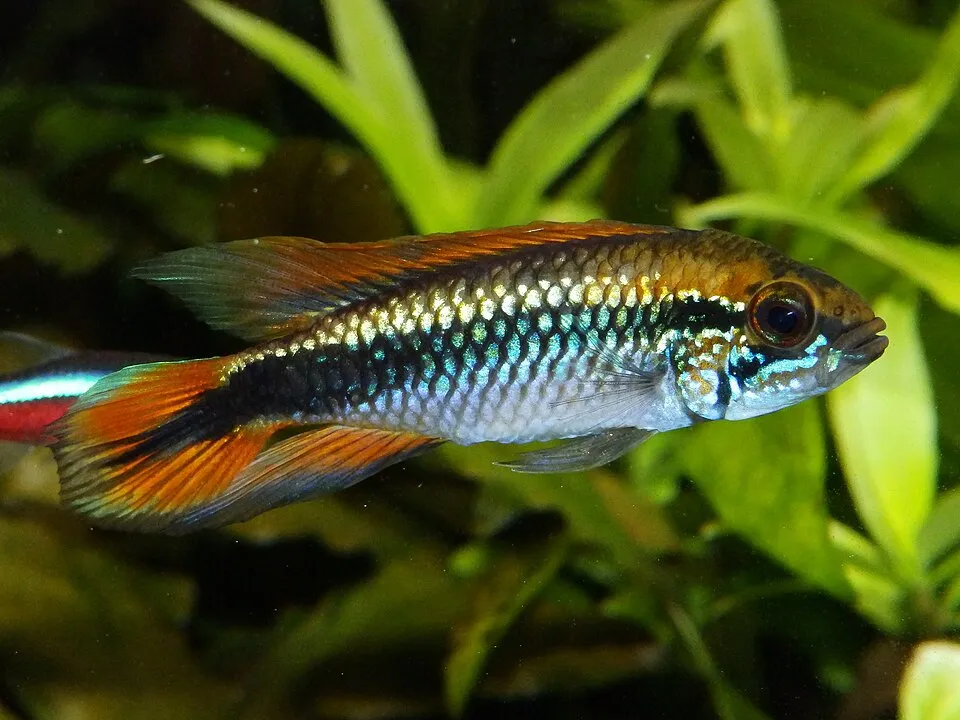
Agassiz's dwarf cichlid
Apistogramma agassizii
Freshwater3.5 in (9 cm) · 20 gal (75 L)72–84°F (22–29°C)
Common questions
What size tank does a Three-striped African catfish need?
A Three-striped African catfish needs at least 20 gal (75 L). It spends most of its time in the middle.
What temperature and pH does a Three-striped African catfish need?
A Three-striped African catfish is comfortable at 75–82°F (24–28°C) with a pH of 6.0–7.5.
How big does a Three-striped African catfish get?
An adult Three-striped African catfish reaches about 3.1 in (8 cm).
Does a Three-striped African catfish need a group?
Yes. A Three-striped African catfish is a schooling species and should be kept in a group, not singly.
Related species
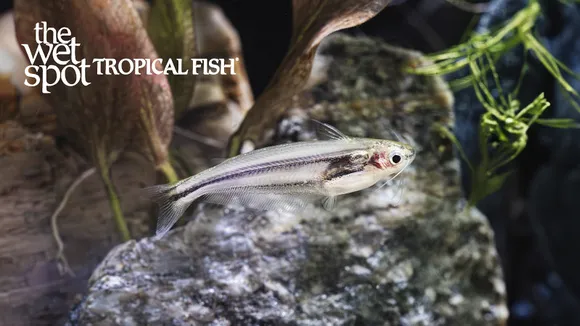 5.1 in (13 cm)40 gal (150 L)73–82°F (23–28°C)
Debauwi cat
Pareutropius debauwi
5.1 in (13 cm) · 40 gal (150 L)
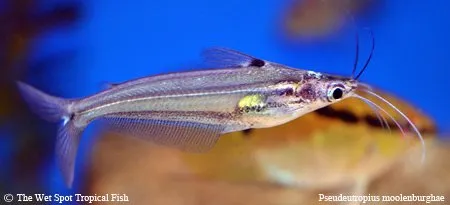 3.9 in (10 cm)30 gal (112 L)73–82°F (23–28°C)
Moolenburgh's glass catfish
Pseudeutropius moolenburghae
3.9 in (10 cm) · 30 gal (112 L)
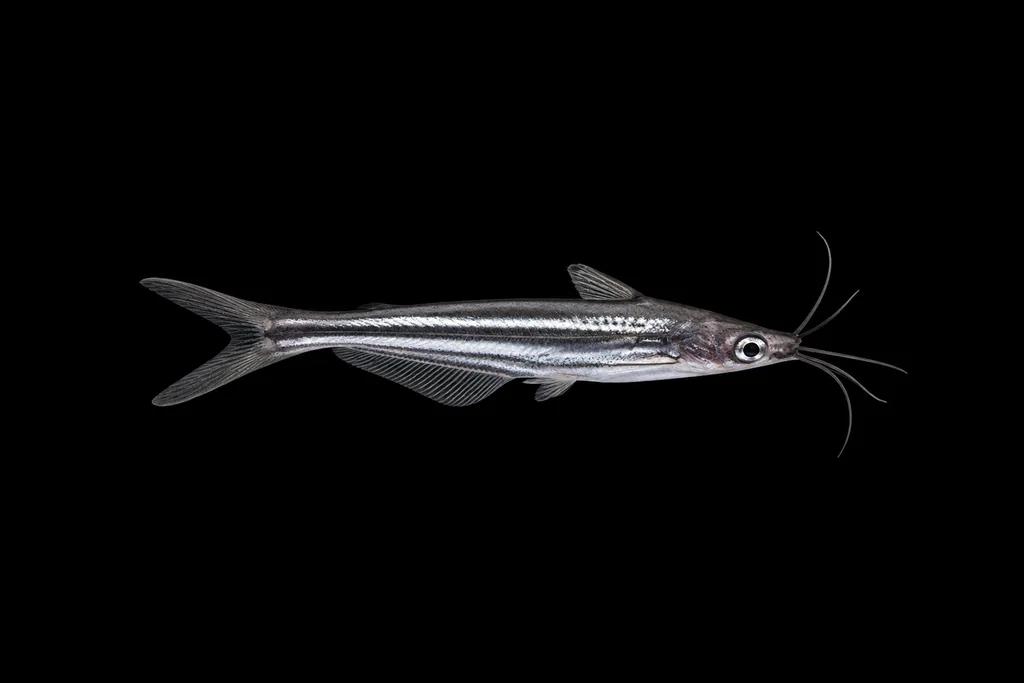 4.3 in (11 cm)30 gal (112 L)73–82°F (23–28°C)
Mini shark cat
Pseudeutropius brachypopterus
4.3 in (11 cm) · 30 gal (112 L)
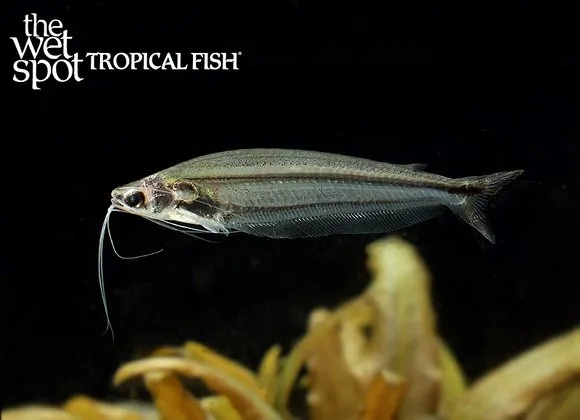 4.7 in (12 cm)40 gal (150 L)73–82°F (23–28°C)
African glass cat
Parailia pellucida
4.7 in (12 cm) · 40 gal (150 L)
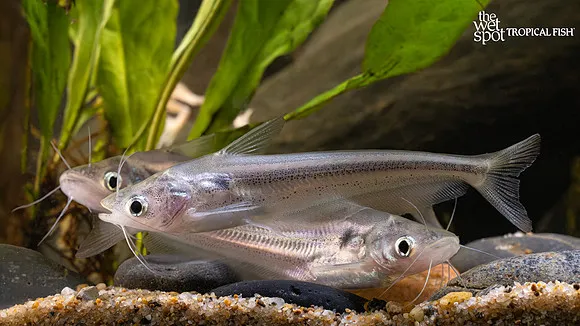 19.7 in (50 cm)264 gal (1,000 L)73–82°F (23–28°C)
African butter catfish
Schilbe intermedius
19.7 in (50 cm) · 264 gal (1,000 L)
 3.1 in (8 cm)22 gal (85 L)72–77°F (22–25°C)
African moon tetra
Bathyaethiops caudomaculatus
3.1 in (8 cm) · 22 gal (85 L)