Largescale rasbora
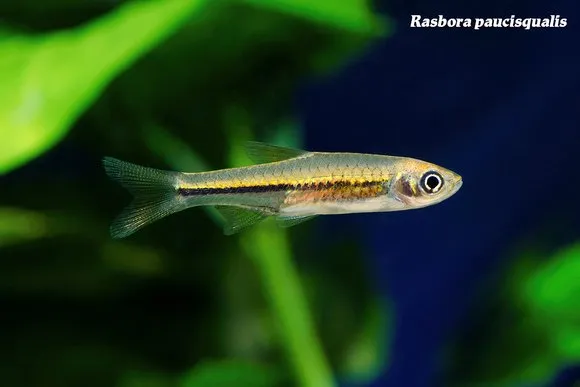
Rasbora paucisqualis
Also known as Largescaled rasbora, Burmese gold neon rasbora
FreshwaterFish
Care at a glance
- Temperature
- 72–81°F
- 22–27°C
- pH
- 5.5–7.0
- Adult size
- 2 in
- 5 cm
- Minimum tank
- 20 gal
- 75 L
- Temperament
- Peaceful
- Social behavior
- Schooling
- Swim level
- Middle
- Difficulty
- Medium
- Breeding
- No record
- Rarity
- Rare
- Family
- Danionidae
- Origin
- Mekong basin and Malaysia
Overview
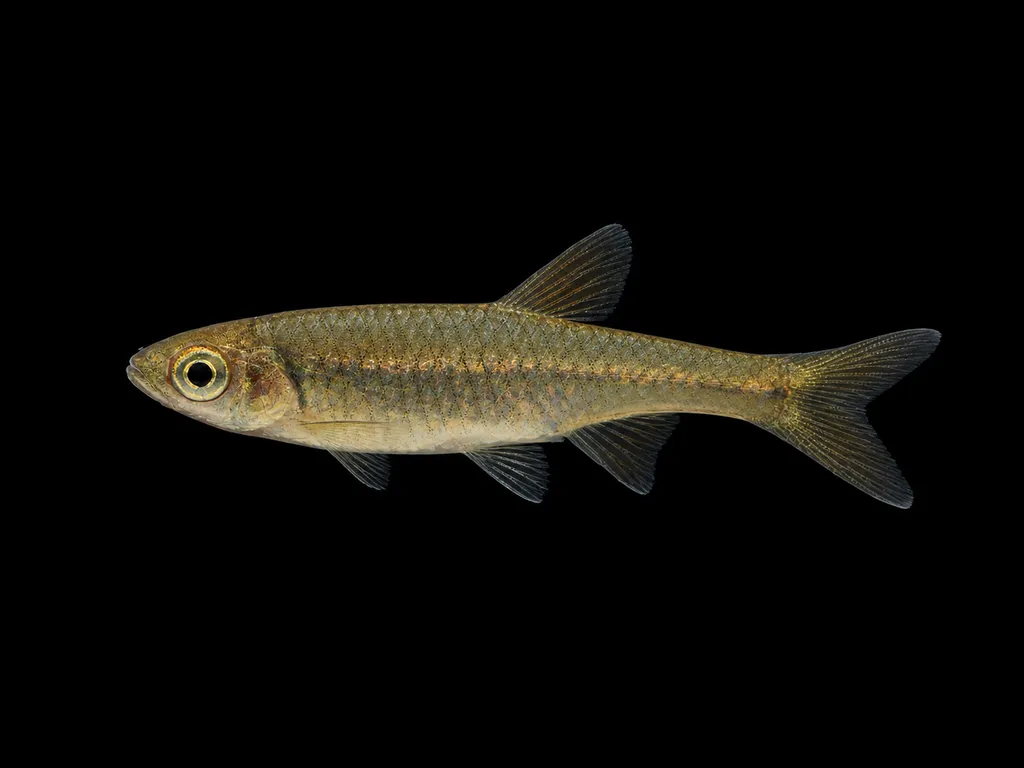
The largescale rasbora is a small, peaceful schooling fish for a planted community tank. A moving group catches the light off its scales like flecks of beaten metal. It is best with a little experience.
Did you know
Each scale along the largescale rasbora's flank is large enough to pick out by eye. Together the plates tile the fish in visibly coarse mail.
Caring for the largescale rasbora
Give a group of largescale rasboras a planted tank of 20 gal (75 L) or larger, with open lanes. A dark substrate, gentle to moderate flow, and some leaf litter or wood to tint and soften the water suit them.
Keep the water soft and on the acidic side, at 72 to 81°F (22 to 27°C) and a pH of 5.5 to 7.0. Feed small foods they can handle, such as crushed flake and micro pellets, with frozen daphnia, cyclops and baby brine shrimp.
Keep a school of eight or more. They are peaceful and stay in the middle of the tank, so a calm community of similar-sized, gentle fish suits them. Their breeding remains undocumented in aquaria.
Good to know
Rasbora paucisqualis is a rasbora in the danio family, Danionidae. Ahl described it in 1935, and the name means few-scaled. Its scales are noticeably larger, and therefore fewer, than those of most rasboras.
In the wild
The largescale rasbora lives in clear, swift forest streams and pools from the Mekong basin south into Malaysia, in soft, slightly acidic water.
Weekly picks
Tank mates
The largescale rasbora is a peaceful, schooling species that keeps to the middle. These picks share a community profile with it, are safe together in both directions, and overlap on water type, temperature and pH.
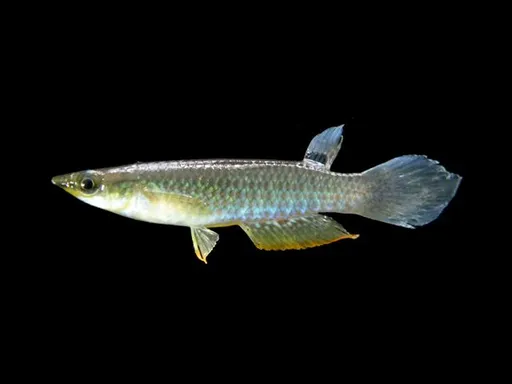
Blue panchax
Aplocheilus panchax
Freshwater3.5 in (9 cm) · 20 gal (75 L)72–82°F (22–28°C)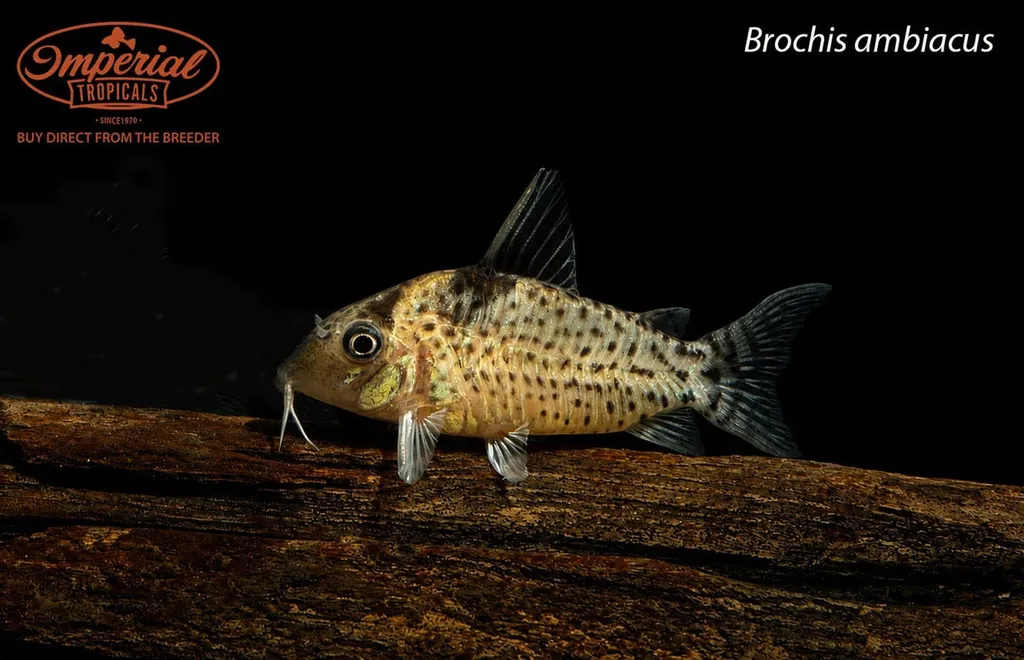
Spotted cory
Brochis ambiacus
Freshwater2.6 in (6.5 cm) · 20 gal (75 L)70–81°F (21–27°C)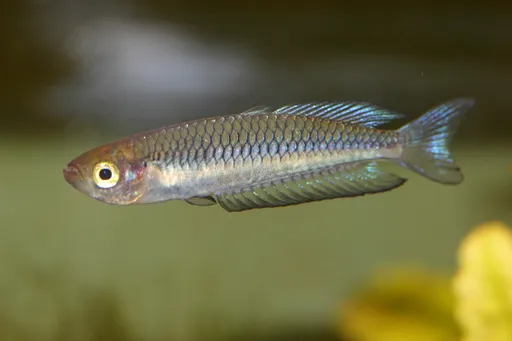
Ornate rainbowfish
Rhadinocentrus ornatus
Freshwater2.4 in (6 cm) · 20 gal (75 L)64–82°F (18–28°C)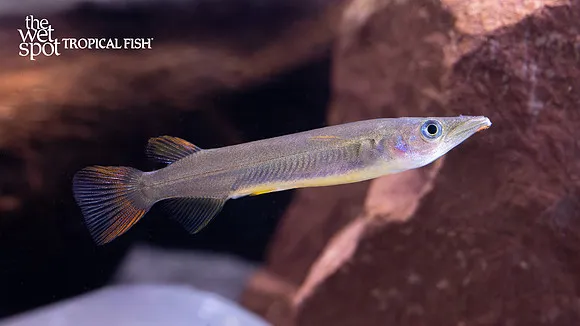
Rex halfbeak
Nomorhamphus rex
Freshwater2.2 in (5.5 cm) · 20 gal (75 L)72–79°F (22–26°C)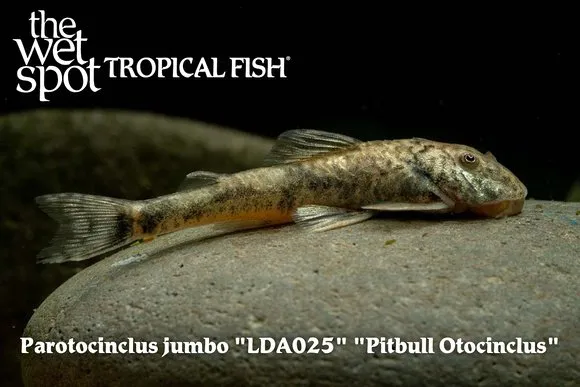
Pit bull otocinclus
Parotocinclus jumbo
Freshwater2.4 in (6 cm) · 20 gal (75 L)72–81°F (22–27°C)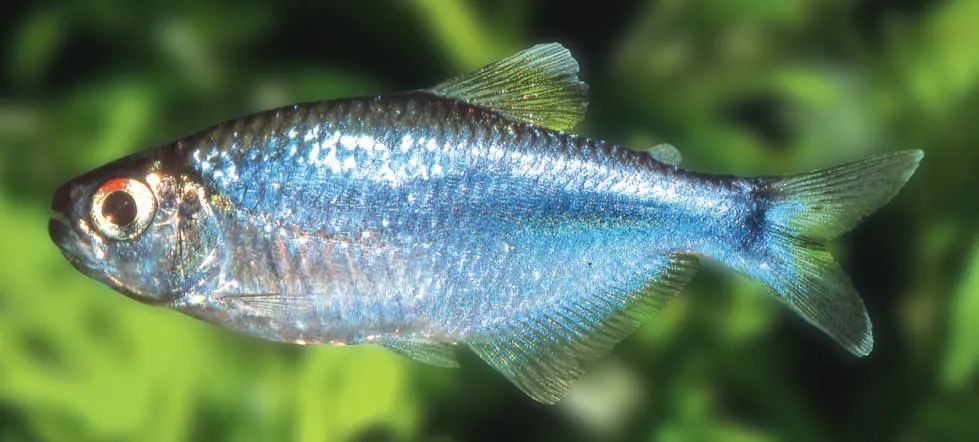
Cochu's blue tetra
Boehlkea fredcochui
Freshwater2.2 in (5.5 cm) · 20 gal (75 L)72–82°F (22–28°C)
Common questions
What size tank does a largescale rasbora need?
A largescale rasbora needs at least 20 gal (75 L). It spends most of its time in the middle.
What temperature and pH does a largescale rasbora need?
A largescale rasbora is comfortable at 72–81°F (22–27°C) with a pH of 5.5–7.0.
What does a largescale rasbora eat?
A largescale rasbora eats small foods it can handle, such as crushed flake and micro pellets. Add frozen daphnia, cyclops and baby brine shrimp.
How big does a largescale rasbora get?
An adult largescale rasbora reaches about 2 in (5 cm).
Does a largescale rasbora need a group?
Yes. A largescale rasbora is a schooling species and should be kept in a group, not singly.
Related species
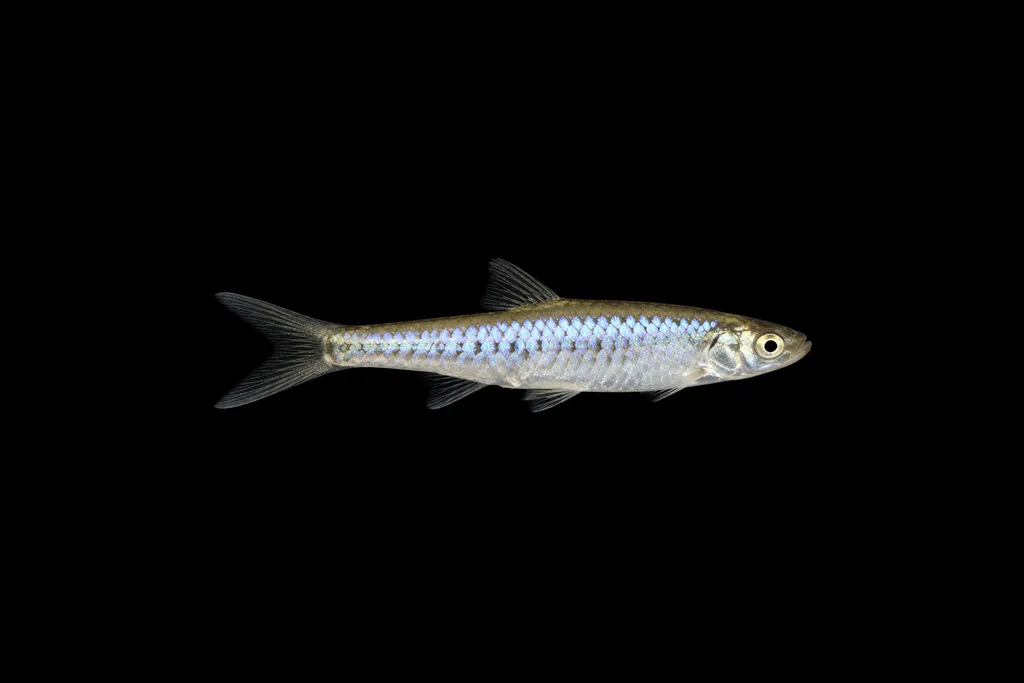 2.2 in (5.5 cm)20 gal (75 L)72–81°F (22–27°C)
Ninescale rasbora
Rasbora ennealepis
2.2 in (5.5 cm) · 20 gal (75 L)
 2.2 in (5.5 cm)20 gal (75 L)73–81°F (23–27°C)
Rutten's rasbora
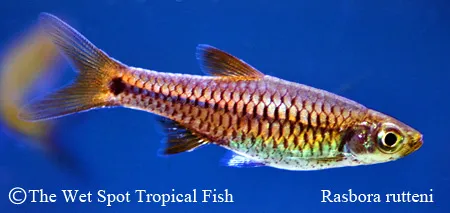
Rasbora rutteni
2.2 in (5.5 cm) · 20 gal (75 L)
 2.2 in (5.5 cm)20 gal (75 L)73–81°F (23–27°C)
Sarawak rasbora
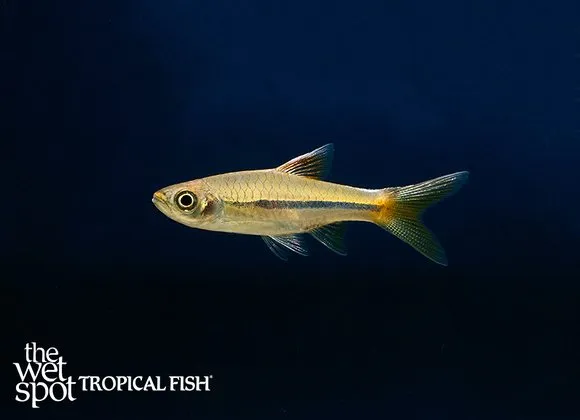
Rasbora sarawakensis
2.2 in (5.5 cm) · 20 gal (75 L)
 1.6 in (4 cm)14 gal (54 L)72–81°F (22–27°C)
Redback rasbora
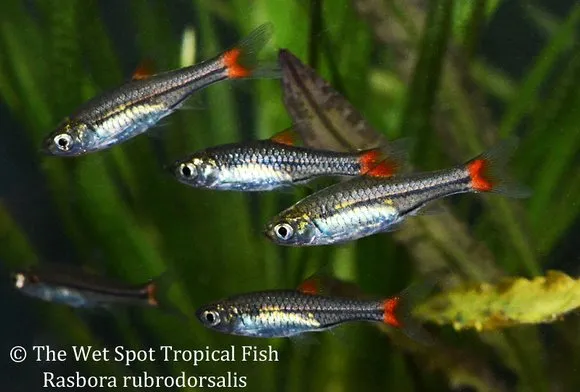
Rasbora rubrodorsalis
1.6 in (4 cm) · 14 gal (54 L)
 1.6 in (4 cm)14 gal (54 L)73–81°F (23–27°C)
Teardrop rasbora
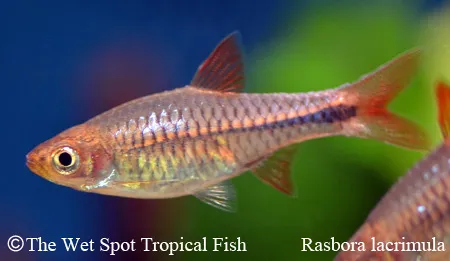
Rasbora lacrimula
1.6 in (4 cm) · 14 gal (54 L)
 2.8 in (7 cm)24 gal (90 L)72–81°F (22–27°C)
Bangka rasbora
Rasbora bankanensis
2.8 in (7 cm) · 24 gal (90 L)