Bangka rasbora
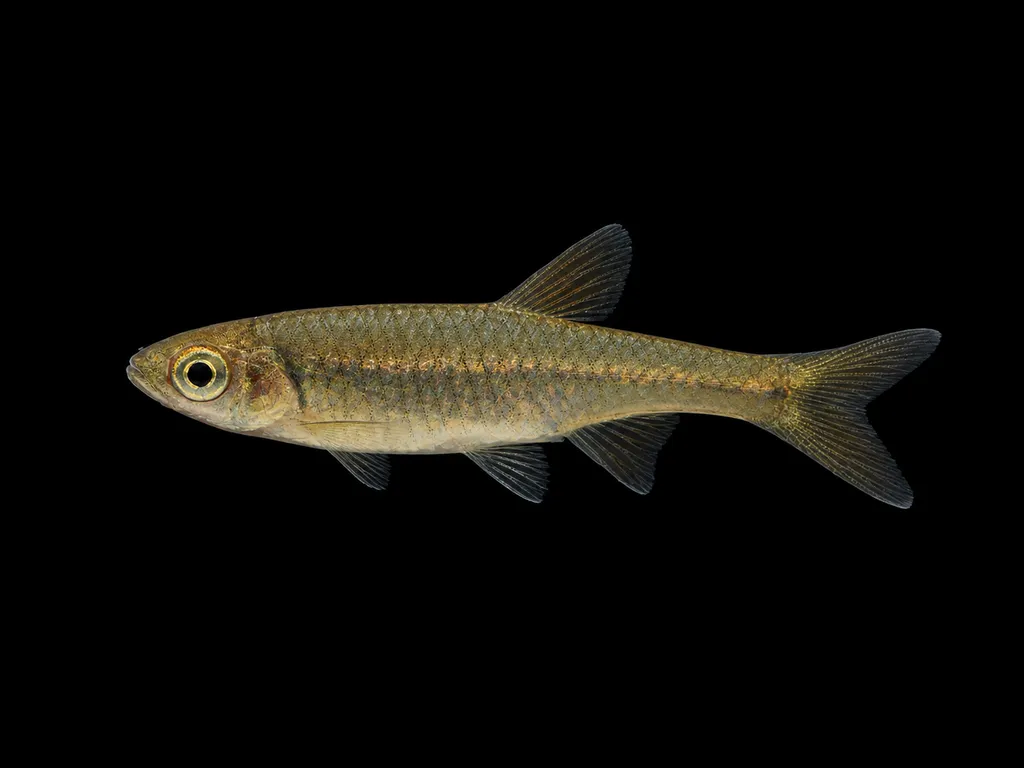
Rasbora bankanensis
Also known as Rasbora bangkanensis, Golden rasbora
FreshwaterFish
Care at a glance
- Temperature
- 72–81°F
- 22–27°C
- pH
- 5.0–7.0
- Adult size
- 2.8 in
- 7 cm
- Minimum tank
- 24 gal
- 90 L
- Temperament
- Peaceful
- Social behavior
- Schooling
- Swim level
- Middle
- Difficulty
- Medium
- Breeding
- No record
- Rarity
- Rare
- Family
- Danionidae
- Origin
- Bangka Island, Sumatra and Borneo, Indonesia and Malaysia
Overview
The Bangka rasbora is a mid-sized, peaceful schooler for a soft-water planted tank. It takes a little experience to keep well.
Did you know
The Bangka rasbora still holds on in forest streams on Bangka, one of the world's great tin-mining islands. Dredge ponds pock the island's landscape, and the streams thread between them.
Caring for the Bangka rasbora
Keep Bangka rasboras in a school of eight or more. In a group they color up and stay out in open midwater, while lone fish turn nervous and pale. Give them a planted tank of 24 gal (90 L) or larger with some open swimming room.
Lean the setup toward blackwater, with a dark substrate and leaf litter or botanicals to soften and tint the water. Keep the water soft at 72 to 81°F (22 to 27°C) and a pH of 5.0 to 7.0. Feed small foods they can manage easily, such as crushed flake, micro pellets and frozen daphnia, cyclops and baby brine shrimp.
Bangka rasboras are peaceful and fit a quiet community of similarly calm species. In size they sit between tiny nano rasboras and larger community fish. Their spawning has not been documented in the hobby.
Good to know
Rasbora bankanensis belongs to the danio and rasbora family, Danionidae. Bleeker described it in 1853 and named it for Bangka, the island where the first specimens were found. A trade spelling with an extra letter, Rasbora bangkanensis, is also in use.
In the wild
The Bangka rasbora lives in forest streams and peat-influenced waters on Bangka Island and across parts of Sumatra and Borneo. The water there is soft, often tea-stained and gently flowing.
Weekly picks
Tank mates
The Bangka rasbora is a peaceful, schooling species that keeps to the middle. These picks share a community profile with it, are safe together in both directions, and overlap on water type, temperature and pH.
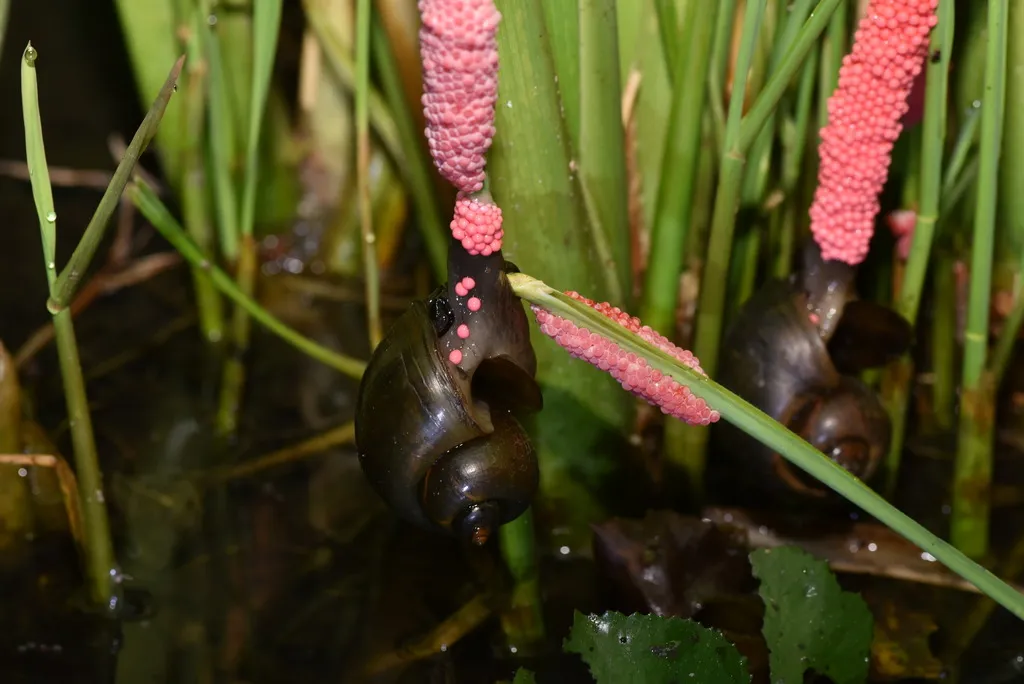
Apple snail
Pomacea canaliculata
Freshwater5.9 in (15 cm) · 21 gal (80 L)64–81°F (18–27°C)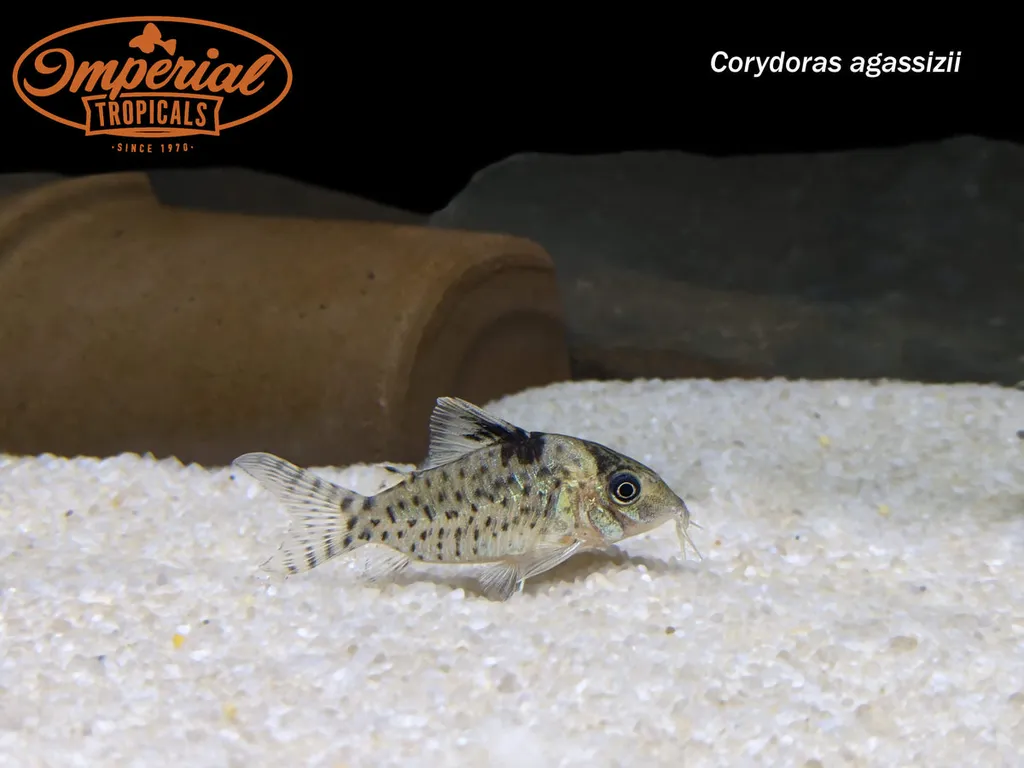
Agassiz's cory
Brochis agassizii
Freshwater2.8 in (7 cm) · 24 gal (90 L)72–79°F (22–26°C)Siamese flying barb
Laubuka siamensis
Freshwater2.6 in (6.5 cm) · 24 gal (90 L)72–81°F (22–27°C)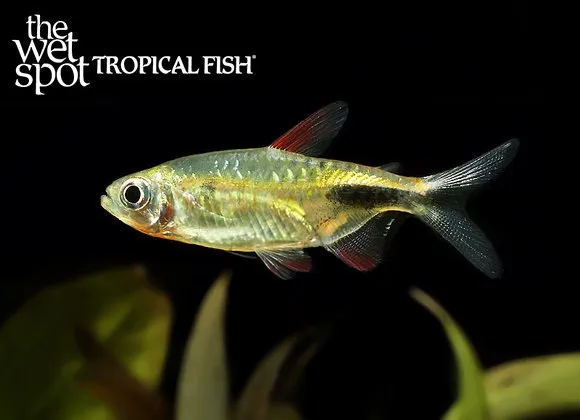
Copper Congo tetra
Hemigrammopetersius pulcher
Freshwater2.4 in (6 cm) · 24 gal (90 L)73–81°F (23–27°C)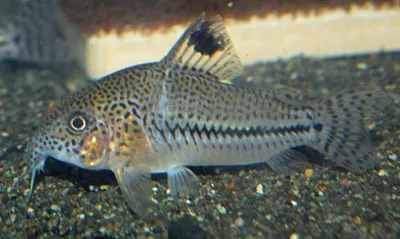
Leopard cory
Brochis leopardus
Freshwater2.8 in (7 cm) · 24 gal (90 L)72–79°F (22–26°C)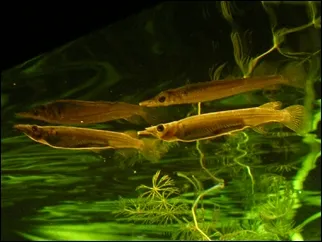
Wrestling halfbeak
Dermogenys pusilla
FreshwaterBrackish2.8 in (7 cm) · 25 gal (95 L)75–82°F (24–28°C)
Common questions
What size tank does a Bangka rasbora need?
A Bangka rasbora needs at least 24 gal (90 L). It spends most of its time in the middle.
What temperature and pH does a Bangka rasbora need?
A Bangka rasbora is comfortable at 72–81°F (22–27°C) with a pH of 5.0–7.0.
What does a Bangka rasbora eat?
A Bangka rasbora eats small foods it can manage easily. Offer crushed flake, micro pellets and frozen daphnia, cyclops and baby brine shrimp.
How big does a Bangka rasbora get?
An adult Bangka rasbora reaches about 2.8 in (7 cm).
Does a Bangka rasbora need a group?
Yes. A Bangka rasbora is a schooling species and should be kept in a group, not singly.
Related species
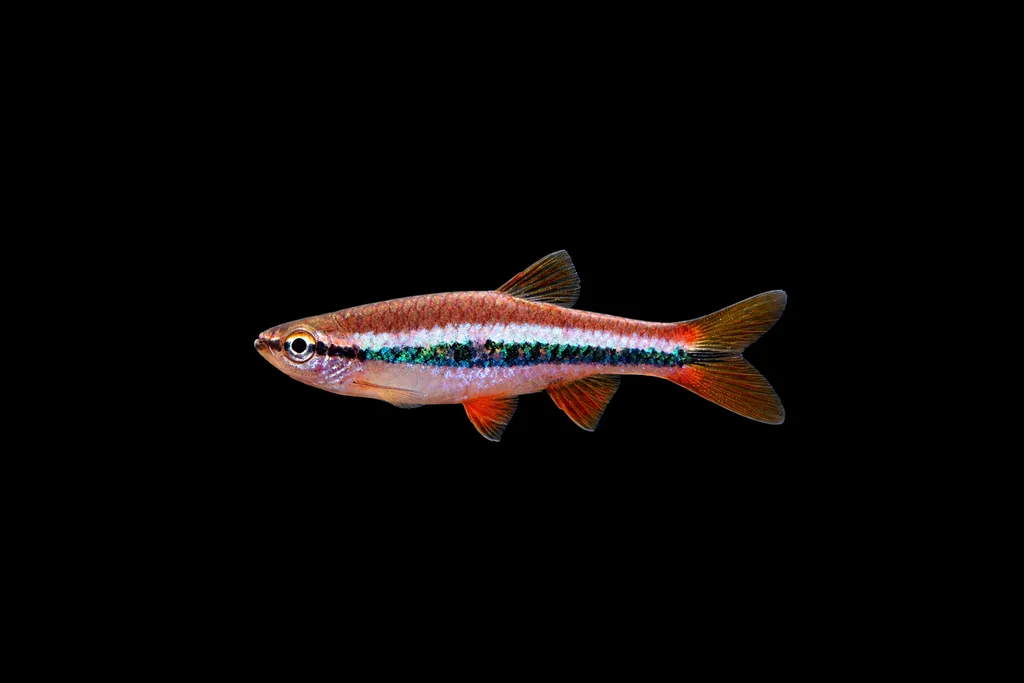 2.8 in (7 cm)24 gal (90 L)73–81°F (23–27°C)
Yap's rasbora
Rasbora patrickyapi
2.8 in (7 cm) · 24 gal (90 L)
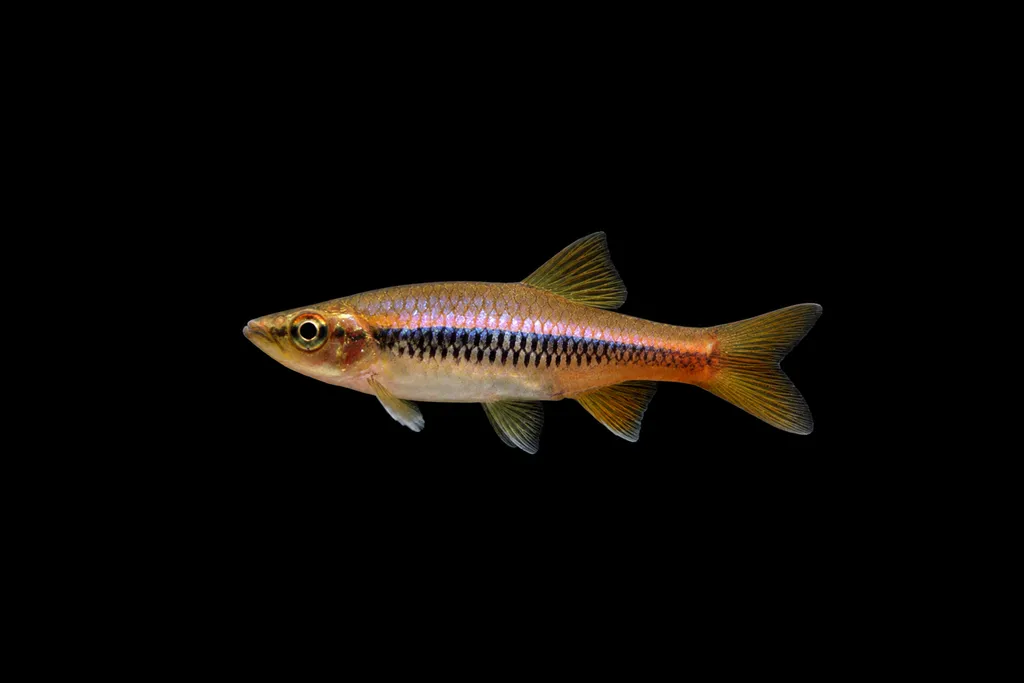 3.3 in (8.5 cm)29 gal (110 L)73–81°F (23–27°C)
Wilpita rasbora
Rasbora wilpita
3.3 in (8.5 cm) · 29 gal (110 L)
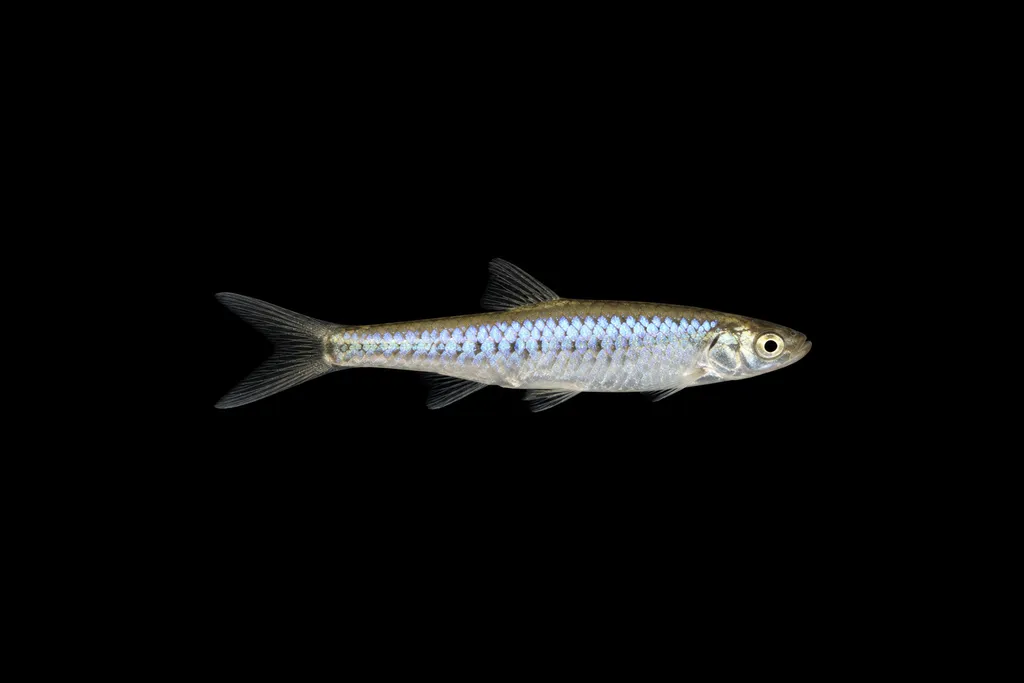 2.2 in (5.5 cm)20 gal (75 L)72–81°F (22–27°C)
Ninescale rasbora
Rasbora ennealepis
2.2 in (5.5 cm) · 20 gal (75 L)
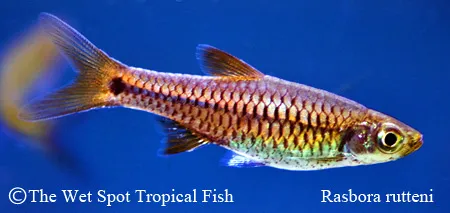 2.2 in (5.5 cm)20 gal (75 L)73–81°F (23–27°C)
Rutten's rasbora
Rasbora rutteni
2.2 in (5.5 cm) · 20 gal (75 L)
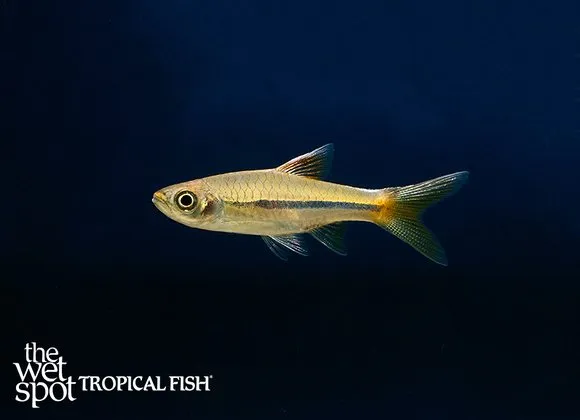 2.2 in (5.5 cm)20 gal (75 L)73–81°F (23–27°C)
Sarawak rasbora
Rasbora sarawakensis
2.2 in (5.5 cm) · 20 gal (75 L)
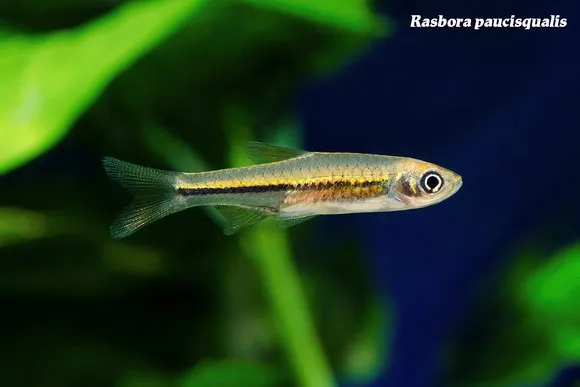 2 in (5 cm)20 gal (75 L)72–81°F (22–27°C)
Largescale rasbora
Rasbora paucisqualis
2 in (5 cm) · 20 gal (75 L)