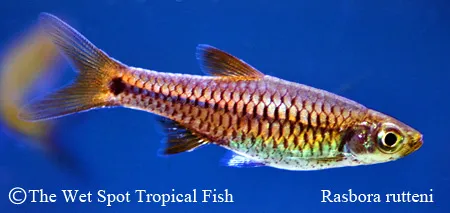
Rutten's rasbora
Rasbora rutteni
Also known as Rutteni rasbora, Blue cardinal rasbora
FreshwaterFish
Care at a glance
- Temperature
- 73–81°F
- 23–27°C
- pH
- 5.5–7.0
- Adult size
- 2.2 in
- 5.5 cm
- Minimum tank
- 20 gal
- 75 L
- Temperament
- Peaceful
- Social behavior
- Schooling
- Swim level
- Middle
- Difficulty
- Medium
- Breeding
- No record
- Rarity
- Rare
- Family
- Danionidae
- Origin
- Borneo, Indonesia
Overview
Rutten's rasbora is a peaceful schooling fish for the middle of a calm, planted community tank. It is a step up from the easiest fish.
Did you know
Rutten's rasbora honors Louis Rutten, a Dutch geologist who surveyed Borneo for an oil company in the early twentieth century. Animals collected on such expeditions often ended up carrying the names of the people who led them.
Caring for the Rutten's rasbora
Keep Rutten's rasboras in a group of at least eight, where they settle and show a soft blue sheen along the side. A planted tank of 20 gal (75 L) or more keeps a group content. Add a sandy substrate, some driftwood and open swimming space.
Give them soft, slightly acidic to neutral water at 73 to 81°F (23 to 27°C) and a pH of 5.5 to 7.0. Keep the water quiet and well filtered, with a gentle flow. Feed a varied diet of flake, small sinking granules, and small frozen or live foods such as daphnia, cyclops and brine shrimp.
Rutten's rasboras are peaceful and hold to the middle of the tank. They suit a calm community of other Bornean or Southeast Asian fish. Their breeding in aquariums is not documented, though as rasboras they are expected to scatter their eggs and give no parental care.
Good to know
Rutten's rasbora, Rasbora rutteni, is a member of the family Danionidae. It is also traded as the blue cardinal rasbora, for the bluish stripe along its flank.
In the wild
Rutten's rasbora lives in small, clear forest streams in Borneo, Indonesia. The water is soft, with gentle flow over mixed sand and gravel among vegetation.
Weekly picks
Tank mates
The Rutten's rasbora is a peaceful, schooling species that keeps to the middle. These picks share a community profile with it, are safe together in both directions, and overlap on water type, temperature and pH.
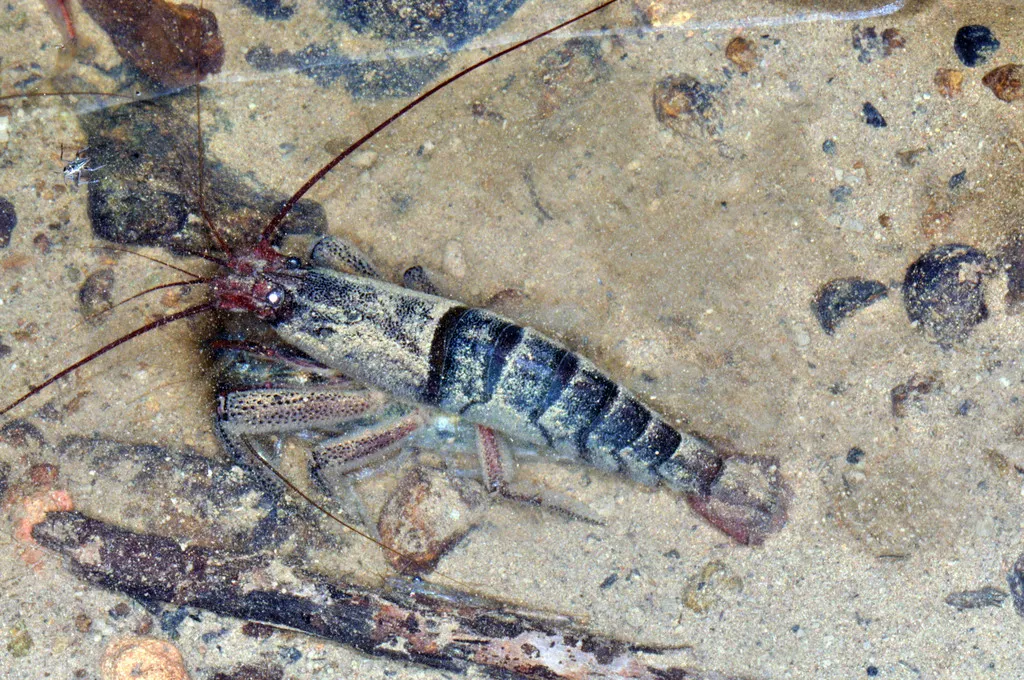
Marble wood shrimp
Atya scabra
Freshwater3.9 in (10 cm) · 20 gal (75 L)73–82°F (23–28°C)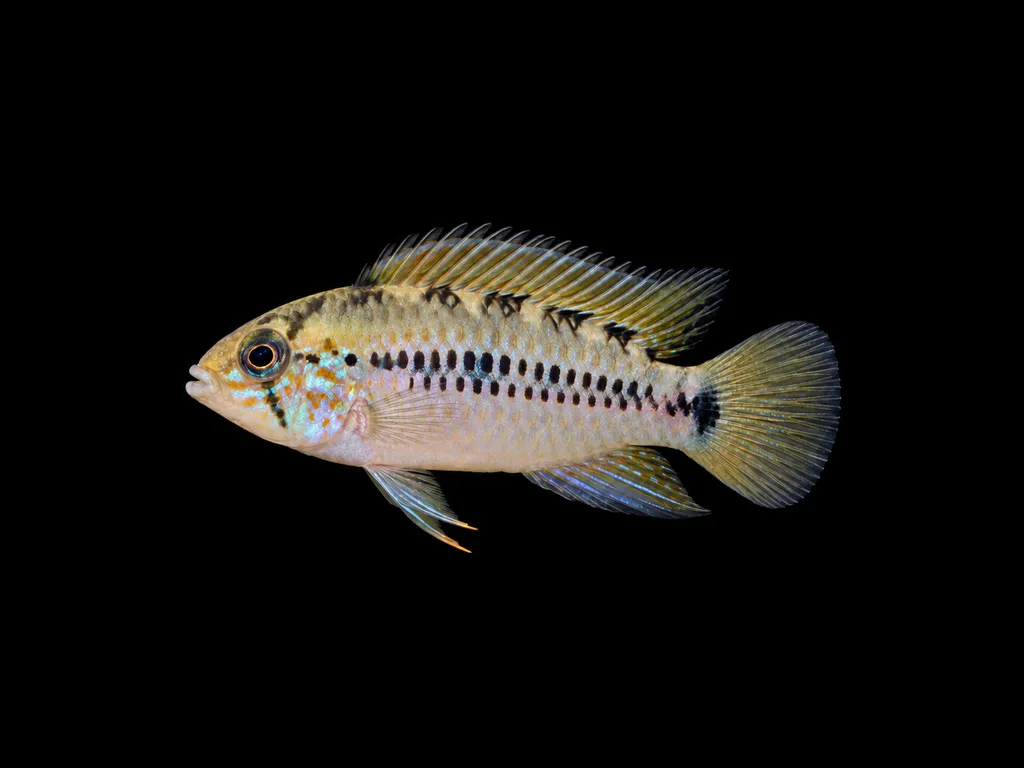
Alacrina dwarf cichlid
Apistogramma alacrina
Freshwater2.8 in (7 cm) · 20 gal (75 L)73–82°F (23–28°C)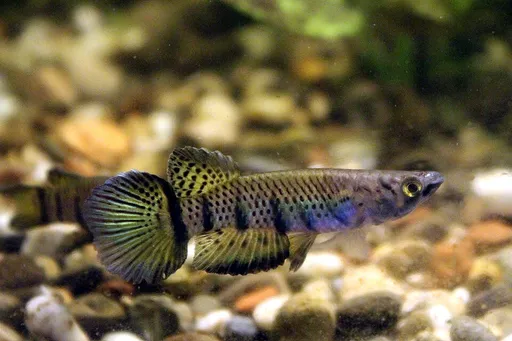
Six-barred panchax
Epiplatys sexfasciatus
Freshwater3.9 in (10 cm) · 20 gal (75 L)72–81°F (22–27°C)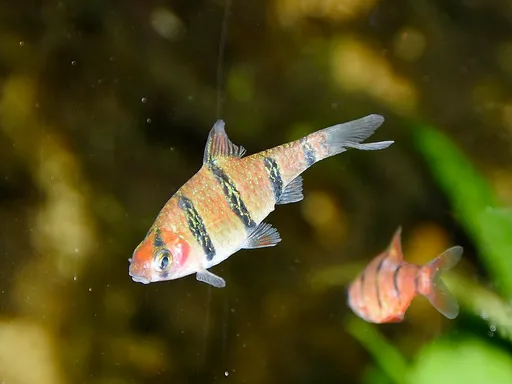
Five-banded barb
Desmopuntius pentazona
Freshwater2 in (5 cm) · 20 gal (75 L)73–81°F (23–27°C)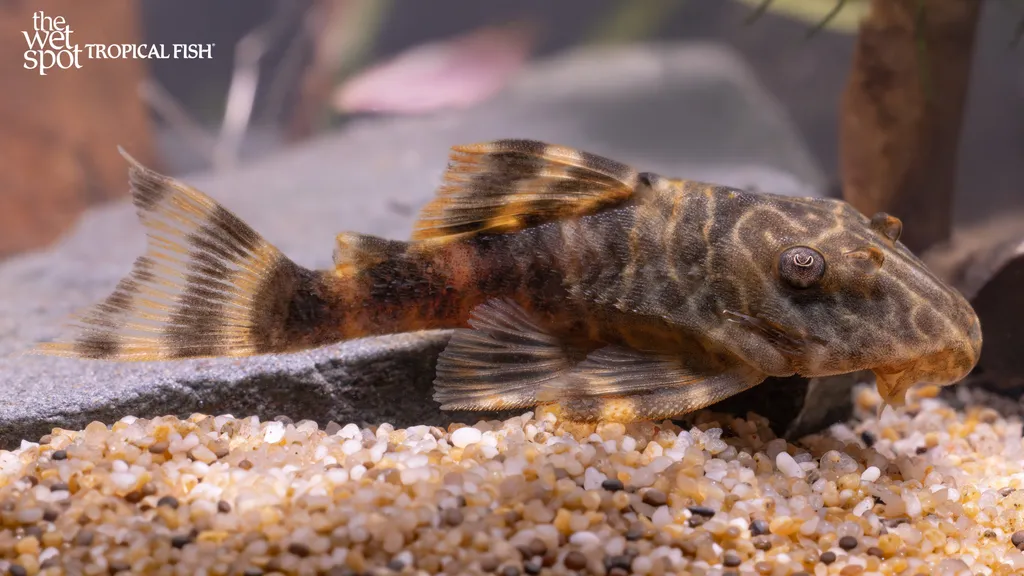
Clown pleco
Panaqolus maccus
Freshwater3.5 in (9 cm) · 20 gal (75 L)73–82°F (23–28°C)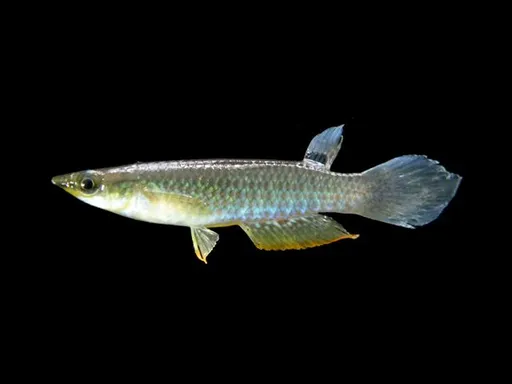
Blue panchax
Aplocheilus panchax
Freshwater3.5 in (9 cm) · 20 gal (75 L)72–82°F (22–28°C)
Common questions
What size tank does a Rutten's rasbora need?
A Rutten's rasbora needs at least 20 gal (75 L). It spends most of its time in the middle.
What temperature and pH does a Rutten's rasbora need?
A Rutten's rasbora is comfortable at 73–81°F (23–27°C) with a pH of 5.5–7.0.
What does a Rutten's rasbora eat?
A Rutten's rasbora eats a varied diet of flake and small sinking granules. Add small frozen or live foods such as daphnia, cyclops and brine shrimp.
How big does a Rutten's rasbora get?
An adult Rutten's rasbora reaches about 2.2 in (5.5 cm).
Does a Rutten's rasbora need a group?
Yes. A Rutten's rasbora is a schooling species and should be kept in a group, not singly.
Related species
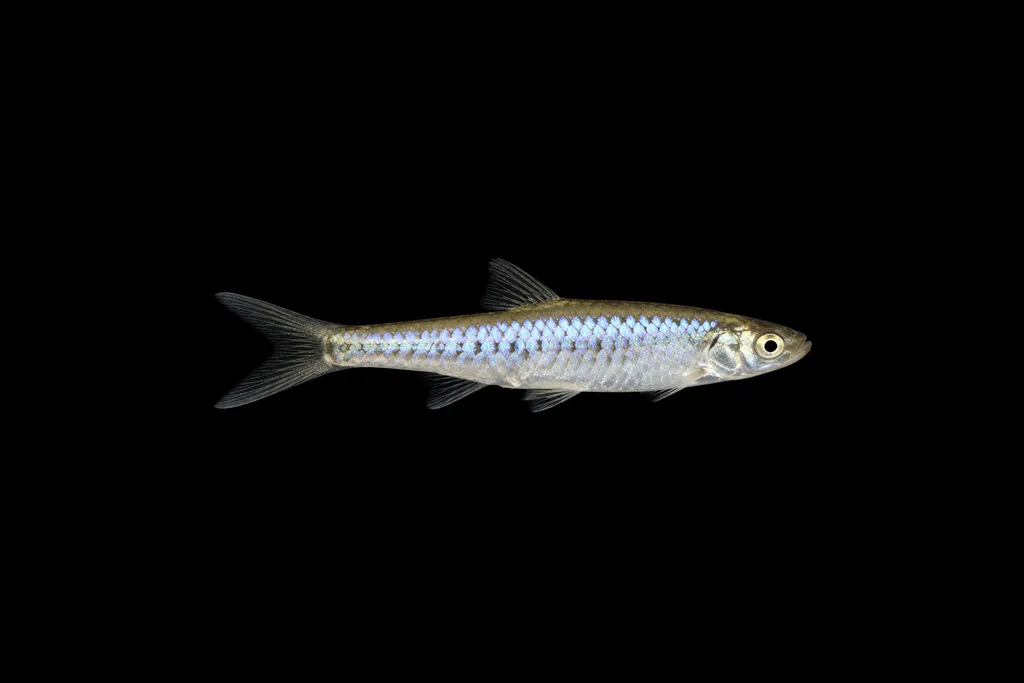 2.2 in (5.5 cm)20 gal (75 L)72–81°F (22–27°C)
Ninescale rasbora
Rasbora ennealepis
2.2 in (5.5 cm) · 20 gal (75 L)
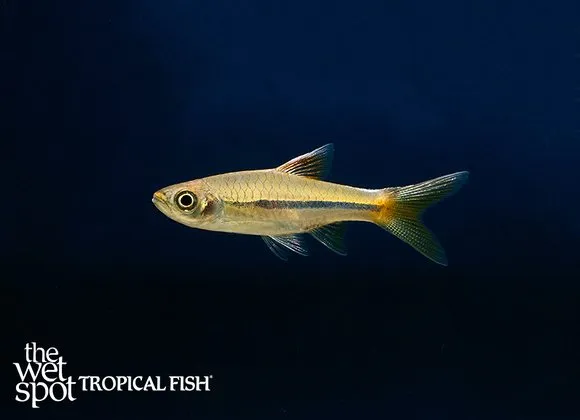 2.2 in (5.5 cm)20 gal (75 L)73–81°F (23–27°C)
Sarawak rasbora
Rasbora sarawakensis
2.2 in (5.5 cm) · 20 gal (75 L)
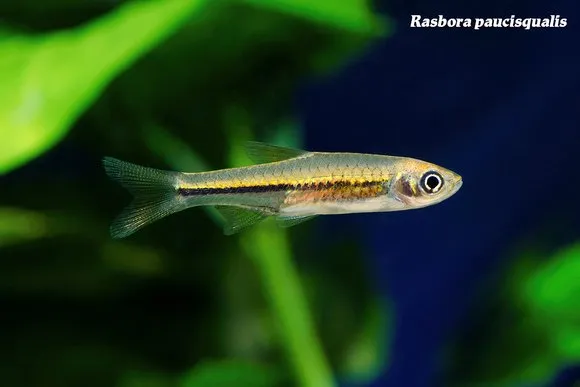 2 in (5 cm)20 gal (75 L)72–81°F (22–27°C)
Largescale rasbora
Rasbora paucisqualis
2 in (5 cm) · 20 gal (75 L)
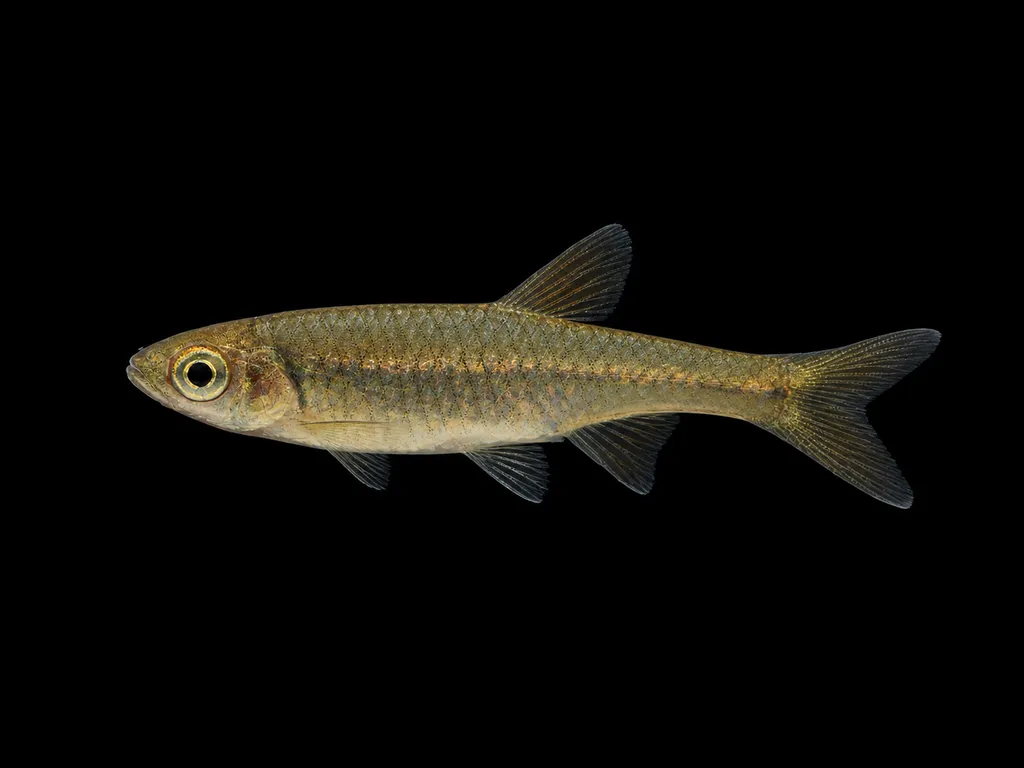 2.8 in (7 cm)24 gal (90 L)72–81°F (22–27°C)
Bangka rasbora
Rasbora bankanensis
2.8 in (7 cm) · 24 gal (90 L)
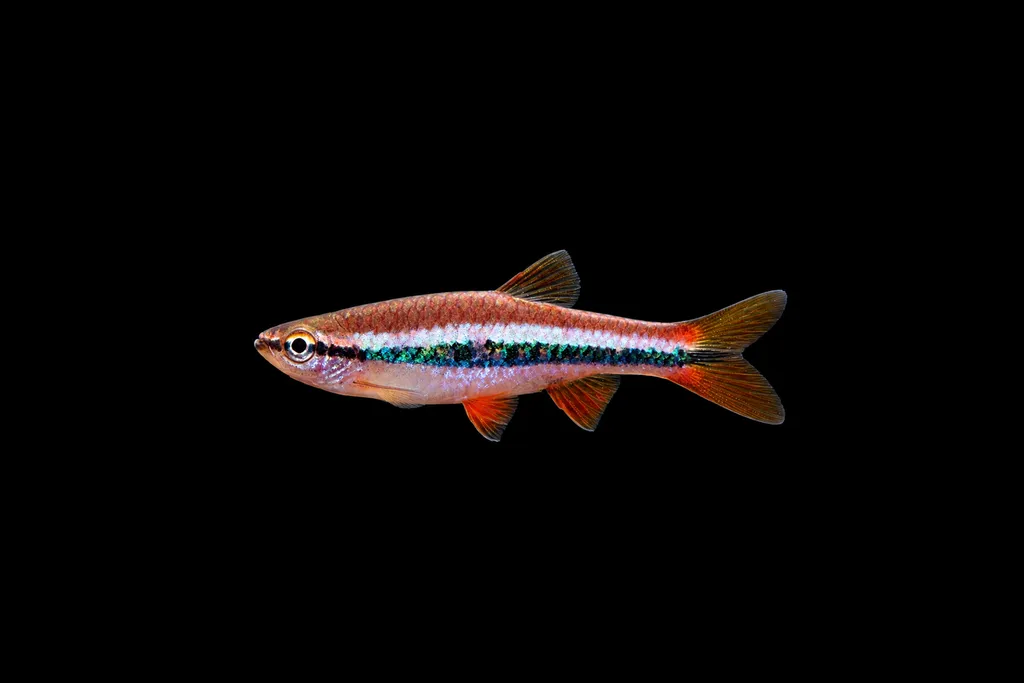 2.8 in (7 cm)24 gal (90 L)73–81°F (23–27°C)
Yap's rasbora
Rasbora patrickyapi
2.8 in (7 cm) · 24 gal (90 L)
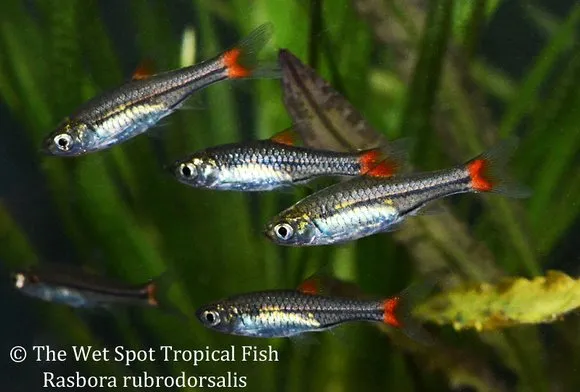 1.6 in (4 cm)14 gal (54 L)72–81°F (22–27°C)
Redback rasbora
Rasbora rubrodorsalis
1.6 in (4 cm) · 14 gal (54 L)