Alacrina dwarf cichlid
Apistogramma alacrina
Also known as Rotpunkt apisto, Red-spot apisto
FreshwaterFish
Care at a glance
- Temperature
- 73–82°F
- 23–28°C
- pH
- 5.5–7.0
- Adult size
- 2.8 in
- 7 cm
- Minimum tank
- 20 gal
- 75 L
- Temperament
- Mostly peaceful
- Social behavior
- Social
- Swim level
- Bottom
- Difficulty
- Medium
- Breeding
- Cave spawner · Medium
- Rarity
- Rare
- Family
- Cichlidae
- Origin
- Orteguaza drainage (Amazon basin) and upper Guaviare drainage (Orinoco basin), southern Colombia
Overview
The Alacrina dwarf cichlid is a small, mostly peaceful cichlid for the bottom of a quiet, planted tank. It is best with a little experience.
Did you know
The Alacrina dwarf cichlid was known in the hobby as the red-spot apisto for roughly two decades before it had a formal name. German hobbyists traded it as the Rotpunkt, and Sven Kullander described it in 2004.
Caring for the Alacrina dwarf cichlid
Keep a pair or a one-male harem in a quiet, planted tank of at least 20 gal (75 L). Give each female a cave of her own. Use a sandy floor with leaf litter, and keep the flow gentle.
Hold the water at 73 to 82°F (23 to 28°C), with a pH of 5.5 to 7.0. It takes small live, frozen and sinking prepared foods.
It is mostly peaceful, so keep tank mates small and calm, such as pencilfish or small tetras. They let the pair hold their territory without stress.
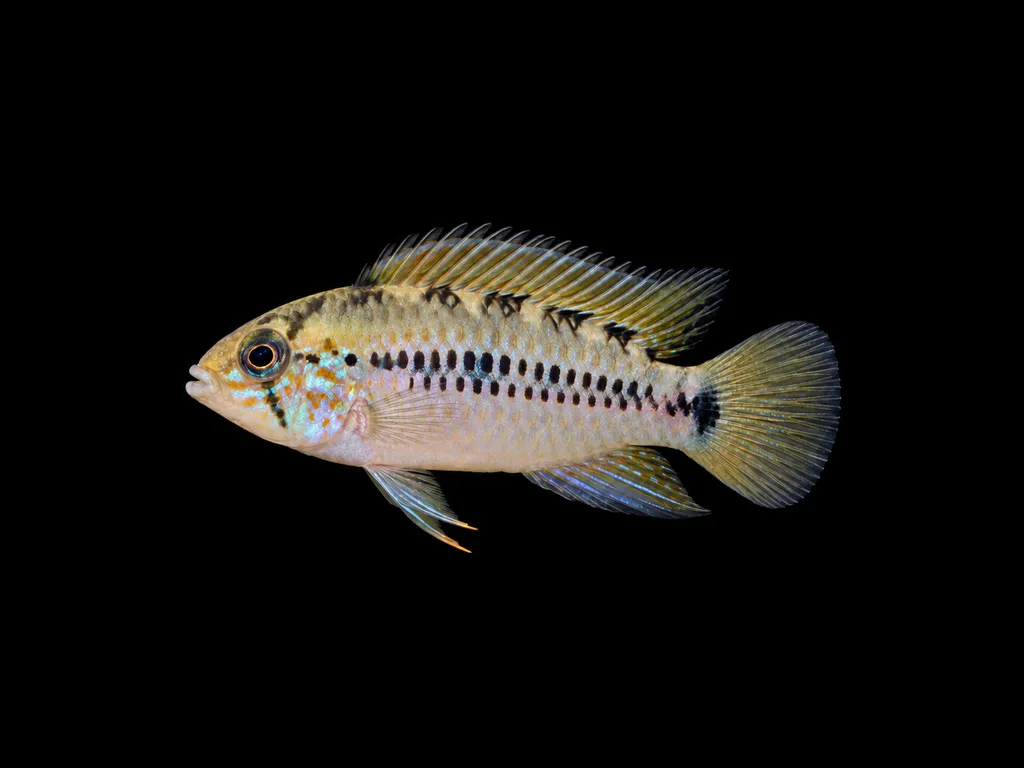
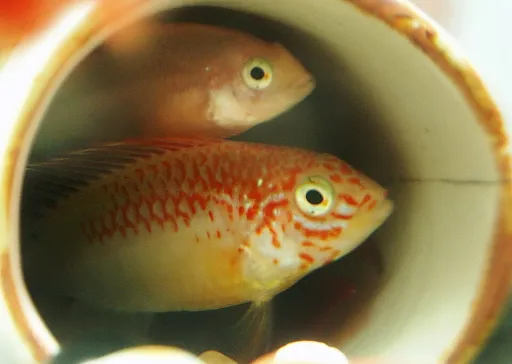
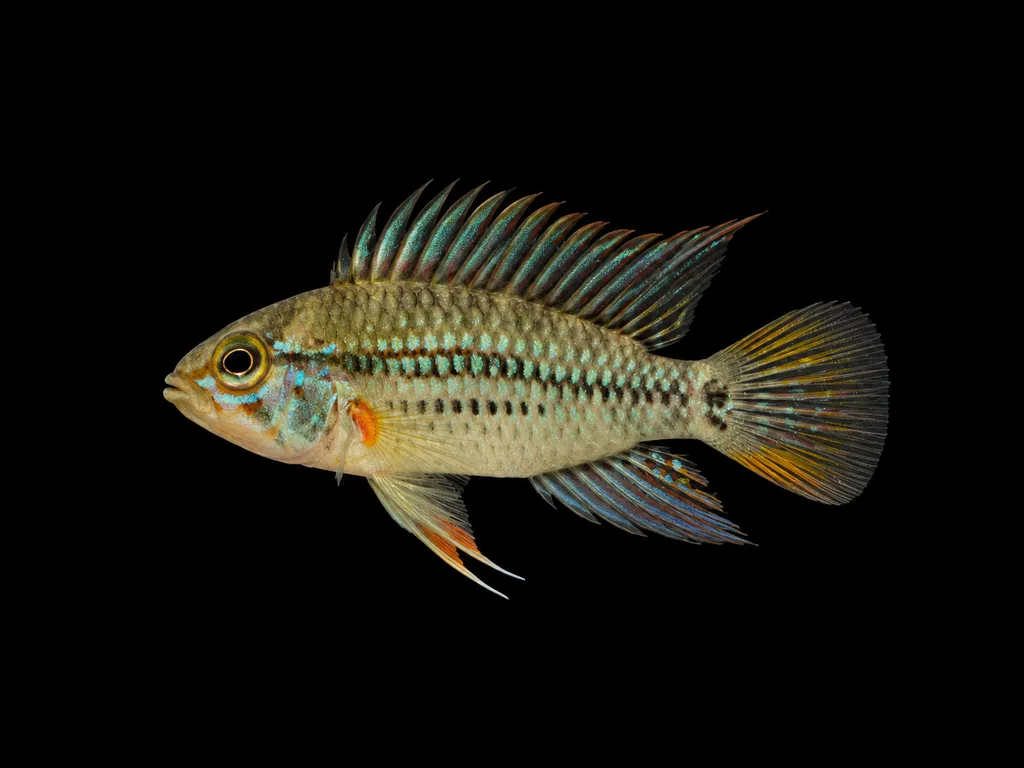
Males show a red-dotted cheek pattern and a lyre-edged tail, and females stay smaller. A female guards the eggs in a cave and turns yellow while she cares for the brood. She then leads the fry around the tank floor, so skip anything that eats babies if you want a brood to survive. Breeding them is a medium challenge.
Good to know
The Alacrina dwarf cichlid, Apistogramma alacrina, is a member of the cichlid family, Cichlidae. It is one of the few Apistogramma found in two river basins at once.
In the wild
The Alacrina dwarf cichlid lives in small forest streams on both sides of the watershed divide in southern Colombia. Its range covers the Orteguaza drainage on the Amazon side and the upper Guaviare on the Orinoco side. It holds close to leaf litter and submerged wood in shallow, slow water.
Weekly picks
Tank mates
The Alacrina dwarf cichlid is a mostly peaceful, social species that keeps to the bottom. These picks share a community profile with it, are safe together in both directions, and overlap on water type, temperature and pH.
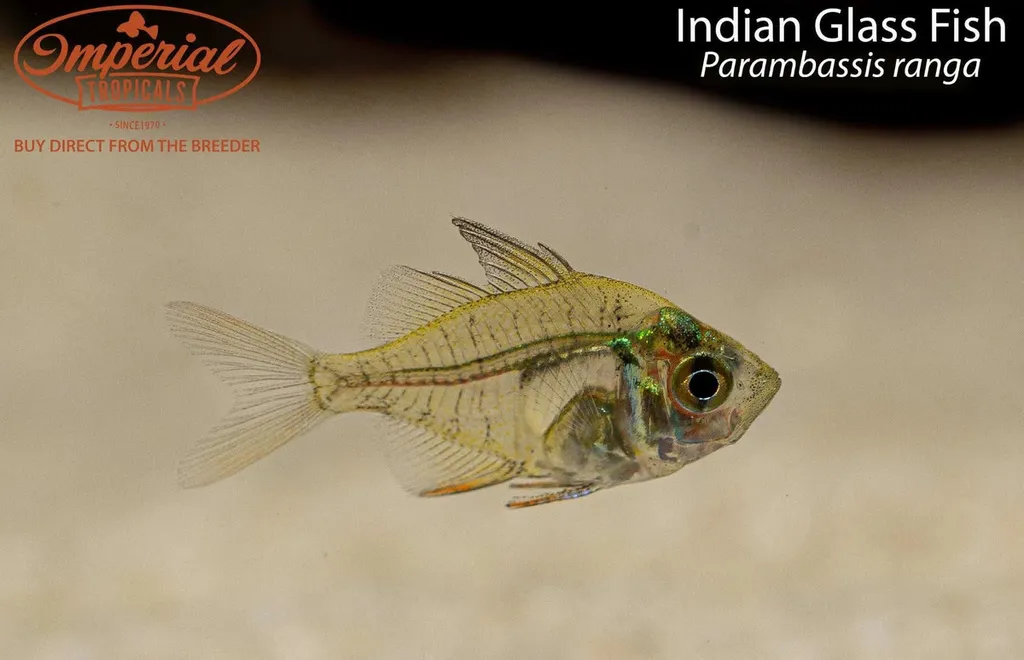
Indian glassy fish
Parambassis ranga
Freshwater3.1 in (8 cm) · 20 gal (75 L)68–86°F (20–30°C)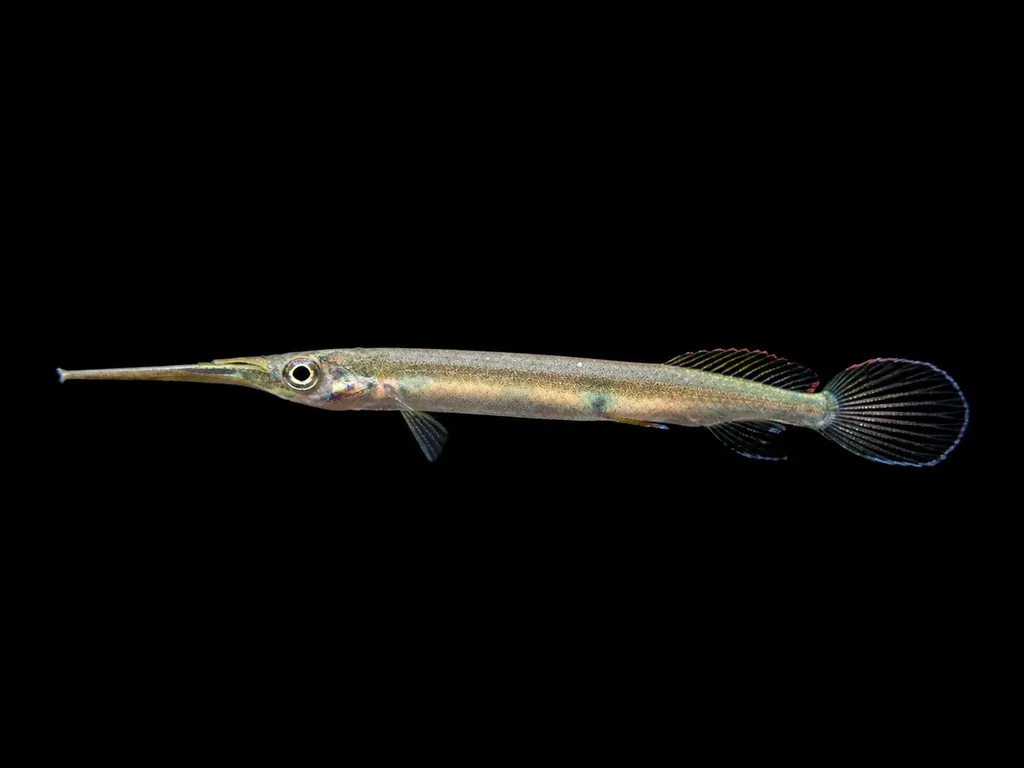
Kuekenthal's halfbeak
Hemirhamphodon kuekenthali
Freshwater3.3 in (8.5 cm) · 20 gal (75 L)73–81°F (23–27°C)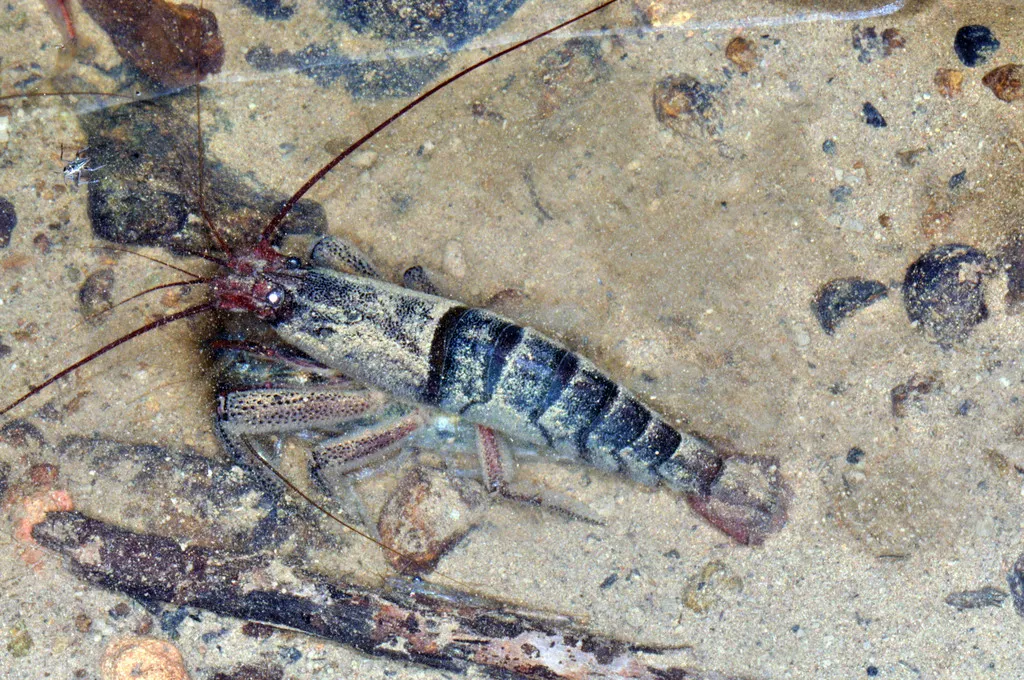
Marble wood shrimp
Atya scabra
Freshwater3.9 in (10 cm) · 20 gal (75 L)73–82°F (23–28°C)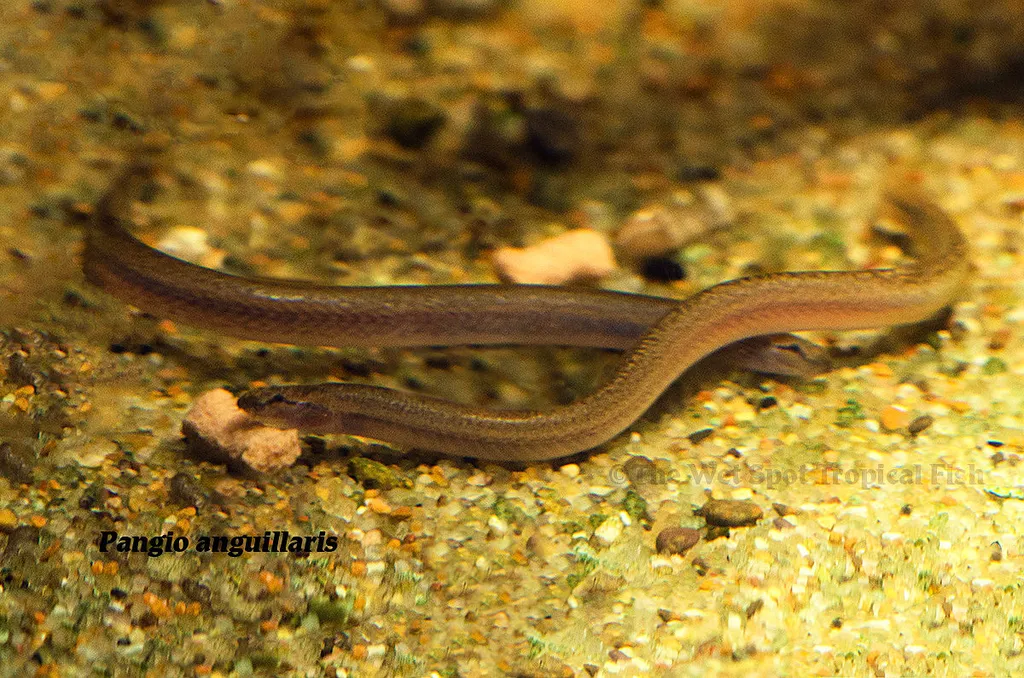
Eel kuhli loach
Pangio anguillaris
Freshwater4.7 in (12 cm) · 20 gal (75 L)72–82°F (22–28°C)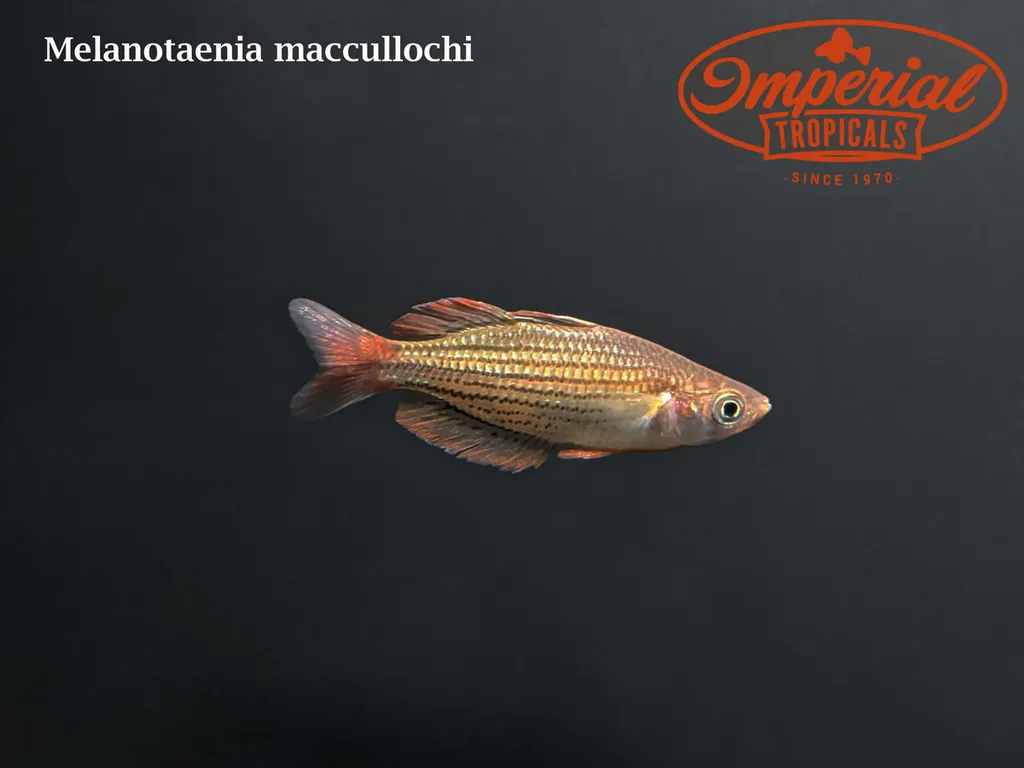
Dwarf rainbowfish
Melanotaenia maccullochi
Freshwater2.8 in (7 cm) · 20 gal (75 L)72–82°F (22–28°C)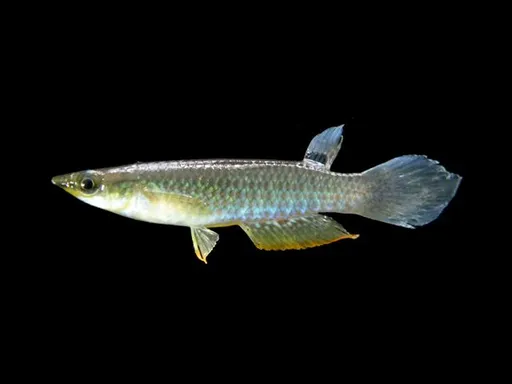
Blue panchax
Aplocheilus panchax
Freshwater3.5 in (9 cm) · 20 gal (75 L)72–82°F (22–28°C)
Common questions
What size tank does an Alacrina dwarf cichlid need?
An Alacrina dwarf cichlid needs at least 20 gal (75 L). It spends most of its time in the bottom.
What temperature and pH does an Alacrina dwarf cichlid need?
An Alacrina dwarf cichlid is comfortable at 73–82°F (23–28°C) with a pH of 5.5–7.0.
What does an Alacrina dwarf cichlid eat?
An Alacrina dwarf cichlid eats small live, frozen and sinking prepared foods.
How big does an Alacrina dwarf cichlid get?
An adult Alacrina dwarf cichlid reaches about 2.8 in (7 cm).
How can you tell a male Alacrina dwarf cichlid from a female?
Males show a red-dotted cheek pattern and a lyre-edged tail. Females stay smaller and turn yellow while they care for a brood.
How does an Alacrina dwarf cichlid breed?
Alacrina dwarf cichlid females guard the eggs in a cave. They then lead the fry around the tank floor, so keep out anything that eats babies.
Related species
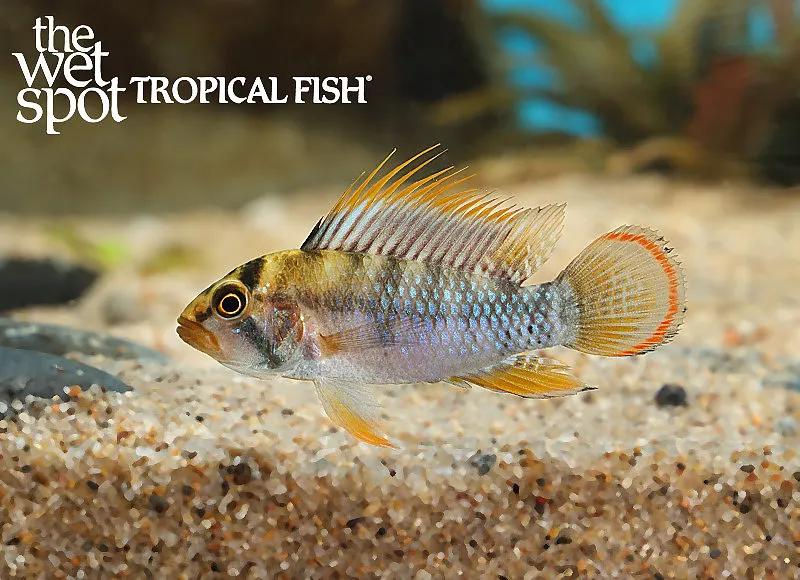 2.8 in (7 cm)20 gal (75 L)73–82°F (23–28°C)
Inca dwarf cichlid
Apistogramma baenschi
2.8 in (7 cm) · 20 gal (75 L)
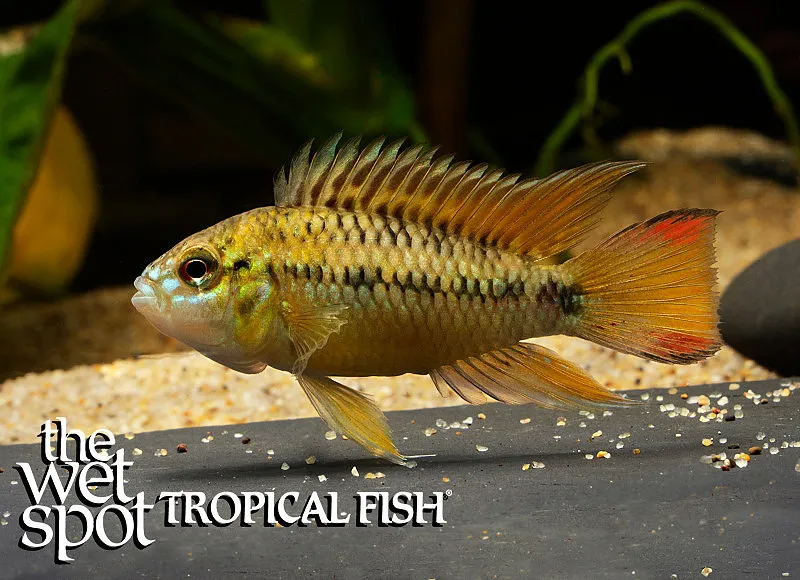
 2.8 in (7 cm)20 gal (75 L)75–82°F (24–28°C)
Viejita dwarf cichlid
Apistogramma viejita
2.8 in (7 cm) · 20 gal (75 L)
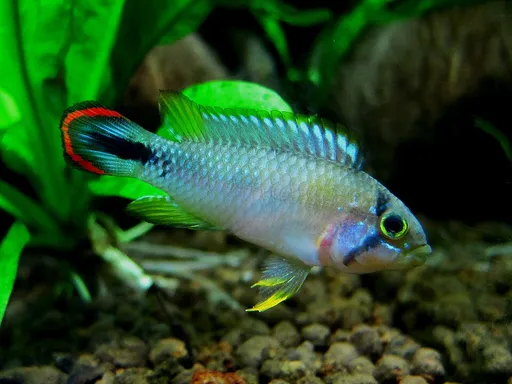
 3 in (7.5 cm)20 gal (75 L)75–84°F (24–29°C)
Hoigne's dwarf cichlid
Apistogramma hoignei
3 in (7.5 cm) · 20 gal (75 L)
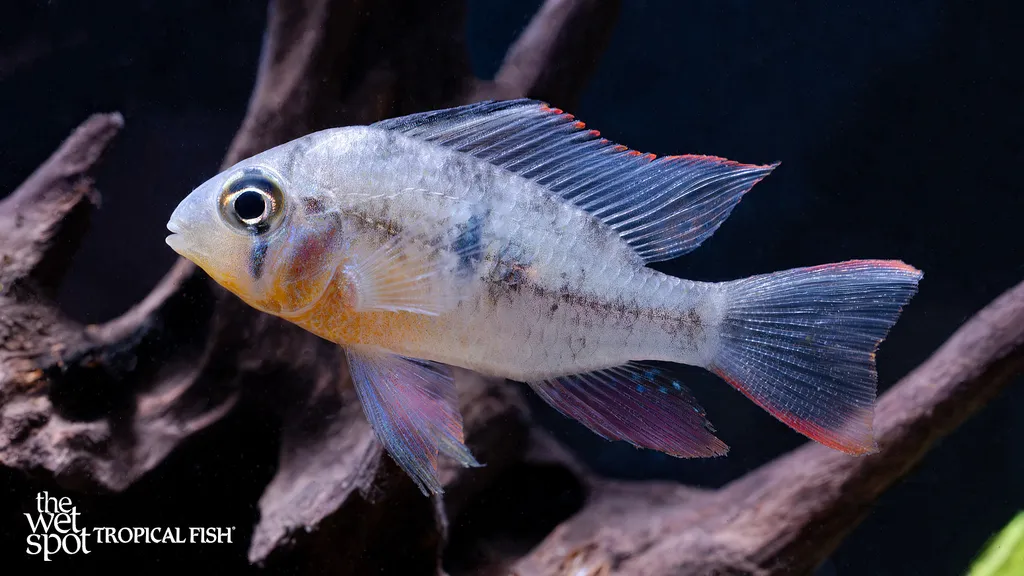
 3 in (7.5 cm)20 gal (75 L)75–82°F (24–28°C)
Panduro apisto
Apistogramma panduro
3 in (7.5 cm) · 20 gal (75 L)
 2.6 in (6.5 cm)16 gal (60 L)77–84°F (25–29°C)
Bigfin dwarf cichlid
Apistogramma megaptera
2.6 in (6.5 cm) · 16 gal (60 L)
 2.6 in (6.5 cm)20 gal (75 L)73–82°F (23–28°C)
Blue-cheek dwarf cichlid
Apistogramma eunotus
2.6 in (6.5 cm) · 20 gal (75 L)