Blue-cheek dwarf cichlid
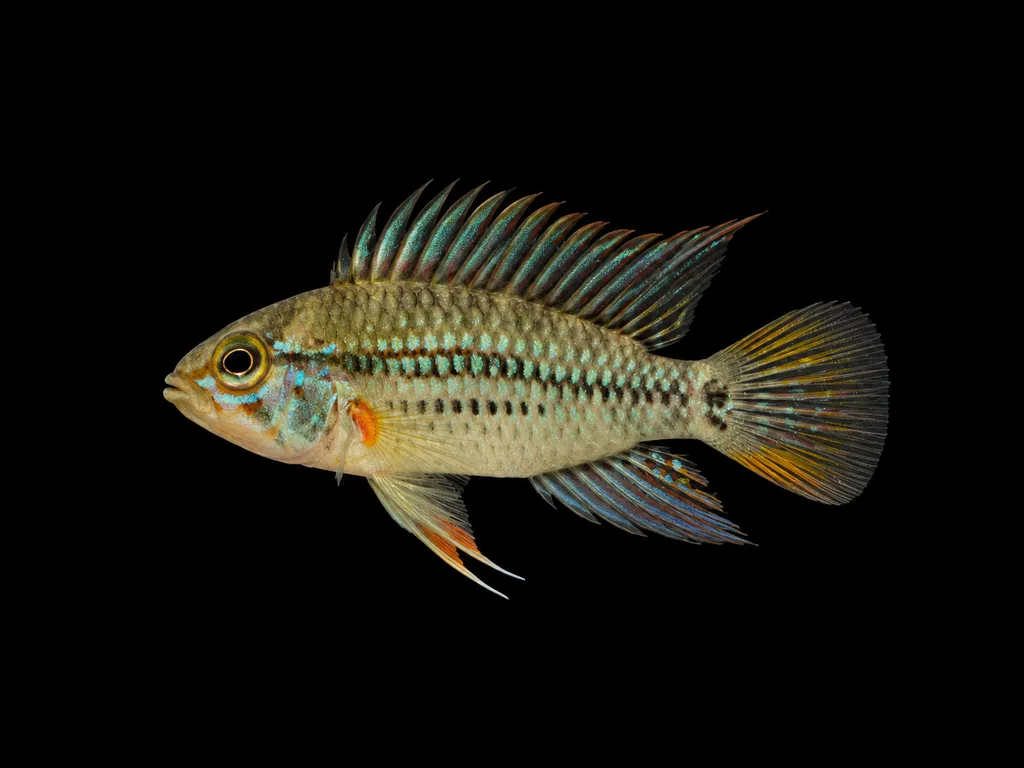
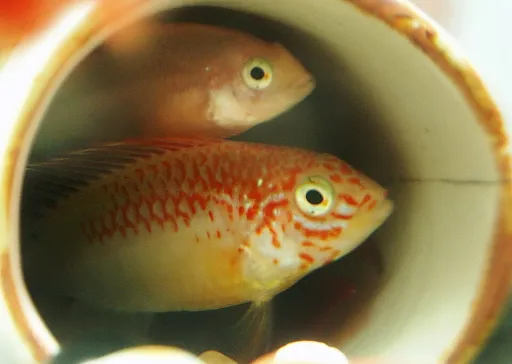
Apistogramma eunotus
Also known as Eunotus apisto, High-back apisto, Blue cheek apisto
FreshwaterFish
Care at a glance
- Temperature
- 73–82°F
- 23–28°C
- pH
- 6.0–7.5
- Adult size
- 2.6 in
- 6.5 cm
- Minimum tank
- 20 gal
- 75 L
- Temperament
- Mostly peaceful
- Social behavior
- Social
- Swim level
- Bottom
- Difficulty
- Medium
- Breeding
- Cave spawner · Medium
- Rarity
- Common
- Family
- Cichlidae
- Origin
- Ucayali and Amazon tributaries in Peru, into the Yavari and Japura systems
Overview
The blue-cheek dwarf cichlid is one of the best first rare apistos, and it spends its days near the bottom of the tank. It is a good next step after the easiest community fish.
Did you know
The blue-cheek dwarf cichlid shrugs off harder water than most of its genus. That makes it the apisto that often works in tanks where blackwater species would sulk.
Caring for the blue-cheek dwarf cichlid
A pair of blue-cheek dwarf cichlids needs a tank of at least 20 gal (75 L). A harem needs a bigger footprint, with a cave for each female. Furnish the tank with sand, leaf litter and caves.
Hold the water at 73 to 82°F (23 to 28°C) with a pH of 6.0 to 7.5. This robust fish is forgiving in captivity, and it even breeds in ordinary soft tap water. It takes prepared foods without fuss.
The blue-cheek holds its own alongside peaceful tetras and corys. Breeding is moderately tricky. The female guards the brood in her cave, then shepherds the fry across the floor for weeks.
Good to know
Apistogramma eunotus was described by Kullander in 1981, and the name means well-backed, for the tall body males develop. Males also wear turquoise cheeks and an orange-edged tail. The species is the namesake of the eunotus complex, a cluster of stocky Peruvian species told apart by cheek pattern and tail shape.
In the wild
The blue-cheek dwarf cichlid is a widespread Peruvian apisto of the Ucayali and upper Amazon drainages. It lives along quiet stream margins and in pools, usually over mud or sand with leaf litter. Unlike the blackwater specialists, it often lives in near-neutral water.
Weekly picks
Tank mates
The blue-cheek dwarf cichlid is a mostly peaceful, social species that keeps to the bottom. These picks share a community profile with it, are safe together in both directions, and overlap on water type, temperature and pH.
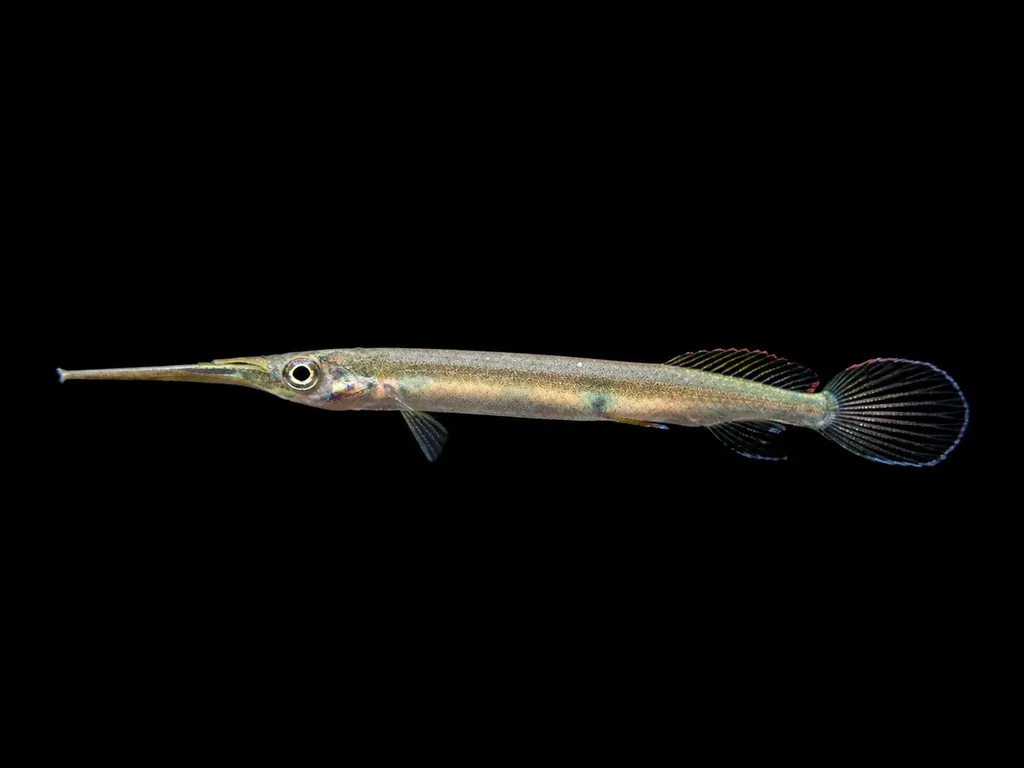
Kuekenthal's halfbeak
Hemirhamphodon kuekenthali
Freshwater3.3 in (8.5 cm) · 20 gal (75 L)73–81°F (23–27°C)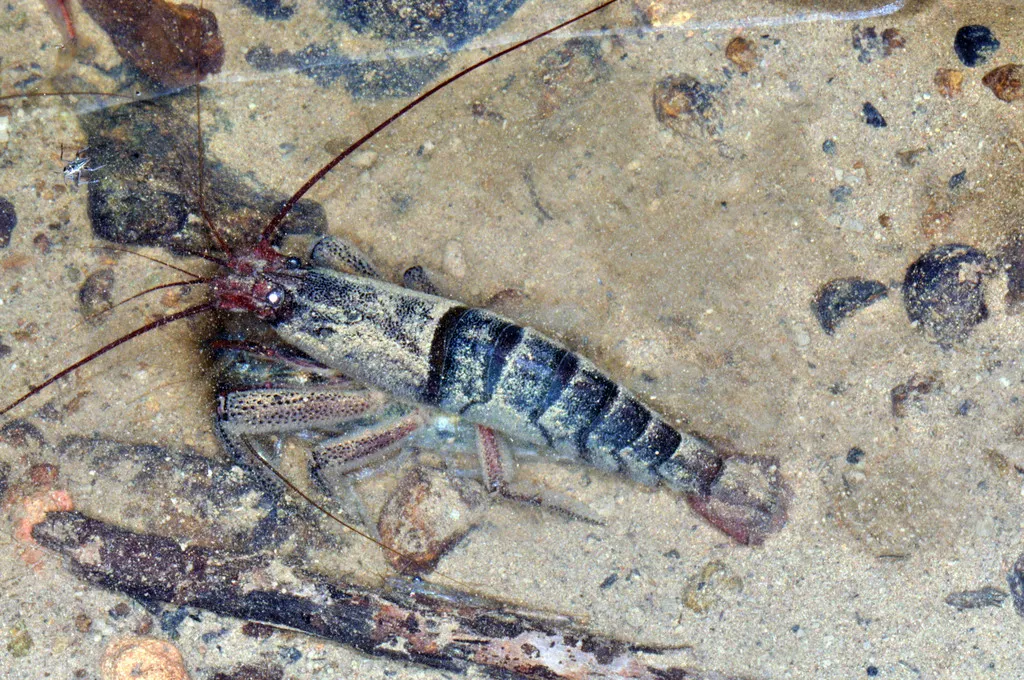
Marble wood shrimp
Atya scabra
Freshwater3.9 in (10 cm) · 20 gal (75 L)73–82°F (23–28°C)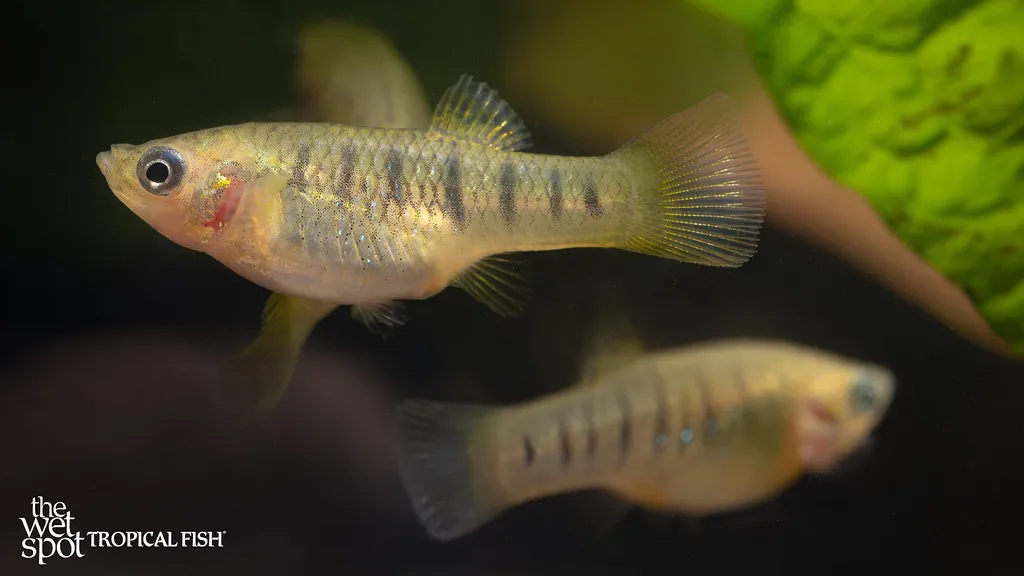
Humpbacked limia
Limia nigrofasciata
Freshwater2.4 in (6 cm) · 20 gal (75 L)72–82°F (22–28°C)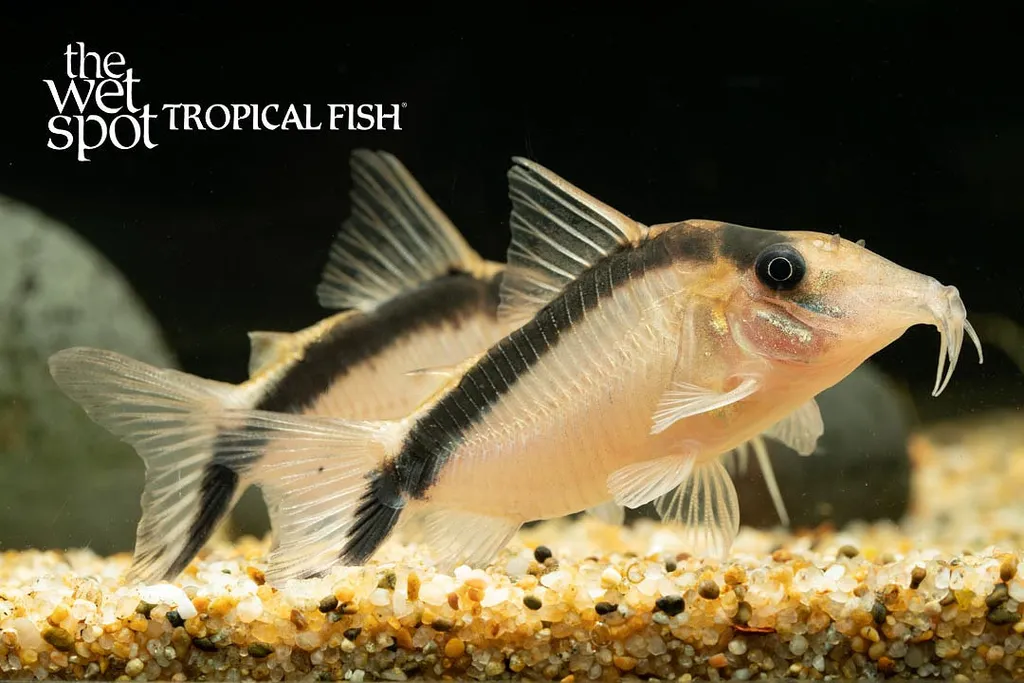
Bethan's cory
Brochis bethanae
Freshwater2.6 in (6.5 cm) · 20 gal (75 L)73–81°F (23–27°C)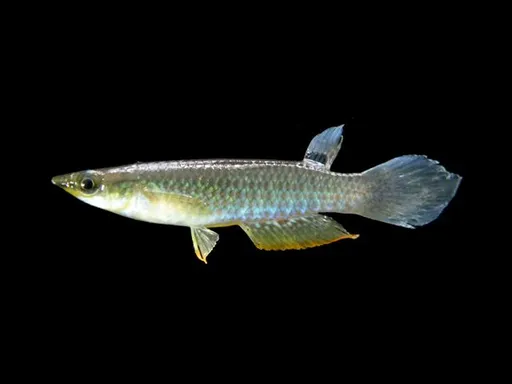
Blue panchax
Aplocheilus panchax
Freshwater3.5 in (9 cm) · 20 gal (75 L)72–82°F (22–28°C)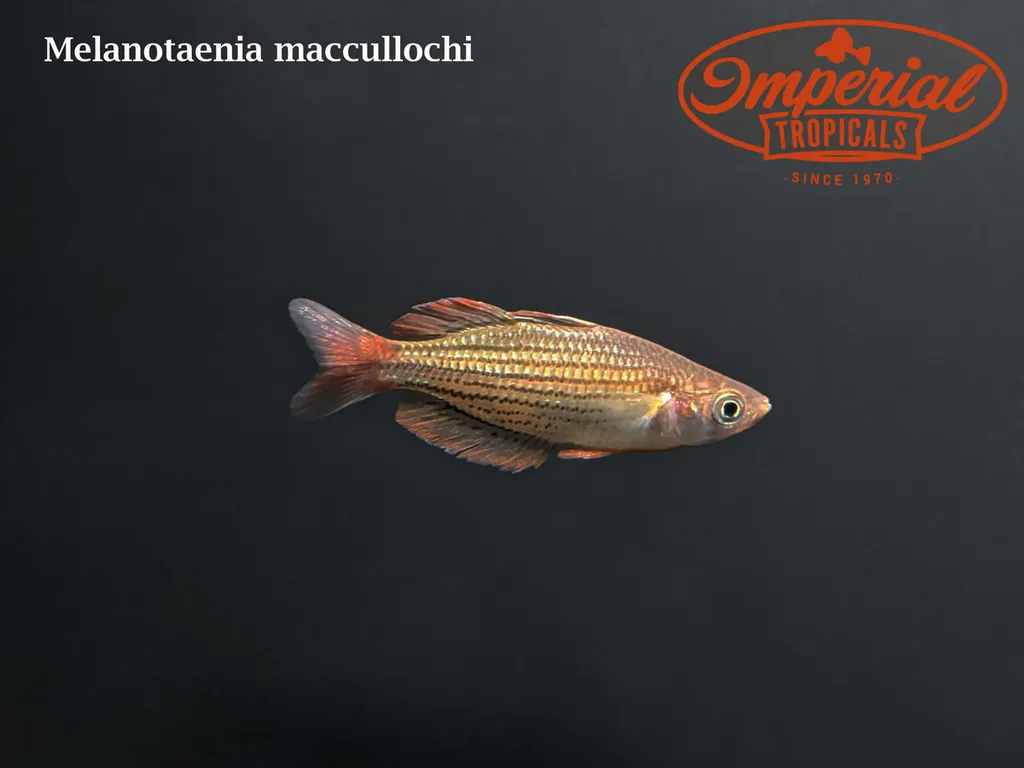
Dwarf rainbowfish
Melanotaenia maccullochi
Freshwater2.8 in (7 cm) · 20 gal (75 L)72–82°F (22–28°C)
Common questions
What size tank does a blue-cheek dwarf cichlid need?
A blue-cheek dwarf cichlid needs at least 20 gal (75 L). It spends most of its time in the bottom.
What temperature and pH does a blue-cheek dwarf cichlid need?
A blue-cheek dwarf cichlid is comfortable at 73–82°F (23–28°C) with a pH of 6.0–7.5.
What does a blue-cheek dwarf cichlid eat?
A blue-cheek dwarf cichlid takes prepared foods without fuss.
How big does a blue-cheek dwarf cichlid get?
An adult blue-cheek dwarf cichlid reaches about 2.6 in (6.5 cm).
Related species
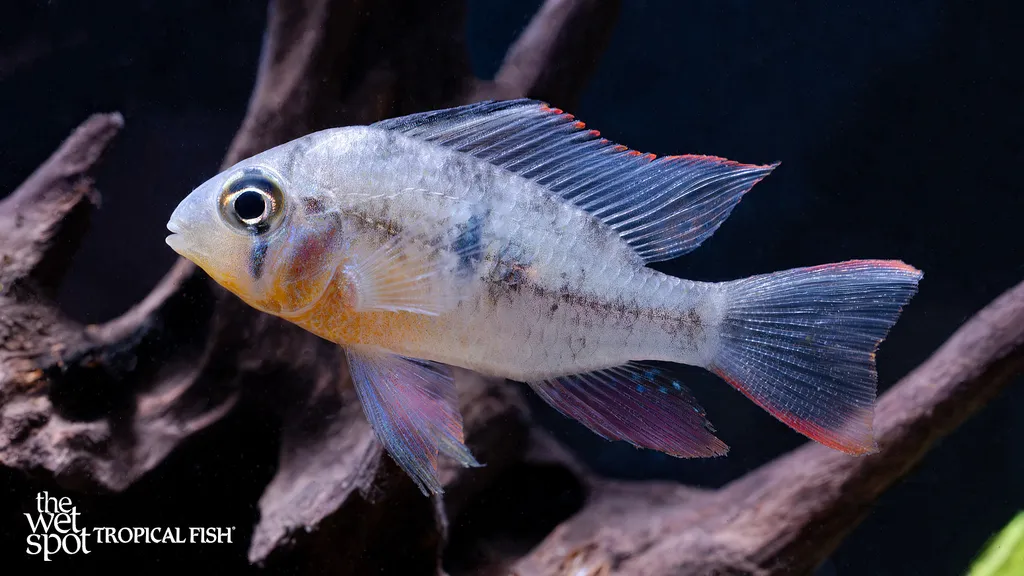 2.6 in (6.5 cm)16 gal (60 L)77–84°F (25–29°C)
Bigfin dwarf cichlid
Apistogramma megaptera
2.6 in (6.5 cm) · 16 gal (60 L)
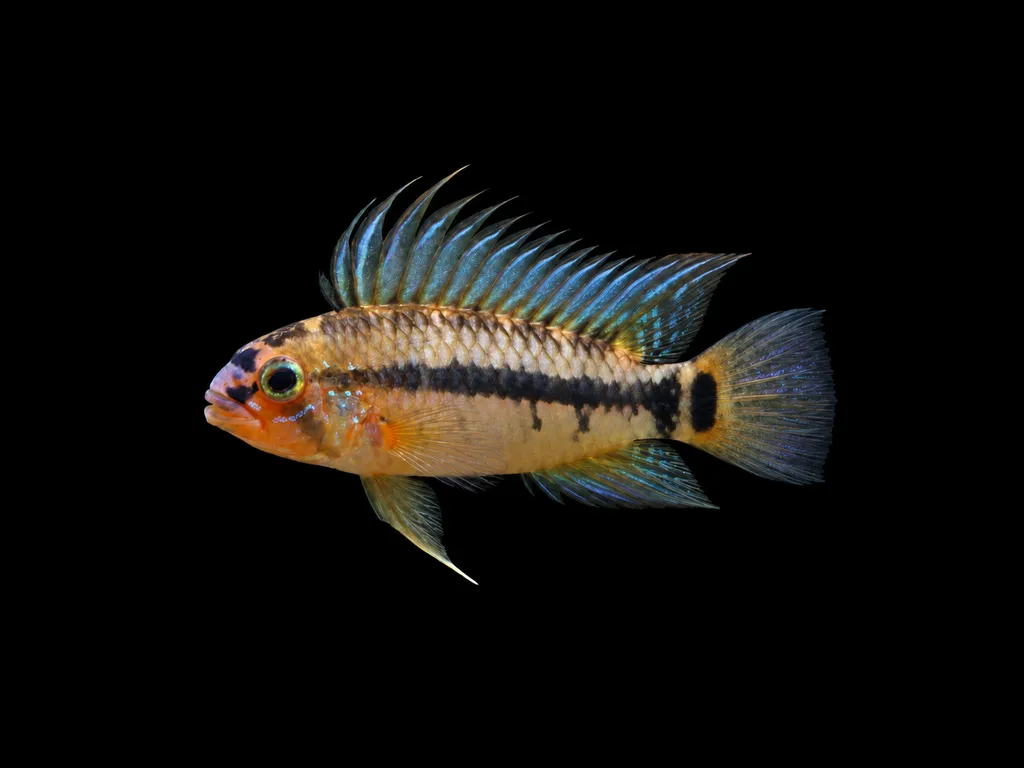 2.6 in (6.5 cm)16 gal (60 L)77–84°F (25–29°C)
Masked dwarf cichlid
Apistogramma personata
2.6 in (6.5 cm) · 16 gal (60 L)
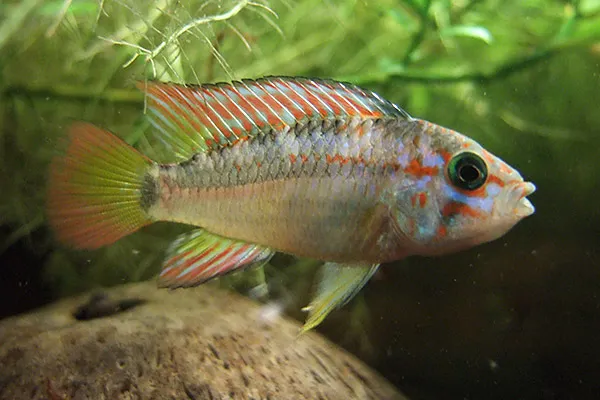 2.6 in (6.5 cm)16 gal (60 L)75–82°F (24–28°C)
Ortega's dwarf cichlid
Apistogramma ortegai
2.6 in (6.5 cm) · 16 gal (60 L)
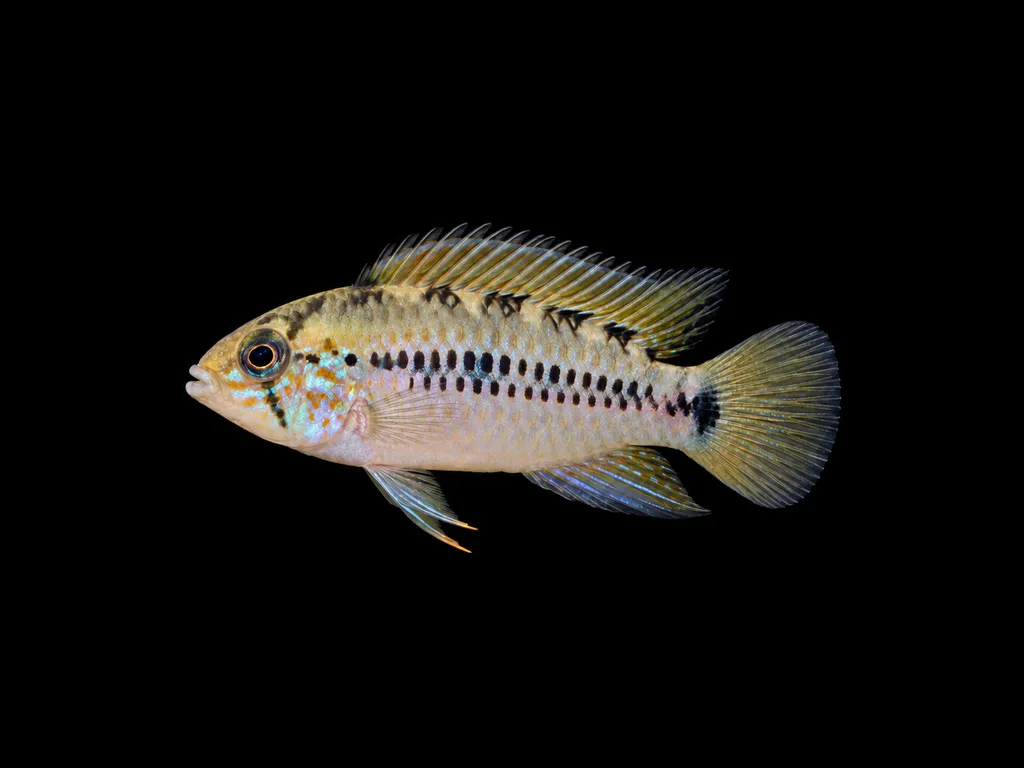 2.8 in (7 cm)20 gal (75 L)73–82°F (23–28°C)
Alacrina dwarf cichlid
Apistogramma alacrina
2.8 in (7 cm) · 20 gal (75 L)
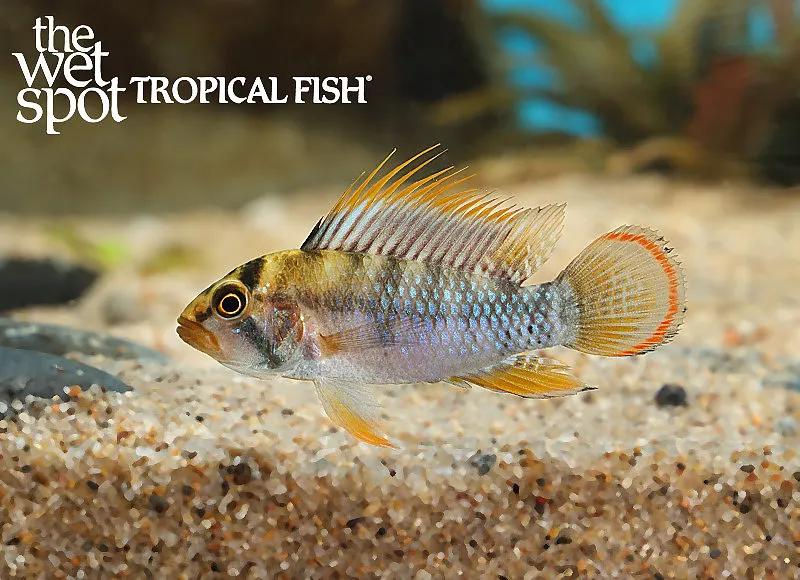 2.8 in (7 cm)20 gal (75 L)73–82°F (23–28°C)
Inca dwarf cichlid
Apistogramma baenschi
2.8 in (7 cm) · 20 gal (75 L)
 2.8 in (7 cm)20 gal (75 L)75–82°F (24–28°C)
Viejita dwarf cichlid
Apistogramma viejita
2.8 in (7 cm) · 20 gal (75 L)