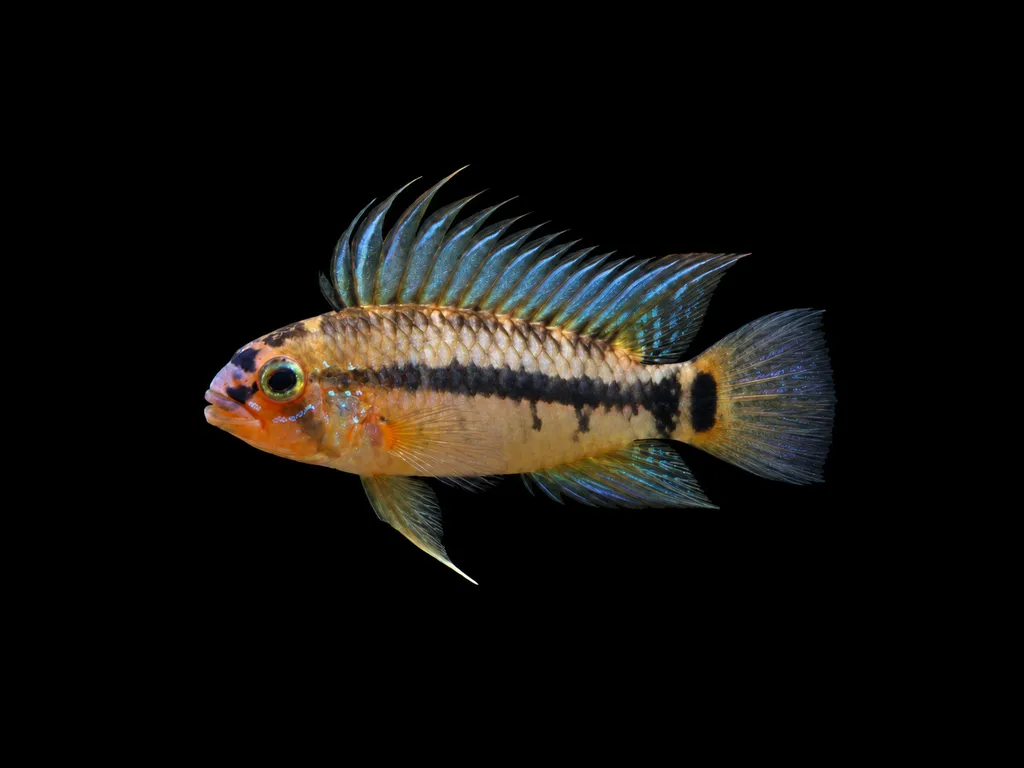
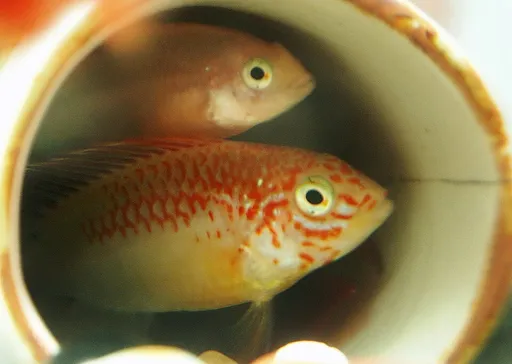
Masked dwarf cichlid
Apistogramma personata
Also known as Uaupes masked apisto
FreshwaterFish
Care at a glance
- Temperature
- 77–84°F
- 25–29°C
- pH
- 4.5–6.2
- Adult size
- 2.6 in
- 6.5 cm
- Minimum tank
- 16 gal
- 60 L
- Temperament
- Mostly peaceful
- Social behavior
- Social
- Swim level
- Bottom
- Difficulty
- Difficult
- Breeding
- Cave spawner · Hard
- Rarity
- Rare
- Family
- Cichlidae
- Origin
- Rio Uaupes basin, upper Rio Negro drainage, Brazil
Overview
The masked dwarf cichlid is a rare blackwater apisto that lives near the bottom of the tank, and it is for experienced keepers only.
Did you know
For most of the years since its description, the masked dwarf cichlid existed for hobbyists only as a black-masked photo in cichlid atlases. Live imports are still events.
Caring for the masked dwarf cichlid
Treat the masked dwarf cichlid as an expert blackwater project. A pair needs a dedicated tank of 16 gal (60 L) or more, set up to read like a Negro tributary. Spread deep leaf litter everywhere, and add wood and dim light.
Aim for near-rainwater chemistry with minimal hardness, at 77 to 84°F (25 to 29°C) and a pH of 4.5 to 6.2. Make live or frozen foods the staple. Tank mates, if any, should be tiny schooling fish from the Negro basin.
Cave spawns need very acidic, soft water for the eggs to develop, and breeding is hard. Pairs may take months to settle before they attempt one.
Good to know
Kullander described the masked dwarf cichlid from the Uaupes in 1980. Its name, personata, means masked, for the heavy dark face marking that males carry. It is a large-cheeked, robust species.
In the wild
The masked dwarf cichlid is a blackwater species of the Rio Uaupes, in the upper Rio Negro system of Brazil. It lives over leaf litter and sand, in hot, extremely soft, acidic water.
Weekly picks
Tank mates
The masked dwarf cichlid is a mostly peaceful, social species that keeps to the bottom. These picks share a community profile with it, are safe together in both directions, and overlap on water type, temperature and pH.
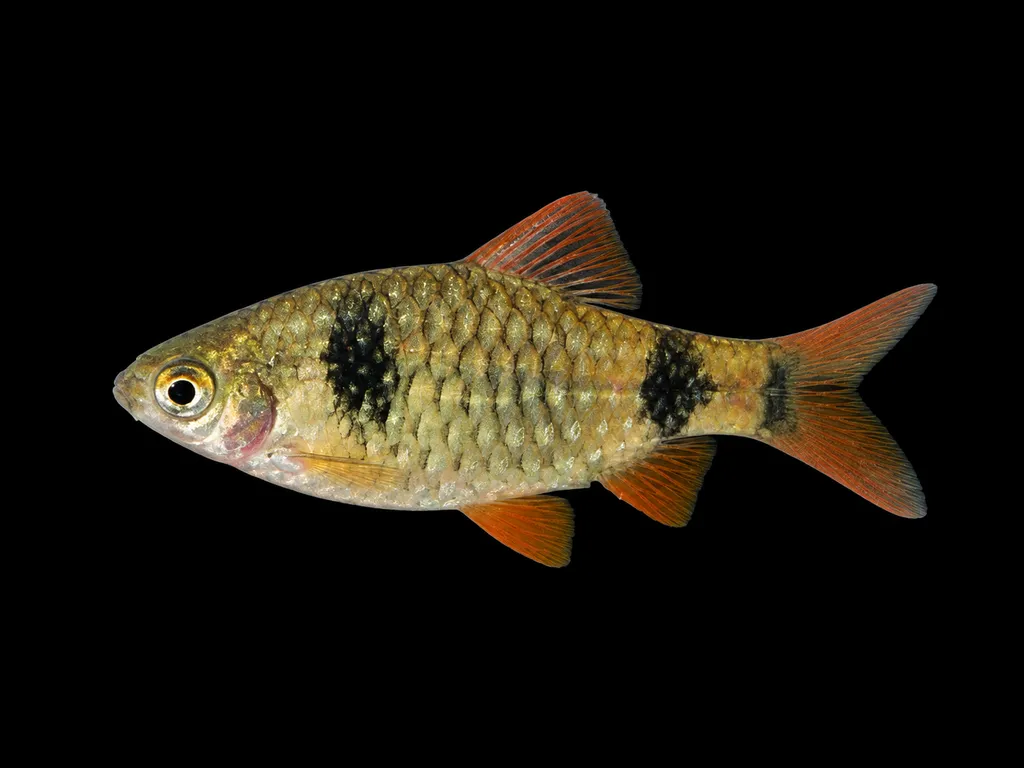
Cuming's barb
Pethia cumingii
Freshwater2 in (5 cm) · 16 gal (60 L)72–81°F (22–27°C)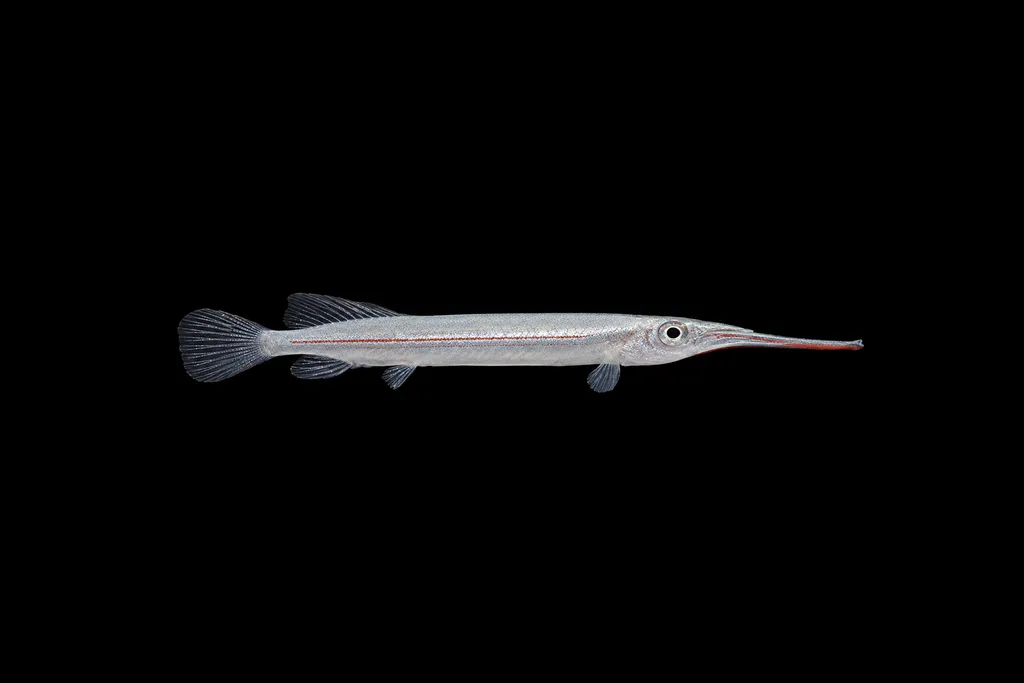
Fire halfbeak
Hemirhamphodon kapuasensis
Freshwater2.4 in (6 cm) · 14 gal (54 L)73–81°F (23–27°C)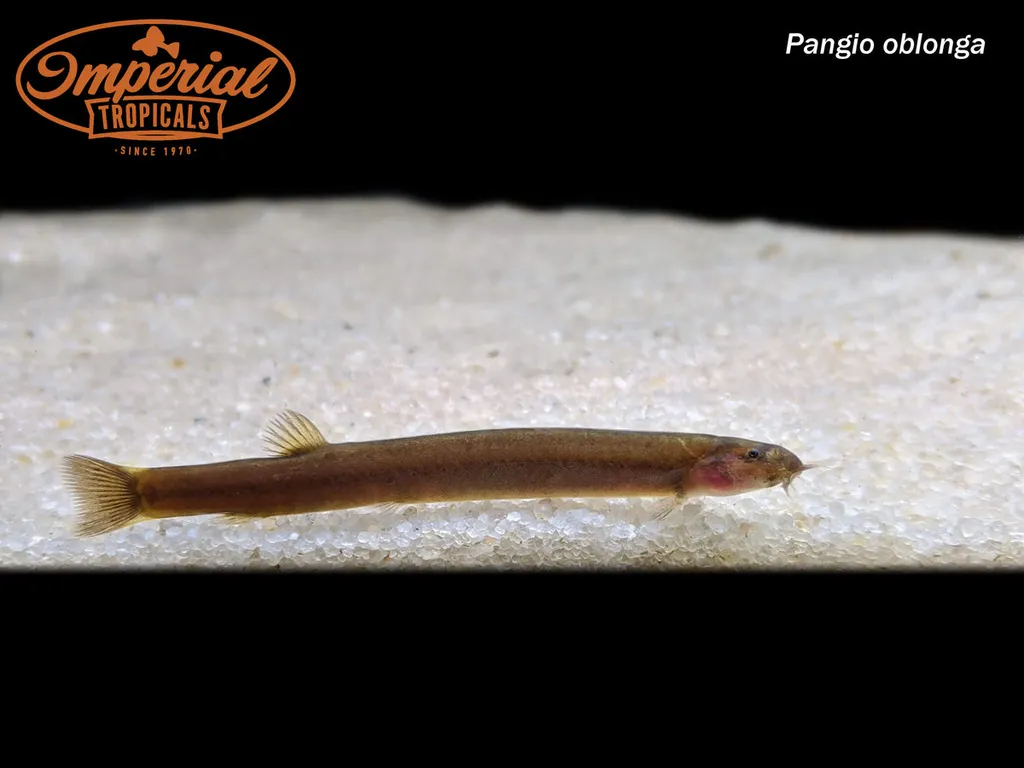
Java loach
Pangio oblonga
Freshwater3.1 in (8 cm) · 15 gal (55 L)70–79°F (21–26°C)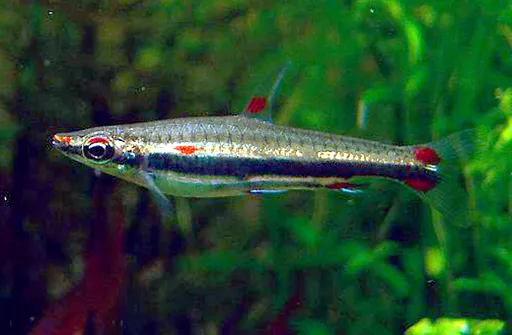
Harrison's pencilfish
Nannostomus harrisoni
Freshwater2.2 in (5.5 cm) · 16 gal (60 L)73–82°F (23–28°C)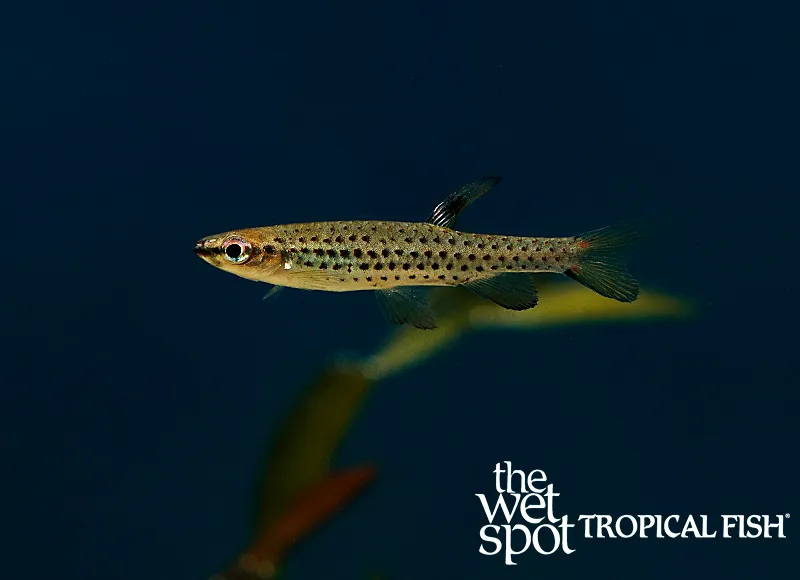
Spotted splash tetra
Copella nattereri
Freshwater2 in (5 cm) · 16 gal (60 L)75–82°F (24–28°C)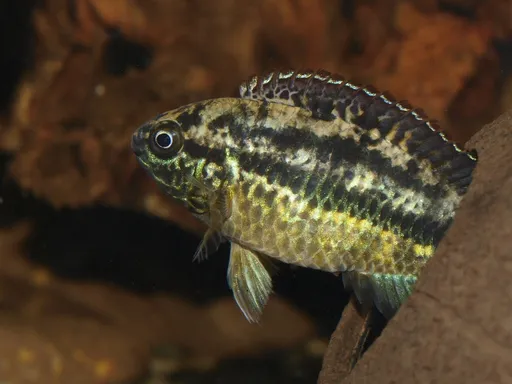
Golden dwarf cichlid
Nannacara anomala
Freshwater3.1 in (8 cm) · 16 gal (60 L)72–82°F (22–28°C)
Common questions
What size tank does a masked dwarf cichlid need?
A masked dwarf cichlid needs at least 16 gal (60 L). It spends most of its time in the bottom.
What temperature and pH does a masked dwarf cichlid need?
A masked dwarf cichlid is comfortable at 77–84°F (25–29°C) with a pH of 4.5–6.2.
What does a masked dwarf cichlid eat?
A masked dwarf cichlid eats live or frozen foods as its staple.
How big does a masked dwarf cichlid get?
An adult masked dwarf cichlid reaches about 2.6 in (6.5 cm).
How does a masked dwarf cichlid breed?
A masked dwarf cichlid spawns in a cave, and the eggs need very acidic, soft water to develop. Pairs may take months to settle before they try, and breeding is hard.
Related species
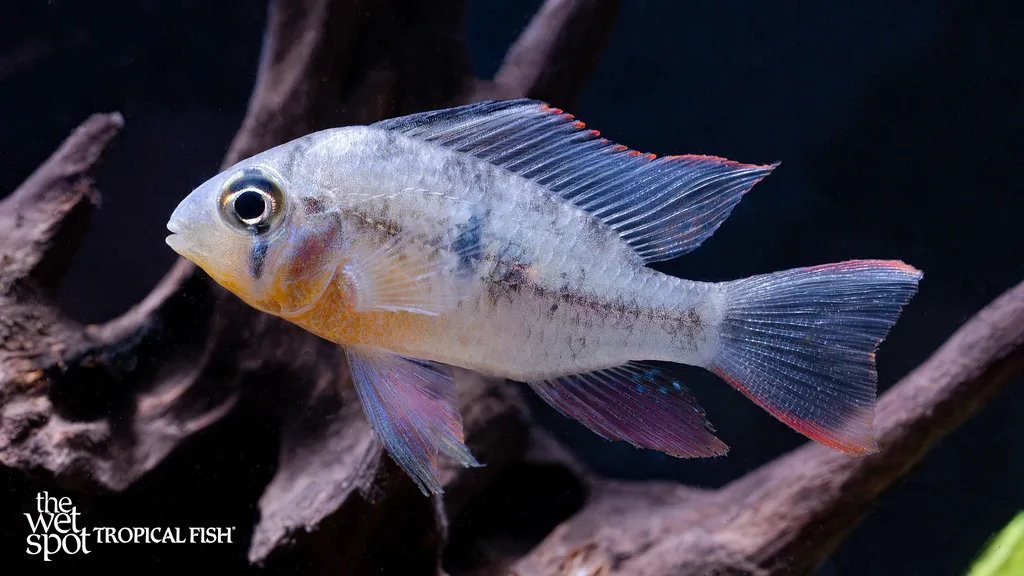 2.6 in (6.5 cm)16 gal (60 L)77–84°F (25–29°C)
Bigfin dwarf cichlid
Apistogramma megaptera
2.6 in (6.5 cm) · 16 gal (60 L)
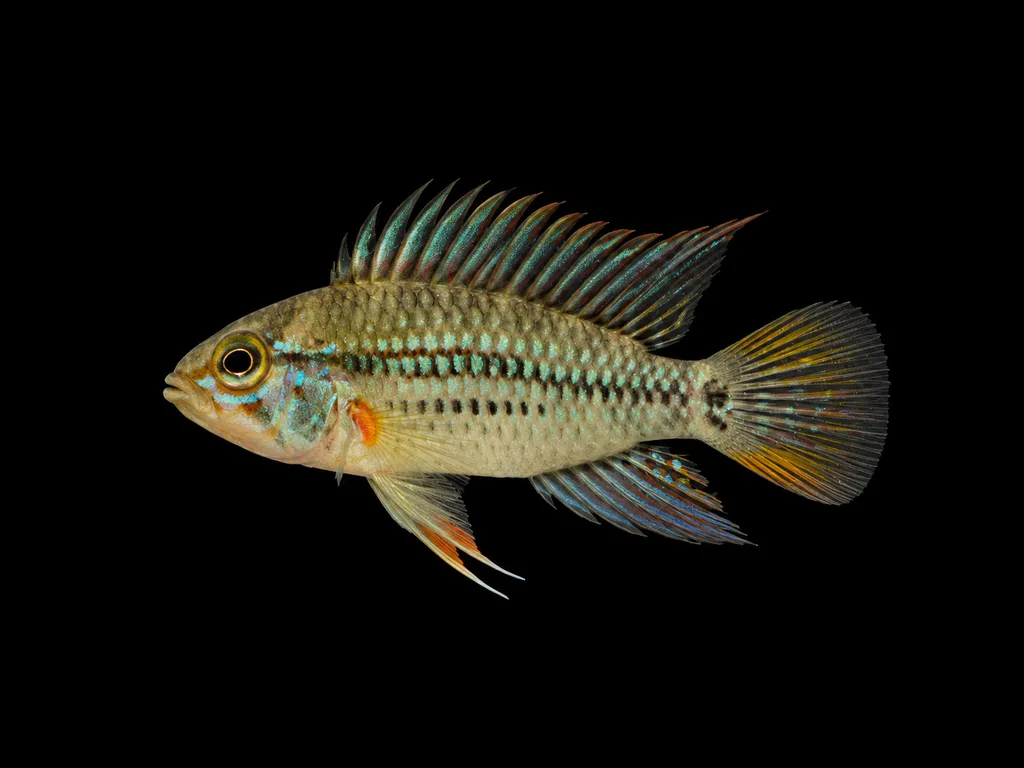 2.6 in (6.5 cm)20 gal (75 L)73–82°F (23–28°C)
Blue-cheek dwarf cichlid
Apistogramma eunotus
2.6 in (6.5 cm) · 20 gal (75 L)
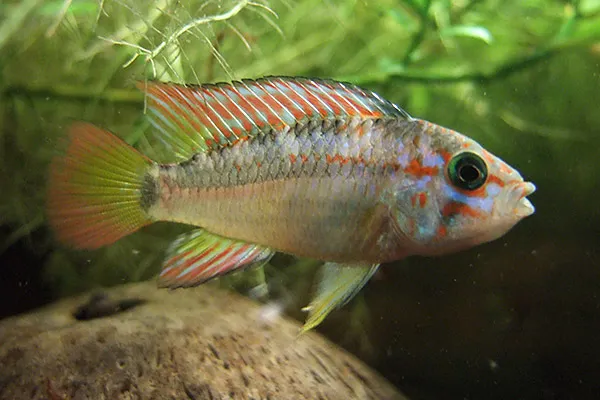 2.6 in (6.5 cm)16 gal (60 L)75–82°F (24–28°C)
Ortega's dwarf cichlid
Apistogramma ortegai
2.6 in (6.5 cm) · 16 gal (60 L)
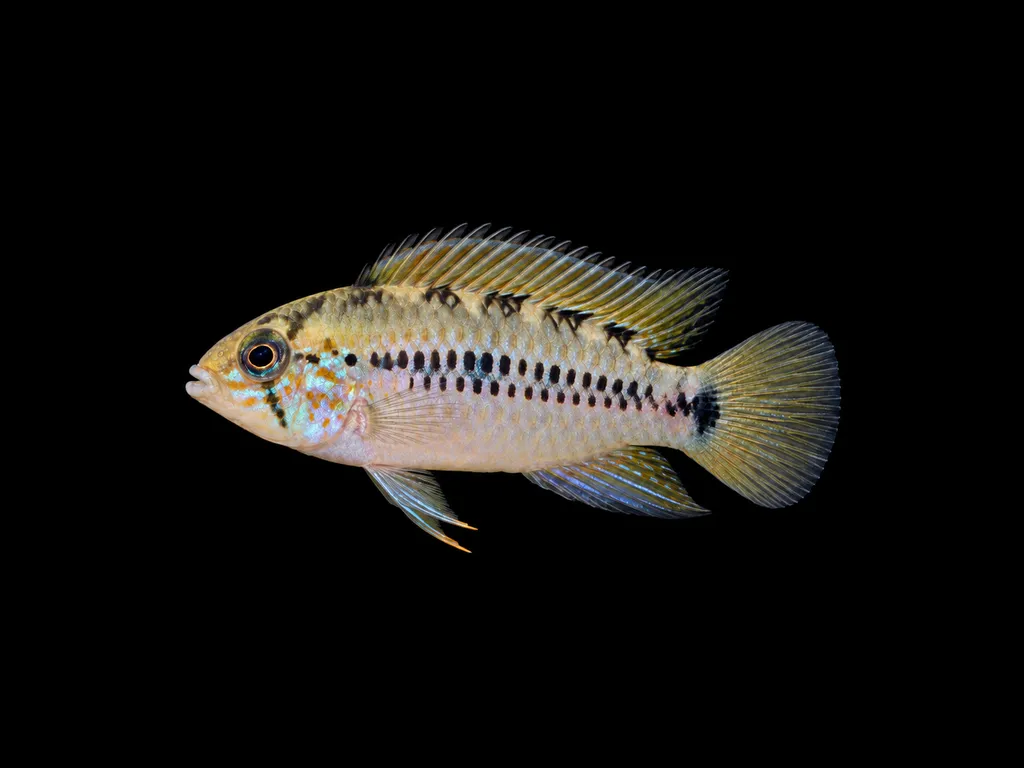 2.8 in (7 cm)20 gal (75 L)73–82°F (23–28°C)
Alacrina dwarf cichlid
Apistogramma alacrina
2.8 in (7 cm) · 20 gal (75 L)
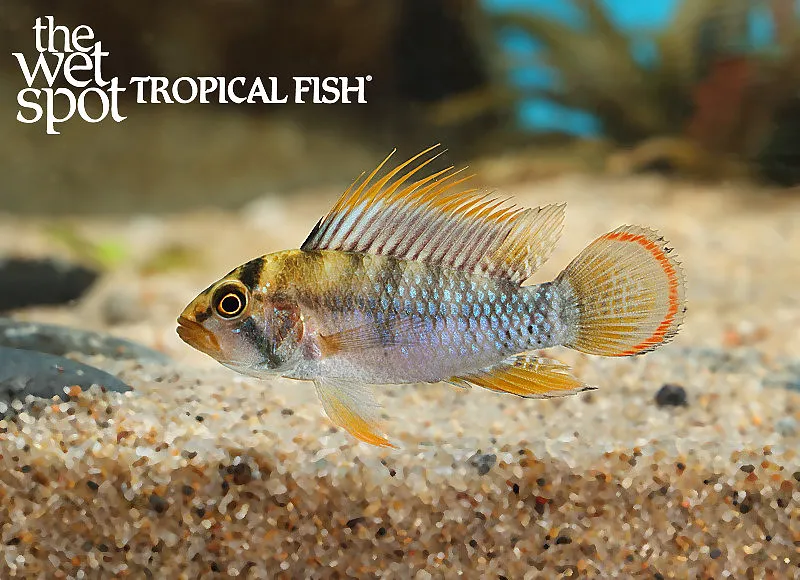 2.8 in (7 cm)20 gal (75 L)73–82°F (23–28°C)
Inca dwarf cichlid
Apistogramma baenschi
2.8 in (7 cm) · 20 gal (75 L)
 2.8 in (7 cm)20 gal (75 L)75–82°F (24–28°C)
Viejita dwarf cichlid
Apistogramma viejita
2.8 in (7 cm) · 20 gal (75 L)