Cardinal tetra
Paracheirodon axelrodi
FreshwaterFish
Care at a glance
- Temperature
- 73–84°F
- 23–29°C
- pH
- 5.0–7.0
- Adult size
- 1.8 in
- 4.5 cm
- Minimum tank
- 16 gal
- 60 L
- Temperament
- Peaceful
- Social behavior
- Schooling
- Swim level
- Middle
- Difficulty
- Easy
- Breeding
- No record
- Rarity
- Very common
- Family
- Characidae
- Origin
- Brazil
Overview
The cardinal tetra is a small, peaceful characin that schools in the middle of a community tank. It is easy to keep once its water is right.
Did you know
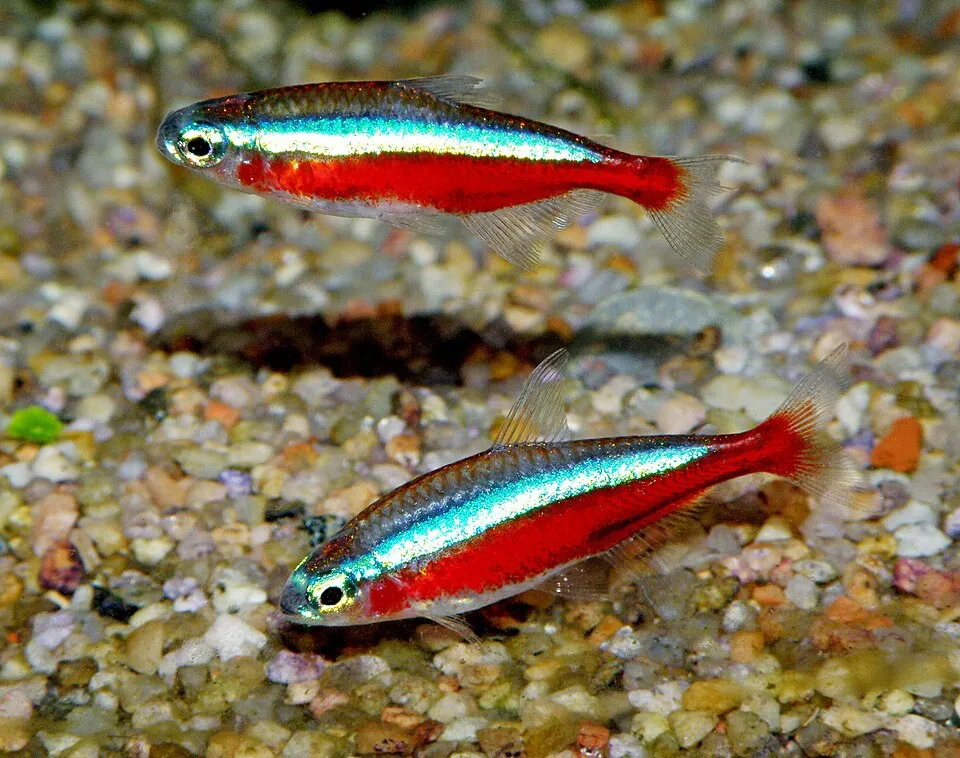
The cardinal tetra's red and blue stripe comes from stacked, crystal-like cells that bend light, not from pigment. The fish can tilt those cells to dim or brighten the blue. That is why a stressed or sleeping cardinal looks washed out, while a settled one glows.
Caring for the cardinal tetra
Keep cardinal tetras in a school of at least six, though a dozen or more looks far better and settles them down. A group fits in 16 gal (60 L) or more, and they swim in the middle of the tank. A dim tank with driftwood, leaf litter and gentle flow suits them.
Give them soft, acidic water at 73 to 84°F (23 to 29°C) and a pH of 5.0 to 7.0. Stable water is the main thing they ask for, so let a tank mature before you add them.
Cardinal tetras are peaceful and safe with other community fish. They eat small foods readily, such as micro pellets, crushed flake and frozen brine shrimp or daphnia.
Good to know
The cardinal tetra is a small characin in the family Characidae. Its red stripe runs the full length of the body, which sets it apart from the similar neon tetra. Most cardinals in the trade are still wild-caught, so they can be a little more sensitive to water quality than tank-bred fish.
In the wild
Cardinal tetras come from blackwater and clearwater streams in the Amazon, especially the Rio Negro and Orinoco systems. These streams run under heavy rainforest shade, and the water is very soft, acidic and stained dark by tannins.
Weekly picks
Tank mates
The cardinal tetra is a peaceful, schooling species that keeps to the middle. These picks share a community profile with it, are safe together in both directions, and overlap on water type, temperature and pH.
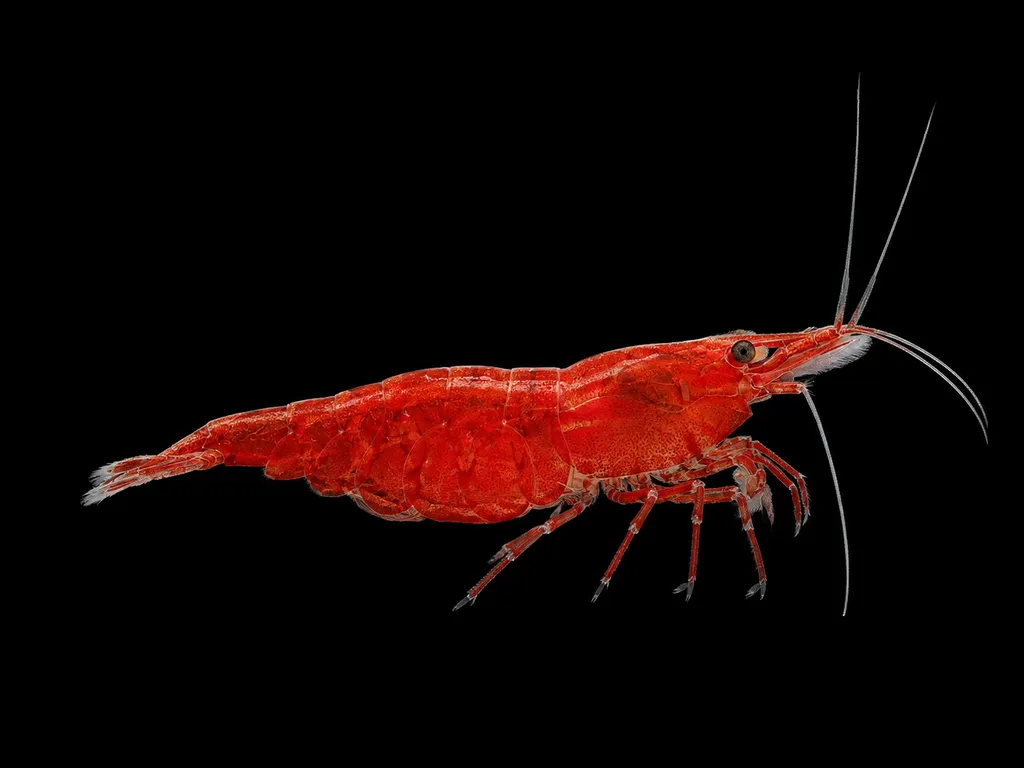
Neocaridina shrimp
Neocaridina davidi
Freshwater1.6 in (4 cm) · 5 gal (19 L)59–84°F (15–29°C)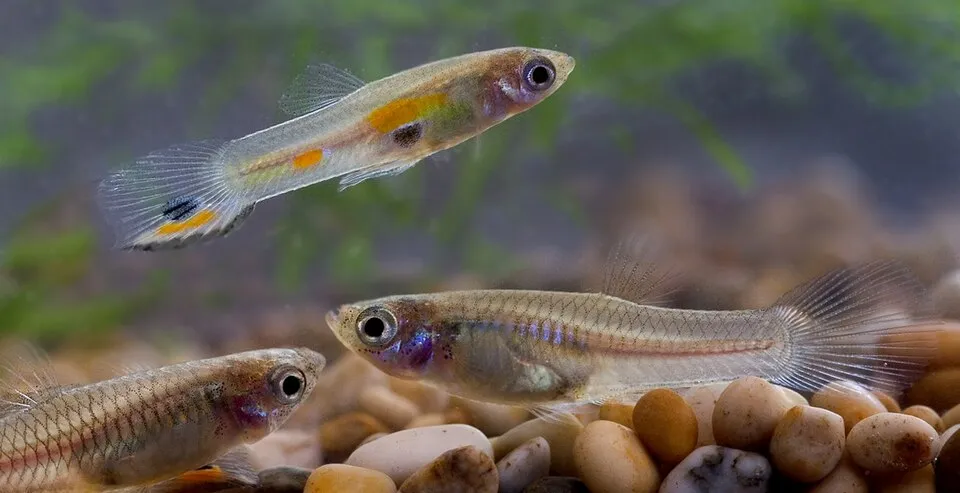
Guppy
Poecilia reticulata
FreshwaterBrackish2.4 in (6 cm) · 10 gal (38 L)64–82°F (18–28°C)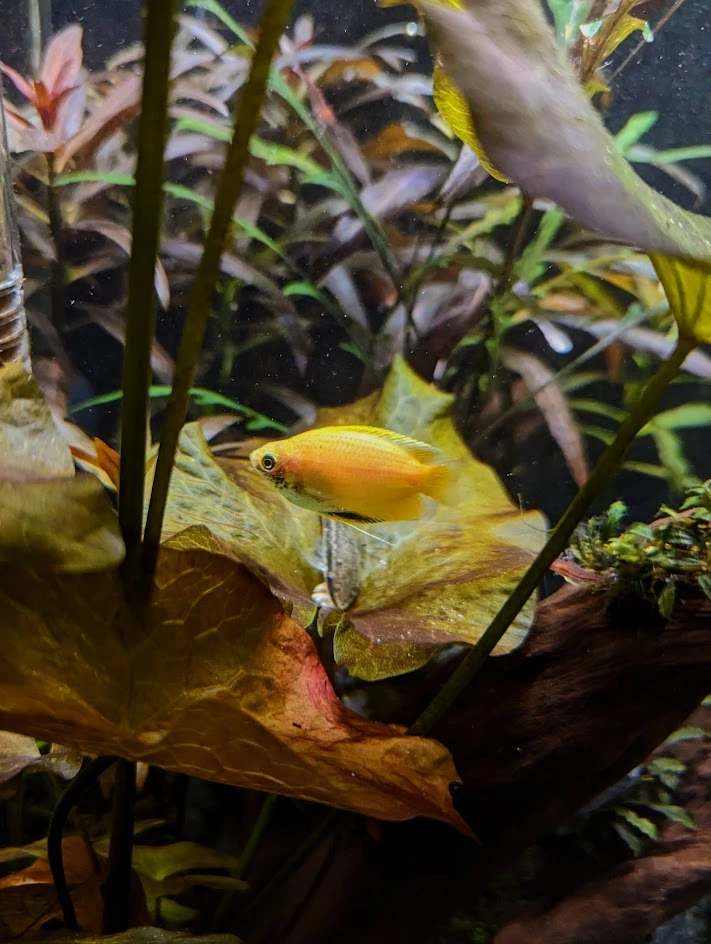
Honey gourami
Trichogaster chuna
Freshwater2 in (5 cm) · 14 gal (54 L)72–82°F (22–28°C)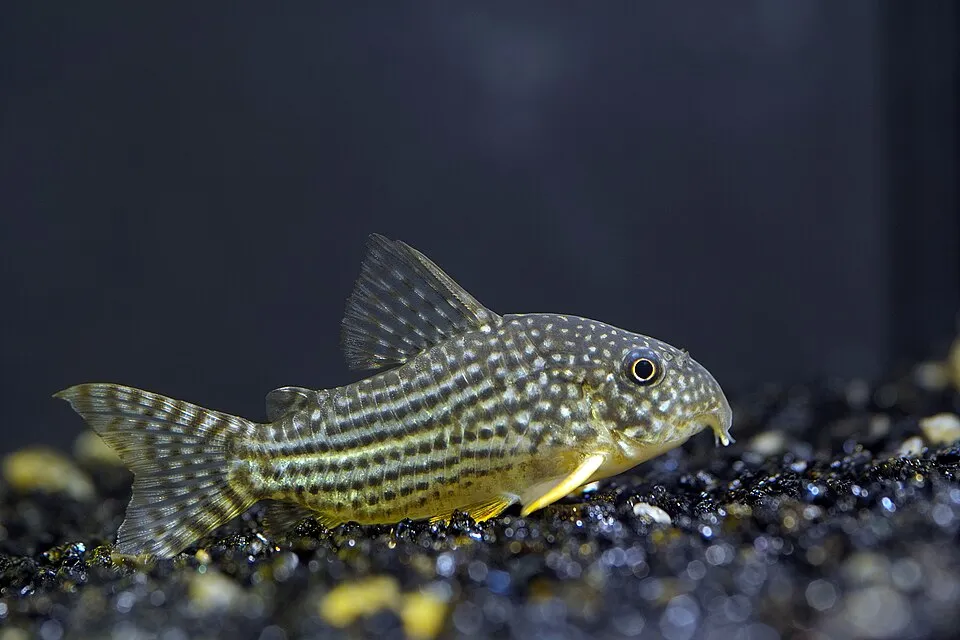
Sterba's cory
Hoplisoma sterbai
Freshwater2.6 in (6.5 cm) · 20 gal (75 L)75–82°F (24–28°C)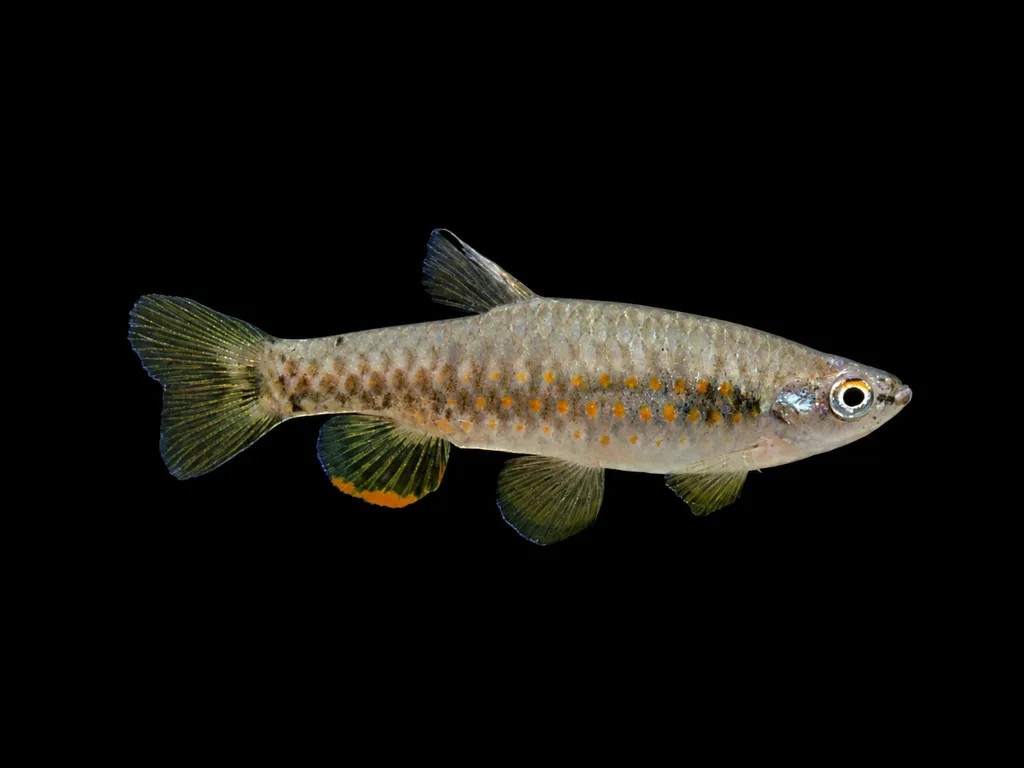
Fanning characin
Pyrrhulina rachoviana
Freshwater2 in (5 cm) · 16 gal (60 L)68–79°F (20–26°C)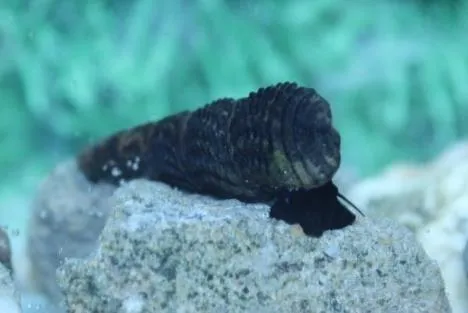
White spotted rabbit snail
Tylomelania towutica
Freshwater4.3 in (11 cm) · 16 gal (60 L)75–84°F (24–29°C)
Common questions
What size tank does a cardinal tetra need?
A cardinal tetra needs at least 16 gal (60 L). It spends most of its time in the middle.
What temperature and pH does a cardinal tetra need?
A cardinal tetra is comfortable at 73–84°F (23–29°C) with a pH of 5.0–7.0.
What does a cardinal tetra eat?
A cardinal tetra eats small foods readily. Offer micro pellets, crushed flake and frozen brine shrimp or daphnia.
How big does a cardinal tetra get?
An adult cardinal tetra reaches about 1.8 in (4.5 cm).
Does a cardinal tetra need a group?
Yes. A cardinal tetra is a schooling species and should be kept in a group, not singly.
Related species
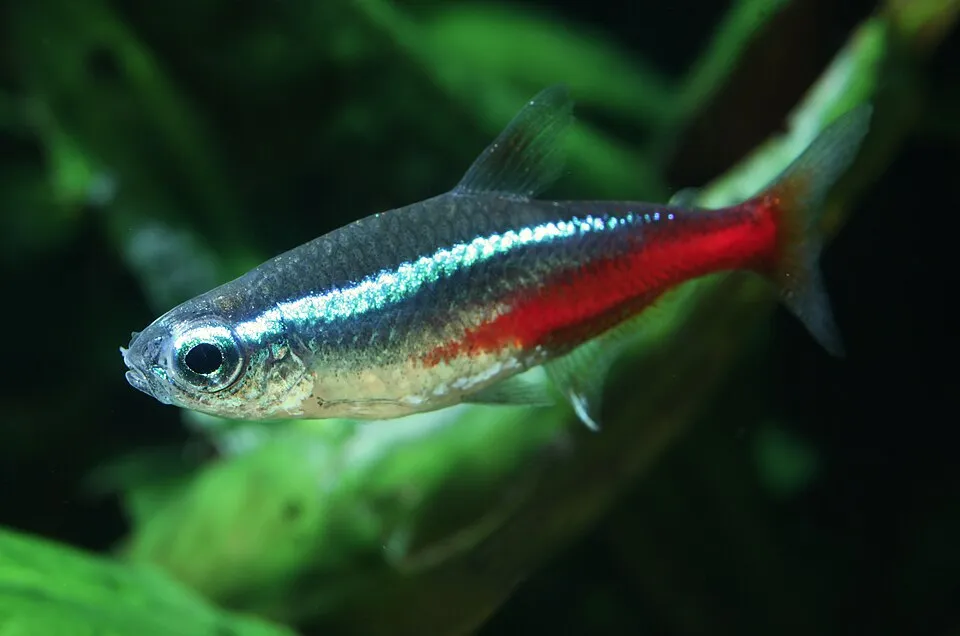 1.5 in (3.8 cm)11 gal (40 L)70–77°F (21–25°C)
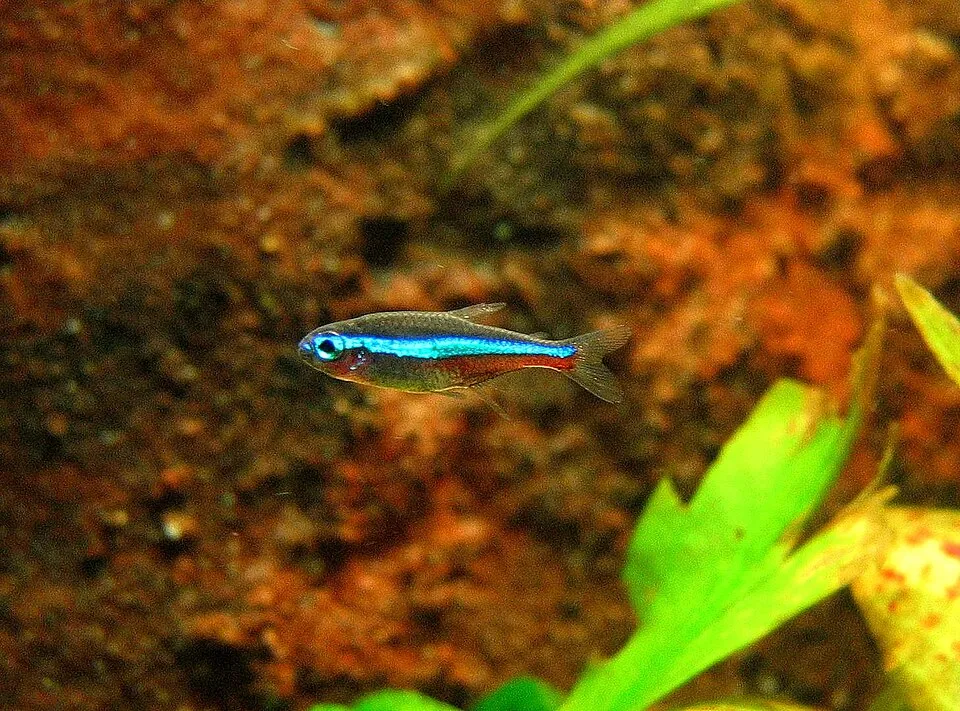
Neon tetra
Paracheirodon innesi
1.5 in (3.8 cm) · 11 gal (40 L)
 1 in (2.5 cm)11 gal (41 L)72–86°F (22–30°C)
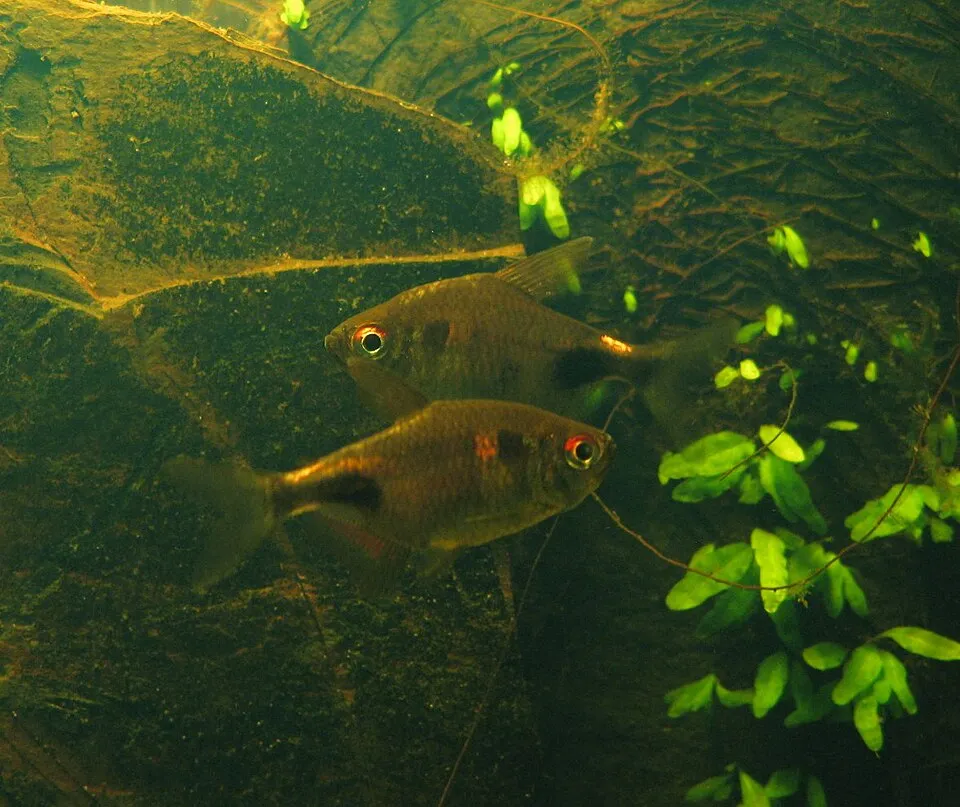
Green neon tetra
Paracheirodon simulans
1 in (2.5 cm) · 11 gal (41 L)
 1.8 in (4.5 cm)20 gal (75 L)73–82°F (23–28°C)
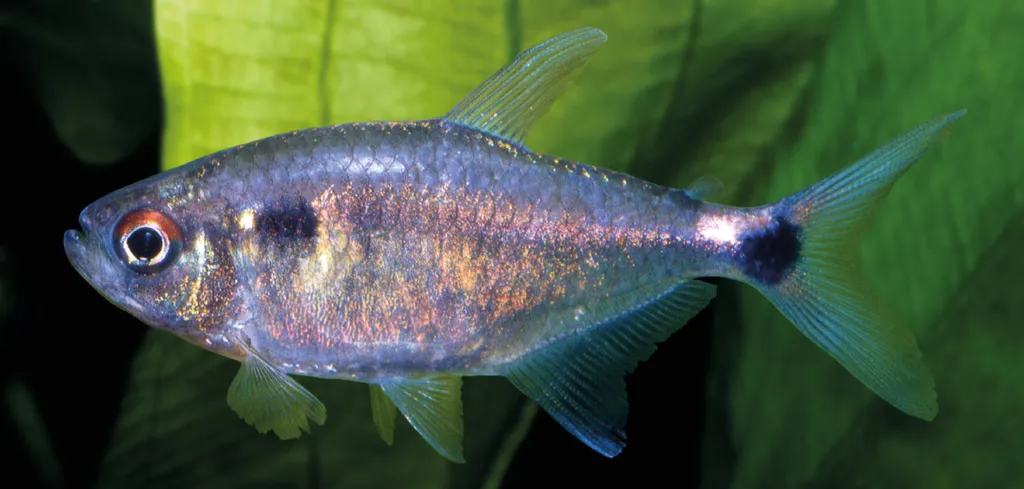
Garnet tetra
Hemigrammus pulcher
1.8 in (4.5 cm) · 20 gal (75 L)
 1.8 in (4.5 cm)17 gal (65 L)75–82°F (24–28°C)
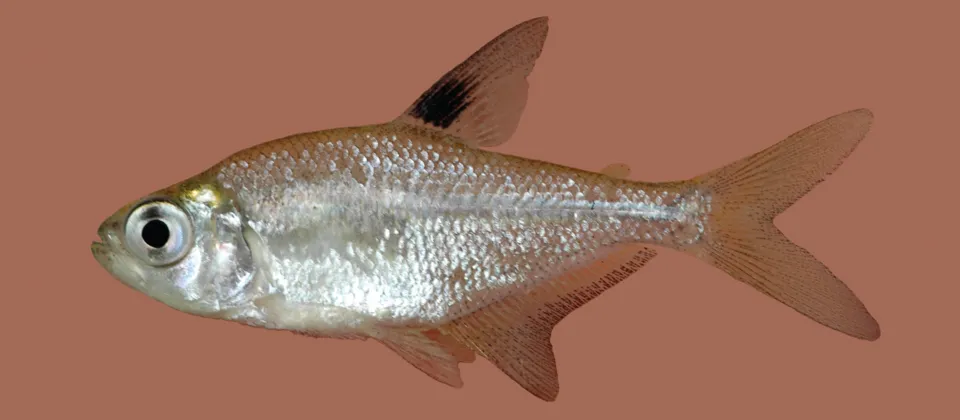
Head-and-taillight tetra
Hemigrammus ocellifer
1.8 in (4.5 cm) · 17 gal (65 L)
 1.8 in (4.5 cm)16 gal (60 L)68–79°F (20–26°C)
Mayan tetra
Hyphessobrycon compressus
1.8 in (4.5 cm) · 16 gal (60 L)
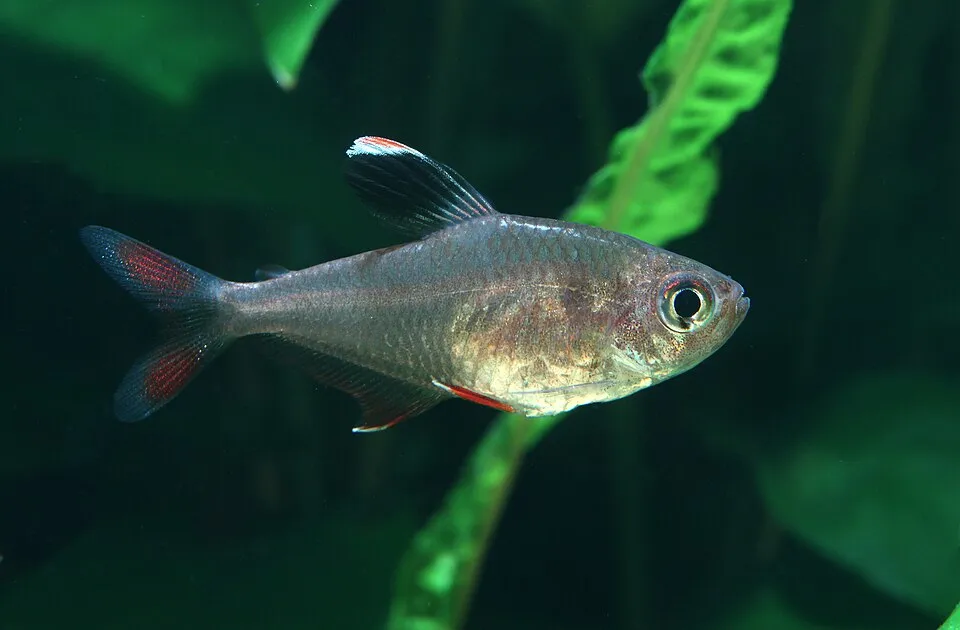 1.8 in (4.5 cm)20 gal (75 L)72–82°F (22–28°C)
Ornate tetra
Hyphessobrycon bentosi
1.8 in (4.5 cm) · 20 gal (75 L)