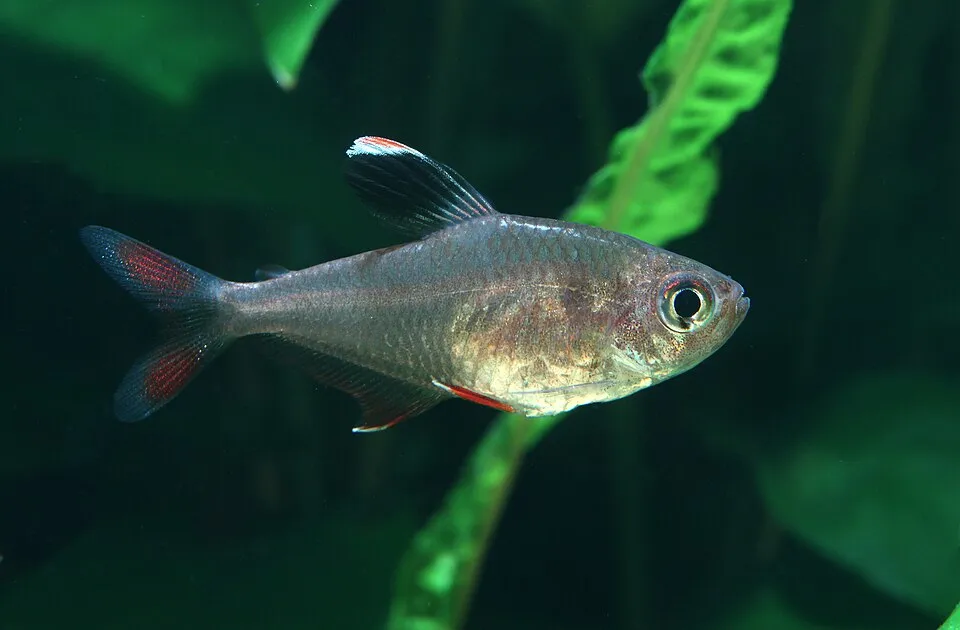
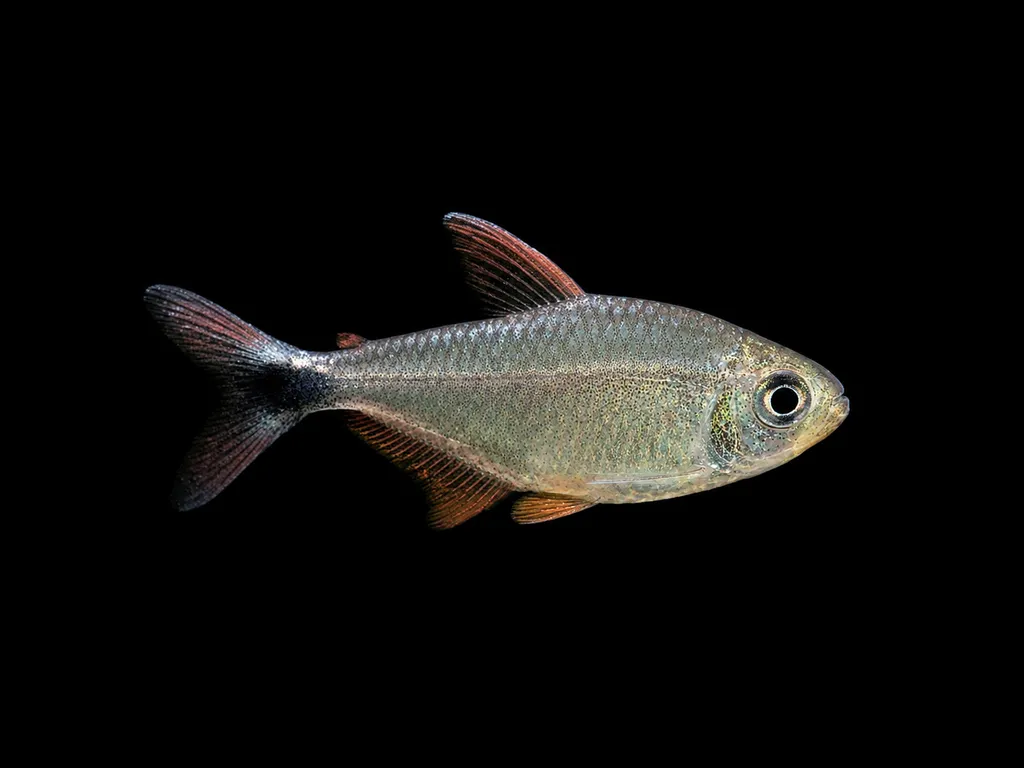
Ornate tetra
Hyphessobrycon bentosi
Also known as Megalamphodus bentosi, Sickle Tetra
FreshwaterFish
Care at a glance
- Temperature
- 72–82°F
- 22–28°C
- pH
- 5.5–7.5
- Adult size
- 1.8 in
- 4.5 cm
- Minimum tank
- 20 gal
- 75 L
- Temperament
- Peaceful
- Social behavior
- Schooling
- Swim level
- Middle
- Difficulty
- Easy
- Breeding
- Egg scatterer · Hard
- Rarity
- Common
- Family
- Characidae
- Origin
- Brazil
Overview
The ornate tetra is a peaceful schooling tetra with red-edged fins, at home in a calm community tank. It is easy to keep.
Did you know
Male ornate tetras spend a lot of time sparring in a group, flaring their long fins side by side without doing real harm. It is mostly display, and it looks better in a bigger school, where several males posture at once.
Caring for the ornate tetra
Keep ornate tetras in a group of at least six, and more if you have room, in 20 gal (75 L) or larger. A planted tank with some dark substrate, driftwood and gentle flow lets them show their best color and feel secure. Subdued lighting helps.
Keep the water warm and soft, at 72 to 82°F (22 to 28°C) and a pH of 5.5 to 7.5. Feed a mix of quality flake and small pellets, with regular frozen or live foods such as bloodworm and daphnia.
Ornate tetras are peaceful, active schoolers in the middle of the tank. They suit a community of calm fish of a similar size.
Males often have longer, more pointed dorsal and anal fins than females. Ornate tetras are egg scatterers with no parental care, and breeding them is hard.
Good to know
The ornate tetra is a characin in the family Characidae. It belongs to a confusing group of similar rosy-finned tetras that are easy to mix up.
In the wild
The ornate tetra comes from the Amazon basin in Brazil. It lives in slow streams, often soft and stained with tannins, among plants, roots and leaf litter. Conditions there run acidic to neutral.
Weekly picks
Tank mates
The ornate tetra is a peaceful, schooling species that keeps to the middle. These picks share a community profile with it, are safe together in both directions, and overlap on water type, temperature and pH.
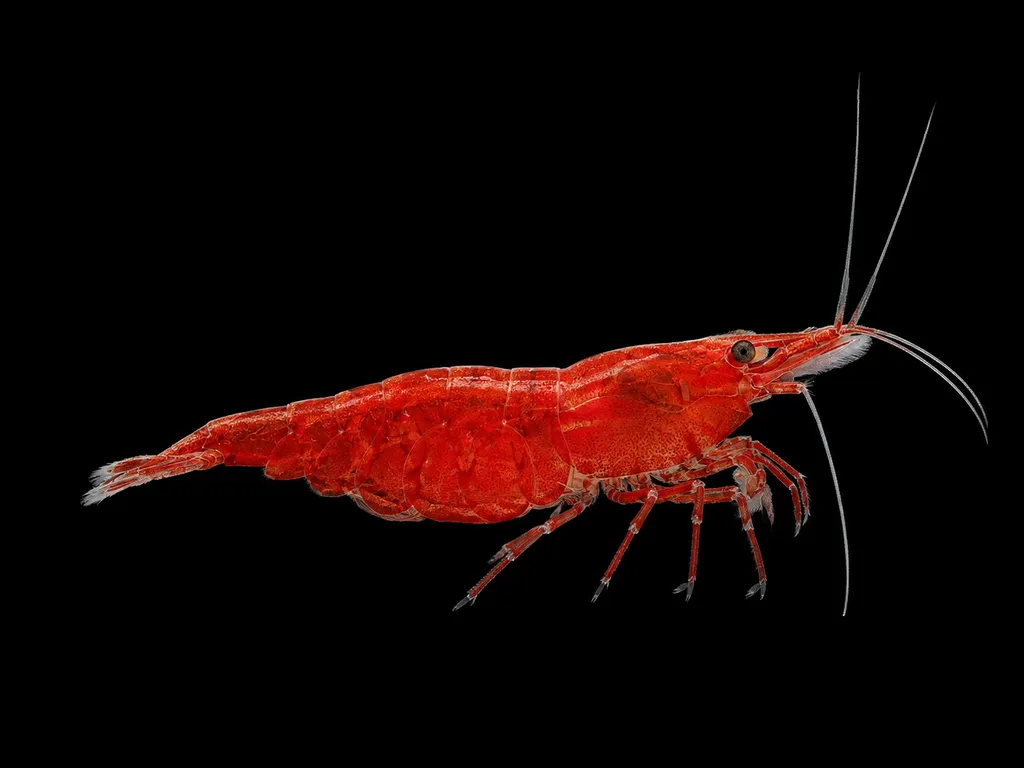
Neocaridina shrimp
Neocaridina davidi
Freshwater1.6 in (4 cm) · 5 gal (19 L)59–84°F (15–29°C)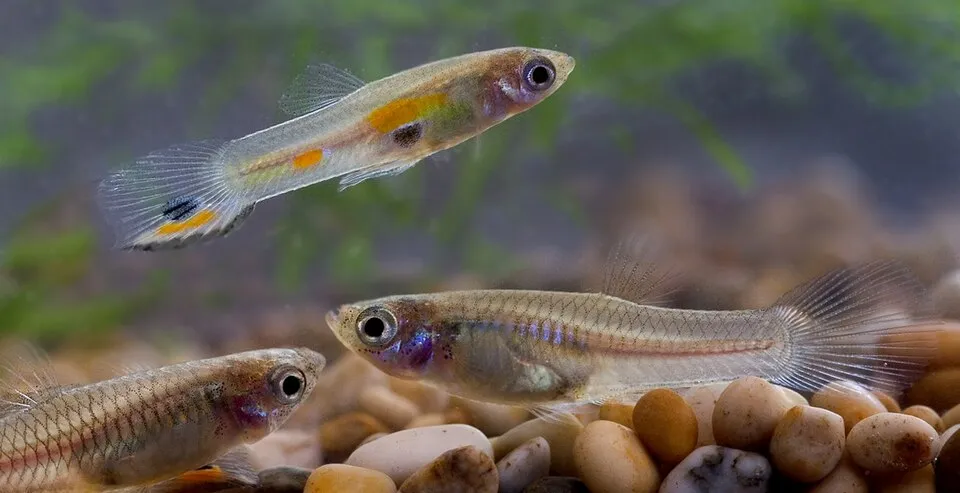
Guppy
Poecilia reticulata
FreshwaterBrackish2.4 in (6 cm) · 10 gal (38 L)64–82°F (18–28°C)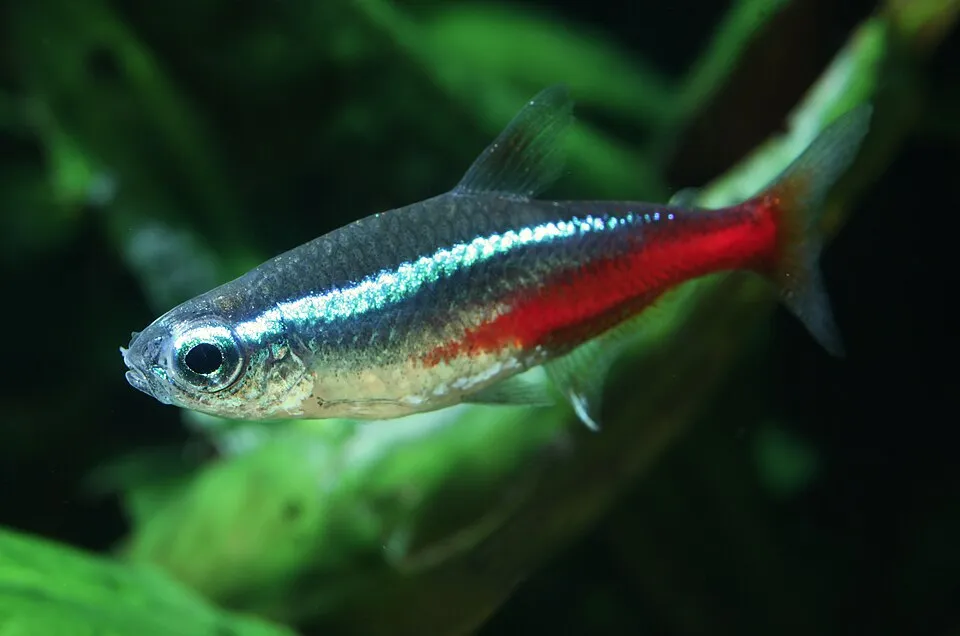
Neon tetra
Paracheirodon innesi
Freshwater1.5 in (3.8 cm) · 11 gal (40 L)70–77°F (21–25°C)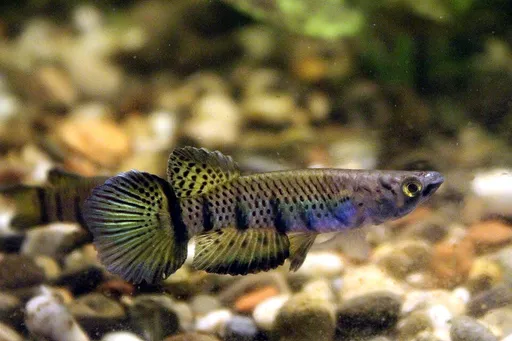
Six-barred panchax
Epiplatys sexfasciatus
Freshwater3.9 in (10 cm) · 20 gal (75 L)72–81°F (22–27°C)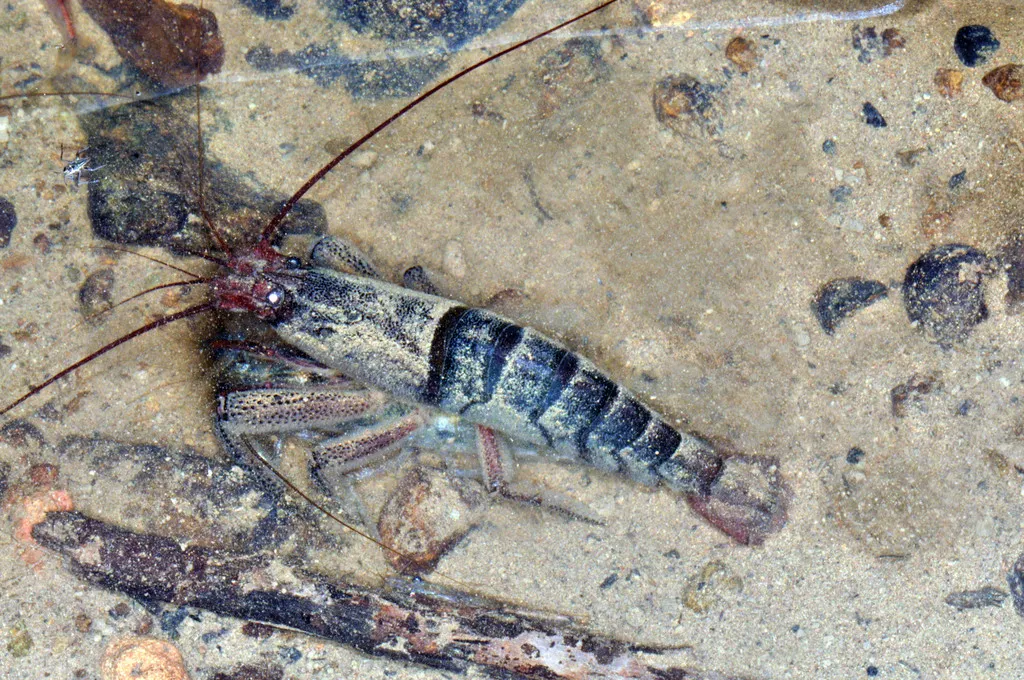
Marble wood shrimp
Atya scabra
Freshwater3.9 in (10 cm) · 20 gal (75 L)73–82°F (23–28°C)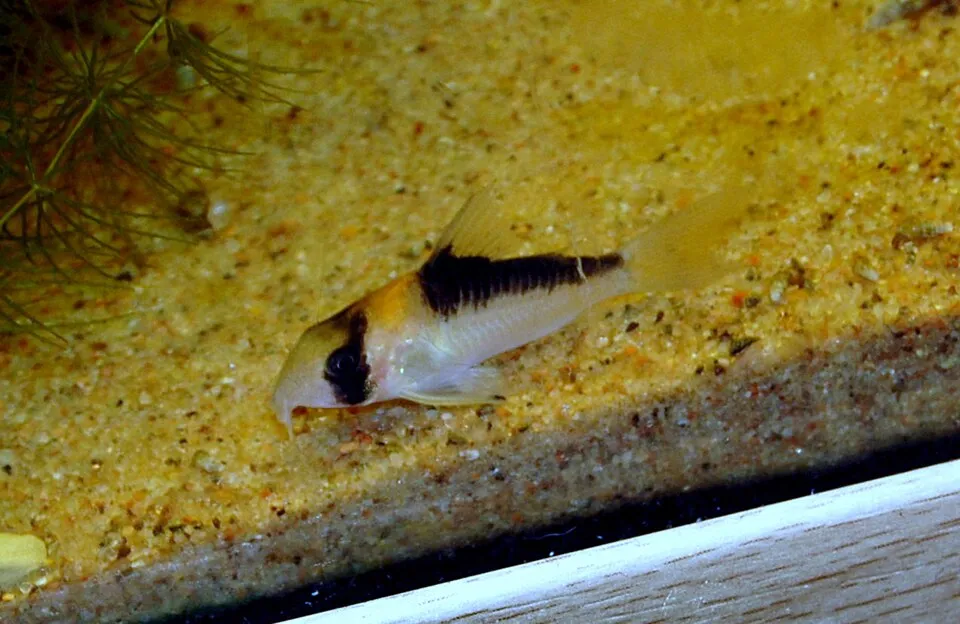
Adolfo's cory
Hoplisoma adolfoi
Freshwater2.4 in (6 cm) · 20 gal (75 L)70–79°F (21–26°C)
Common questions
What size tank does an ornate tetra need?
An ornate tetra needs at least 20 gal (75 L). It spends most of its time in the middle.
What temperature and pH does an ornate tetra need?
An ornate tetra is comfortable at 72–82°F (22–28°C) with a pH of 5.5–7.5.
What does an ornate tetra eat?
An ornate tetra eats quality flake and small pellets, with regular frozen or live foods such as bloodworm and daphnia.
How big does an ornate tetra get?
An adult ornate tetra reaches about 1.8 in (4.5 cm).
Does an ornate tetra need a group?
Yes. An ornate tetra is a schooling species and should be kept in a group, not singly.
How can you tell a male ornate tetra from a female?
Males often have longer, more pointed dorsal and anal fins than females.
How does an ornate tetra breed?
Ornate tetras scatter their eggs and give them no parental care. Breeding them is hard.
Related species
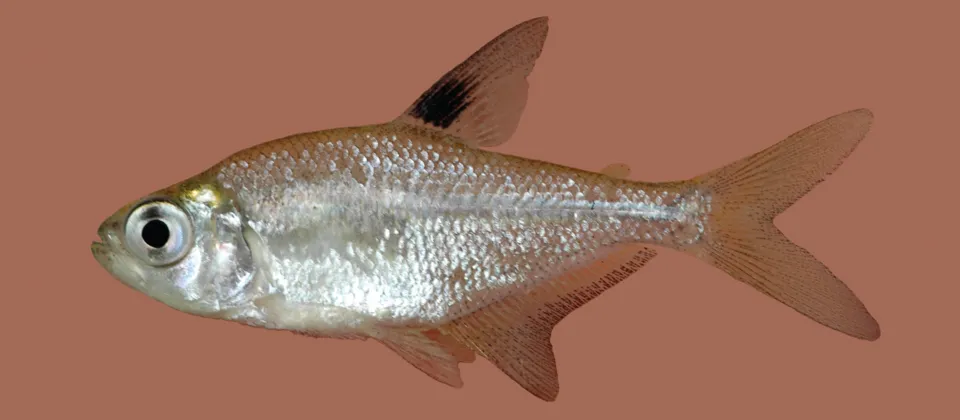 1.8 in (4.5 cm)16 gal (60 L)68–79°F (20–26°C)
Mayan tetra
Hyphessobrycon compressus
1.8 in (4.5 cm) · 16 gal (60 L)
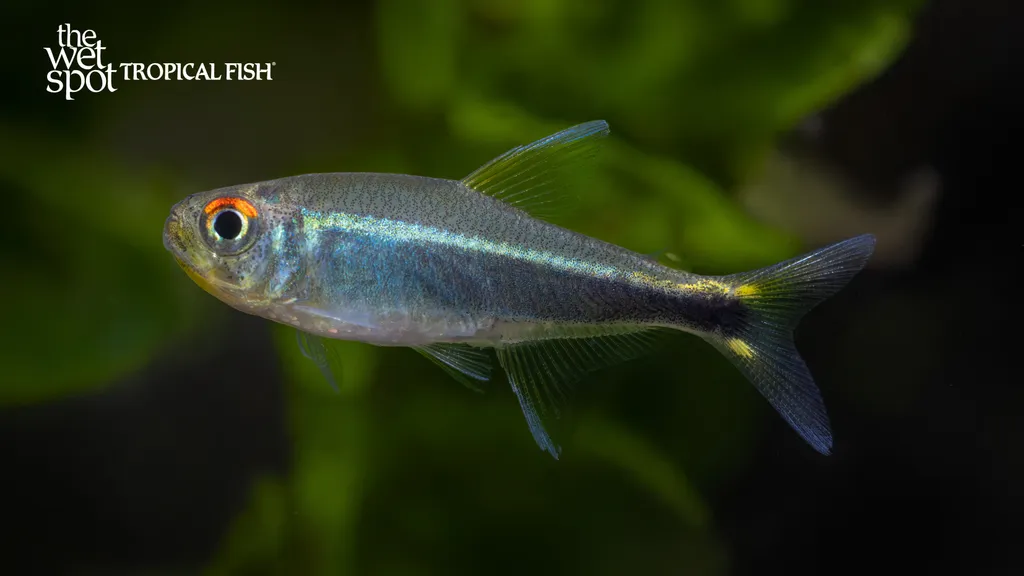 1.8 in (4.5 cm)20 gal (75 L)73–82°F (23–28°C)
Purple tetra
Hyphessobrycon metae
1.8 in (4.5 cm) · 20 gal (75 L)
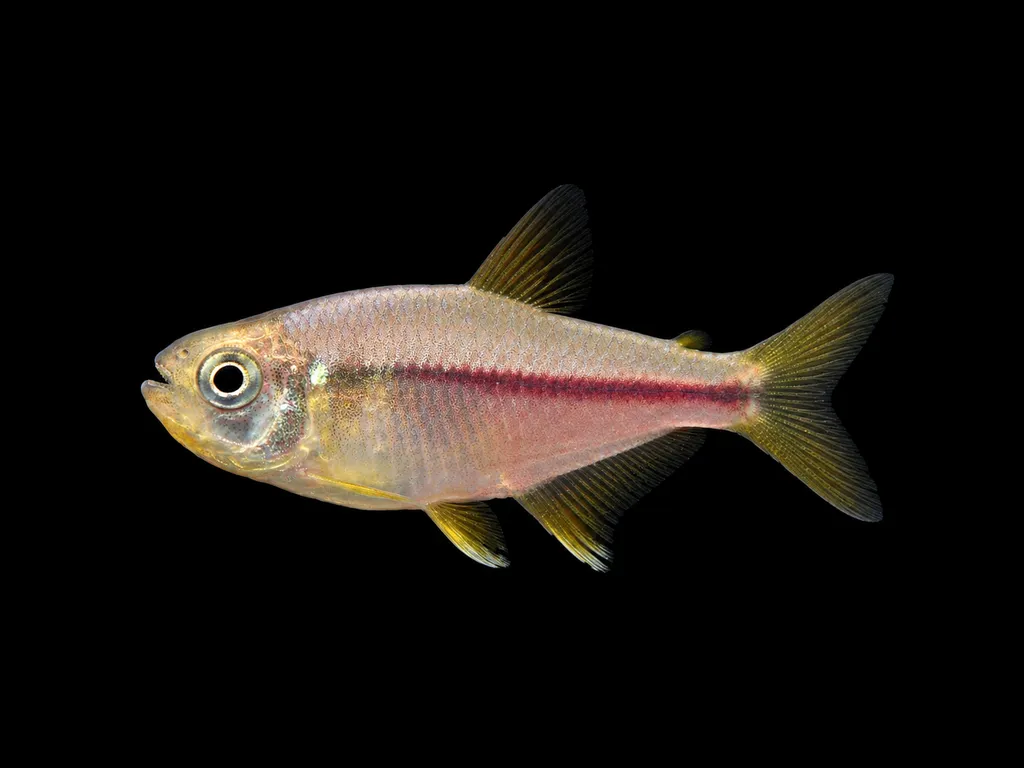 1.8 in (4.6 cm)16 gal (60 L)72–82°F (22–28°C)
Itaparica tetra
Hyphessobrycon itaparicensis
1.8 in (4.6 cm) · 16 gal (60 L)
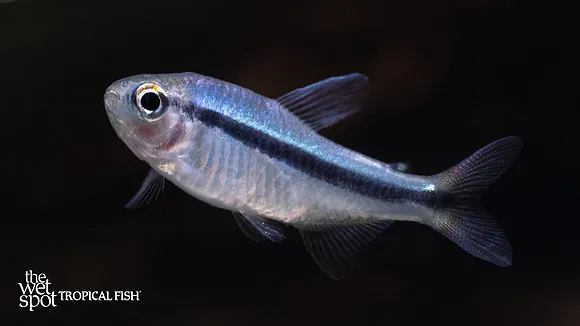 1.7 in (4.4 cm)16 gal (60 L)72–81°F (22–27°C)
Lapis tetra
Hyphessobrycon cyanotaenia
1.7 in (4.4 cm) · 16 gal (60 L)
 1.7 in (4.4 cm)16 gal (60 L)72–81°F (22–27°C)
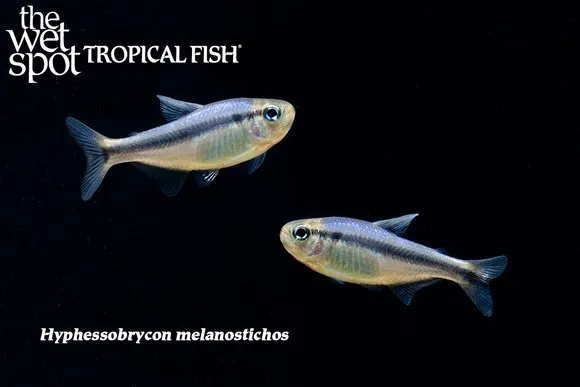
Melanostichos tetra
Hyphessobrycon melanostichos
1.7 in (4.4 cm) · 16 gal (60 L)
 1.7 in (4.4 cm)16 gal (60 L)70–81°F (21–27°C)
Robustulus tetra
Hyphessobrycon robustulus
1.7 in (4.4 cm) · 16 gal (60 L)