Lapis tetra
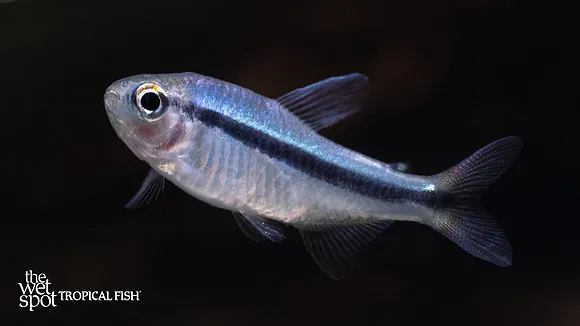
Hyphessobrycon cyanotaenia
Also known as Blue ribbon tetra
FreshwaterFish
Care at a glance
- Temperature
- 72–81°F
- 22–27°C
- pH
- 5.5–7.0
- Adult size
- 1.7 in
- 4.4 cm
- Minimum tank
- 16 gal
- 60 L
- Temperament
- Peaceful
- Social behavior
- Schooling
- Swim level
- Middle
- Difficulty
- Medium
- Breeding
- Hard
- Rarity
- Rare
- Family
- Characidae
- Origin
- Upper Juruena basin, Mato Grosso, Brazil
Overview
The lapis tetra is a peaceful schooling tetra whose blue flash makes it worth hunting down. It takes a little experience to keep well.
Did you know
Under a flashlight beam at night, the lapis tetra's flank stripe lights up like the gemstone it is named for. It is a party trick that blackwater keepers discover by accident.
Caring for the lapis tetra
Keep lapis tetras in a group of six or more, in a tank of 16 gal (60 L) or larger. A dark bottom suits them, and side lighting or a bright open lane shows off their blue flash.
They like clean, oxygen-rich water with some current, at 72 to 81°F (22 to 27°C) and a pH of 5.5 to 7.0. Feed flake, granules and frozen foods, which they take eagerly.
Lapis tetras spar harmlessly among themselves and leave other fish alone, so they are safe in a peaceful community. Breeding them is hard.
Good to know
Hyphessobrycon cyanotaenia is a characin in the family Characidae, described in 2005. Its species name means blue ribbon, and the fish is also sold as the blue ribbon tetra. The name refers to the deep blue-black band along its side, which flashes electric blue when light hits it right.
In the wild
The lapis tetra swims in clear upland streams of the upper Juruena, part of the Tapajos headwaters in Mato Grosso, Brazil.
Weekly picks
Tank mates
The lapis tetra is a peaceful, schooling species that keeps to the middle. These picks share a community profile with it, are safe together in both directions, and overlap on water type, temperature and pH.
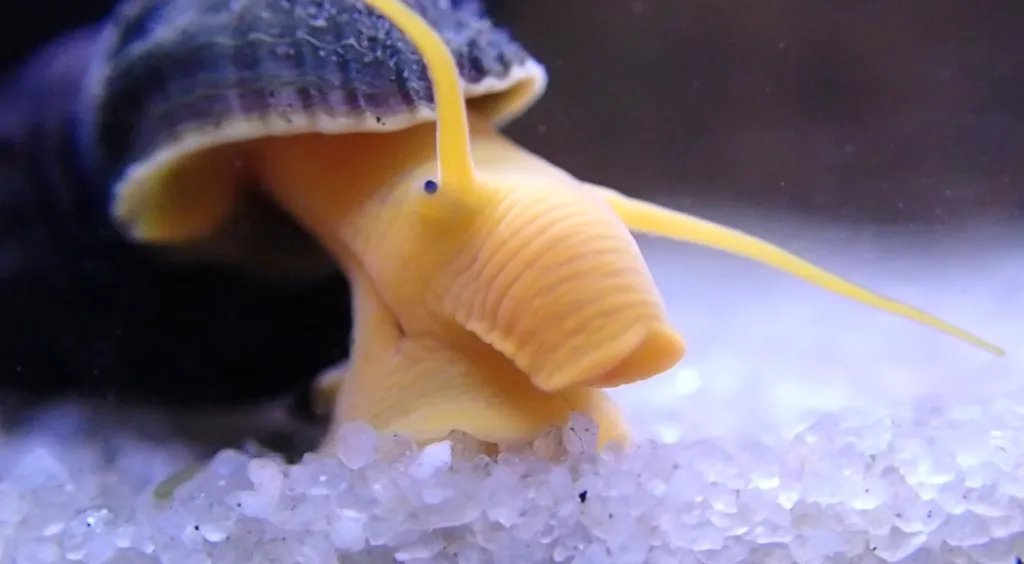
Gold rabbit snail
Tylomelania gemmifera
Freshwater2.8 in (7 cm) · 16 gal (60 L)75–82°F (24–28°C)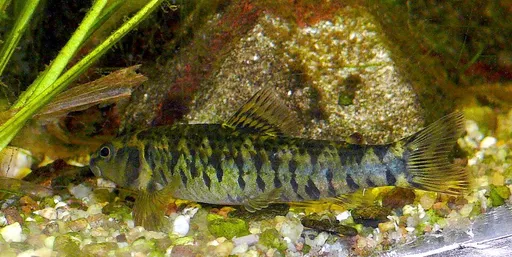
Darter tetra
Characidium fasciatum
Freshwater2.8 in (7 cm) · 16 gal (60 L)68–79°F (20–26°C)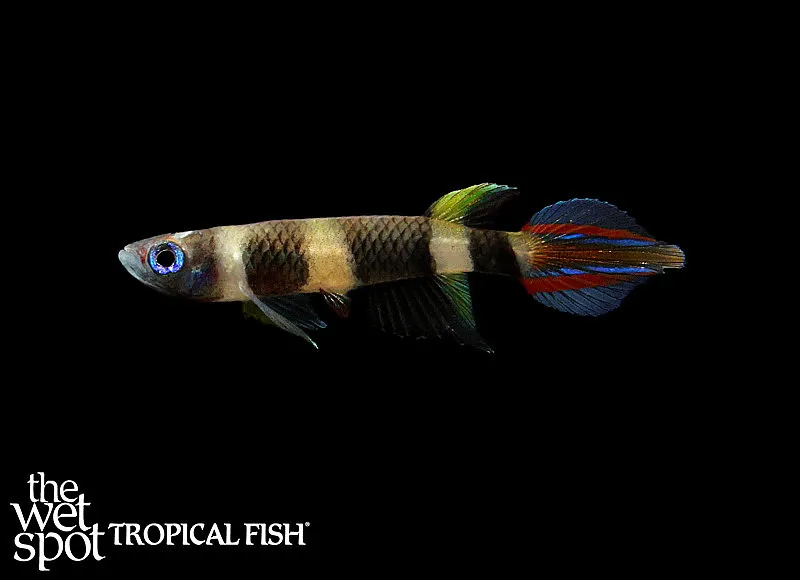
Clown killifish
Epiplatys annulatus
Freshwater1.4 in (3.5 cm) · 15 gal (55 L)68–79°F (20–26°C)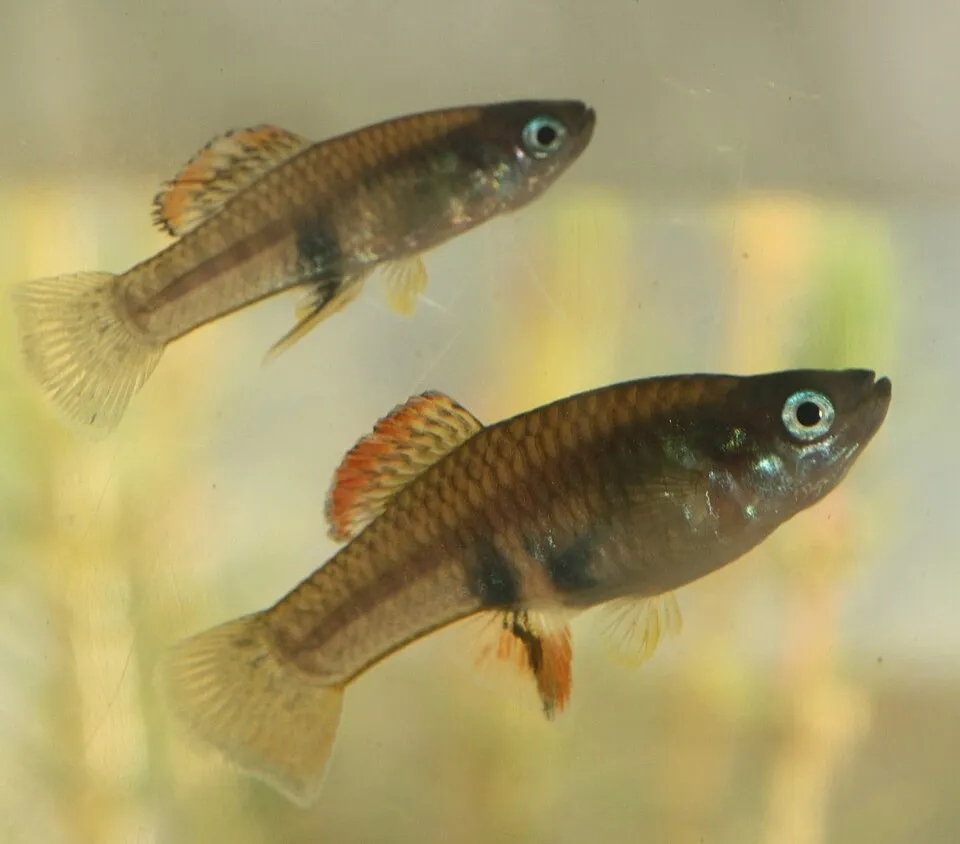
Cardinal toothcarp
Brachyrhaphis roseni
Freshwater2.4 in (6 cm) · 16 gal (60 L)72–86°F (22–30°C)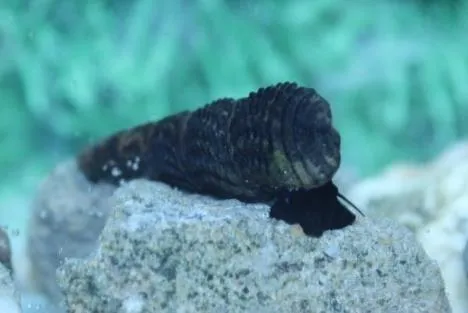
White spotted rabbit snail
Tylomelania towutica
Freshwater4.3 in (11 cm) · 16 gal (60 L)75–84°F (24–29°C)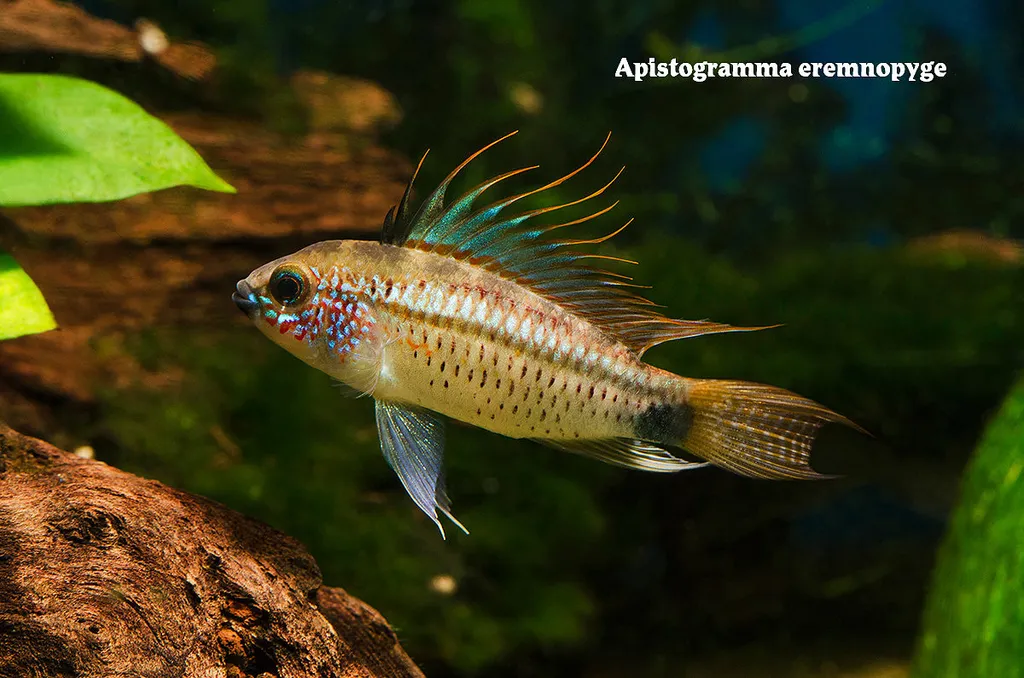
Fire-tail dwarf cichlid
Apistogramma eremnopyge
Freshwater1.8 in (4.5 cm) · 16 gal (60 L)73–81°F (23–27°C)
Common questions
What size tank does a lapis tetra need?
A lapis tetra needs at least 16 gal (60 L). It spends most of its time in the middle.
What temperature and pH does a lapis tetra need?
A lapis tetra is comfortable at 72–81°F (22–27°C) with a pH of 5.5–7.0.
What does a lapis tetra eat?
A lapis tetra eagerly takes flake, granules and frozen foods.
How big does a lapis tetra get?
An adult lapis tetra reaches about 1.7 in (4.4 cm).
Does a lapis tetra need a group?
Yes. A lapis tetra is a schooling species and should be kept in a group, not singly.
Related species
 1.7 in (4.4 cm)16 gal (60 L)72–81°F (22–27°C)
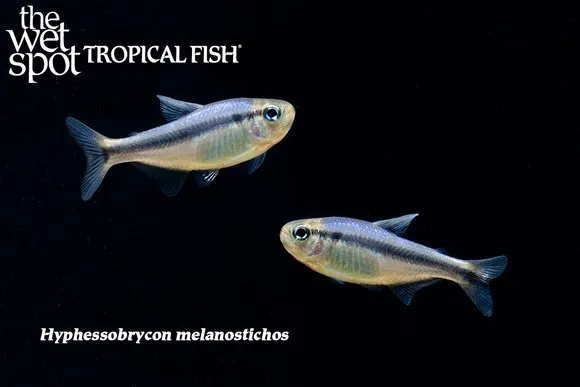
Melanostichos tetra
Hyphessobrycon melanostichos
1.7 in (4.4 cm) · 16 gal (60 L)
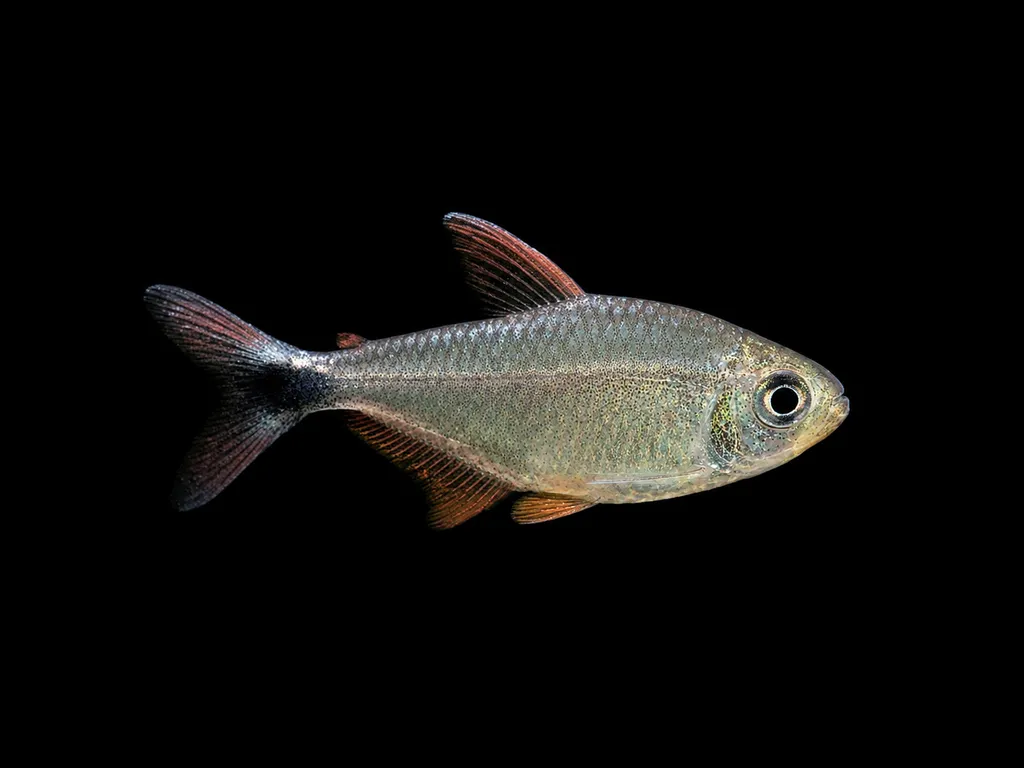 1.7 in (4.4 cm)16 gal (60 L)70–81°F (21–27°C)
Robustulus tetra
Hyphessobrycon robustulus
1.7 in (4.4 cm) · 16 gal (60 L)
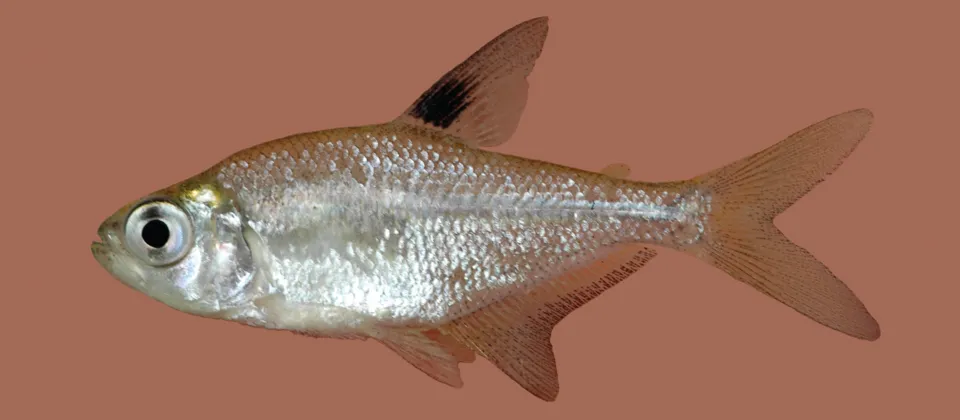 1.8 in (4.5 cm)16 gal (60 L)68–79°F (20–26°C)
Mayan tetra
Hyphessobrycon compressus
1.8 in (4.5 cm) · 16 gal (60 L)
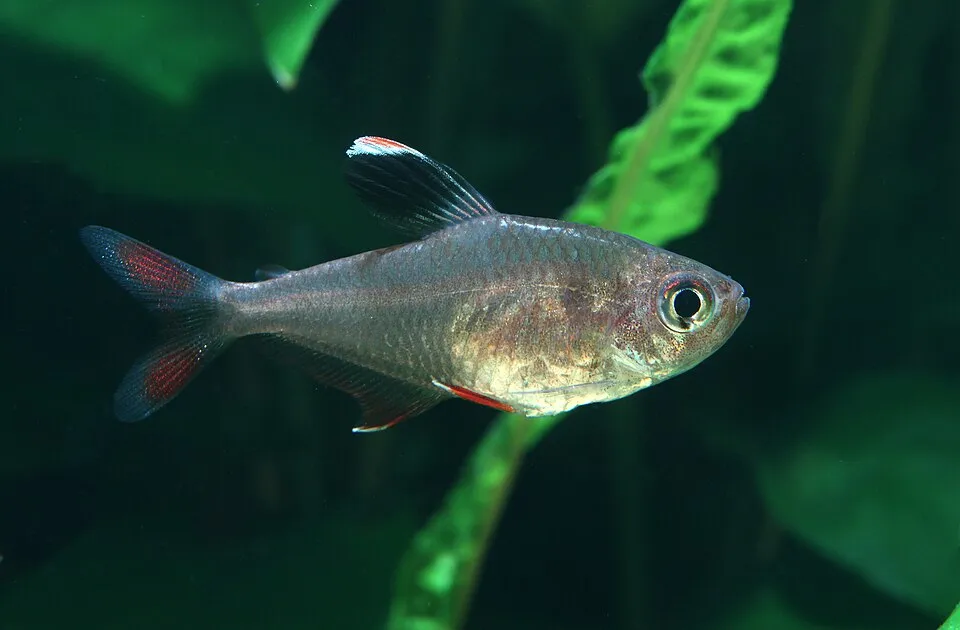 1.8 in (4.5 cm)20 gal (75 L)72–82°F (22–28°C)
Ornate tetra
Hyphessobrycon bentosi
1.8 in (4.5 cm) · 20 gal (75 L)
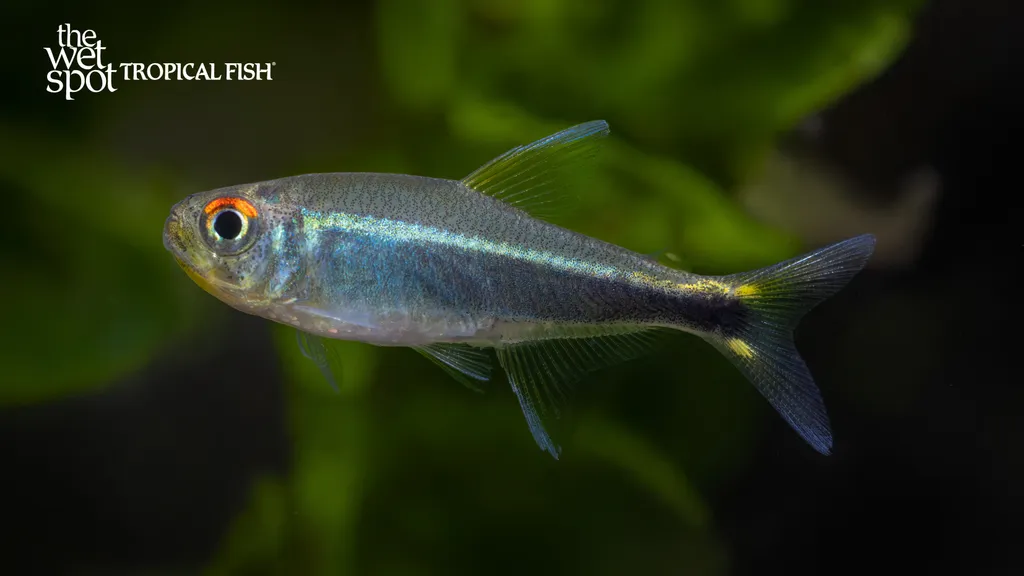 1.8 in (4.5 cm)20 gal (75 L)73–82°F (23–28°C)
Purple tetra
Hyphessobrycon metae
1.8 in (4.5 cm) · 20 gal (75 L)
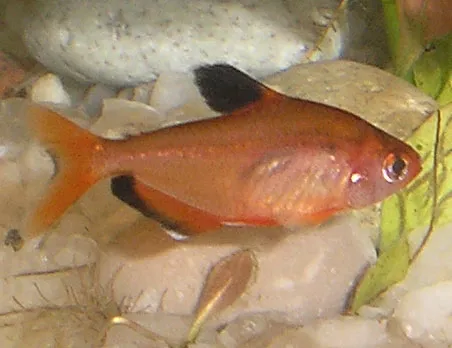 1.8 in (4.5 cm)17 gal (65 L)68–82°F (20–28°C)
Serpae tetra
Hyphessobrycon eques
1.8 in (4.5 cm) · 17 gal (65 L)