Cherry barb
Rohanella titteya
Also known as Puntius titteya
FreshwaterFish
Care at a glance
- Temperature
- 72–81°F
- 22–27°C
- pH
- 6.0–8.0
- Adult size
- 2 in
- 5 cm
- Minimum tank
- 20 gal
- 75 L
- Temperament
- Peaceful
- Social behavior
- Schooling
- Swim level
- Middle
- Difficulty
- Beginner
- Breeding
- Medium
- Rarity
- Very common
- Family
- Cyprinidae
- Origin
- Sri Lanka
Overview
Keep them in a group of six or more in a tank from about 75 liters, ideally with more females than males so the males are not pestering one female. They are peaceful and tend to hang in the middle and lower water near plants. They eat almost anything: flake, micro-pellets, and frozen or live foods like bloodworms and daphnia. Their calm temperament makes them a solid beginner fish for a community tank.
In the wild
Cherry barbs are native to shaded forest streams in Sri Lanka, in slow, soft water with overhanging plants and a layer of leaf litter on the bottom. A planted tank with some shade and gentle flow brings out their color and confidence. They are flexible on water, taking a pH from mildly acidic to mildly alkaline and temps in the low to high 20s C.
Good to know
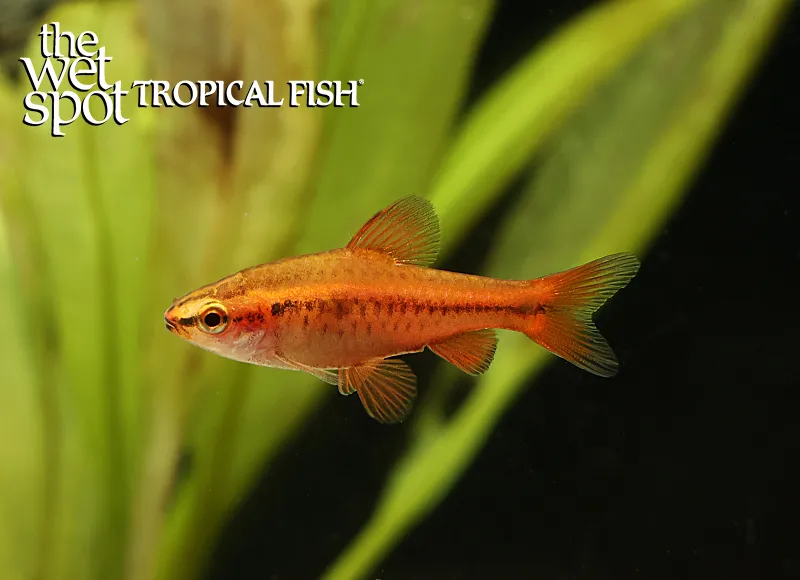
This is a small cyprinid in the family Cyprinidae, reaching about 5 cm. Males are slim and turn deep cherry red when in good condition or breeding, while females are stockier and a muted brownish color. They are egg scatterers with no parental care and will eat their own eggs if given the chance.
Did you know
The red color is mostly a male display thing. A dominant breeding male turns a bright, deep cherry, while subordinate males and resting fish stay much paler, so the color in your tank shifts through the day depending on who is showing off and who is laying low.
Weekly picks
Tank mates
Cherry barb is a peaceful, schooling species that keeps to the middle. These picks share a community profile with it, are safe together in both directions, and overlap on water type, temperature and pH.
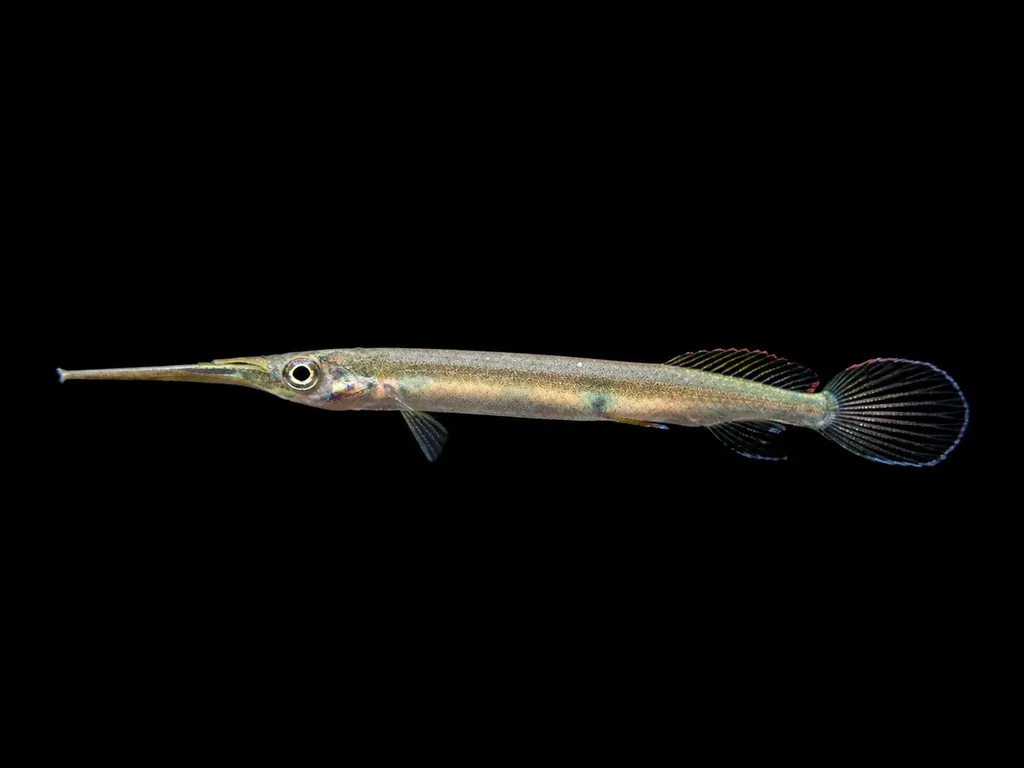
Kuekenthal's halfbeak
Hemirhamphodon kuekenthali
Freshwater3.3 in (8.5 cm) · 20 gal (75 L)73–81°F (23–27°C)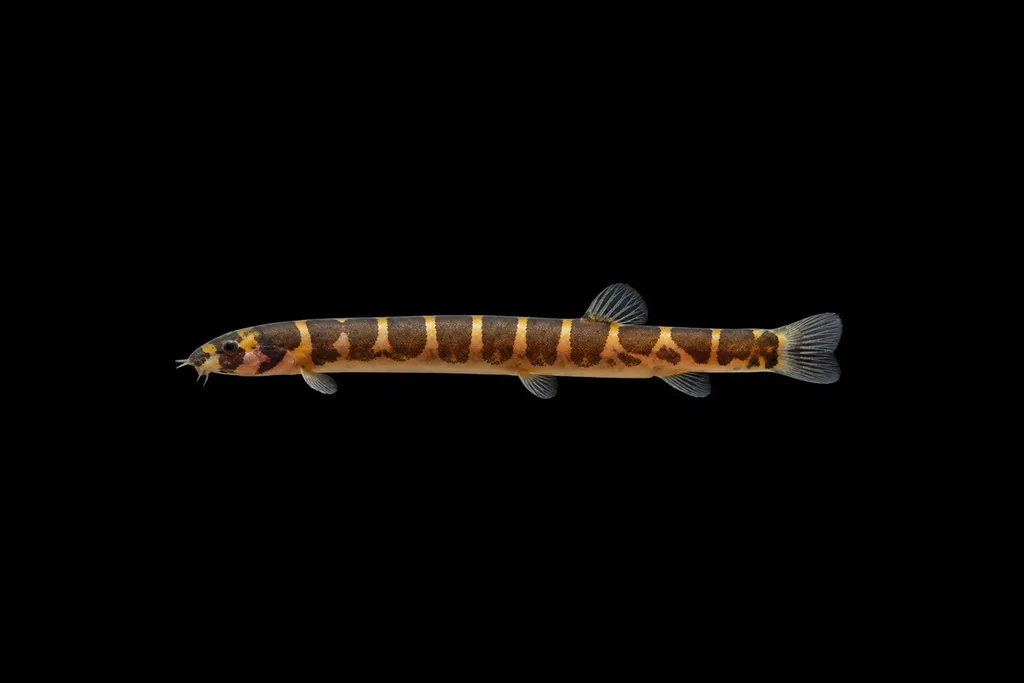
Borneo kuhli loach
Pangio borneensis
Freshwater2.5 in (6.3 cm) · 20 gal (75 L)72–81°F (22–27°C)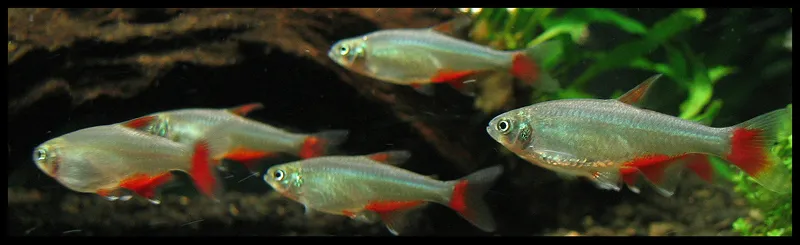
Bloodfin tetra
Aphyocharax anisitsi
Freshwater2.2 in (5.5 cm) · 20 gal (75 L)72–82°F (22–28°C)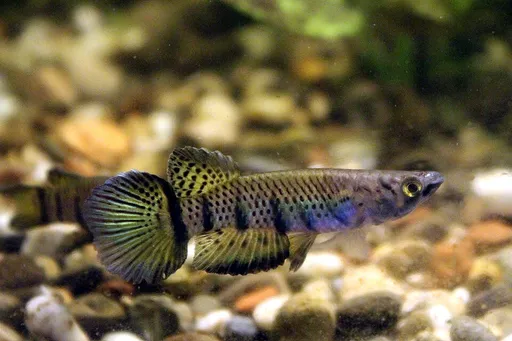
Six-barred panchax
Epiplatys sexfasciatus
Freshwater3.9 in (10 cm) · 20 gal (75 L)72–81°F (22–27°C)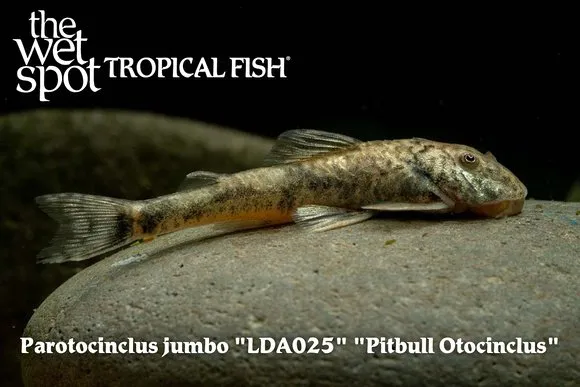
Pit bull otocinclus
Parotocinclus jumbo
Freshwater2.4 in (6 cm) · 20 gal (75 L)72–81°F (22–27°C)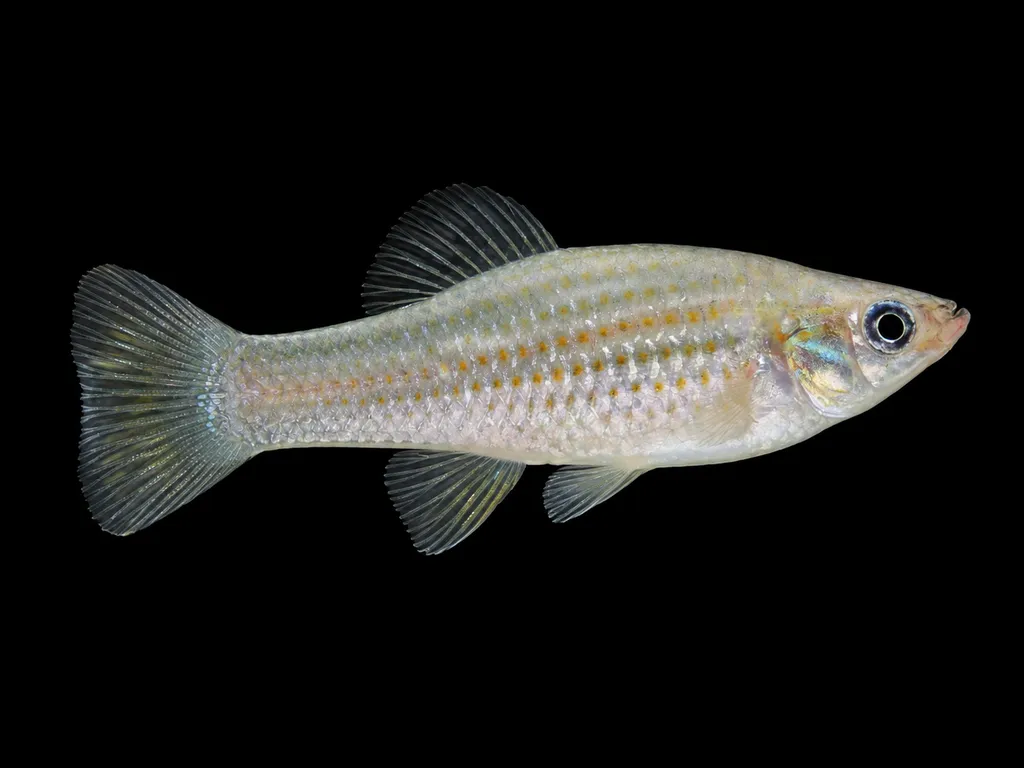
Amazon molly
Poecilia formosa
Freshwater3.5 in (9 cm) · 20 gal (75 L)68–82°F (20–28°C)
Common questions
What size tank does a Cherry barb need?
A Cherry barb needs at least 20 gal (75 L). It spends most of its time in the middle.
What temperature and pH does a Cherry barb need?
A Cherry barb is comfortable at 72–81°F (22–27°C) with a pH of 6.0–8.0.
How big does a Cherry barb get?
An adult Cherry barb reaches about 2 in (5 cm).
Does a Cherry barb need a group?
Yes. A Cherry barb is a schooling species and should be kept in a group, not singly.
Related species
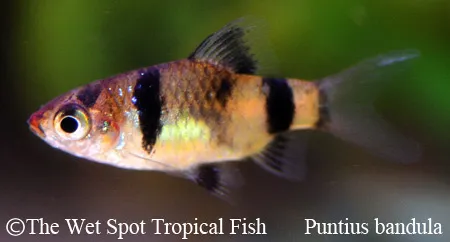 2 in (5 cm)20 gal (75 L)73–81°F (23–27°C)
Bandula barb
Pethia bandula
2 in (5 cm) · 20 gal (75 L)
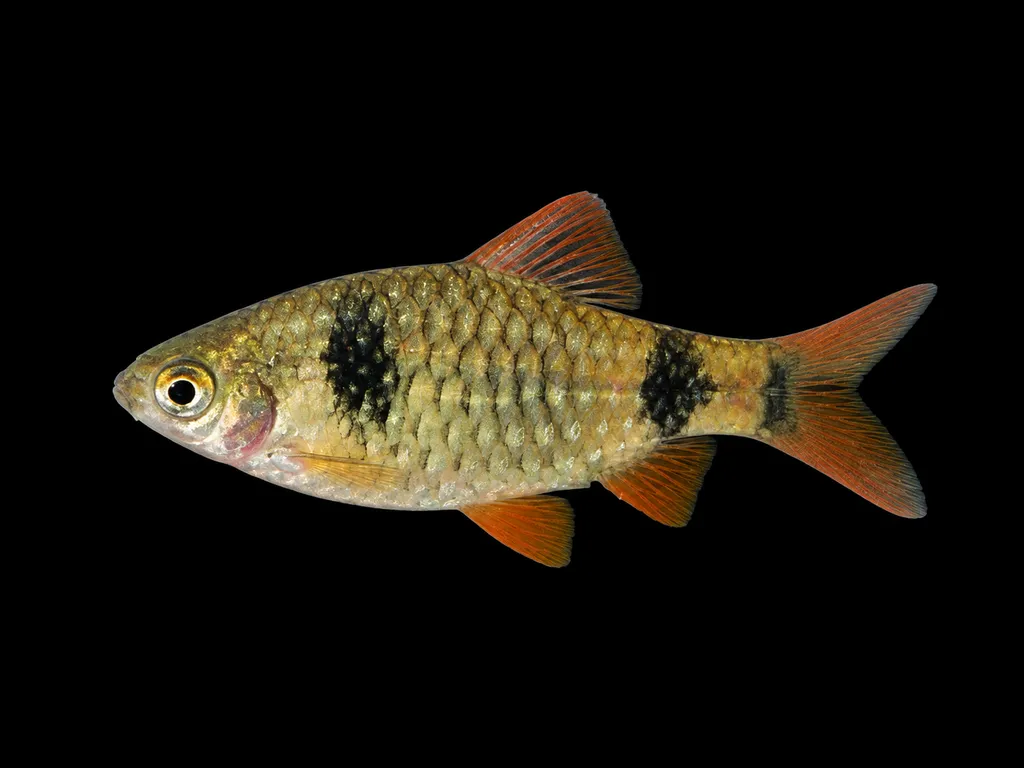 2 in (5 cm)16 gal (60 L)72–81°F (22–27°C)
Cuming's barb
Pethia cumingii
2 in (5 cm) · 16 gal (60 L)
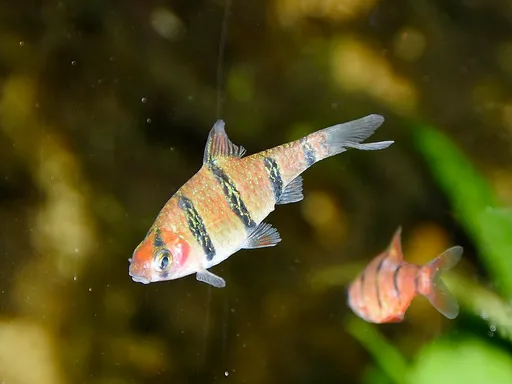 2 in (5 cm)20 gal (75 L)73–81°F (23–27°C)
Five-banded barb
Desmopuntius pentazona
2 in (5 cm) · 20 gal (75 L)
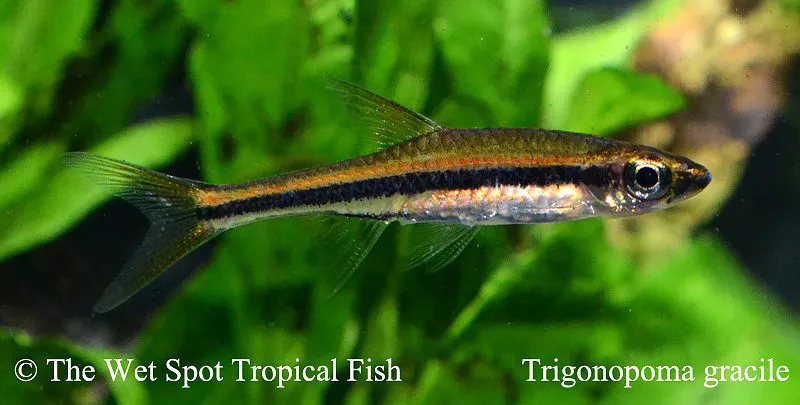 2 in (5 cm)16 gal (60 L)72–79°F (22–26°C)
Graceful rasbora
Trigonopoma gracile
2 in (5 cm) · 16 gal (60 L)
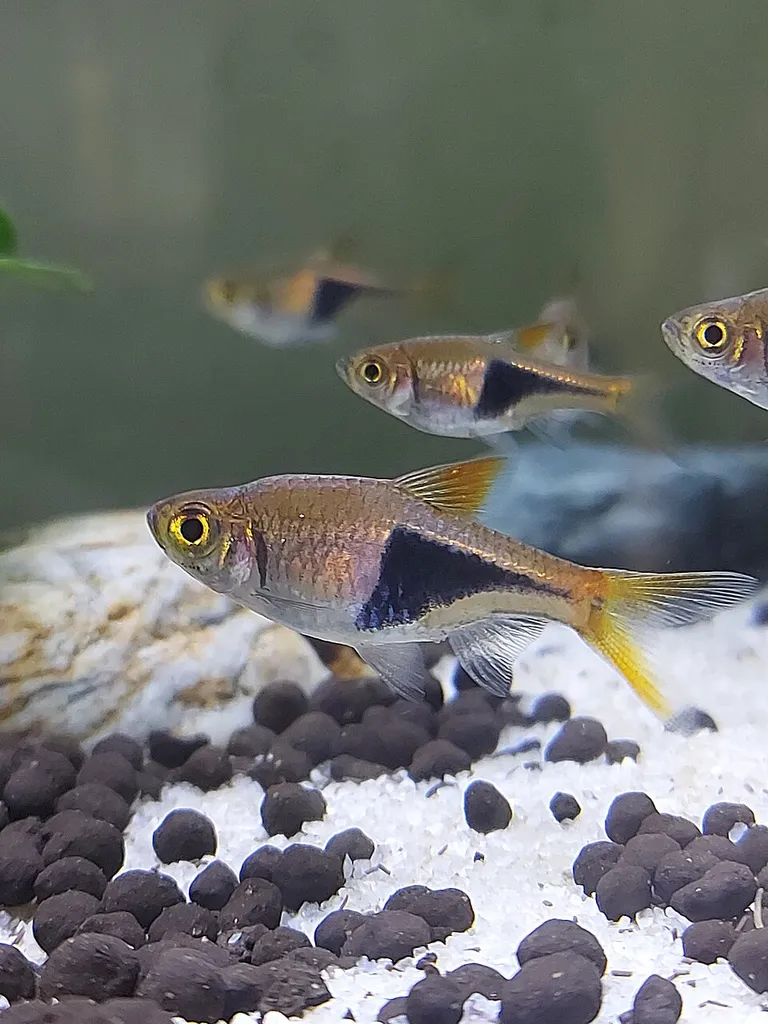 2 in (5 cm)15 gal (55 L)72–82°F (22–28°C)
Harlequin rasbora
Trigonostigma heteromorpha
2 in (5 cm) · 15 gal (55 L)
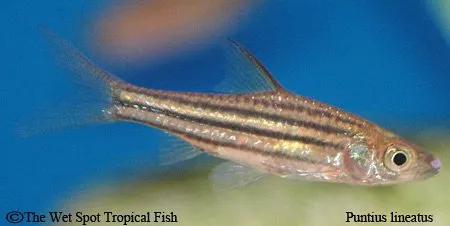 2 in (5 cm)20 gal (75 L)73–81°F (23–27°C)
Lined barb
Striuntius lineatus
2 in (5 cm) · 20 gal (75 L)