Harlequin rasbora
Trigonostigma heteromorpha
FreshwaterFish
Care at a glance
- Temperature
- 72–82°F
- 22–28°C
- pH
- 6.0–7.0
- Adult size
- 2 in
- 5 cm
- Minimum tank
- 15 gal
- 55 L
- Temperament
- Peaceful
- Social behavior
- Schooling
- Swim level
- Middle
- Difficulty
- Beginner
- Breeding
- Medium
- Rarity
- Common
- Family
- Cyprinidae
- Origin
- Thailand, Sunda Islands
Overview
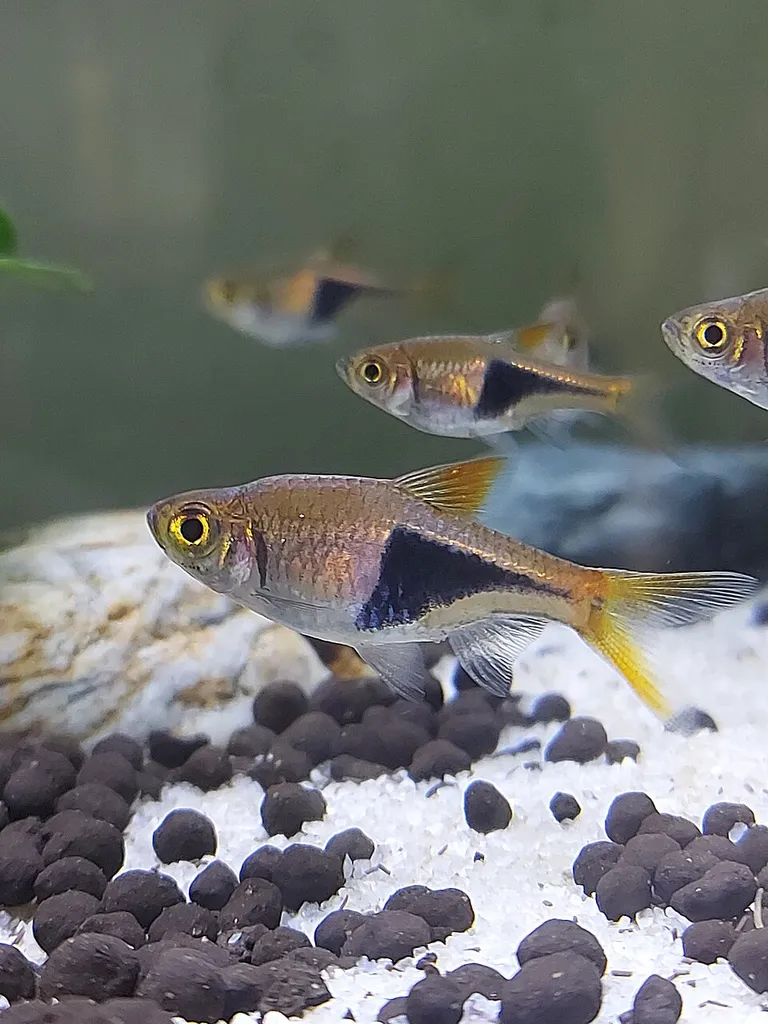
Keep them in a school of at least six, ideally more, in a tank of 55 liters or up. They are peaceful and spend most of their time in the middle of the water column, moving as a tight group. They eat just about anything small, like good flake, micro-pellets, and frozen or live bloodworms and daphnia. They make easy, calm community fish with other peaceful species that like the same soft, warm water.
In the wild
Harlequin rasboras come from slow, soft, acidic blackwater streams in Thailand and the Sunda Islands, the kind shaded by trees and full of leaf litter and roots. To match that, give them a dim tank with plenty of plants, some driftwood, and a soft sand substrate. Tannin-stained water from botanicals suits them well and brings out their color. Aim for a pH around 6 to 7 and temps in the mid 20s C.
Good to know
This is a small cyprinid (family Cyprinidae) that tops out around 5 cm. The big black triangle on the rear half of the body is its trademark. They are egg-layers that spawn by sticking eggs to the undersides of broad leaves, which is unusual for a rasbora. The species is listed as Least Concern with stable wild populations.
Did you know
They are one of the harder small egg-layers to breed at home because they need very soft, acidic water and will only spawn on the underside of a leaf, where the female flips belly-up to lay.
Weekly picks
Tank mates
Harlequin rasbora is a peaceful, schooling species that keeps to the middle. These picks share a community profile with it, are safe together in both directions, and overlap on water type, temperature and pH.
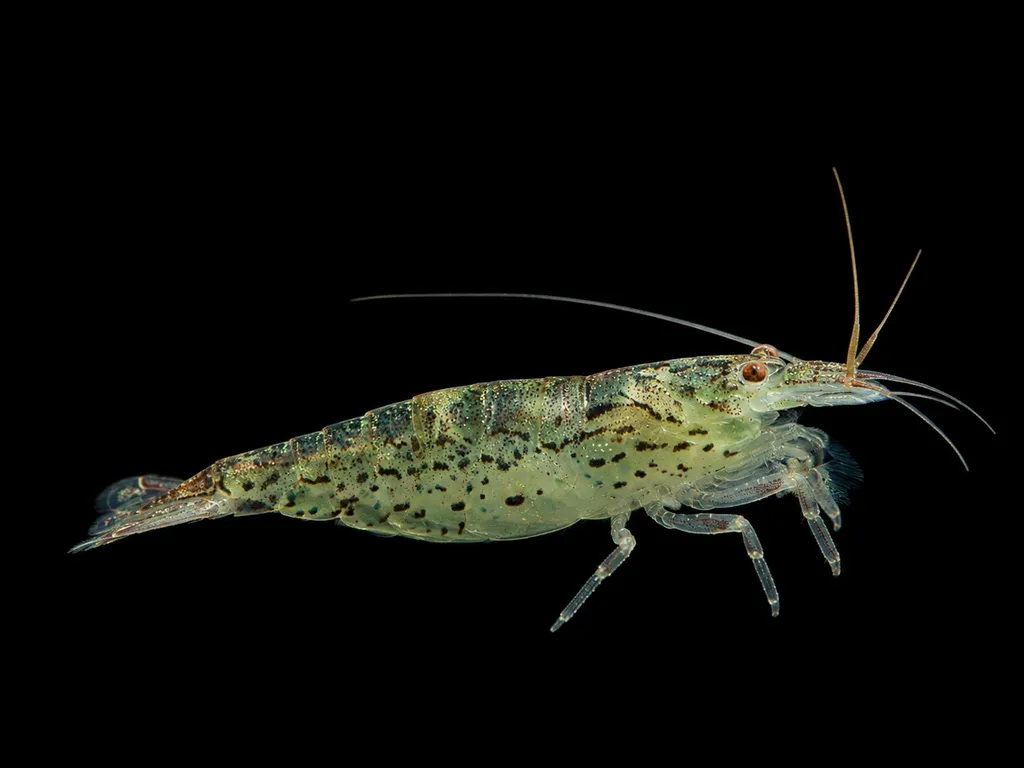
Green lace shrimp
Atyoida pilipes
Freshwater2.8 in (7 cm) · 14 gal (54 L)73–82°F (23–28°C)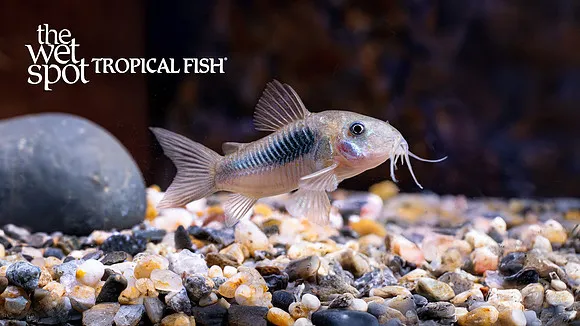
Blackstripe cory
Hoplisoma bondi
Freshwater2 in (5 cm) · 15 gal (55 L)70–79°F (21–26°C)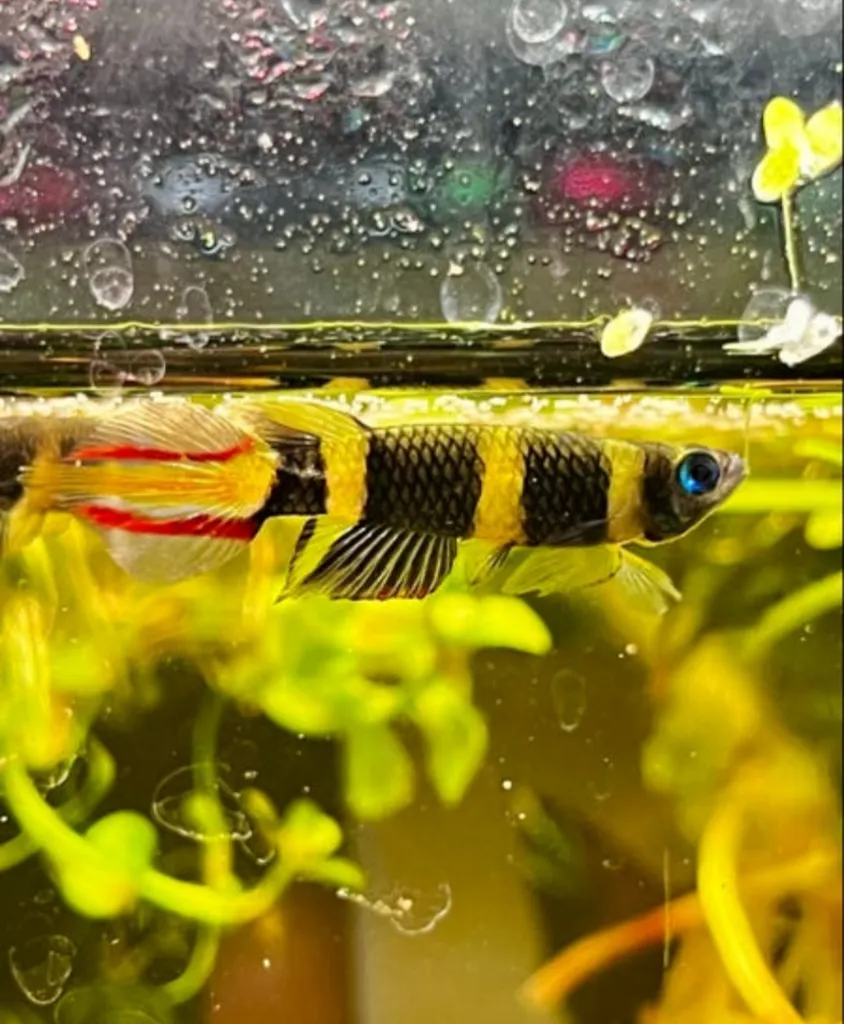
Clown killifish
Epiplatys annulatus
Freshwater1.4 in (3.5 cm) · 15 gal (55 L)68–79°F (20–26°C)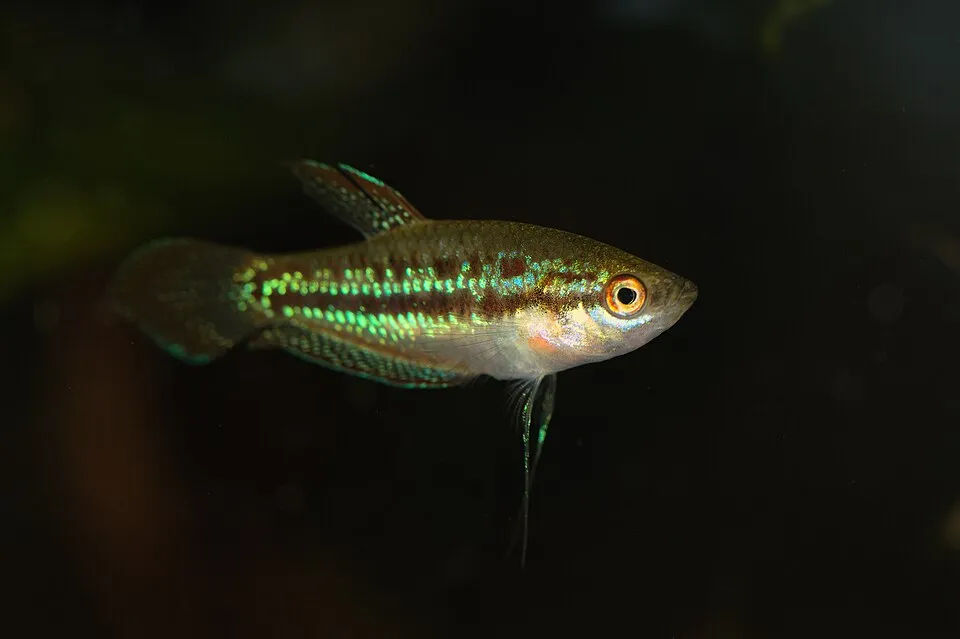
Pygmy gourami
Trichopsis pumila
Freshwater1.6 in (4 cm) · 15 gal (55 L)72–82°F (22–28°C)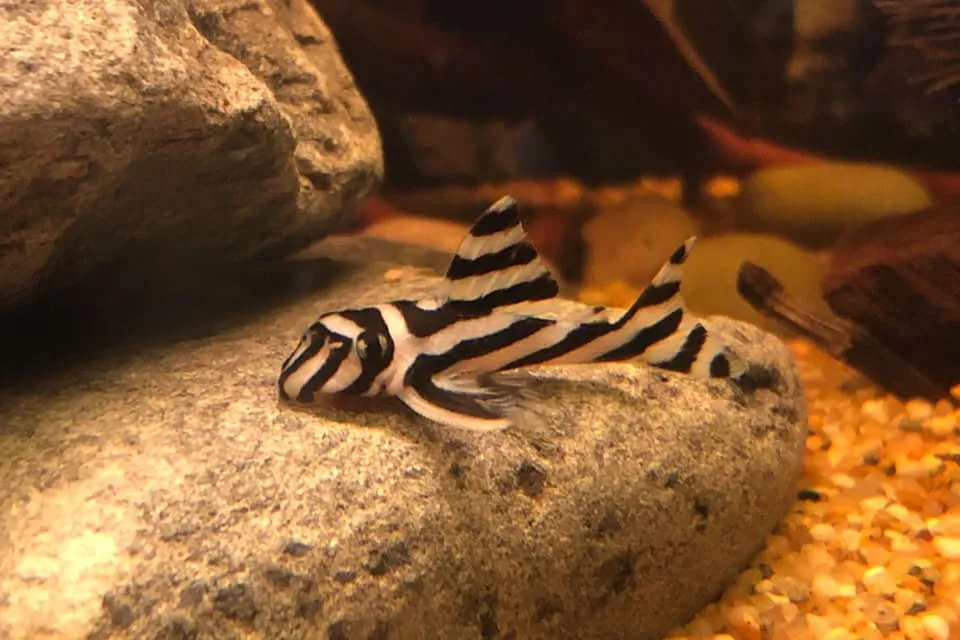
Zebra pleco
Hypancistrus zebra
Freshwater3.1 in (8 cm) · 15 gal (55 L)79–86°F (26–30°C)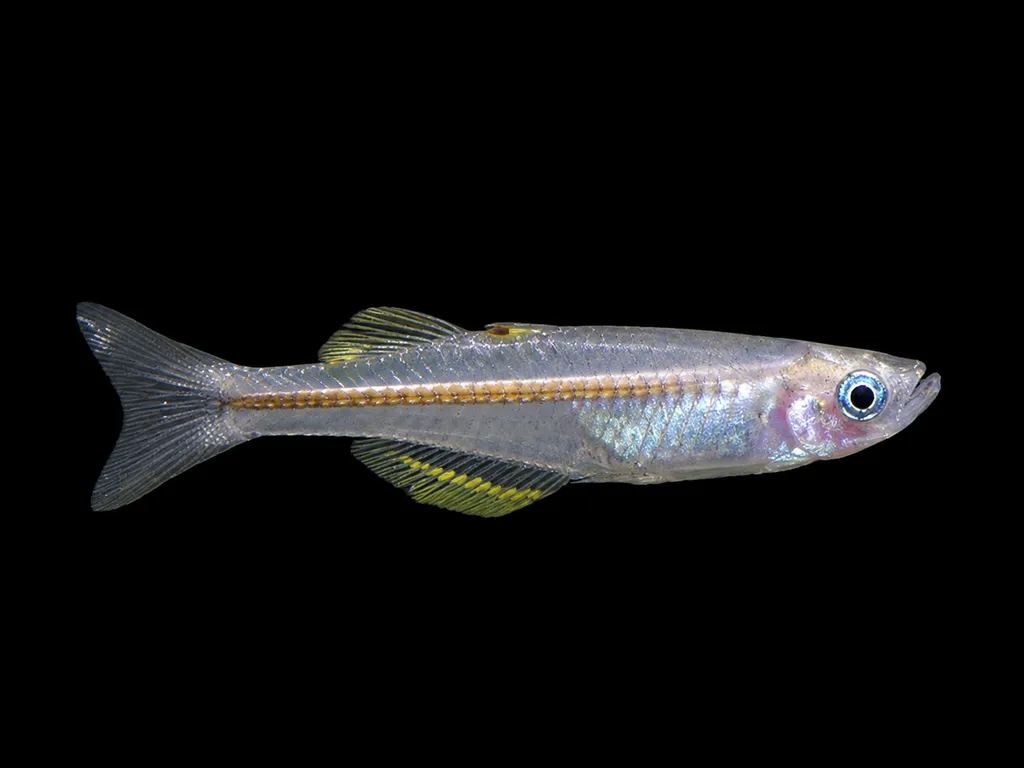
New Guinea blue-eye
Pseudomugil novaeguineae
Freshwater1.8 in (4.5 cm) · 15 gal (55 L)79–86°F (26–30°C)
Common questions
What size tank does a Harlequin rasbora need?
A Harlequin rasbora needs at least 15 gal (55 L). It spends most of its time in the middle.
What temperature and pH does a Harlequin rasbora need?
A Harlequin rasbora is comfortable at 72–82°F (22–28°C) with a pH of 6.0–7.0.
How big does a Harlequin rasbora get?
An adult Harlequin rasbora reaches about 2 in (5 cm).
Does a Harlequin rasbora need a group?
Yes. A Harlequin rasbora is a schooling species and should be kept in a group, not singly.
Related species
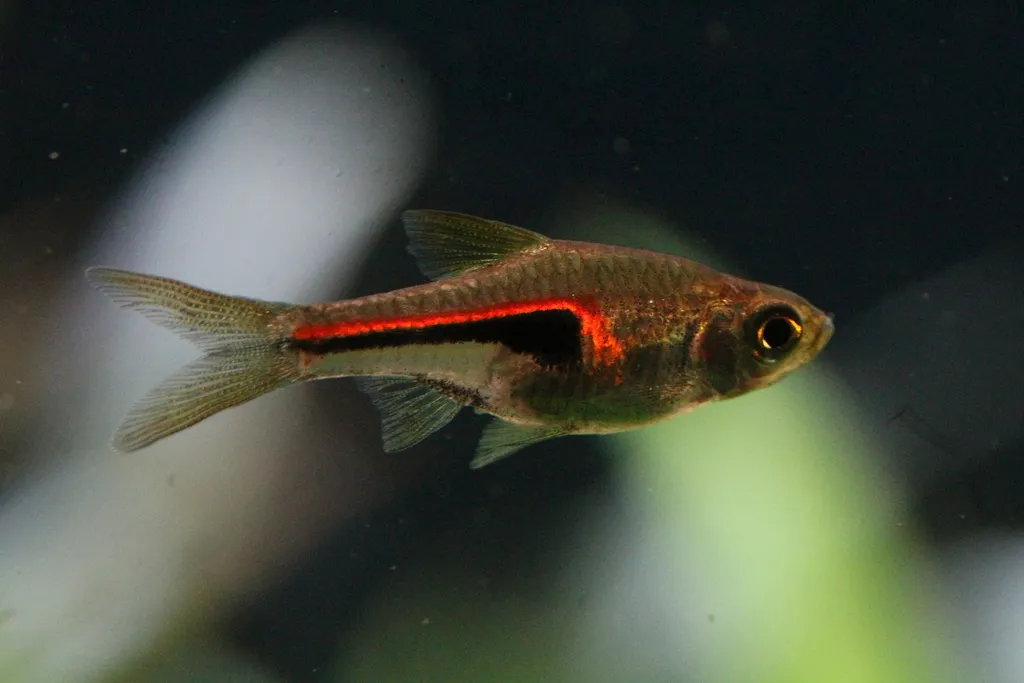 1.6 in (4 cm)12 gal (45 L)73–82°F (23–28°C)
Glowlight rasbora
Trigonostigma hengeli
1.6 in (4 cm) · 12 gal (45 L)
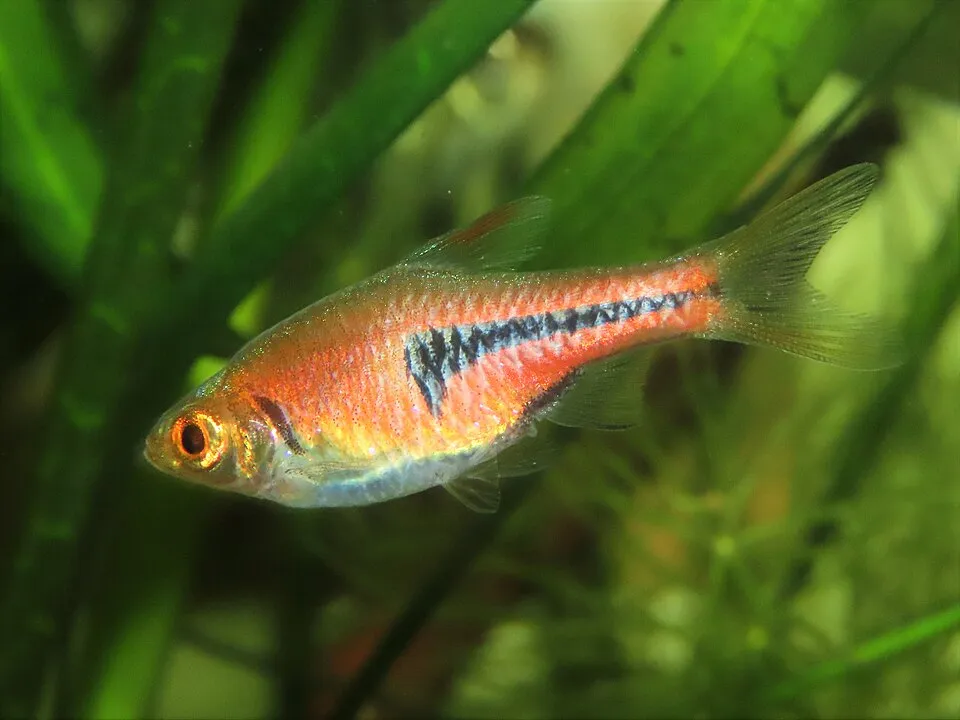 1.5 in (3.8 cm)11 gal (40 L)73–82°F (23–28°C)
Espei rasbora
Trigonostigma espei
1.5 in (3.8 cm) · 11 gal (40 L)
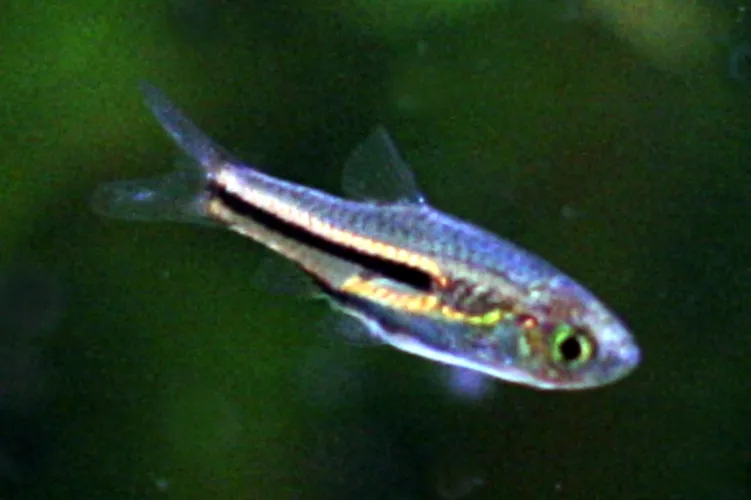 1 in (2.5 cm)12 gal (45 L)73–81°F (23–27°C)
Somphongs's rasbora
Trigonostigma somphongsi
1 in (2.5 cm) · 12 gal (45 L)
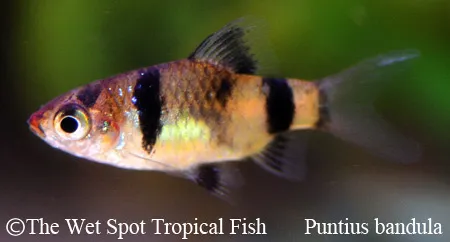 2 in (5 cm)20 gal (75 L)73–81°F (23–27°C)
Bandula barb
Pethia bandula
2 in (5 cm) · 20 gal (75 L)
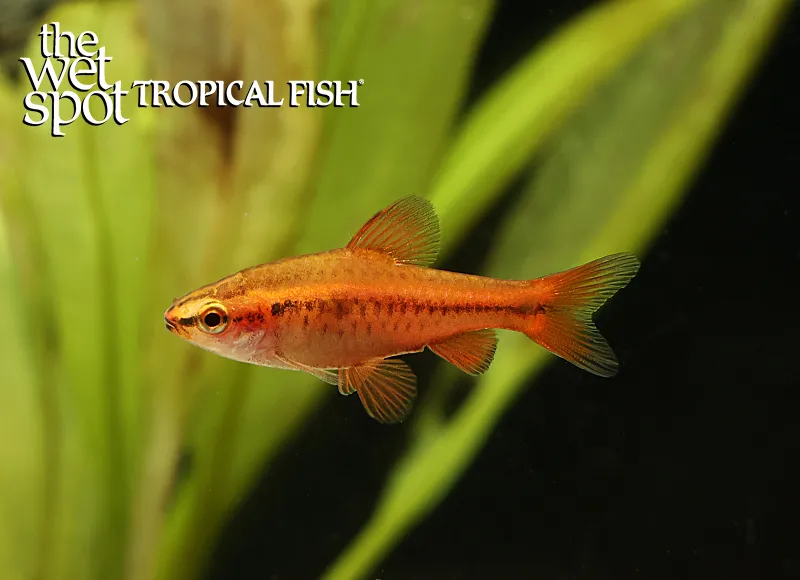 2 in (5 cm)20 gal (75 L)72–81°F (22–27°C)
Cherry barb
Rohanella titteya
2 in (5 cm) · 20 gal (75 L)
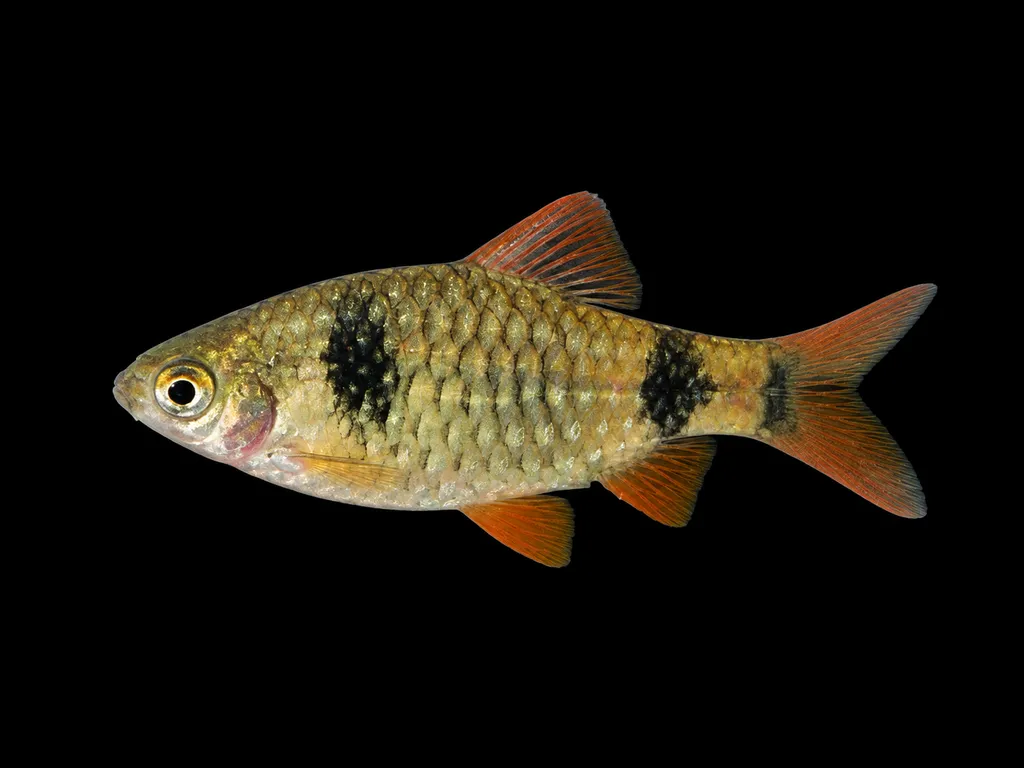 2 in (5 cm)16 gal (60 L)72–81°F (22–27°C)
Cuming's barb
Pethia cumingii
2 in (5 cm) · 16 gal (60 L)