Licorice gourami
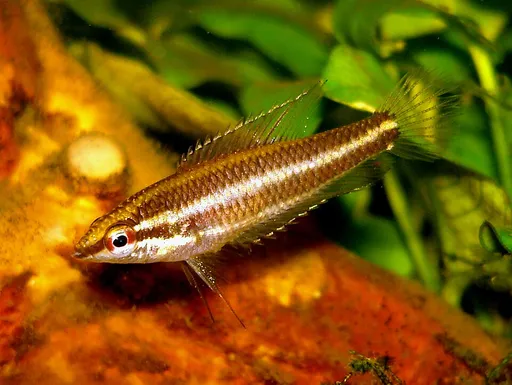
Parosphromenus deissneri
Also known as Deissner's licorice gourami, Bangka licorice gourami, Liquorice gourami
FreshwaterFish
Care at a glance
- Temperature
- 72–82°F
- 22–28°C
- pH
- 3.5–6.0
- Adult size
- 1.5 in
- 3.8 cm
- Minimum tank
- 11 gal
- 40 L
- Temperament
- Peaceful
- Social behavior
- Social
- Tankmates
- With caution
- Swim level
- Bottom
- Difficulty
- Difficult
- Breeding
- Hard
- Rarity
- Very rare
- Family
- Osphronemidae
- Origin
- Endemic to Bangka Island, Indonesia, in acidic blackwater peat swamp forest.
Overview
This tiny blackwater specialist needs a dedicated species tank of around 40 litres with very soft, acidic water at pH 3.5 to 6.0 and 22 to 28 C, filled with peat, leaf litter, and tannins. Feed only small live and freshly hatched foods such as baby brine shrimp, moina, and mosquito larvae, since it usually refuses dried and often frozen food. Keep it alone or with a few tiny cyprinids like Boraras, never with boisterous fish. This is an expert-level fish that is easily starved or stressed.
In the wild
Lives in shaded blackwater swamps and streams stained dark by tannins, with very soft, acidic, mineral-poor water. Sunlight barely reaches the tea-colored water, and pH can drop below 5. The fish stays low among leaf litter, roots, and submerged wood. These specialized habitats are shrinking fast due to land clearing.
Good to know
Parosphromenus deissneri was described by Bleeker in 1859 and is the type species of the licorice gourami genus in the family Osphronemidae. True deissneri is restricted to Bangka Island, and many fish sold under this name are actually other Parosphromenus species. It is one of the smallest gouramis, staying under 4 cm.
Did you know
Courting males glow with iridescent blue and red fin markings and perform head-down displays inside their chosen cave.
Common questions
What size tank does a Licorice gourami need?
A Licorice gourami needs at least 11 gal (40 L). It spends most of its time in the bottom.
What temperature and pH does a Licorice gourami need?
A Licorice gourami is comfortable at 72–82°F (22–28°C) with a pH of 3.5–6.0.
How big does a Licorice gourami get?
An adult Licorice gourami reaches about 1.5 in (3.8 cm).
Related species
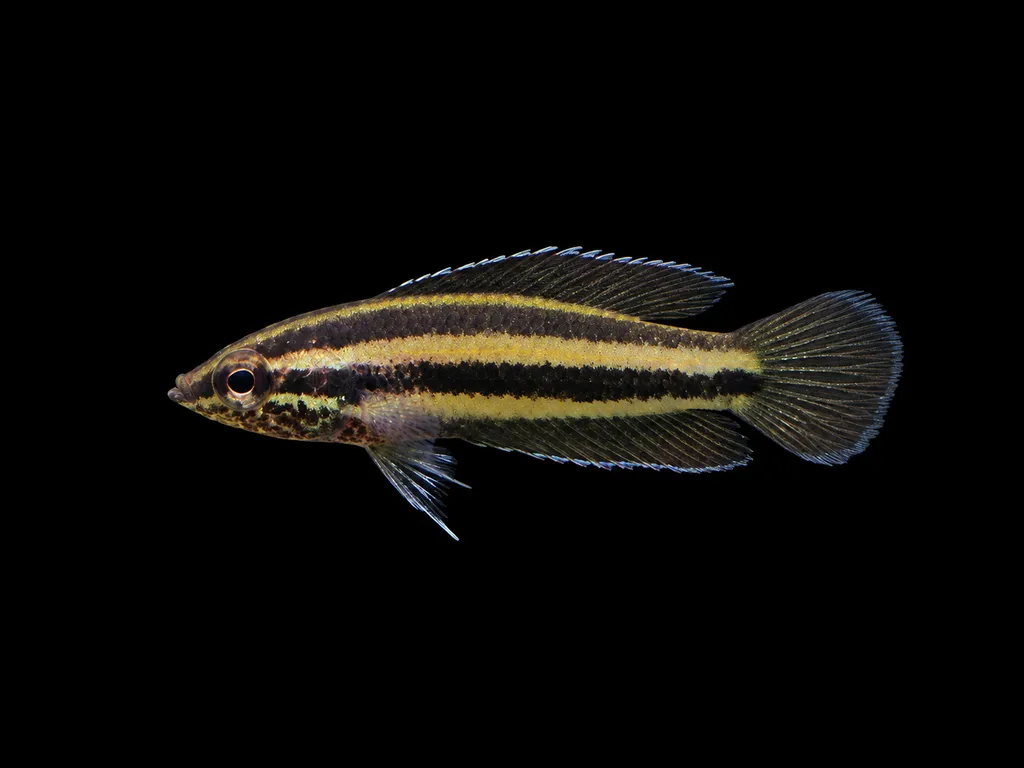 1.4 in (3.5 cm)11 gal (40 L)72–82°F (22–28°C)
Anjungan licorice gourami
Parosphromenus anjunganensis
1.4 in (3.5 cm) · 11 gal (40 L)
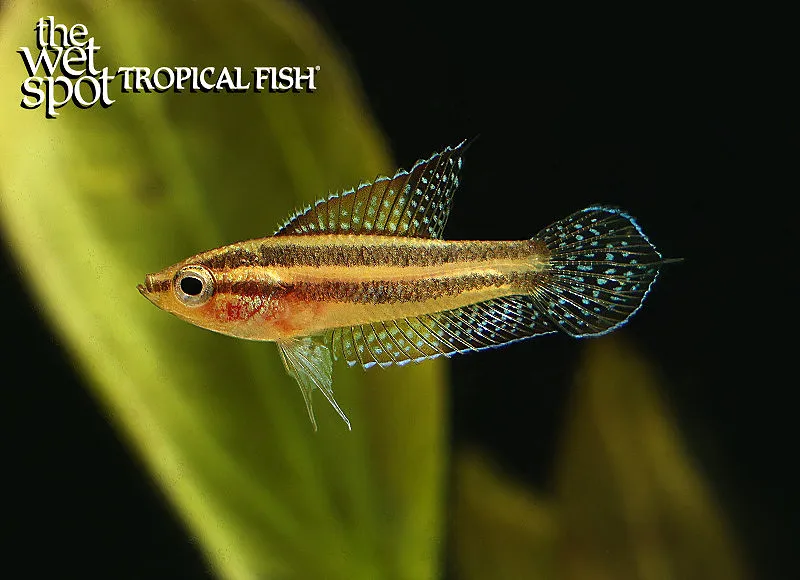 1.4 in (3.5 cm)11 gal (40 L)72–82°F (22–28°C)
Linke's licorice gourami
Parosphromenus linkei
1.4 in (3.5 cm) · 11 gal (40 L)
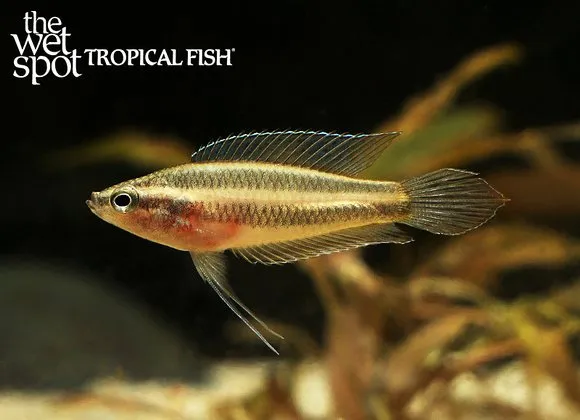 1.5 in (3.7 cm)5 gal (20 L)72–81°F (22–27°C)
Swamp licorice gourami
Parosphromenus paludicola
1.5 in (3.7 cm) · 5 gal (20 L)
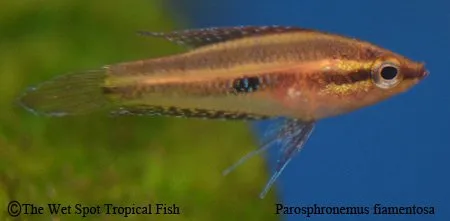 1.6 in (4 cm)5 gal (20 L)72–81°F (22–27°C)
Spadetail licorice gourami
Parosphromenus filamentosus
1.6 in (4 cm) · 5 gal (20 L)
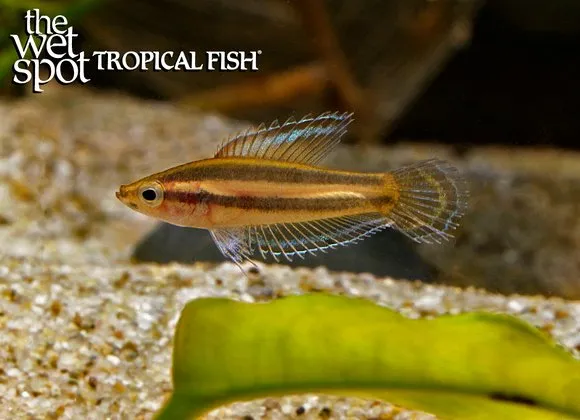 1.4 in (3.5 cm)5 gal (20 L)72–81°F (22–27°C)
Nagy's licorice gourami
Parosphromenus nagyi
1.4 in (3.5 cm) · 5 gal (20 L)
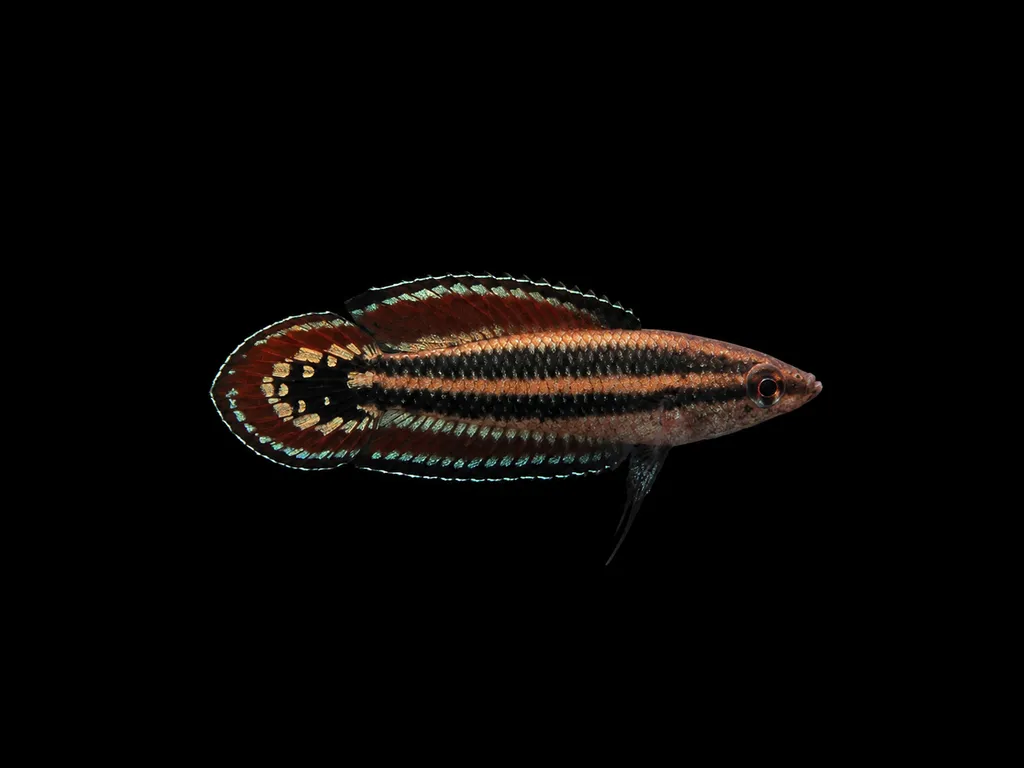 1.3 in (3.4 cm)5 gal (20 L)72–81°F (22–27°C)
Quindecim licorice gourami
Parosphromenus quindecim
1.3 in (3.4 cm) · 5 gal (20 L)