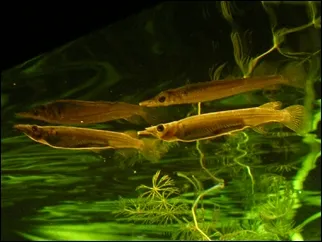
Red line halfbeak
Hemirhamphodon phaiosoma
Also known as Phaiosoma halfbeak
FreshwaterFish
Care at a glance
- Temperature
- 73–81°F
- 23–27°C
- pH
- 4.5–6.5
- Adult size
- 2.6 in
- 6.5 cm
- Minimum tank
- 14 gal
- 54 L
- Temperament
- Peaceful
- Social behavior
- Social
- Swim level
- Top
- Difficulty
- Medium
- Breeding
- Livebearer · Medium
- Rarity
- Rare
- Family
- Zenarchopteridae
- Origin
- Sundaland peat swamps
Overview
The red line halfbeak is a quiet, slender surface fish that holds near the top of a dim, soft-water tank. It suits a keeper with some experience.
Did you know
The red line halfbeak's species name, phaiosoma, means dusky body, for its plain, shaded flanks. Its scientific name and its shop name pull in opposite directions.
Caring for the red line halfbeak
Set up red line halfbeaks in a planted, well-covered tank of 14 gal (54 L) or larger. Keep the lid tight, since they will jump. Driftwood, leaf litter, floating plants and dim light give them a blackwater surface.
They want soft, acidic, tea-dark water and stillness, so keep the flow gentle. Hold the temperature at 73 to 81°F (23 to 27°C) and the pH at 4.5 to 6.5.
Red line halfbeaks are surface insectivores that take small floating foods. Offer mosquito larvae, fruit flies, daphnia and small live or frozen insects, plus fine floating dried foods.
Keep a small group with more females than males, as males display and spar with one another along the surface. They are peaceful and pair well with calm tank mates that stay lower and leave the top clear. Nothing large or boisterous should crowd them.
Red line halfbeaks bear live young rather than laying eggs. Breeding them is of moderate difficulty.
Good to know
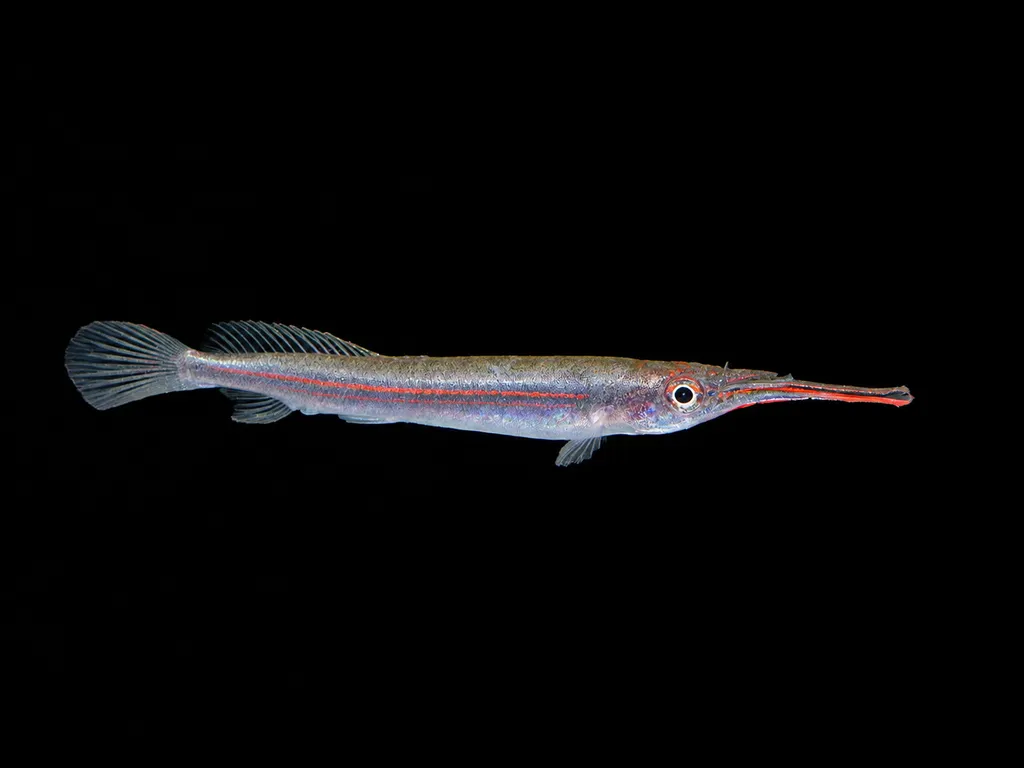
Hemirhamphodon phaiosoma is one of several closely similar Bornean and Sundaic halfbeaks that keepers can find hard to tell apart. It belongs to the family Zenarchopteridae. It has a slim body and a red or orange tip to the lower beak.
In the wild
The red line halfbeak ranges across the Sunda region, on Bangka and Belitung, western Sumatra and Borneo. It lives at the surface of soft, acidic peat waters stained with tannins.
Weekly picks
Tank mates
The red line halfbeak is a peaceful, social species that keeps to the top. These picks share a community profile with it, are safe together in both directions, and overlap on water type, temperature and pH.
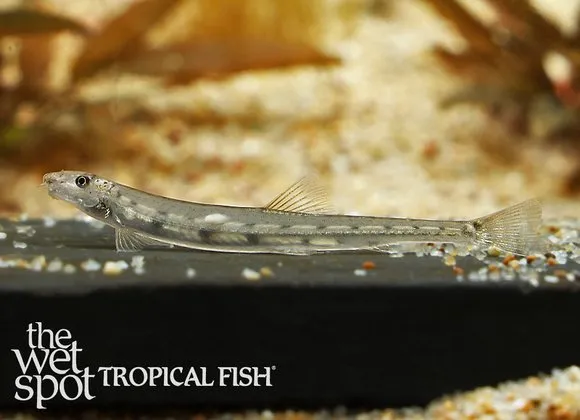
Dwarf horseface loach
Acanthopsoides robertsi
Freshwater2.2 in (5.5 cm) · 14 gal (54 L)72–81°F (22–27°C)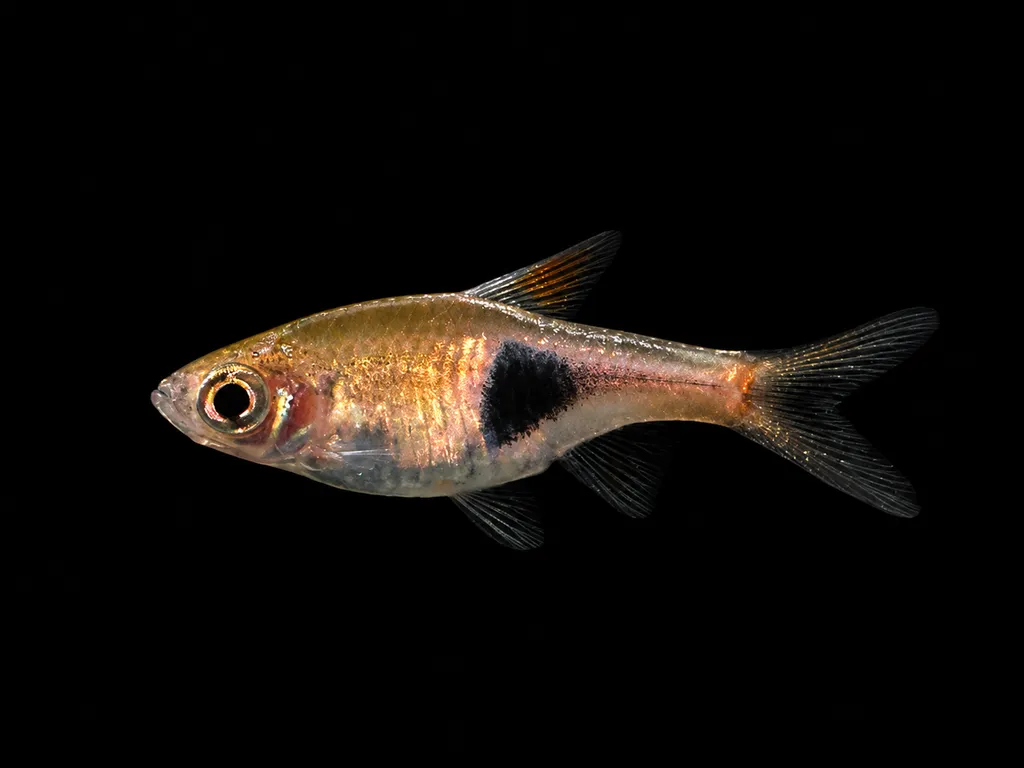
Malayan harlequin rasbora
Trigonostigma truncata
Freshwater1.2 in (3 cm) · 14 gal (54 L)72–81°F (22–27°C)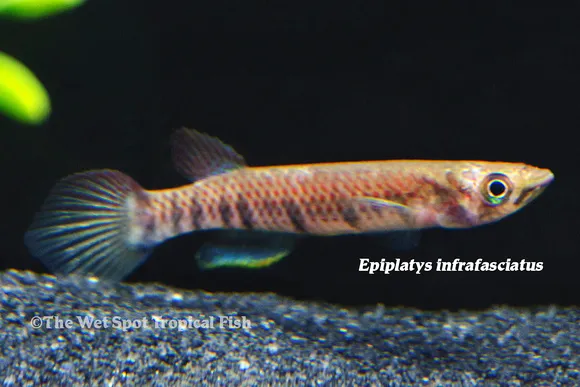
Infrafasciatus killifish
Epiplatys infrafasciatus
Freshwater2.4 in (6 cm) · 14 gal (54 L)68–77°F (20–25°C)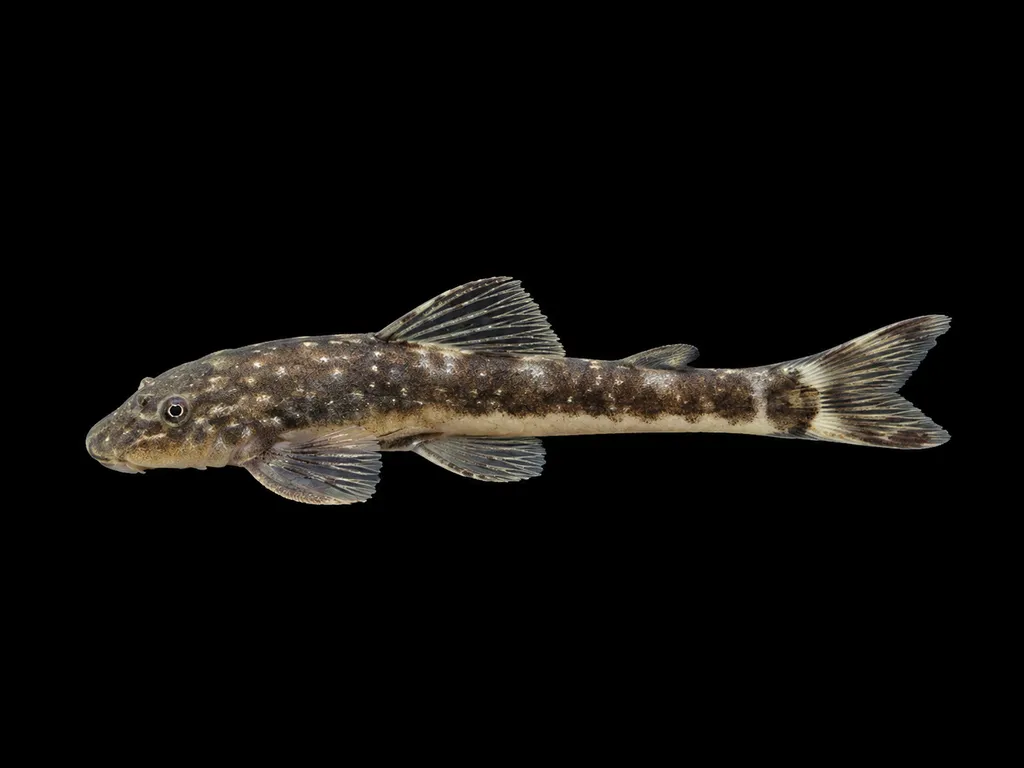
Ceará parotocinclus
Parotocinclus cearensis
Freshwater2 in (5 cm) · 14 gal (54 L)72–81°F (22–27°C)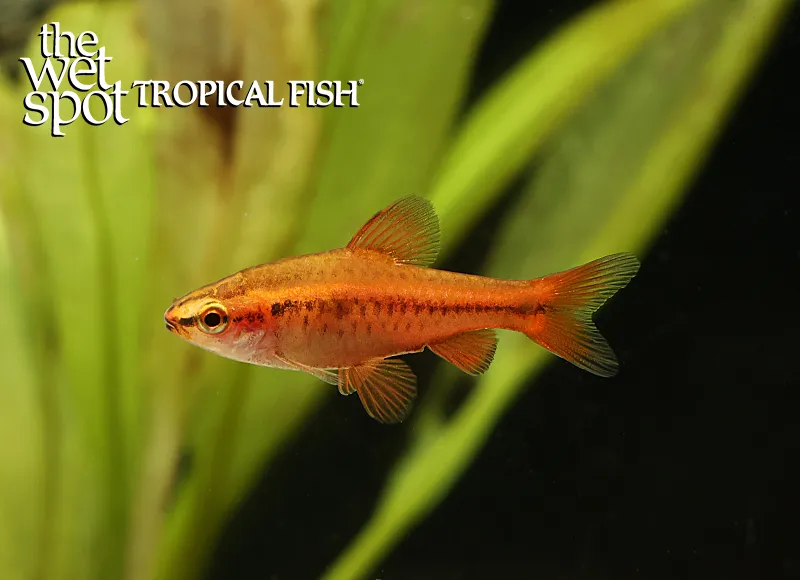
Cherry barb
Rohanella titteya
Freshwater2 in (5 cm) · 14 gal (54 L)72–81°F (22–27°C)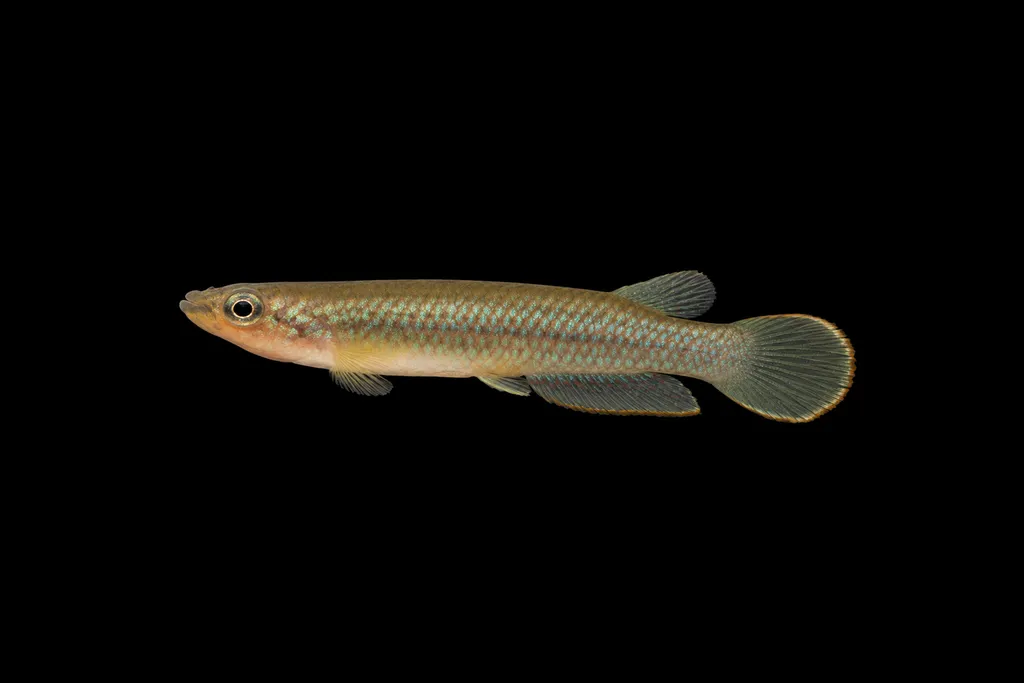
Guinean panchax
Epiplatys guineensis
Freshwater2.8 in (7 cm) · 14 gal (54 L)68–77°F (20–25°C)
Common questions
What size tank does a red line halfbeak need?
A red line halfbeak needs at least 14 gal (54 L). It spends most of its time in the top.
What temperature and pH does a red line halfbeak need?
A red line halfbeak is comfortable at 73–81°F (23–27°C) with a pH of 4.5–6.5.
What does a red line halfbeak eat?
A red line halfbeak is a surface insectivore. It eats small floating foods such as mosquito larvae, fruit flies, daphnia and small live or frozen insects, and fine floating dried foods.
How big does a red line halfbeak get?
An adult red line halfbeak reaches about 2.6 in (6.5 cm).
How does a red line halfbeak breed?
A red line halfbeak gives birth to live young. Breeding it is of moderate difficulty.
Related species
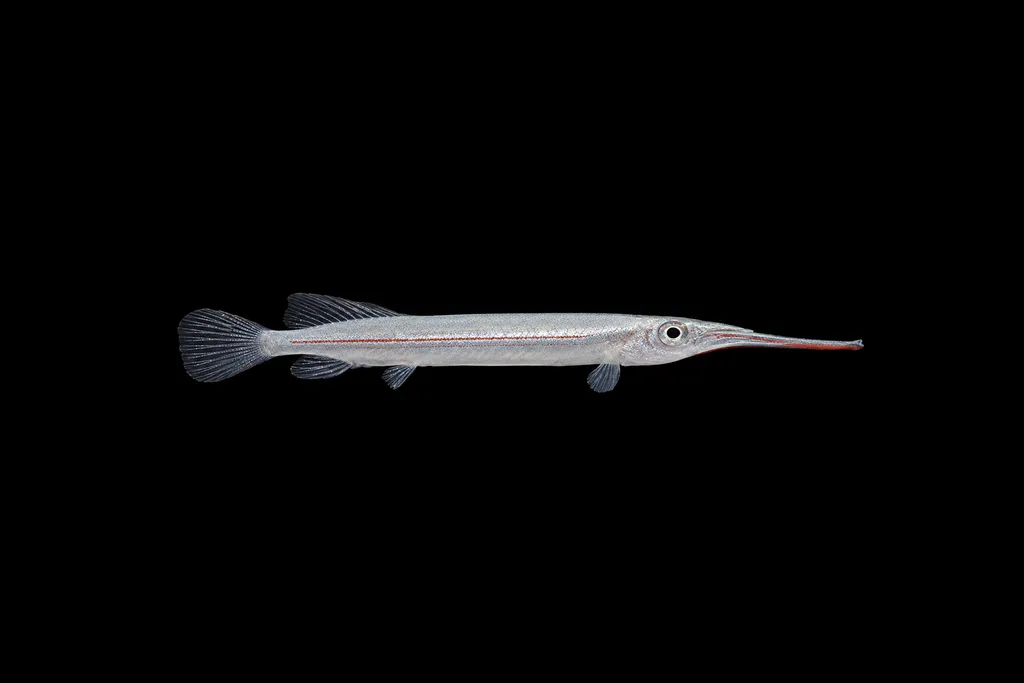
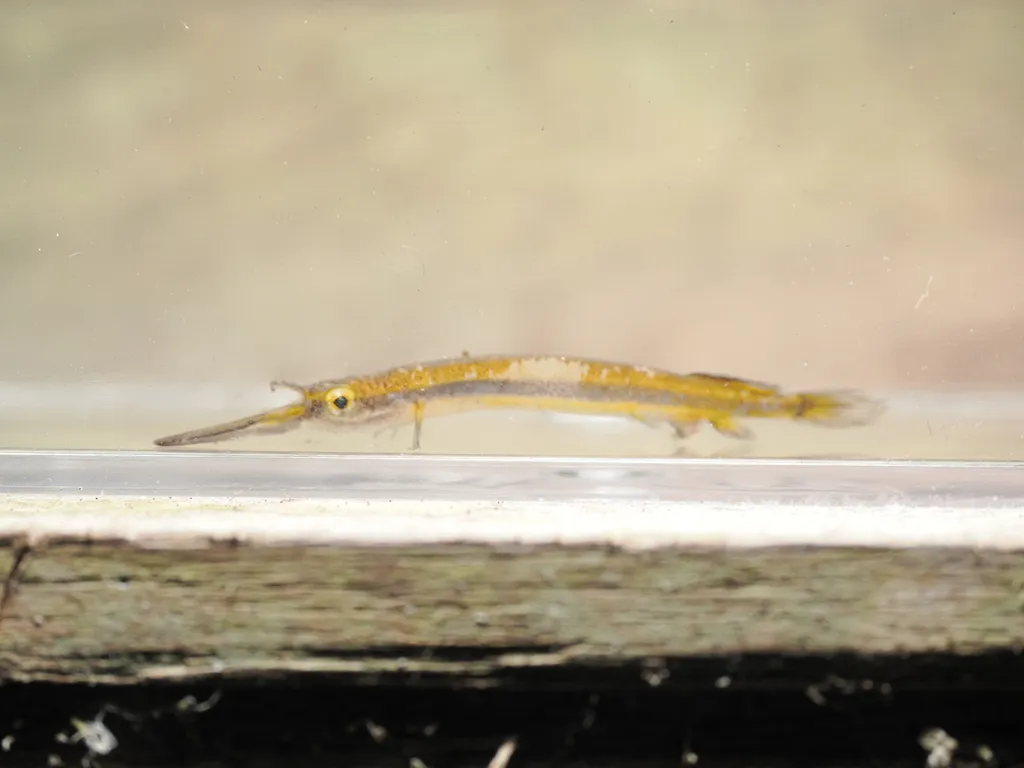 2.6 in (6.5 cm)14 gal (54 L)73–81°F (23–27°C)
Gold-spotted halfbeak
Hemirhamphodon chrysopunctatus
2.6 in (6.5 cm) · 14 gal (54 L)
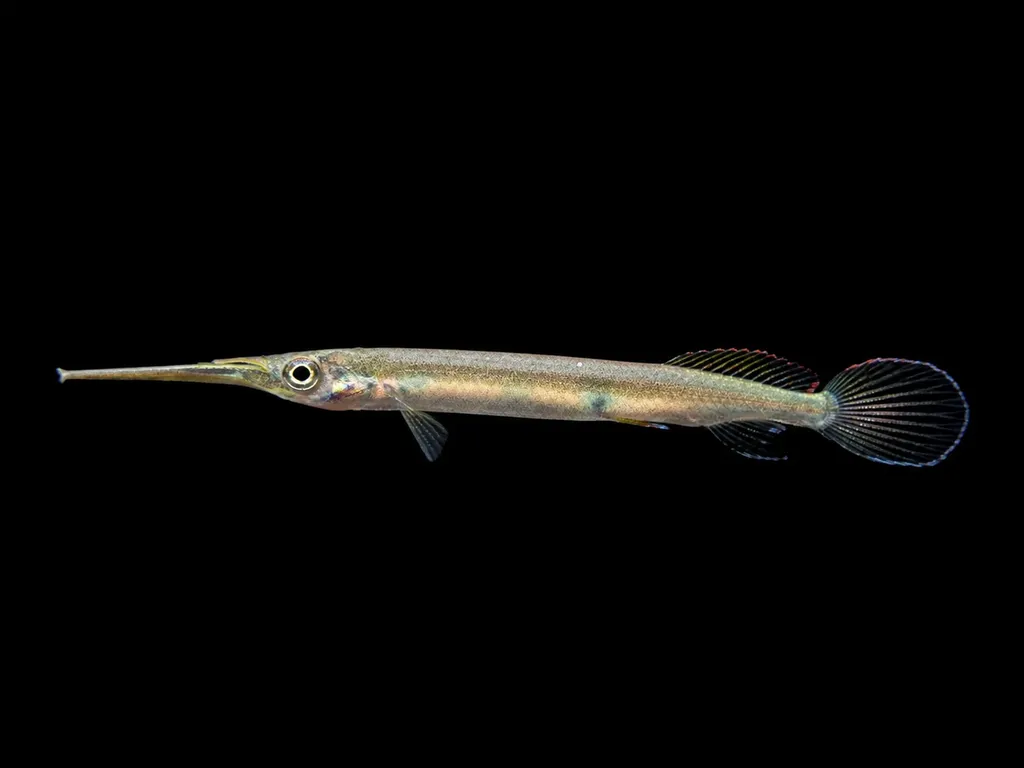
 2.4 in (6 cm)14 gal (54 L)73–81°F (23–27°C)
Fire halfbeak
Hemirhamphodon kapuasensis
2.4 in (6 cm) · 14 gal (54 L)
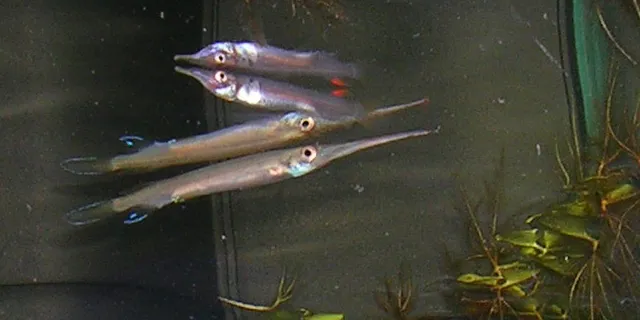
 3.3 in (8.5 cm)20 gal (75 L)73–81°F (23–27°C)
Kuekenthal's halfbeak
Hemirhamphodon kuekenthali
3.3 in (8.5 cm) · 20 gal (75 L)
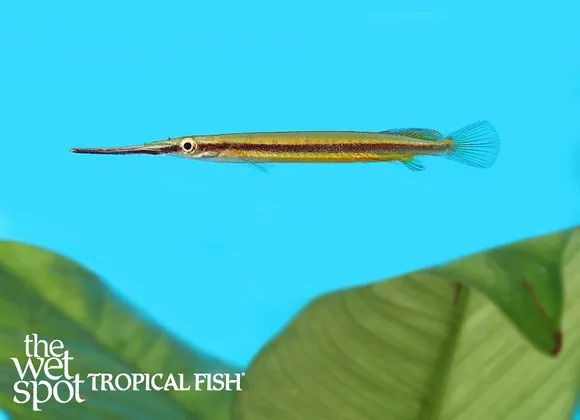
 3.5 in (9 cm)34 gal (130 L)75–82°F (24–28°C)
Forest halfbeak
Hemirhamphodon pogonognathus
3.5 in (9 cm) · 34 gal (130 L)
 1.8 in (4.5 cm)11 gal (40 L)73–81°F (23–27°C)
Borneo gold spot halfbeak
Hemirhamphodon tengah
1.8 in (4.5 cm) · 11 gal (40 L)
 2.8 in (7 cm)25 gal (95 L)75–82°F (24–28°C)
Wrestling halfbeak
Dermogenys pusilla
2.8 in (7 cm) · 25 gal (95 L)