Threadfin rainbowfish
Iriatherina werneri
Also known as Thread fin rainbow
FreshwaterFish
Care at a glance
- Temperature
- 72–86°F
- 22–30°C
- pH
- 6.0–7.5
- Adult size
- 1.6 in
- 4 cm
- Minimum tank
- 13 gal
- 50 L
- Temperament
- Peaceful
- Social behavior
- Schooling
- Swim level
- Middle
- Difficulty
- Medium
- Breeding
- Egg depositor
- Rarity
- Rare
- Family
- Melanotaeniidae
- Origin
- New Guinea, Australia
Overview
The threadfin rainbowfish is a small, delicate schooling fish for a calm, planted community tank. It is best kept by someone with a little experience.
Did you know
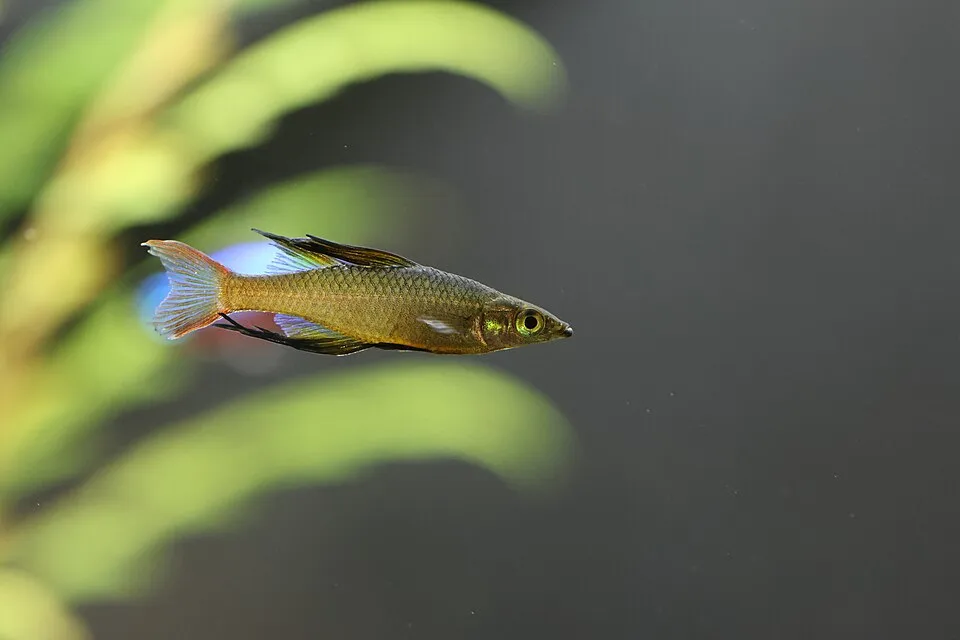
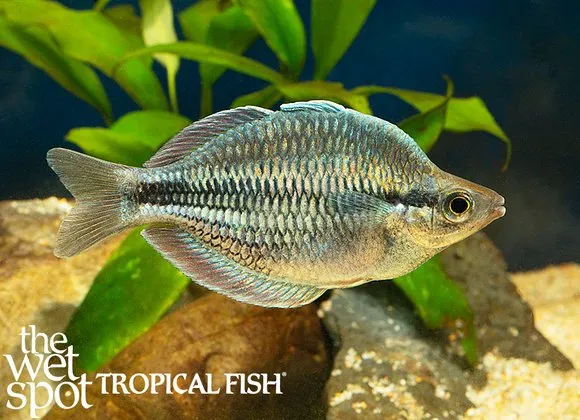
The male threadfin rainbowfish carries some of the longest, most elaborate fins in the whole rainbowfish family. In display he spreads them wide, like small flags.
Caring for the threadfin rainbowfish
Keep threadfin rainbowfish in a group of eight or more, with several males so they display their long, trailing fins to one another. Aim for a tank of 13 gal (50 L) or larger. Plenty of fine-leaved and floating plants over a fine substrate gives the males space to show off. Add some leaf litter as well.
Keep the water calm and clean, with very gentle flow. Hold it at 72 to 86°F (22 to 30°C) and a pH of 6.0 to 7.5. Threadfins have small mouths, so offer fine foods such as crushed flake, micro pellets, frozen cyclops, daphnia and baby brine shrimp.
They are delicate and peaceful, and they swim in the middle of the tank. Choose calm, slow tank mates. Faster fish will outcompete them at feeding time and may nip their flowing fins, and the males' trailing threads are fragile.
Males grow long, thread-like dorsal and tail fins as they mature, which make them look much larger than they are. Threadfins scatter small eggs among fine plants and mops over an extended period and give no parental care. The fry hatch very small and need tiny live foods in their first days.
Good to know
The threadfin rainbowfish is Iriatherina werneri, a member of the rainbowfish family Melanotaeniidae. It is the only species in its genus.
In the wild
Threadfin rainbowfish live in northern Australia and southern New Guinea. They keep to clear, still and slow-moving waters such as swamps, lagoons and vegetated stream edges. These waters are warm, soft and slightly acidic to neutral.
Weekly picks
Tank mates
The threadfin rainbowfish is a peaceful, schooling species that keeps to the middle. These picks share a community profile with it, are safe together in both directions, and overlap on water type, temperature and pH.
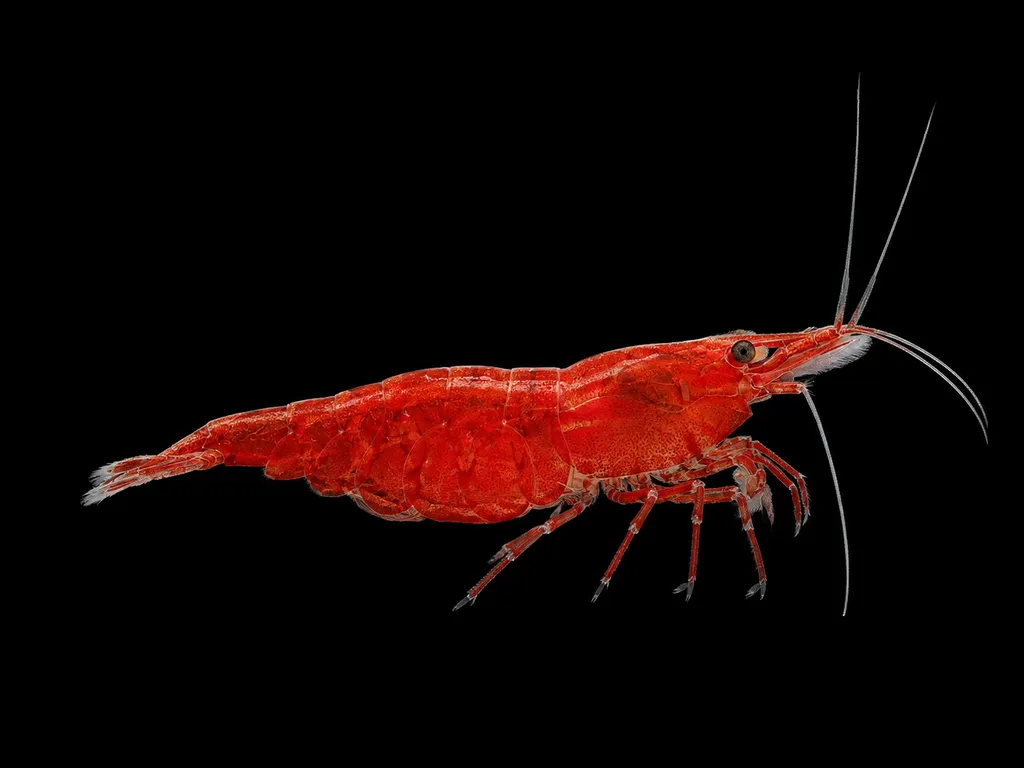
Neocaridina shrimp
Neocaridina davidi
Freshwater1.6 in (4 cm) · 5 gal (19 L)59–84°F (15–29°C)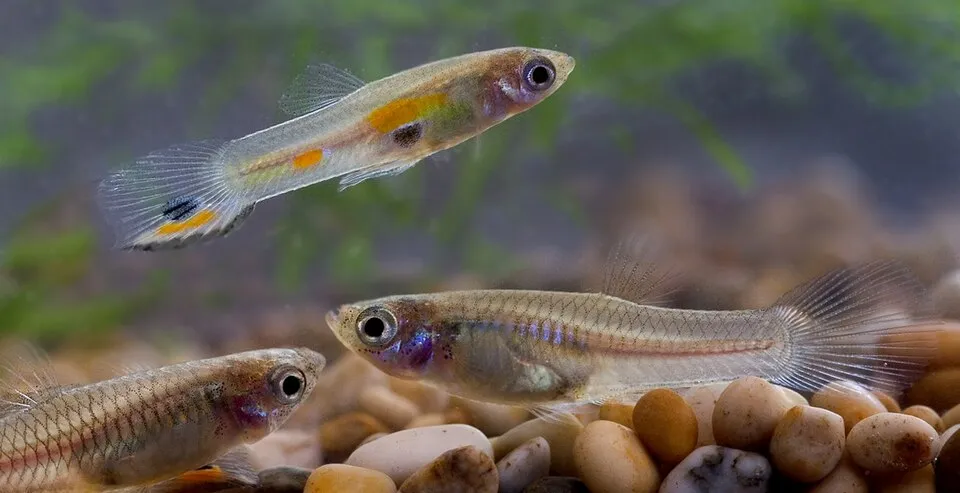
Guppy
Poecilia reticulata
FreshwaterBrackish2.4 in (6 cm) · 10 gal (38 L)64–82°F (18–28°C)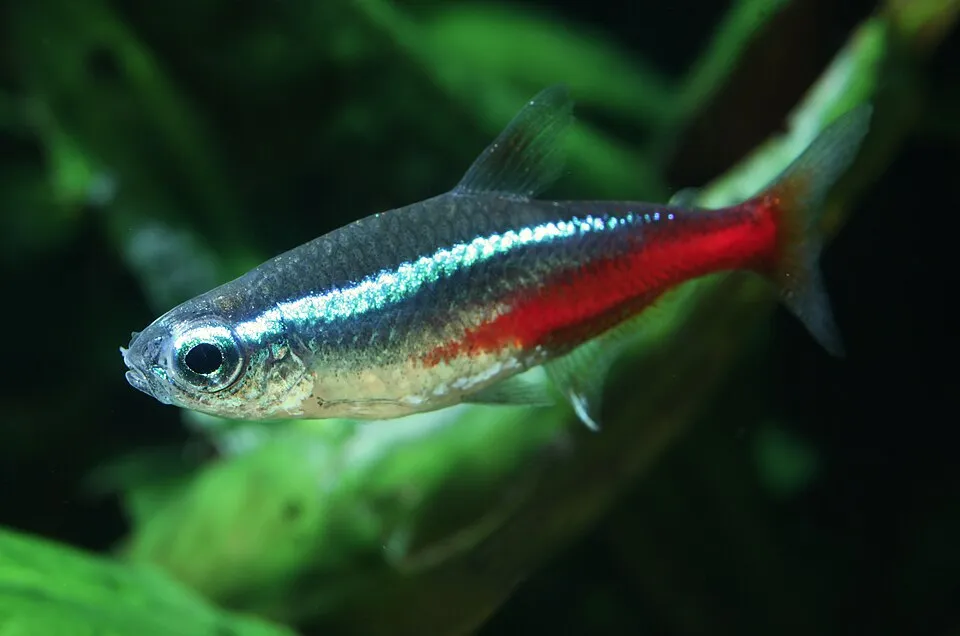
Neon tetra
Paracheirodon innesi
Freshwater1.5 in (3.8 cm) · 11 gal (40 L)70–77°F (21–25°C)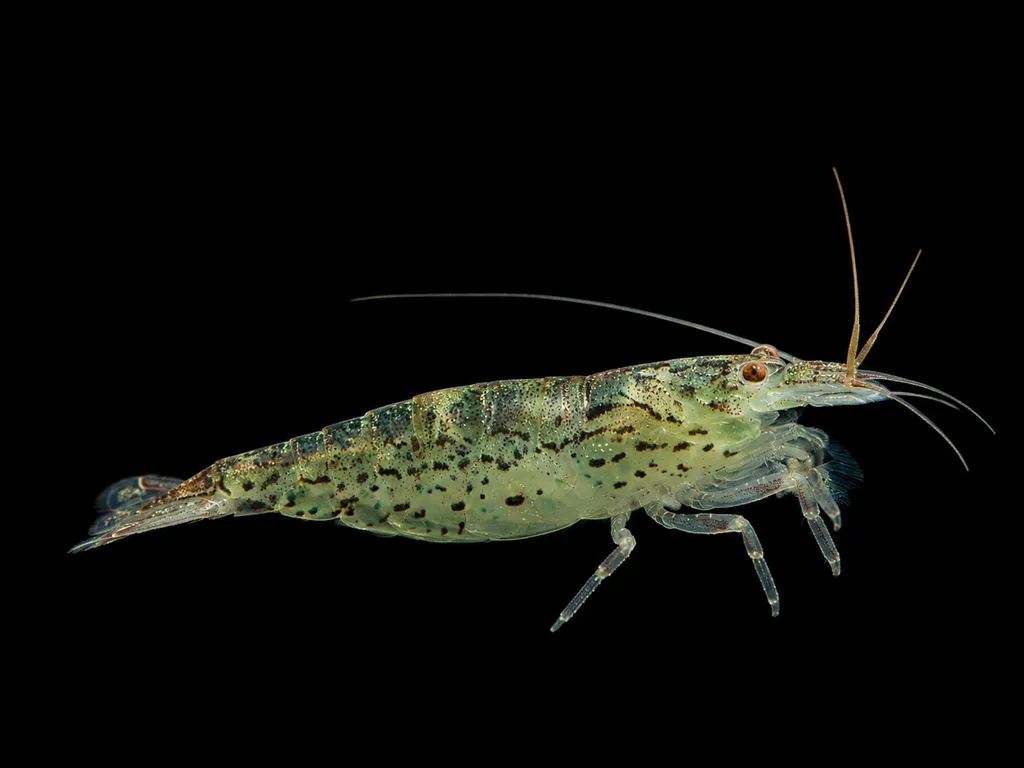
Green lace shrimp
Atyoida pilipes
Freshwater2.8 in (7 cm) · 14 gal (54 L)73–82°F (23–28°C)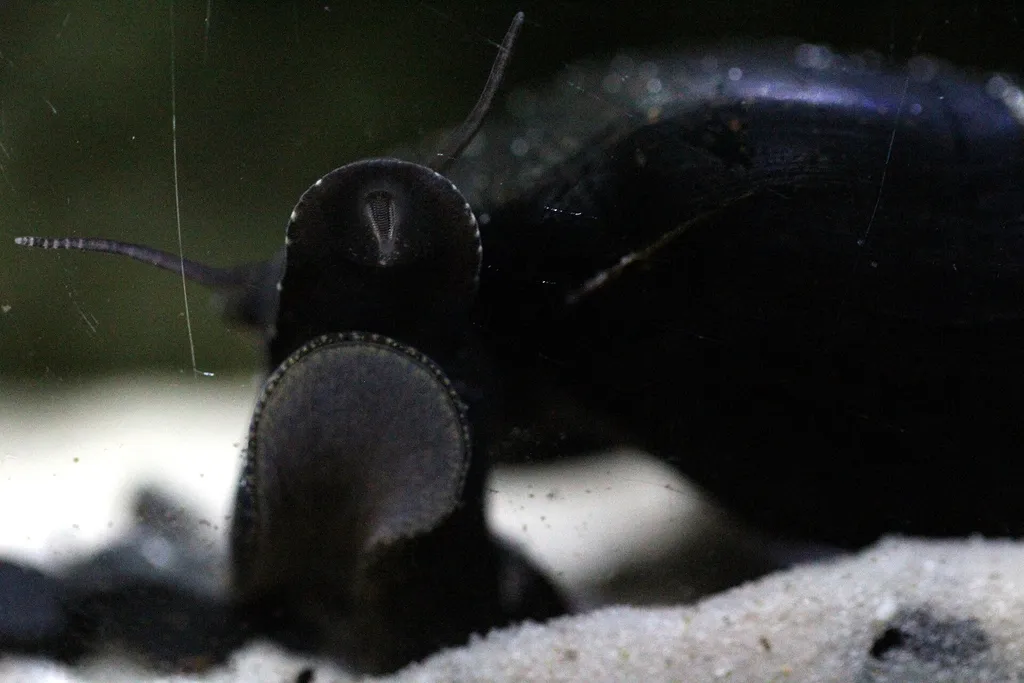
Black devil snail
Faunus ater
Freshwater3.9 in (10 cm) · 13 gal (50 L)72–86°F (22–30°C)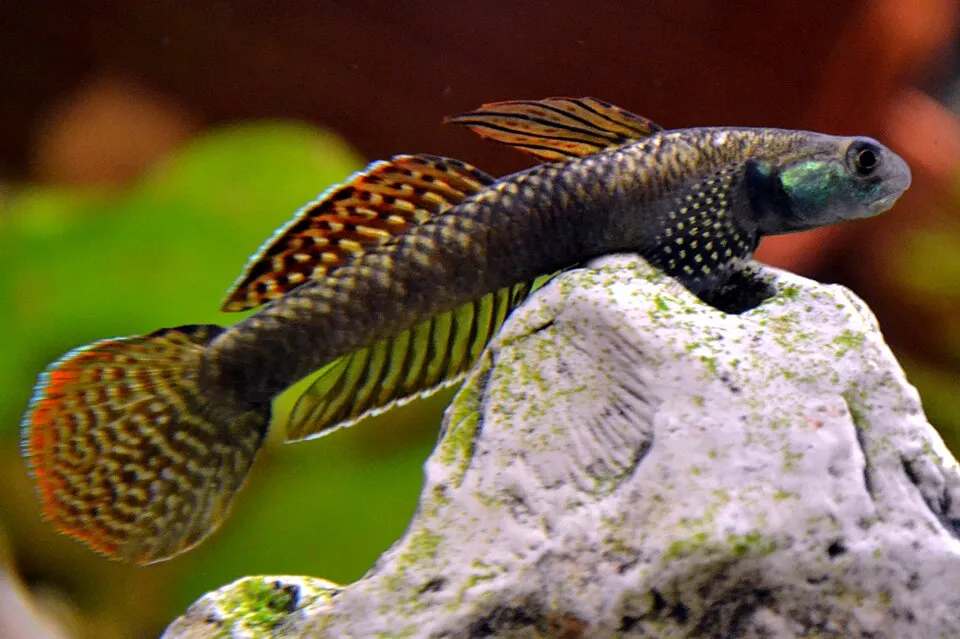
Rainbow stiphodon
Stiphodon ornatus
Freshwater2.6 in (6.5 cm) · 13 gal (50 L)68–79°F (20–26°C)
Common questions
What size tank does a threadfin rainbowfish need?
A threadfin rainbowfish needs at least 13 gal (50 L). It spends most of its time in the middle.
What temperature and pH does a threadfin rainbowfish need?
A threadfin rainbowfish is comfortable at 72–86°F (22–30°C) with a pH of 6.0–7.5.
What does a threadfin rainbowfish eat?
A threadfin rainbowfish has a small mouth, so it needs fine foods. Offer crushed flake, micro pellets, frozen cyclops, daphnia and baby brine shrimp.
How big does a threadfin rainbowfish get?
An adult threadfin rainbowfish reaches about 1.6 in (4 cm).
Does a threadfin rainbowfish need a group?
Yes. A threadfin rainbowfish is a schooling species and should be kept in a group, not singly.
How can you tell a male threadfin rainbowfish from a female?
Males are the ones with long, thread-like dorsal and tail fins. These grow in as they mature and make the fish look much larger.
How does a threadfin rainbowfish breed?
Threadfin rainbowfish scatter small eggs among fine plants and mops over an extended period and give the eggs no care. The fry hatch very small and need tiny live foods for their first days.
Related species
 2.2 in (5.5 cm)20 gal (75 L)75–86°F (24–30°C)
Sahul rainbowfish
Melanotaenia sahulensis
2.2 in (5.5 cm) · 20 gal (75 L)
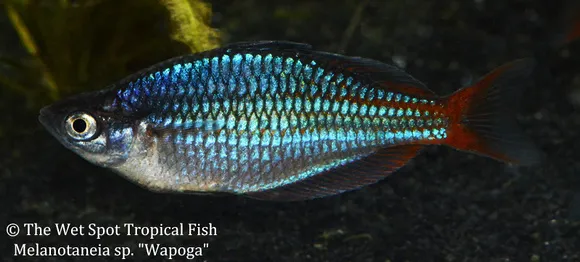 2.2 in (5.6 cm)24 gal (90 L)75–84°F (24–29°C)
Wapoga rainbowfish
Melanotaenia rubrivittata
2.2 in (5.6 cm) · 24 gal (90 L)
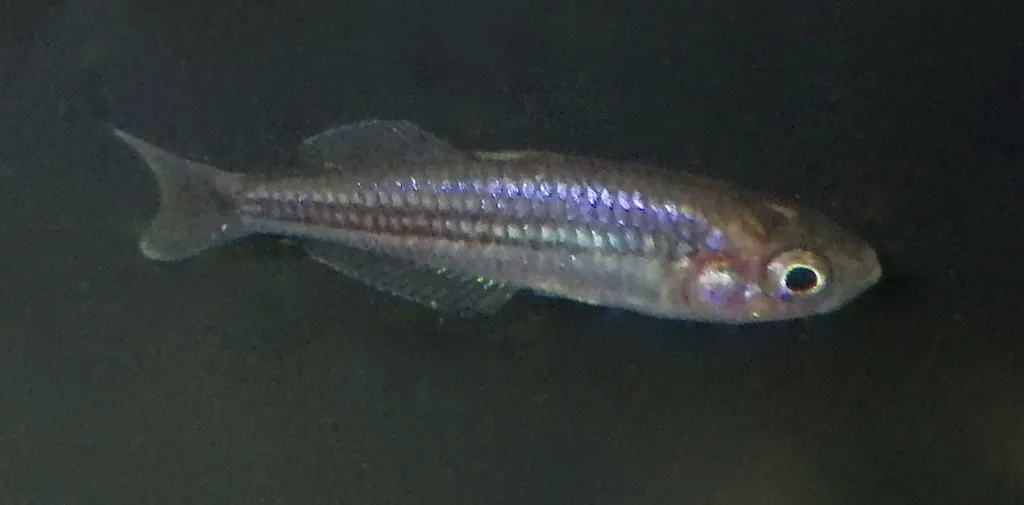 2.4 in (6 cm)20 gal (75 L)73–84°F (23–29°C)
Pygmy rainbowfish
Melanotaenia pygmaea
2.4 in (6 cm) · 20 gal (75 L)
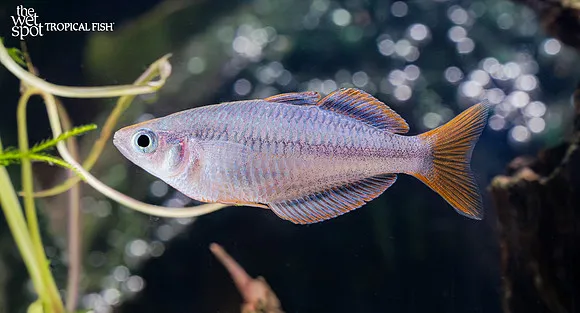 2.4 in (6.2 cm)29 gal (110 L)77–86°F (25–30°C)
Lake Furnusu rainbowfish
Melanotaenia mairasi
2.4 in (6.2 cm) · 29 gal (110 L)
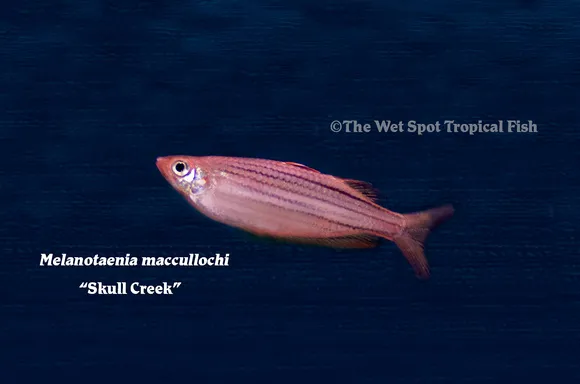
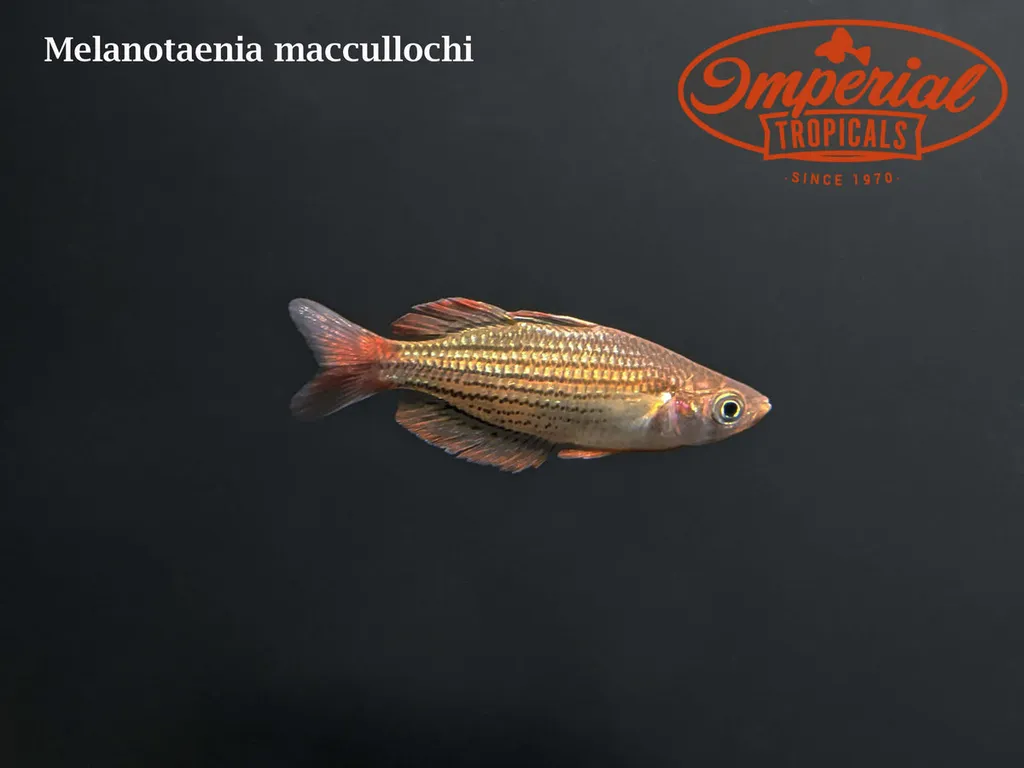 2.8 in (7 cm)20 gal (75 L)72–82°F (22–28°C)
Dwarf rainbowfish
Melanotaenia maccullochi
2.8 in (7 cm) · 20 gal (75 L)
 2.8 in (7 cm)29 gal (110 L)77–86°F (25–30°C)
Kamaka rainbowfish
Melanotaenia kamaka
2.8 in (7 cm) · 29 gal (110 L)