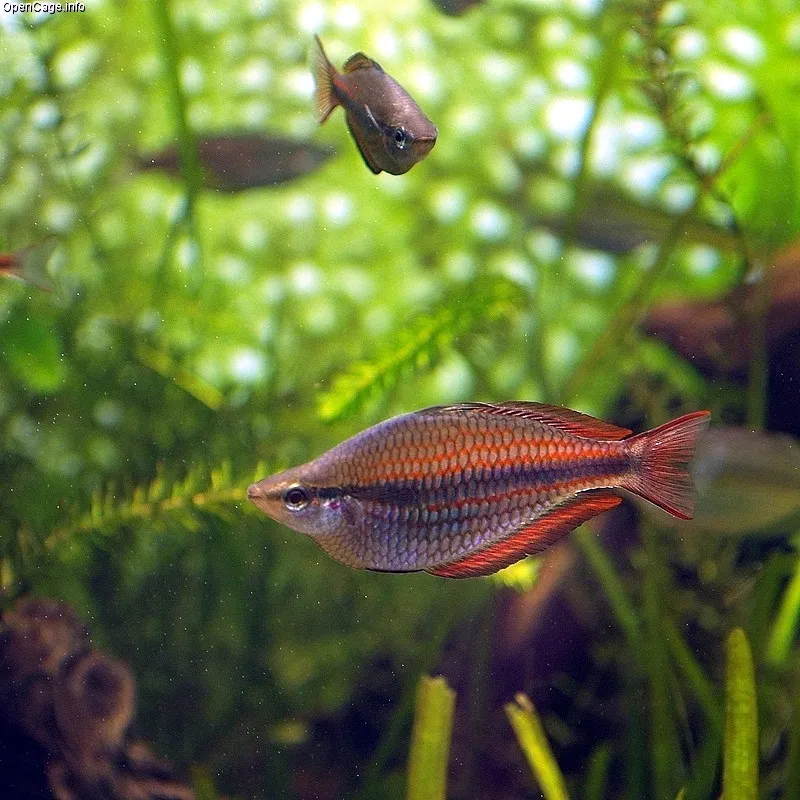
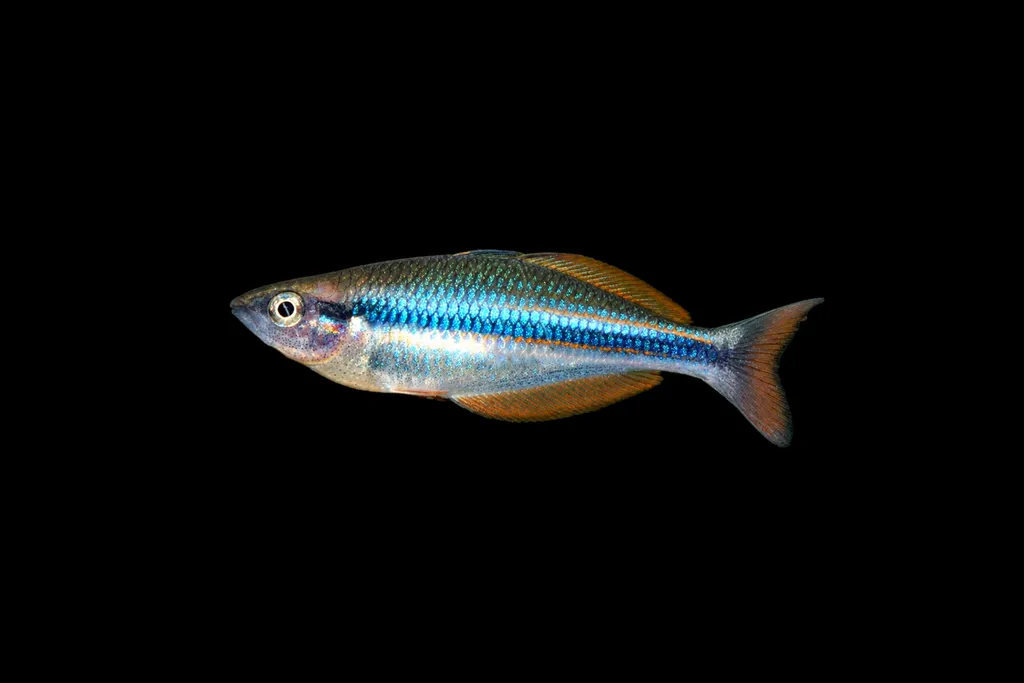
Banded rainbowfish
Melanotaenia trifasciata
Also known as Trifasciata Rainbow
FreshwaterFish
Care at a glance
- Temperature
- 75–84°F
- 24–29°C
- pH
- 6.5–8.0
- Adult size
- 5.9 in
- 15 cm
- Minimum tank
- 50 gal
- 190 L
- Temperament
- Peaceful
- Social behavior
- Schooling
- Swim level
- Middle
- Difficulty
- Easy
- Breeding
- Hard
- Rarity
- Rare
- Family
- Melanotaeniidae
- Origin
- Australia
Overview
Banded rainbowfish are active, sizeable fish that do best in a group of six or more, where males compete in color and fin displays without any real aggression. They cruise the middle of the tank and suit a spacious community with other robust, peaceful species. Because they can reach around 15 centimeters and swim hard, give them length to move. Feed a varied diet of good flake or pellet with frozen bloodworms, brine shrimp, and the odd bit of vegetable matter. Densely plant the back and sides and keep a long open lane in front. Aim for a tank around 190 liters or larger.
In the wild
This rainbowfish lives across northern Australia, in clear coastal and inland streams that run over sand and stone with plenty of sunlight and aquatic growth. Those waters are typically warm and neutral to slightly hard, so a pH of about 6.5 to 8 and a temperature between 24 and 29 degrees Celsius fit it well. Set up an aquarium with a fine substrate, driftwood or rockwork, sturdy plants along the margins, and clean, well-filtered water with a little current to mimic the flow it knows.
Good to know
Melanotaenia trifasciata sits in the family Melanotaeniidae and is one of the larger members, reaching up to about 15 centimeters though it is often seen a little smaller. The scientific name refers to the dark band that runs the length of the body, and populations from different rivers vary widely in base color. It is a continuous egg-scatterer, dropping a small number of eggs daily onto fine plants or wool mops over weeks. Coaxing a good spawn and raising the tiny fry takes effort, so breeding is considered hard.
Did you know
Banded rainbowfish are well known among keepers for their regional color forms, with names like Goyder River pointing to the exact creek a strain came from. Two fish of the same species can look strikingly different depending on where their line originated.
Weekly picks
Tank mates
Banded rainbowfish is a peaceful, schooling species that keeps to the middle. These picks share a community profile with it, are safe together in both directions, and overlap on water type, temperature and pH.
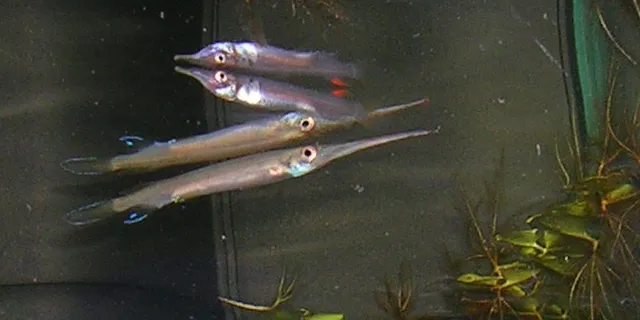
Forest halfbeak
Hemirhamphodon pogonognathus
Freshwater3.5 in (9 cm) · 34 gal (130 L)75–82°F (24–28°C)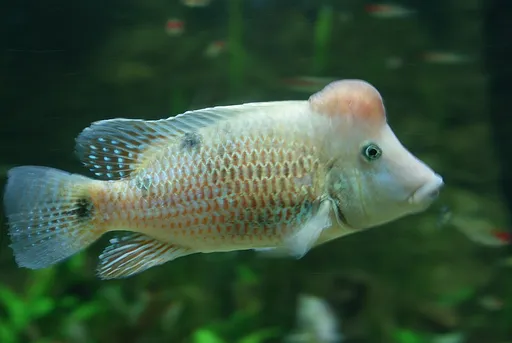
Red hump eartheater
Geophagus steindachneri
Freshwater5.9 in (15 cm) · 53 gal (200 L)72–82°F (22–28°C)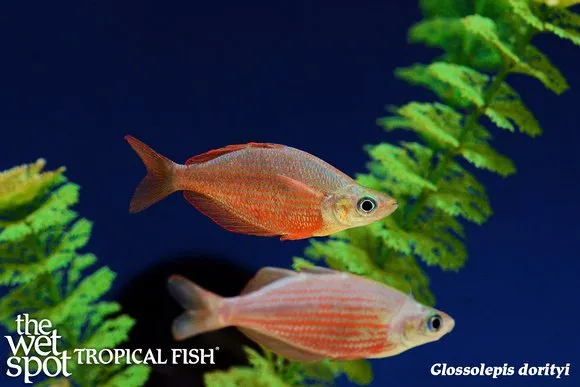
Dority's rainbowfish
Glossolepis dorityi
Freshwater5.1 in (13 cm) · 53 gal (200 L)77–86°F (25–30°C)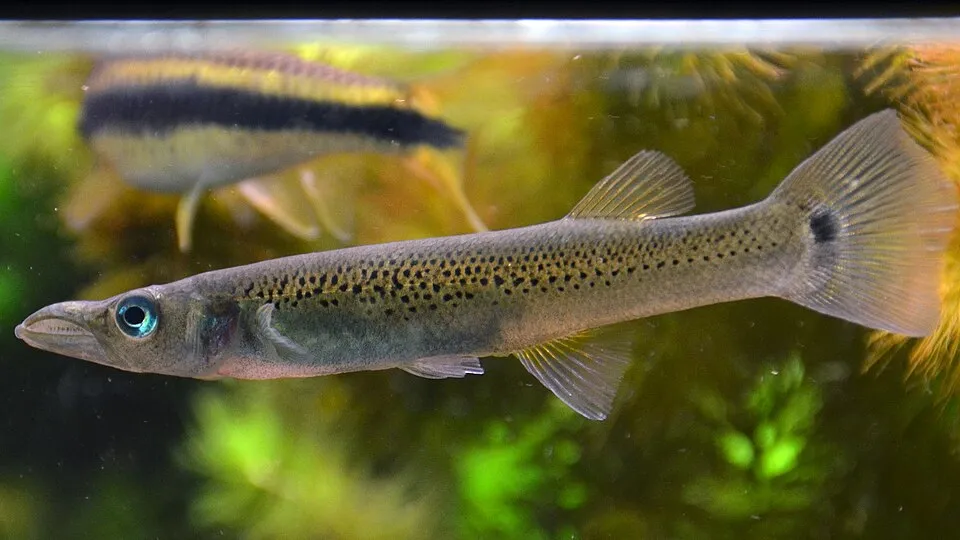
Pike topminnow
Belonesox belizanus
Freshwater7.9 in (20 cm) · 44 gal (165 L)73–82°F (23–28°C)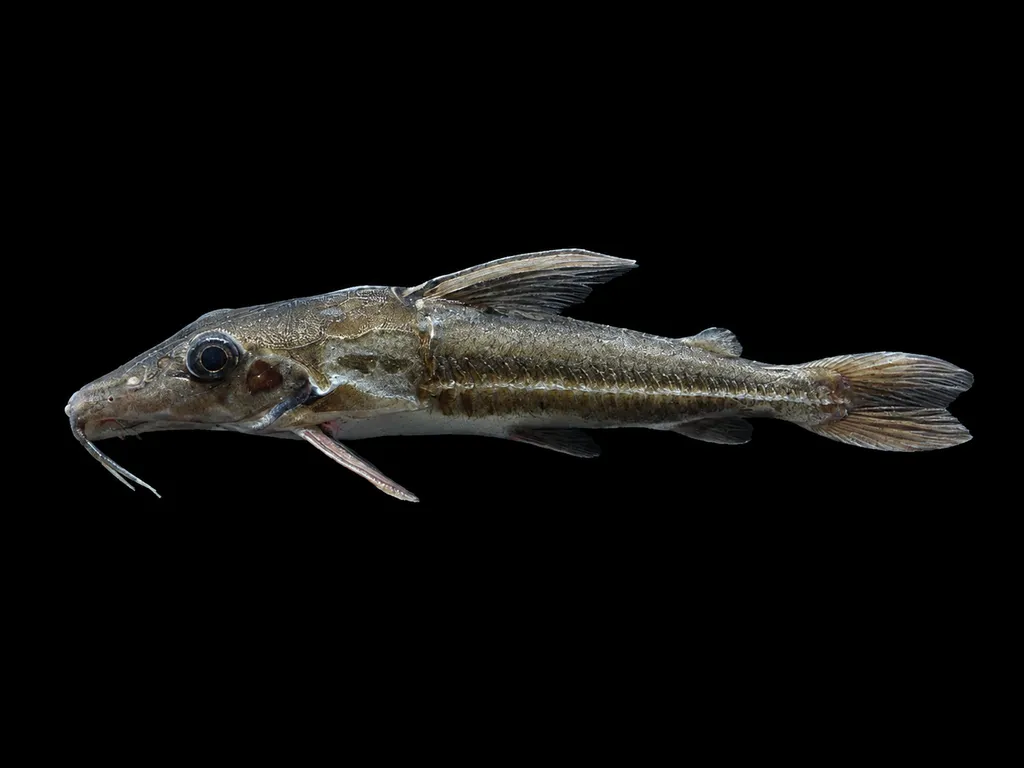
Green turushuki catfish
Hemidoras morrisi
Freshwater6.3 in (16 cm) · 53 gal (200 L)73–82°F (23–28°C)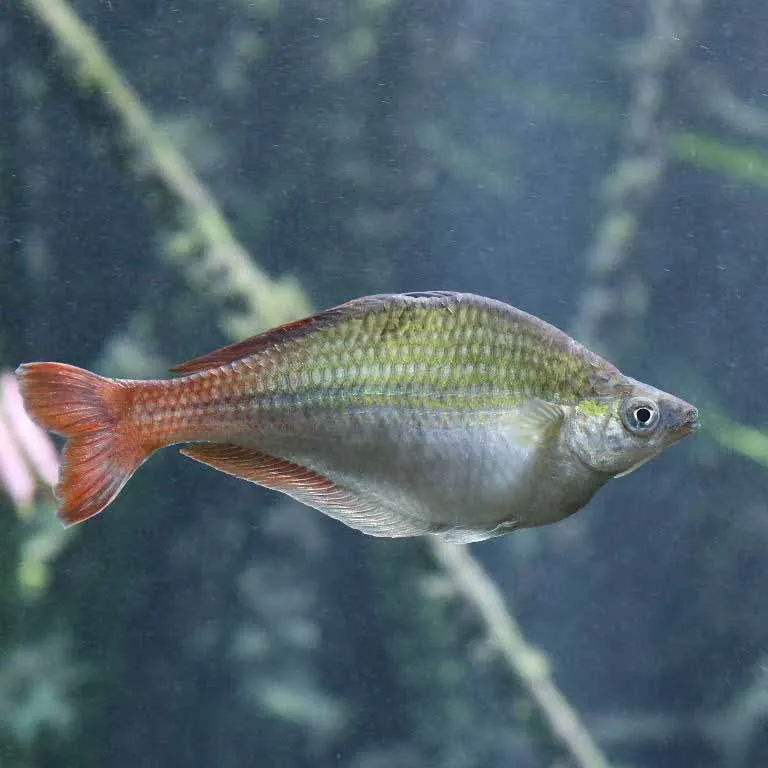
Bleher's rainbowfish
Chilatherina bleheri
Freshwater4.7 in (12 cm) · 53 gal (200 L)73–81°F (23–27°C)
Common questions
What size tank does a Banded rainbowfish need?
A Banded rainbowfish needs at least 50 gal (190 L). It spends most of its time in the middle.
What temperature and pH does a Banded rainbowfish need?
A Banded rainbowfish is comfortable at 75–84°F (24–29°C) with a pH of 6.5–8.0.
How big does a Banded rainbowfish get?
An adult Banded rainbowfish reaches about 5.9 in (15 cm).
Does a Banded rainbowfish need a group?
Yes. A Banded rainbowfish is a schooling species and should be kept in a group, not singly.
Related species
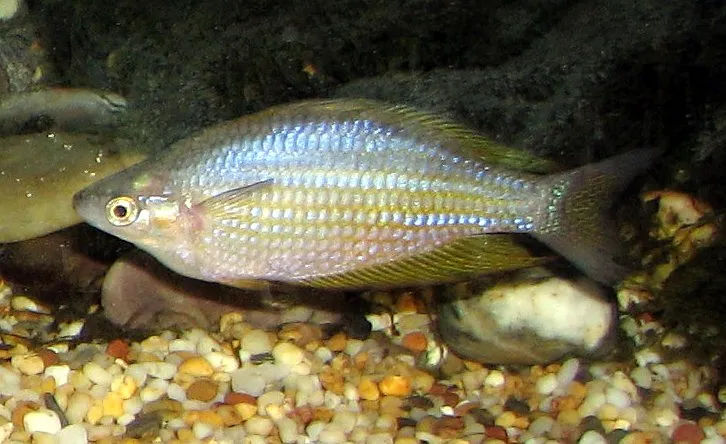 5.9 in (15 cm)50 gal (190 L)75–84°F (24–29°C)
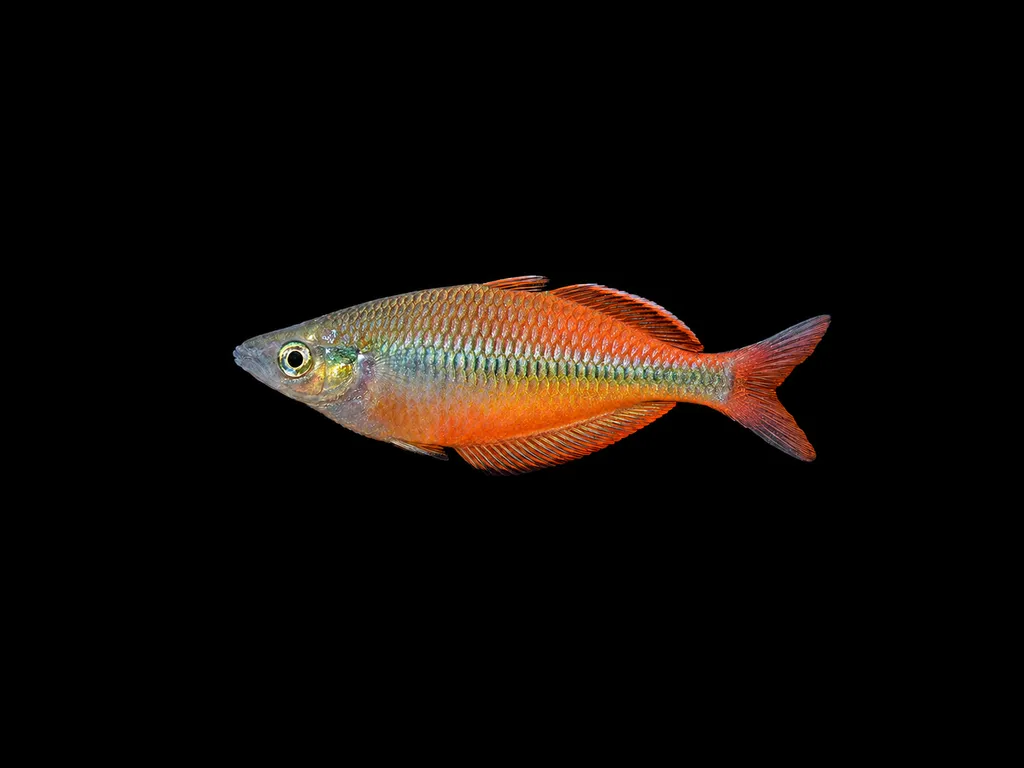
Eastern rainbowfish
Melanotaenia splendida splendida
5.9 in (15 cm) · 50 gal (190 L)
 5.5 in (14 cm)42 gal (160 L)75–84°F (24–29°C)
Susi rainbowfish
Melanotaenia susii
5.5 in (14 cm) · 42 gal (160 L)
 5.4 in (13.8 cm)53 gal (200 L)75–84°F (24–29°C)
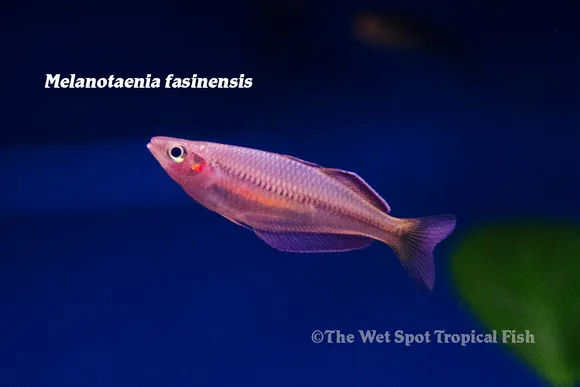
Fasin rainbowfish
Melanotaenia fasinensis
5.4 in (13.8 cm) · 53 gal (200 L)
 5.1 in (13 cm)53 gal (200 L)75–86°F (24–30°C)
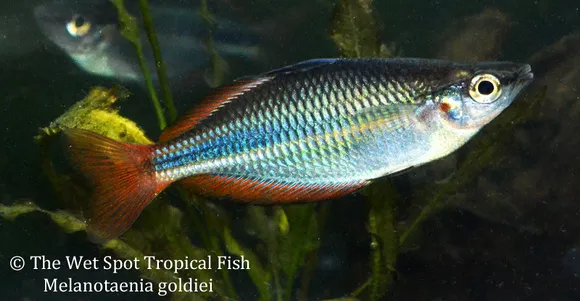
Goldie River rainbowfish
Melanotaenia goldiei
5.1 in (13 cm) · 53 gal (200 L)
 5.1 in (13 cm)53 gal (200 L)77–86°F (25–30°C)
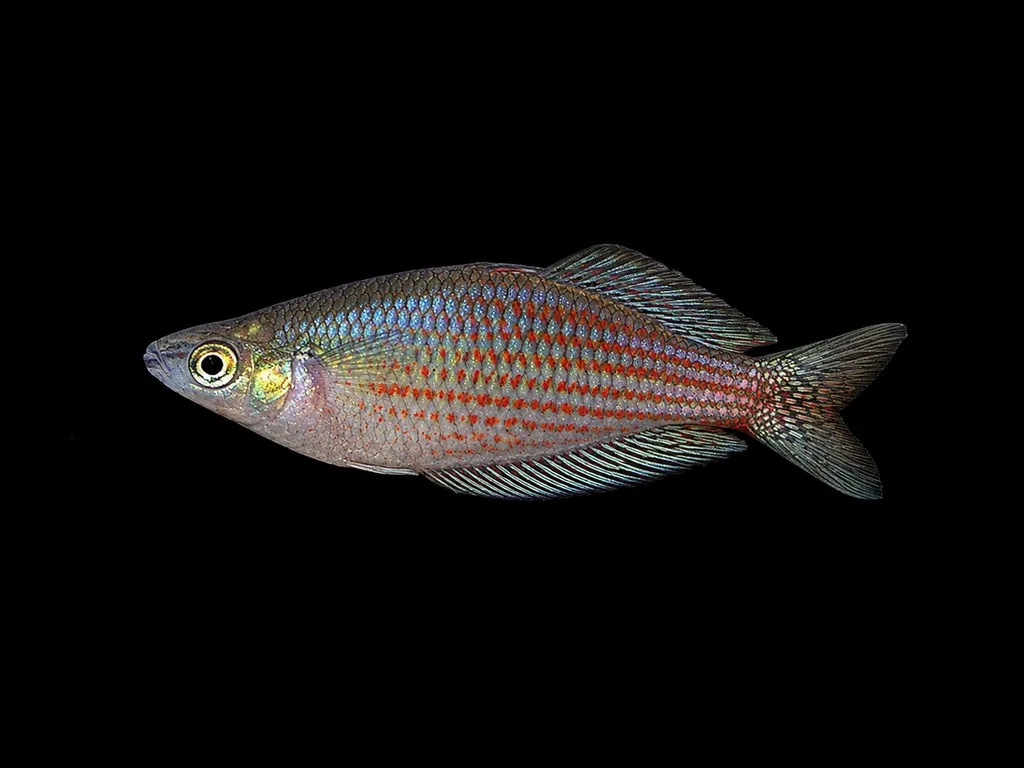
Red-striped rainbowfish
Melanotaenia rubrostriata
5.1 in (13 cm) · 53 gal (200 L)
 7.3 in (18.5 cm)66 gal (250 L)73–82°F (23–28°C)
Van Heurn's rainbowfish
Melanotaenia vanheurni
7.3 in (18.5 cm) · 66 gal (250 L)