Fasin rainbowfish
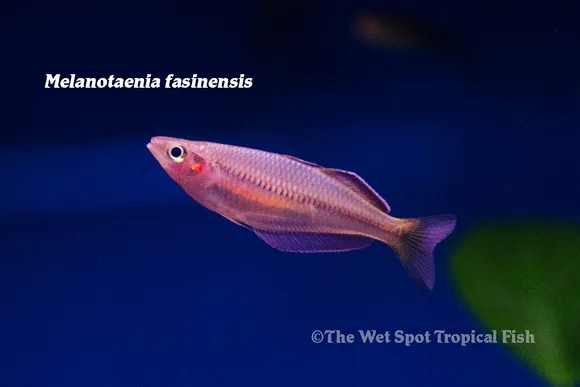
Melanotaenia fasinensis
Also known as Fasin Creek rainbowfish, Fasinensis rainbow
FreshwaterFish
Care at a glance
- Temperature
- 75–84°F
- 24–29°C
- pH
- 6.8–8.0
- Adult size
- 5.4 in
- 13.8 cm
- Minimum tank
- 53 gal
- 200 L
- Temperament
- Peaceful
- Social behavior
- Schooling
- Swim level
- Middle
- Difficulty
- Medium
- Breeding
- Egg depositor · Medium
- Rarity
- Rare
- Family
- Melanotaeniidae
- Origin
- Fasin Creek, Klasafet region, Bird's Head Peninsula, West Papua
Overview
The Fasin rainbowfish is a large, energetic schooling fish for a long community tank with open midwater. It does best with a keeper who has some experience.
Did you know
The Fasin rainbowfish was named in 2010, in a paper that also reported the rediscovery of the Ajamaru Lakes rainbowfish. That species had gone unrecorded since the 1950s and was feared lost.
Caring for the Fasin rainbowfish
Fasin rainbowfish need length more than anything, so choose a long tank over a tall one. Keep a school of six or more in at least 53 gal (200 L). Give them a sandy bottom, plants around the edges and open midwater for the males to own.
Keep the water neutral to alkaline and moderately hard, at 75 to 84°F (24 to 29°C) and a pH of 6.8 to 8.0. Give them some current. Feed a generous, varied diet of flake and granules with frozen bloodworm, daphnia and brine shrimp.
Fasin rainbowfish are peaceful despite their size and bustle. They do best with other sturdy, calm fish that can keep up, such as barbs, larger rainbowfishes and peaceful catfish.
Males are olive-backed with a dark band along the flank. Breeding them is of medium difficulty, in the standard rainbowfish pattern of daily egg-scattering onto plants or mops.
Good to know
Melanotaenia fasinensis was described by Kadarusman, Paradis and Pouyaud in 2010, and it belongs to the family Melanotaeniidae. It is one of the larger rainbowfishes discovered in recent decades. It also goes by Fasin Creek rainbowfish.
In the wild
The Fasin rainbowfish lives in Fasin Creek, in the Klasafet karst country of the Bird's Head Peninsula, West Papua. The creek runs clear and limestone-fed, carrying dissolved minerals.
Weekly picks
Tank mates
The Fasin rainbowfish is a peaceful, schooling species that keeps to the middle. These picks share a community profile with it, are safe together in both directions, and overlap on water type, temperature and pH.
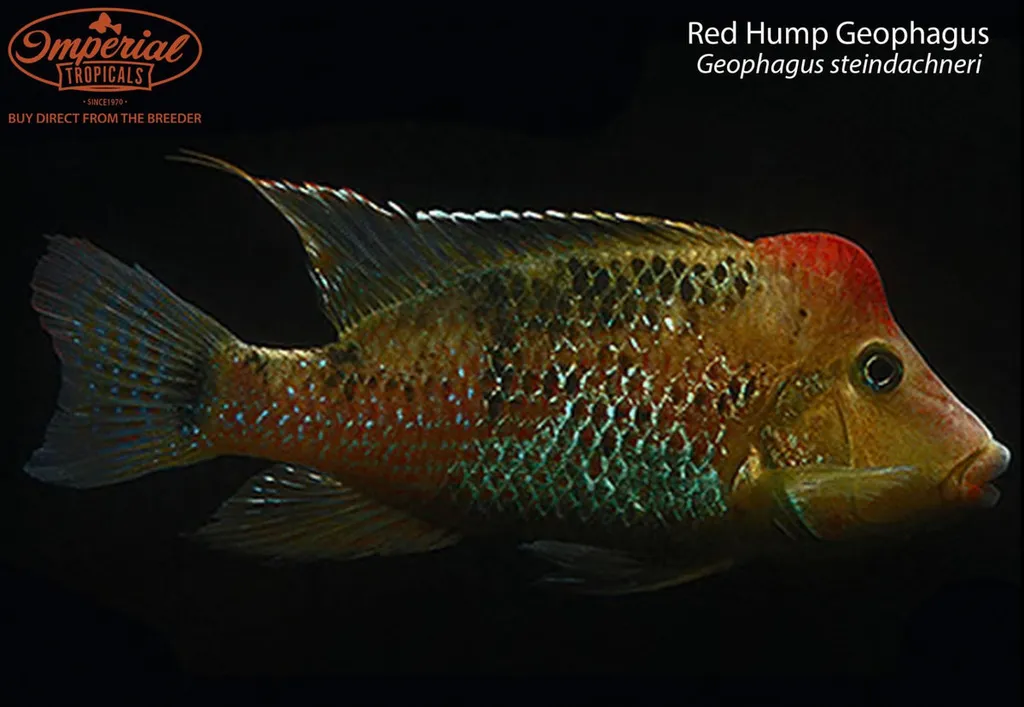
Red hump eartheater
Geophagus steindachneri
Freshwater5.9 in (15 cm) · 53 gal (200 L)72–82°F (22–28°C)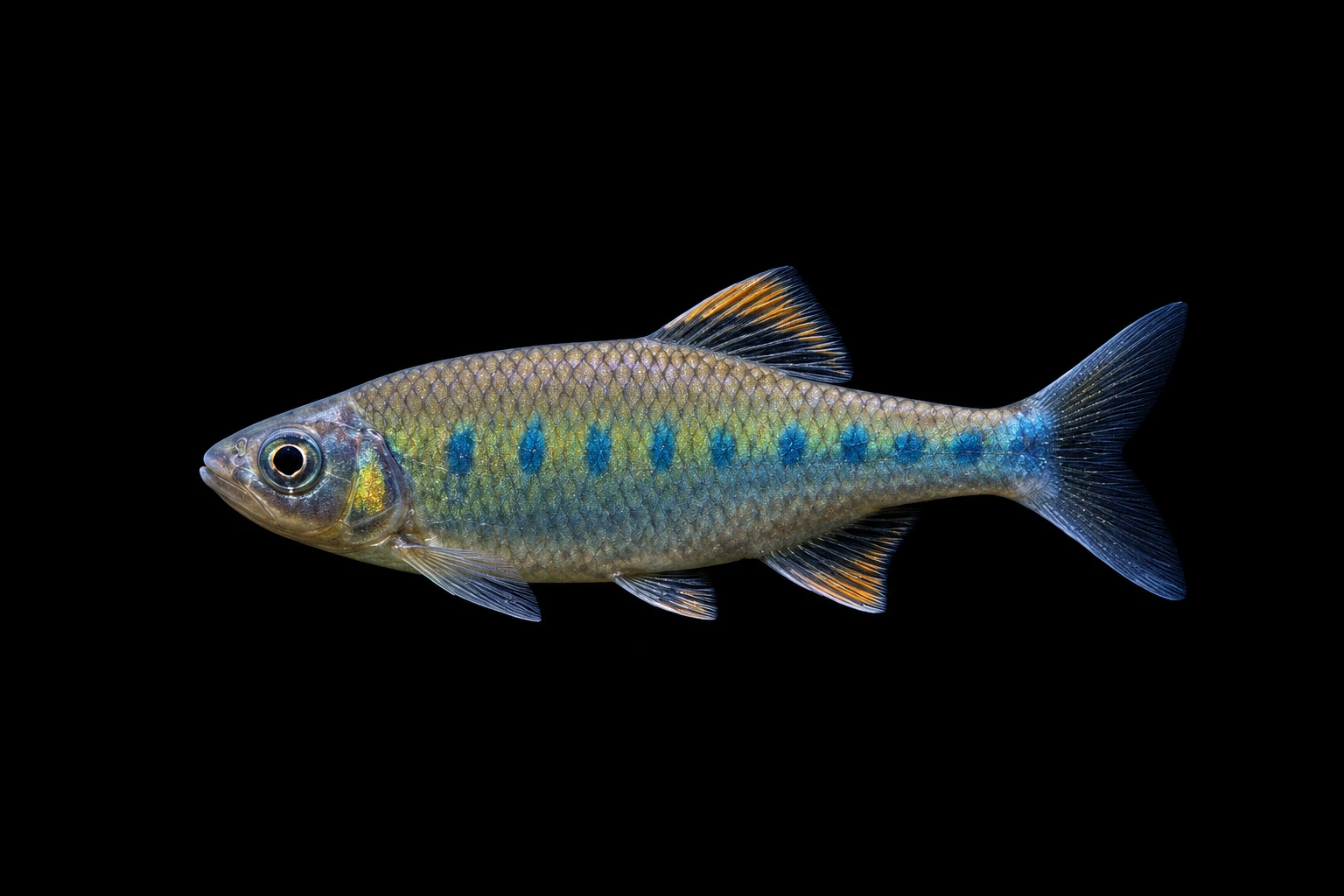
Blue spotted hill trout
Barilius bakeri
Freshwater5.1 in (13 cm) · 53 gal (200 L)64–79°F (18–26°C)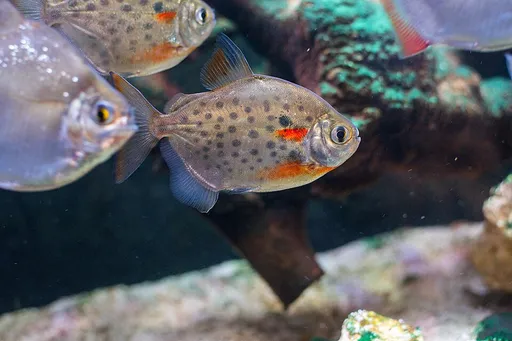
Spotted silver dollar
Metynnis lippincottianus
Freshwater5.5 in (14 cm) · 53 gal (200 L)73–81°F (23–27°C)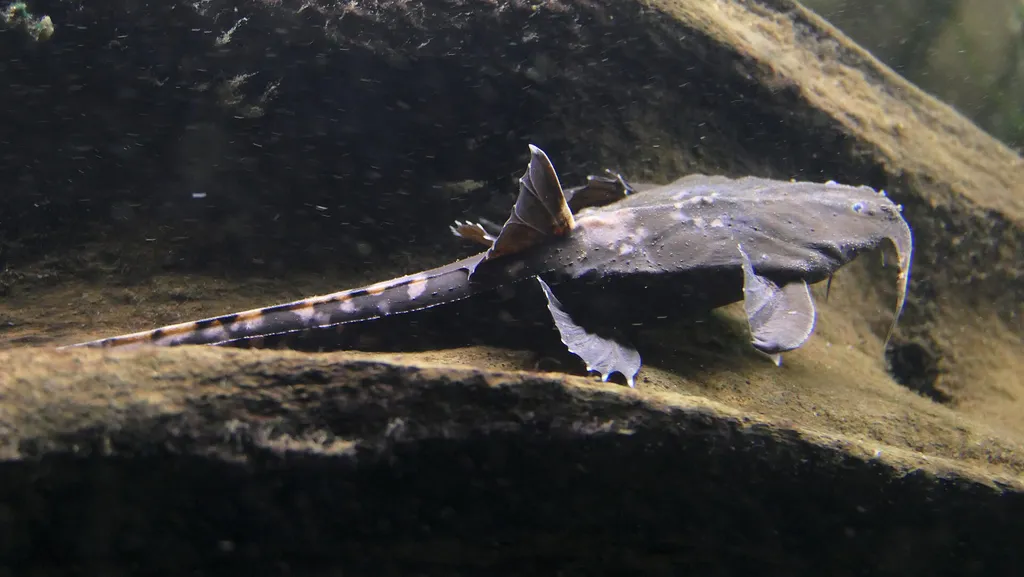
Whiptail banjo catfish
Platystacus cotylephorus
FreshwaterBrackish12.6 in (32 cm) · 53 gal (200 L)73–82°F (23–28°C)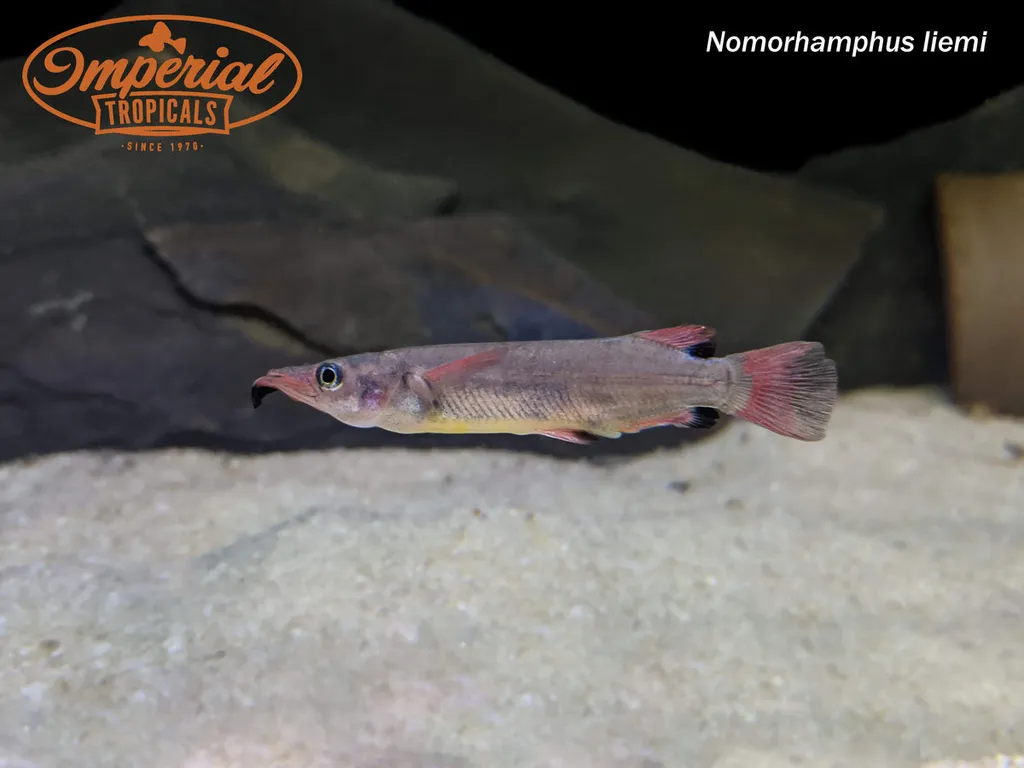
Celebes halfbeak
Nomorhamphus liemi
Freshwater3.5 in (9 cm) · 40 gal (150 L)68–77°F (20–25°C)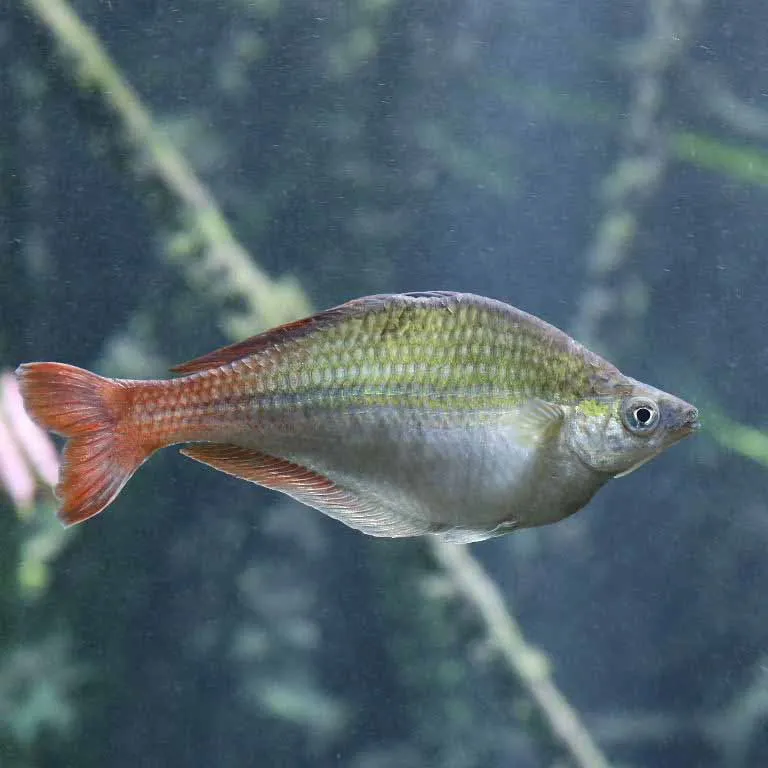
Bleher's rainbowfish
Chilatherina bleheri
Freshwater4.7 in (12 cm) · 53 gal (200 L)73–81°F (23–27°C)
Common questions
What size tank does a Fasin rainbowfish need?
A Fasin rainbowfish needs at least 53 gal (200 L). It spends most of its time in the middle.
What temperature and pH does a Fasin rainbowfish need?
A Fasin rainbowfish is comfortable at 75–84°F (24–29°C) with a pH of 6.8–8.0.
What does a Fasin rainbowfish eat?
A Fasin rainbowfish eats a generous, varied diet of flake and granules. Add frozen bloodworm, daphnia and brine shrimp.
How big does a Fasin rainbowfish get?
An adult Fasin rainbowfish reaches about 5.4 in (13.8 cm).
Does a Fasin rainbowfish need a group?
Yes. A Fasin rainbowfish is a schooling species and should be kept in a group, not singly.
How can you tell a male Fasin rainbowfish from a female?
Males are olive-backed, with a dark band along the flank.
How does a Fasin rainbowfish breed?
Fasin rainbowfish scatter eggs onto plants or mops every day, the standard rainbowfish pattern. Breeding them is of medium difficulty.
Related species
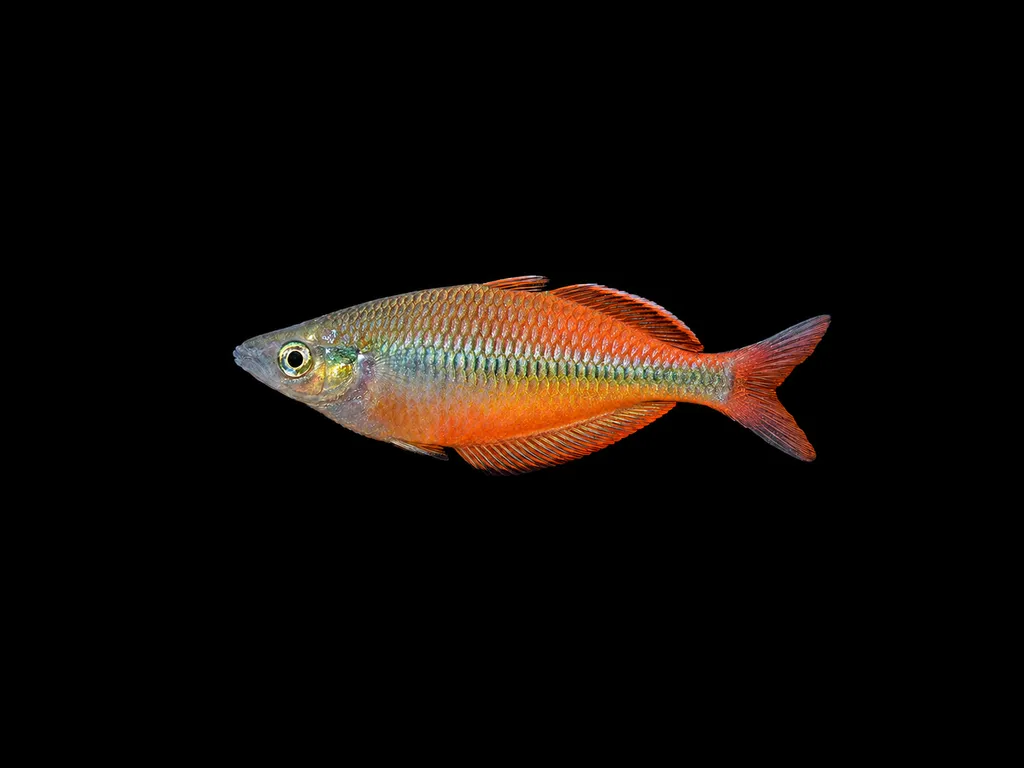 5.5 in (14 cm)42 gal (160 L)75–84°F (24–29°C)
Susi rainbowfish
Melanotaenia susii
5.5 in (14 cm) · 42 gal (160 L)
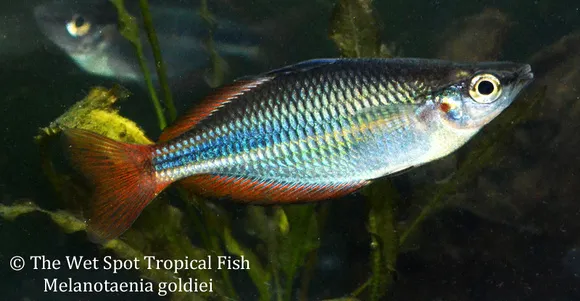 5.1 in (13 cm)53 gal (200 L)75–86°F (24–30°C)
Goldie River rainbowfish
Melanotaenia goldiei
5.1 in (13 cm) · 53 gal (200 L)
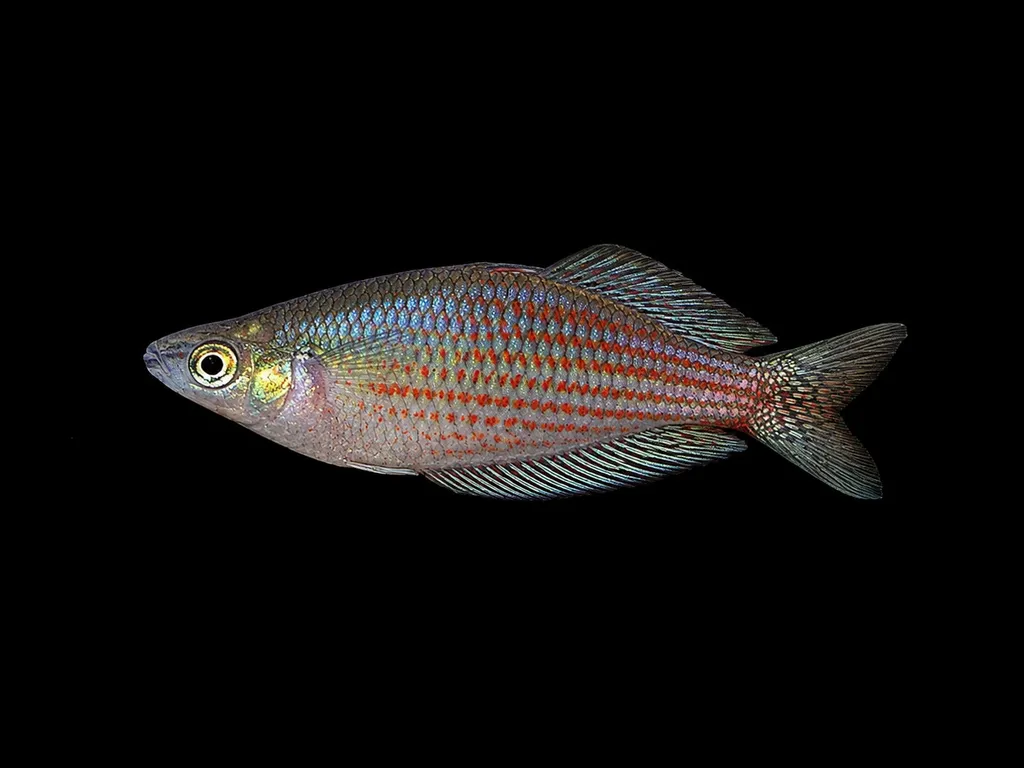 5.1 in (13 cm)53 gal (200 L)77–86°F (25–30°C)
Red-striped rainbowfish
Melanotaenia rubrostriata
5.1 in (13 cm) · 53 gal (200 L)
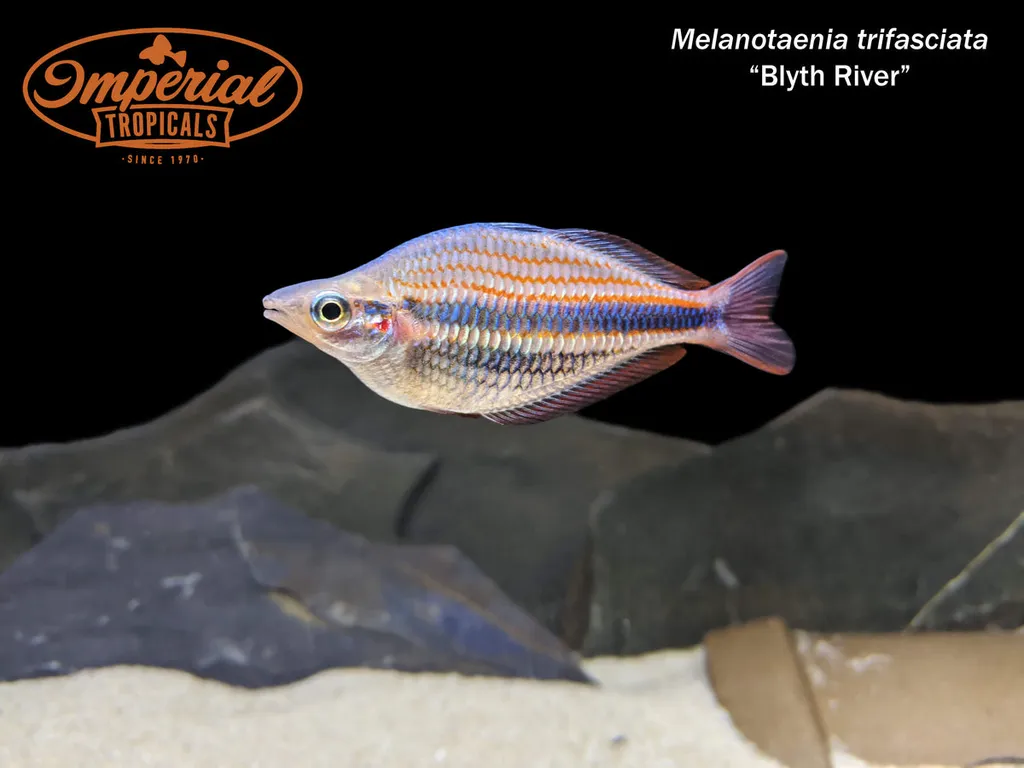 5.9 in (15 cm)50 gal (190 L)75–84°F (24–29°C)
Banded rainbowfish
Melanotaenia trifasciata
5.9 in (15 cm) · 50 gal (190 L)
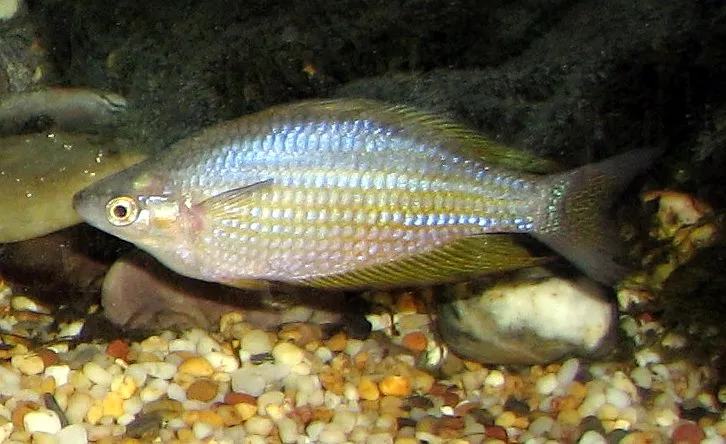 5.9 in (15 cm)50 gal (190 L)75–84°F (24–29°C)
Eastern rainbowfish
Melanotaenia splendida splendida
5.9 in (15 cm) · 50 gal (190 L)
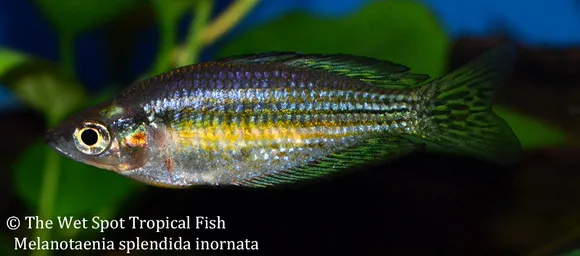 4.7 in (12 cm)29 gal (110 L)72–86°F (22–30°C)
Checkered rainbowfish
Melanotaenia splendida inornata
4.7 in (12 cm) · 29 gal (110 L)