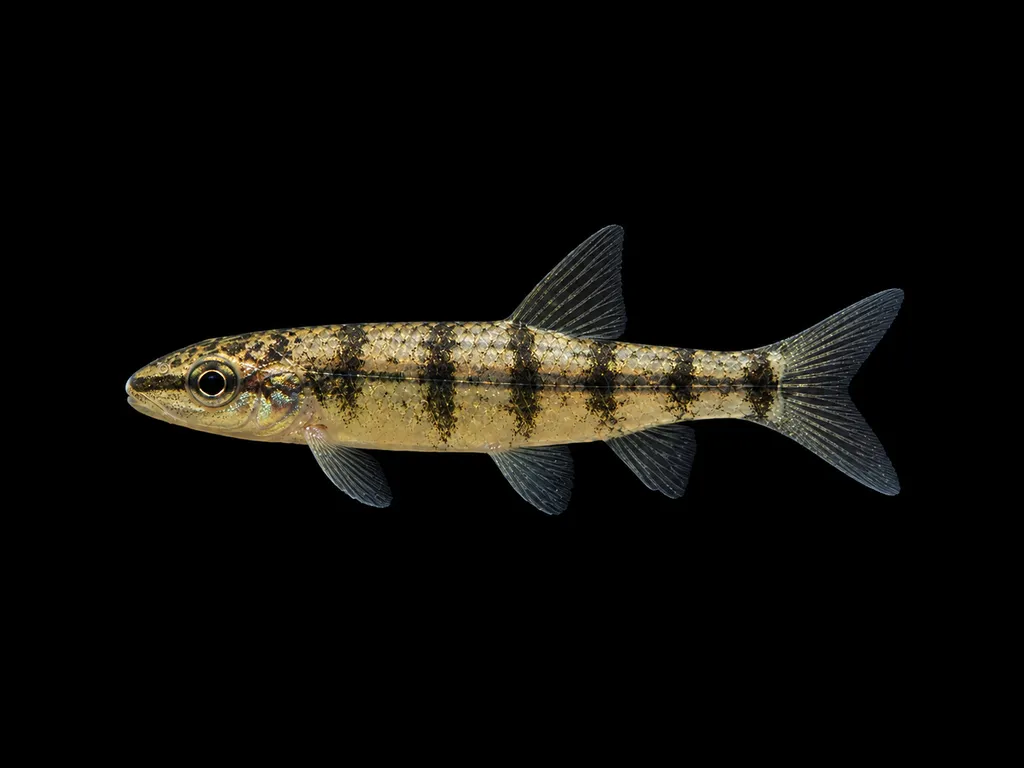
Banded darter tetra
Nannocharax fasciatus
Also known as Banded African darter tetra
FreshwaterFish
Care at a glance
- Temperature
- 73–82°F
- 23–28°C
- pH
- 6.0–7.5
- Adult size
- 2.6 in
- 6.5 cm
- Minimum tank
- 21 gal
- 80 L
- Temperament
- Peaceful
- Social behavior
- Social
- Swim level
- Bottom
- Difficulty
- Medium
- Breeding
- No record
- Rarity
- Rare
- Family
- Distichodontidae
- Origin
- Coastal rivers of West Africa
Overview
The banded darter tetra is a peaceful, bottom-hugging African characin. It suits a keeper past the beginner stage.
Did you know
The banded darter tetra lives an ocean away from South America's darter characins, yet it evolved the same design. Both are barred, bottom-perching characins that rest propped on their fins and hop rather than cruise. The two lineages are unrelated.
Caring for the banded darter tetra
A small group of banded darter tetras settles into a tank of 21 gal (80 L). Give them open sand, smooth rounded stones, driftwood and some cover at the edges. A gentle to moderate current gives them something to work against.
Keep the water well oxygenated, at 73 to 82°F (23 to 28°C) with a pH of 6.0 to 7.5. They are sensitive to fresh, unsettled water, so a mature tank and steady maintenance suit them best.
Feed sinking foods and small frozen items such as bloodworm and brine shrimp. They pick these from the substrate and plant surfaces.
Banded darter tetras are peaceful and sociable. They can live alone, but if you keep a group, six or so is a good size. Choose calm, similarly sized tank mates rather than tiny or very delicate fish. There is no record of them breeding in aquariums.
Good to know
Nannocharax fasciatus is a small African darter in the family Distichodontidae. It carries the dark cross-bars its name records. The various banded Nannocharax are notoriously hard to tell apart.
In the wild
The banded darter tetra lives in the coastal rivers and streams of West Africa, broadly from Senegal across to Cameroon. It keeps to clear, flowing water over sand and stone.
Weekly picks
Tank mates
The banded darter tetra is a peaceful, social species that keeps to the bottom. These picks share a community profile with it, are safe together in both directions, and overlap on water type, temperature and pH.
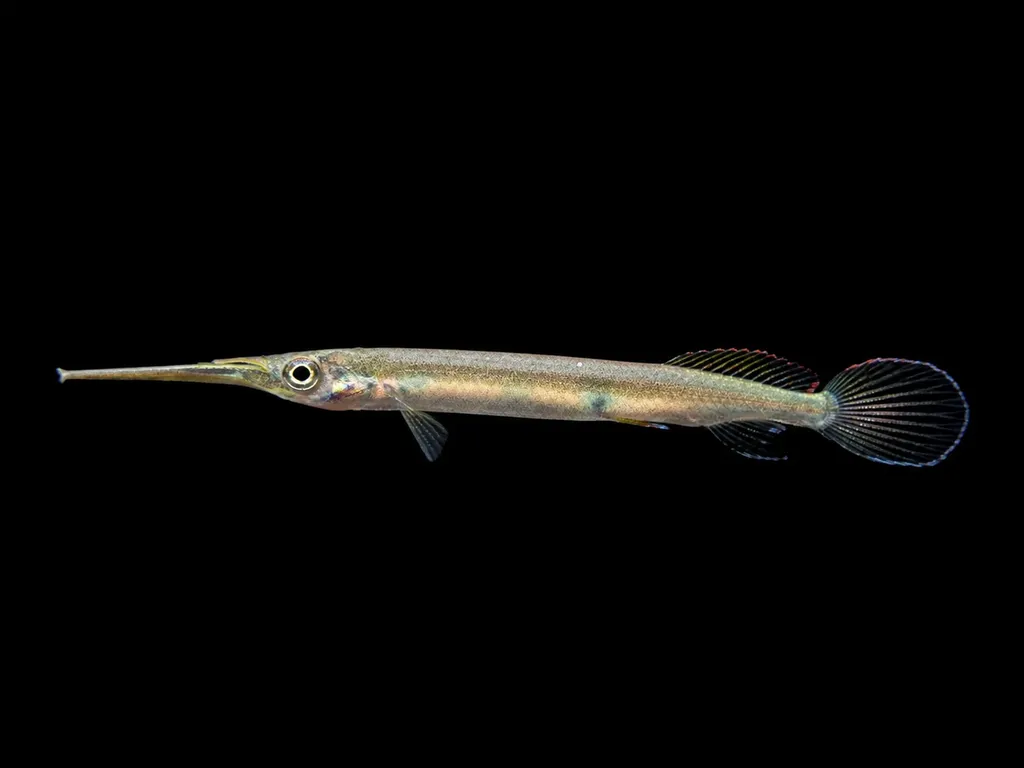
Kuekenthal's halfbeak
Hemirhamphodon kuekenthali
Freshwater3.3 in (8.5 cm) · 20 gal (75 L)73–81°F (23–27°C)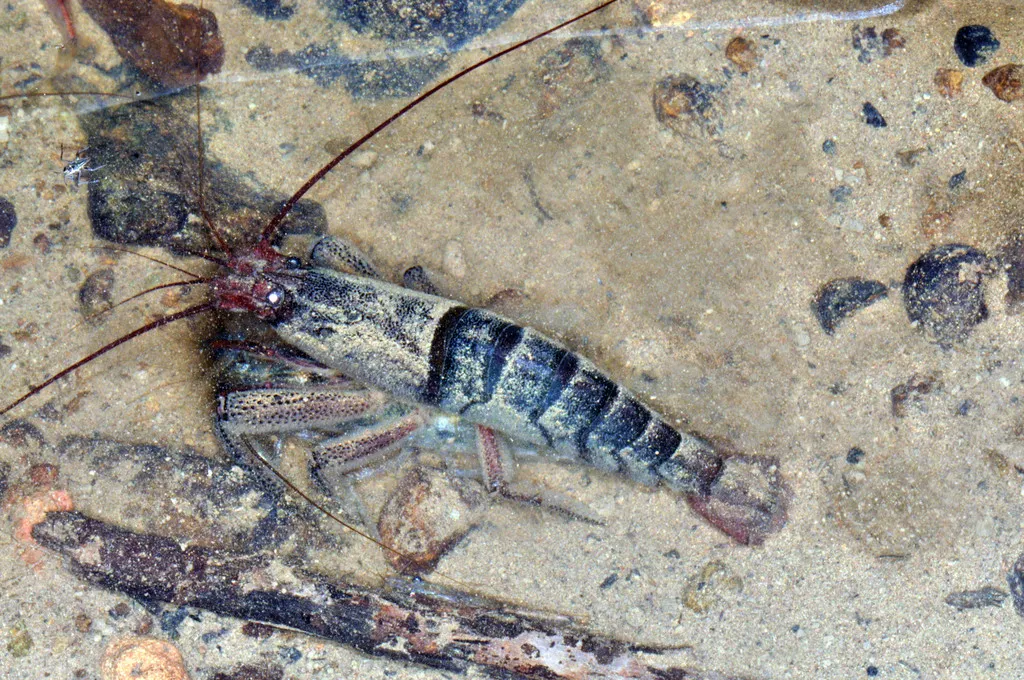
Marble wood shrimp
Atya scabra
Freshwater3.9 in (10 cm) · 20 gal (75 L)73–82°F (23–28°C)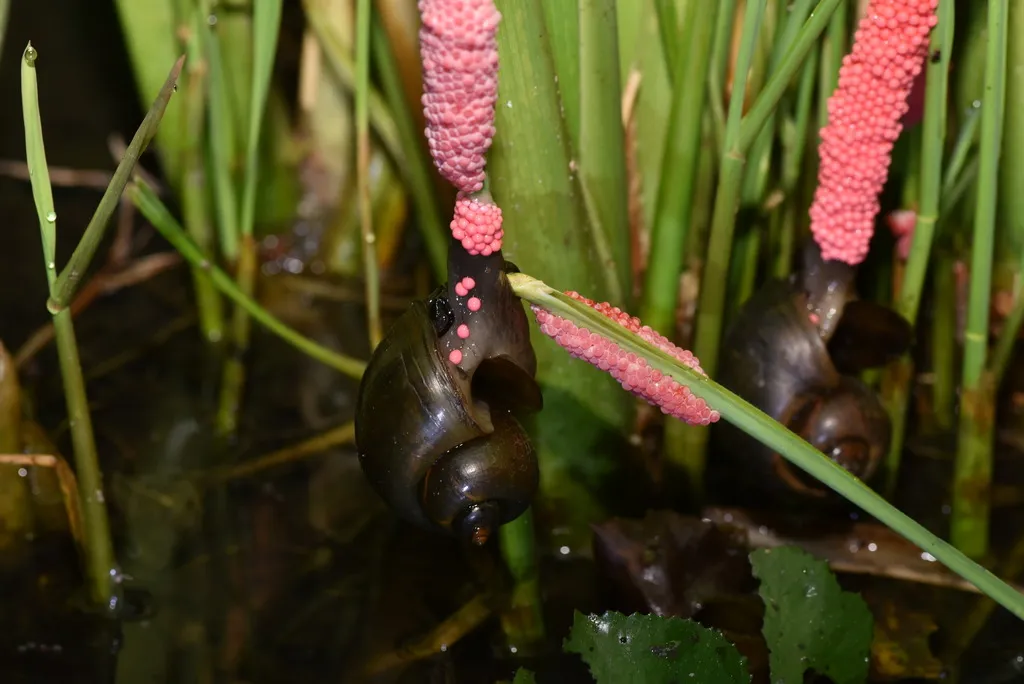
Apple snail
Pomacea canaliculata
Freshwater5.9 in (15 cm) · 21 gal (80 L)64–81°F (18–27°C)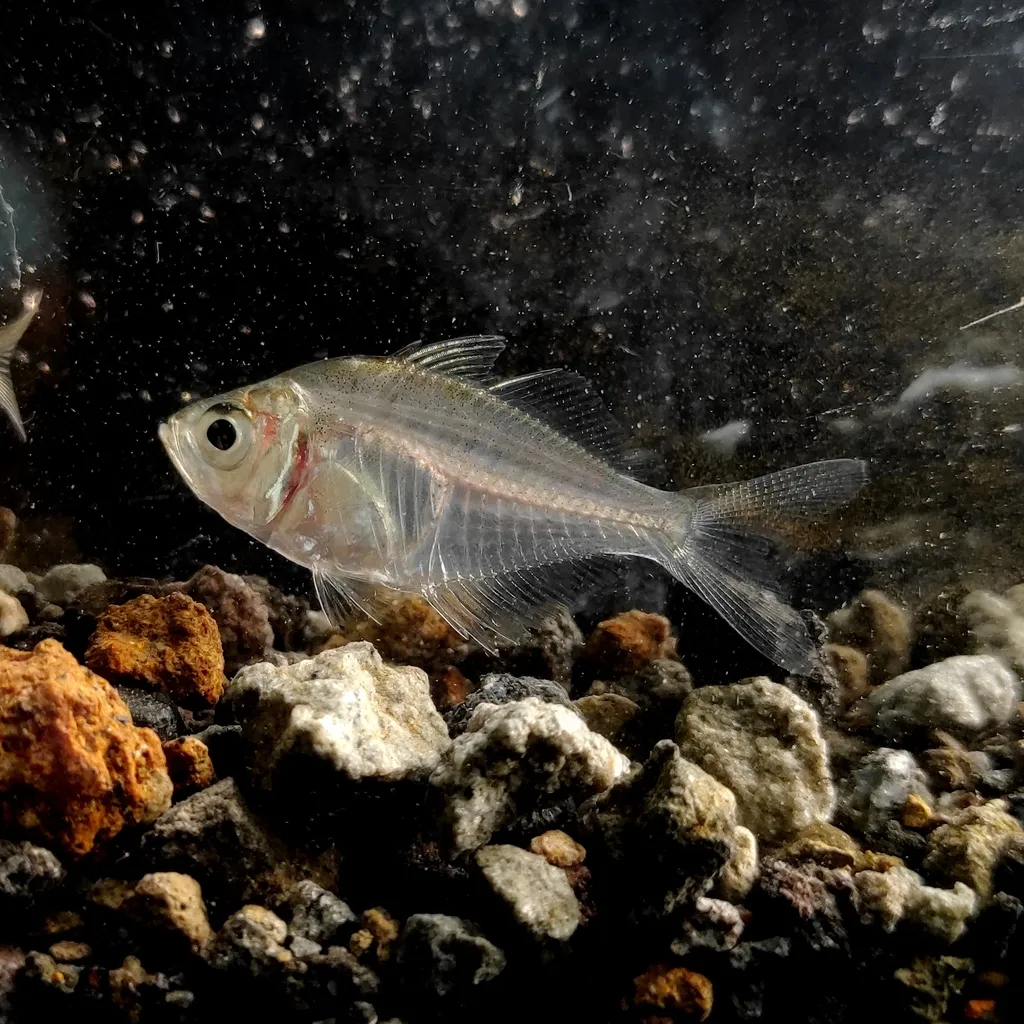
Siamese glassfish
Parambassis siamensis
Freshwater2.8 in (7 cm) · 21 gal (80 L)73–82°F (23–28°C)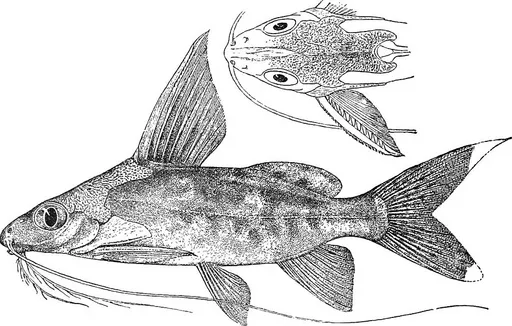
Bigeye squeaker
Synodontis alberti
Freshwater5.9 in (15 cm) · 21 gal (80 L)72–79°F (22–26°C)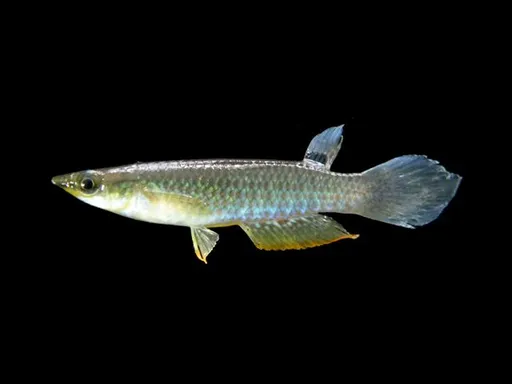
Blue panchax
Aplocheilus panchax
Freshwater3.5 in (9 cm) · 20 gal (75 L)72–82°F (22–28°C)
Common questions
What size tank does a banded darter tetra need?
A banded darter tetra needs at least 21 gal (80 L). It spends most of its time in the bottom.
What temperature and pH does a banded darter tetra need?
A banded darter tetra is comfortable at 73–82°F (23–28°C) with a pH of 6.0–7.5.
What does a banded darter tetra eat?
A banded darter tetra eats sinking foods and small frozen items such as bloodworm and brine shrimp. It picks them from the substrate and plant surfaces.
How big does a banded darter tetra get?
An adult banded darter tetra reaches about 2.6 in (6.5 cm).
Related species
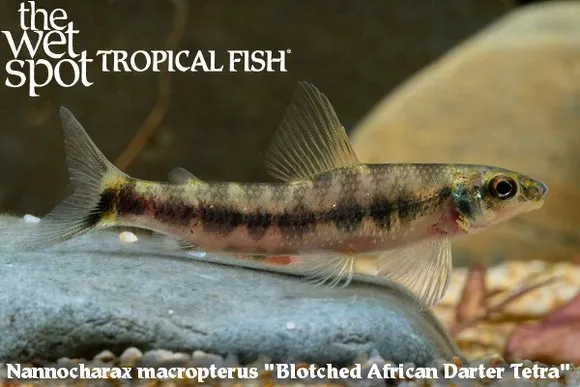 2.4 in (6 cm)21 gal (80 L)73–82°F (23–28°C)
Blotched darter tetra
Nannocharax macropterus
2.4 in (6 cm) · 21 gal (80 L)
- 2.4 in (6 cm)21 gal (80 L)73–82°F (23–28°C)
Red-lipped darter tetra
Nannocharax rubrolabiatus
2.4 in (6 cm) · 21 gal (80 L)
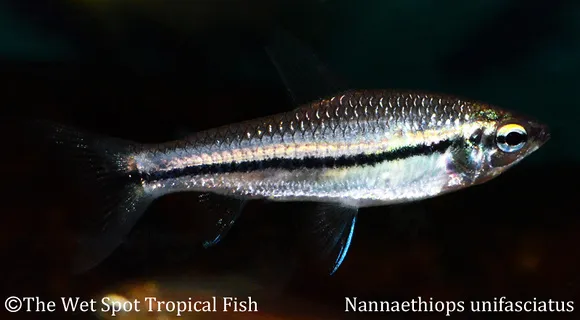 2.6 in (6.5 cm)16 gal (60 L)72–79°F (22–26°C)
African oneline tetra
Nannaethiops unitaeniatus
2.6 in (6.5 cm) · 16 gal (60 L)
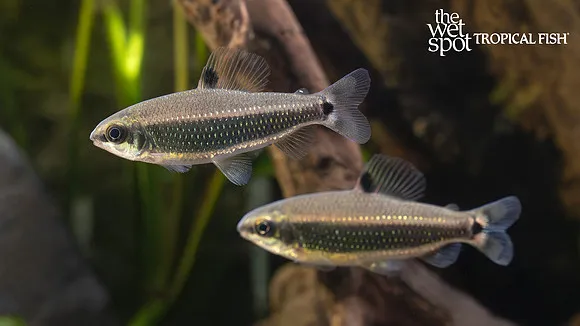 2.4 in (6 cm)20 gal (75 L)72–79°F (22–26°C)
Green dwarf distichodus
Distichodus teugelsi
2.4 in (6 cm) · 20 gal (75 L)
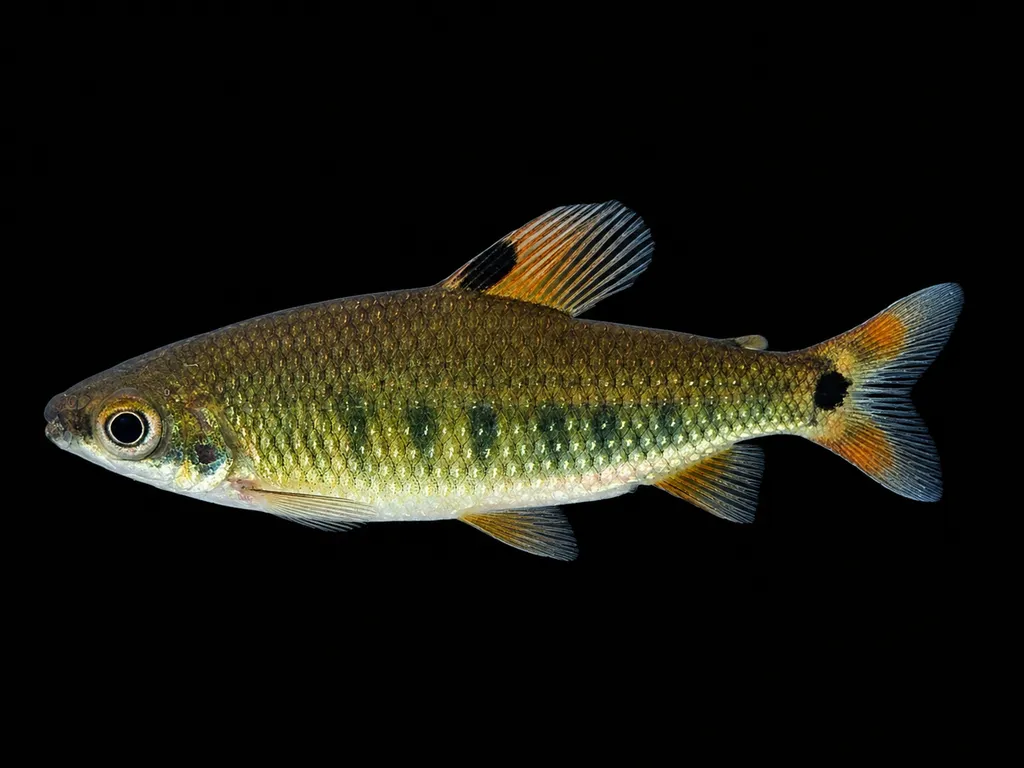 3 in (7.5 cm)30 gal (112 L)73–81°F (23–27°C)
Dwarf distichodus
Distichodus decemmaculatus
3 in (7.5 cm) · 30 gal (112 L)
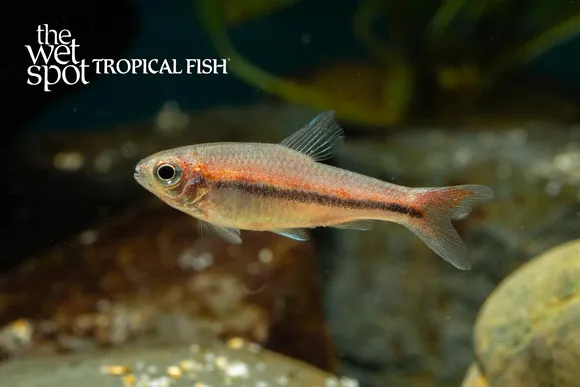 1.8 in (4.5 cm)14 gal (54 L)73–81°F (23–27°C)
Trewavas's neolebias
Neolebias trewavasae
1.8 in (4.5 cm) · 14 gal (54 L)