Panda cory
Hoplisoma panda
Also known as Corydoras panda
FreshwaterFish
Care at a glance
- Temperature
- 72–77°F
- 22–25°C
- pH
- 6.0–7.5
- Adult size
- 2 in
- 5 cm
- Minimum tank
- 15 gal
- 55 L
- Temperament
- Peaceful
- Social behavior
- Shoaling
- Swim level
- Bottom
- Difficulty
- Easy
- Breeding
- Hard
- Rarity
- Common
- Family
- Callichthyidae
- Origin
- Peru
Overview
These are sociable bottom dwellers that need a group of at least six, and they're more active and confident in larger numbers. A tank around 55 liters works for a small shoal. Keep water cool, roughly 22 to 25 C, soft, and acidic to neutral, since they don't tolerate heat well. Feed sinking foods that reach the bottom, like wafers, sinking pellets, and frozen bloodworm, and never count on them to clean up after other fish.
In the wild
Panda corys come from cool, clear headwater streams in Peru, fed by runoff from the Andes. The water there is soft, slightly acidic, and runs cooler than most tropical tanks. Give them a sand or smooth fine-gravel bottom so they can feed without damaging their barbels, plus shade and some current. Keeping the tank on the cool side matters more for this species than for many corys.
Good to know
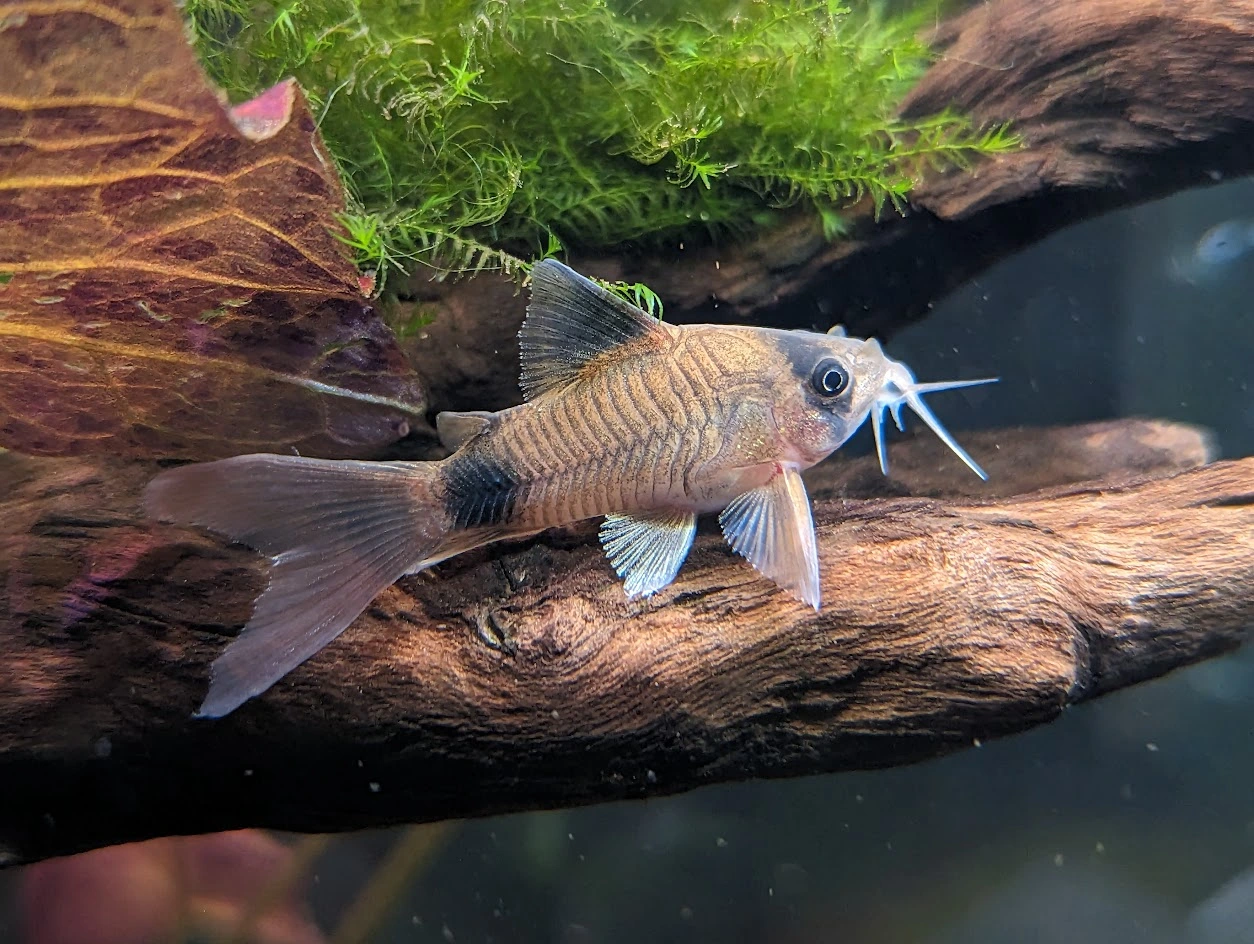
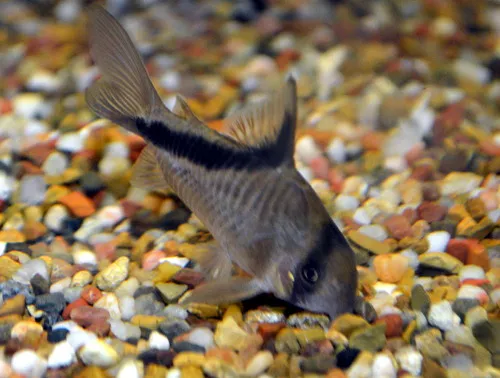
This is a small armored catfish in the family Callichthyidae, reaching about 5 cm. The name comes from its pattern: a pale body with a dark eye mask, a spot on the dorsal fin, and a band near the tail. Like other Corydoras it's an egg layer, with females sticking eggs to surfaces after a clutch is fertilized. They can live well past five years in good conditions.
Did you know
Corys can breathe air. They dart to the surface, gulp a bubble, and absorb oxygen through their gut before letting it out. With pandas this is normal, but if a whole group is racing up constantly it can be a sign the water is low on oxygen or the tank is running too warm.
Weekly picks
Tank mates
Panda cory is a peaceful, shoaling species that keeps to the bottom. These picks share a community profile with it, are safe together in both directions, and overlap on water type, temperature and pH.
Variable platy
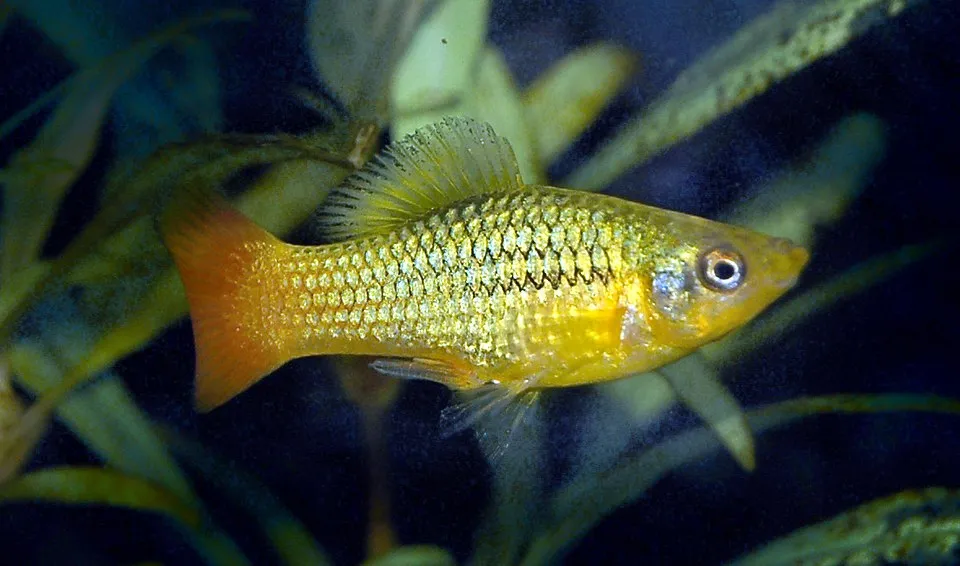
Xiphophorus variatus
Freshwater2.8 in (7 cm) · 15 gal (55 L)68–79°F (20–26°C)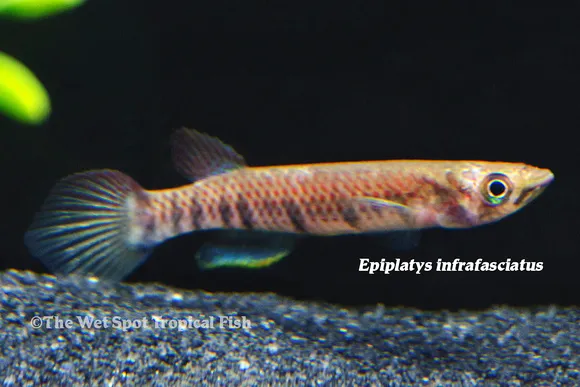
Infrafasciatus killifish
Epiplatys infrafasciatus
Freshwater2.4 in (6 cm) · 14 gal (54 L)68–77°F (20–25°C)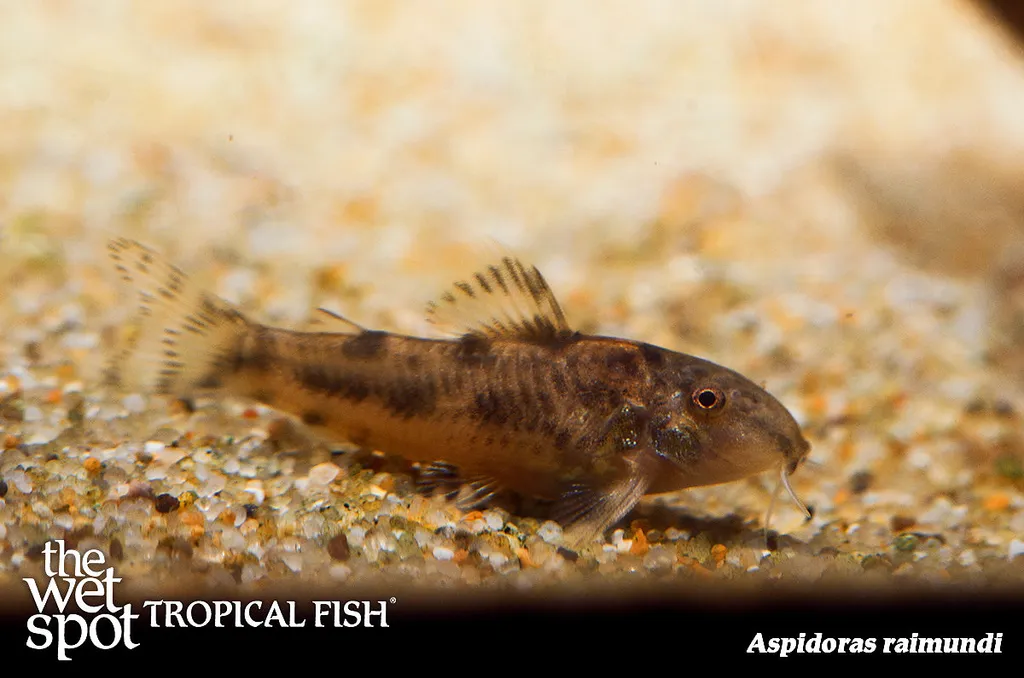
Aspidoras cory-cat
Aspidoras raimundi
Freshwater1.8 in (4.5 cm) · 15 gal (55 L)68–77°F (20–25°C)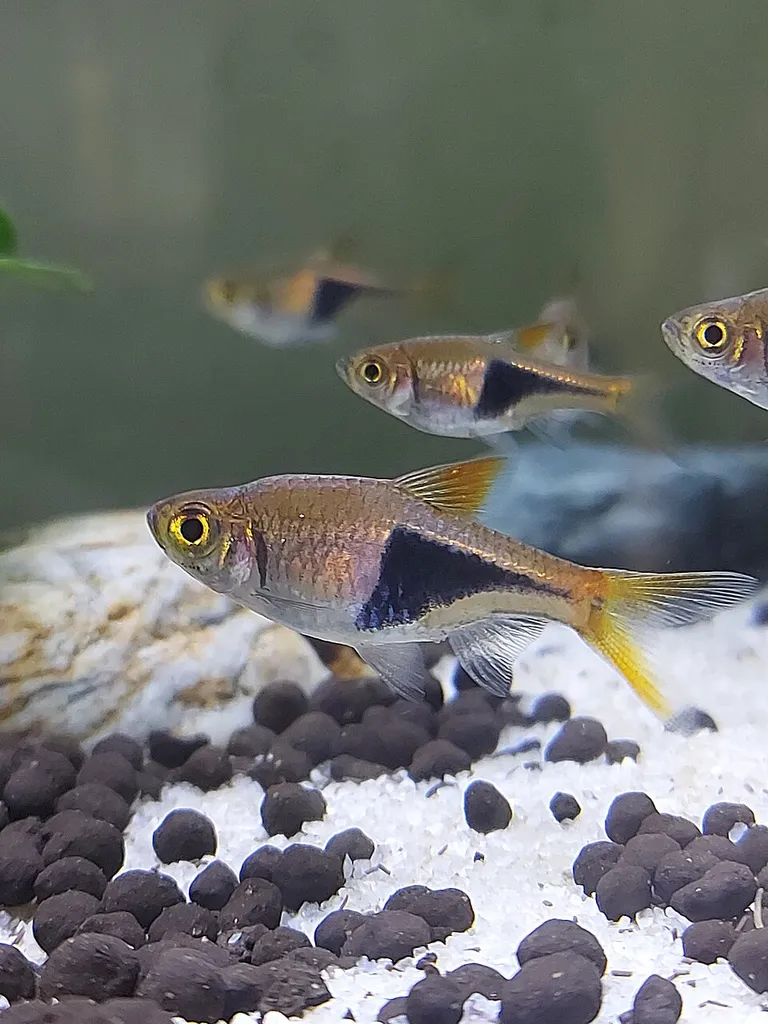
Harlequin rasbora
Trigonostigma heteromorpha
Freshwater2 in (5 cm) · 15 gal (55 L)72–82°F (22–28°C)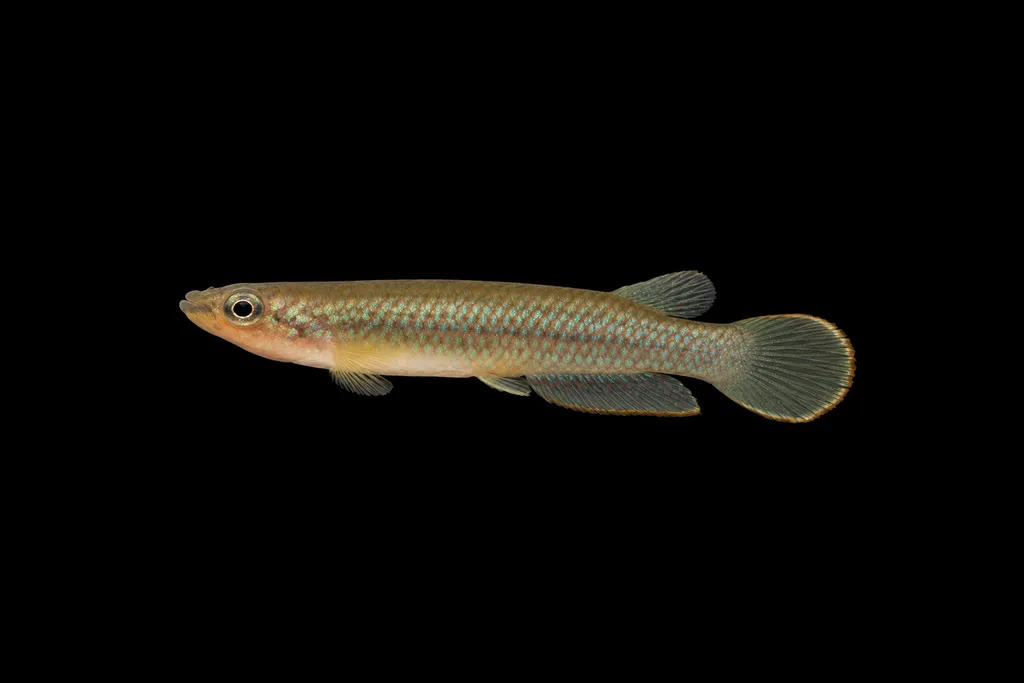
Guinean panchax
Epiplatys guineensis
Freshwater2.8 in (7 cm) · 14 gal (54 L)68–77°F (20–25°C)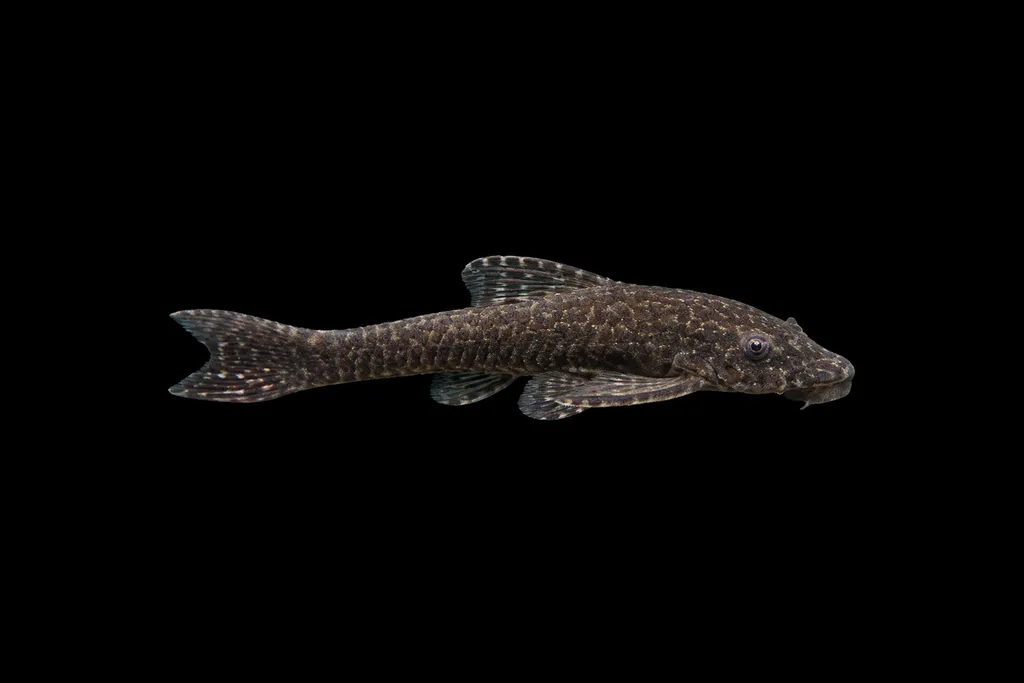
Black otocinclus
Hisonotus notatus
Freshwater2 in (5 cm) · 14 gal (54 L)72–81°F (22–27°C)
Common questions
What size tank does a Panda cory need?
A Panda cory needs at least 15 gal (55 L). It spends most of its time in the bottom.
What temperature and pH does a Panda cory need?
A Panda cory is comfortable at 72–77°F (22–25°C) with a pH of 6.0–7.5.
How big does a Panda cory get?
An adult Panda cory reaches about 2 in (5 cm).
Does a Panda cory need a group?
Yes. A Panda cory is a shoaling species and should be kept in a group, not singly.
Related species
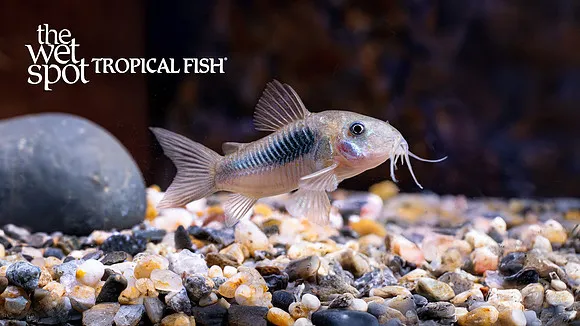 2 in (5 cm)15 gal (55 L)70–79°F (21–26°C)
Blackstripe cory
Hoplisoma bondi
2 in (5 cm) · 15 gal (55 L)
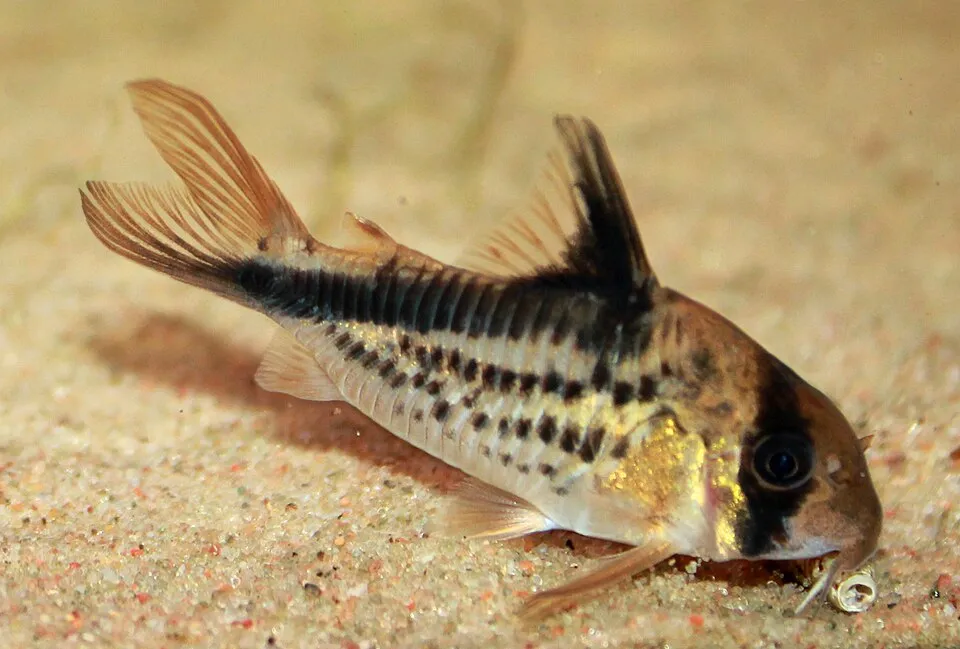 2 in (5 cm)16 gal (60 L)70–75°F (21–24°C)
Dirty bandit cory
Hoplisoma loxozonum
2 in (5 cm) · 16 gal (60 L)
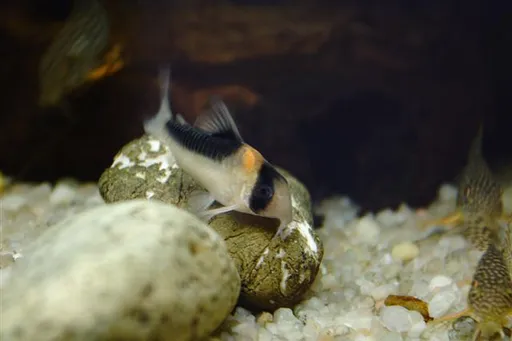 2 in (5 cm)20 gal (75 L)72–79°F (22–26°C)
Duplicate cory
Hoplisoma duplicareum
2 in (5 cm) · 20 gal (75 L)
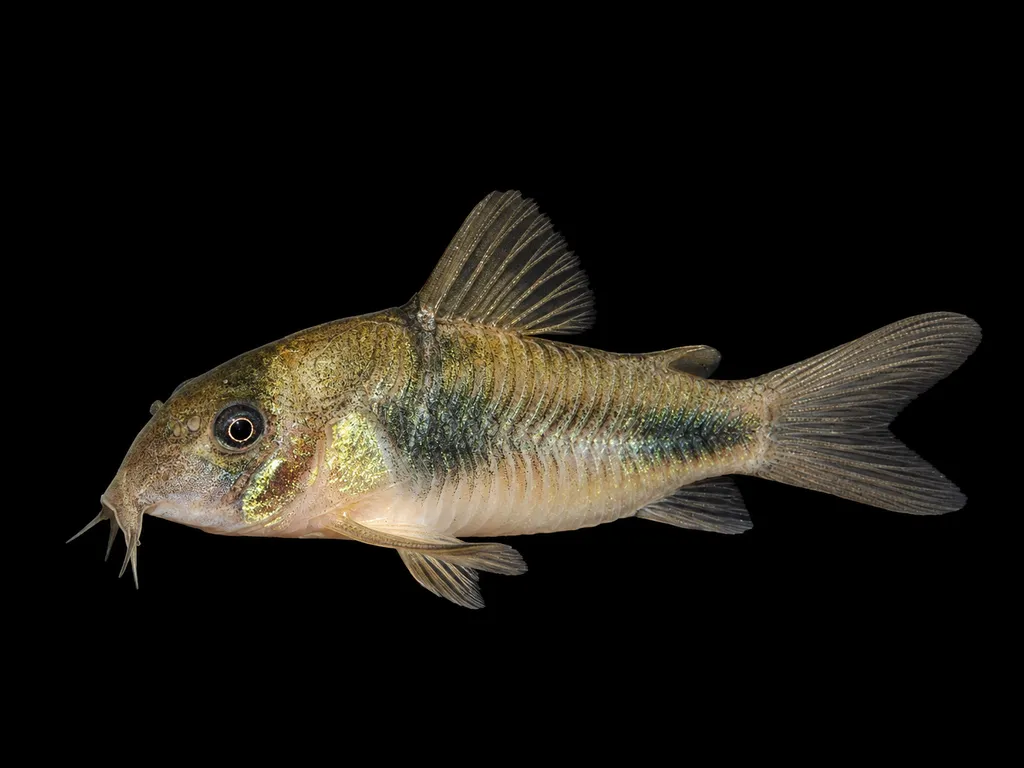 2 in (5 cm)16 gal (60 L)66–77°F (19–25°C)
Ehrhardt's cory
Hoplisoma ehrhardti
2 in (5 cm) · 16 gal (60 L)
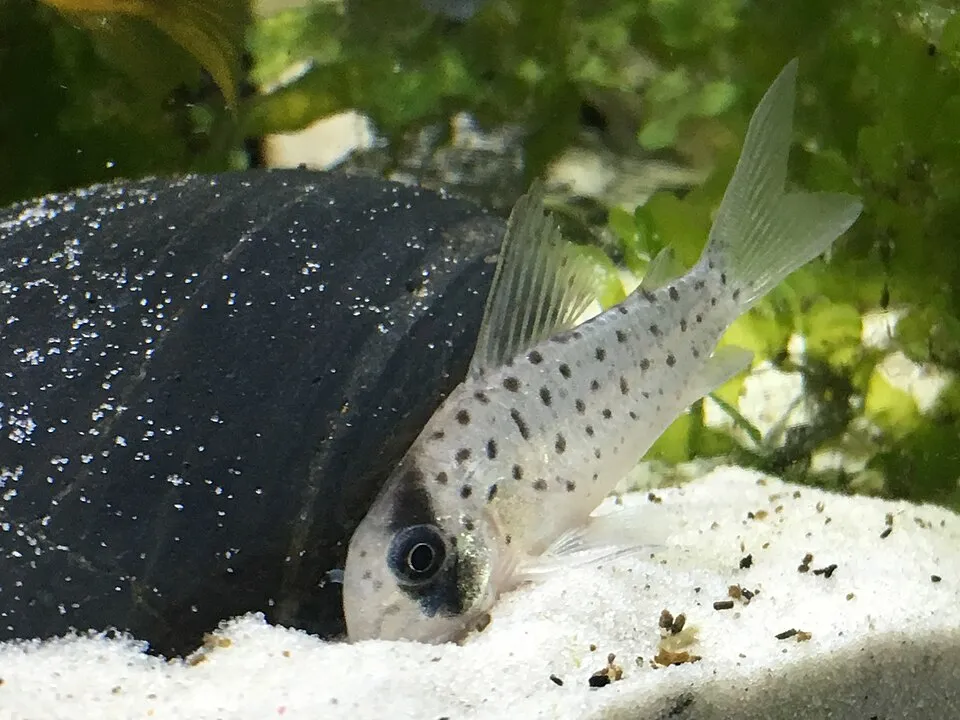 2 in (5 cm)16 gal (60 L)70–81°F (21–27°C)
Fairy cory
Hoplisoma atropersonatum
2 in (5 cm) · 16 gal (60 L)
 2 in (5 cm)16 gal (60 L)72–79°F (22–26°C)
False bandit cory
Hoplisoma melini
2 in (5 cm) · 16 gal (60 L)