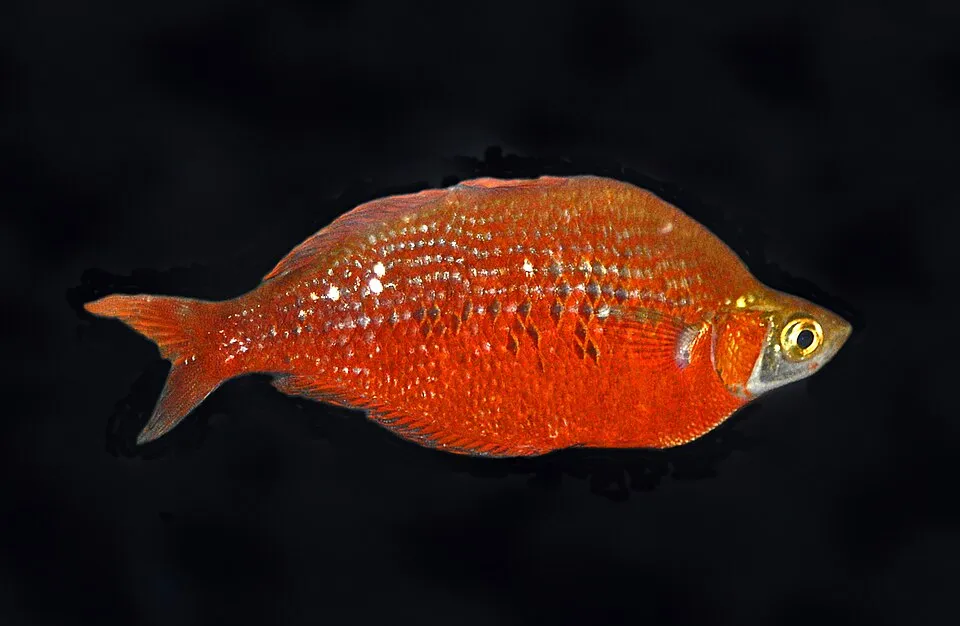
Red rainbowfish
Glossolepis incisus
Also known as Irian Red Rainbow
FreshwaterFish
Care at a glance
- Temperature
- 72–77°F
- 22–25°C
- pH
- 7.0–8.5
- Adult size
- 5.5 in
- 14 cm
- Minimum tank
- 34 gal
- 130 L
- Temperament
- Peaceful
- Social behavior
- Schooling
- Swim level
- Middle
- Difficulty
- Easy
- Breeding
- Hard
- Rarity
- Common
- Family
- Melanotaeniidae
- Origin
- New Guinea
Overview
Keep them in a group of at least six so males display to each other and color up properly. A lone male often stays dull. They are peaceful, active mid-water swimmers that need horizontal space more than height. Pair them with other sturdy, similarly sized community fish. Feed a varied diet of quality flake or small pellets with frozen foods like brine shrimp and bloodworms to bring out the red.
In the wild
Red rainbowfish come from Lake Sentani and nearby waters in New Guinea, a warm freshwater lake with plants along the margins and open water out from shore. The water there is neutral to alkaline and clear. In the tank, aim for a pH from 7 to 8.5, temps in the low to mid 20s C, and a long open swimming lane with planting toward the back and sides. A 130 liter tank or larger gives them the length they want.
Good to know
This is a rainbowfish in the family Melanotaeniidae, reaching about 14 cm, which makes it one of the larger rainbows in the hobby. Mature males turn deep brick-red and develop a high-backed body shape, while females stay silvery and slimmer. They are egg scatterers that lay sticky eggs among fine plants over a long spawning period. The species has a limited natural range in the Sentani system.
Did you know
Young males look plain and silvery and only develop their red as they mature, which catches buyers off guard at the shop. The deepest color tends to show during morning sparring, when rival males face off and briefly turn an almost glowing red before settling back down.
Weekly picks
Tank mates
Red rainbowfish is a peaceful, schooling species that keeps to the middle. These picks share a community profile with it, are safe together in both directions, and overlap on water type, temperature and pH.
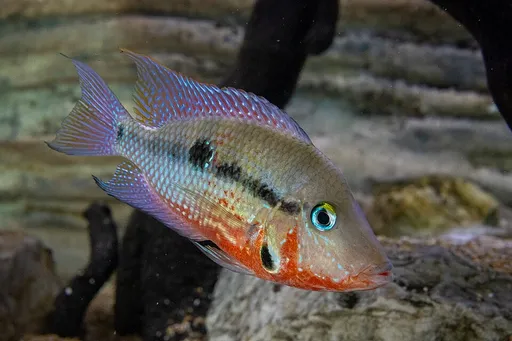
Firemouth cichlid
Thorichthys meeki
Freshwater5.9 in (15 cm) · 30 gal (115 L)73–82°F (23–28°C)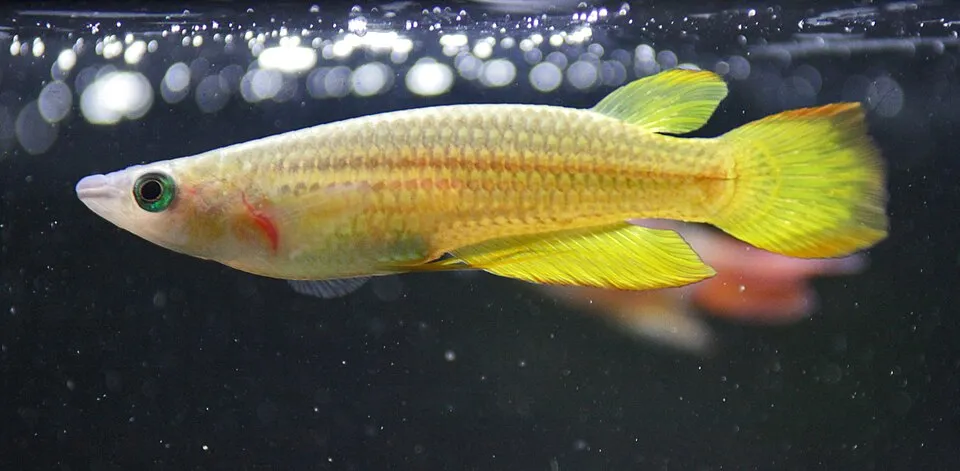
Striped panchax
Aplocheilus lineatus
Freshwater4.3 in (11 cm) · 30 gal (115 L)72–77°F (22–25°C)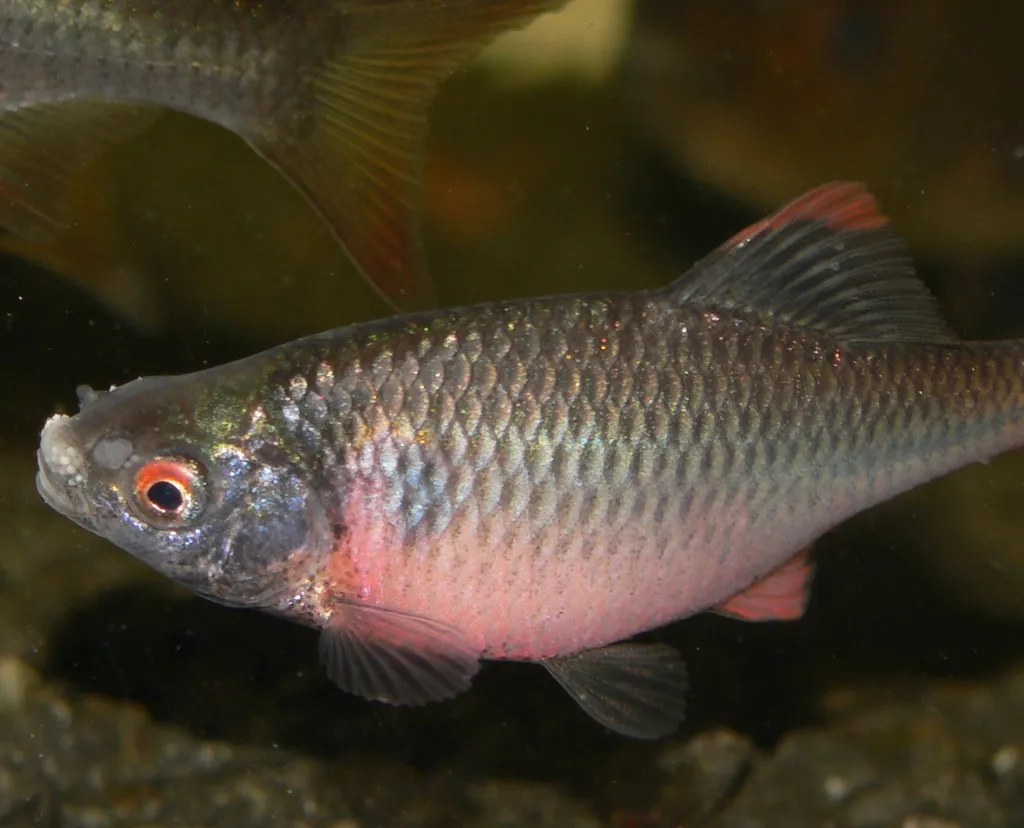
European bitterling
Rhodeus amarus
Freshwater3.9 in (10 cm) · 34 gal (130 L)55–72°F (13–22°C)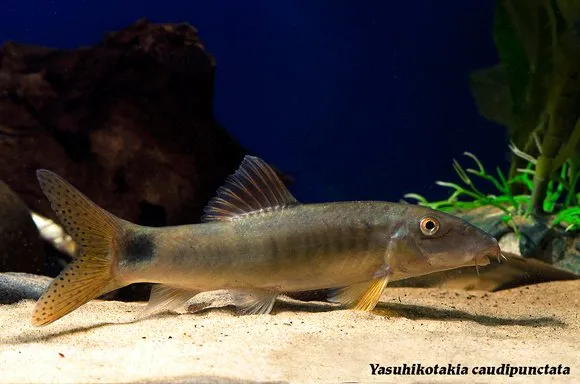
Spottail loach
Yasuhikotakia caudipunctata
Freshwater4.3 in (11 cm) · 37 gal (140 L)73–82°F (23–28°C)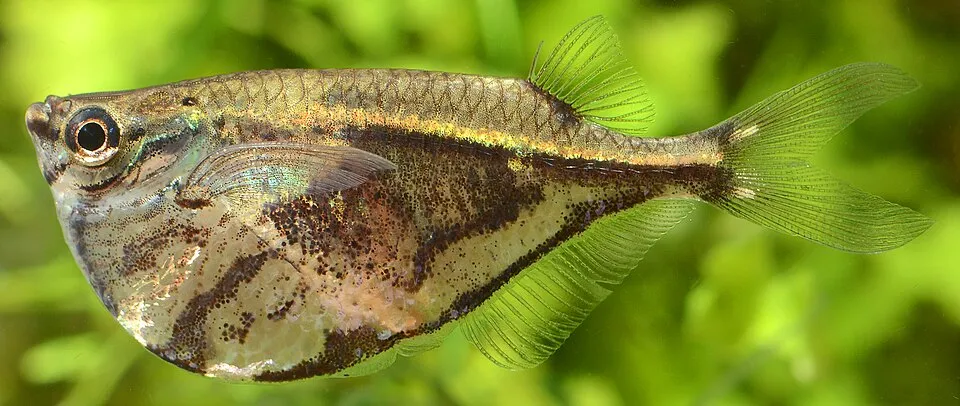
Marbled hatchetfish
Carnegiella strigata
Freshwater1.6 in (4 cm) · 32 gal (120 L)68–82°F (20–28°C)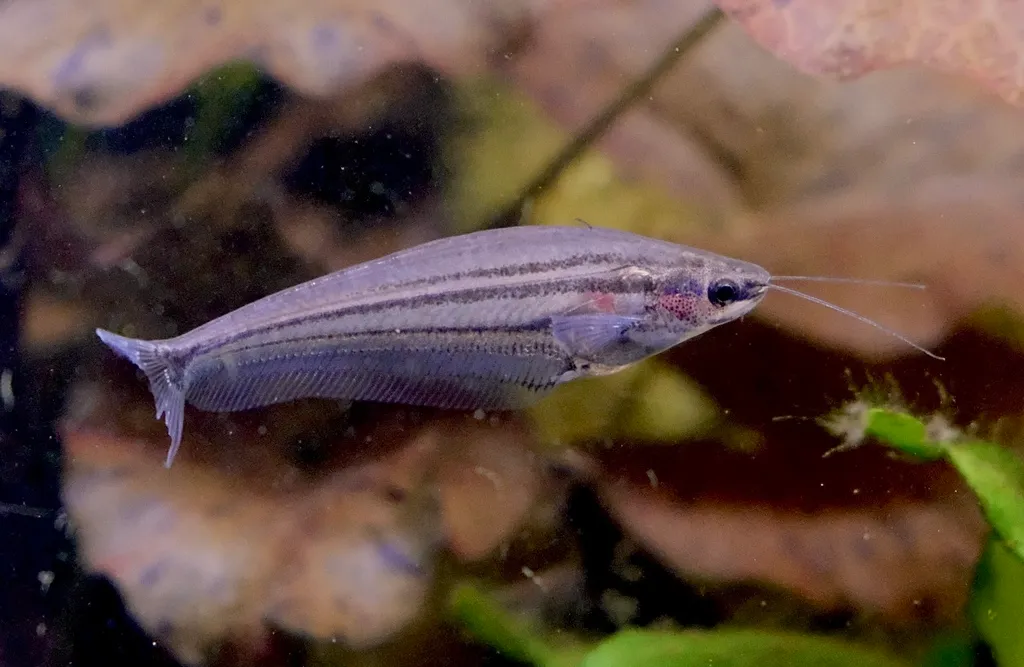
Striped glass catfish
Kryptopterus macrocephalus
Freshwater3.5 in (9 cm) · 36 gal (135 L)70–79°F (21–26°C)
Common questions
What size tank does a Red rainbowfish need?
A Red rainbowfish needs at least 34 gal (130 L). It spends most of its time in the middle.
What temperature and pH does a Red rainbowfish need?
A Red rainbowfish is comfortable at 72–77°F (22–25°C) with a pH of 7.0–8.5.
How big does a Red rainbowfish get?
An adult Red rainbowfish reaches about 5.5 in (14 cm).
Does a Red rainbowfish need a group?
Yes. A Red rainbowfish is a schooling species and should be kept in a group, not singly.
Related species
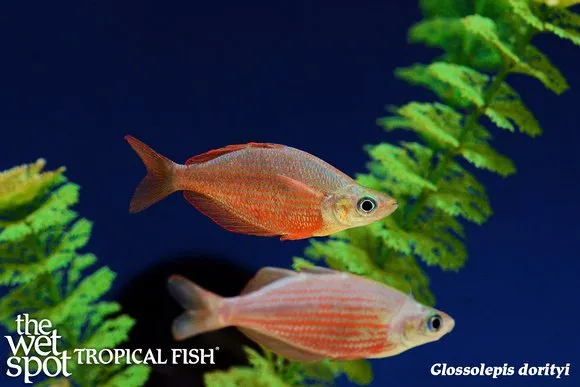 5.1 in (13 cm)53 gal (200 L)77–86°F (25–30°C)
Dority's rainbowfish
Glossolepis dorityi
5.1 in (13 cm) · 53 gal (200 L)
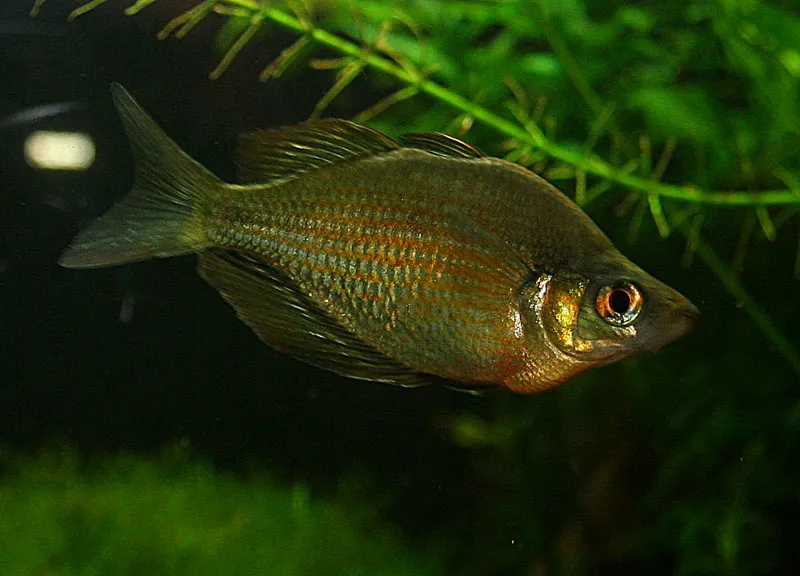 3.9 in (10 cm)25 gal (95 L)77–86°F (25–30°C)
Lake Wanam rainbowfish
Glossolepis wanamensis
3.9 in (10 cm) · 25 gal (95 L)
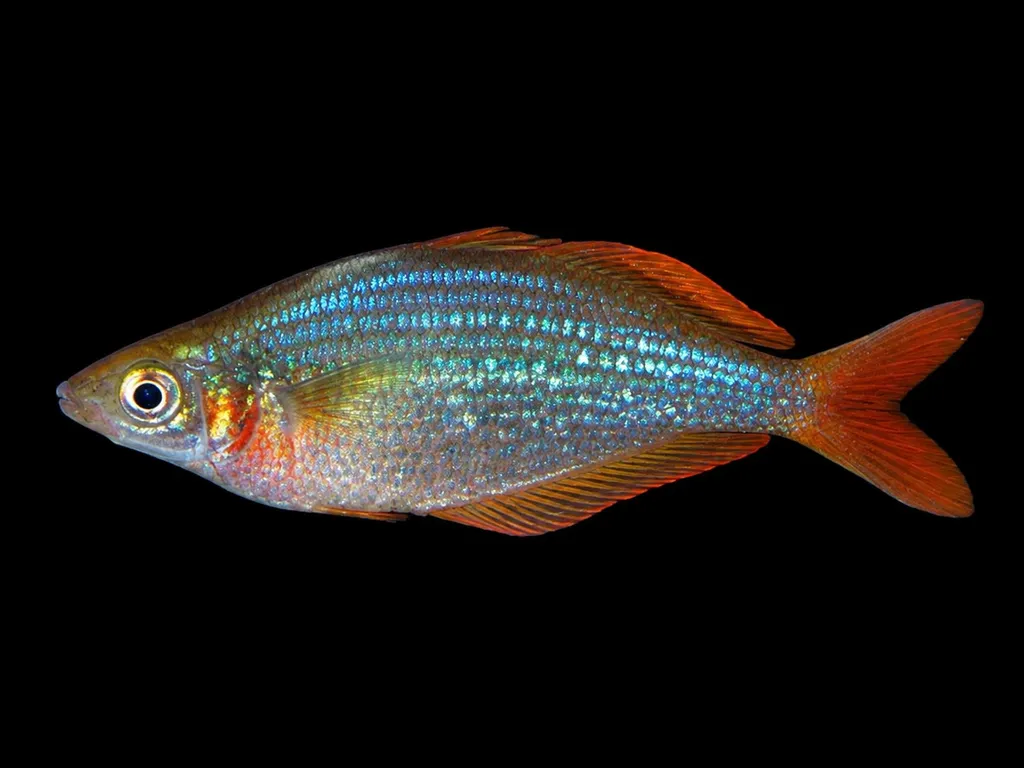 3.6 in (9.2 cm)42 gal (160 L)75–84°F (24–29°C)
Millennium rainbowfish
Glossolepis pseudoincisa
3.6 in (9.2 cm) · 42 gal (160 L)
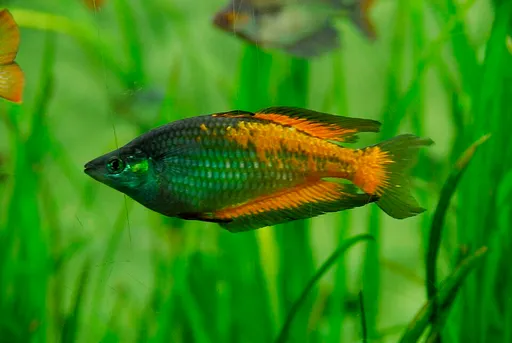 5.5 in (14 cm)55 gal (208 L)79–86°F (26–30°C)
Sepik rainbowfish
Glossolepis multisquamata
5.5 in (14 cm) · 55 gal (208 L)
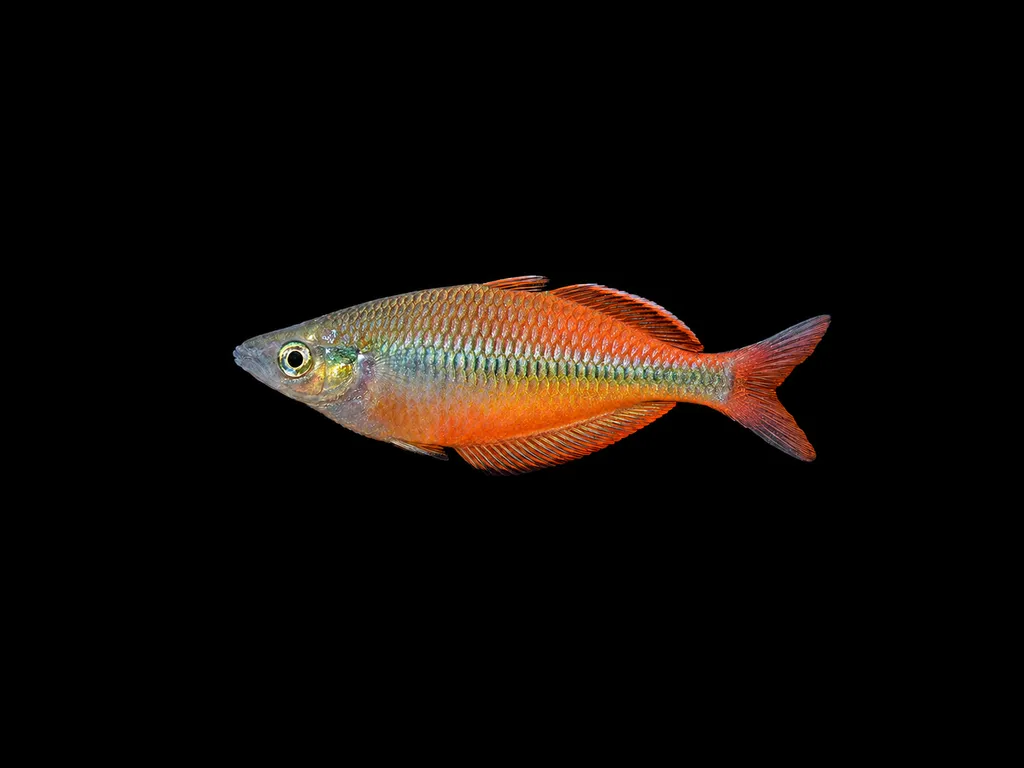 5.5 in (14 cm)42 gal (160 L)75–84°F (24–29°C)
Susi rainbowfish
Melanotaenia susii
5.5 in (14 cm) · 42 gal (160 L)
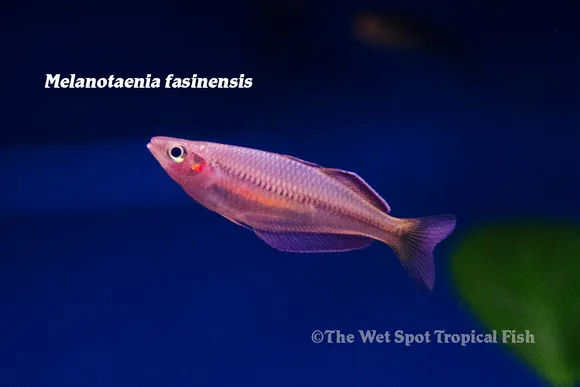 5.4 in (13.8 cm)53 gal (200 L)75–84°F (24–29°C)
Fasin rainbowfish
Melanotaenia fasinensis
5.4 in (13.8 cm) · 53 gal (200 L)