Arrowhead puffer
Pao suvattii
Also known as Tetraodon suvattii, Pignose Puffer, Mekong Arrowhead Puffer
FreshwaterFish
Care at a glance
- Temperature
- 72–79°F
- 22–26°C
- pH
- 6.0–7.5
- Adult size
- 5.9 in
- 15 cm
- Minimum tank
- 26 gal
- 100 L
- Temperament
- Aggressive
- Social behavior
- Solitary
- Tankmates
- Species tank only
- Swim level
- Bottom
- Difficulty
- Medium
- Breeding
- Hard
- Rarity
- Rare
- Family
- Tetraodontidae
- Origin
- Thailand, Laos
Overview
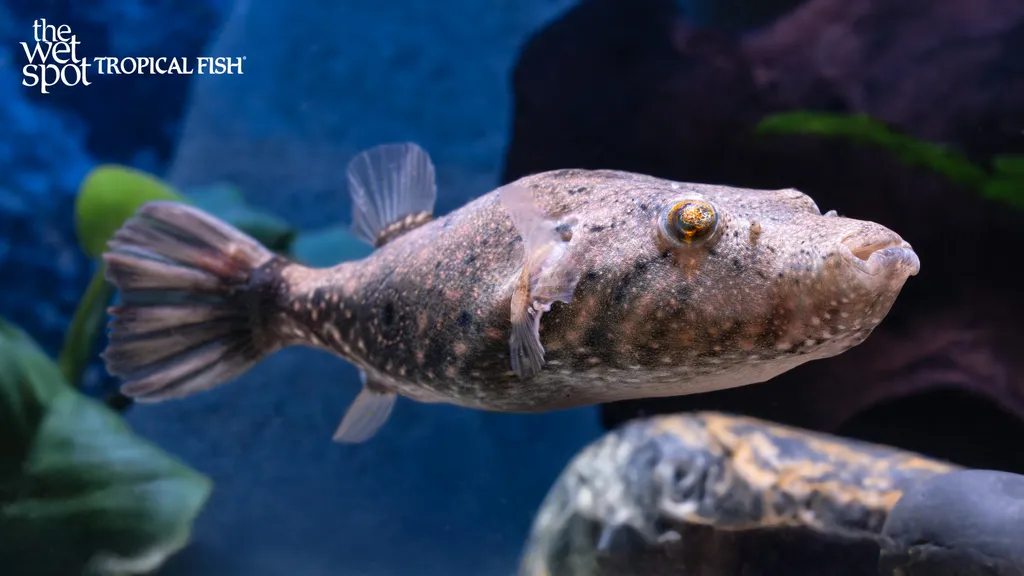
The arrowhead puffer is an aggressive, solitary ambush predator that buries itself in soft sand with only its eyes showing, then lunges up at anything that passes. It should be kept strictly alone, as it will attack tankmates and other puffers. Give it a deep bed of fine sand so it can bury naturally, along with some rocks and roots for structure. Feed meaty foods such as snails, mussel, prawn, and earthworms, and include hard-shelled items to keep the teeth worn down. It is a hefty, inactive fish rather than a swimmer, so a single specimen suits a tank of around 100 liters or larger with plenty of floor space.
In the wild
This puffer comes from the Mekong and Chao Phraya river systems of Thailand and Laos, where it lies half-buried in sandy and muddy riverbeds waiting to ambush prey. It is a pure freshwater fish that likes calm, warm water and a soft floor it can sink into. Recreate that with a deep, fine sand substrate, gentle filtration, and a few flat stones or bogwood for cover. Keep the temperature from 22 to 26 C and the pH between 6 and 7.5. Steady, clean water suits it, since like all puffers it is sensitive to poor conditions.
Good to know
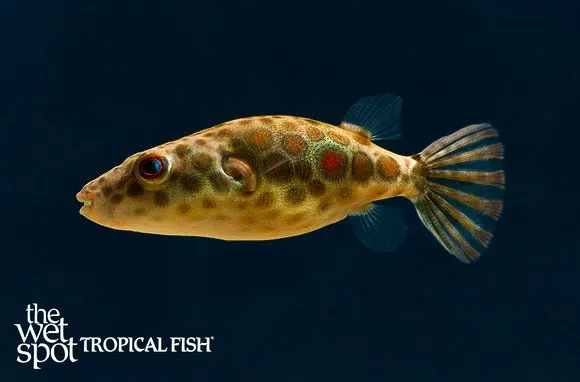
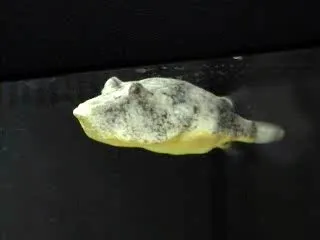
The arrowhead puffer, also known as the pignose or Mekong arrowhead puffer, is a member of the family Tetraodontidae and was long placed in the genus Tetraodon, now often Pao. Adults reach around 15 cm and have a broad, flattened head and a dark, arrow-shaped marking on the back that gives the fish its name. Like other puffers it has four fused, beak-like teeth and can inflate when alarmed. It has been bred in aquariums, though it is challenging. The pair spawns in a pit or cave and one parent guards the eggs until they hatch.
Did you know
The arrowhead puffer takes its name from the dark arrow-shaped pattern running down its back. It spends most of its life sitting motionless and half-buried in the sand, looking like a lump of debris, then explodes upward to grab a passing fish or shrimp before settling back as if nothing happened.
Common questions
What size tank does an Arrowhead puffer need?
An Arrowhead puffer needs at least 26 gal (100 L). It spends most of its time in the bottom.
What temperature and pH does an Arrowhead puffer need?
An Arrowhead puffer is comfortable at 72–79°F (22–26°C) with a pH of 6.0–7.5.
How big does an Arrowhead puffer get?
An adult Arrowhead puffer reaches about 5.9 in (15 cm).
Related species
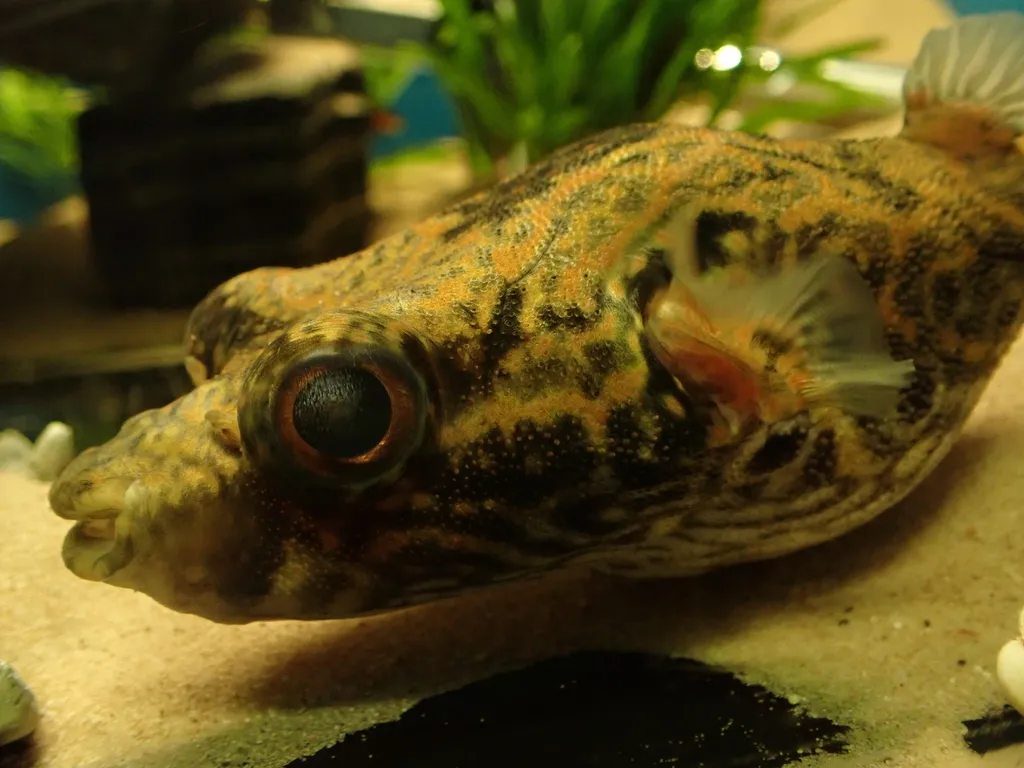 7.9 in (20 cm)32 gal (120 L)75–82°F (24–28°C)
Humpback puffer
Pao palembangensis
7.9 in (20 cm) · 32 gal (120 L)
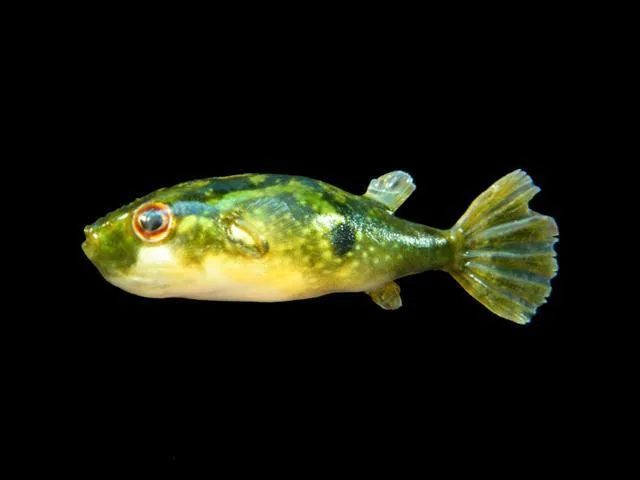 6.3 in (16 cm)53 gal (200 L)75–82°F (24–28°C)
Target puffer
Pao leiurus
6.3 in (16 cm) · 53 gal (200 L)
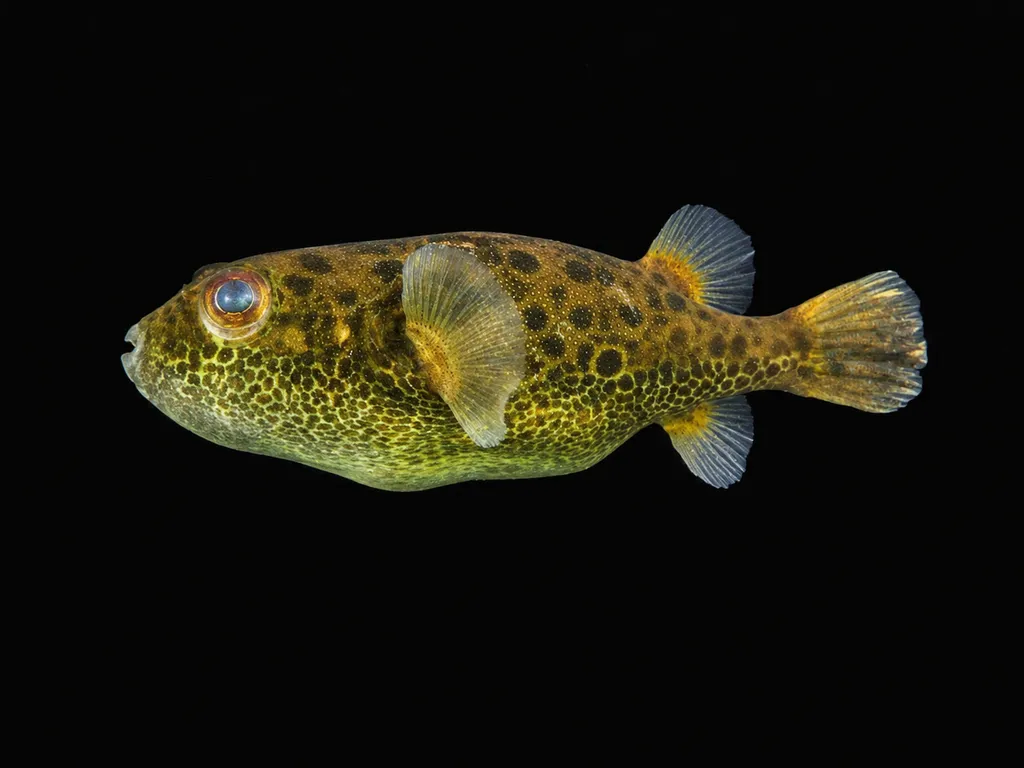 5.5 in (14 cm)42 gal (160 L)75–82°F (24–28°C)
Marsh puffer
Pao brevirostris
5.5 in (14 cm) · 42 gal (160 L)
 4.7 in (12 cm)42 gal (160 L)75–82°F (24–28°C)
Abei puffer
Pao abei
4.7 in (12 cm) · 42 gal (160 L)
 5.9 in (15 cm)26 gal (100 L)75–82°F (24–28°C)
Congo pufferfish
Tetraodon miurus
5.9 in (15 cm) · 26 gal (100 L)
 5.5 in (14 cm)26 gal (100 L)73–81°F (23–27°C)
Hairy puffer
Tetraodon baileyi
5.5 in (14 cm) · 26 gal (100 L)