Humpback puffer
Pao palembangensis
Also known as Dragon Puffer, Tetraodon palembangensis
FreshwaterFish
Care at a glance
- Temperature
- 75–82°F
- 24–28°C
- pH
- 6.5–7.5
- Adult size
- 7.9 in
- 20 cm
- Minimum tank
- 32 gal
- 120 L
- Temperament
- Aggressive
- Social behavior
- Solitary
- Tankmates
- Species tank only
- Swim level
- Bottom
- Difficulty
- Medium
- Breeding
- No record
- Rarity
- Rare
- Family
- Tetraodontidae
- Origin
- South East Asia
Overview
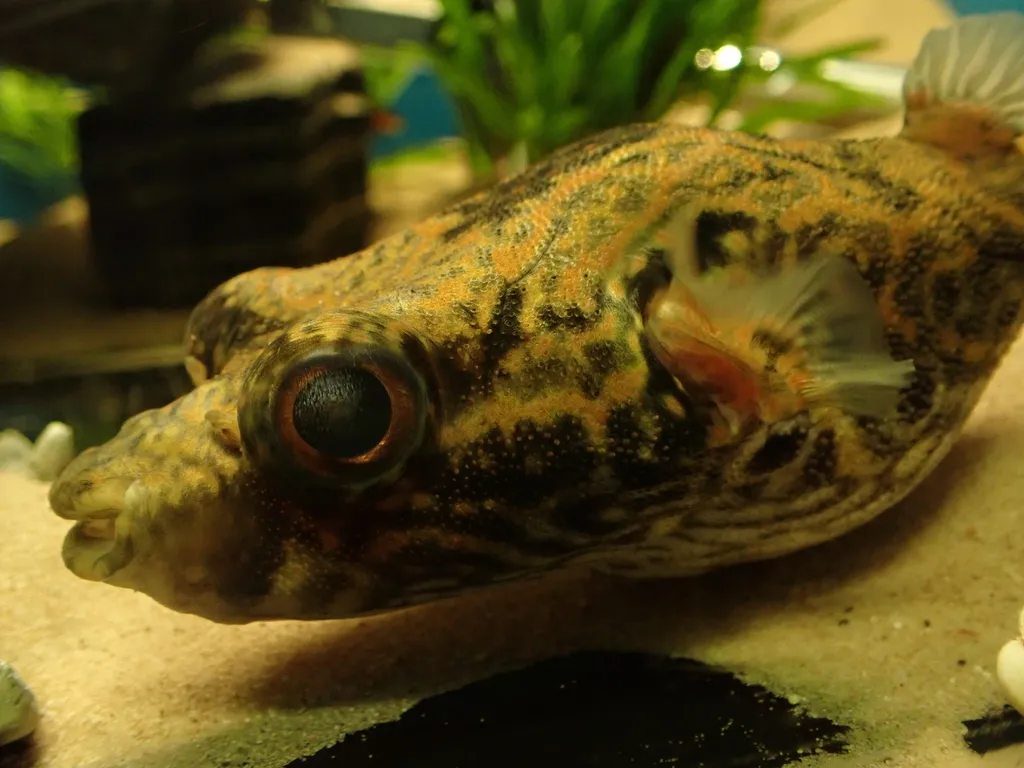
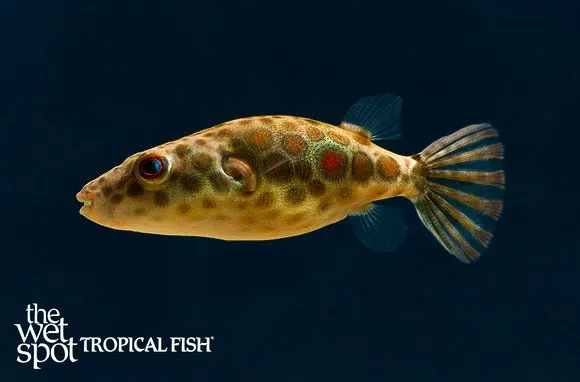
The humpback puffer is an aggressive, solitary ambush predator that spends long stretches lying still on the bottom, sometimes half-buried, until prey wanders too close. It should be kept alone, as anything small enough to fit in its mouth is likely to be eaten and larger fish are treated as a threat. It is a very inactive fish that may only move at feeding time, so give it a calm tank with wood, roots, and a soft floor rather than strong currents. Feed meaty foods such as snails, mussel, prawn, and earthworms, and include hard-shelled items for its teeth. A single adult suits a tank of around 120 liters or larger.
In the wild
The humpback puffer, also called the dragon puffer, comes from slow, shaded fresh waters of Southeast Asia, where it lies among submerged roots and leaf litter waiting to ambush fish. It likes still, soft, slightly acidic to neutral water and plenty of cover to lurk in. Recreate that with driftwood, roots, leaf litter, and a soft substrate, along with gentle filtration and dim light. Keep the temperature from 24 to 28 C and the pH between 6.5 and 7.5. Steady, clean water is important, since like all puffers it reacts badly to poor conditions.
Good to know
The humpback puffer is a member of the family Tetraodontidae, now often placed in the genus Pao, and was long known as Tetraodon palembangensis. Adults reach about 20 cm and have a knobbly, humped back and a mottled brown pattern that blends into wood and leaf litter. Like all true puffers it has four fused, beak-like teeth and can inflate with water when threatened. Aquarium breeding is undocumented, and nearly all specimens are wild caught.
Did you know
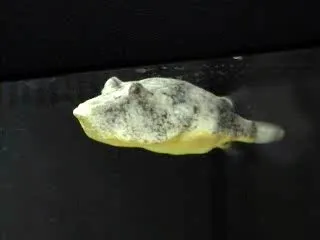
The humpback puffer is known for playing dead. It will lie motionless on its side on the bottom, looking like a dead fish or a fallen leaf, until a smaller fish comes to investigate, then it springs up in a sudden lunge and swallows the visitor.
Common questions
What size tank does a Humpback puffer need?
A Humpback puffer needs at least 32 gal (120 L). It spends most of its time in the bottom.
What temperature and pH does a Humpback puffer need?
A Humpback puffer is comfortable at 75–82°F (24–28°C) with a pH of 6.5–7.5.
How big does a Humpback puffer get?
An adult Humpback puffer reaches about 7.9 in (20 cm).
Related species
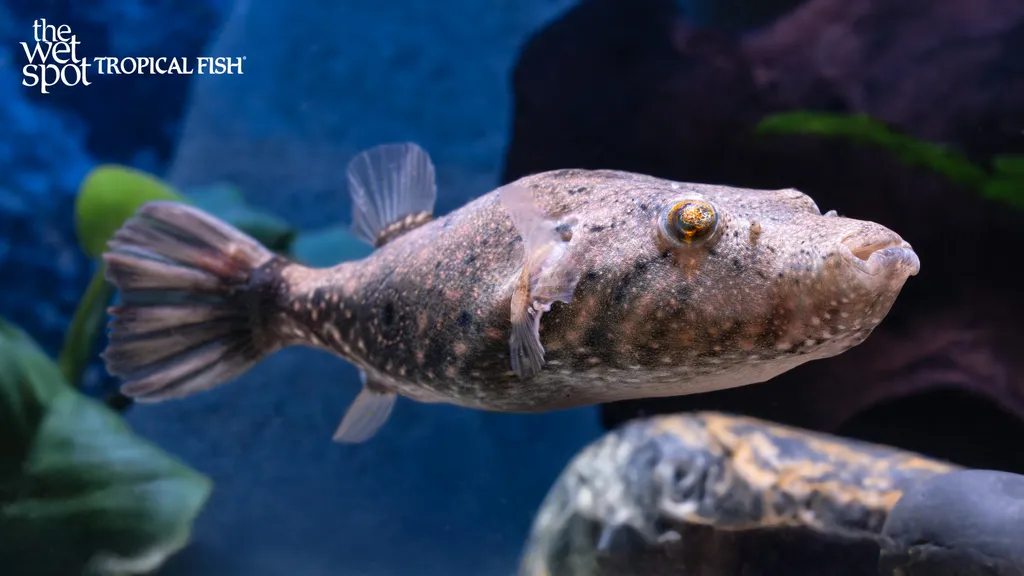 5.9 in (15 cm)26 gal (100 L)72–79°F (22–26°C)
Arrowhead puffer
Pao suvattii
5.9 in (15 cm) · 26 gal (100 L)
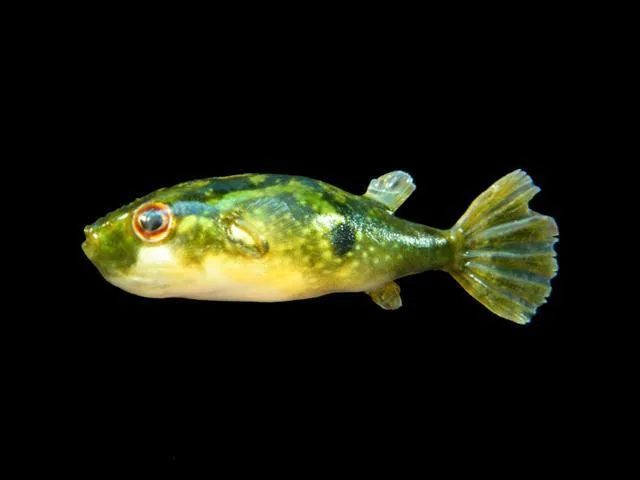 6.3 in (16 cm)53 gal (200 L)75–82°F (24–28°C)
Target puffer
Pao leiurus
6.3 in (16 cm) · 53 gal (200 L)
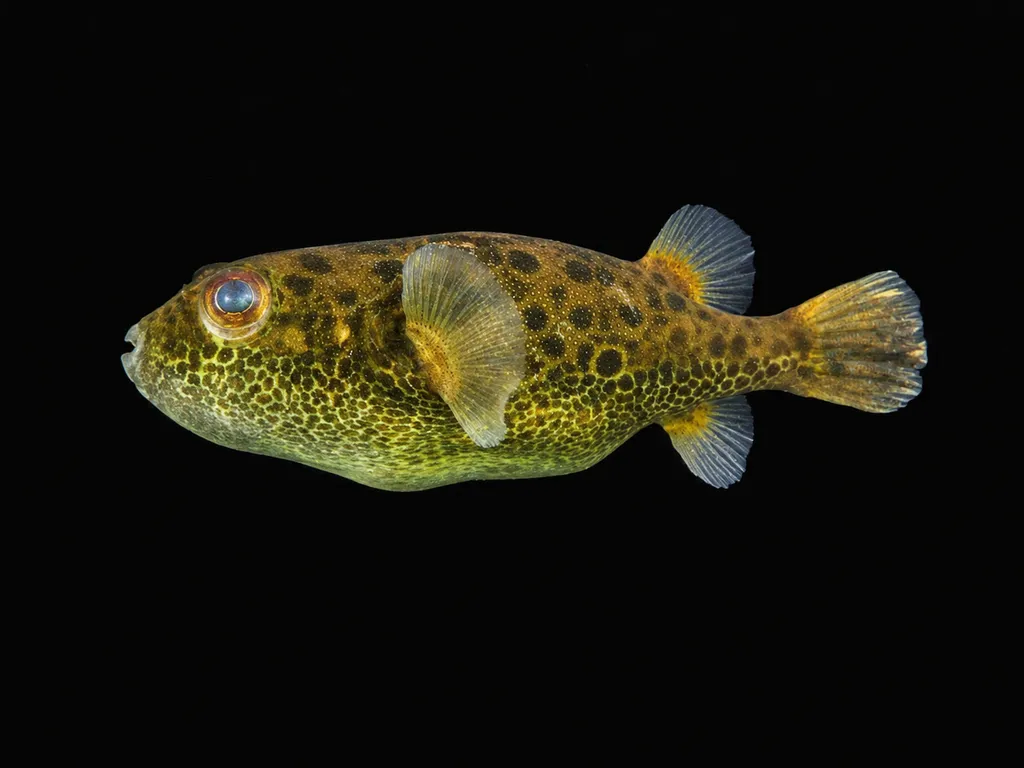 5.5 in (14 cm)42 gal (160 L)75–82°F (24–28°C)
Marsh puffer
Pao brevirostris
5.5 in (14 cm) · 42 gal (160 L)
 4.7 in (12 cm)42 gal (160 L)75–82°F (24–28°C)
Abei puffer
Pao abei
4.7 in (12 cm) · 42 gal (160 L)
 5.9 in (15 cm)26 gal (100 L)75–82°F (24–28°C)
Congo pufferfish
Tetraodon miurus
5.9 in (15 cm) · 26 gal (100 L)
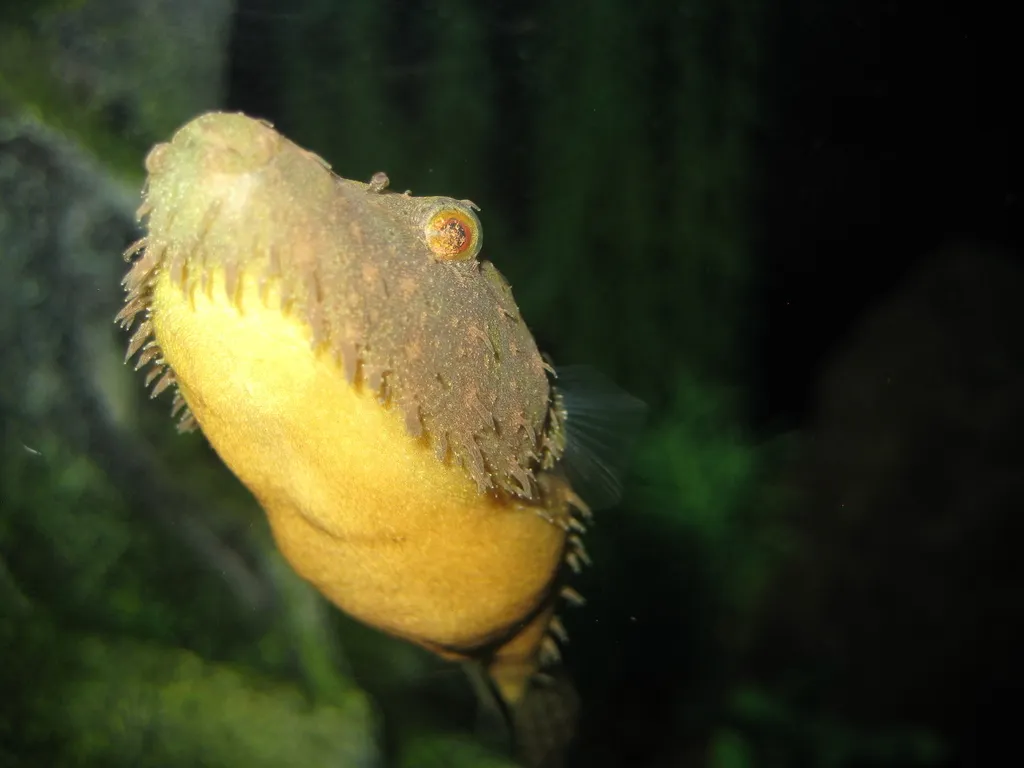 5.5 in (14 cm)26 gal (100 L)73–81°F (23–27°C)
Hairy puffer
Tetraodon baileyi
5.5 in (14 cm) · 26 gal (100 L)