Red-tail dwarf puffer
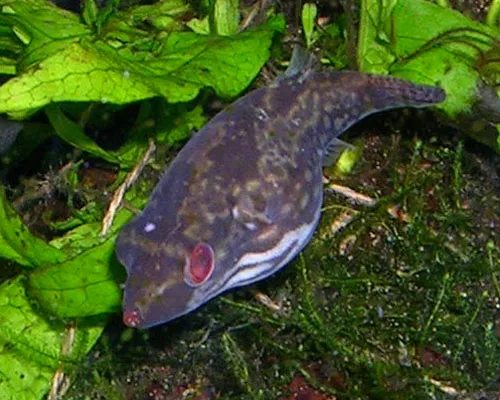
Carinotetraodon irrubesco
Also known as Red-tailed Redeye Puffer, Sumatran Red Eye Puffer
FreshwaterFish
Care at a glance
- Temperature
- 72–82°F
- 22–28°C
- pH
- 6.5–7.5
- Adult size
- 1.8 in
- 4.5 cm
- Minimum tank
- 17 gal
- 65 L
- Temperament
- Peaceful
- Social behavior
- Solitary
- Tankmates
- With caution
- Swim level
- Middle
- Difficulty
- Difficult
- Breeding
- No record
- Rarity
- Very rare
- Family
- Tetraodontidae
- Origin
- Sumatra, Borneo
Overview
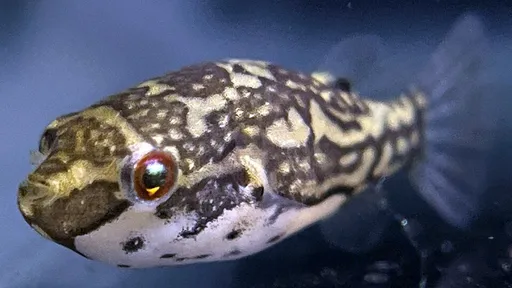
The red-tail dwarf puffer is a tiny freshwater puffer and one of the calmer members of its group, though it is still a puffer and can nip. It is usually kept on its own, or as a small harem with several females to each male if you have the space, since males can be territorial. It suits a heavily planted tank of its own rather than a busy community. Give it soft sand it can wallow into and dense planting for cover. Like all puffers its teeth keep growing, so feed small hard-shelled foods such as tiny snails along with frozen bloodworms and brine shrimp. A single fish or small group fits a planted tank of around 65 liters or larger.
In the wild
The red-tail dwarf puffer comes from soft, slow, tannin-stained streams and rivers on Sumatra and Borneo, where the water is often murky brown and gently acidic. It likes calm, well-planted water with lots of cover. Recreate that with dense planting, driftwood, leaf litter, and a soft sand bed it can bury into, along with gentle filtration and subdued light. Keep the temperature from 22 to 28 C and the pH between 6.5 and 7.5. It is sensitive to poor water quality, so keep nitrate low with regular water changes and stable, clean conditions.
Good to know
The red-tail dwarf puffer belongs to the family Tetraodontidae and is one of the smallest puffers, reaching only about 4.5 cm. Like its relatives in the genus Carinotetraodon, the male can raise a ridge or keel along its belly and back when displaying, which gives the group its name. Males and females also differ in color, with males showing a red tail and eye. Like all true puffers it has fused, beak-like teeth and can inflate. Aquarium breeding is little documented.
Did you know
Male red-tail dwarf puffers can pop up a thin ridge along the belly and back when courting or facing a rival, a trick that earns the genus the name comb or keel puffers. The sexes look quite different too, with males wearing a red tail and red-rimmed eye while females are browner and more patterned.
Common questions
What size tank does a Red-tail dwarf puffer need?
A Red-tail dwarf puffer needs at least 17 gal (65 L). It spends most of its time in the middle.
What temperature and pH does a Red-tail dwarf puffer need?
A Red-tail dwarf puffer is comfortable at 72–82°F (22–28°C) with a pH of 6.5–7.5.
How big does a Red-tail dwarf puffer get?
An adult Red-tail dwarf puffer reaches about 1.8 in (4.5 cm).
Related species
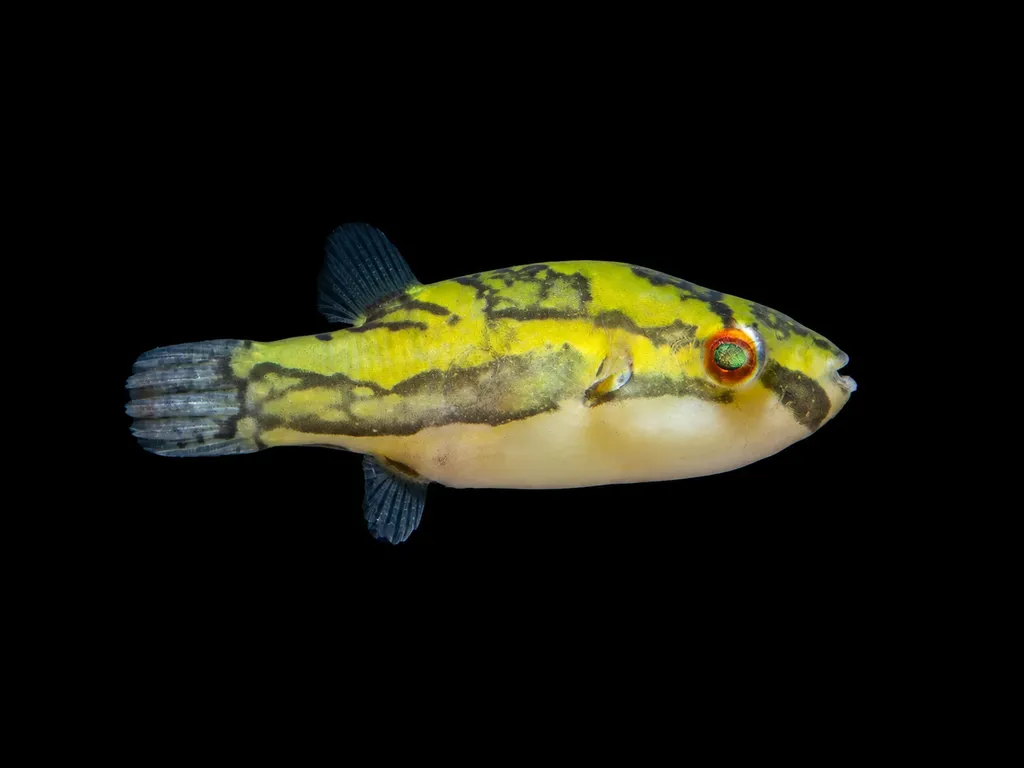 2 in (5 cm)14 gal (54 L)75–82°F (24–28°C)
Borneo red-eye puffer
Carinotetraodon borneensis
2 in (5 cm) · 14 gal (54 L)
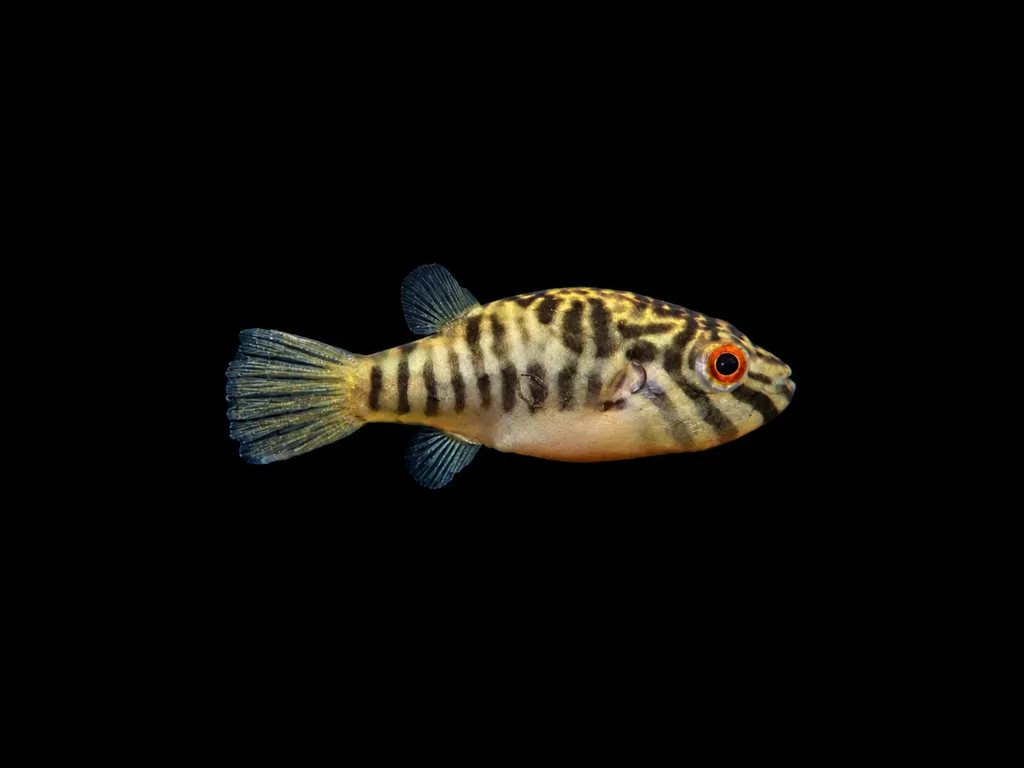 2 in (5 cm)14 gal (54 L)75–82°F (24–28°C)
Striped red-eye puffer
Carinotetraodon salivator
2 in (5 cm) · 14 gal (54 L)
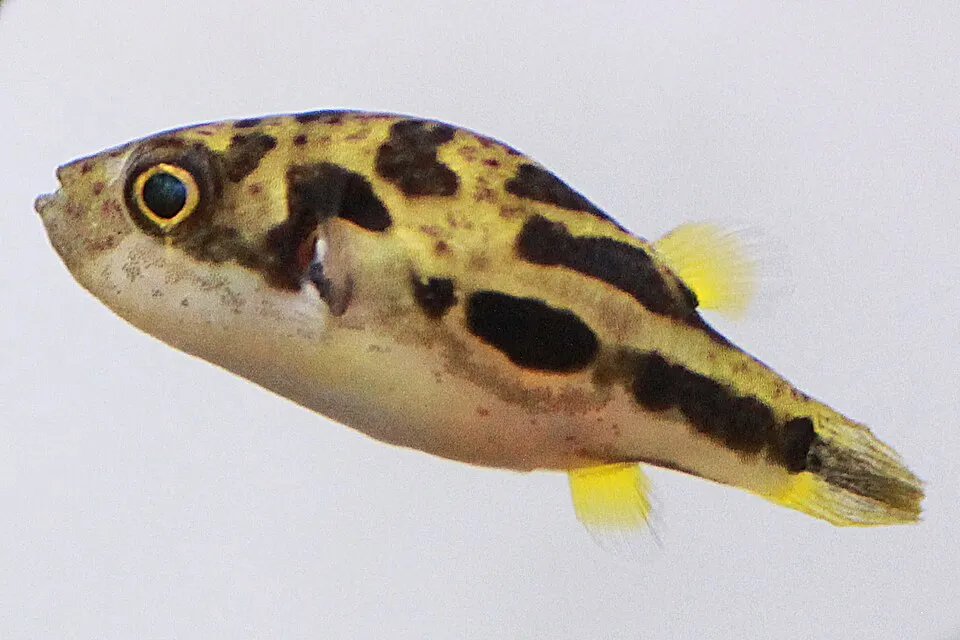 1.4 in (3.5 cm)15 gal (55 L)72–82°F (22–28°C)
Dwarf pufferfish
Carinotetraodon travancoricus
1.4 in (3.5 cm) · 15 gal (55 L)
 2.4 in (6 cm)14 gal (54 L)75–82°F (24–28°C)
Redeye puffer
Carinotetraodon lorteti
2.4 in (6 cm) · 14 gal (54 L)
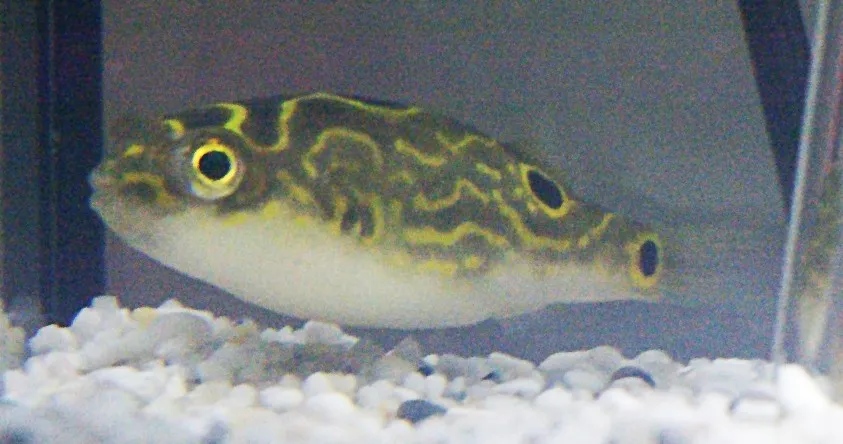 3.1 in (8 cm)20 gal (75 L)72–79°F (22–26°C)
Figure eight puffer
Tetraodon biocellatus
3.1 in (8 cm) · 20 gal (75 L)
- 3.3 in (8.5 cm)29 gal (110 L)75–82°F (24–28°C)
Red-striped puffer
Dichotomyctere erythrotaenia
3.3 in (8.5 cm) · 29 gal (110 L)