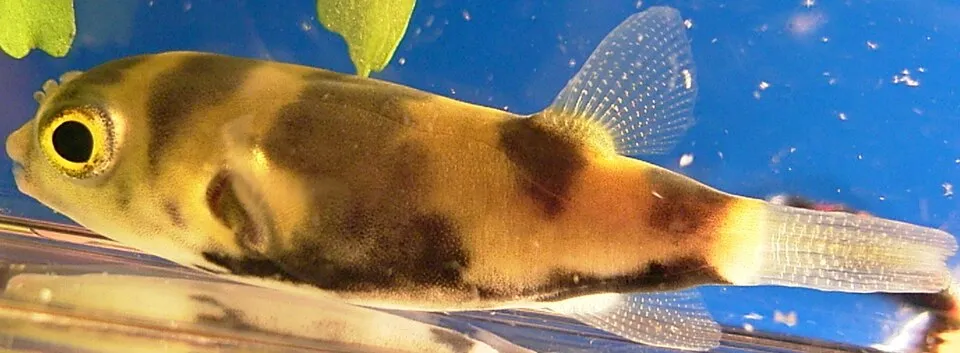
Amazon puffer
Colomesus asellus
Also known as South American Puffer
FreshwaterFish
Care at a glance
- Temperature
- 72–82°F
- 22–28°C
- pH
- 6.0–7.5
- Adult size
- 4.7 in
- 12 cm
- Minimum tank
- 26 gal
- 100 L
- Temperament
- Mostly peaceful
- Social behavior
- Shoaling
- Tankmates
- With caution
- Swim level
- Middle
- Difficulty
- Difficult
- Breeding
- No record
- Rarity
- Rare
- Family
- Tetraodontidae
- Origin
- Brazil, Colombia, Peru, Ecuador
Overview
Unusually for a puffer, the Amazon puffer does best in a group and turns nervous when kept alone, so plan on a small shoal of five or more. They are active, busy swimmers that spend the day cruising open water rather than lurking. They can be nippy, so keep them as a species group or only with fast, robust tankmates, and watch for fin-nipping. Their teeth grow constantly, so a steady diet of hard-shelled prey is essential. Feed pond and ramshorn snails, small clams and mussels, and frozen shrimp to wear the teeth down. A group needs plenty of swimming room, so aim for a tank of around 100 liters or larger.
In the wild
The Amazon puffer is a true freshwater fish from the large river systems of Brazil, Colombia, Peru, and Ecuador, where it roams flowing channels and follows the seasonal floods. Unlike many brackish puffers, it never needs salt. Give it clean, well-oxygenated water with a gentle to moderate current, a pH between 6 and 7.5, and a temperature from 22 to 28 C. Open swimming space matters more than heavy decor, but include driftwood and some planted areas along the sides so the group has room to patrol the middle of the tank.
Good to know
The Amazon puffer belongs to the family Tetraodontidae, the true puffers, whose four fused teeth form a hard, beak-like plate. Adults reach about 12 cm. Like all puffers it can gulp water to inflate into a ball when threatened, and it lacks scales and normal ribs. This species is famous for having some of the fastest-growing teeth of any freshwater puffer, which is why hard foods are not optional. Aquarium breeding is essentially undocumented, and almost all fish in the trade are wild caught.
Did you know
The Amazon puffer grows its beak-like teeth faster than almost any other freshwater puffer. Without a constant supply of snails and other hard-shelled food to grind them down, the teeth can overgrow until the fish cannot eat, and keepers sometimes have to trim them by hand.
Common questions
What size tank does an Amazon puffer need?
An Amazon puffer needs at least 26 gal (100 L). It spends most of its time in the middle.
What temperature and pH does an Amazon puffer need?
An Amazon puffer is comfortable at 72–82°F (22–28°C) with a pH of 6.0–7.5.
How big does an Amazon puffer get?
An adult Amazon puffer reaches about 4.7 in (12 cm).
Does an Amazon puffer need a group?
Yes. An Amazon puffer is a shoaling species and should be kept in a group, not singly.
Related species
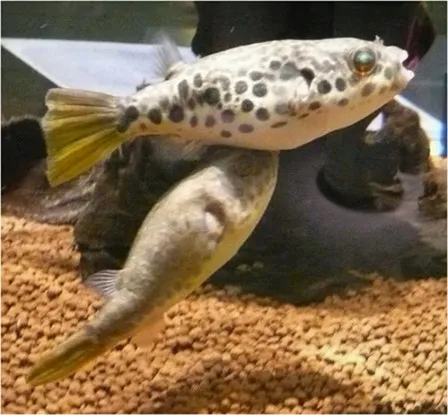 3.5 in (9 cm)29 gal (110 L)75–82°F (24–28°C)
Spotted Congo puffer
Tetraodon schoutedeni
3.5 in (9 cm) · 29 gal (110 L)
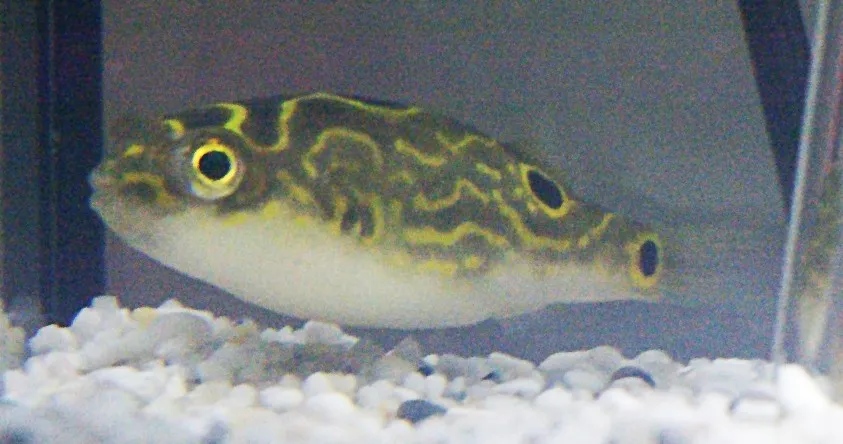 3.1 in (8 cm)20 gal (75 L)72–79°F (22–26°C)
Figure eight puffer
Tetraodon biocellatus
3.1 in (8 cm) · 20 gal (75 L)
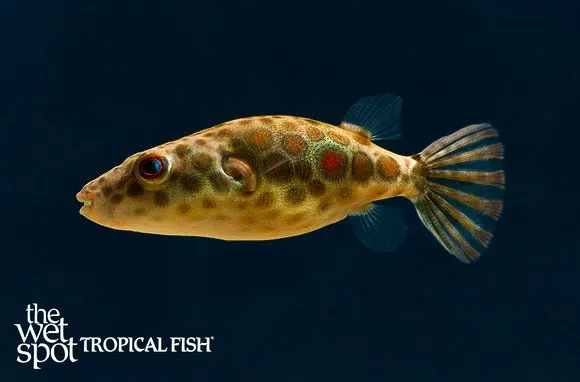 4.7 in (12 cm)42 gal (160 L)75–82°F (24–28°C)
Abei puffer
Pao abei
4.7 in (12 cm) · 42 gal (160 L)
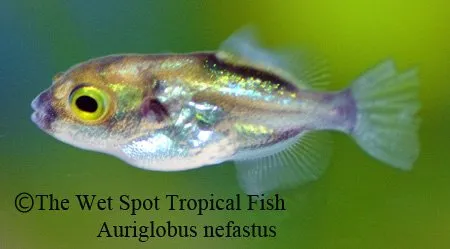 5.1 in (13 cm)66 gal (250 L)75–82°F (24–28°C)
Greenbottle puffer
Auriglobus nefastus
5.1 in (13 cm) · 66 gal (250 L)
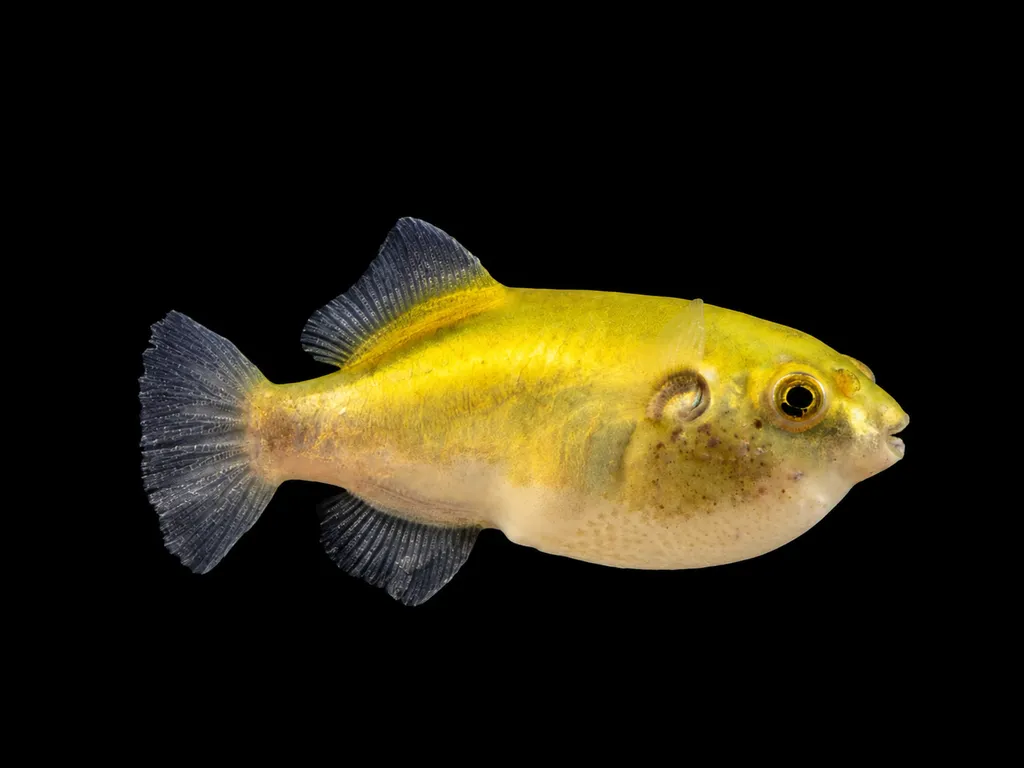 4.3 in (11 cm)22 gal (85 L)73–82°F (23–28°C)
Golden puffer
Auriglobus modestus
4.3 in (11 cm) · 22 gal (85 L)
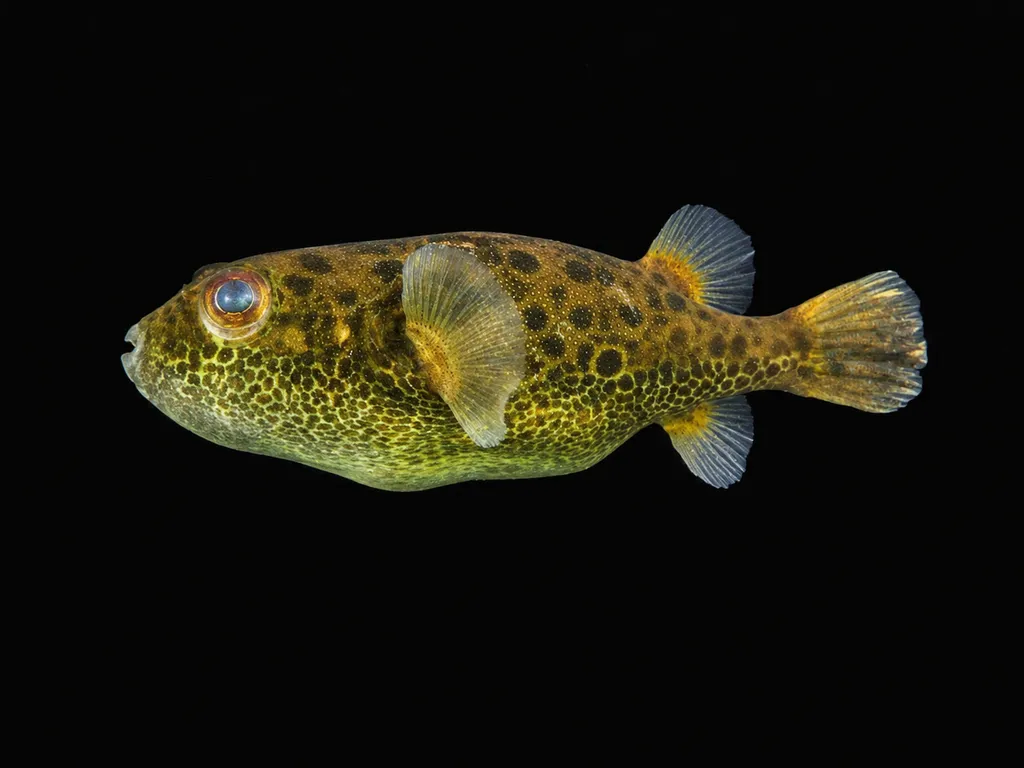 5.5 in (14 cm)42 gal (160 L)75–82°F (24–28°C)
Marsh puffer
Pao brevirostris
5.5 in (14 cm) · 42 gal (160 L)