Collett's tetra
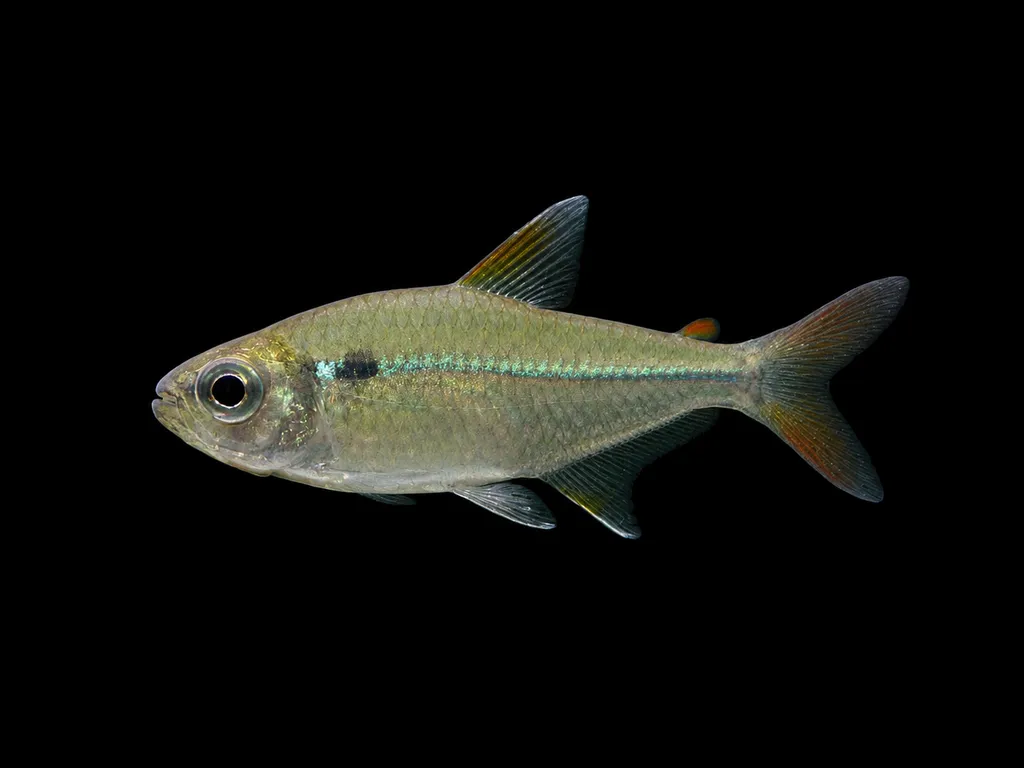
Hemigrammus collettii
Also known as Moenkhausia collettii, Collettii tetra
FreshwaterFish
Care at a glance
- Temperature
- 73–82°F
- 23–28°C
- pH
- 5.5–7.0
- Adult size
- 2 in
- 5 cm
- Minimum tank
- 20 gal
- 75 L
- Temperament
- Peaceful
- Social behavior
- Schooling
- Swim level
- Middle
- Difficulty
- Medium
- Breeding
- Egg scatterer
- Rarity
- Rare
- Family
- Characidae
- Origin
- Upper Amazon and Orinoco margins
Overview
Collett's tetra is an understated schooling fish for the middle of a calm community tank. It is a step up from the easiest fish.
Did you know
For over a century, Collett's tetra was filed under Moenkhausia. Genetic and anatomical study finally moved it into Hemigrammus, where it belongs with the type species of that genus. The fish itself never changed, only the label on the jar.
Caring for the Collett's tetra
Keep Collett's tetras in a group of ten or more, in 20 gal (75 L) or larger with planting and open lanes. A dark substrate, leaf litter and driftwood give a blackwater feel, and their colors come alive over a dark setup. Dim light and shade from plants keep them settled.
Give them warm, soft water at 73 to 82°F (23 to 28°C) and a pH of 5.5 to 7.0, with gentle flow. Offer small foods, such as quality flake, micro pellets, and regular frozen or live daphnia, cyclops and bloodworm.
Collett's tetras are peaceful and mix well with other calm, soft-water community fish. Small tetras, pencilfish, hatchetfish and corydoras all suit them. Keep them away from large or boisterous tank mates that would outcompete them at feeding time. They are egg-scattering characins with no parental care, and settled home breeding is not well documented.
Good to know
Collett's tetra belongs to the family Characidae. A copper stripe runs along its flank and ends in a dark, white-edged spot on the tail.
In the wild
Collett's tetra ranges widely across the Amazon basin, from Peru to the Guianas and into the margins of the Orinoco. It lives in slow, soft, tannin-tinted water over muddy, leaf-strewn bottoms.
Weekly picks
Tank mates
The Collett's tetra is a peaceful, schooling species that keeps to the middle. These picks share a community profile with it, are safe together in both directions, and overlap on water type, temperature and pH.
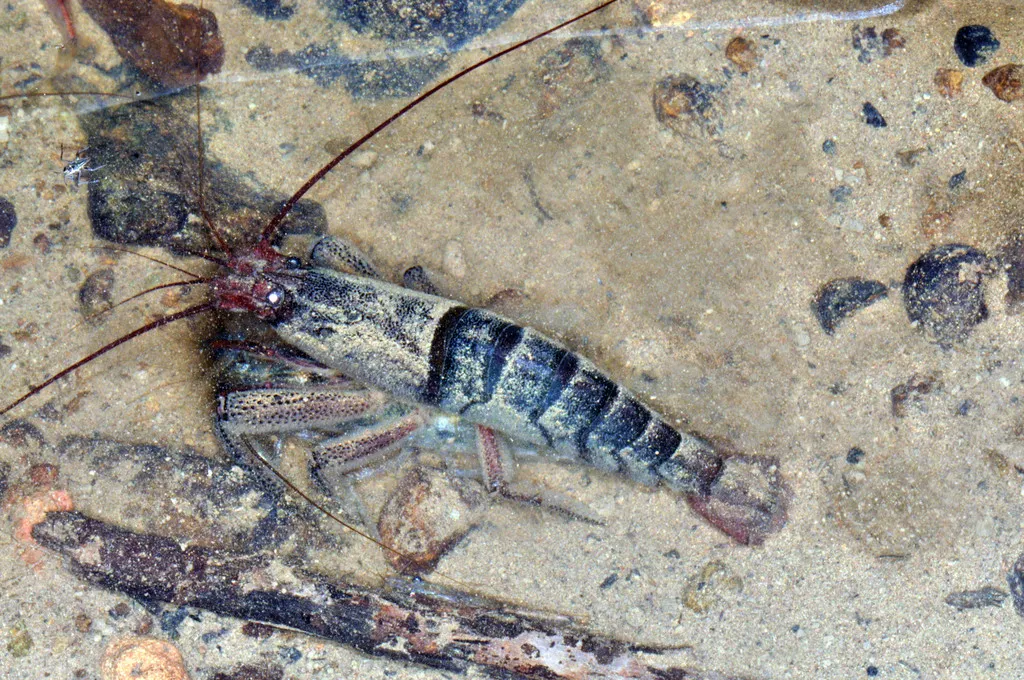
Marble wood shrimp
Atya scabra
Freshwater3.9 in (10 cm) · 20 gal (75 L)73–82°F (23–28°C)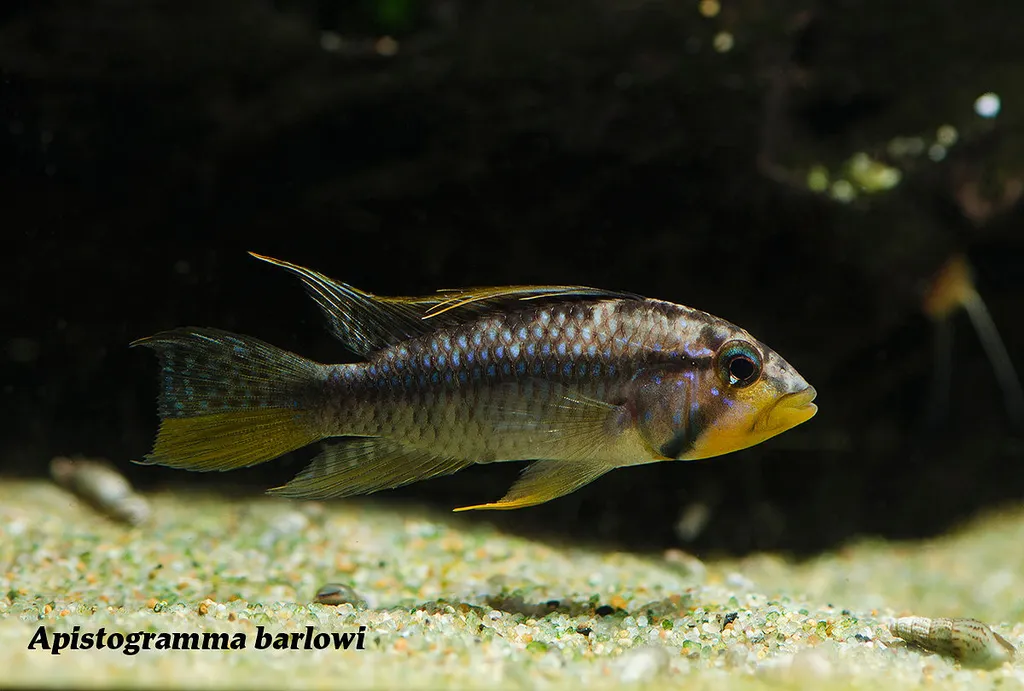
Barlow's dwarf cichlid
Apistogramma barlowi
Freshwater3.1 in (8 cm) · 20 gal (75 L)73–82°F (23–28°C)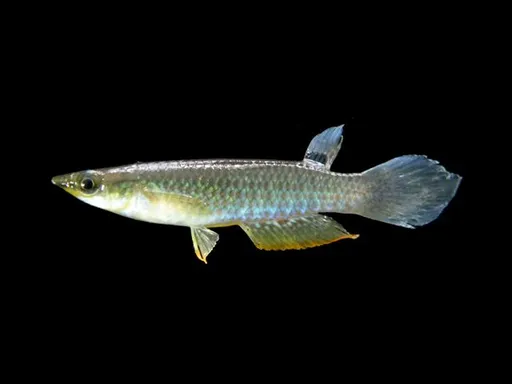
Blue panchax
Aplocheilus panchax
Freshwater3.5 in (9 cm) · 20 gal (75 L)72–82°F (22–28°C)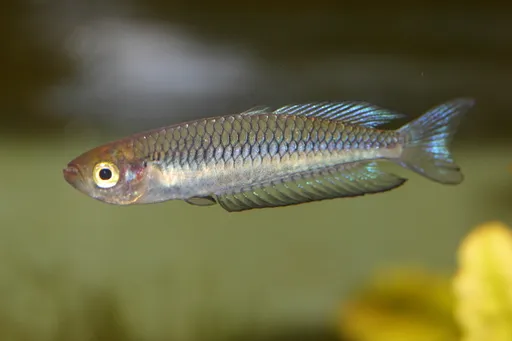
Ornate rainbowfish
Rhadinocentrus ornatus
Freshwater2.4 in (6 cm) · 20 gal (75 L)64–82°F (18–28°C)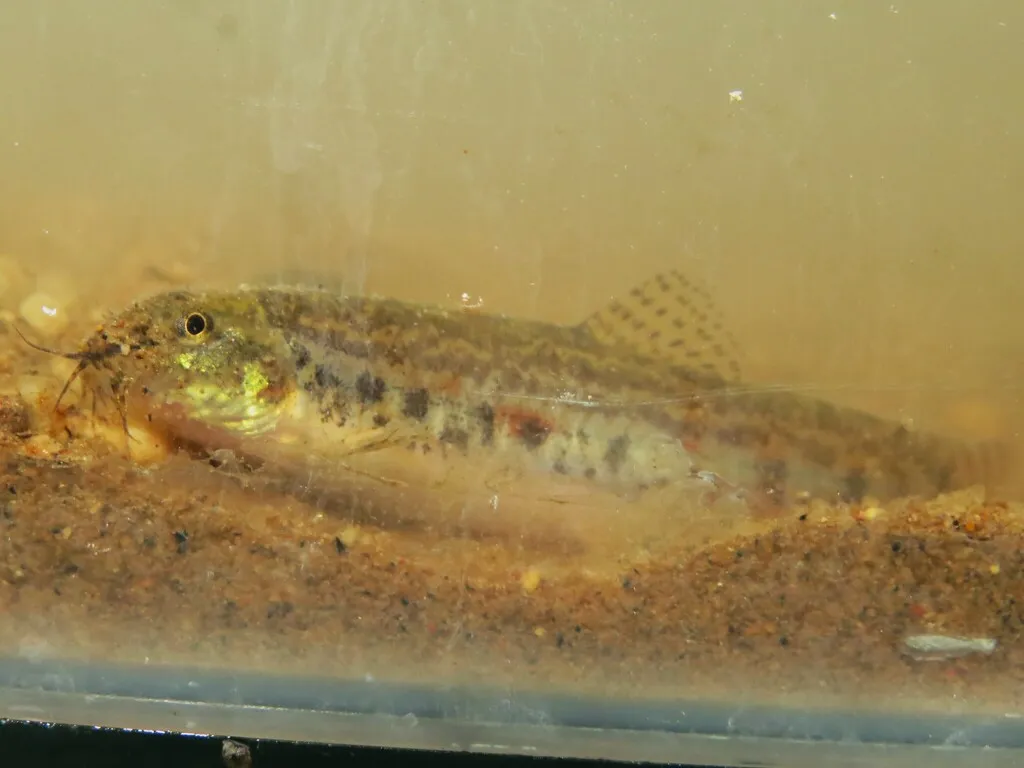
Common spiny loach
Lepidocephalichthys thermalis
Freshwater3.1 in (8 cm) · 20 gal (75 L)72–82°F (22–28°C)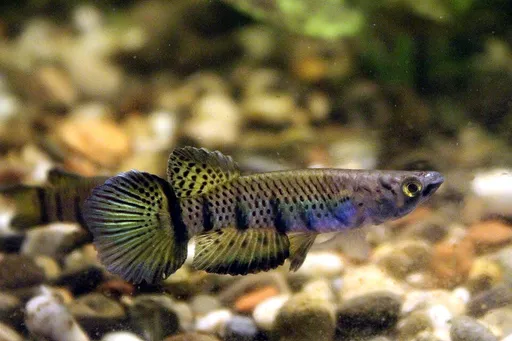
Six-barred panchax
Epiplatys sexfasciatus
Freshwater3.9 in (10 cm) · 20 gal (75 L)72–81°F (22–27°C)
Common questions
What size tank does a Collett's tetra need?
A Collett's tetra needs at least 20 gal (75 L). It spends most of its time in the middle.
What temperature and pH does a Collett's tetra need?
A Collett's tetra is comfortable at 73–82°F (23–28°C) with a pH of 5.5–7.0.
What does a Collett's tetra eat?
A Collett's tetra eats small foods, such as quality flake and micro pellets. Give it regular frozen or live daphnia, cyclops and bloodworm as well.
How big does a Collett's tetra get?
An adult Collett's tetra reaches about 2 in (5 cm).
Does a Collett's tetra need a group?
Yes. A Collett's tetra is a schooling species and should be kept in a group, not singly.
How does a Collett's tetra breed?
Collett's tetras scatter their eggs and give no parental care. Settled home breeding is not well documented.
Related species
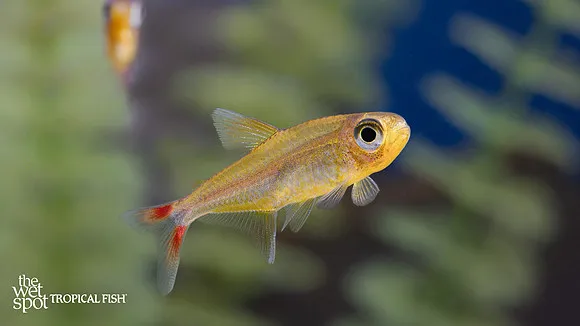 2 in (5 cm)20 gal (75 L)73–82°F (23–28°C)
Red flush tetra
Hemigrammus stictus
2 in (5 cm) · 20 gal (75 L)
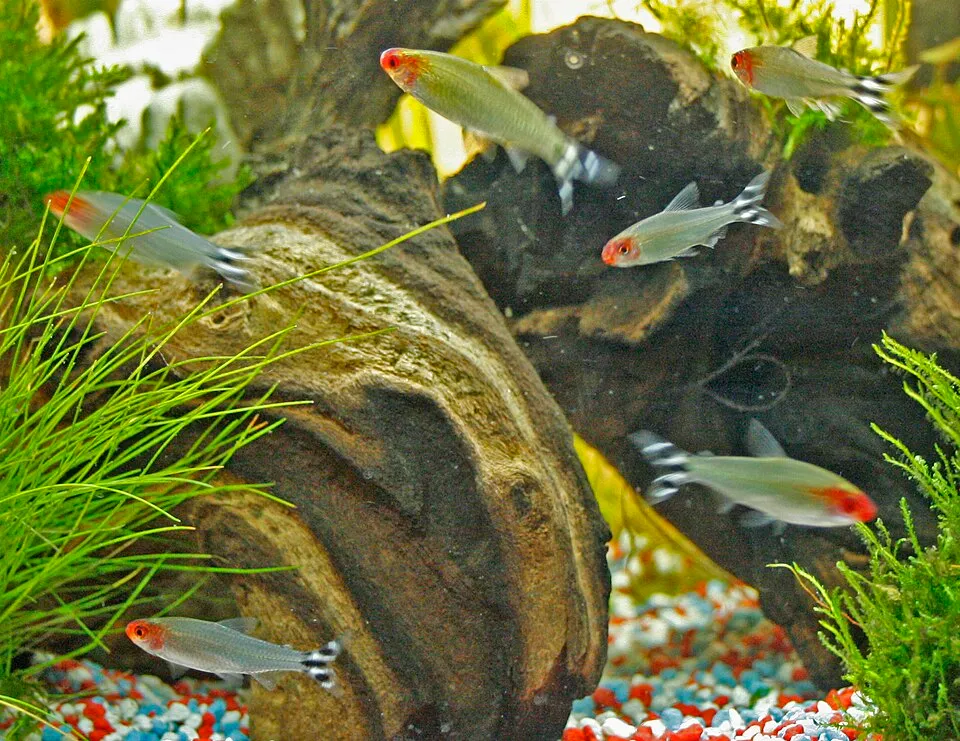 2 in (5 cm)20 gal (75 L)75–81°F (24–27°C)
Rummy-nose tetra
Hemigrammus rhodostomus
2 in (5 cm) · 20 gal (75 L)
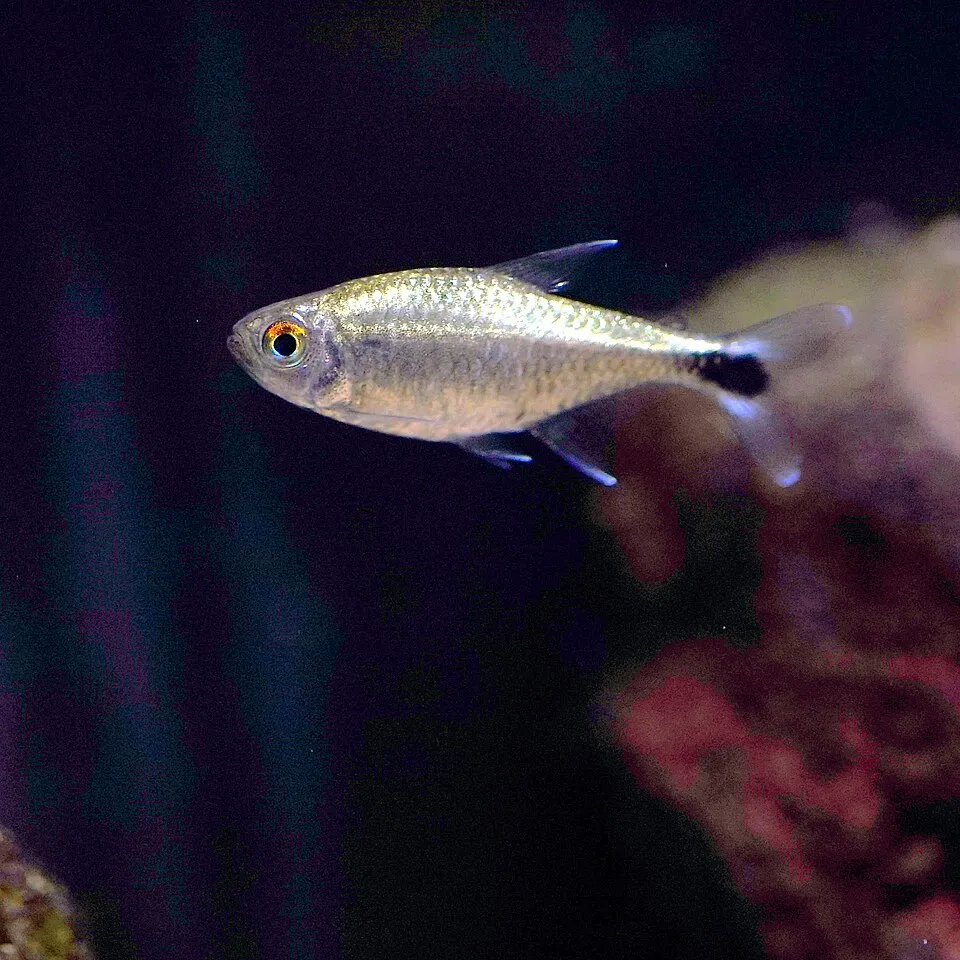 2.2 in (5.5 cm)20 gal (75 L)75–82°F (24–28°C)
Golden tetra
Hemigrammus rodwayi
2.2 in (5.5 cm) · 20 gal (75 L)
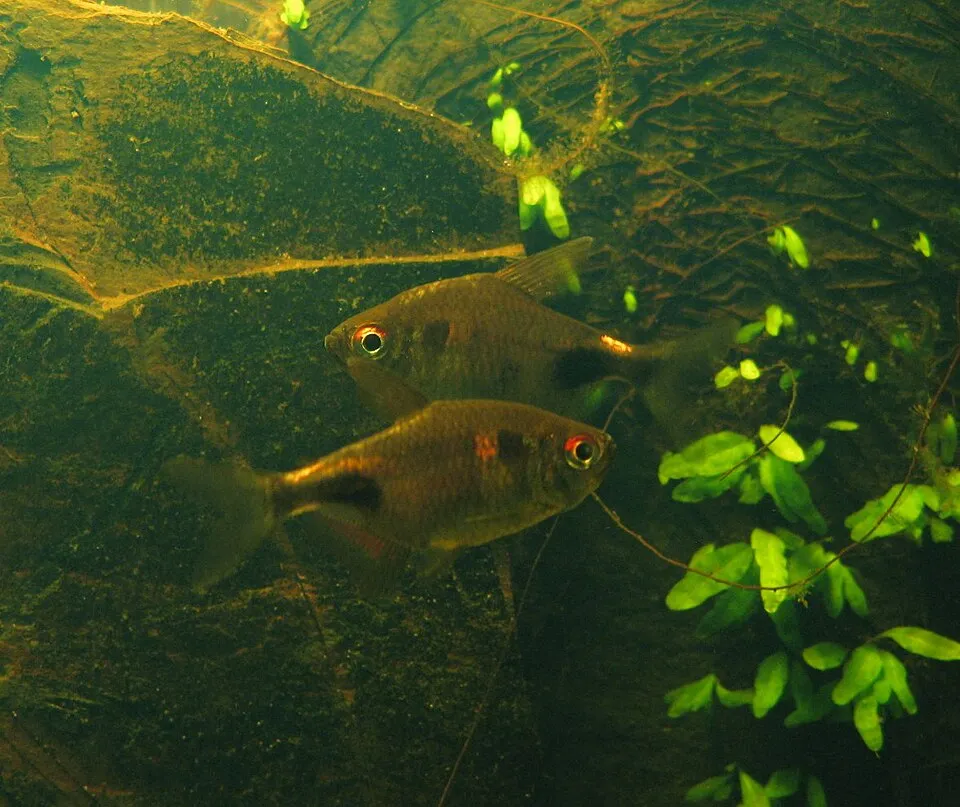 1.8 in (4.5 cm)20 gal (75 L)73–82°F (23–28°C)
Garnet tetra
Hemigrammus pulcher
1.8 in (4.5 cm) · 20 gal (75 L)
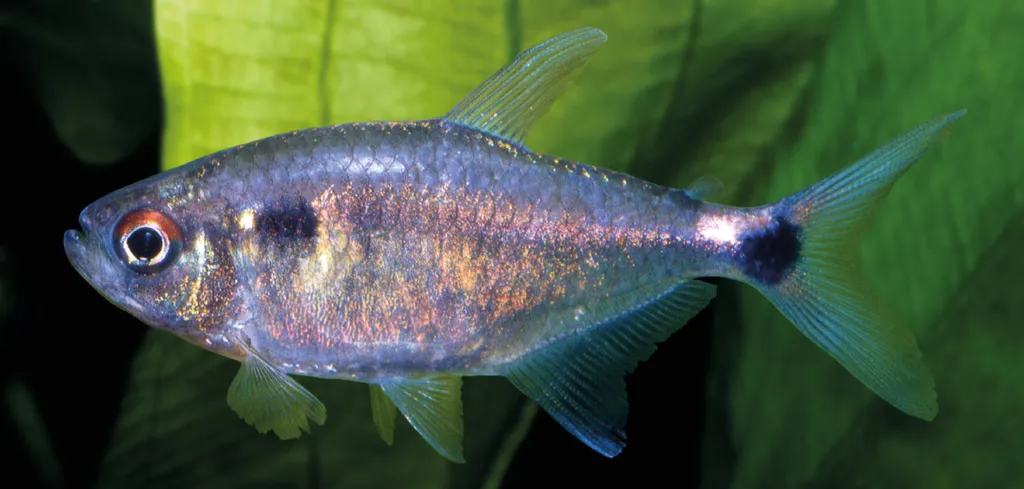 1.8 in (4.5 cm)17 gal (65 L)75–82°F (24–28°C)
Head-and-taillight tetra
Hemigrammus ocellifer
1.8 in (4.5 cm) · 17 gal (65 L)
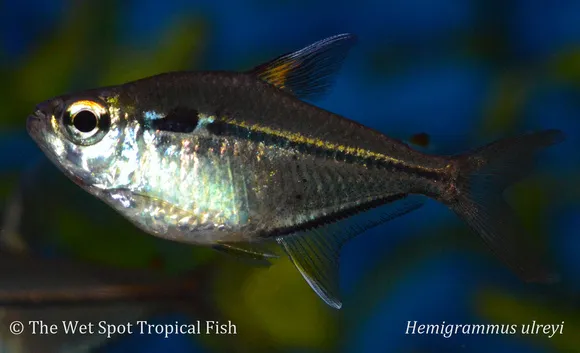 1.7 in (4.4 cm)20 gal (75 L)72–81°F (22–27°C)
Ulrey's tetra
Hemigrammus ulreyi
1.7 in (4.4 cm) · 20 gal (75 L)