Rummynose tetra
Petitella bleheri
Also known as Brilliant rummynose tetra
FreshwaterFish
Care at a glance
- Temperature
- 75–81°F
- 24–27°C
- pH
- 6.0–7.0
- Adult size
- 2 in
- 5 cm
- Minimum tank
- 20 gal
- 75 L
- Temperament
- Peaceful
- Social behavior
- Schooling
- Swim level
- Middle
- Difficulty
- Medium
- Breeding
- Hard
- Rarity
- Very common
- Family
- Characidae
- Origin
- Rio Negro basin, Brazil
Overview
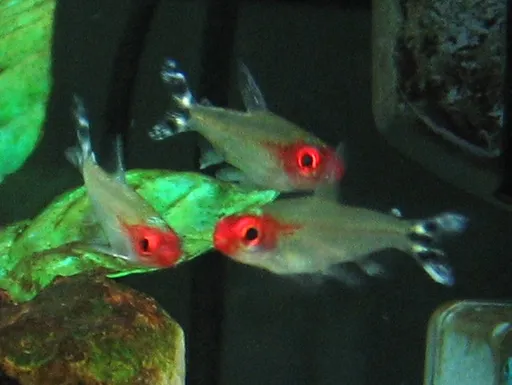
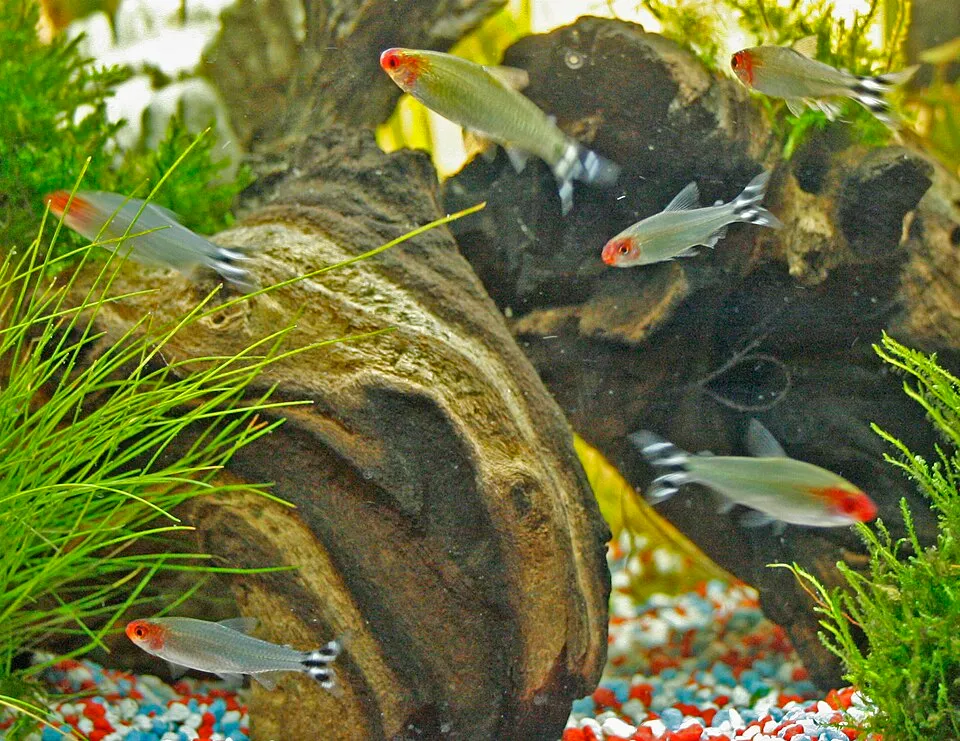
Keep them in a tight school of 8 to 10 or more in a tank of 75 liters or up, since a small group gets nervous and loses color. They are peaceful and hold to the middle of the water column, swimming as one unit. Water should sit at 24 to 27 C, soft, with a pH of 6 to 7, and it needs to be stable in a tank that has been running a while. Feed small flakes, micro pellets, and frozen foods like daphnia or baby brine. Pair them with other calm, similarly sized fish that suit the same warm, soft, acidic water.
In the wild
Rummynose tetras come from the Rio Negro basin in Brazil, soft acidic blackwater stained dark with tannins from leaf litter and driftwood. To match that, give them a tank of 75 liters or more with driftwood, leaf litter, a dark substrate, and dim light, which brings out the red nose and keeps them settled. Keep the water warm at 24 to 27 C, soft, and acidic at a pH of 6 to 7. They need a mature, well cycled tank, since the nose fades the moment water quality drops.
Good to know
This is a characin in the family Characidae, reaching about 5 cm as an adult. It was formerly classified as Hemigrammus bleheri before being moved to Petitella. It is an egg scatterer with no parental care, and breeding is hard, needing very soft, acidic blackwater conditions to trigger spawning. Most fish in the trade are commercially bred.
Did you know
The red nose works as a built in water tester. When conditions are good the snout glows deep red, but it fades to pale pink or washes out when water quality slips or the fish is stressed. If the school's noses dim, check your parameters before anything else.
Weekly picks
Tank mates
Rummynose tetra is a peaceful, schooling species that keeps to the middle. These picks share a community profile with it, are safe together in both directions, and overlap on water type, temperature and pH.
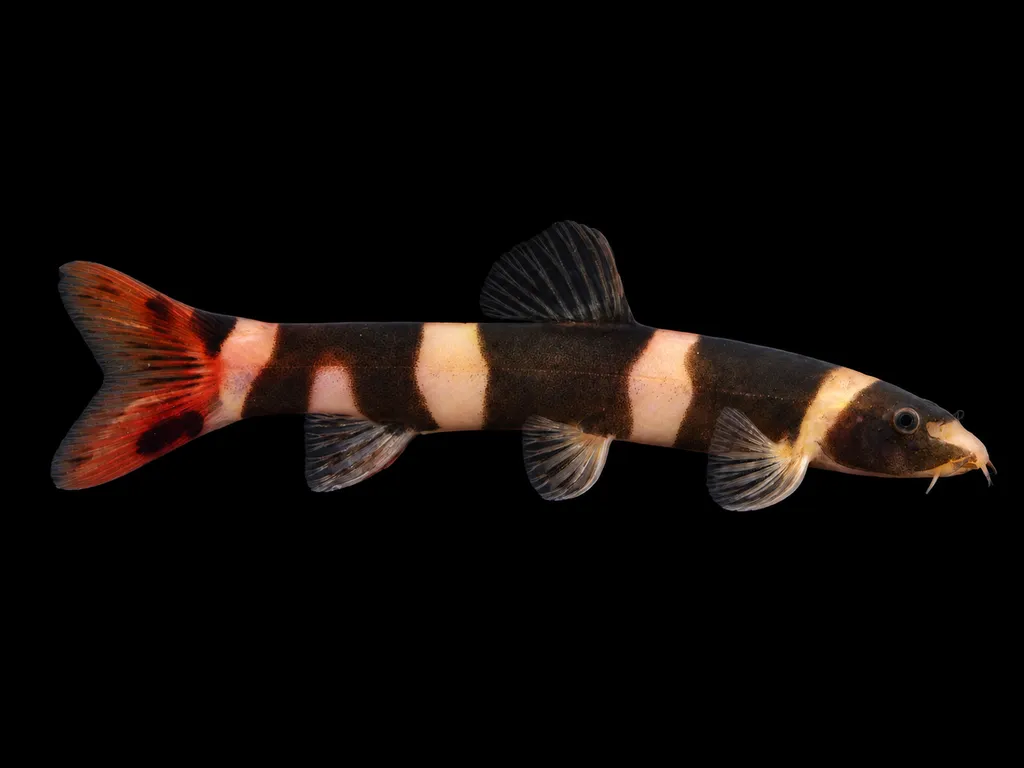
Barito loach
Kapuasia falaris
Freshwater2.6 in (6.5 cm) · 20 gal (75 L)73–81°F (23–27°C)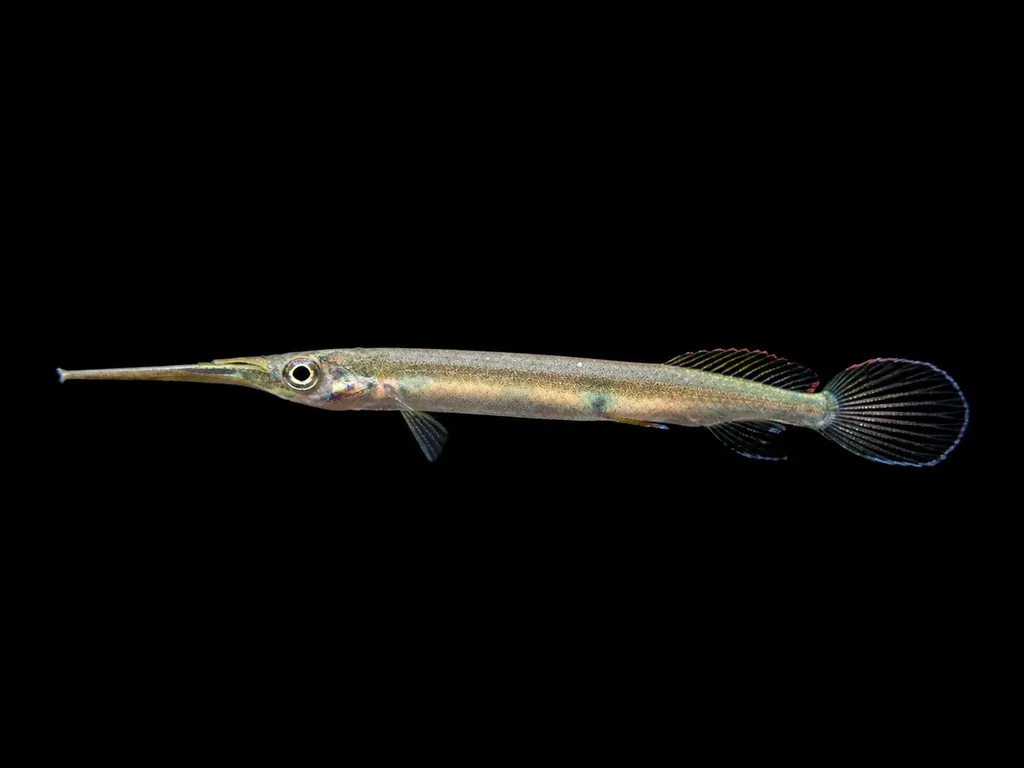
Kuekenthal's halfbeak
Hemirhamphodon kuekenthali
Freshwater3.3 in (8.5 cm) · 20 gal (75 L)73–81°F (23–27°C)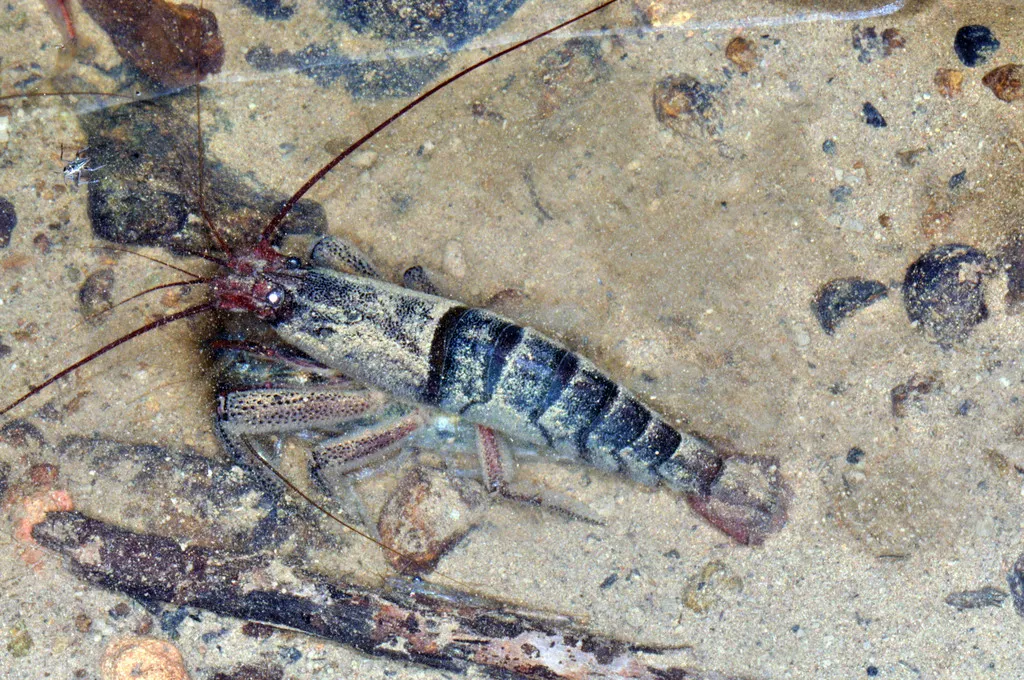
Marble wood shrimp
Atya scabra
Freshwater3.9 in (10 cm) · 20 gal (75 L)73–82°F (23–28°C)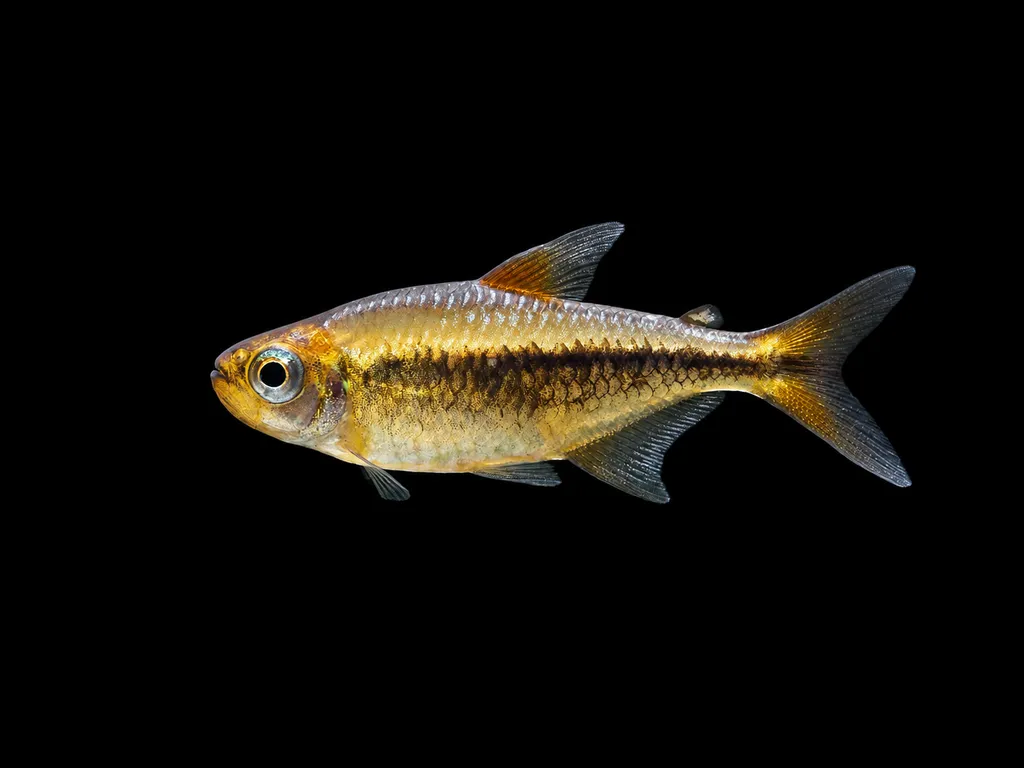
Blackmargin tetra
Moenkhausia nigromarginata
Freshwater2.1 in (5.3 cm) · 20 gal (75 L)73–82°F (23–28°C)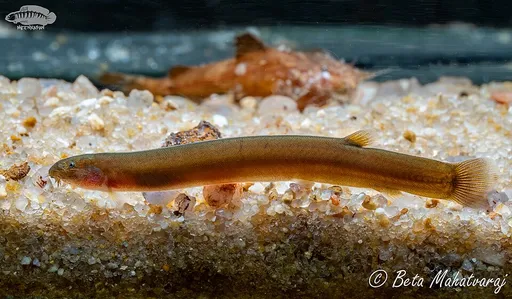
Cinnamon loach
Pangio pangia
Freshwater2.4 in (6 cm) · 20 gal (75 L)72–81°F (22–27°C)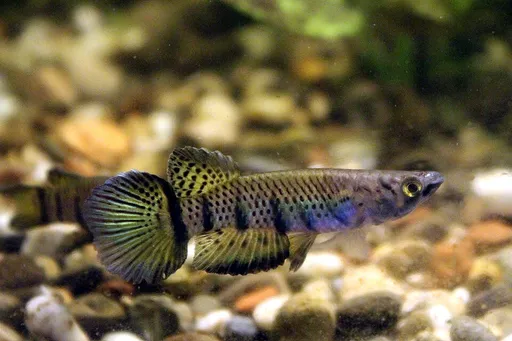
Six-barred panchax
Epiplatys sexfasciatus
Freshwater3.9 in (10 cm) · 20 gal (75 L)72–81°F (22–27°C)
Common questions
What size tank does a Rummynose tetra need?
A Rummynose tetra needs at least 20 gal (75 L). It spends most of its time in the middle.
What temperature and pH does a Rummynose tetra need?
A Rummynose tetra is comfortable at 75–81°F (24–27°C) with a pH of 6.0–7.0.
How big does a Rummynose tetra get?
An adult Rummynose tetra reaches about 2 in (5 cm).
Does a Rummynose tetra need a group?
Yes. A Rummynose tetra is a schooling species and should be kept in a group, not singly.
Related species
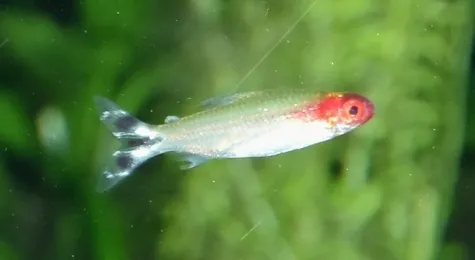 2 in (5 cm)29 gal (110 L)72–79°F (22–26°C)
False rummynose tetra
Petitella georgiae
2 in (5 cm) · 29 gal (110 L)
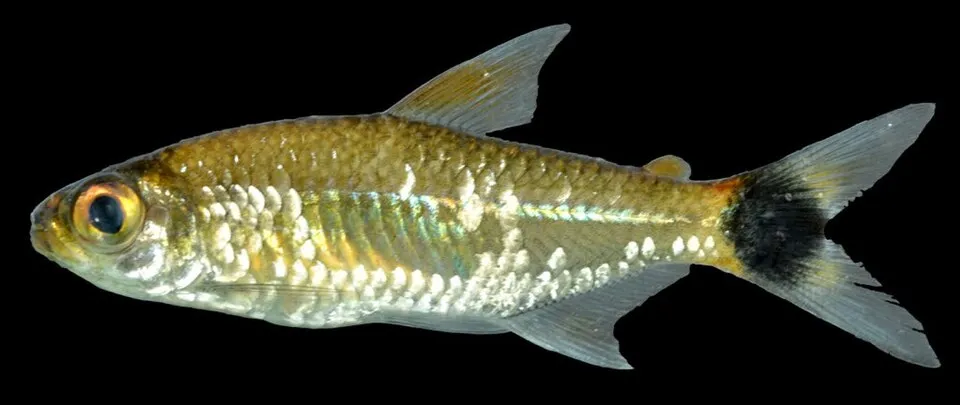 2 in (5 cm)16 gal (60 L)75–82°F (24–28°C)
Ceros tetra
Moenkhausia ceros
2 in (5 cm) · 16 gal (60 L)
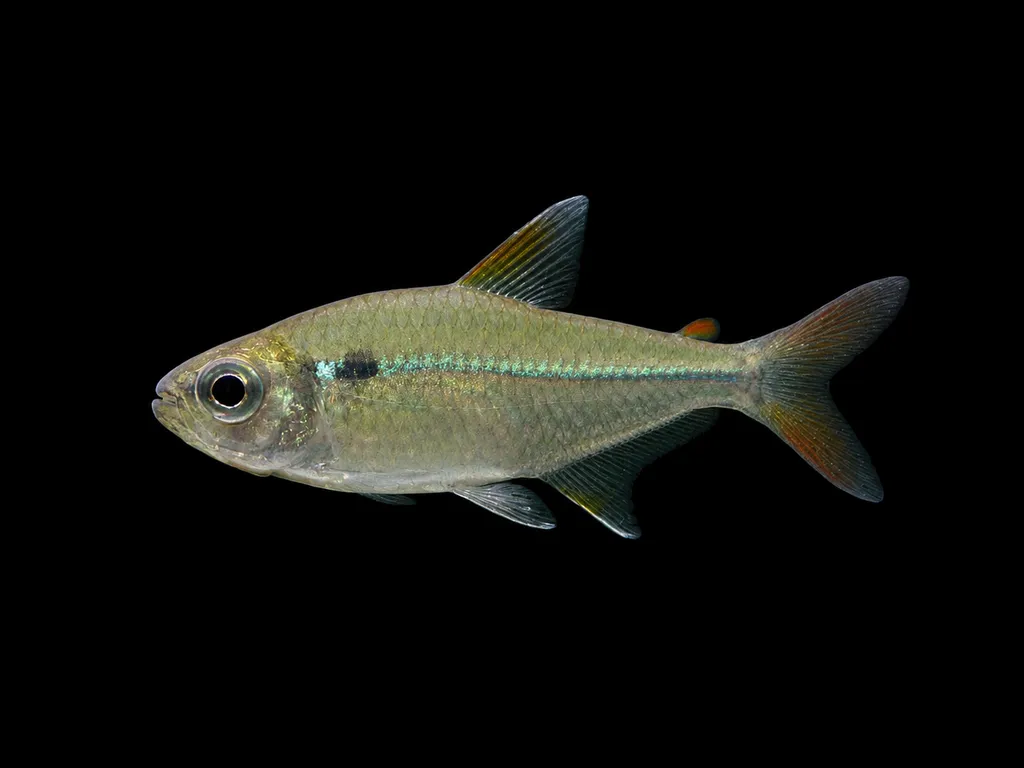 2 in (5 cm)20 gal (75 L)73–82°F (23–28°C)
Collett's tetra
Hemigrammus collettii
2 in (5 cm) · 20 gal (75 L)
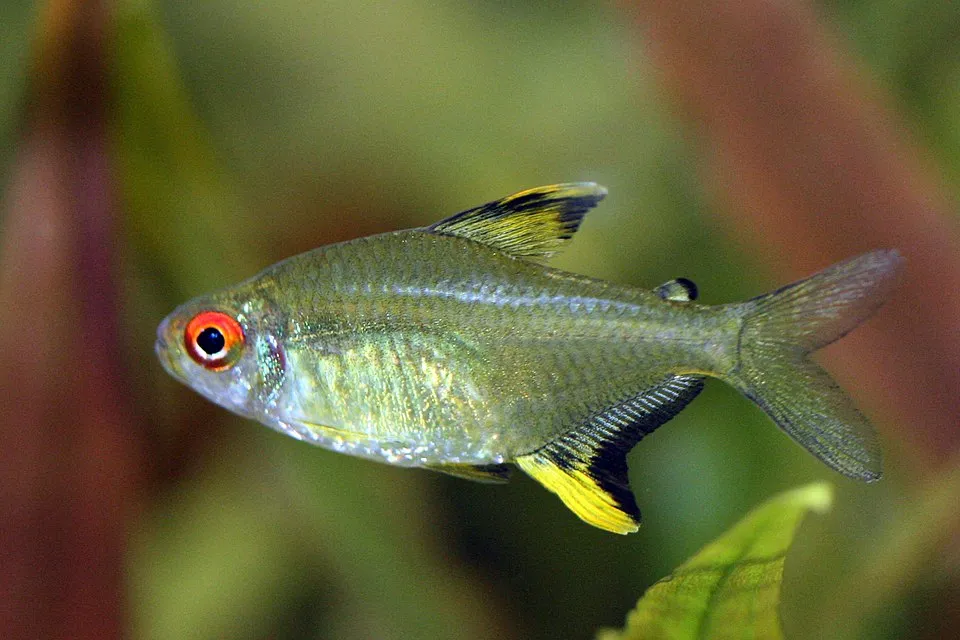 2 in (5 cm)17 gal (65 L)72–82°F (22–28°C)
Lemon tetra
Hyphessobrycon pulchripinnis
2 in (5 cm) · 17 gal (65 L)
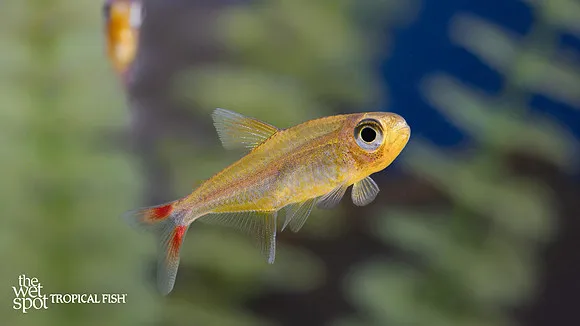 2 in (5 cm)20 gal (75 L)73–82°F (23–28°C)
Red flush tetra
Hemigrammus stictus
2 in (5 cm) · 20 gal (75 L)
 2 in (5 cm)20 gal (75 L)75–81°F (24–27°C)
Rummy-nose tetra
Hemigrammus rhodostomus
2 in (5 cm) · 20 gal (75 L)