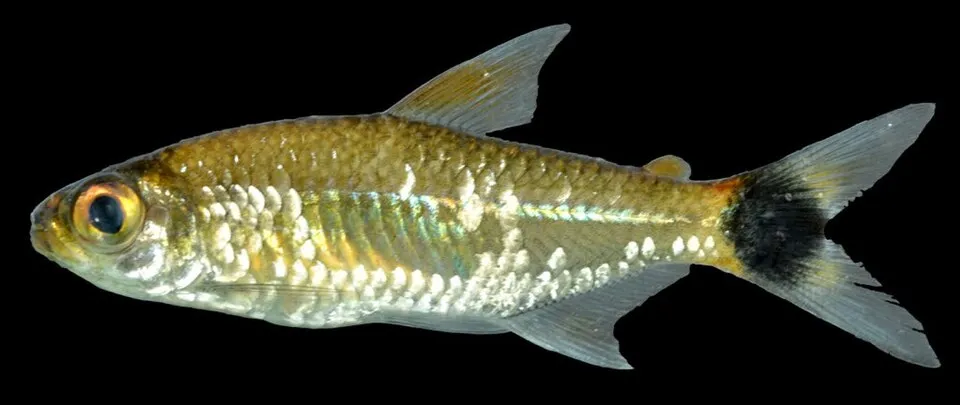
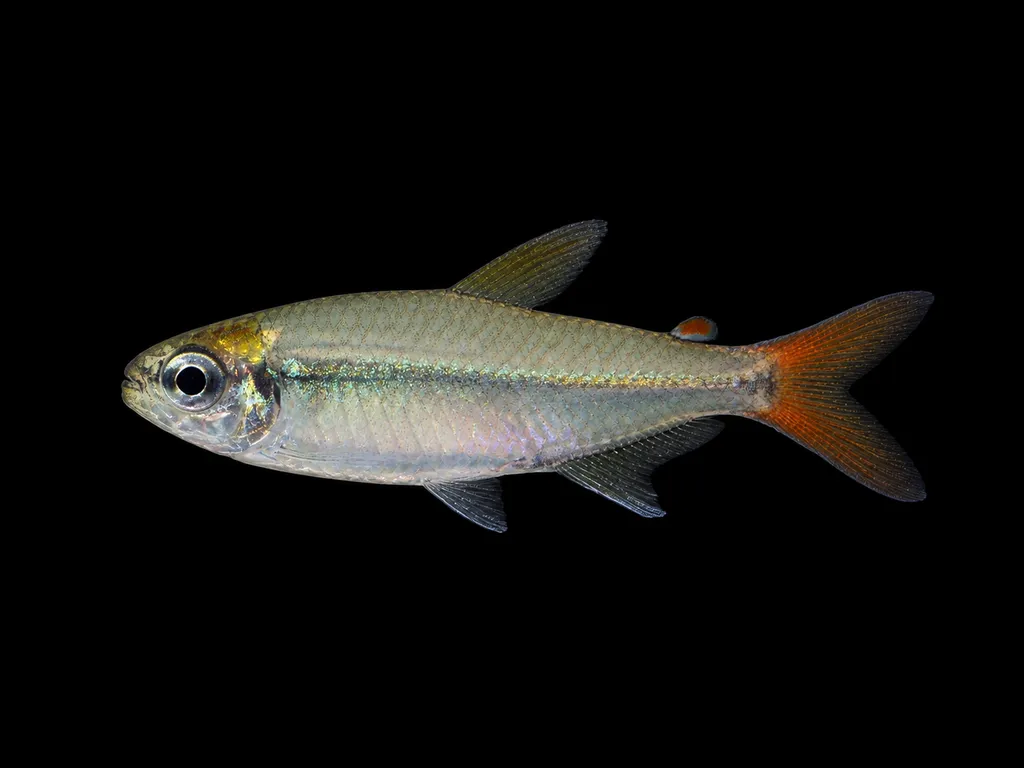
Ceros tetra
Moenkhausia ceros
FreshwaterFish
Care at a glance
- Temperature
- 75–82°F
- 24–28°C
- pH
- 5.5–7.0
- Adult size
- 2 in
- 5 cm
- Minimum tank
- 16 gal
- 60 L
- Temperament
- Peaceful
- Social behavior
- Schooling
- Swim level
- Middle
- Difficulty
- Medium
- Breeding
- No record
- Rarity
- Very rare
- Family
- Characidae
- Origin
- Peru, Brazil
Overview
Keep them in a school of six or more in a tank of about 60 liters or larger. They are peaceful, active swimmers that work the middle and upper water. Feed a varied diet of quality flake, micro-pellets, and frozen brine shrimp or daphnia, since they are easygoing omnivores. They make good residents for a calm community of similar-sized fish.
In the wild
Ceros tetras come from clear, slow stretches of the Amazon basin in Peru and Brazil, in shaded, plant-rich water. Set up a dim tank with driftwood, some plants, and soft, slightly acidic to neutral water to suit them. Keep temps in the mid to high 20s C.
Good to know
This is a characin in the genus Moenkhausia, family Characidae, reaching about 5 cm. Like other Moenkhausia tetras it is an egg scatterer with no parental care, and eggs typically hatch within a day or two. It is a less common species in the trade, so solid keeping information is thinner than for the popular tetras.
Did you know
Moenkhausia is a large, messy genus, and fish traded under one name are often mixed with close look-alikes, so a group bought as Ceros tetras may not all be the exact same species. If you want a uniform school, buy them all at once from a single batch.
Weekly picks
Tank mates
Ceros tetra is a peaceful, schooling species that keeps to the middle. These picks share a community profile with it, are safe together in both directions, and overlap on water type, temperature and pH.
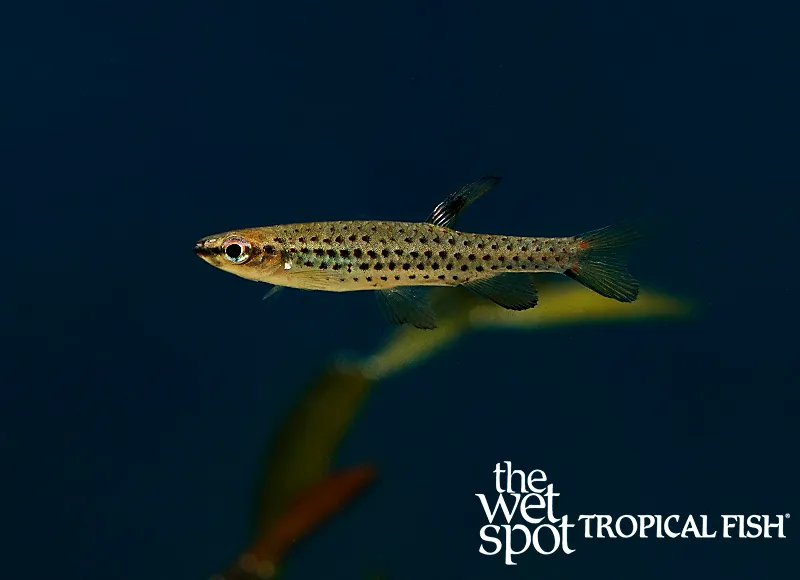
Spotted splash tetra
Copella nattereri
Freshwater2 in (5 cm) · 16 gal (60 L)75–82°F (24–28°C)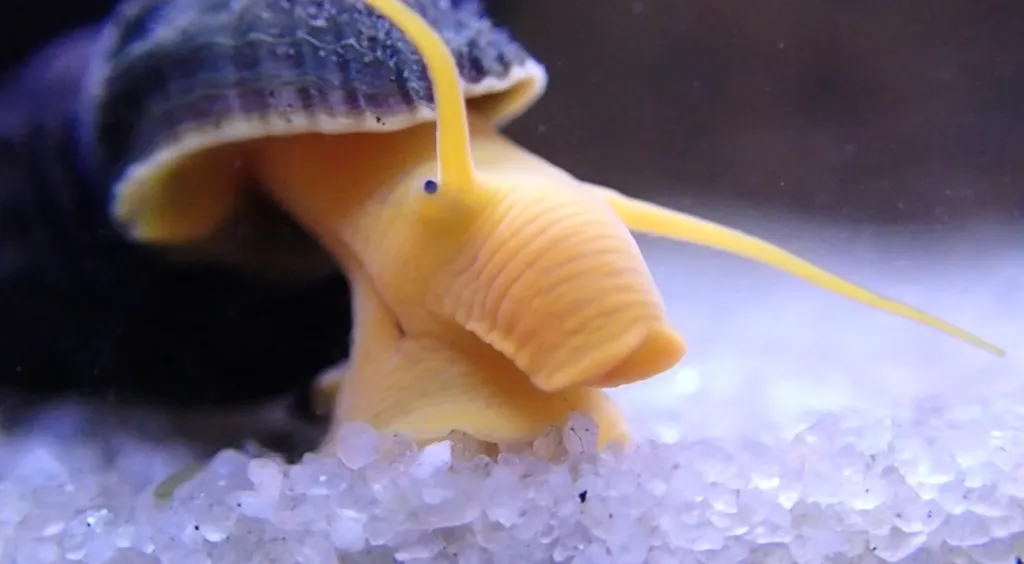
Gold rabbit snail
Tylomelania gemmifera
Freshwater2.8 in (7 cm) · 16 gal (60 L)75–82°F (24–28°C)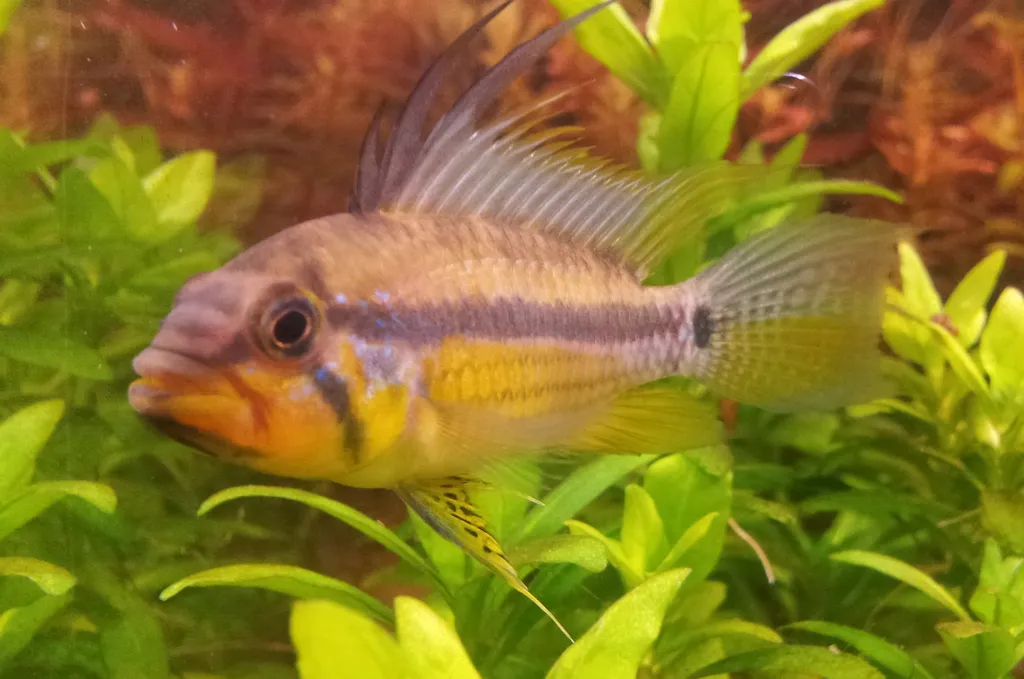
Allpahuayo dwarf cichlid
Apistogramma allpahuayo
Freshwater2 in (5 cm) · 16 gal (60 L)75–82°F (24–28°C)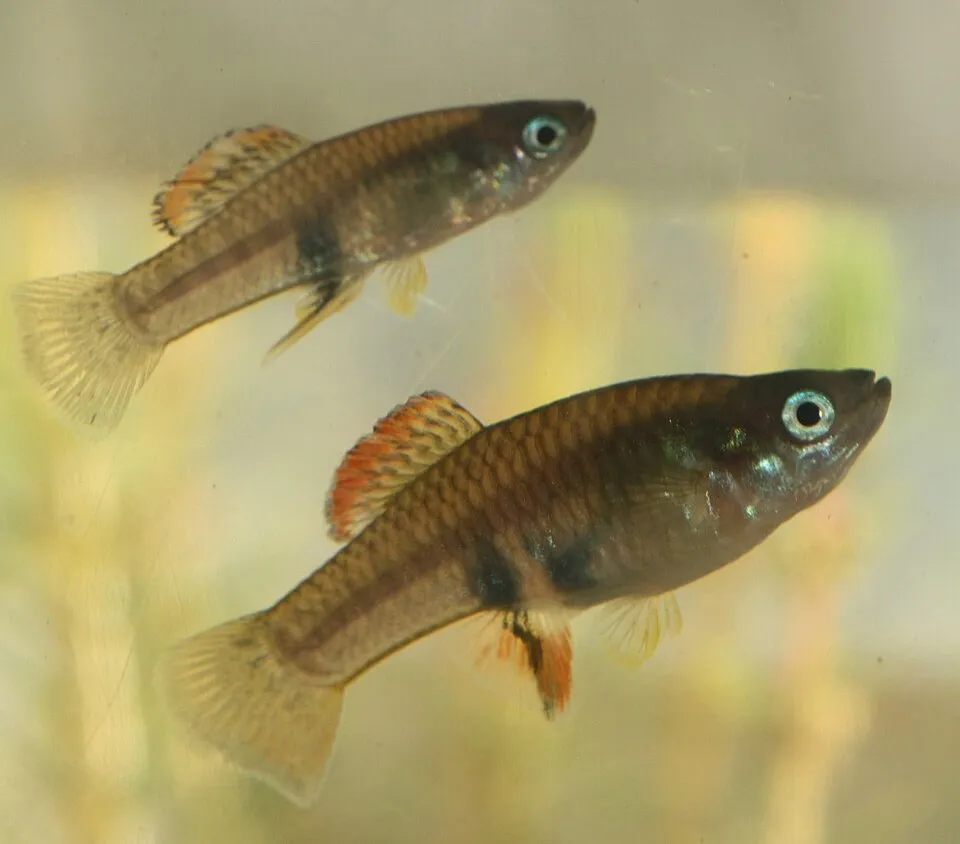
Cardinal toothcarp
Brachyrhaphis roseni
Freshwater2.4 in (6 cm) · 16 gal (60 L)72–86°F (22–30°C)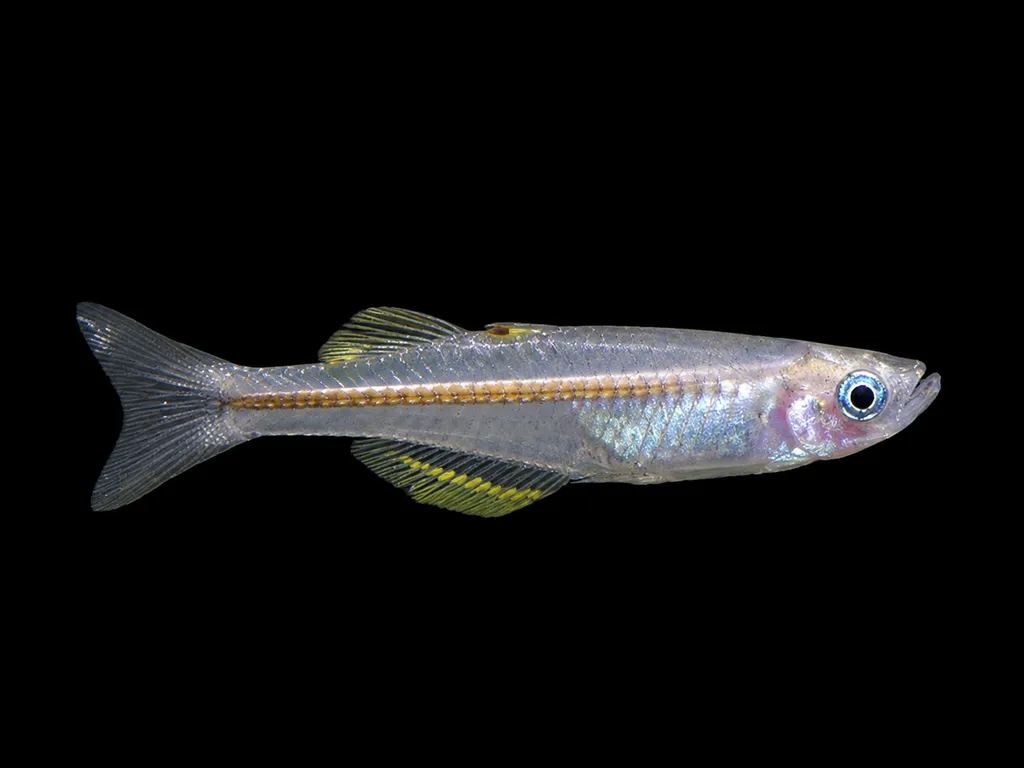
New Guinea blue-eye
Pseudomugil novaeguineae
Freshwater1.8 in (4.5 cm) · 15 gal (55 L)79–86°F (26–30°C)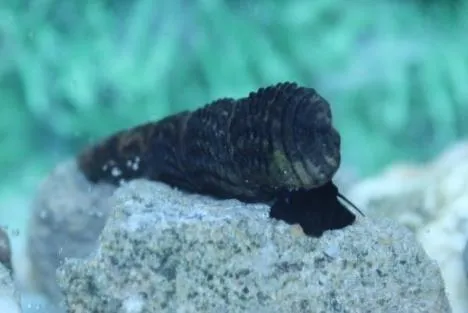
White spotted rabbit snail
Tylomelania towutica
Freshwater4.3 in (11 cm) · 16 gal (60 L)75–84°F (24–29°C)
Common questions
What size tank does a Ceros tetra need?
A Ceros tetra needs at least 16 gal (60 L). It spends most of its time in the middle.
What temperature and pH does a Ceros tetra need?
A Ceros tetra is comfortable at 75–82°F (24–28°C) with a pH of 5.5–7.0.
How big does a Ceros tetra get?
An adult Ceros tetra reaches about 2 in (5 cm).
Does a Ceros tetra need a group?
Yes. A Ceros tetra is a schooling species and should be kept in a group, not singly.
Related species
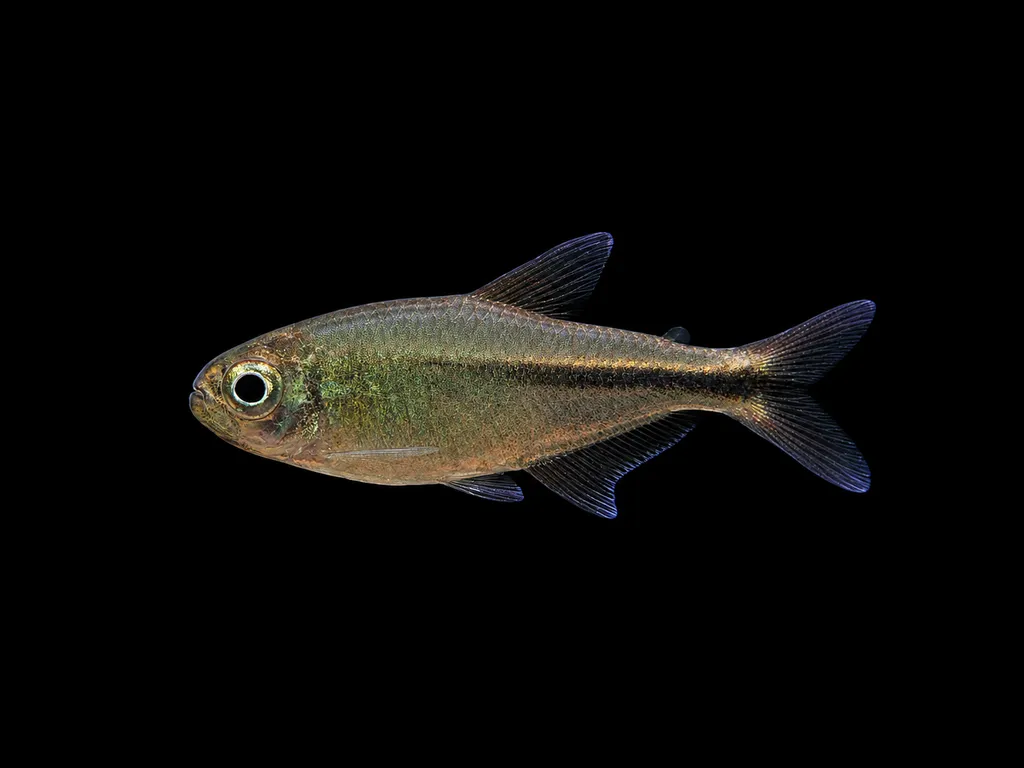 2 in (5.2 cm)20 gal (75 L)73–82°F (23–28°C)
Aurora tetra
Moenkhausia aurora
2 in (5.2 cm) · 20 gal (75 L)
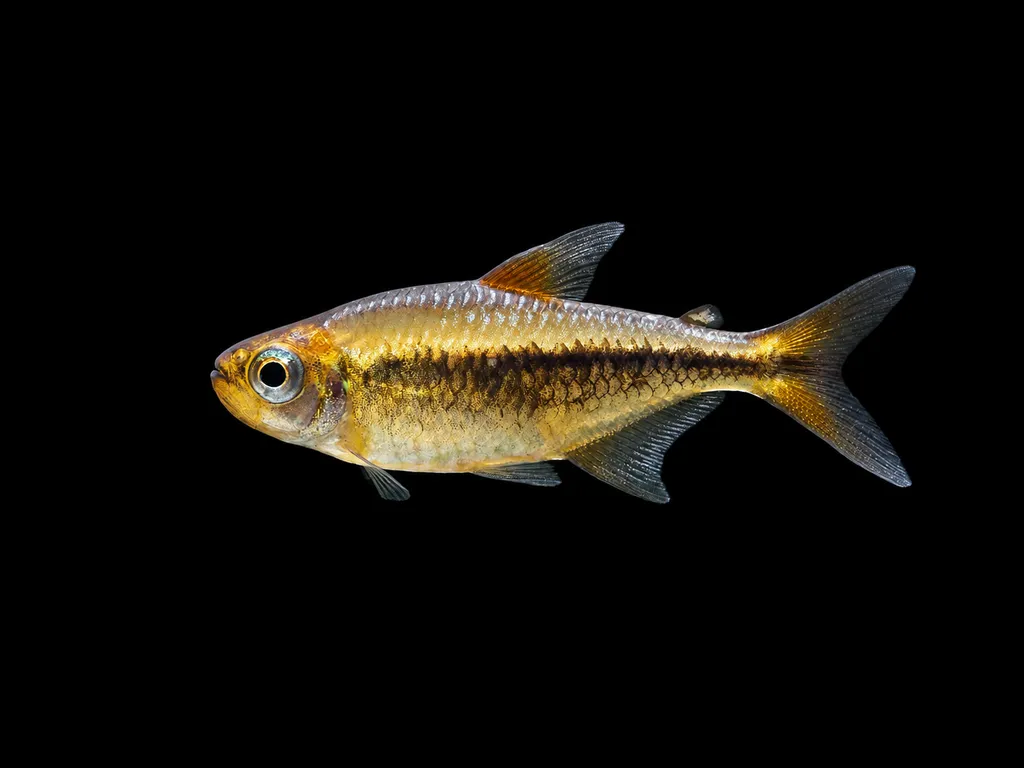 2.1 in (5.3 cm)20 gal (75 L)73–82°F (23–28°C)
Blackmargin tetra
Moenkhausia nigromarginata
2.1 in (5.3 cm) · 20 gal (75 L)
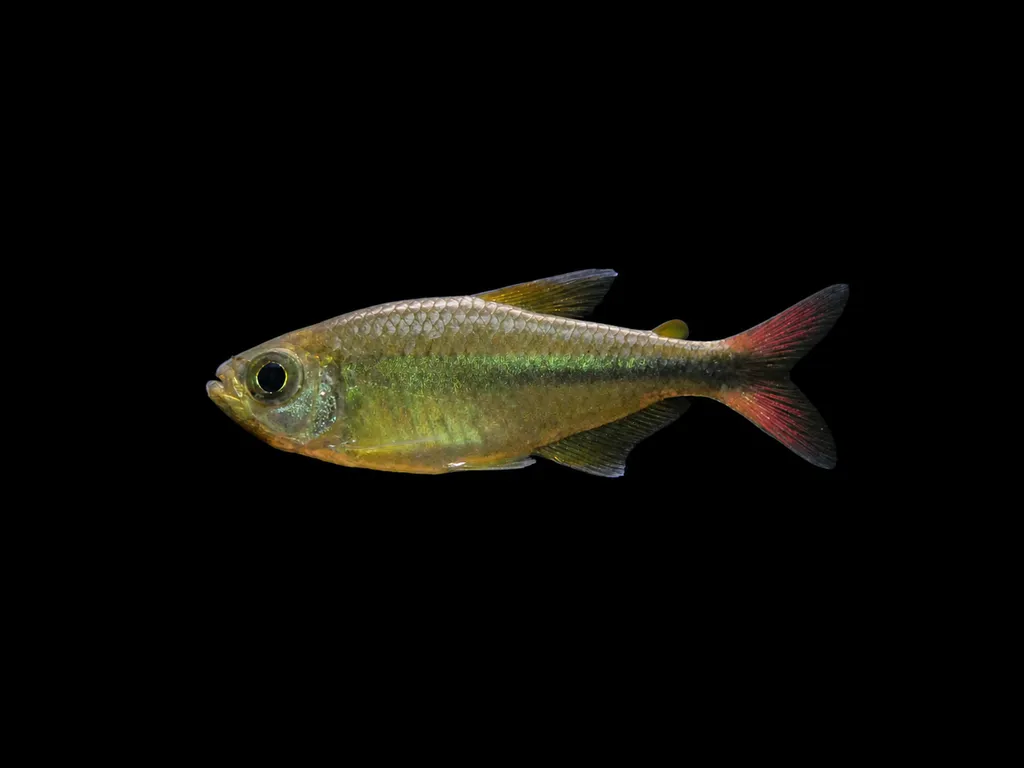 1.9 in (4.7 cm)20 gal (75 L)72–81°F (22–27°C)
Lopes's tetra
Moenkhausia lopesi
1.9 in (4.7 cm) · 20 gal (75 L)
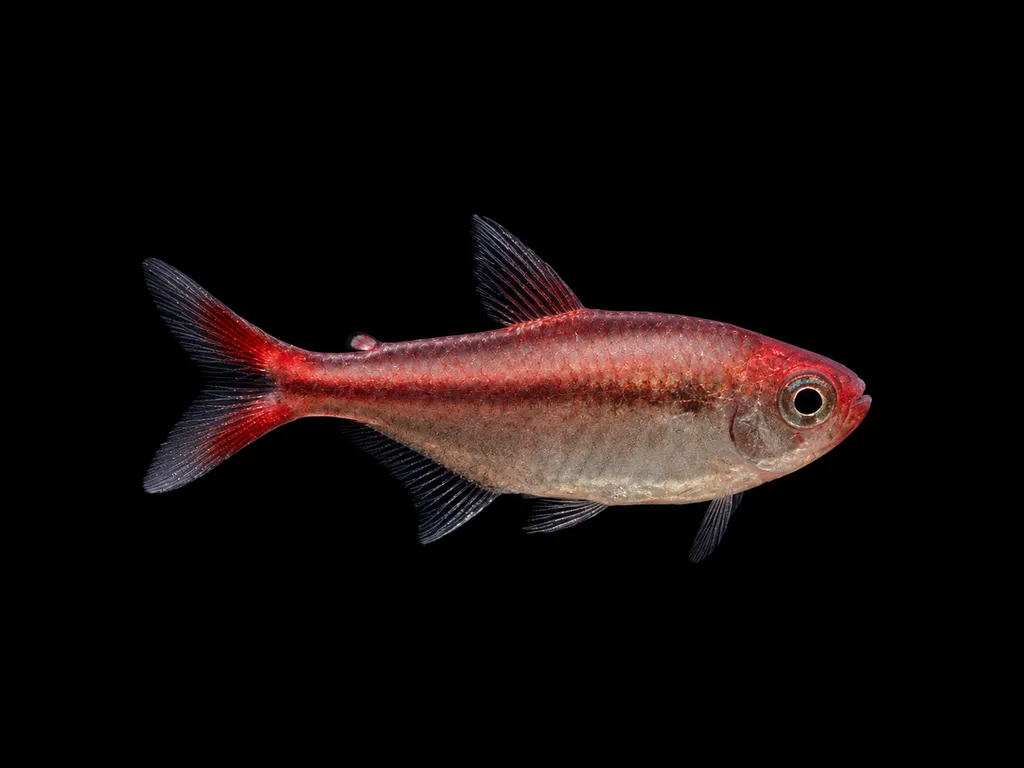 2.1 in (5.4 cm)20 gal (75 L)73–82°F (23–28°C)
Ruby moenkhausia
Moenkhausia rubra
2.1 in (5.4 cm) · 20 gal (75 L)
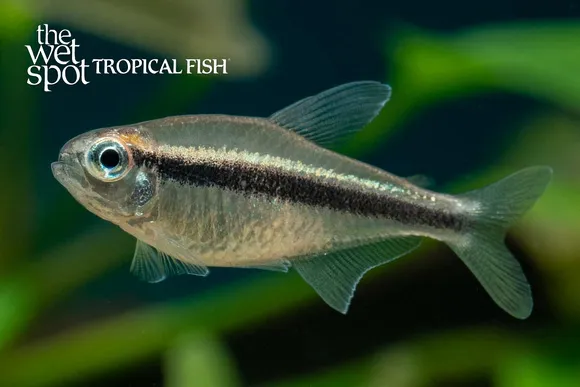 2.2 in (5.6 cm)20 gal (75 L)73–82°F (23–28°C)
Dusky tetra
Moenkhausia phaeonota
2.2 in (5.6 cm) · 20 gal (75 L)
 2.4 in (6 cm)20 gal (75 L)73–82°F (23–28°C)
Cope's tetra
Moenkhausia copei
2.4 in (6 cm) · 20 gal (75 L)