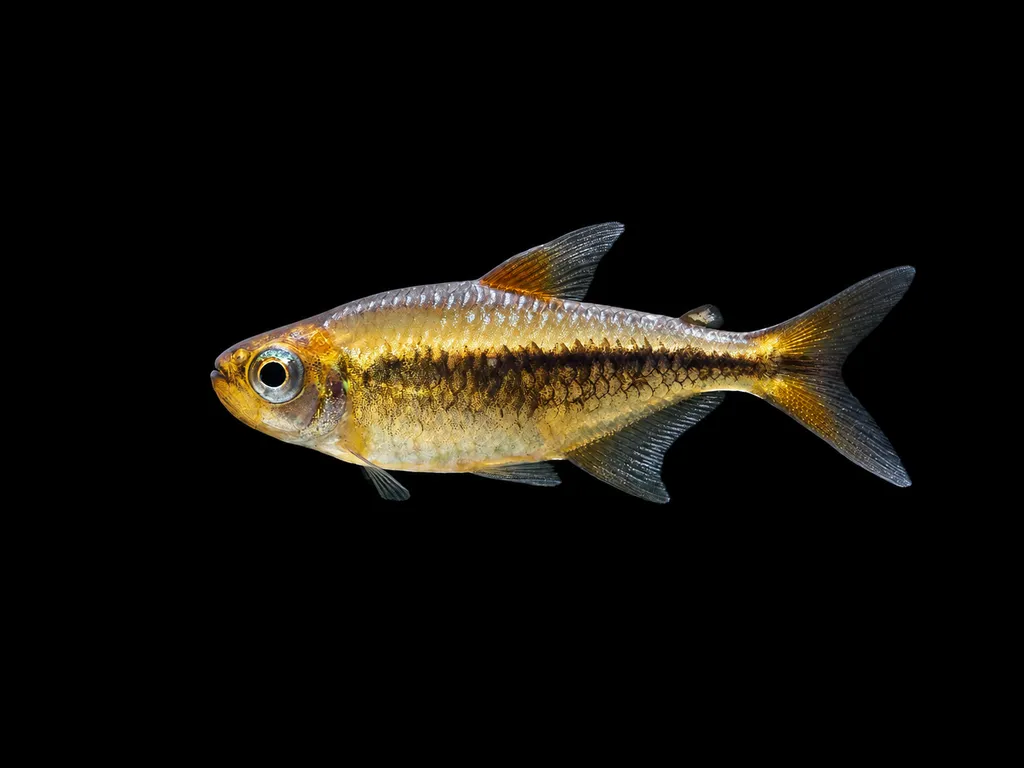
Blackmargin tetra
Moenkhausia nigromarginata
Also known as Nigromarginata tetra, Yellow moon kogal tetra
FreshwaterFish
Care at a glance
- Temperature
- 73–82°F
- 23–28°C
- pH
- 5.5–7.0
- Adult size
- 2.1 in
- 5.3 cm
- Minimum tank
- 20 gal
- 75 L
- Temperament
- Peaceful
- Social behavior
- Schooling
- Swim level
- Middle
- Difficulty
- Medium
- Breeding
- Egg scatterer
- Rarity
- Rare
- Family
- Characidae
- Origin
- Upper Rio Tapajos basin, Mato Grosso, Brazil
Overview
The blackmargin tetra is a peaceful schooler that swims in the middle of a planted tank. It is best with a little experience.
Did you know
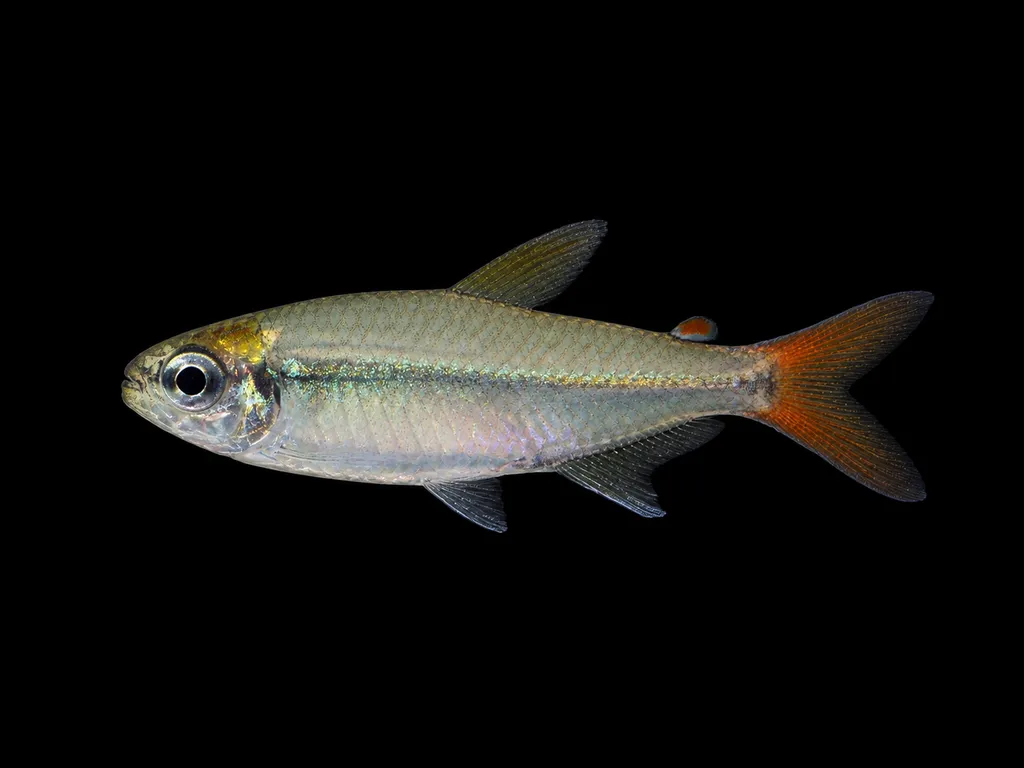
The blackmargin tetra's species name, nigromarginata, means black-margined. It describes the thin dark line that outlines the fins and gives the fish its common name.
Caring for the blackmargin tetra
Give a group of blackmargin tetras 20 gal (75 L) or more, with room to swim. A sandy bottom, driftwood, some leaf litter and planting around open swimming lanes suit them.
Keep the water warm, soft and slightly acidic, at 73 to 82°F (23 to 28°C) and a pH of 5.5 to 7.0. Provide gentle flow, good oxygenation and clean water from regular changes. Feed a mix of quality flake or micro pellets with frozen and live foods such as daphnia, bloodworm and brine shrimp.
Keep a group of at least eight to ten so the fish feel secure and display well. In a good group the black edging on the fins shows most clearly, especially against pale plants and a darker background. Blackmargin tetras are peaceful, so pair them with calm community fish of similar size, such as small tetras, hatchetfish, pencilfish and corydoras. Avoid anything large or pushy.
Like most of its genus, the blackmargin tetra is an egg-scattering spawner with no parental care. There are no established aquarium breeding records.
Good to know
Moenkhausia nigromarginata is a characin of the family Characidae, described by Costa in 1994. Living fish show a blue eye and a blue sheen along the back in side light.
In the wild
The blackmargin tetra comes from clear headwater streams of the upper Rio Tapajos basin in Mato Grosso, central Brazil.
Weekly picks
Tank mates
The blackmargin tetra is a peaceful, schooling species that keeps to the middle. These picks share a community profile with it, are safe together in both directions, and overlap on water type, temperature and pH.
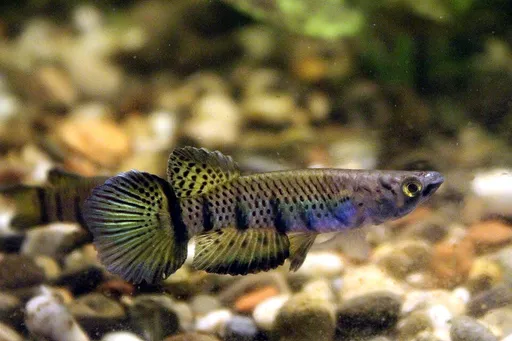
Six-barred panchax
Epiplatys sexfasciatus
Freshwater3.9 in (10 cm) · 20 gal (75 L)72–81°F (22–27°C)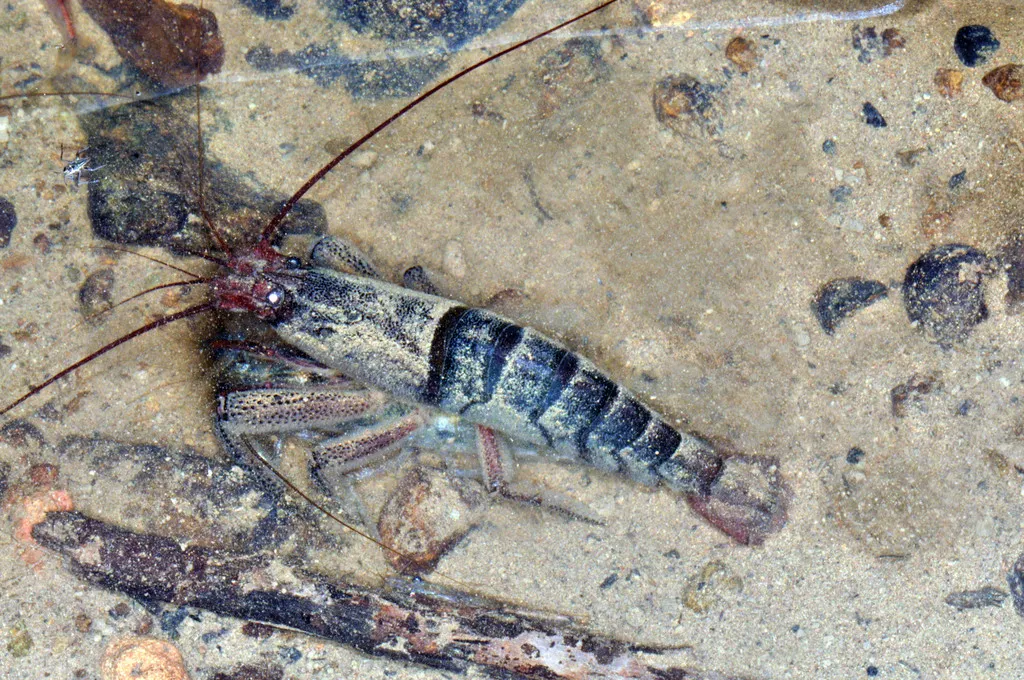
Marble wood shrimp
Atya scabra
Freshwater3.9 in (10 cm) · 20 gal (75 L)73–82°F (23–28°C)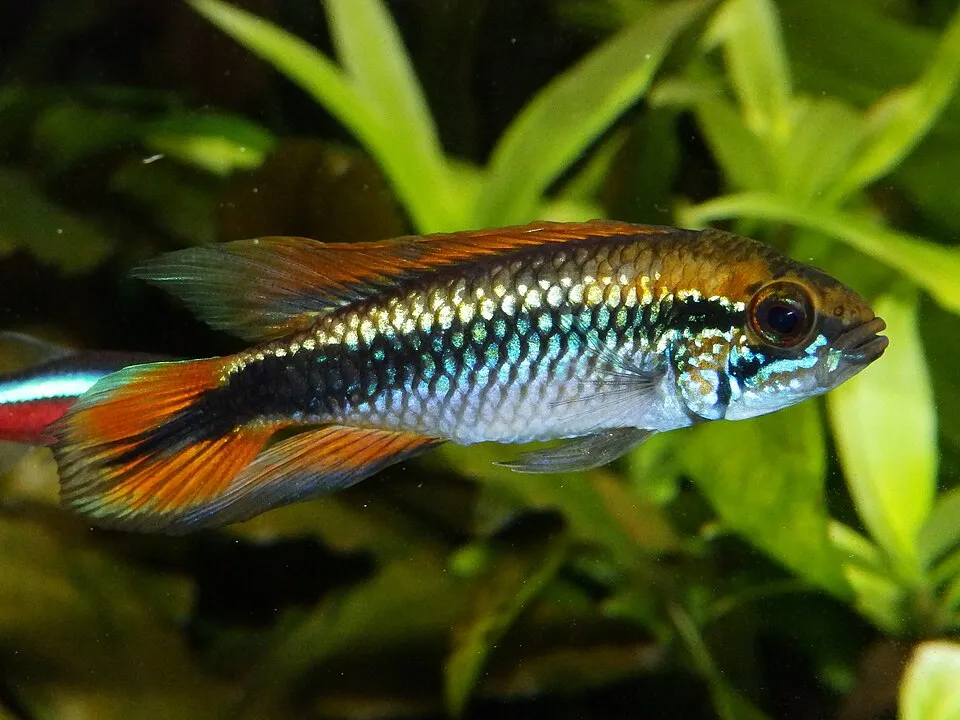
Agassiz's dwarf cichlid
Apistogramma agassizii
Freshwater3.5 in (9 cm) · 20 gal (75 L)72–84°F (22–29°C)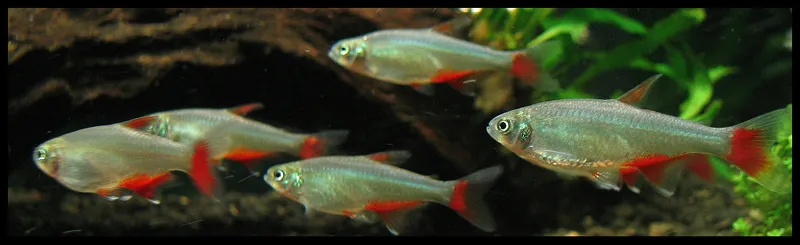
Bloodfin tetra
Aphyocharax anisitsi
Freshwater2.2 in (5.5 cm) · 20 gal (75 L)72–82°F (22–28°C)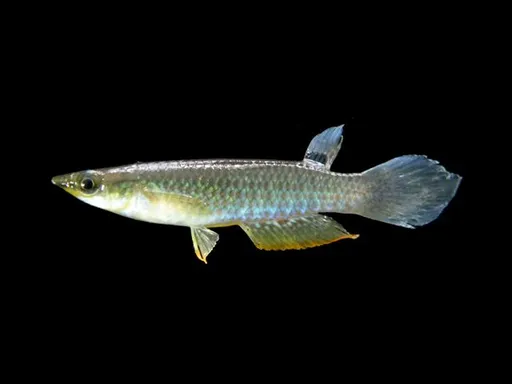
Blue panchax
Aplocheilus panchax
Freshwater3.5 in (9 cm) · 20 gal (75 L)72–82°F (22–28°C)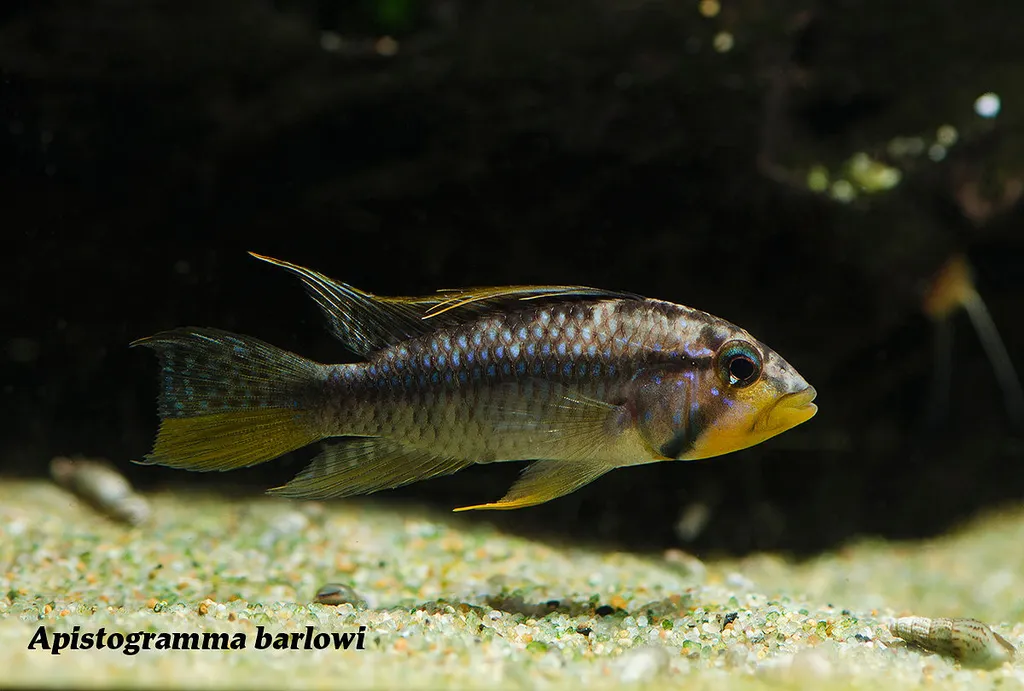
Barlow's dwarf cichlid
Apistogramma barlowi
Freshwater3.1 in (8 cm) · 20 gal (75 L)73–82°F (23–28°C)
Common questions
What size tank does a blackmargin tetra need?
A blackmargin tetra needs at least 20 gal (75 L). It spends most of its time in the middle.
What temperature and pH does a blackmargin tetra need?
A blackmargin tetra is comfortable at 73–82°F (23–28°C) with a pH of 5.5–7.0.
What does a blackmargin tetra eat?
A blackmargin tetra eats a mix of quality flake or micro pellets. Add frozen and live foods such as daphnia, bloodworm and brine shrimp.
How big does a blackmargin tetra get?
An adult blackmargin tetra reaches about 2.1 in (5.3 cm).
Does a blackmargin tetra need a group?
Yes. A blackmargin tetra is a schooling species and should be kept in a group, not singly.
How does a blackmargin tetra breed?
The blackmargin tetra scatters its eggs and gives no parental care, like most of its genus. There are no established aquarium breeding records.
Related species
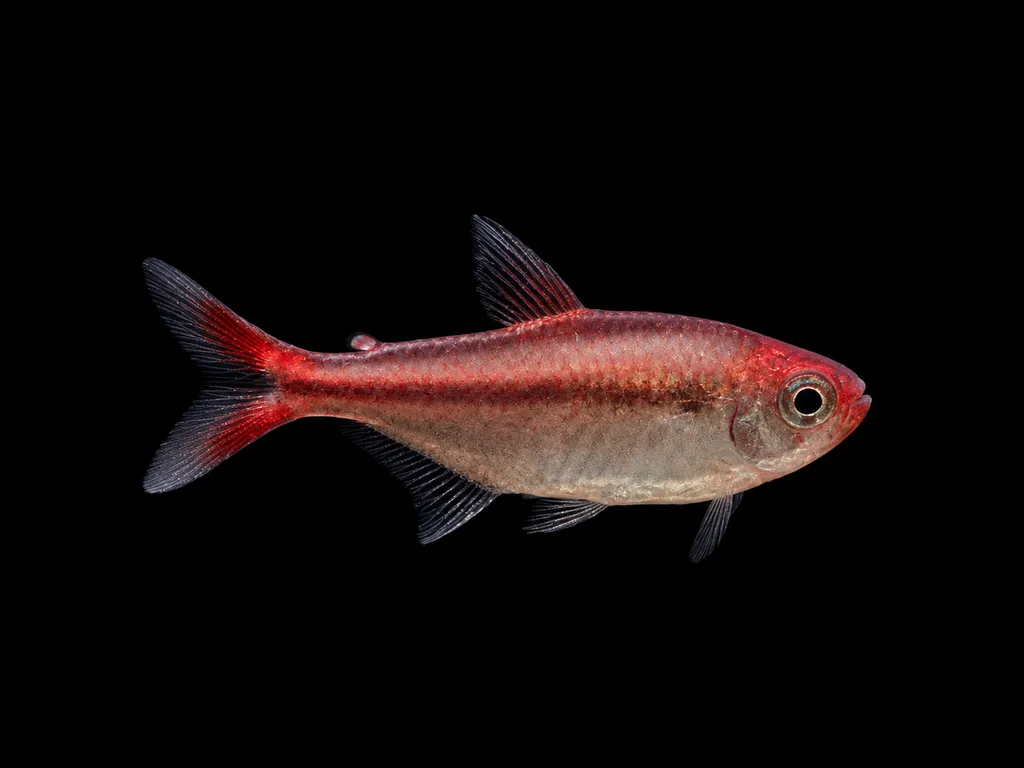 2.1 in (5.4 cm)20 gal (75 L)73–82°F (23–28°C)
Ruby moenkhausia
Moenkhausia rubra
2.1 in (5.4 cm) · 20 gal (75 L)
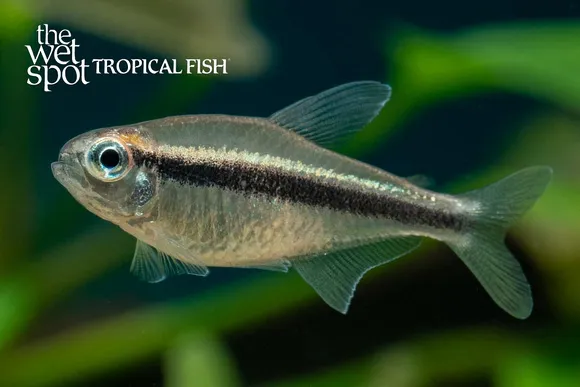
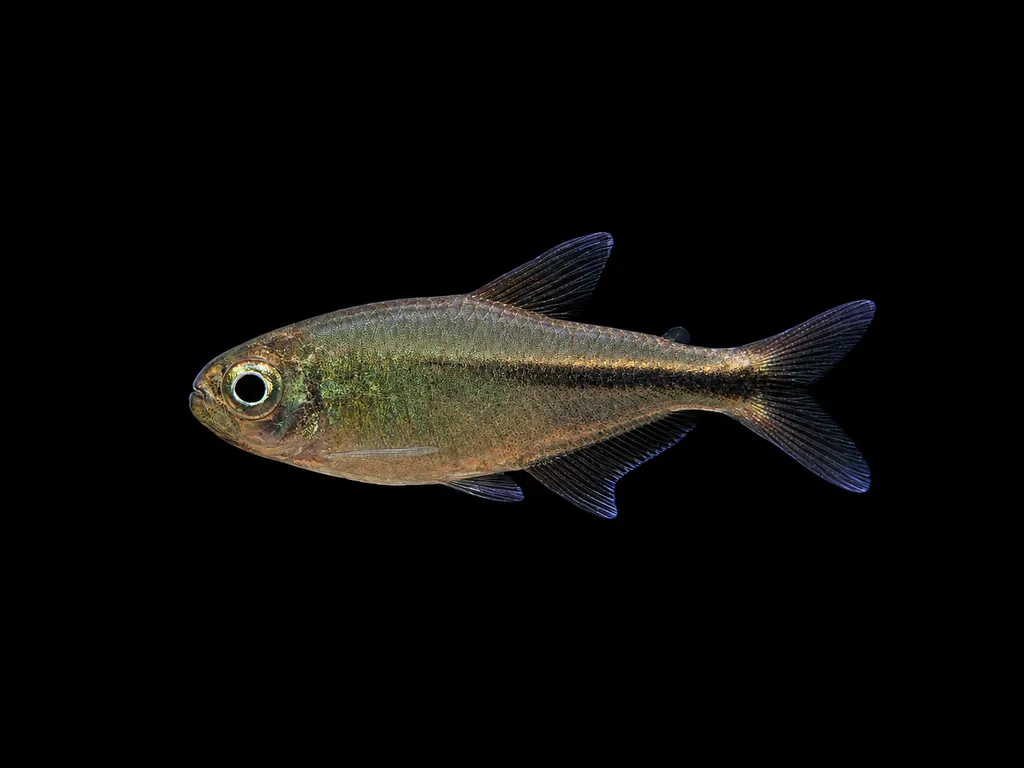 2 in (5.2 cm)20 gal (75 L)73–82°F (23–28°C)
Aurora tetra
Moenkhausia aurora
2 in (5.2 cm) · 20 gal (75 L)
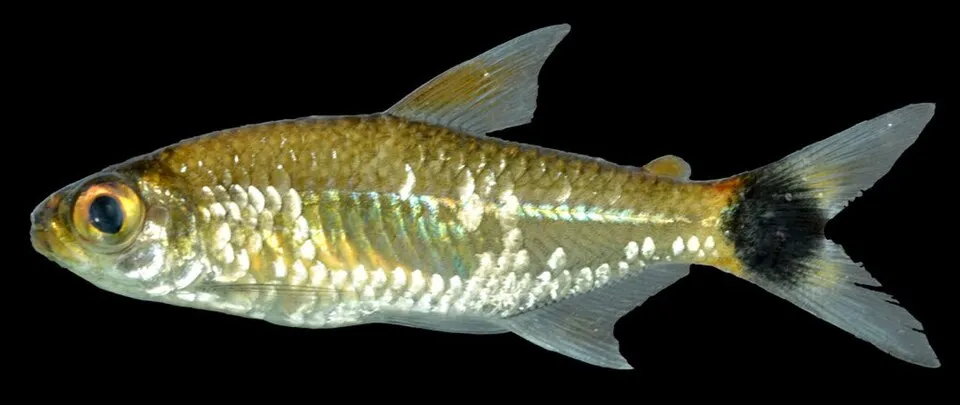
 2.2 in (5.6 cm)20 gal (75 L)73–82°F (23–28°C)
Dusky tetra
Moenkhausia phaeonota
2.2 in (5.6 cm) · 20 gal (75 L)
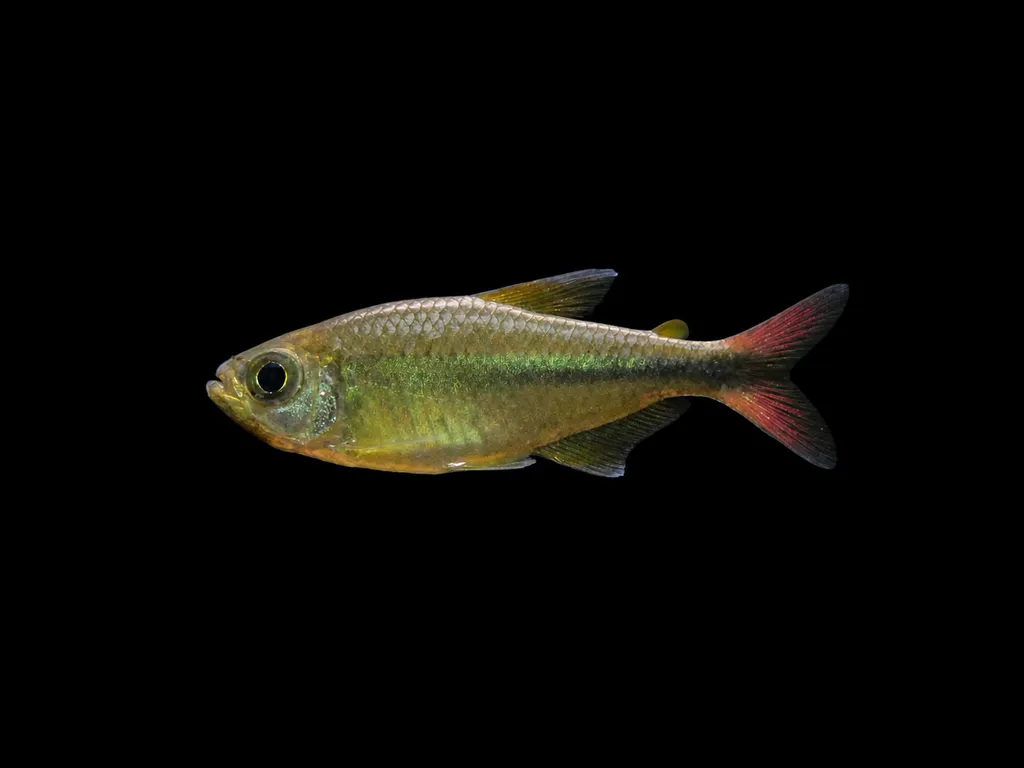
 2 in (5 cm)16 gal (60 L)75–82°F (24–28°C)
Ceros tetra
Moenkhausia ceros
2 in (5 cm) · 16 gal (60 L)
 1.9 in (4.7 cm)20 gal (75 L)72–81°F (22–27°C)
Lopes's tetra
Moenkhausia lopesi
1.9 in (4.7 cm) · 20 gal (75 L)
 2.4 in (6 cm)20 gal (75 L)73–82°F (23–28°C)
Cope's tetra
Moenkhausia copei
2.4 in (6 cm) · 20 gal (75 L)